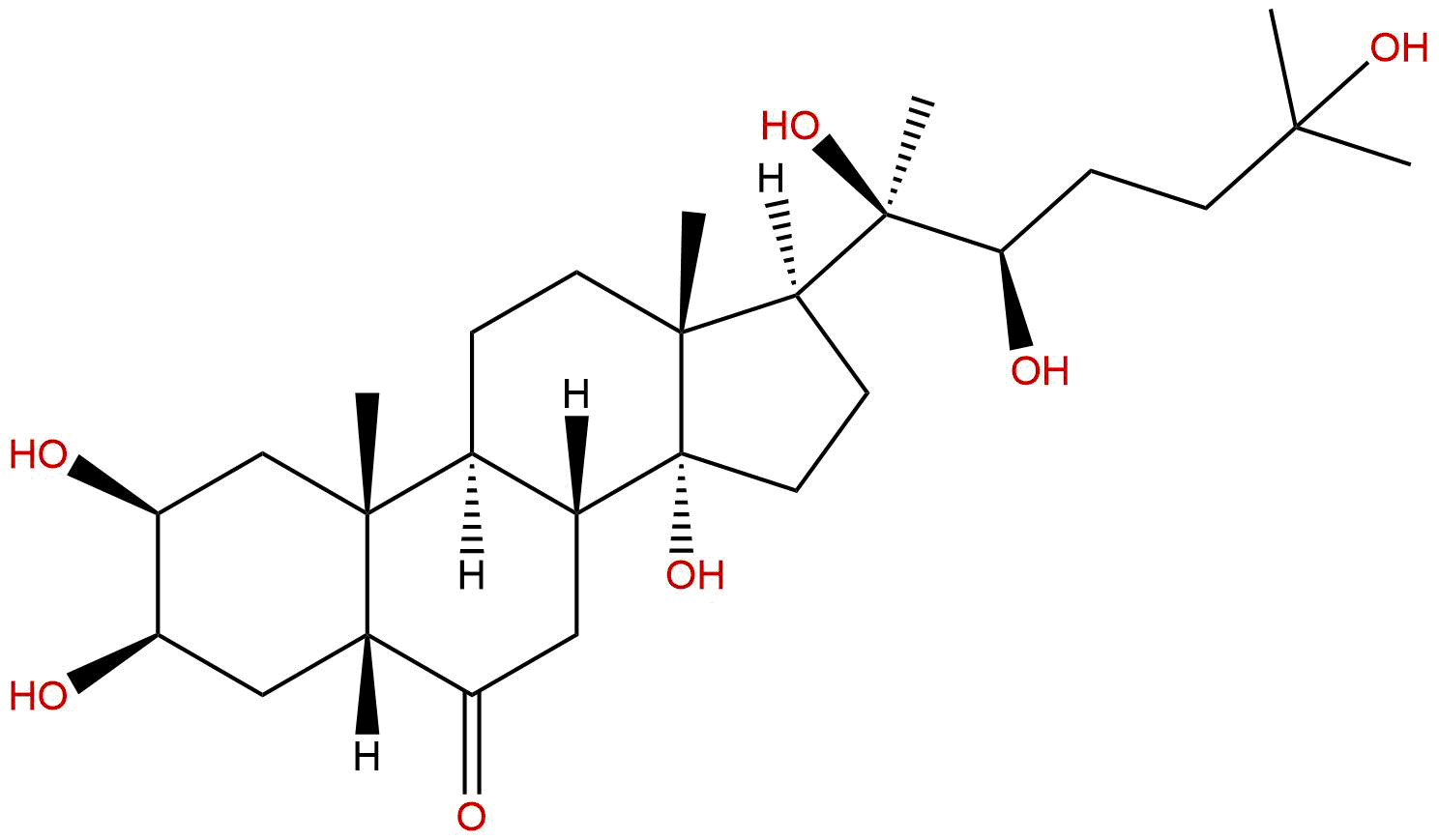


Product name: 14-Hydroxylated brassinosteroid
Synonym name: (2β,3β,5β,22R)-2,3,14,20,22,25-Hexahydroxycholestan-6-one
Catalogue No.: BP4983
Cas No.: 457603-63-3
Formula: C27H46O7
Mol Weight: 482.658
Botanical Source:
Type of Compound: Terpenoids
Purity: 95%~99%
Analysis Method: HPLC-DAD or/and HPLC-ELSD
Identification Method: Mass, NMR
Packing: Brown vial or HDPE plastic bottle
Storage: Store in a well closed container, protected from air and light. Put into refrigerate or freeze for long term storage.
Whenever possible, you should prepare and use solutions on the same day. However, if you need to make up stock solutions in advance, we recommend that you store the solution as aliquots in tightly sealed vials at -20℃. Generally, these will be useable for up to two weeks.
The product could be supplied from milligrams to grams
Inquire for bulk scale.
For Reference Standard and R&D, Not for Human Use Directly.
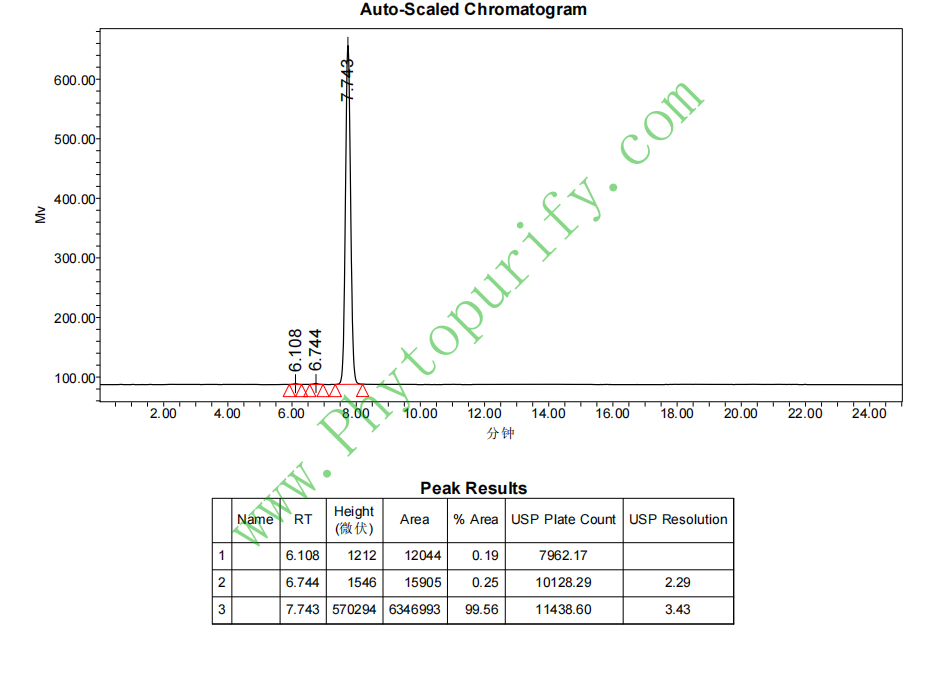
HPLC of 14-Hydroxylated brassinosteroid
Storage conditions:Short-term storage at 2~8℃, long-term storage at -20 ~ -80℃
138.4500
1.7982
1.7981
.1238
1.0804
9.7616
Low
61.7409
5.1604
No
No
No
No
No
No
0.0
Yes
No
No
Yes
Natural products, as an important source of drug discovery, play an indispensable role in the long struggle between humans and diseases. Among the numerous natural product families with novel structures and diverse activities, brassinosteroids (BRs) are a class of plant sterols with significant physiological activity. Since the first isolation of brassinolide from rapeseed pollen in the 1970s, BRs have attracted much attention from the botanical community due to their outstanding functions in regulating plant growth and development, and responding to environmental stress. However, in recent years, with the deepening of research, the non classical pharmacological activities exhibited by BRs and their derivatives in animal cells and disease models, especially their potential immunomodulatory effects, are gradually uncovering a new chapter in the medical application of this ancient plant hormone family.
14 Hydroxylated brassinosteroid (CAS number: 457603-63-3) is a specific member of the brassinosteroid family characterized by a hydroxyl substitution at position C-14 of the steroid nucleus. This structural modification may not only affect its binding ability to receptors in plants, but also endow it with a unique biological activity spectrum. Unlike the classic brassinosteroids known for promoting plant growth, the study of 14 hydroxybrassinosteroids in animal systems, particularly their immunomodulatory functions, is becoming an emerging hotspot in the field of natural product pharmacology. Preliminary research suggests that this compound may exhibit fine tuned regulation of immune cell function by intervening in multiple key immune signaling pathways, such as Toll like receptor 4 (TLR4), signal transduction and transcription activator 3 (STAT3), and nuclear factor kappa B (NF - κ B). This mode of action makes it potentially applicable in fields such as autoimmune diseases, inflammatory responses, and tumor immunotherapy.
This article aims to provide a comprehensive professional review of 14 hydroxybrassinosteroids. We will systematically elucidate its chemical structure and physicochemical properties, trace its plant origin and extraction methods, deeply analyze its pharmacological activity, mechanism of action, and molecular targets, and evaluate its pharmacokinetic characteristics and development potential based on its pharmacological parameters. Ultimately, we will look forward to its prospects and challenges in clinical translation, in order to provide systematic scientific references for the in-depth research and development of this natural product.
14 hydroxybrassinosteroids belong to the class of plant sterols, and their core skeleton is a typical cyclopentane dihydrophenanthrene (steroid nucleus). Unlike animal steroid hormones such as cholesterol and sex hormones, the characteristic of the brassinosteroid family is the presence of a 7-oxolactone ring (such as brassinosteroid) or 6-keto group (such as brassinosterone) on its A ring, as well as multiple hydroxyl substitutions on the B ring and side chains. The most significant structural feature of 14 hydroxybrassinosteroids is the introduction of a hydroxyl group (- OH) at the C-14 position of the steroid nucleus. The C-14 site is a crucial stereocenter in steroid chemistry, and its hydroxylation is typically in the alpha configuration (i.e. 14 α - OH), which has a significant impact on the overall conformation and polarity of the molecule.
From the chemical structural formula, the compound has a complete steroid tetracyclic skeleton and is connected to a C8 side chain containing multiple chiral centers. There are usually hydroxyl groups on the side chains, such as at positions C-22 and C-23. The presence of these hydroxyl groups, along with the C-14 hydroxyl group, together form multiple hydrogen bond donor and acceptor sites on the molecular surface, which are the structural basis for their specific interactions with biological targets such as receptor proteins and enzymes.
In terms of physical and chemical properties, according to the provided pharmacological parameters, the molecular weight of 14 hydroxybrassinosteroids is 482.6580 Da, which belongs to the category of small molecule compounds and meets the basic molecular weight requirements for oral drugs (usually<500 Da). Its lipid water partition coefficient (LogP) is 1.7982, indicating that the molecule has moderate lipophilicity, neither completely hydrophobic nor completely hydrophilic, which is beneficial for its penetration on biological membranes and dissolution in body fluids. The topologically polar surface area (TPSA) is 138.4500 Å ², which is relatively high (it is generally believed that oral absorption is poor when TPSA>140 Å ²), suggesting that the molecule contains more polar groups (such as hydroxyl groups), which may affect its efficiency in passive diffusion across membranes. Its water solubility (0.1238 mg/mL) is relatively low, belonging to the category of slight solubility, which may be a challenge for its bioavailability in vivo. In addition, the parameters show that its blood-brain barrier (BBB) penetration ability is low, indicating that the compound is not easily able to enter the central nervous system, which can to some extent avoid central related side effects, but also limits its application in the treatment of brain diseases. Importantly, the hERG inhibition assessment was negative, and the Ames test result was 0.0, indicating that the compound does not pose significant risks of cardiac toxicity (hERG channel inhibition) or genetic toxicity (Ames test negative) in the preliminary safety evaluation, which is a positive signal for its candidate drug.
Brassinosterol is widely present in the plant kingdom, especially in the pollen, seeds, stems and leaves of Brassicaceae plants, where its content is relatively abundant. 14 hydroxybrassinosteroids, as one of them, are closely related to the overall distribution of the brassinosteroid family. Common plant sources rich in brassinosteroids include rapeseed(Brassica napus)Cabbage(Brassica rapa)Arabidopsis thaliana(Arabidopsis thaliana)Rice(Oryza sativa)And some leguminous plants. However, the content of 14 hydroxybrassinosteroids in plants is usually extremely low and belongs to trace active ingredients, which poses a huge challenge for their isolation and purification.
The traditional method for extracting 14 hydroxybrassinosteroids usually relies on organic solvent extraction. Due to its lipophilicity, plant materials such as dried pollen or seedlings are often soaked or refluxed for extraction using methanol, ethanol, ethyl acetate, or their mixed solvents. After filtration and concentration of the extract, crude extract is obtained. Due to the presence of a large amount of impurities such as lipids, pigments, and other sterols in the crude extract, a series of liquid-liquid partitioning extractions are required (such as defatting with n-hexane and extracting the target components with ethyl acetate or n-butanol) to achieve initial enrichment.
Further purification is highly dependent on modern chromatographic techniques. Positive phase silica gel column chromatography is a classic method for separating brassinosteroids, typically using solvent systems such as chloroform methanol or dichloromethane isopropanol for gradient elution. However, due to the similar polarity of 14 hydroxybrassinosteroids and structurally similar brassinosteroids such as brassinosteroids and brassinosterones, complete separation cannot be achieved solely by normal phase chromatography. Therefore, high-performance liquid chromatography (HPLC) has become the key means of final purification. Reverse phase HPLC (such as C18 column) combined with methanol water or acetonitrile water mobile phase systems can achieve high-resolution separation. In addition, in recent years, some more efficient and environmentally friendly extraction techniques have also been applied, such as supercritical fluid extraction (SFE), high-speed countercurrent chromatography (HSCCC), etc. These techniques can improve extraction efficiency, reduce the use of organic solvents, and may achieve higher purity.
It is worth noting that due to the extremely low content of natural sources, the cost of directly extracting 14 hydroxybrassinosteroids from plants is extremely high, making it difficult to meet the needs of large-scale research and development. Therefore, chemical synthesis and semi synthetic methods have become feasible ways to obtain this compound. 14 hydroxybrassinosteroids can be synthesized directionally through a series of complex chemical modification reactions, including hydroxyl protection, oxidation, reduction, hydroxylation, etc., starting from inexpensive and readily available plant sterols such as stigmasterol and sitosterol. In recent years, with the development of synthetic biology, the use of genetically engineered microorganisms (such as yeast) for heterologous synthesis of brassinosteroids has also shown great potential, providing new ideas for achieving sustainable and low-cost production in the future.
Although the functional research of 14 hydroxybrassinosteroids in plants is relatively limited, their pharmacological activities, especially their immunomodulatory effects, demonstrated in animal models and at the cellular level are attracting increasing attention. Current research mainly focuses on its ability to regulate the homeostasis of the immune system.
Immune regulatory activity: This is the core pharmacological activity of 14 hydroxybrassinosteroids. Preliminary studies have shown that the compound can bidirectionally regulate immune responses, exhibiting either immune enhancement or immune suppression effects under different conditions. For example, in models of immune dysfunction or pathogen attack, it may enhance the body's innate immune response by activating antigen-presenting cells such as macrophages and dendritic cells, promoting the secretion of pro-inflammatory cytokines (such as IFN - γ). On the contrary, in models of excessive inflammation or autoimmune diseases, it can inhibit overactivated immune cells, reduce the production of pro-inflammatory factors (such as TNF - α, IL-6), and promote the differentiation of anti-inflammatory factors (such as IL-10) and regulatory T cells (Treg), thereby exerting anti-inflammatory and immunosuppressive effects. The characteristic of this' immune modulator ', rather than a simple immune stimulant or inhibitor, gives it unique advantages in treating various immune related diseases.
Anti inflammatory activity: Closely related to immune regulatory activity is its anti-inflammatory effect. By inhibiting the activation of key pro-inflammatory signaling pathways such as NF - κ B and STAT3, 14 hydroxybrassinosteroid can effectively downregulate the expression of various inflammatory mediators. In the lipopolysaccharide (LPS) - induced macrophage inflammation model, this compound was observed to significantly reduce the production of nitric oxide (NO), prostaglandin E2 (PGE2), and various pro-inflammatory cytokines. This anti-inflammatory activity has also been preliminarily validated in various animal models of acute and chronic inflammation, such as mouse ear swelling and rat adjuvant arthritis.
Antitumor activity: The immunomodulatory effect has also extended to the field of tumors. 14 hydroxybrassinosteroids may exert anti-tumor effects by regulating immune cell function in the tumor microenvironment. For example, it may reverse the polarization of tumor associated macrophages (TAMs) from M2 type (pro tumor) to M1 type (anti-tumor) by inhibiting the STAT3 signaling pathway, or enhance the activity and infiltration of cytotoxic T lymphocytes (CTLs). In addition, its potential impact on immune checkpoint molecules such as CTLA-4 and FOXP3, as well as Treg cell markers, suggests that it may serve as an immune checkpoint regulator that synergizes with existing immune therapies such as PD-1/PD-L1 inhibitors. However, there are currently few reports on its direct killing effect on tumor cells, and its anti-tumor activity may rely more on indirect regulation by the immune system.
Other potential activities: Given that brassinosteroids have activity similar to animal steroidal hormones in plants, some studies speculate that 14 hydroxybrassinosteroids may have a weak impact on the animal endocrine system, but the relevant evidence is still insufficient. In addition, there have been occasional reports of its antioxidant, anti apoptotic, and other cell protective effects, but these activities are often intertwined with its immune regulatory functions.
The pharmacological activity of 14 hydroxybrassinosteroids, especially their immunomodulatory effects, is achieved by interacting with multiple key molecular targets to regulate complex signal transduction networks. According to existing research, its mechanism of action mainly involves the following aspects:
1. Regulation of TLR4 signaling pathway: TLR4 is a key pattern recognition receptor that recognizes pathogen associated molecular patterns (such as LPS) and injury associated molecular patterns, and plays a central role in initiating innate immune and inflammatory responses. 14 hydroxybrassinosteroids may bind directly or indirectly to TLR4 or its co receptor MD-2, competitively inhibiting the binding of agonists such as LPS, or interfering with the dimerization of TLR4 and the recruitment of downstream adaptor proteins such as MyD88 and TRIF. This leads to the inhibition of downstream NF - κ B and MAPK signaling pathways, thereby reducing the transcription and release of pro-inflammatory cytokines. This is one of the core mechanisms by which it exerts anti-inflammatory effects.
2. Regulation of STAT3 signaling pathway: STAT3 is a key transcription factor that plays a dual role in inflammation, immune suppression, and tumorigenesis. On the one hand, STAT3 signaling activated by cytokines such as IL-6 promotes pro-inflammatory responses; On the other hand, in the tumor microenvironment, sustained activation of STAT3 drives immune suppression, promotes Treg cell differentiation, and suppresses anti-tumor immunity. 14 hydroxybrassinosteroids have been shown to inhibit the phosphorylation (i.e. activated form) of STAT3, thereby blocking its nuclear translocation and the expression of downstream target genes (such as IL-10, VEGF, Cyclin D1). By inhibiting STAT3, this compound can alleviate inflammation and reverse tumor immune suppression, demonstrating pleiotropic regulatory ability.
3. Regulation of NF - κ B signaling pathway: NF - κ B is the main switch of inflammatory response. In the resting state, NF - κ B binds to the inhibitory protein I κ B in the cytoplasm. When stimulated by signals such as TLR4 and TNF receptors, I κ B is phosphorylated and degraded, releasing NF - κ B into the nucleus to initiate transcription of pro-inflammatory genes (such as IL-2, IFN - γ, TNF - α). 14 hydroxybrassinosteroids may inhibit the activity of I κ B kinase (IKK), prevent the degradation of I κ B, and thus "trap" NF - κ B in the cytoplasm, effectively blocking the inflammatory cascade.
4. Regulation of T cell differentiation and function: This compound also has a fine regulatory effect on adaptive immunity. By affecting the aforementioned signaling pathways, it can regulate the differentiation direction of initial T cells. For example, inhibiting STAT3 and STAT4 signaling may reduce the differentiation of pro-inflammatory T cell subsets such as Th1 and Th17; Promoting TGF - β 1 signaling and FOXP3 expression is beneficial for inducing the production of Treg cells with immunosuppressive function. In addition, its potential impact on the expression of CTLA-4 (a negative regulatory checkpoint for T cell activation) suggests that it may be involved in regulating the threshold of T cell activation and maintaining immune tolerance.
5. Regulation of cytokine network: Ultimately, the changes in the aforementioned signaling pathways converge on the reprogramming of the cytokine network. 14 hydroxybrassinosteroids can downregulate the levels of pro-inflammatory cytokines (such as IL-2, IFN - γ, TNF - α), while upregulating the levels of anti-inflammatory cytokines (such as IL-10) and immune regulatory factors (such as TGF - β 1). This balance regulation of cytokine networks is the ultimate manifestation of their immune regulatory effects and maintenance of immune homeostasis.
To push 14 hydroxybrassinosteroid from laboratory research to clinical application, a comprehensive evaluation of its drug-induced and pharmacokinetic (ADME) properties is necessary. Based on the provided parameters and existing knowledge, we can conduct preliminary analysis.
Drug Evaluation: As mentioned earlier, the molecular weight (482.66 Da) and LogP (1.80) of this compound meet most of the criteria of Lipinski's five rules (molecular weight<500, LogP<5), indicating that it has the basic chemical backbone to become an oral drug. However, TPSA (138.45 Å ²) is relatively high, which is often associated with poor oral absorption and membrane permeability. The low water solubility (0.12 mg/mL) suggests that it may face challenges in terms of solubility and dissolution rate. Therefore, the pharmacological properties of this compound are at a moderate level, and its oral bioavailability may be low. It is necessary to improve its solubility and absorption through formulation methods (such as solid dispersions, nanocrystals, liposomes, etc.) or prodrug design. HERG negative (no risk of cardiac toxicity) and Ames test negative (no genetic toxicity) are important additional factors for its pharmacological properties, indicating that it has good preliminary safety.
Pharmacokinetic (ADME) prediction:
- Absorption: Due to its high TPSA and low water solubility, oral absorption is expected to be poor, and bioavailability may be low. Its absorption may mainly rely on passive diffusion, but may be influenced by intestinal efflux transporters such as P-glycoprotein. Developing non oral routes of administration (such as injection, transdermal administration) may be an effective strategy to increase its in vivo exposure.
- Distribution: A moderate LogP value indicates that its tissue distribution may be relatively extensive, but due to the unknown plasma protein binding rate, its distribution volume is difficult to accurately predict. Low BBB penetration is an important feature, meaning its concentration in the central nervous system is low, which helps to avoid central side effects but also limits its application in brain diseases.
- Metabolism: As a steroid compound containing multiple hydroxyl groups, its metabolism is likely to mainly occur in the liver, mediated by cytochrome P450 enzymes (CYPs) and uridine diphosphate glucuronosyltransferases (UGTs). Possible metabolic pathways include hydroxylation, oxidation, and binding reactions with glucuronic acid or sulfuric acid. The hydroxyl group at position C-14 may be a key metabolic site. The activity and toxicity of metabolites need further research.
- Excretion: Due to its low water solubility, the unmetabolized prototype drug may mainly enter the intestine through bile excretion and ultimately be excreted with feces. The water-soluble metabolites formed after the phase II binding reaction may be mainly excreted through the kidneys and urine.
Security assessment: In addition to the preliminary negative results of hERG and Ames tests, a more comprehensive toxicological evaluation is needed, including acute toxicity, subchronic toxicity, reproductive and developmental toxicity, and potential effects on other organs such as the liver and kidneys. Given its immunomodulatory activity, special attention should be paid to the potential immunotoxicity it may cause, such as increased risk of infection due to excessive immunosuppression or autoimmune reactions caused by immune stimulation.
The unique immune regulatory mechanism and preliminary safety characteristics of 14 hydroxybrassinosteroid have opened up broad prospects for its clinical application in multiple disease fields.
1. Autoimmune diseases: Given its ability to inhibit the NF - κ B and STAT3 pathways, promote Treg cell differentiation, and balance the pro-inflammatory/anti-inflammatory cytokine network, this compound has great potential in the treatment of autoimmune diseases such as rheumatoid arthritis, inflammatory bowel disease (such as Crohn's disease, ulcerative colitis), and multiple sclerosis. Its advantage lies in the possibility of achieving better therapeutic effects and lower side effects than traditional single target drugs through multi-target and multi pathway regulation.
2. Inflammatory diseases: For acute or chronic inflammatory reactions, such as sepsis, acute lung injury, atherosclerosis, etc., the anti-inflammatory activity of 14 hydroxybrassinosterol may play a therapeutic role. Especially in life-threatening excessive inflammatory reactions such as sepsis, its strategy of "braking" the inflammatory storm by inhibiting the TLR4/NF - κ B pathway may provide a new option for clinical treatment.
3. Tumor immunotherapy: This is one of the most promising but also challenging directions. By inhibiting STAT3 signaling and regulating immune cells in the tumor microenvironment (such as repolarizing M2 macrophages to M1 and inhibiting Treg function), 14 hydroxybrassinosteroid is expected to become a novel immunomodulatory agent. It can be used in combination with immune checkpoint inhibitors (such as anti-PD-1/PD-L1 antibodies) to "relieve" immune suppression in the tumor microenvironment and improve the response rate of existing immune therapies. In addition, its potential impact on CTLA-4 suggests that it may directly serve as an immune checkpoint modulator.
4. Transplant rejection and allergic diseases: Its immunosuppressive effect may also be applied in anti rejection therapy after organ transplantation, as well as in the treatment of allergic diseases such as allergic asthma and atopic dermatitis.
Future prospects and challenges:
Despite its promising prospects, the clinical translation of 14 hydroxybrassinosteroids still faces many challenges:
- Source and Cost: The natural content is extremely low, and the chemical synthesis steps are complex, resulting in high acquisition costs. The primary task is to develop efficient and green synthetic or biosynthetic methods.
- Pharmacokinetic optimization: Low oral bioavailability is its biggest bottleneck. Advanced drug delivery systems such as lipid nanoparticles and polymer micelles need to be developed or structurally modified (prodrug design) to improve their ADME properties.
- In depth elucidation of the mechanism of action: At present, the understanding of its molecular targets is still relatively preliminary. Advanced technologies such as chemical proteomics and CRISPR screening are needed to accurately identify the protein targets it directly binds to, and elucidate its specific mode of action in different cell types and disease backgrounds.
- Security assessment: The safety of long-term medication, especially the long-term effects on the immune system (such as increased risk of infection or tumors), requires rigorous preclinical and clinical evaluations.
- Clinical trial validation: All basic research results ultimately need to be validated for their safety and effectiveness through rigorously designed clinical trials.
14 hydroxybrassinosteroids, a natural product derived from the plant hormone family, are emerging in the field of natural product pharmacology due to their unique immunomodulatory activity. It finely regulates the cytokine network and immune cell differentiation by acting on multiple key immune signaling nodes such as TLR4, STAT3, NF - κ B, demonstrating great potential for treating autoimmune diseases, inflammation, and tumors. Although there are challenges in its pharmacological properties, especially in terms of oral bioavailability, its initial safety advantages and multi-target mode of action make it an extremely attractive lead compound. Future research should focus on in-depth analysis of its mechanism of action, optimization of pharmacokinetic properties, and exploration of clinical translation pathways. With the continuous advancement of synthetic biology, medicinal chemistry, and pharmaceutical technology, we have reason to believe that 14 hydroxybrassinosteroids and their derivatives have the potential to evolve from "star molecules" in a laboratory to innovative drugs serving human health, bringing new hope for the treatment of immune related diseases.
