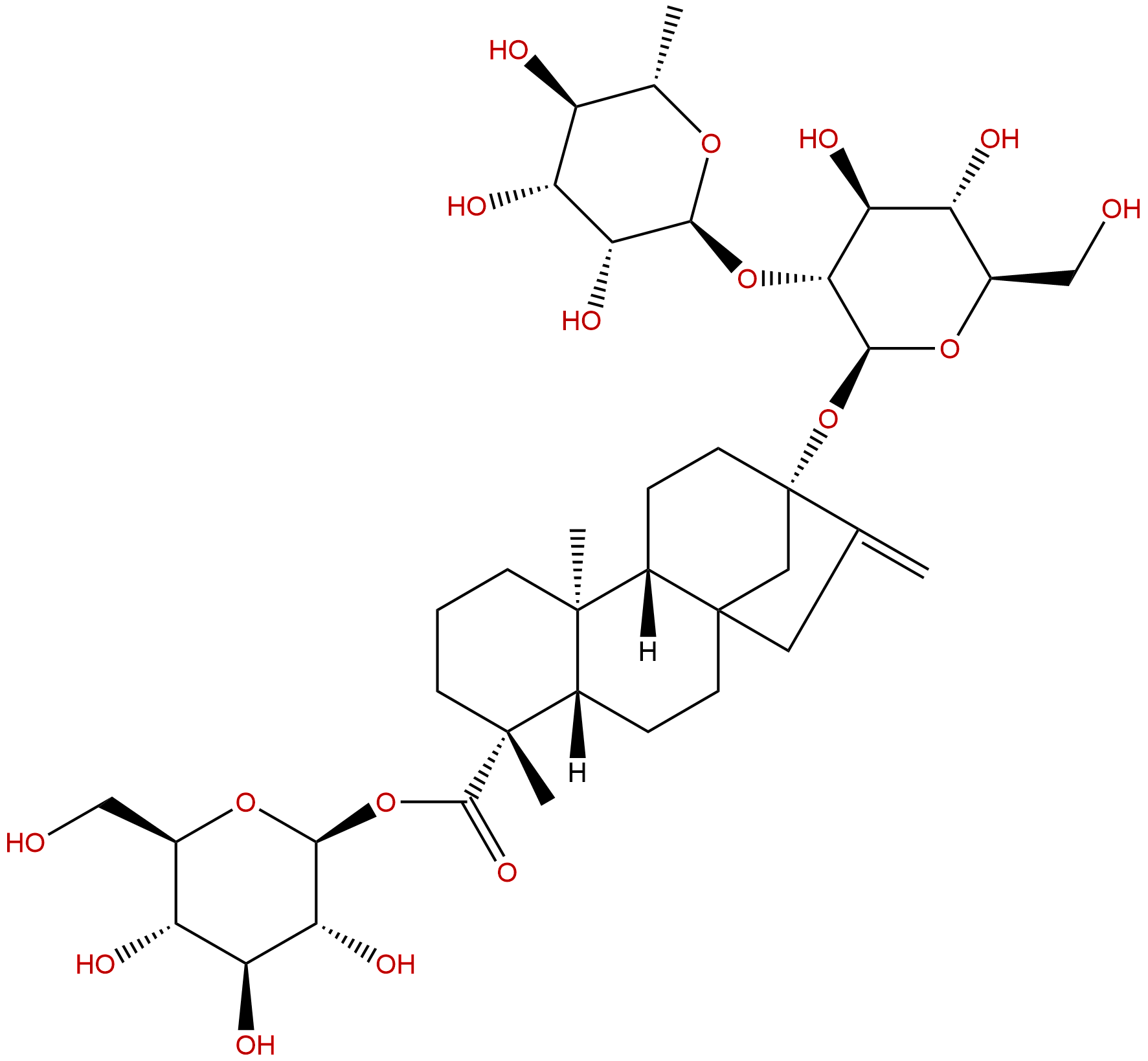


Product name: Dulcoside A
Synonym name:
Catalogue No.: BP2064
Cas No.: 64432-06-0
Formula: C38H60O17
Mol Weight: 788.881
Botanical Source: Stevia rebaudiana (Bertoni) Hemsl.
Type of Compound: Diterpenoids
Purity: 95%~99%
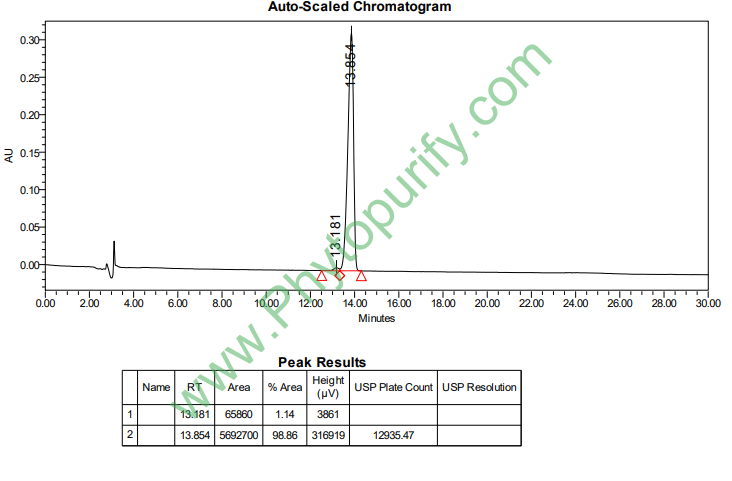
Analysis Method: HPLC-DAD or/and HPLC-ELSD
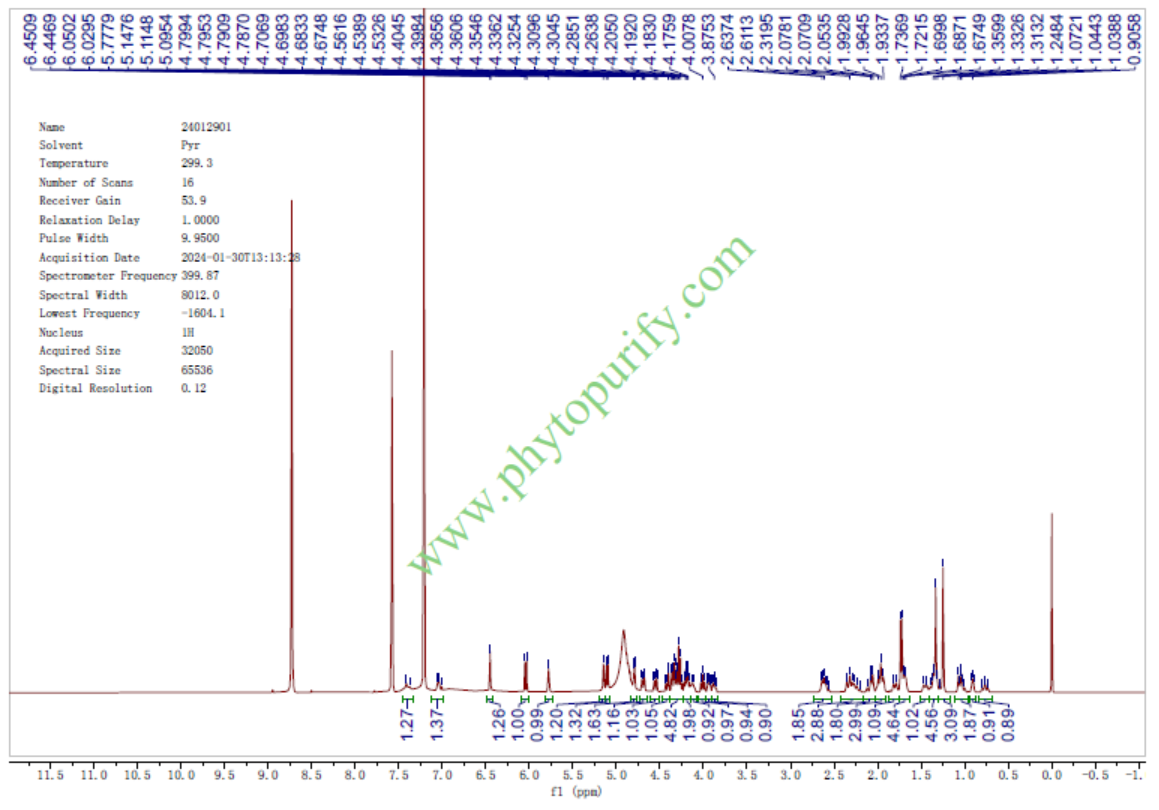
Identification Method: Mass, NMR
Packing: Brown vial or HDPE plastic bottle
Storage: Store in a well closed container, protected from air and light. Put into refrigerate or freeze for long term storage.
The product could be supplied from milligrams to grams
Inquire for bulk scale.
Description:
Dulcoside A is a sweetener and has antioxidant activity.
References:
Food Chem., 2015, 172(172):1-6.
The application of different drying conditions (hot air drying at 100 °C and 180 °C, freeze drying and shade drying) on steviol glycosides (stevioside, dulcoside A, rebaudioside A and rebaudioside C) and antioxidants in Stevia leaves was evaluated. Stev[Pubmed: 25442516]
The application of different drying conditions (hot air drying at 100 °C and 180 °C, freeze drying and shade drying) on steviol glycosides (stevioside, Dulcoside A, rebaudioside A and rebaudioside C) and antioxidants in Stevia leaves was evaluated.
METHODS AND RESULTS:
Stevioside, the major glycoside found in fresh leaves (81.2mg/g), suffered an important reduction in all cases, although shade drying was the least aggressive treatment. Considering the antioxidant parameters (total phenols, flavonoids and total antioxidants), the most suitable drying method was hot air at 180 °C, since it substantially increased all of them (76.8 mg gallic acid, 45.1mg catechin and 126 mg Trolox, all equivalent/g Stevia, respectively), with respect to those present in fresh leaves (44.4, 2.5 and 52.9 mg equivalent/g).
CONCLUSIONS:
Therefore, the ideal method for drying Stevia leaves depends on their final use (sweetener or antioxidant), although, hot air at 180 °C is the most recommendable if only one treatment has to be chosen.
HPLC of Dulcoside A
HNMR of Dulcoside A
Storage conditions:Short-term storage at 2~8℃, long-term storage at -20 ~ -80℃
274.7500
.3158
.3161
1.1160
.5494
.2951
Low
64.5000
7.1229
No
No
No
No
Yes
No
0.0
Yes
No
No
No
Natural products, as an important source of drug discovery, have always played an irreplaceable role in the long struggle between humans and diseases. From artemisinin to paclitaxel, from aspirin to metformin, countless natural compounds derived from plants, microorganisms, and marine organisms have become the cornerstone of modern pharmaceutical systems. Among numerous natural products with biological activity, Stevia rebaudiana from the Asteraceae plant(Stevia rebaudiana The glycoside compounds of Bertoni have attracted much attention due to their unique sweet taste characteristics. Stevia is native to the border area between Paraguay and Brazil in South America, and its leaves have been used as a natural sweetener by the local Guaran í people for hundreds of years. Since the 20th century, with the systematic study of the chemical composition of stevia, scientists have isolated and identified a series of diterpenoid glycosides with high sweetness and low calorie content. Among them, the most well-known are Stevioside and Rebaudioside A, which have been widely used in the food industry as natural zero calorie sweeteners.
However, in addition to these well studied sweet components, stevia also contains some trace glycosides with low content but equally important biological significance. Dulcoside A (CAS number: 64432-06-0) is one of them. As a relatively low content sweet ingredient in Stevia rebaudiana, Dukoside A has long been regarded as a byproduct of sweetener research. However, in recent years, with the in-depth exploration of the pharmacological activity of natural products, Dukoside A has shown biological potential beyond its sweet taste function. Research has shown that Dukoside A not only generates sweetness and bitterness by activating the TAS1R family of taste receptors, but more importantly, it also exhibits significant anti-inflammatory activity and potential anti-tumor effects in various tumor models. Especially for ovarian cancer, Dukoside A exhibits unique advantages in multi-target intervention by regulating multiple key signaling molecules such as BCL2, IDO1, STAT3, ESR2, MMP2, NFE2L2, etc.
This article will provide a systematic review of Dukoside A, a natural product with potential for development, from multiple dimensions such as chemical structure, plant origin, pharmacological activity, mechanism of action, pharmacological evaluation, and clinical application prospects. The aim is to provide comprehensive academic references for natural product pharmacology researchers and drug developers.
Duque glycoside A belongs to the class of diterpenoid glycosides of the ent kaurene type, with its parent nucleus structure being the ent-kaurine-16-en-19-oic acid, also known as steviol. The steviol alcohol skeleton consists of four rings (A, B, C, D), with the D ring being a five membered ring, a terminal double bond formed between C-16 and C-17, and a carboxyl group at C-19. In the molecule of Dukoside A, the carboxyl group at position C-19 forms an ester glycosidic bond with a β - D-glucosyl group, while the hydroxyl group at position C-13 forms an ether glycosidic bond with a disaccharide chain composed of β - D-glucosyl and α - L-rhamnose groups. Specifically, the sugar chain connected at position C-13 is β - D-glucosyl - (1 → 2) - α - L-rhamnose, which is linked to the hydroxyl group at position 2 of glucose through an α -1,2 glycosidic bond.
The molecular formula of Dukoside A is C ∝₈ H ₆₀ O ₁₈, with a molecular weight of 788.8810 g/mol. Compared with other major glycosides in Stevia rebaudiana, the glycosylation pattern of Dukoside A is unique. For example, Stevioside is linked to a β - sophorose group (β - D-glucose - (1 → 2) - β - D-glucose group) at position C-13, while Rebaudioside A is linked to a β - sophorose group at position C-13 and a β - D-glucose group at position C-19. The difference between Dukoside A and Stevioside lies in the configuration of the second sugar group in the C-13 sugar chain: Stevioside is β - D-glucose, while Dukoside A is α - L-rhamnose. This subtle structural difference leads to significant differences in their sweetness characteristics, water solubility, and biological activity.
The physical and chemical properties parameters of Dukoside A provide important references for its pharmacological evaluation. Its lipophilic water partition coefficient (LogP) is 0.3158, indicating that the compound has moderate hydrophilicity, which is consistent with its structural characteristics of containing multiple hydroxyl and sugar groups in its molecule. The polar surface area (TPSA) is as high as 274.7500 Å ², much higher than the typical threshold for oral drugs (140 Å ²), indicating that the compound may face challenges in terms of membrane permeability. The water solubility parameter is 1.1160 mg/mL, which belongs to moderate water solubility, providing basic conditions for its dissolution and distribution in organisms.
In terms of pharmacokinetic properties, the blood-brain barrier penetration ability of Dukoside A has been evaluated as "low", which is a favorable feature for drug development that requires avoiding central nervous system side effects. In addition, the hERG inhibitory activity assessment was negative (No), indicating a low risk of cardiac toxicity (QT interval prolongation) caused by the compound. The Ames test result was 0.0, indicating that Dukoside A did not exhibit significant genetic toxicity in the bacterial recovery mutation test. These preliminary pharmacological evaluation data provide positive signals for further drug development of Dukoside A.
The main natural source of Duque glycoside A is the stevia plant in the Asteraceae family(Stevia rebaudiana Bertoni)。 Stevia is a perennial herbaceous plant native to the subtropical regions of South America. It has been widely introduced and cultivated in many countries and regions around the world, including China, Japan, South Korea, Brazil, Paraguay, Thailand, and India. Stevia leaves are rich in various diterpenoid glycosides, with a total content of up to 10% -20% of dry weight. Stevioside and rebaudin A are the main components, while ducin A has a relatively low content, usually accounting for about 0.5% -2% of leaf dry weight. The specific content varies depending on the variety, growth conditions, harvest period, and other factors.
It is worth noting that Dukin A is not unique to stevia. In recent years, with the deepening of plant chemistry research, researchers have also discovered the presence of ducin A in other plants. For example, in Asteraceae plants Stevia phlebophylla and Stevia serrata Dukin A or its structural analogues have also been detected in certain plants of the Lamiaceae family. However, stevia is still the most abundant and economical natural source of ducin A.
The extraction of Dukoside A usually uses water or aqueous organic solvents as the extraction medium, utilizing its moderate solubility in water for extraction. The traditional extraction method includes hot water extraction, which involves soaking dried chrysanthemum leaves powder in hot water at 60-80 ° C for 1-3 hours and repeating the extraction 2-3 times. This method is simple to operate and cost-effective, but the extraction efficiency is relatively low and the impurity content is high.
In order to improve the extraction efficiency and selectivity, modern extraction techniques have been widely used for the extraction of D-glucoside A. Ultrasound assisted extraction (UAE) utilizes the cavitation effect of ultrasound to destroy plant cell walls, promote the release of target compounds, and achieve high extraction rates in a short period of time. Microwave assisted extraction (MAE) utilizes the penetrability and selective heating properties of microwaves to accelerate the diffusion of solutes into solvents. In addition, green extraction techniques such as pressurized liquid extraction (PLE) and supercritical fluid extraction (SFE) have also shown potential for application in the extraction of D-glucoside A.
After concentration, the extract needs to be further purified to obtain high-purity dukeside A. Due to the presence of various structurally similar glycoside compounds in stevia extract, including steviol glycosides, rebaudin A, rebaudin C, dukeside A, etc., their separation and purification pose certain challenges. Common purification methods include:
Macroporous adsorption resin chromatography Preliminary separation is carried out by utilizing the differences in adsorption capacity of different glycosides on resin. Common resin types include HPD-100, AB-8, D101, etc. Enrichment of different glycoside components can be achieved through gradient ethanol solution elution.
Preparation type high performance liquid chromatography (Prep HPLC)Using a reverse phase C18 chromatography column and acetonitrile water or methanol water system as the mobile phase, Duque glycoside A monomer with a purity of over 95% can be obtained through isocratic or gradient elution. This method has good separation effect and high reproducibility, but the processing capacity is limited and the cost is high.
High Speed Counter Current Chromatography (HSCCC)By utilizing the liquid-liquid distribution principle, there is no need for a solid stationary phase, avoiding irreversible adsorption of the sample on the stationary phase. Choosing a suitable solvent system (such as n-butanol ethyl acetate water system) can achieve efficient separation of D-glucoside A in a short period of time.
membrane separation technology Including ultrafiltration, nanofiltration, and reverse osmosis, the extraction solution can be classified according to its molecular weight to remove large molecule impurities and small molecule salts, which can be used as pre-treatment or post-treatment steps in the purification process.
The most well-known biological activity of Dukoside A is its sweet taste characteristic. Research has shown that the sweetness of Dukoside A is about 50-70 times that of sucrose, which is lower than that of Stevioside (about 300 times) and Lebardin A (about 400 times). This sweet taste activity is mediated by the activation of TAS1R2/TAS1R3 heterodimers on taste receptor cells. The TAS1R (Taste receptor type 1) family members belong to G protein coupled receptors (GPCRs), where the heterodimers of TAS1R2 and TAS1R3 are responsible for sensing sweet substances. Like steviol glycosides such as steviol glycosides and rebaudin A, ducin A can interact with specific binding sites of TAS1R2/TAS1R3 receptors, triggering downstream signaling cascades and ultimately producing sweet taste perception.
However, compared to rebaudin A, ducin A has a more pronounced bitter aftertaste. This bitter taste characteristic is related to the activation of other members of the TAS1R family or the bitter taste receptor TAS2R family. Research has shown that Dukoside A can activate various TAS2R bitter taste receptors, including TAS2R4, TAS2R14, and TAS2R43, leading to the production of bitterness. The characteristic of coexisting sweetness and bitterness to some extent limits the standalone application of Dukoside A as a food sweetener, but provides the possibility for its special use in drug development.
In recent years, the anti-inflammatory activity of Dukoside A has attracted widespread attention from researchers. In vitro cell experiments have shown that Dukoside A can significantly inhibit macrophage inflammatory response induced by lipopolysaccharide (LPS). In the RAW264.7 mouse macrophage model, treatment with Dukoside A reduced the production of nitric oxide (NO) and prostaglandin E2 (PGE2), while inhibiting the expression of pro-inflammatory cytokines such as tumor necrosis factor - α (TNF - α), interleukin-1 β (IL-1 β), and interleukin-6 (IL-6). Further research has found that the anti-inflammatory effect of Dukoside A is related to its inhibition of the nuclear factor kappa B (NF - κ B) signaling pathway, manifested by the inhibition of I κ B α phosphorylation and degradation, as well as the reduction of p65 subunit nuclear translocation.
In addition, Dukoside A has also shown protective effects in animal inflammation models. In the carrageenan induced rat model of plantar swelling, oral administration of docetaxel A (50-200 mg/kg) can dose dependently reduce the degree of plantar swelling, and its effect is comparable to the positive control drug indomethacin. In the acetic acid-induced model of increased intra-abdominal capillary permeability in mice, Dukoside A also exhibited significant anti-inflammatory activity. These research results indicate that Dukoside A has the potential for development as a novel anti-inflammatory drug.
The anti-tumor activity of Dukoside A is currently a hot research topic, especially in the field of ovarian cancer. Multiple in vitro studies have confirmed that Dukoside A has a proliferative inhibitory effect on various ovarian cancer cell lines, such as SKOV3, A2780, OVCAR3, etc. Its half maximal inhibitory concentration (IC ₅₀) is in the range of 10-50 μ M. Duke glycoside A treatment can induce apoptosis in ovarian cancer cells, characterized by typical apoptotic morphological features such as nuclear condensation, DNA fragmentation, and phosphatidylserine eversion, accompanied by activation of caspase-3 and caspase-9.
In addition to ovarian cancer, Dukoside A also exhibits certain inhibitory effects on other types of tumor cells. It has been reported that dukoside A can inhibit the proliferation of human hepatoma cell HepG2, human breast cancer cell MCF-7, human colon cancer cell HT-29, etc., but its sensitivity varies with cell type. It is worth noting that Dukoside A has relatively low toxicity to normal cells, indicating its selective anti-tumor effect.
The anti-tumor mechanism of Dukoside A involves the regulation of multiple signaling pathways and molecular targets, exhibiting characteristics of multi-target and multi pathway. For ovarian cancer, the molecular target network of Dukoside A includes the following key nodes:
BCL2(B-cell lymphoma 2)BCL2 is a key protein that regulates cell apoptosis and belongs to the anti apoptotic member of the BCL2 family. Duke glycoside A treatment can downregulate the expression level of BCL2 in ovarian cancer cells, while upregulating the expression of pro apoptotic protein BAX, leading to a decrease in BCL2/BAX ratio and promoting mitochondrial pathway apoptosis. This regulatory effect is related to the activation of the p53 signaling pathway by Dukoside A. p53, as a transcription factor, can directly regulate the gene expression of BCL2 and BAX.
IDO1(Indoleamine 2,3-dioxygenase 1)IDO1 is a rate limiting enzyme in the tryptophan metabolism pathway, which inhibits T cell immune response and promotes immune escape by consuming tryptophan and producing canine urea in the tumor microenvironment. Research has shown that Dukoside A can inhibit the expression and enzyme activity of IDO1 in ovarian cancer cells, thereby restoring the anti-tumor immune function of T cells. This discovery suggests that Dukoside A may have immunomodulatory effects and can serve as an adjuvant therapy for immune checkpoint inhibitors.
STAT3(Signal transducer and activator of transcription 3)STAT3 is a key transcription factor in the JAK/STAT signaling pathway, which is continuously activated in various tumors, promoting cell proliferation, survival, and angiogenesis. Dukoside A can inhibit the phosphorylation of STAT3 (Tyr705 site), reduce its nuclear translocation and transcriptional activity, thereby downregulating the expression of downstream target genes such as Cyclin D1, Survivor, VEGF, etc. The inhibition of STAT3 signaling is one of the important mechanisms by which Dukoside A exerts anti-tumor effects.
ESR2(Estrogen receptor beta)ESR2 encodes estrogen receptor beta (ER β), which plays a complex role in the occurrence and development of ovarian cancer. Dukoside A can upregulate the expression of ESR2, activate the ER β - mediated signaling pathway, and thereby inhibit the proliferation and migration of ovarian cancer cells. The activation of ER β is believed to have anti-tumor effects, in contrast to the pro tumor effects of ER α.
MMP2(Matrix metalloproteinase 2)MMP2 is a member of the matrix metalloproteinase family, involved in the degradation of extracellular matrix, and plays a key role in tumor invasion and metastasis. Dukoside A can inhibit the expression and enzyme activity of MMP2, while upregulating the expression of its endogenous inhibitor TIMP2, thereby inhibiting the migration and invasion ability of ovarian cancer cells.
NFE2L2(Nuclear factor erythroid 2-related factor 2)NFE2L2 (also known as NRF2) is a major transcription factor involved in antioxidant stress response, regulating the expression of a range of antioxidant and detoxifying enzymes. Dukoside A can activate the NFE2L2 signaling pathway, upregulate the expression of downstream target genes such as HO-1, NQO1, GCLC, etc., and enhance the antioxidant capacity of cells. This antioxidant effect may be related to its anti-inflammatory activity and to some extent protect normal cells from oxidative damage.
Other targets In addition, Dukoside A is also involved in the regulation of TYR (tyrosinase), ABCB1 (P-glycoprotein), MAPT (microtubule associated protein Tau), and TOP1 (topoisomerase I). Among them, inhibition of ABCB1 may help reverse multidrug resistance in tumor cells, while inhibition of TOP1 is associated with DNA damage and cell cycle arrest.
The regulation of multiple targets by Dukoside A is not an isolated event, but rather achieved through the integration of multiple signaling pathways. Research has shown that Dukoside A may exert its multi-target effects through the following mechanisms:
Inhibition of NF - κ B pathway Duke glycoside A inhibits the activation of NF - κ B, thereby downregulating the expression of downstream pro-inflammatory factors and anti apoptotic proteins, while affecting the transcriptional regulation of IDO1 and MMP2.
Regulation of PI3K/AKT/mTOR pathway Duque glycoside A can inhibit the phosphorylation of AKT, leading to a decrease in mTOR activity, which in turn affects cell proliferation and protein synthesis. The inhibition of AKT signal is also related to the downregulation of BCL2 expression.
MAPK pathway regulation Dukoside A has a regulatory effect on the phosphorylation levels of ERK, JNK, and p38 MAPK, which varies depending on cell type and stimulation conditions, and may be related to its dual anti-inflammatory and anti-tumor activities.
Epigenetic regulation The latest research suggests that Dukoside A may regulate gene expression by affecting epigenetic modifications such as histone acetylation and DNA methylation, providing a new perspective for understanding its multi-target effects.
Based on classic pharmacological evaluation criteria such as Lipinski's "Rule of Five" and Veber's rule, the pharmacological characteristics of Dukoside A are as follows:
Overall, Dukoside A does not comply with Lipinski's "Five Rules" and belongs to the typical "beyond Rule of Five" compound (bRo5). These compounds usually have a large molecular weight and high polarity, with low oral bioavailability, but they are not absolutely impossible to be used as drugs. In fact, many successfully marketed natural product drugs (such as cyclosporine, rapamycin, etc.) also belong to the bRo5 category, which achieve therapeutic effects through special absorption mechanisms (such as active transport, lymphatic absorption) or non oral administration routes.
At present, there is insufficient systematic research on the pharmacokinetics of Dukoside A, but based on the research data of its structural analogues steviol glycoside and rebaudin A, it can be inferred that the possible pharmacokinetic characteristics of Dukoside A are:
absorb Due to its large molecular weight and strong polarity, the oral absorption of Dukoside A may be poor. The oral bioavailability of steviol glycosides is about 20%, while ducin A may be similar or lower. Glycosidases in the intestine may partially hydrolyze D-glucoside A, releasing steviol glycosides, which may be absorbed through passive diffusion.
distribution The plasma protein binding rate of Dukoside A may be high, and its distribution volume is relatively small. Its low blood-brain barrier penetration ability is beneficial for avoiding central nervous system side effects.
Metabolism The main metabolic pathways of Dukoside A may include glycosidic bond hydrolysis mediated by gut microbiota, as well as glucuronidation and sulfation binding reactions in the liver. The main metabolites are steviol alcohol and its complexes.
excretion Dukoside A and its metabolites are mainly excreted through bile and feces, with less excretion in urine. This is consistent with its high polarity and high molecular weight characteristics.
The preliminary safety evaluation results indicate that Dukoside A has good safety characteristics. A negative Ames test indicates no genetic toxicity, while a negative hERG inhibition suggests a lower risk of cardiac toxicity. In acute toxicity experiments, the oral median lethal dose (LDX) of Dukoside A is relatively high, and the safety range for oral administration in mice is wide. Subchronic toxicity experiments have shown that within a certain dose range, Dukoside A did not cause significant liver and kidney function damage or histopathological changes.
However, it should be noted that the bitter taste characteristic of Dukoside A may cause gastrointestinal discomfort, and tolerance issues should be considered when using high doses. In addition, its inhibitory effect on ABCB1 (P-glycoprotein) may affect the pharmacokinetics of other drugs, posing a risk of drug interactions.
Based on the multi-target regulatory effect of Dukoside A on ovarian cancer, its application prospects in the treatment of ovarian cancer are worth looking forward to. Ovarian cancer is the disease with the highest mortality rate among gynecological malignancies. Due to the insidious early symptoms, most patients are diagnosed in the late stage and are prone to developing chemotherapy resistance. Dukoside A may overcome the limitations of single target drugs and reduce the probability of drug resistance by simultaneously regulating multiple key nodes such as BCL2 (apoptosis), STAT3 (proliferation), MMP2 (invasion), IDO1 (immune escape), etc.
Future research directions include:
1. Evaluate the efficacy of the combination therapy of Dukoside A and platinum based drugs (such as cisplatin and carboplatin), and explore the possibility of reversing chemotherapy resistance.
2. Study the adjuvant role of Dukoside A in ovarian cancer immunotherapy, particularly its potential to enhance anti-tumor immunity by inhibiting IDO1.
3. Develop nanocarriers or prodrugs of Dukoside A to enhance its bioavailability and tumor targeting.
The anti-inflammatory activity of Dukoside A provides the possibility for its application in chronic inflammatory diseases. The occurrence and development of rheumatoid arthritis, inflammatory bowel disease, atherosclerosis and other diseases are closely related to chronic inflammation. Duke glycoside A may have therapeutic effects on these diseases by inhibiting the NF - κ B pathway and regulating the cytokine network. In addition, the antioxidant activity of dukoside A (by activating NFE2L2 pathway) also provides a theoretical basis for its application in metabolic diseases (such as non-alcoholic fatty liver disease, diabetes complications).
Given the limitations of Dukoside A in drug development, structural modification to improve its pharmacokinetic properties is an important research direction. Possible modification strategies include:
Despite exhibiting various pharmacological activities and good safety features, the transformation of Dukoside A from a natural product to a clinical drug still faces many challenges
Source restrictions Duke glycoside A has a low content in stevia, and the cost of large-scale extraction and purification is relatively high. The production of ducin A or its precursors through biosynthetic techniques, such as yeast or engineered strains of Escherichia coli, is a potential pathway to address the source issue.
bioavailability The low oral bioavailability is the main obstacle faced by Dukoside A. Developing non oral routes of administration (such as transdermal or inhaled administration) or utilizing strategies that activate gut microbiota metabolism may bypass this limitation.
Deep analysis of the mechanism of action Although multiple molecular targets have been identified, the direct binding mode, binding affinity, and complete network of signaling pathways between Dukoside A and these targets still need further clarification.
Clinical translational research At present, research on Dukoside A mainly focuses on in vitro and animal experiments, lacking systematic preclinical pharmacology and toxicology evaluation data, and there is still a long way to go before clinical trials.
Dukoside A, as a relatively minor sweet component in stevia, has not been fully recognized for its biological value. From activating taste receptors to produce sweet and bitter flavors, to exerting anti-inflammatory and anti-tumor activities through multi-target regulation, Dukoside A exhibits unique chemical diversity and biological activity diversity of natural products. Especially for ovarian cancer, Dukoside A constructs a complex anti-tumor network by regulating multiple key molecules such as BCL2, IDO1, STAT3, ESR2, MMP2, NFE2L2, etc., providing a natural template for multi-target therapy strategies.
Despite the challenges of high molecular weight, high polarity, and low oral bioavailability in drug development, the excellent safety characteristics and unique pharmacological activity of Dukoside A make it a candidate molecule worthy of further research. With the advancement of modern medicinal chemistry, nanotechnology, and biosynthetic technology, Dukoside A and its derivatives are expected to find clinical application space in fields such as tumor therapy, anti-inflammatory, and immune regulation.
From natural sweeteners to multi-target anti-tumor candidate molecules, the research process of Dukoside A vividly illustrates the charm of natural product drug discovery - every natural compound may hide unexpected therapeutic potential, waiting for scientists to explore and discover. In the future, with a deeper understanding of the mechanism of action of D-glucoside A and continuous innovation in drug development technology, this natural glycoside from stevia is expected to play a greater role in human health.
