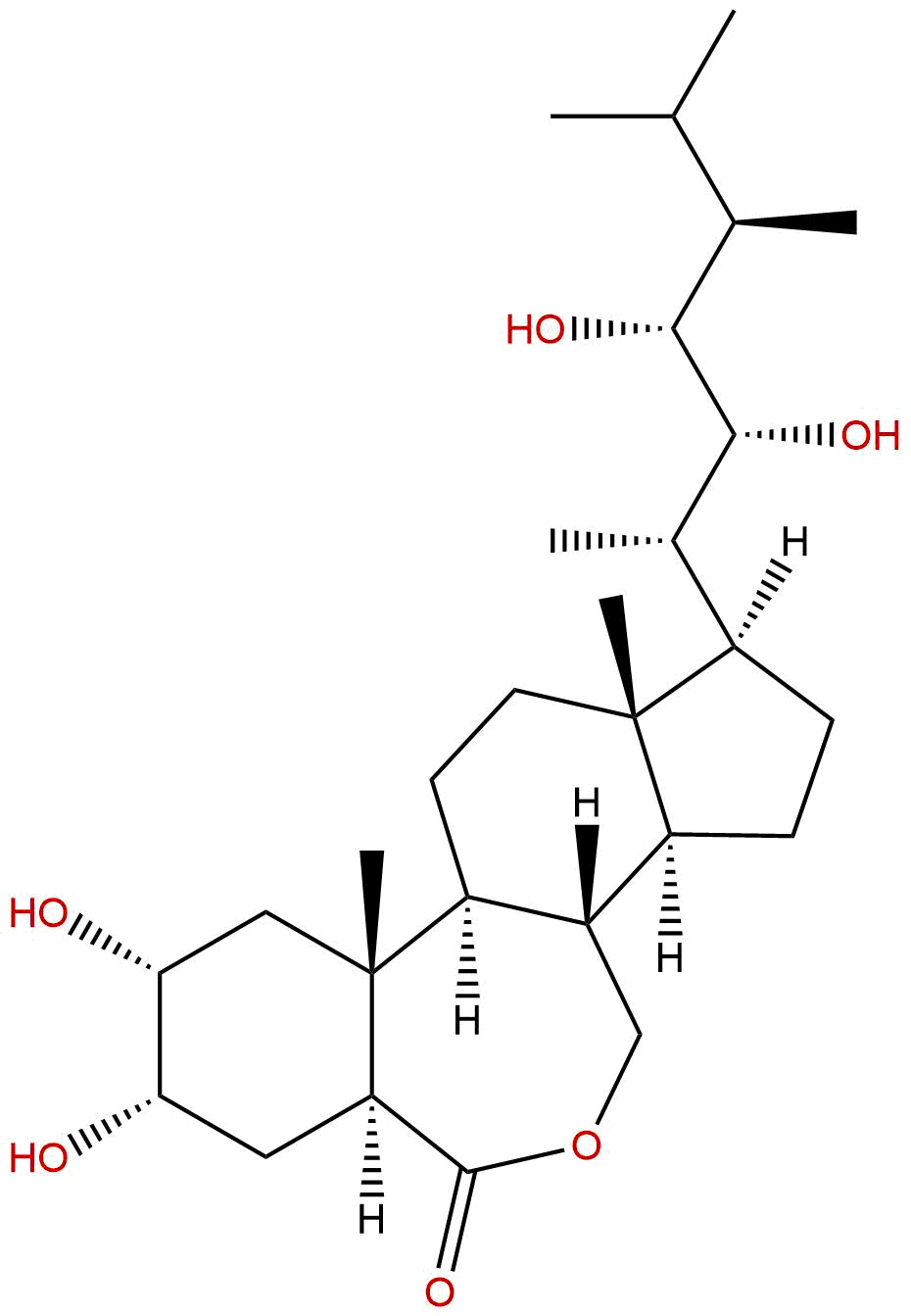


Product name: 24-epi-Brassinolide
Synonym name: 24(R)-Epibrassinolide;24-Epibrassinolide
Catalogue No.: BP5254
Cas No.: 78821-43-9
Formula: C28H48O6
Mol Weight: 480.686
Botanical Source:
Type of Compound: Terpenoids
Purity: 95%~99%
Analysis Method: HPLC-DAD or/and HPLC-ELSD
Identification Method: Mass, NMR
Packing: Brown vial or HDPE plastic bottle
Storage: Store in a well closed container, protected from air and light. Put into refrigerate or freeze for long term storage.
Whenever possible, you should prepare and use solutions on the same day. However, if you need to make up stock solutions in advance, we recommend that you store the solution as aliquots in tightly sealed vials at -20℃. Generally, these will be useable for up to two weeks.
The product could be supplied from milligrams to grams
Inquire for bulk scale.
For Reference Standard and R&D, Not for Human Use Directly.
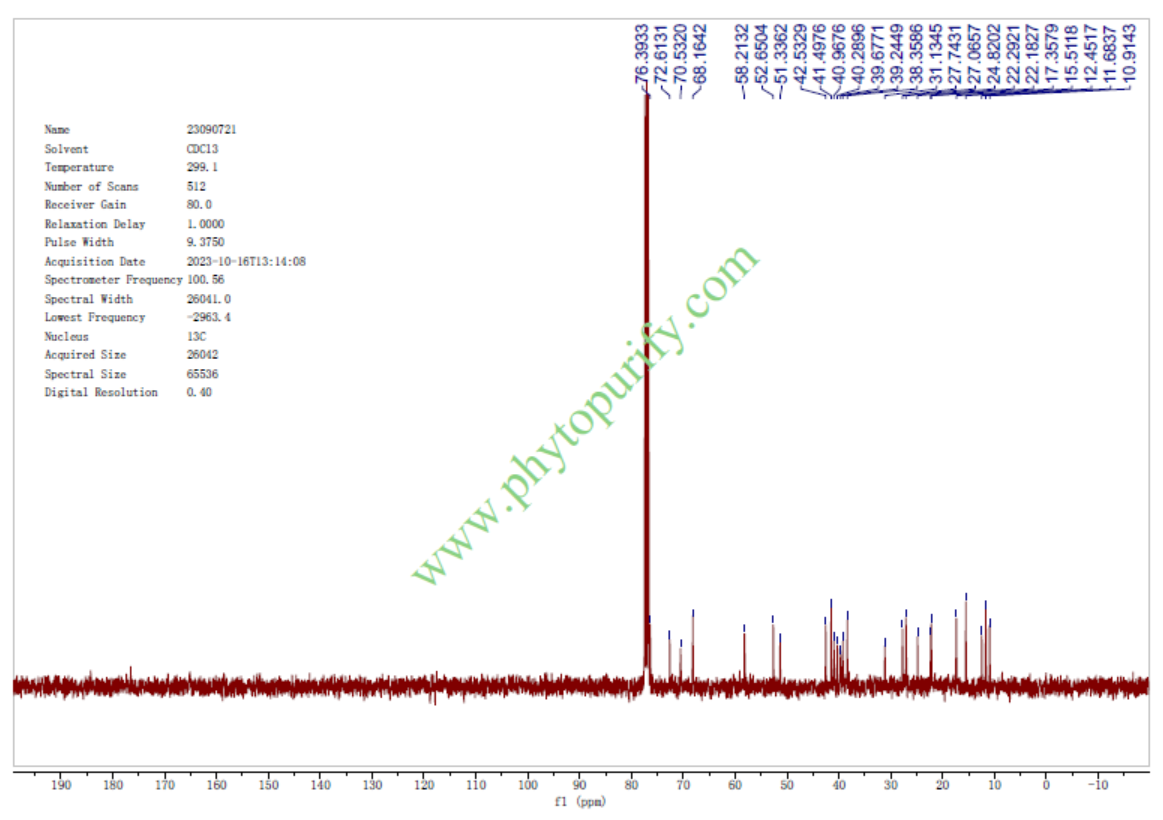
NMR of 24-epi-Brassinolide
Storage conditions:Short-term storage at 2~8℃, long-term storage at -20 ~ -80℃
107.2200
3.3430
3.3430
.0294
1.3681
11.4362
Low
81.6543
5.0403
No
No
No
No
No
No
0.0
Yes
No
No
No
Natural products play a crucial role in the development history of human civilization, not only as the cornerstone of traditional medicine, but also as an important source of modern drug discovery and agricultural innovation. Among numerous biologically active natural compounds, brassinosteroids (BRs), as a class of endogenous plant hormones, have attracted much attention since their discovery in the 1970s due to their outstanding physiological activity. 24 epibrassinolide (24 epiBL), as an active isomer of brassinolide (BL), is one of the most extensively studied and widely used members of the brassinosteroid family. Its unique chemical structure endows it with powerful plant growth regulatory activity and is known as the "sixth major plant hormone".
The discovery and study of brassinolide 24 is a model of the cross fusion of plant physiology and natural product chemistry. Early research mainly focused on its ability to promote plant cell elongation and division. Subsequently, its functional spectrum was continuously expanded, covering almost the entire process of plant growth and development, from seed germination, root development, vascular bundle differentiation to enhanced photosynthesis, delayed aging, and response to biotic and abiotic stress (such as drought, salinity, high temperature, low temperature, and pathogen infection). This pleiotropy has shown great potential for the application of 24 epicatechin lactone in agricultural production, making it an important tool for increasing crop yield, improving quality, and enhancing stress resistance.
However, as research deepens, people gradually realize that the biological effects of 24 epicatechin lactone are not limited to the plant kingdom. In recent years, a series of breakthrough studies have found that brassinosteroids and their analogues also exhibit significant pharmacological activities in animal cells and disease models, especially in anti-inflammatory, antiviral, neuroprotective, and anti-tumor aspects. This discovery greatly broadens the research perspective of 24 epigallocatechin lactone, elevating it from a pure plant growth regulator to a natural lead compound with potential medicinal value. This article aims to systematically review the chemical structure, sources, pharmacological activities, mechanisms of action, and pharmacological evaluation of 24 table brassinolide, in order to provide comprehensive academic references for the in-depth research and development of this compound.
The chemical structure of brassinolide is the basis of its biological function. As the C-24 isomer of brassinosteroid, it belongs to the class of polyhydroxylated sterol lactones. Its core skeleton is 5 α - cholestane, and it has multiple characteristic functional groups on the A ring and side chains. Specifically, its structure consists of a 7-oxa-6-one lactone ring (B ring) and four hydroxyl groups located at C-2, C-3, C-22, and C-23 positions. Compared with brassinolide (BL), 24 epibrassinolide has a different methyl configuration at position C-24, with BL in the α - configuration (R configuration) and 24 epiBL in the β - configuration (S configuration). This subtle stereochemical difference, although not affecting its overall binding pattern with receptors, to some extent affects its biological activity and metabolic stability, making it an ideal model for studying structure activity relationships (SAR).
From the perspective of physical and chemical properties, the molecular formula of 24 epicatechin lactone is C ₂₈ H ₄₈ O ₆, with a molecular weight of 480.6860 Da. Its lipid water partition coefficient (LogP) is 3.3430, indicating its lipophilicity, which helps it to cross biofilms and transport over long distances in plants. Its topological polar surface area (TPSA) is 107.2200 Å ², and the higher TPSA value mainly comes from four hydroxyl groups and one lactone ring, which determines its relatively low solubility in water (0.0294 mg/mL). This amphiphilic feature is crucial for its interaction with the membrane receptor BRI1. In addition, its blood-brain barrier (BBB) penetration ability was evaluated as "low", suggesting that in the mammalian system, 24 epicatechin lactone may mainly act on peripheral tissues, with limited direct effects on the central nervous system. Preliminary toxicological evaluations indicate a low risk of inhibition of hERG potassium ion channels ("no") and no mutagenicity was observed in the Ames test (result 0.0), providing positive early signals for its safety as a potential drug candidate.
24- Epibrassinolide is widely present in nature, but its content is extremely low. It was initially isolated and identified from the pollen of Brassica napus L., which is also the origin of its name. Subsequently, research found that it is commonly present in different organs of various higher plants, including but not limited to pollen, seeds, leaves, stem tips, and immature fruits. Common sources of plants rich in BRs include: Brassica plants (such as rapeseed and cabbage), leguminous plants (such as peas and soybeans), Poaceae plants (such as rice and wheat), Solanaceae plants (such as tomatoes and tobacco), and pine and cypress plants. Among them, pollen and immature seeds are usually the tissues with the highest BRs content, but even so, their concentrations are only at the level of nanograms to micrograms per gram of fresh weight.
Given the extremely low content of 24 β - brassinolide in plants, its extraction and purification process is highly challenging and typically requires multiple steps of operation. The classic extraction process generally includes the following key steps:
1. Solvent extraction Polar organic solvents such as methanol, ethanol, or chloroform methanol mixtures are commonly used for cold soaking or Soxhlet extraction of dried plant materials. Due to the presence of BRs in both free and bound forms (such as glycosides and esters) within plant bodies, the extraction solution typically requires hydrolysis steps (such as enzymatic or alkaline hydrolysis) to release bound BRs.
2. Liquid-liquid distribution After concentrating the extract, distribute it with solvents of different polarities to preliminarily remove a large amount of lipid soluble impurities (such as chlorophyll and wax) and water-soluble impurities (such as sugars and amino acids). Common distribution systems include petroleum ether methanol/water, chloroform water, etc.
3. chromatographic separation This is the core of the purification process. Due to the extremely low content of BRs, high-resolution chromatographic techniques are required. The classic processes include silica gel column chromatography (commonly using chloroform methanol gradient elution) and reverse phase C18 column chromatography (commonly using methanol water or acetonitrile water gradient elution). For trace analysis, high performance liquid chromatography (HPLC) combined with ultraviolet detection (UV) or evaporative light scattering detection (ELSD) is an essential step.
4. Final purification and identification After multi-step chromatographic purification, high-purity 24 epicatechin lactone can be obtained. The structural identification mainly relies on mass spectrometry (MS) and nuclear magnetic resonance spectroscopy (NMR). Due to the lack of strong chromophores in BRs, derivatization treatment (such as boronic acid esterification) is often used to enhance their UV absorption or mass spectrometry response, thereby improving detection sensitivity.
In recent years, in order to meet the needs of large-scale production and application, chemical synthesis methods, especially stereoselective synthesis, have become the main way to obtain 24 epicatechin lactones. Starting from inexpensive and readily available sterols such as stigmasterol or ergosterol, a complex polyhydroxysteroid lactone skeleton can be efficiently constructed through a series of oxidation, reduction, functional group conversion, and internal esterification reactions. In addition, the study of biosynthetic pathways also provides a theoretical basis for the production of 24 epicatechin lactone in microbial or plant cell factories through metabolic engineering methods.
The pharmacological activity research of 24 β - brassinolide initially focused on the field of plants, and gradually expanded to animal and human disease models, demonstrating various biological activities.
As a plant hormone, the core pharmacological activity of 24 epicatechin lactone is to regulate plant growth and development. Its most classic function is to promote cell elongation and division, especially in the absence of auxin. Specifically manifested as:
- promote growth 24 epiBL at extremely low concentrations (in the nanomolar to micromolar range) can significantly promote the elongation of embryonic sheaths and stem nodes in crops such as rice, wheat, and corn. It can activate cell wall relaxases (such as expansion proteins), increase the plasticity of the cell wall, and thus drive cell elongation.
- Improve yield and quality In agricultural production, exogenous application of 24 epiBL can significantly increase the yield of various crops. For example, spraying during the grain filling stage of rice can increase thousand grain weight and seed setting rate; Applying it to fruits and vegetables such as tomatoes and peppers can promote fruit enlargement, coloring, and sugar accumulation, improving quality.
- Enhance resilience This is one of the most notable activities of 24 epiBL. It can systematically enhance plant tolerance to various abiotic stresses. Under drought stress, it can induce stomatal closure, increase the accumulation of osmoregulatory substances such as proline and soluble sugars, and enhance the activity of antioxidant enzymes (such as SOD, POD, CAT), thereby reducing oxidative damage. Under salt stress, it can regulate ion homeostasis, reduce Na ⁺ accumulation, and upregulate the expression of salt resistance related genes. Under low temperature stress, it can stabilize cell membrane structure, increase unsaturated fatty acid content, and induce the expression of cold responsive genes.
- delay aging 24 epiBL can effectively delay leaf senescence by inhibiting chlorophyll degradation and maintaining photosynthetic efficiency, prolonging leaf functional period, which is of great significance for improving crop yield in the later stage.
In recent years, remarkable progress has been made in the activity research of 24 epigallocatechin lactone in mammalian systems, revealing its new value as a potential therapeutic drug.
- anti-inflammatory activity Multiple studies have shown that 24 epiBL exhibits significant anti-inflammatory effects both in vitro and in vivo. In the macrophage model stimulated by lipopolysaccharide (LPS), it can effectively inhibit the production of pro-inflammatory cytokines (such as TNF - α, IL-1 β, IL-6) and nitric oxide (NO). The mechanism may be related to the inhibition of the activation of NF - κ B and MAPK signaling pathways. In animal models, 24 epiBL has a relieving effect on colitis induced by dextran sulfate sodium (DSS) and toe swelling induced by carrageenan.
- Antiviral activity Research has found that 24 epiBL has inhibitory effects on various viruses, including herpes simplex virus (HSV), influenza virus, and certain enteroviruses. Its mechanism of action may involve multiple levels, such as directly inhibiting virus replication, interfering with virus host cell binding, and regulating host immune response. For example, there are reports that 24 epiBL can inhibit the replication of influenza A virus by activating the autophagy pathway in cells.
- Neuroprotective activity Given its anti-inflammatory and antioxidant properties, 24 epiBL also exhibits protective potential in neurodegenerative disease models. In the Alzheimer's disease cell model induced by β - amyloid protein (A β), it can reduce the aggregation and toxicity of A β, protecting neurons from oxidative stress damage. In Parkinson's disease models, it may protect dopaminergic neurons by activating the Nrf2/ARE antioxidant pathway.
- Antitumor activity Preliminary studies have shown that 24 epiBL can inhibit the proliferation and induce apoptosis of some cancer cell lines (such as breast cancer and prostate cancer cells). The mechanism may be related to regulating the steroid hormone receptor signaling pathway or affecting the cell cycle progression. However, research in this area is still in its infancy, and the exact mechanism of its anti-tumor activity and in vivo efficacy need further verification.
The biological effects of 24 β - brassinolide are achieved by binding to specific receptor proteins and activating a complex signal transduction network. In plants, their signaling pathways have been analyzed quite clearly, while in animal cells, their targets are still being explored.
In plants, the perception of 24 α - brassinosteroid lactone begins with the receptor kinase BRI1 (Brassinosteroid Insensitive 1) on the cell membrane. BRI1 is a receptor kinase rich in leucine repeat (LRR) sequences, and its extracellular domain is responsible for recognizing and binding to 24 epiBL. When 24 epiBL binds to BRI1, it promotes the formation of heterodimers between BRI1 and its co receptor BAK1 (BRI1 Associated Receptor Kinase 1), and triggers a series of phosphorylation cascades. The activated BRI1/BAK1 complex phosphorylates the downstream cytoplasmic kinase BSK1 (BR Signaling Kinase 1), which in turn activates the phosphatase BSU1 (BRI1 Suppressor 1). BSU1 inhibits the activity of negative regulatory factor GSK3 like kinase (such as BIN2) through dephosphorylation. The inactivation of BIN2 relieved the phosphorylation inhibition of downstream transcription factors BZR1 (Brassinozole Resin 1) and BES1 (BRI1-EMS Suppressor 1). Dephosphorylated BZR1 and BES1 enter the nucleus and interact with various transcription factors to regulate the expression of hundreds of target genes, which are widely involved in physiological processes such as cell elongation, division, differentiation, photosynthesis, and stress response.
In addition, there is extensive cross-talk between the signaling pathway of 24 brassinolide and the auxin signaling pathway. For example, BRs can regulate the expression and localization of auxin transporters such as AUX1 and PIN1, thereby affecting the polar transport and distribution of auxin. Meanwhile, BRs can also affect the activity of auxin receptor TIR1 and response factor ARF1, jointly regulating plant organogenesis and directional growth. This complex network regulatory mechanism explains the molecular basis of the pleiotropy of 24 epiBL.
In mammals, the target of action of 24 epicatechin lactone is not fully understood, but existing evidence points to several possible candidate molecules:
1. Nuclear receptor Given its sterol like structure, 24 epiBL may exert its effects through cross reactivity with certain nuclear receptors, such as glucocorticoid receptor GR, androgen receptor AR, and estrogen receptor ER. Previous studies have shown that BRs can competitively bind to GR and exhibit partial excitatory or antagonistic activity, which may be one of the mechanisms underlying their anti-inflammatory effects. However, its binding affinity is usually much lower than that of endogenous ligands.
2. Membrane receptors and ion channels 24 epiBL may rapidly affect cellular function through non genomic pathways. For example, it may act on G protein coupled receptors (GPCRs) or ion channels on the cell membrane, rapidly regulating intracellular Ca ² ⁺ concentration and protein kinase activity.
3. Redox regulating enzyme The antioxidant activity of 24 epiBL may be partially attributed to its ability to directly scavenge free radicals or by regulating the activity of intracellular redox sensitive signaling proteins such as Nrf2 and NF - κ B.
4. Autophagy and apoptotic pathway In antiviral and anti-tumor research, 24 epiBL has been found to regulate the expression of autophagy related proteins (such as LC3, Beclin-1) and apoptosis related proteins (such as Bcl-2, Caspase-3), suggesting that it may exert its effects by intervening in these core cellular processes.
Overall, the mechanism of action of 24 epicatechin lactone in mammals is diverse and complex, involving both genomic and non genomic pathways. The identification of its exact targets remains a hot and difficult topic in current research.
A systematic evaluation of the pharmacological properties, including pharmacokinetic (ADME) characteristics and safety, is required to push 24 epigallocatechin lactone from a plant growth regulator to a drug candidate.
Based on computational predictions and preliminary experimental data, the pharmacological characteristics of 24 table brassinolide are as follows:
- Molecular weight and LogP The molecular weight (480.7 Da) is slightly higher than the upper limit of the "five rules" for traditional small molecule drugs (500 Da), but its LogP value (3.34) is within the ideal range (1-5), indicating that it has good membrane permeability potential.
- TPSA and solubility TPSA (107.2 Å ²) is higher than the recommended upper limit of 140 Å ² for oral medications, which is consistent with its lower water solubility (0.0294 mg/mL). Low water solubility is one of the main obstacles to oral administration, which may lead to low bioavailability. Therefore, developing appropriate formulation technologies (such as nanoemulsions, liposomes, cyclodextrin inclusion complexes) is the key to improving their oral absorption.
- Blood-brain barrier penetration Prediction shows that its BBB penetration ability is low, which may be advantageous for the development of peripheral targeted drugs such as anti-inflammatory and anti-tumor drugs, and can reduce central nervous system side effects. But if the goal is to treat neurodegenerative diseases, it is necessary to enhance their ability to enter the brain through structural modifications or special delivery systems.
- safety The preliminary toxicological evaluation results are positive. The low risk of hERG inhibition means that it is less likely to induce QT interval prolongation and arrhythmia in the heart. The Ames test was negative (0.0), indicating no direct mutagenicity. These data provide important security guarantees for its further development.
At present, there is insufficient research on the ADME of 24 brassinolide in mammals, but it can be inferred based on its structural characteristics and preliminary studies:
- absorb Due to its lipophilicity, 24 epiBL may be absorbed by the gastrointestinal tract through passive diffusion. But low water solubility will limit its dissolution rate, resulting in incomplete absorption. Oral bioavailability may be low.
- distribution Due to its moderate LogP, it may be widely distributed in various tissues in the body, especially lipid rich tissues. The binding rate with plasma proteins (such as albumin) may be high.
- Metabolism As a polyhydroxysteroid compound, 24 epiBL is likely to undergo extensive phase I metabolism (such as hydroxylation, oxidation) and phase II metabolism (such as glucuronidation, sulfation) in the liver. Its lactone ring may also be hydrolyzed by esterases to open the ring. The activity and toxicity of metabolites need to be studied.
- excretion Metabolites are mainly excreted through bile and urine. The renal excretion of the prototype drug may be lower.
The unique pharmacological activity spectrum of 24 brassinolide has shown broad application prospects in multiple fields.
In the field of agriculture, the application of 24 β - brassinolide has become quite mature. As an efficient, low toxicity, and environmentally friendly plant growth regulator, it is widely used for:
- food crops Improve the yield and stress resistance of rice, wheat, and corn.
- cash crop Improve the fiber quality of cotton, increase the oil content of rapeseed, and increase the number of soybean pods.
- Fruit and vegetable horticulture Promote fruit setting and enlargement of tomatoes, peppers, cucumbers, etc., increase the sugar content and color of strawberries and grapes, and extend the freshness period of flowers.
- Anti stress and disaster reduction Applying it before or after adverse conditions such as drought, salt alkali, and low temperature can effectively reduce disaster losses.
In the future, its application in agriculture will develop towards precision and compounding, such as compounding with fertilizers, fungicides, insecticides, and developing sustained-release formulations based on nanotechnology to improve utilization and reduce dosage.
In the field of medicine, the potential of 24 β - brassinolide is still to be explored, but the prospects are promising:
- antiinflammatory drug Given its excellent anti-inflammatory activity and absence of typical side effects of steroid drugs, 24 epiBL or its derivatives are expected to be developed as novel drugs for the treatment of chronic inflammatory diseases such as inflammatory bowel disease and rheumatoid arthritis.
- antiviral drugs Its broad-spectrum antiviral activity and unique mechanism of action (such as inducing autophagy) make it a potential candidate drug for combating viral infections such as influenza and herpes, especially when existing drugs develop resistance.
- Neuroprotective agent For neurodegenerative diseases such as Alzheimer's disease and Parkinson's disease, the multi-target effects of 24 epiBL (anti-inflammatory, antioxidant, anti A β aggregation) make it an attractive lead compound.
- Antitumor adjuvant drugs Although the direct anti-tumor activity needs to be strengthened, its potential to enhance chemotherapy sensitivity and alleviate chemotherapy toxic side effects (such as bone marrow suppression and neurotoxicity) is worth exploring.
Despite its broad prospects, the clinical translation of 24 epigallocatechin gallate still faces many challenges:
1. The mechanism of action is unclear The exact molecular targets and signaling pathways in mammals are not yet clear, which hinders structure based drug design and optimization.
2. Pharmacokinetic defects Low water solubility and potential rapid metabolism are the main obstacles to oral administration, requiring the development of advanced drug delivery systems or structural modifications.
3. Insufficient validation of in vivo drug efficacy At present, most pharmacological activity studies are still at the level of cell and animal models, lacking systematic preclinical pharmacological and toxicological evaluations.
4. The study of Structure Activity Relationship (SAR) is not systematic The SAR research on 24 epiBL and its analogues is not yet in-depth, and has not effectively guided the discovery of highly efficient and low toxicity derivatives.
Future research directions should focus on: ① identifying mammalian targets using chemical biological methods such as affinity chromatography and photoaffinity labeling; ② Improve its pharmacokinetic properties through strategies such as prodrug design and nano formulations; ③ Conduct systematic SAR research, synthesize and screen derivatives with higher activity and better selectivity; ④ Validate its efficacy and safety in animal models closer to clinical settings, such as transgenic mice and primates.
24- Epibrassinolide, a plant derived sterol compound, has vividly demonstrated the dual value of natural products in basic science and applied transformation since its discovery as a plant hormone. Its successful application in the field of plant growth regulation has made significant contributions to global agricultural production. In recent years, the newly discovered anti-inflammatory, antiviral, neuroprotective and other activities in mammalian systems have opened the door to the field of medicine, making it a highly promising natural lead compound.
Although the transition from plant growth regulators to clinical drugs is full of challenges, especially in terms of mechanism of action analysis and drug optimization, there is still a lot of work to be done. However, the unique chemical structure, pleiotropic pharmacological activity, and initially demonstrated good safety of 24 epigallocatechin gallate all indicate its enormous potential for development. With the continuous advancement of chemical biology, medicinal chemistry, and modern pharmacology techniques, we have reason to believe that through in-depth research and rational modification of 24 epigallocatechin lactone, a new type of therapeutic drug derived from plant hormones is expected to be developed in the future, bringing new hope to human health. The exploration of such "cross-border" natural products not only expands the boundaries of drug discovery, but also once again proves that nature is an inexhaustible treasure trove of innovative drugs.
