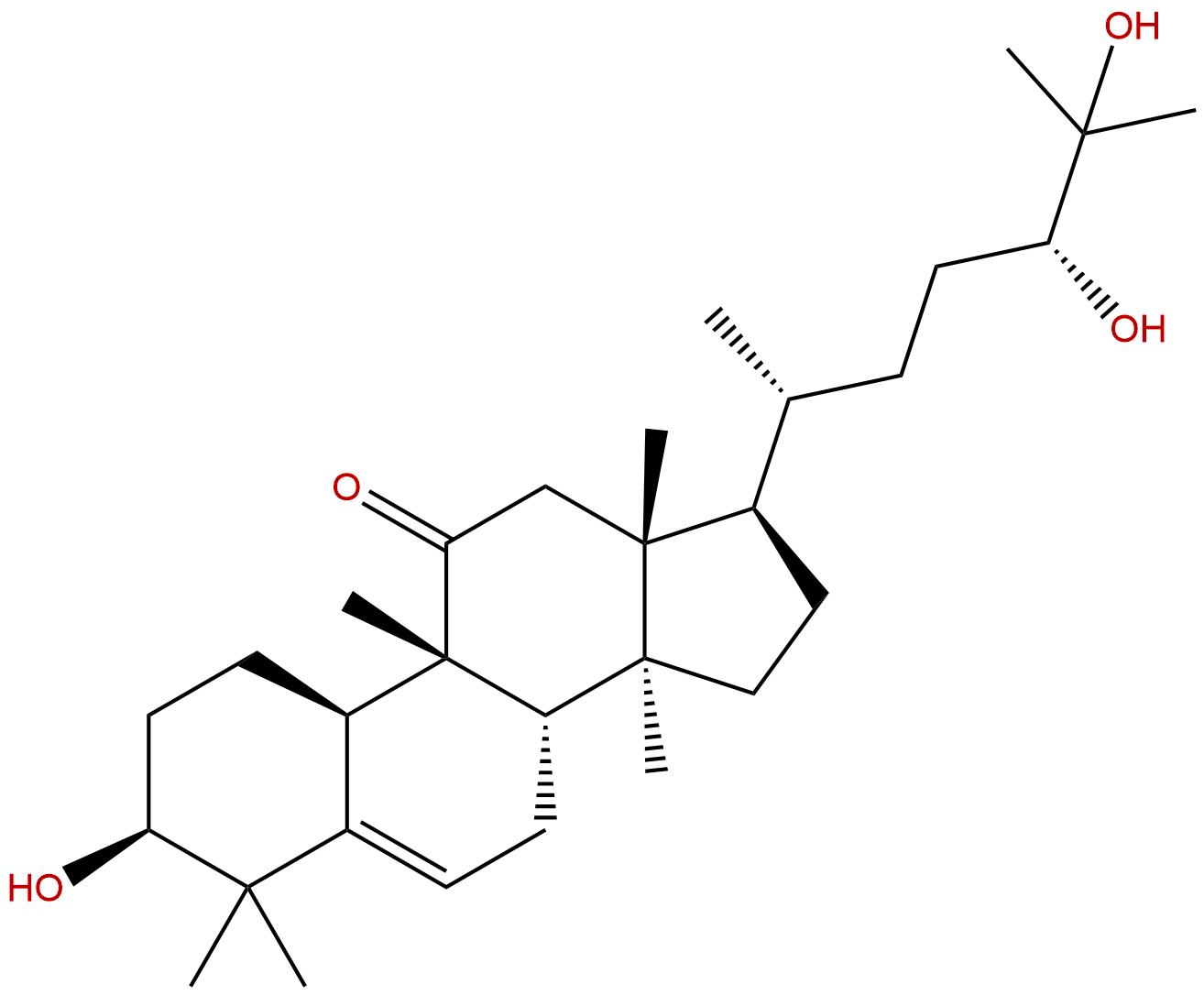


Product name: Bryodulcosigenin
Synonym name: Alternative CAS: 88930-16-9
Catalogue No.: BP1851
Cas No.: 4965-97-3
Formula: C30H50O4
Mol Weight: 474.726
Botanical Source:
Physical Description:
Type of Compound: Triterpenoids
Purity: 95%~99%
Analysis Method: HPLC-DAD or/and HPLC-ELSD
Identification Method: Mass, NMR
Packing: Brown vial or HDPE plastic bottle
The product could be supplied from milligrams to grams. Inquire for bulk scale.
We provide solution to improve the water-solubility of compounds, thereby facilitating the variety of activity tests and clinic uses.
For Reference Standard and R&D, Not for Human Use Directly.
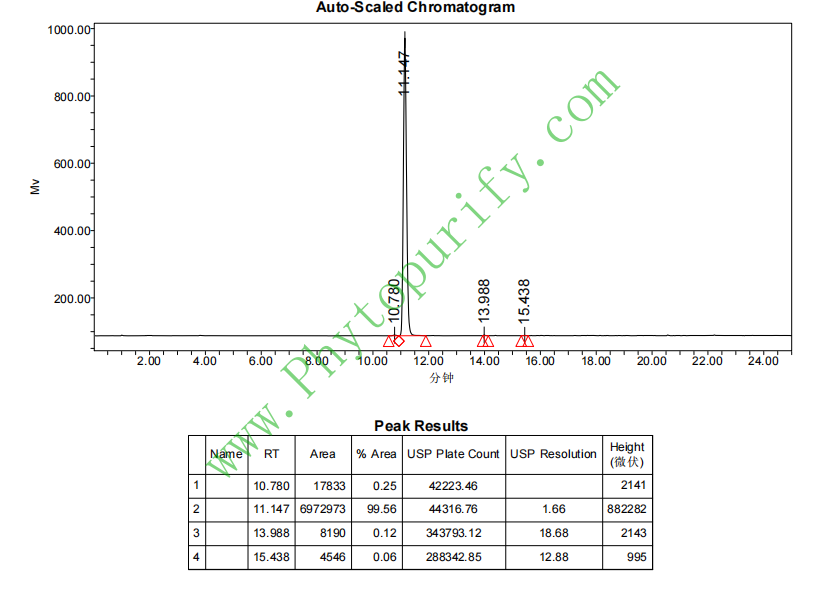
HPLC of Bryodulcosigenin
Storage conditions:Short-term storage at 2~8℃, long-term storage at -20 ~ -80℃
77.7600
5.1616
5.1616
.0027
2.9984
6.6243
Low
84.5266
4.9687
No
No
No
No
No
No
0.0
No
No
No
Yes
Bryodulcosigenin is a natural triterpenoid compound with significant biological activity. Its CAS number is 4965-97-3, molecular formula is C30H50O4, and molecular weight is approximately 474.73 g/mol. This compound was initially discovered for its' anti-inflammatory effect ', and studies have shown that it has a potent inhibitory effect on the induction of early antigen of EB virus (EBV-EA), suggesting its potential anti-inflammatory and antiviral properties. Although its English name "Bryodulcosigenin" implies its association with Bryonia plants in the Cucurbitaceae family, existing data indicates that its plant origin is monk fruit(Siraitia grosvenorii), This is a medicinal plant widely used in traditional Chinese medicine to moisten the lungs, relieve cough, produce fluids, and quench thirst. In recent years, with the increasing attention to functional gastrointestinal diseases, especially Constipation type irritable bowel syndrome With the deepening of research, the glycosides of Pueraria lobata have attracted much attention due to their effects on multiple key targets related to intestinal secretion, transport, and sensation, such as CFTR, OPRM1, SLC9A3, AQP3, KCNJ13. This article will provide a systematic professional popularization of this promising natural product from the aspects of its chemical nature, origin, pharmacological mechanism, potential for drug formation, and research prospects.
Glycyrrhizin belongs to the tetracyclic triterpenoid class of compounds. Its SMILES string (C C@H[C@H]1CC[C@@]2(C)[C@@H]3CC=C4C@@H[C @] 3 (C) C (=O) C [C @] 12C) reveals its complex stereochemical structure, containing multiple chiral centers and specific functional groups such as hydroxyl (- OH) and carbonyl (C=O). This structure is the material basis for its biological activity.
Analyzing its physicochemical properties from the parameters of drug properties:
- Molecular weight (MW):474.73 g/mol, Slightly higher than conventional small molecule drugs (usually<500 Da), but still within an acceptable range.
- Lipid water partition coefficient (LogP/LogD)All are 5.16. This value is significantly greater than 5, indicating that the glycosides of Pueraria lobata have Highly lipophilic This is beneficial for its penetration of cell membranes, but it may also lead to poor water solubility (only 0.0027 mg/mL), which is a key challenge that needs to be overcome for its oral administration.
- Topological Polarity Surface Area (TPSA)77.76 Å ². This value reflects the surface area of polar atoms (such as oxygen atoms) in the molecule, and typically TPSA<140 Å ² is favorable for cell membrane permeation. The TPSA value of Pueraria baicalensis glycoside is moderate, indicating that its membrane permeability may be acceptable, which is consistent with the higher Caco-2 permeability data (6.62 × 10 ⁻⁶ cm/s), indicating its good intestinal absorption potential.
- Plasma protein binding rate (PPB)As high as 84.53%, it means that most drugs bind to proteins in the blood, which may affect their free concentration and efficacy, but may also prolong their half-life.
Overall, salidroside glycoside is a triterpenoid molecule with medium size, high lipid solubility, low water solubility, and good membrane permeability potential. The hydroxyl groups in its structure provide necessary polarity and the possibility of hydrogen bonding interactions with the target protein.
What are the known plant sources of the sweet glycosides in the root of diarrhea monk fruit(Siraitia grosvenorii), Commonly known as' Monk Fruit '. Momordica grosvenorii is a perennial vine of Cucurbitaceae, which is native to Guangxi, Guangdong and other regions of China. Its dried fruit is a famous traditional Chinese medicine and natural sweetener. Because it contains rich mogrosides, its sweetness is extremely high and its calories are extremely low.
In the theory of traditional Chinese medicine, Momordica grosvenorii is cool in nature, sweet in taste, and belongs to the lung and large intestine meridians. Traditionally, it is mainly used for Lung heat, dry cough, sore throat, loss of voice, intestinal dryness, constipation Waiting for symptoms. The efficacy of its "moistening the intestines and promoting bowel movements" coincides with the therapeutic potential of "constipation type irritable bowel syndrome" pointed out by the modern research institute of root laxative glycosides. This reflects an interesting echo between traditional experience and modern scientific discoveries: the purgative glycosides in the extract of Siraitia grosvenorii, which is traditionally used for defecation, may play a role by regulating modern molecular targets such as intestinal ion channels and water channels. The isolation and identification of active ingredients with clear modern pharmacological mechanisms from traditional medicinal plants is a classic pathway for the development of natural product drugs.
The core pharmacological activity of Pueraria baicalensis glycoside is its anti-inflammatory effect Early studies have confirmed that its potent inhibition of EBV-EA induction is a manifestation of its anti-inflammatory activity. However, what is even more remarkable is that it targets Constipation type irritable bowel syndrome The potential therapeutic value is mainly achieved by targeting five key gut related targets:
CFTR (cystic fibrosis transmembrane conductance regulator)CFTR is a key chloride ion channel primarily expressed on the apical membrane of intestinal epithelial cells. It is responsible for the secretion of chloride ions and bicarbonate ions, and is the core protein that regulates intestinal fluid secretion. Activating CFTR can promote intestinal fluid secretion, soften feces, and facilitate bowel movements. The action of root laxative glycosides on CFTR may regulate its function, thereby affecting intestinal water and salt balance, which is crucial for the treatment of constipation predominant IBS characterized by insufficient intestinal secretion and slow transmission.
OPRM1 (μ - opioid receptor)μ - opioid receptors are widely distributed in the central and peripheral nervous systems, involved in pain regulation and gastrointestinal motility. Activation of μ - opioid receptors in the intestine can inhibit the release of intestinal neurotransmitters,Slow down intestinal peristalsis This is one of the reasons why many opioid drugs cause constipation. The direction of action (excitatory or antagonistic) of the root laxative glycoside on OPRM1 still needs to be clarified. If it is an antagonist, it may block excessive μ - opioid receptor signaling in the intestine, thereby Promote intestinal peristalsis Relieve constipation.
SLC9A3 (sodium hydrogen exchanger 3, NHE3)NHE3 is the main sodium hydrogen exchange protein expressed on the apical membrane of intestinal epithelial cells, responsible for the absorption of sodium ions and water. Inhibiting NHE3 can reduce the reabsorption of sodium and water, increase the moisture content of intestinal lumen, and play a role in Soften feces and promote excretion The function. Glycyrrhizin may affect intestinal water absorption by regulating NHE3 activity.
AQP3 (aquaporin 3)AQP3 is a water glycerol channel protein that exists in the basement membrane of colonic epithelial cells and participates in the cross cellular transport of water. Regulating the expression or function of AQP3 can affect the colonic reabsorption of water. In a constipated state, excessive water reabsorption may be involved. Glycyrrhizin may regulate the water retention capacity of the colon by affecting AQP3.
KCNJ13 (inward rectifying potassium channel J subfamily member 13)This potassium channel plays a role in maintaining cell membrane potential and epithelial cell function. In the intestinal epithelium, potassium channels participate in the regulation of secretion and absorption processes. Regulating it may indirectly affect the fluid and ion balance of the intestine.
Mechanism of Action Integration Hypothesis:
The root laxative glycoside may regulate the intestinal environment through multi-target synergistic effects, thereby treating constipated IBS. The potential mechanisms include:Promote secretion(By adjusting CFTR)Reduce excessive absorption(By adjusting NHE3 and AQP3)Adjust power(By affecting the OPRM1 signal) and Maintain ion balance(via KCNJ13). This multi-target mode of action is consistent with the multifactorial pathophysiological characteristics of many complex diseases, such as IBS, and may have a comprehensive regulatory advantage over single target drugs. Its basic anti-inflammatory activity may also help alleviate the low-grade intestinal inflammation often associated with IBS.
Based on the provided pharmacological parameters and in combination with the general rules of medicinal chemistry (such as Lipinski's Five Rules), evaluate the development potential of salidroside as an oral drug:
Lipinski's Five Rules Analysis:
Evaluation of other key parameters:
Comprehensive evaluation of drug properties:
The root laxative glycoside has clear pharmacological targets and the potential to treat constipated IBS. Its absorption and permeability are good, and the preliminary toxicity signal is still acceptable. However, it High lipid solubility (high LogP) and extremely low water solubility This is the biggest obstacle to developing oral preparations. Future pharmaceutical chemistry optimization may require molecular modification (such as making prodrugs, introducing polar groups) to improve water solubility, or developing special drug delivery systems (such as nanomaterials, solid dispersions) to enhance their dissolution and bioavailability. The potential hepatotoxic signals must also be clarified through rigorous preclinical studies.
At present, research on the glycosides of Pueraria baicalensis is still ongoing Preclinical stage The existing data clearly outlines its role as a multi-target intestinal regulator, especially in the field of constipation predominant irritable bowel syndrome where clinical needs have not been fully met. It comes from the background of the medicinal and food homologous plant Momordica grosvenorii, which also provides a certain traditional basis for its safety.
Current research focus Should be:
1. Deepening the mechanism of action Clarify whether it excites or antagonizes key targets such as CFTR and OPRM1, as well as the precise molecular mechanism of its action.
2. Pharmacodynamic validation Systematically evaluate its overall efficacy in improving constipation, regulating intestinal sensitivity, and exercising in animal models closer to human diseases, such as IBS animal models.
3. Optimization of drug properties To solve the core problem of poor water solubility, candidate compounds with exploitability can be obtained through formulation or structural modification strategies.
4. Comprehensive evaluation of safety In particular, conduct in-depth research and risk assessment on the potential hepatotoxicity (ALT elevation) it suggests.
Application Prospects:
If the above challenges are overcome, salidroside glycosides have the potential to be developed into a new type of natural plant derived compound Regulators for treating constipation predominant IBS Its multi-target mechanism of action may lead to more comprehensive symptom control (constipation, abdominal pain, bloating). In addition, its anti-inflammatory properties may also be beneficial for IBS subtypes accompanied by inflammation. In addition to treating IBS, its role in regulating CFTR and NHE3 also suggests its potential application value in other secretion dysfunction related diseases, such as certain types of constipation or diarrhea.
In summary, the root laxative glycoside is a natural active molecule that connects traditional wisdom with modern pharmacology, with clear targets and therapeutic directions. Although it still faces challenges in terms of physicochemical properties and safety on its path to becoming a drug, it undoubtedly provides a valuable research template and lead compound for exploring new gastrointestinal disease treatment drugs from traditional medicinal plants.
