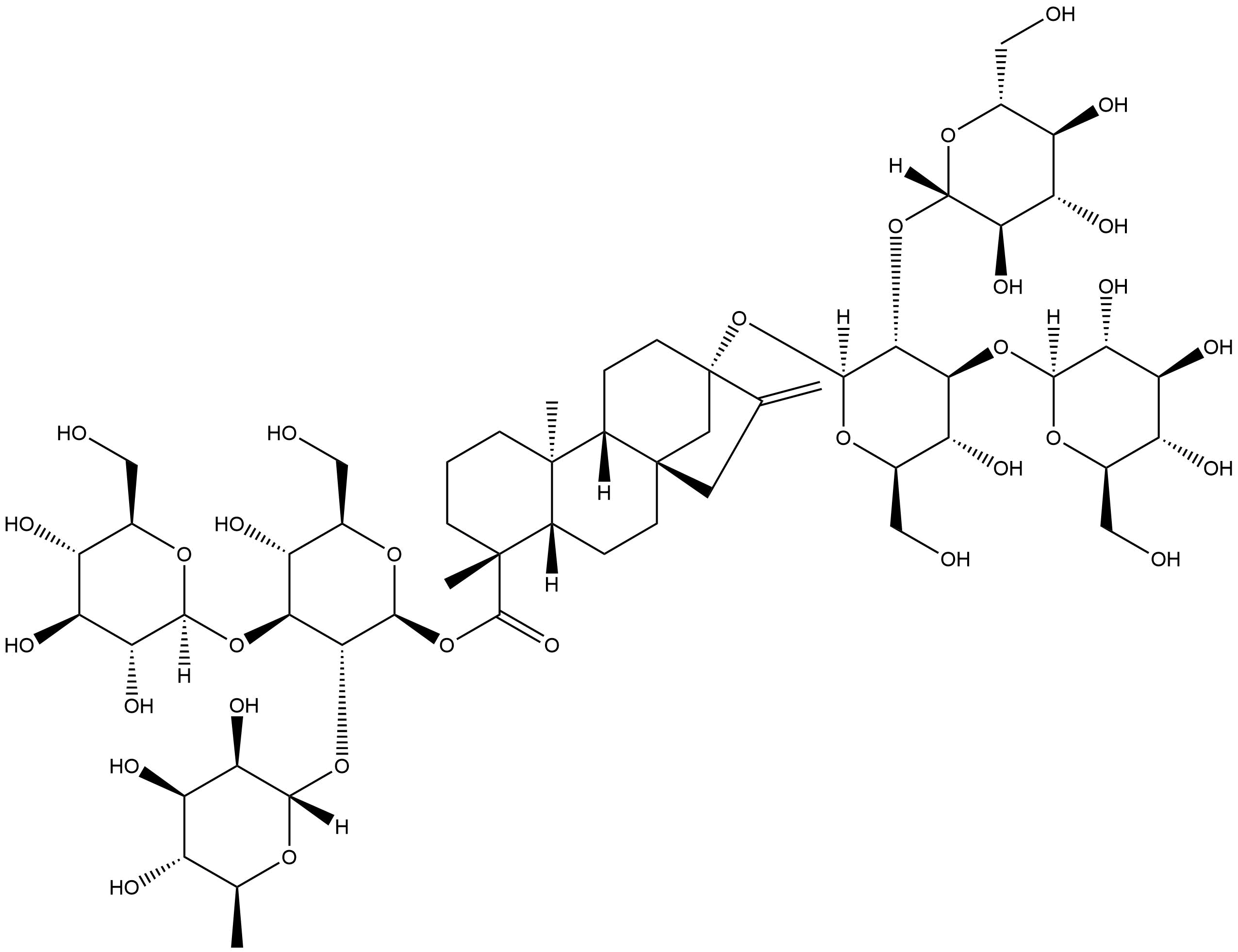


Product name: Rebaudioside N
Synonym name:
Catalogue No.: BP4072
Cas No.: 1220616-46-5
Formula: C56H90O32
Mol Weight: 1275.3
Botanical Source: Stevia rebaudiana (Bertoni) Hemsl.
Physical Description:
Type of Compound: Diterpenoids
Purity: 95%~99%
Analysis Method: HPLC-DAD or/and HPLC-ELSD
Identification Method: Mass, NMR
Packing: Brown vial or HDPE plastic bottle
Storage: Store in a well closed container, protected from air and light. Put into refrigerate or freeze for long term storage.
Whenever possible, you should prepare and use solutions on the same day. However, if you need to make up stock solutions in advance, we recommend that you store the solution as aliquots in tightly sealed vials at -20℃. Generally, these will be useable for up to two weeks.
The product could be supplied from milligrams to grams
Inquire for bulk scale.
For Reference Standard and R&D, Not for Human Use Directly.
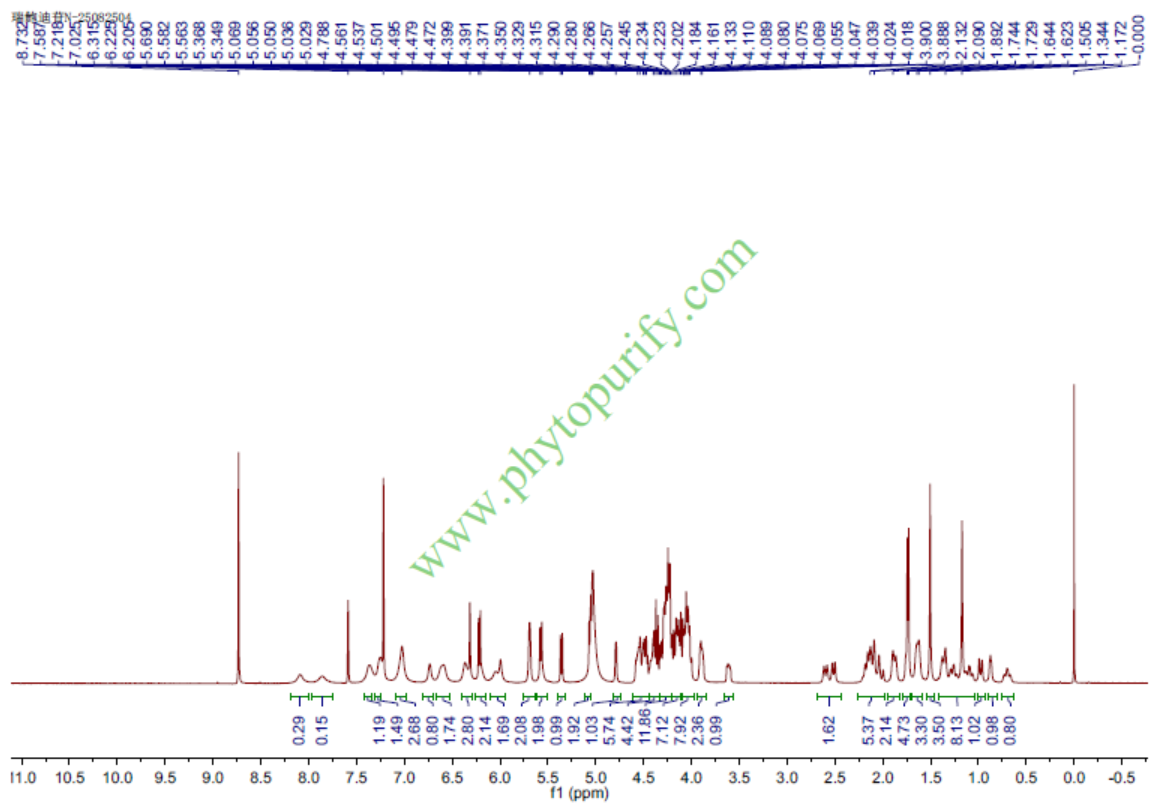
HNMR of Rebaudioside N
Storage conditions:Short-term storage at 2~8℃, long-term storage at -20 ~ -80℃
512.2000
-.9428
-.9428
5.0959
.4007
.3389
Low
49.8783
7.1377
Yes
No
No
No
Yes
No
0.0
Yes
No
No
Yes
Rebaudioside N (hereinafter referred to as "Rebaudioside N") is a compound derived from Stevia rebaudiana(Stevia rebaudiana The small steviol glycosides isolated from Bertoni leaves have attracted much attention in recent years due to their unique sweet taste characteristics and potential pharmacological activities. Stevioside, as a natural non sugar sweetener, has been widely used in the food industry because of its low calorie, no risk of diabetes and good safety. As an important member of the stevia glycoside family, RuiN not only has a significant sweetness, but also exhibits various biological activities, especially in regulating blood sugar, showing potential therapeutic value.
With the continuous increase in the number of patients with diabetes and metabolic syndrome worldwide, finding safe and effective hypoglycemic natural products has become an important direction of drug research and development. The mechanism of Ruin N in regulating blood glucose, improving insulin sensitivity and related metabolic pathways has been gradually revealed, showing its potential as an adjuvant treatment for diabetes. This article aims to provide a systematic review of the chemical structure and physicochemical properties, plant sources and extraction methods, pharmacological activity and mechanism of action, pharmacological evaluation, and clinical application prospects of RuiN, with the hope of providing theoretical basis and reference for subsequent research and development.
The chemical structure of rebaudin N belongs to the steviol glycoside class, with a molecular formula of C ₅₄ H ₈₈ O ₂₇ and a molecular weight of 1275.3040. The core of its structure is the steviol skeleton, which forms a complex glycosidic structure through the connection of multiple sugar groups. The sugar linkage mode and quantity of Rebaudioside A are more complex than other stevia glycosides such as Rebaudioside A, and this structural difference endows it with unique sweet taste characteristics and biological activity.
In terms of physical and chemical properties, the LogP value of RuiN is -0.9428, indicating its strong hydrophilicity and water solubility of about 5.0959, indicating its good solubility in water. Its topological polar surface area (TPSA) is as high as 512.2000, reflecting that the molecule has a large number of polar functional groups, which facilitate the formation of hydrogen bonds and other polar interactions with biomolecules. The low blood-brain barrier permeability of RuiN suggests its limited ability to penetrate the central nervous system, reducing the potential risk of central neurotoxicity. The negative result of hERG channel inhibition experiment indicates a low risk of cardiac toxicity; The Ames mutagenicity test result was 0.0, indicating no significant genetic toxicity.
In summary, the physicochemical properties of RuiN are in line with the characteristics of natural product drugs, and its excellent water solubility and safety have laid a solid foundation for its drug development.
Ruibaodi glycoside N mainly exists in Stevia rebaudiana(Stevia rebaudiana Bertoni is an important member of the steviol glycoside family in its leaves. Stevia is a perennial herbaceous plant native to Paraguay and Brazil in South America, widely cultivated and utilized due to the presence of various sweet glycosides in its leaves.
The traditional Rui N extraction method mainly includes the following steps:
In recent years, the application of new technologies such as ultrasound assisted extraction and microwave-assisted extraction has improved extraction efficiency and purity, reduced energy consumption and environmental pollution. In addition, metabolic engineering research based on biosynthetic pathways also provides new ideas for the industrial production of RuiN.
The research on the pharmacological activity of ribavirin N mainly focuses on its hypoglycemic effect and related metabolic regulatory functions. Many in vitro and in vivo experiments have shown that Ruin N can significantly improve blood glucose metabolism, enhance insulin sensitivity, and reduce diabetes and its complications.
Hypoglycemic effect
RuiN promotes glucose uptake and utilization by regulating insulin secretion and insulin signaling pathways, thereby reducing plasma glucose levels. Animal model studies have shown that the fasting blood glucose and glucose tolerance of the RuiN treatment group have significantly improved.
Increased insulin sensitivity
RuiN can enhance the activity of insulin receptor (INSR) and its downstream signaling molecule IRS1, promote the translocation of glucose transporter SLC2A4 (GLUT4) to the cell membrane, and increase the uptake of glucose by muscle and adipose tissue.
Lipid metabolism regulation
RuiN has a regulatory effect on overexpression of PPAR γ (peroxisome proliferator activated receptor γ), improving lipid metabolism abnormalities and alleviating insulin resistance.
DPP4 inhibitory effect
RuiN has certain inhibitory activity against dipeptidyl peptidase 4 (DPP4), prolongs the half-life of glucagon like peptide-1 (GLP-1), promotes insulin secretion, and inhibits blood glucose elevation.
In addition, Rui N also showed the potential of antioxidant, anti-inflammatory and improving liver metabolic function, providing theoretical support for its multi-target treatment of diabetes and metabolic syndrome.
The hypoglycemic effect of ribavirin N involves multiple molecular targets and signaling pathways, reflecting its multi-target and multi pathway pharmacological properties.
Activation of glucokinase (GCK)
GCK, as a key enzyme in glucose metabolism, catalyzes the conversion of glucose to glucose-6-phosphate and is a key molecule for pancreatic beta cells to perceive blood glucose levels. RuiN can enhance GCK activity, promote insulin secretion, and improve blood glucose homeostasis.
Regulation of peroxisome proliferator activated receptor gamma (PPARG)
PPARG plays a central role in adipocyte differentiation and insulin sensitivity. RuiN promotes the recovery of adipocyte function and alleviates insulin resistance by activating PPARG.
Dipeptidyl peptidase 4 (DPP4) inhibition
DPP4 degrades GLP-1, limiting its insulin secretion promoting effect. RuiN inhibits DPP4 activity, increases GLP-1 levels, enhances insulin secretion and blood glucose regulation.
Insulin receptor substrate 1 (IRS1) signaling pathway
IRS1 is a key mediator in insulin signaling transduction, and RuiN promotes phosphorylation of IRS1, activates downstream PI3K/Akt pathways, and enhances glucose uptake.
Expression and translocation of glucose transporter 4 (SLC2A4)
RuiN promotes the translocation of SLC2A4 to the cell membrane, increases glucose entry into muscle and adipocytes, and lowers blood glucose levels.
In summary, RuiN exhibits a comprehensive hypoglycemic mechanism by regulating insulin secretion, signal transduction, and glucose metabolism through multi-target synergistic effects.
Ruibaodi glycoside N has shown good safety and drug compatibility in drug development, and has high potential for development.
Physical and chemical properties and drug compatibility
RuiN has a relatively high molecular weight (1275.3040) and belongs to the category of large molecule natural products. Its LogP value is -0.9428, indicating strong hydrophilicity and good water solubility (5.0959), which is beneficial for the dissolution and absorption of oral preparations.
safety evaluation
The hERG channel inhibition experiment was negative, indicating no significant risk of cardiac toxicity. The Ames mutagenicity test result was 0.0, indicating no genetic toxicity. The blood-brain barrier has low permeability, reducing the possibility of central nervous system side effects.
Pharmacokinetic characteristics
At present, there is limited data on the in vivo absorption, distribution, metabolism, and excretion (ADME) of RuiN. Due to its high molecular weight, oral bioavailability may be limited, and modern drug delivery systems such as nanocarriers and liposomes are needed to improve bioavailability. The metabolic pathway of RuiN may involve intestinal microbial enzymatic hydrolysis and liver metabolism, and further research is urgently needed.
Drug interactions and metabolic stability
RuiN does not inhibit hERG channels and has no significant genotoxicity, indicating its high safety when used in combination with other drugs. Further research is needed in the future to investigate its impact on the cytochrome P450 enzyme system and metabolic stability.
Overall, RuiN has good safety and physicochemical properties, but it needs to overcome the limitations of low bioavailability and optimize the administration route and dosage form design.
Ruibaodi glycoside N, as a natural sweetener with hypoglycemic activity, has broad prospects in clinical applications.
Adjuvant treatment of diabetes
Rui N regulates blood glucose metabolism through multiple targets, and is suitable for use as an auxiliary therapeutic agent for diabetes patients, especially for type 2 diabetes patients. Its natural source and good safety give it an advantage in long-term management.
Functional foods and nutritional supplements
In combination with its sweet taste characteristics and hypoglycemic effect, Ruin N can be developed into functional food, low calorie sweetener and nutritional supplement to meet the needs of diabetes and metabolic syndrome patients for healthy diet.
Combination therapy strategy
RuiN can be used in combination with existing hypoglycemic drugs such as DPP4 inhibitors and PPAR γ agonists to exert a synergistic effect, reducing drug dosage and the risk of side effects.
Future research directions
As an important member of the steviol glycoside family, rebaudin N combines natural sweeteners with multi-target hypoglycemic pharmacological activities, demonstrating good potential for drug development and clinical application. Its unique chemical structure and physicochemical properties endow it with excellent safety and biological activity. By regulating key targets such as GCK, PPARG, DPP4, IRS1, SLC2A4 and INSR, Ruin can effectively improve blood glucose metabolism and insulin sensitivity, and has the potential of multi-dimensional treatment of diabetes.
In the future, with the deepening of pharmacokinetic research and the advancement of formulation technology, RuiN is expected to become an important ingredient in the new generation of natural hypoglycemic drugs or functional foods. Systematic clinical research and industrial development will promote its wide application in the prevention and treatment of diabetes and related metabolic diseases, and contribute new natural drug resources to global public health.
