11β, 13 Dihydro Mountain Lettuce Extract: Research Progress from Chicory Active Ingredients to Multi target Anti inflammatory Natural Products
Introduction/Overview
Natural products, as an important source of drug discovery, have always played an irreplaceable role in the long struggle between humans and diseases. Sesquiterpene lactones (SLs) are a class of secondary metabolites widely present in Asteraceae plants, which have attracted attention for their structural diversity and significant biological activity. These compounds typically have an alpha methylene gamma lactone structural unit, which is considered a key pharmacophore for their various pharmacological activities such as anti-inflammatory, anti-tumor, and antimicrobial effects. However, it is precisely this active structure that often brings about adverse reactions such as cytotoxicity, limiting its clinical application. Therefore, the search for natural derivatives that retain activity and reduce toxicity after structural modification has become an important direction of research in this field.
11β, 11 β, 13 Dihydrolactocin (DHL) is a natural sesquiterpene lactone that has entered the field of researchers in this context. As an 11,13 double bond hydrogenated derivative of Lactucin, DHL is the first to extract from the Asteraceae plant chicory(Cichorium intybus L. Separated from it. Chicory, as a medicinal and edible plant, has a long history of medicinal and edible use in Europe, Asia, and the Mediterranean region. Its roots, leaves, and flowers are widely used to treat digestive system diseases, inflammation, and fever. Modern pharmacological research has confirmed that chicory extract has various biological activities such as anti-inflammatory, hepatoprotective, hypoglycemic, and antioxidant properties, among which sesquiterpene lactones are considered as the pharmacological substance basis.
The uniqueness of DHL lies in its significant anti-inflammatory activity and significantly reduced cytotoxicity, despite the absence of the classic α - methylene - γ - lactone structure in its molecule. This characteristic makes it an ideal model molecule for studying the structure-activity relationship of sesquiterpene lactones, and also provides a new lead compound for the development of low toxicity and high efficiency anti-inflammatory drugs. In recent years, with the in-depth research on the pharmacological activity and molecular mechanism of DHL, its potential applications in anti-inflammatory, analgesic, neuroprotective and other fields have gradually emerged. This article will provide a systematic review of the research progress of 11 β, 13 dihydrolettuce extract from the aspects of chemical structure, plant origin, pharmacological activity, mechanism of action, pharmacological evaluation, and clinical application prospects.
Chemical structure and physicochemical properties
Chemical structural characteristics
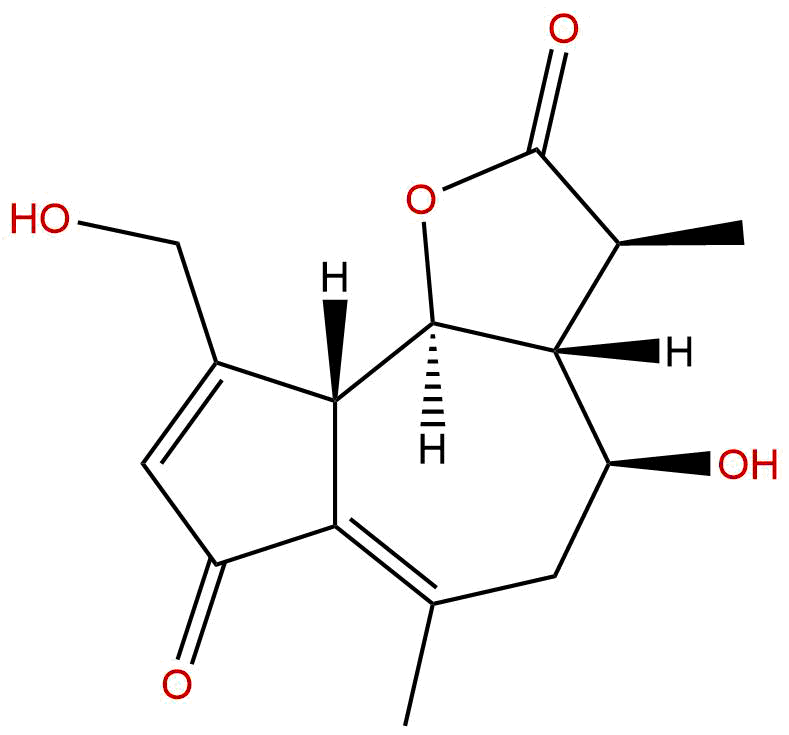
11β, The chemical structure of 13 dihydrolettuce extract (CAS number: 83117-63-9) belongs to guaianolide sesquiterpene lactones. Its molecular skeleton is composed of 15 carbon atoms, and its core structure is formed by the fusion of a five membered gamma lactone ring and a seven membered ring (azulene ring). The most significant structural difference between DHL and its parent compound, lettuce extract, is that the C11-C13 double bond is reduced to a single bond, and the C11 position is in a β configuration. This structural modification causes DHL to lose its classic Michael addition receptor structure of α - methylene - γ - lactone, thereby altering its interaction mode with biological targets.
DHL molecules contain multiple functional groups: a primary alcohol hydroxyl group (- CH ₂ OH, located at C15), a secondary alcohol hydroxyl group (- OH, located at C8), a cyclic terpene ketone (C=O, located at C3), and a furan ring (located at C4-C5-C6-C7). The presence of these functional groups endows DHL with certain polarity and hydrogen bond donor/acceptor abilities, and provides a structural basis for its interaction with biomolecules. The molecular formula is C ₁₅ H ₁₈ O ₅, and the molecular weight is 278.3040 g/mol.
Physical and chemical property parameters
From the perspective of drug properties, DHL exhibits ideal physicochemical properties. Its lipid water partition coefficient (LogP) is 0.3260, indicating that the compound has moderate lipophilicity, which is beneficial for dissolution and transport in the aqueous phase, and can also pass through biofilm barriers. The topological polar surface area (TPSA) is 83.8300 Å ², which is lower than the recommended upper limit of 140 Å ² for oral drugs, indicating its good oral absorption potential. The water solubility parameter is 5.7849, which belongs to the category of moderately water-soluble compounds, providing favorable conditions for their dissolution and distribution in vivo.
It is worth noting that DHL's blood-brain barrier penetration has been evaluated as "high", which gives it the potential to act on central nervous system targets, but also suggests the need to pay attention to potential central nervous system side effects. In addition, the hERG inhibition risk assessment was' no ', and the Ames test result was 0.0, indicating that the compound did not exhibit significant cardiotoxicity and genotoxicity risks in the preliminary safety evaluation, providing a safety basis for its further development.
Plant sources and extraction methods
Main plant sources
11β, 13 Dihydroshan lettuce extract mainly comes from the Asteraceae genus Cichorium(Cichorium)Plants, including chicory(Cichorium intybus L. It is the most important natural source. Chicory is a perennial herbaceous plant native to Europe, West Asia, and North Africa, and is now widely cultivated in temperate regions worldwide. Its different parts (roots, leaves, flowers) all contain sesquiterpene lactones, but the distribution of their content varies. Research has shown that the content of DHL in chicory roots is relatively high, especially during specific stages of the growing season.
Except for chicory, other Asteraceae plants such as Gesneri(Cichorium endivia L.)、 Dandelion(Taraxacum Spp.) may also contain trace amounts of DHL, but the content is much lower than that of chicory. The accumulation of DHL in chicory is influenced by various factors, including variety, growth environment, harvesting time, processing methods, etc. For example, under organic cultivation conditions, the total content of sesquiterpene lactones in chicory roots is usually higher than under conventional cultivation, and drought stress can induce an increase in its content.
Extraction and purification methods
DHL usually uses organic solvent extraction method for extraction. Due to the polarity of the compound, commonly used extraction solvents include methanol, ethanol, ethyl acetate, and their mixed solvents. Research has shown that a 70% ethanol aqueous solution has a higher extraction efficiency for sesquiterpene lactones from chicory roots. The extraction process usually includes steps such as raw material drying, crushing, solvent soaking, ultrasonic assisted or heated reflux extraction, filtration, concentration, etc.
The crude extract contains a large amount of impurities and requires further purification. Classic separation methods include liquid-liquid extraction, silica gel column chromatography, and preparative high-performance liquid chromatography (pre HPLC). Due to the similarity in structure between DHL and other sesquiterpene lactones such as lettuce extract and mountain lettuce bitter extract, the separation difficulty is relatively high. In recent years, new separation methods such as high-speed countercurrent chromatography (HSCCC) and molecular imprinting technology have also been applied to the purification of DHL, significantly improving separation efficiency and purity.
It is worth noting that DHL may undergo chemical changes during the extraction and storage process. Due to the presence of multiple hydroxyl and carbonyl groups in the molecule, isomerization, dehydration, or oxidation reactions may occur under acidic or alkaline conditions. Therefore, the extraction process should be temperature and time controlled to avoid prolonged high-temperature treatment, and the product should be stored at low temperatures and away from light.
Pharmacological activity research
anti-inflammatory activity
Anti inflammatory activity is one of the most concerned pharmacological effects of DHL. Multiple in vitro and in vivo studies have confirmed that DHL can effectively inhibit inflammatory responses. In a macrophage model stimulated by lipopolysaccharide (LPS), DHL significantly reduces the production of pro-inflammatory cytokines such as tumor necrosis factor - α (TNF - α), interleukin-6 (IL-6), and interleukin-1 β (IL-1 β). Meanwhile, DHL can also inhibit the release of nitric oxide (NO) and prostaglandin E ₂ (PGE ₂), which is closely related to the downregulation of inducible nitric oxide synthase (iNOS/NOS2) and cyclooxygenase-2 (COX-2/PTGS2) expression.
Compared with the parent compound lettuce extract, DHL has slightly lower anti-inflammatory activity but significantly reduced cytotoxicity, demonstrating better therapeutic efficacy. This discovery is of great significance because many sesquiterpene lactones, although possessing potent anti-inflammatory activity, have limited clinical applications due to their cytotoxicity. The emergence of DHL provides a new option for developing safer anti-inflammatory drugs.
Analgesic activity
Due to its anti-inflammatory properties, DHL's analgesic effect has also received attention. In the formalin induced inflammatory pain model, DHL significantly reduced foot licking time in mice, demonstrating a dose-dependent analgesic effect. It is worth noting that DHL's analgesic effect may involve a dual mechanism of peripheral and central mechanisms. On the one hand, reducing peripheral inflammatory pain by inhibiting the production of inflammatory mediators; On the other hand, due to its excellent blood-brain barrier penetration, DHL may directly act on the pain pathway of the central nervous system.
Neuroprotective effect
In recent years, DHL's potential in neuroprotection has gradually been recognized. DHL can alleviate neuronal damage induced by β - amyloid (A β) and 6-hydroxydopamine (6-OHDA) in cell models of neurodegenerative diseases such as Alzheimer's disease and Parkinson's disease. The mechanism may be related to inhibiting oxidative stress, reducing neuroinflammatory response, and regulating the expression of apoptosis related proteins. In addition, DHL can promote the proliferation and differentiation of neural stem cells, suggesting its potential to promote nerve regeneration.
Other biological activities
In addition to the above activities, DHL also showed certain antioxidant, liver protective and anti diabetes activities. In the oxidative stress model, DHL can eliminate free radicals and enhance the activity of intracellular antioxidant enzymes. In the liver injury model, DHL can reduce serum transaminase levels and alleviate liver cell damage. In diabetes model, DHL can improve insulin resistance and reduce blood sugar level. Although these activities have not been thoroughly studied, they provide clues for DHL's multifunctional applications.
Mechanism of action and molecular targets
Regulation of anti-inflammatory signaling pathway
The anti-inflammatory effect of DHL involves the regulation of multiple signaling pathways. Among them, the nuclear factor kappa B (NF - κ B) pathway is one of the most important targets. Research has shown that DHL can inhibit the activity of I κ B kinase (IKK/IKBKB), prevent the phosphorylation and degradation of I κ B α, and thus suppress the nuclear translocation and transcriptional activity of NF - κ B (RELA/p65). This mechanism explains the inhibitory effect of DHL on the expression of various inflammatory factors and enzymes, such as TNF - α, IL-6, iNOS, COX-2.
In addition, DHL can regulate the signal transduction and transcription activator 3 (STAT3) signaling pathway. STAT3 is a key transcription factor that mediates IL-6 signaling and plays an important role in inflammation and immune responses. DHL can inhibit the phosphorylation and dimerization of STAT3, thereby blocking the expression of its downstream target genes. It is worth noting that DHL's inhibitory effect on STAT3 may be associated with its anti-inflammatory and anti-tumor activities.
Inflammatory bodies and cell pyroptosis
The latest research has found that DHL can regulate the activation of NLRP3 inflammasome. NLRP3 inflammasome is a multi protein complex, and its activation can lead to the activation of caspase-1 (CASP1), which promotes the maturation and secretion of IL-1 β and IL-18, and induces pyroptosis. DHL can inhibit the assembly and activation of NLRP3 inflammasomes, reduce the activity of CASP1, and thus alleviate the inflammatory response. This finding provides a theoretical basis for DHL to treat NLRP3 related inflammatory diseases (such as gout, type 2 diabetes, Alzheimer's disease).
Regulation of Transient Receptor Potential Channels
The regulatory effect of DHL on transient receptor potential (TRP) channels is an important mechanism for its analgesic activity. Research has shown that DHL can activate TRPV1 and TRPA1 channels, which is similar to the effect of lettuce extract, but with weaker intensity. TRPV1 and TRPA1 are key ion channels that mediate pain and inflammatory signals, and their activation is typically associated with pain perception. However, moderate activation of these two channels by DHL may produce desensitization effects, thereby exerting analgesic effects. In addition, DHL's regulation of TRP channels may also be involved in its anti-inflammatory effects, as TRP channels are also expressed in immune cells and can regulate cytokine release.
Multi-target action network
Based on existing research, the anti-inflammatory effect of DHL is not achieved through a single target, but involves a complex multi-target network. Its key targets include: IL-6、STAT3、CASP1、TRPV1、RELA(NF-κB p65)、PTGS1/2、TNF、TRPA1、IKBKB(IKKβ) And NOS2 (iNOS). These targets cover multiple levels such as cytokines, transcription factors, inflammatory enzymes, ion channels, etc., forming a network of interrelated interactions. This multi-target mode of action enables DHL to comprehensively regulate inflammatory responses, but also increases the complexity of its mechanism of action research.
Evaluation of drug properties and pharmacokinetics
Analysis of drug properties
Based on Lipinski's Rule of Five and Veber's Rule, DHL exhibits good drug likeness. Its molecular weight (278.3 Da) is less than 500 Da, LogP (0.326) is less than 5, and the number of hydrogen bond donors (3 hydroxyl groups) and acceptors (5 oxygen atoms) are both within a reasonable range. TPSA (83.83 Å ²) is less than 140 Å ², and the number of rotatable bonds in the molecule is moderate, meeting the basic requirements for oral medication. These parameters indicate that DHL has the potential to become an oral medication.
Pharmacokinetic characteristics
Although DHL's systematic pharmacokinetic studies are not yet sufficient, preliminary data is available for reference. Based on its physicochemical properties, DHL has good oral absorption and may have high bioavailability. Its high blood-brain barrier penetration suggests that drugs can enter the central nervous system, which is of great significance for the treatment of neuroinflammation and neurodegenerative diseases. However, this also means that attention needs to be paid to the side effects of the central nervous system.
The metabolic pathway of DHL is not fully understood. According to structural analysis, the hydroxyl groups in its molecule may undergo glucuronidation and sulfation binding reactions, while the furan ring may undergo oxidative metabolism through the cytochrome P450 enzyme system. These metabolic reactions may affect the bioavailability and duration of drug activity. The elimination pathway of DHL may be mainly through renal excretion and bile excretion.
safety evaluation
The preliminary security evaluation results show that DHL has good security. A negative Ames test indicates no genetic toxicity, while a negative hERG inhibition risk assessment of 'no' suggests a low risk of cardiac toxicity. Compared with the parent compound lettuce extract, DHL's cytotoxicity is significantly reduced, which is related to its lack of α - methylene - γ - lactone structure. However, further systematic safety evaluations are needed for long-term toxicity, reproductive toxicity, and carcinogenicity.
Clinical application prospects and prospects
Development of anti-inflammatory drugs
Based on its significant anti-inflammatory activity and good safety, DHL has the potential to develop into a new type of anti-inflammatory drug. Compared with traditional nonsteroidal anti-inflammatory drugs (NSAIDs), DHL works through a multi-target mechanism and may have better efficacy and lower gastrointestinal side effects. Compared to glucocorticoids, DHL does not have steroid like side effects. Therefore, DHL may be suitable for long-term treatment of chronic inflammatory diseases such as rheumatoid arthritis, inflammatory bowel disease, psoriasis, etc.
Treatment of neurodegenerative diseases
DHL's neuroprotective effects, anti-inflammatory activity, and excellent blood-brain barrier penetration make it a candidate compound for treating neurodegenerative diseases. Diseases such as Alzheimer's disease, Parkinson's disease, and multiple sclerosis all involve neuroinflammation and oxidative stress, and DHL's multi-target mode of action may have a comprehensive therapeutic effect on these diseases. In addition, DHL's regulatory effect on TRP channels may also improve neuropathic pain, which is a common complication of many neurodegenerative diseases.
Development of analgesic drugs
DHL's analgesic activity, particularly in relieving inflammatory and neuropathic pain, gives it the potential to be developed as a novel analgesic drug. Compared to opioid drugs, DHL does not have serious side effects such as addiction and respiratory depression; Compared to NSAIDs, their gastrointestinal safety is higher. Therefore, DHL may become a new option for treating chronic pain.
Challenges and Prospects
Although DHL has shown promising application prospects, its development still faces many challenges. Firstly, DHL has a low content in plants and high extraction costs. The establishment of chemical synthesis or semi synthesis methods is the key to solving the problem of raw material supply. Secondly, the mechanism of action of DHL still needs further clarification, especially its exact targets and metabolic pathways in vivo. Thirdly, systematic pharmacokinetic and toxicological studies are still needed to comprehensively evaluate its pharmacological properties. Finally, further research is needed on the structure-activity relationship of DHL, as it is possible to obtain derivatives with higher activity and better selectivity through structural modification.
Future research should focus on the following aspects: firstly, establishing efficient and environmentally friendly DHL preparation methods; Secondly, modern molecular biology techniques such as CRISPR-Cas9 gene editing and proteomics are utilized to further elucidate its mechanism of action; Thirdly, conduct systematic preclinical pharmacokinetic and toxicological studies; The fourth is to optimize the structure through medicinal chemical methods to improve its activity and selectivity; The fifth is to explore the synergistic effects of DHL with other drugs and develop compound formulations.
Conclusion
11β, 13 Dihydroshan lettuce extract, as a natural sesquiterpene lactone, has shown significant value in the field of natural product drug research due to its unique chemical structure and multi-target pharmacological activity. Compared with the parent compound lettuce extract, DHL significantly reduces cytotoxicity while retaining anti-inflammatory activity, making it an ideal model for studying the structure-activity relationship of sesquiterpene lactones and providing a new lead compound for the development of low toxicity and high efficacy anti-inflammatory drugs.
From a chemical structure perspective, DHL's 11,13 double bond reduction modification reveals the possibility of separating the activity and toxicity of sesquiterpene lactones, providing important structural modification ideas for pharmaceutical chemists. From the perspective of pharmacological activity, DHL exerts anti-inflammatory, analgesic, and neuroprotective effects by regulating multiple targets such as NF - κ B, STAT3, NLRP3 inflammasomes, and TRP channels. This multi-target mode of action is in line with the modern concept of "multi-target therapy" in drug development. From the perspective of drug development, DHL has good physicochemical properties and preliminary safety, and has the potential for further development.
However, DHL still has a long way to go from laboratory discovery to clinical application. The issues of raw material supply, mechanism clarification, pharmacokinetic optimization, and safety evaluation all need to be systematically addressed. With the continuous advancement of synthetic biology, medicinal chemistry, and pharmacology technologies, it is believed that DHL and its derivatives have the potential to become new drug candidate molecules for the treatment of inflammatory and neurodegenerative diseases in the future. In depth research on these "non classical" active ingredients in natural products not only helps to reveal the pharmacological substance basis of traditional medicinal plants, but also provides new ideas and directions for modern drug discovery.