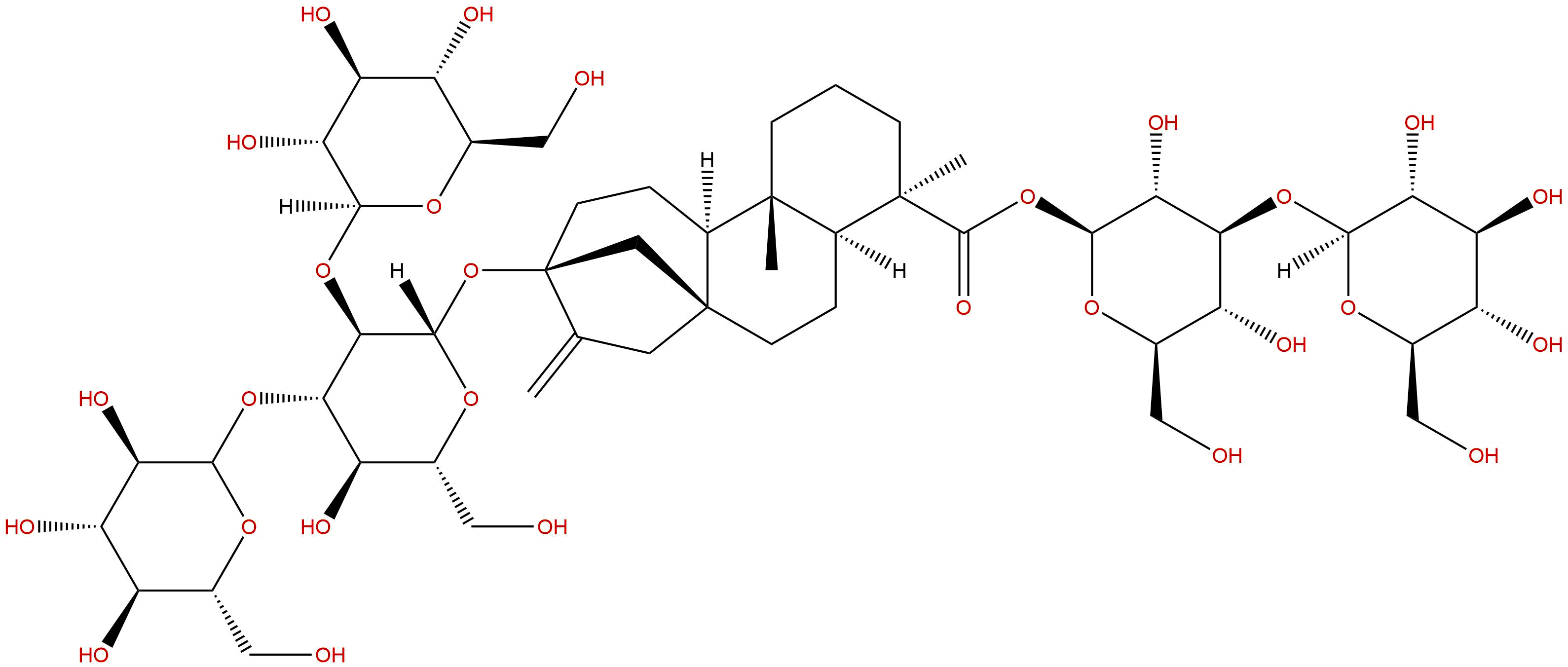


Product name: Rebaudioside I
Synonym name:
Catalogue No.: BP2086
Cas No.: 1220616-34-1
Formula: C50H80O28
Mol Weight: 1129.16
Botanical Source: Stevia rebaudiana (Bertoni) Hemsl.
Physical Description:
Type of Compound: Diterpenoids
Purity: 95%~99%
Analysis Method: HPLC-DAD or/and HPLC-ELSD
Identification Method: Mass, NMR
Packing: Brown vial or HDPE plastic bottle
Storage: Store in a well closed container, protected from air and light. Put into refrigerate or freeze for long term storage.
Whenever possible, you should prepare and use solutions on the same day. However, if you need to make up stock solutions in advance, we recommend that you store the solution as aliquots in tightly sealed vials at -20℃. Generally, these will be useable for up to two weeks.
The product could be supplied from milligrams to grams
Inquire for bulk scale.
For Reference Standard and R&D, Not for Human Use Directly.
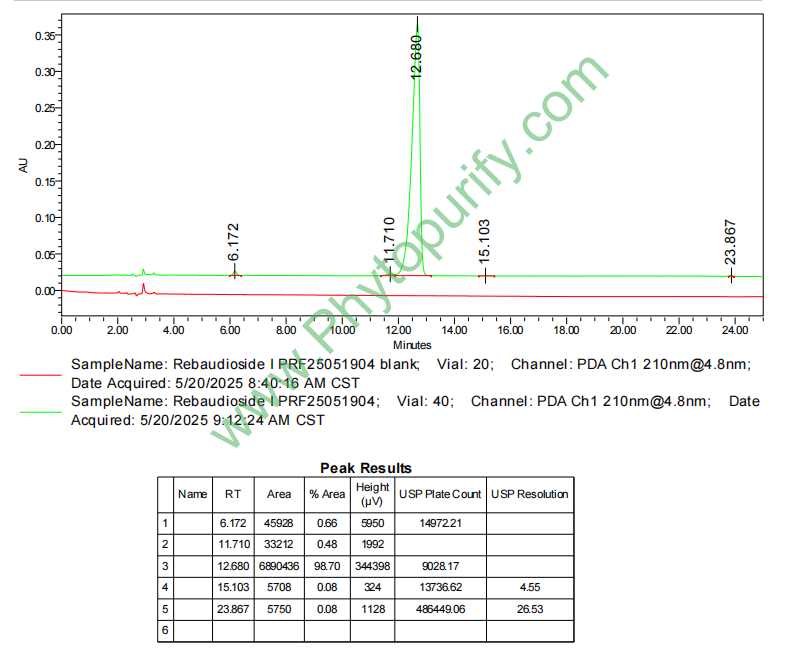
HPLC of Rebaudioside I
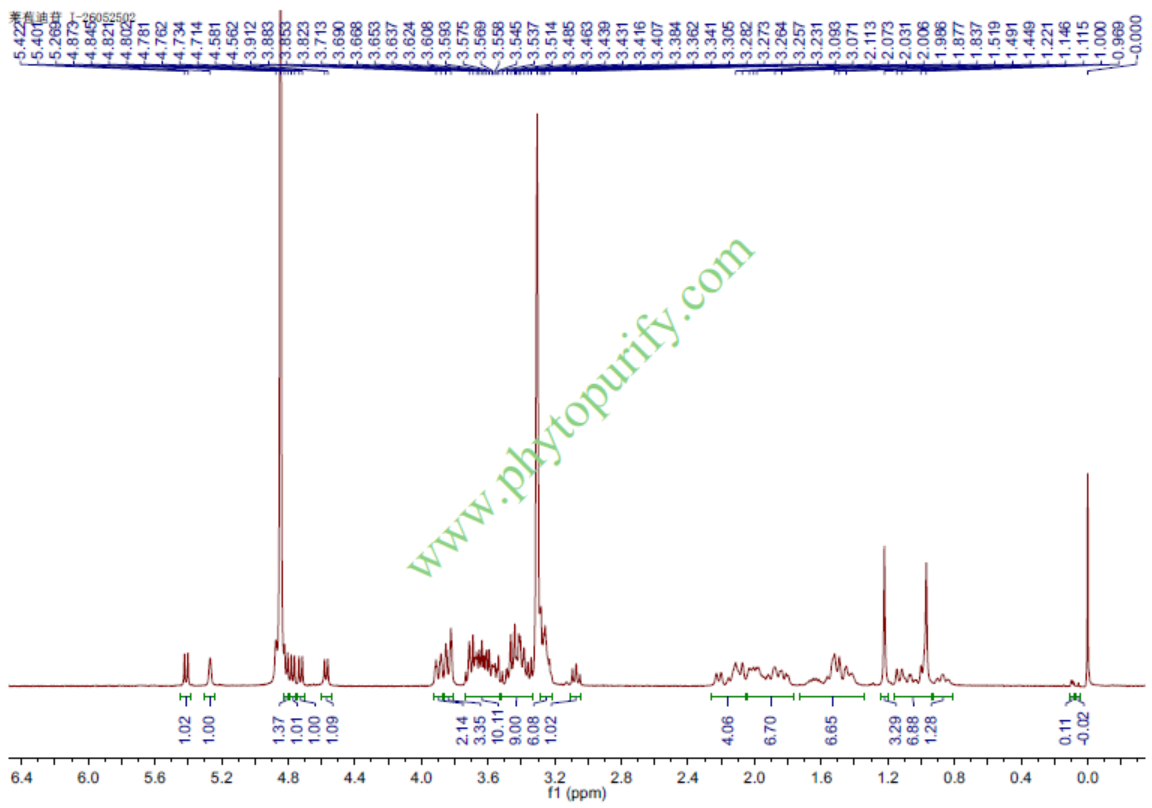
HNMR of Rebaudioside I
Storage conditions:Short-term storage at 2~8℃, long-term storage at -20 ~ -80℃
453.2800
-1.0613
-1.0608
3.4059
.4282
.3701
Low
53.0372
4.2312
Yes
No
No
No
Yes
No
0.0
Yes
No
No
Yes
Rebaudioside I, also known as Reb I, is a type of sweetener derived from Stevia rebaudiana(Stevia rebaudiana The natural calorie free sweetener isolated from Morita has received widespread attention in recent years due to its unique sweet taste characteristics and potential pharmacological activity. As one of a variety of sweet glycosides in Stevia rebaudioside I, it not only has excellent sweet perception, but also shows a variety of biological activities, especially in the field of anti diabetes, showing significant potential. With the continuous growth of the number of diabetes patients worldwide, the development of safe and effective natural anti diabetes drugs has become an important direction of contemporary drug research and development. Ruibaodi glycoside I has gradually become a research hotspot due to its natural source, high safety, and multi-target regulation.
This article will provide a systematic review of the chemical structure and physicochemical properties, plant sources and extraction processes, pharmacological activity and mechanism of action, pharmacological evaluation, pharmacokinetic characteristics, as well as the prospects and challenges in clinical applications of Rabeprizin I. The aim is to provide comprehensive reference and inspiration for related research.
The chemical structure of Rebaodi glycoside I belongs to the steviol glycosides class, with a molecular formula of C50H80O27 and a molecular weight of 1129.1620. Ruibaodi glycoside I is composed of a steviol core structure connected to multiple glucose residues through glycosidic bonds. The specific structure includes a diterpenoid skeleton of steviol and five glucose units. This structure endows Ribadine I with high water solubility and sweet taste characteristics.
In terms of physical and chemical properties, Ribadine I exhibits low lipid solubility (LogP of approximately -1.0613) and high polarity (TPSA of 453.2800), indicating its strong molecular polarity and good water solubility (solubility of approximately 3.4059 mg/mL). In addition, the low blood-brain barrier permeability of Ribadine I suggests that its direct effects in the central nervous system are limited. In terms of safety, rebaudin I did not exhibit hERG channel inhibitory activity, and the Ames mutagenicity test result was 0, indicating that its genotoxicity risk is extremely low and has a good safety basis.
Ruibaodi glycoside I is mainly derived from Stevia rebaudiana(Stevia rebaudiana Morita), This plant is native to Paraguay and Brazil in South America and is a perennial herbaceous plant. Stevia leaves contain various sweet glycosides, among which the content of rebaudin I is relatively low, usually lower than that of rebaudin A and stevioside.
The process of extracting rebaudin I mainly includes the following steps:
In recent years, supercritical fluid extraction, enzymatic conversion, and biosynthetic technologies have also been applied to the preparation of rabidicin I to improve yield and purity, and reduce production costs.
The pharmacological activity of Rabadioside I mainly focuses on its anti diabetes effect and related metabolic regulation function. Multiple in vitro and in vivo experiments have shown that rebaudin I can improve glucose metabolism disorders, regulate the insulin signaling pathway, and lower blood glucose levels.
In addition to anti diabetes, Rabadioside I also has antioxidant, anti-inflammatory and cardiovascular protective effects, but the related research is still in the preliminary stage and needs to be further deepened.
The anti diabetes mechanism of Rabadioside I involves multiple signal pathways and key molecular targets, which reflects the characteristics of its multi target and multi pathway coordinated regulation.
AMPK (5 'AMP activated protein kinase) is a central regulatory factor in cellular energy metabolism. Ruibaodi glycoside I promotes glucose uptake and lipid oxidation, inhibits fat synthesis, and improves metabolic syndrome related symptoms by activating AMPK (PRKAA1). AMPK activation also enhances GLUT4 (SLC2A4) expression and promotes glucose transport.
Ruibaodi glycoside I enhances insulin signaling and improves insulin resistance by promoting phosphorylation of insulin receptor substrate 1 (IRS1) and protein kinase B (AKT1). This mechanism helps to restore insulin sensitivity, promote glucose metabolism and storage.
Ruibaodi glycoside I inhibits DPP4 activity, prolongs the half-life of glucagon like peptide-1 (GLP-1), promotes insulin secretion, reduces postprandial blood glucose fluctuations, and has pharmacological effects similar to DPP4 inhibitors.
Ruibaodi glycoside I promotes SLC2A4 (GLUT4) expression and membrane translocation, enhances peripheral tissue glucose uptake, and reduces blood glucose levels.
By regulating PPARG expression, Ribadine I improves lipid metabolism disorders, reduces adipose tissue inflammation, and assists in glucose metabolism balance.
Ruibaodi glycoside I may also participate in glucose metabolism regulation by regulating targets such as glucokinase (GCK), sodium glucose cotransporter 2 (SGLT2), and PI3K regulatory subunit (PIK3R1). The specific mechanism still needs further research and verification.
Ruibaodi glycoside I has shown good safety and reasonable pharmacokinetic characteristics in terms of drug formulation.
Ruibaodi glycoside I has a high molecular weight (1129.1620), strong polarity, and limited oral bioavailability. It is mainly metabolized by gut microbiota into active metabolites such as steviol alcohol. It has good water solubility, which is beneficial for the development of formulations. Low fat solubility and high polarity limit its passive diffusion absorption, but a certain degree of absorption may be achieved through specific transport proteins.
Ruibaodi glycoside I is mainly hydrolyzed by gut microbiota in the body, releasing steviol alcohol, which is absorbed and metabolized. This metabolic process affects its pharmacological efficacy and half-life in vivo, indicating the need to pay attention to its metabolic kinetics and pharmacological activity of metabolites in the future.
Ruibaodi glycoside I, as a natural calorie free sweetener, has been widely used in the food industry to replace sucrose and reduce calorie intake. Its potential of anti diabetes and metabolic regulation provides a new direction for its development in the field of medicine.
In the future, by combining modern medicinal chemistry, pharmacology, and biotechnology methods, Rabeprizin I is expected to enhance its efficacy and bioavailability through strategies such as structural modification and nanocarriers, promoting its clinical translation.
As an important natural sweetness glycoside in Stevia rebaudioside I, it has excellent sweetness characteristics and multi-target anti diabetes activity, showing broad application prospects. It exerts significant metabolic regulatory effects by activating AMPK, regulating the insulin signaling pathway, inhibiting DPP4, and promoting glucose transport through multiple mechanisms. The drug efficacy evaluation shows that it has good safety, but its bioavailability and clinical validation are still the focus of future research.
As the global burden of diabetes and metabolic diseases continues to increase, the development and utilization of Rabadioside I will not only help enrich natural drug resources, but also provide new ideas for the treatment of diabetes. In the future, it is necessary to strengthen its pharmacological mechanism research, optimize formulation technology, and conduct systematic clinical trials in order to achieve its widespread clinical application and benefit patients.
