Introduction/Overview
Natural products are an important source of drug discovery and development, and their diverse chemical structures and unique biological activities provide valuable molecular templates for human health and sustainable agricultural development. In the field of plant hormones, brassinosteroids (BRs), as an important class of plant steroid hormones, have been derived from rapeseed since 1979(Brassica napus)Since its first isolation and identification in pollen, it has attracted much attention due to its outstanding physiological activity. Brassinolide plays an irreplaceable regulatory role in various stages of plant growth and development, such as cell elongation and division, vascular bundle differentiation, photomorphogenesis, reproductive development, and stress response.
28 homobrassinolide (28-HBL) is a key active analogue in the brassinolide family. Compared with the naturally occurring brassinolide (BL), 28-HBL has an additional methylene group (- CH ₂ -) at the C-24 position of its side chain, which endows it with unique biological activity and potential applications. As an exogenous plant growth regulator, 28-HBL has been widely studied and applied in agricultural production to enhance crop yield, improve quality, and enhance tolerance to various biotic and abiotic stresses. However, in recent years, with the deepening of research on plant hormone cross-border signaling and mammalian pharmacology, the potential pharmacological activity of 28-HBL has gradually emerged, especially in the regulation of cholesterol and glucose homeostasis, transforming it from a pure plant growth regulator to a lead compound with potential pharmaceutical development value. This review aims to systematically sort out the chemical structure, sources, pharmacological activities, mechanisms of action, and pharmacological evaluation of 28 high brassinolide, and explore its scientific prospects for transformation from plant physiological regulation to human disease intervention.
Chemical structure and physicochemical properties
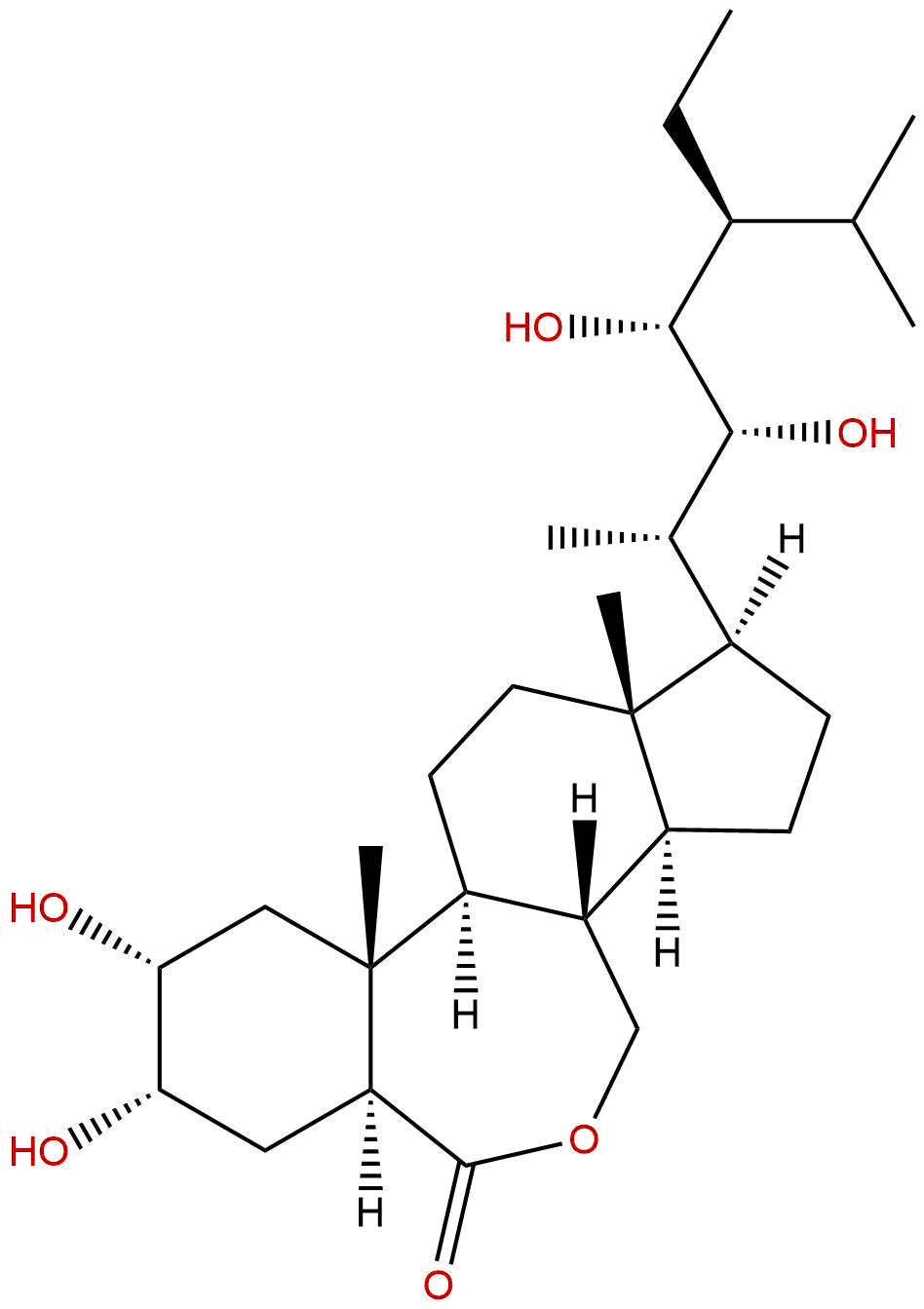
The chemical structure of 28 high brassinolide belongs to a typical plant steroid skeleton, with its core being the 5 α - cholestane (5 α - cholestane) nucleus. Similar to mammalian steroid hormones, BRs have a tetracyclic cyclopentane hydrophenanthrene core structure. The chemical name of 28-HBL is (22R, 23R, 24S) -2 α, 3 α, 22,23-tetrahydroxy-24-ethyl-5 α - cholestan-6-one, or abbreviated as (22R, 23R, 24S) -28-homobrassinolide. Its molecular formula is C ₂₉ H ₅₀ O ₆, and its molecular weight is 494.7130 g/mol.
Structurally, the key difference between 28-HBL and brassinolide (BL) lies in the side chain. The C-24 position of the side chain of BL is a methyl group, while the C-24 position of 28-HBL is an ethyl group (i.e. an additional methylene group), hence the name "28 high". This structural modification significantly affects its binding affinity with receptor proteins and subsequent signal transduction efficiency. The 28-HBL molecule contains four hydroxyl groups (- OH) and one lactone ring. Specifically, the C-2 and C-3 positions of the A ring are hydroxyl groups in the alpha configuration, the C-6 position of the B ring is a carbonyl group (C=O) that forms a lactone structure with the C-5 and C-7 positions, and the C-22 and C-23 positions of the side chain are adjacent diols in the R configuration. These polar groups endow 28-HBL with a certain degree of hydrophilicity, but the overall molecule still exhibits strong lipid solubility characteristics.
In terms of physicochemical properties, the lipid water partition coefficient (LogP) of 28-HBL is 3.7177, indicating its strong lipophilicity and ease of penetration through biological membranes. Its topological polar surface area (TPSA) is 107.22 Å ², indicating that the molecule has moderate polarity and theoretically has some potential for oral absorption, but may be limited by the intestinal barrier. The water solubility is 0.0165 mg/mL, which is a difficult to dissolve compound, posing challenges to its formulation development and in vivo bioavailability. In addition, the predictive model shows that the blood-brain barrier (BBB) penetration ability of 28-HBL is relatively low, suggesting that its distribution in the central nervous system may be limited. Importantly, the hERG inhibition prediction result was negative, and the Ames test result was 0.0, indicating a low risk of cardiac and genetic toxicity and a good safety basis.
Plant sources and extraction methods
28 high brassinolide is not the most abundant BRs in natural plants, it was originally obtained as brassinolide analogs through chemical synthesis or semi synthesis methods. However, in nature, brassinolide compounds are widely present in various plants, including rapeseed, Arabidopsis, rice, corn, peas, tea trees, etc. Although the content of 28 HBL is extremely low in its natural state, plants can produce a series of BRs with different side chain structures through biosynthetic pathways, including precursors or related metabolites of 28 high brassinolide.
Extracting BRs from plants is a highly challenging task, mainly due to their extremely low content in plant tissues (typically at ng/g to μ g/g fresh weight levels). Traditional extraction methods typically include the following steps:
1. Solvent extraction Soak or homogenize fresh or freeze-dried plant materials using polar organic solvents such as methanol, ethanol, or chloroform methanol mixtures. Due to the fact that BRs often exist in a free or bound state (such as glycosides and fatty acid esters) in plants, the selection of extraction solvents is crucial.
2. Liquid-liquid distribution After concentration, the extraction solution is usually subjected to liquid-liquid distribution using solvents such as n-hexane, chloroform, and ethyl acetate to remove lipid soluble impurities (such as chlorophyll and lipids) and enrich BRs. BRs are usually enriched in ethyl acetate or n-butanol phase due to their moderate polarity.
3. Chromatographic purification This is the core step of separation and purification. Common methods include silica gel column chromatography, reverse C18 column chromatography, Sephadex LH-20 gel column chromatography, etc. By gradient elution, BRs can be separated from other plant hormones and impurities.
4. High performance liquid chromatography (HPLC)To further obtain high-purity monomer compounds, semi preparative or analytical HPLC is usually used for purification. Due to the lack of strong UV absorbing groups, BRs are often monitored using evaporative light scattering detectors (ELSD) or mass spectrometry detectors (MS).
Given the extremely low yield and high cost of natural extraction, the 28-HBL currently used for research and application mainly relies on chemical synthesis. The synthetic route usually starts with plant sterols (such as campesterol and stigmasterol) and constructs the core skeleton and side chains through a series of stereoselective reactions. The key to the synthesis strategy lies in precise control of the 2 α, 3 α - hydroxyl configuration of the A ring, the 6-keto-Lactone structure of the B ring, and the 22R, 23R, 24S stereochemistry of the side chains. In recent years, with the development of green chemistry and biocatalytic technology, the use of enzymatic synthesis or microbial transformation to produce 28-HBL has also shown certain potential, but large-scale industrial production has not yet been achieved.
Pharmacological activity research
The pharmacological activity research of 28 high brassinolide initially focused on its function as a plant growth regulator, but in recent years, its biological activity in mammalian systems has gradually become a research hotspot.
1. Plant growth regulatory activity
In plants, 28-HBL exhibits physiological activity similar to natural BL, and even superior in some aspects. Its main pharmacological activities include:
- Promote cell elongation and division 28-HBL significantly promotes the elongation and growth of plant stems, leaves, and roots by activating cell wall relaxases (such as auxin) and cell cycle related genes.
- Enhance the efficiency of photosynthesis Research has shown that treatment with 28-HBL can increase chlorophyll content, Rubisco enzyme activity, and photochemical efficiency of photosystem II (PSII) in plant leaves, thereby promoting dry matter accumulation.
- Improve crop yield and quality Applied to crops such as rice, wheat, soybeans, and tomatoes, it can significantly increase the number of effective panicles, grain weight, fruit size, and soluble solids content.
- Induce stress resistance This is one of the most notable activities of 28-HBL. It can significantly enhance the tolerance of plants to various abiotic and biotic stresses such as drought, salinity, high temperature, low temperature, heavy metal toxicity, and pathogen infection. The mechanism involves activating the antioxidant enzyme system (such as SOD, POD, CAT), accumulating osmoregulatory substances (such as proline, soluble sugars), upregulating the gene expression of heat shock proteins (HSPs) and pathogen associated proteins (PRs).
2. Pharmacological activity in mammalian cells and animal models
Breaking through traditional understanding, 28-HBL has been found to cross interact with certain signaling pathways in mammalian cells, demonstrating potential pharmacological value.
- Cholesterol metabolism regulation Given the structural similarity between BRs and mammalian steroid hormones such as estrogen, androgen, and glucocorticoids, researchers speculate that they may affect cholesterol metabolism. In vitro cell experiments and animal model studies have shown that 28-HBL can regulate the expression and activity of key cholesterol synthesis enzymes (such as HMG CoA reductase) in the liver, and affect the abundance of low-density lipoprotein receptor (LDLR), thereby reducing plasma total cholesterol and low-density lipoprotein cholesterol (LDL-C) levels. Its mechanism of action may be related to the activation of the AMP activated protein kinase (AMPK) signaling pathway.
- Glucose homeostasis regulation 28-HBL has also shown potential in improving insulin sensitivity and glucose metabolism. In cell models of insulin resistance, such as 3T3-L1 adipocytes and HepG2 liver cells, treatment with 28-HBL can promote glucose uptake and enhance insulin signaling (such as increasing phosphorylation levels of IRS-1 and Akt). In the animal model of type 2 diabetes, oral or intraperitoneal injection of 28-HBL can significantly reduce fasting blood glucose, improve abnormal glucose tolerance, and reduce insulin resistance. These effects are partially attributed to their inhibition of key hepatic gluconeogenesis enzymes such as PEPCK and G6Pase, as well as their promotion of GLUT4 translocation in skeletal muscle and adipose tissue.
- Anti inflammatory and antioxidant activity Similar to inducing antioxidant defense in plants, 28-HBL also exhibits antioxidant and anti-inflammatory effects in mammalian cells. It can inhibit the production of pro-inflammatory cytokines (such as TNF - α, IL-6, IL-1 β) in macrophages induced by lipopolysaccharide (LPS), and activate the nuclear factor E2 related factor 2 (Nrf2) pathway, upregulate the expression of a series of antioxidant enzyme genes, thereby reducing oxidative stress damage.
Mechanism of action and molecular targets
The mechanism of action of 28 high brassinolide differs significantly between plant and mammalian systems, reflecting its multifunctionality as a signaling molecule.
1. Mechanism of action in plants: BRI1 receptor-mediated signaling pathway
In plants, 28-HBL, as one of the active forms of BRs, has been extensively studied for its mechanism of action. The core is a signal transduction cascade mediated by the receptor kinase BRI1 (Brassinosteroid Insensive 1) and its co receptor BAK1 (BRI1 Associated Receptor Kinase 1).
- Receptor binding and activation 28-HBL first binds to the extracellular domain of BRI1 located on the cell membrane. BRI1 is a receptor kinase rich in leucine repeat sequences (LRRs). After binding, BRI1 forms a heterodimer with BAK1 and undergoes mutual phosphorylation, thereby activating the kinase activity of BRI1.
- signal transduction Activated BRI1 phosphorylates downstream receptor like cytoplasmic kinase BSK1 (BR Signaling Kinase 1), which in turn activates phosphatase BSU1 (BRI1 Suppressor 1). BSU1 inhibits the activity of negative regulatory factors GSK3 like kinases (such as BIN2, Brassinosteroid Insensitive 2) through dephosphorylation.
- Transcriptional reprogramming The inactivation of BIN2 leads to the dephosphorylation of its downstream transcription factors BZR1 (Brassinozole Resin 1) and BES1 (BRI1-EMS Suppressor 1). Dephosphorylated BZR1 and BES1 enter the nucleus and bind to the BR response element (BRRE) on the target gene promoter, activating or inhibiting the expression of hundreds of genes related to cell elongation, division, differentiation, and stress response.
- Cross talk with other hormones There is extensive cross-talk between the 28-HBL signaling pathway and the auxin signaling pathway. For example, BRs can regulate the expression and polarity localization of auxin transporters PIN-FORMED 1 and AUX1, thereby affecting the distribution of auxin. Meanwhile, BRs can also affect the activity of auxin receptor TIR1 (Transport Inhibitor Response 1) and response factor ARF1 (Auxin Response Factor 1), synergistically regulating plant growth and development.
2. Potential mechanisms in mammals: multi-target and signal crossover
The mechanism of action of 28-HBL in mammals is not fully understood, but existing evidence suggests that it may exert its effects through multiple pathways rather than a single "receptor ligand" mode.
- Nuclear receptor regulation Given its steroid skeleton, 28-HBL may act as a weak ligand or modulator for certain nuclear receptors, such as the pregnane X receptor PXR, constitutive androgen receptor CAR, and even estrogen receptor ER. By binding to these receptors, it can affect the expression of drug metabolizing enzymes (such as CYP3A4) and cholesterol/bile acid metabolism related genes.
- AMPK signaling pathway AMPK is a key sensor for cellular energy metabolism. 28-HBL has been reported to activate AMPK, thereby inhibiting downstream acetyl CoA carboxylase (ACC) and HMG CoA reductase, thereby suppressing the synthesis of fatty acids and cholesterol. The activation of AMPK also promotes the translocation of GLUT4 and glucose uptake.
- G protein coupled receptor (GPCR)There is a hypothesis that 28-HBL may act on an unknown GPCR on the cell membrane, transmitting signals through second messengers (such as cAMP, Ca ² ⁺) to rapidly regulate cellular metabolism.
- Direct membrane effect Due to its lipophilicity, 28-HBL can embed into cell membranes, altering membrane fluidity and the composition of microstructural domains (such as lipid rafts), indirectly affecting the function of membrane-bound proteins (such as receptors, ion channels, transporters).
Evaluation of drug properties and pharmacokinetics
The conversion of 28 high brassinolide from plant growth regulators to human drugs requires a systematic evaluation of its pharmacological properties.
1. Analysis of pharmacological parameters
According to the Lipinski Rule of Five, the molecular weight of 28-HBL (494.7) is slightly higher than 500, the LogP (3.72) is less than 5, and the number of hydrogen bond donors (4 hydroxyl groups) and acceptors (6 oxygen atoms) both comply with the rules. Its TPSA is 107.22 Å ², indicating that it has a certain potential for oral absorption. However, its extremely poor water solubility (0.0165 mg/mL) is the main bottleneck limiting its oral bioavailability. Low water solubility may lead to slow dissolution and incomplete absorption of drugs in the gastrointestinal tract. In addition, the predicted blood-brain barrier penetration ability is low, which may be unfavorable for diseases that require action on the central nervous system (such as neurodegenerative diseases), but may be an advantage for diseases targeting peripheral targets (such as liver, muscle, adipose tissue) (such as metabolic syndrome). The negative results of hERG inhibition and Ames test have preliminarily ruled out the risks of cardiac toxicity and genetic toxicity, which are important additional factors in its drug development.
2. Pharmacokinetic characteristics (prediction and preliminary study)
At present, there is relatively limited pharmacokinetic (ADME) data on 28-HBL in mammals, but based on its physicochemical properties and preliminary animal experiments, it can be inferred that:
- absorb Oral absorption may be poor and vary greatly among individuals, mainly limited by water solubility. It may be necessary to use solubilization techniques (such as nanocrystals, liposomes, cyclodextrin inclusion complexes) or design prodrugs to improve their oral bioavailability. Injection administration (such as intraperitoneal injection) is currently a commonly used route of administration in animal experiments.
- distribution Due to its high lipophilicity, 28-HBL may be widely distributed in the body, especially in lipid rich tissues such as the liver and adipose tissue. Its binding rate to plasma proteins (such as albumin) may be high.
- Metabolism As an exogenous steroid, 28-HBL is likely to be metabolized by the cytochrome P450 enzyme system (CYP450) in the liver. The main metabolic pathways may include hydroxylation, oxidation, reduction, and glucuronic acid or sulfate binding reactions. Its metabolites may retain some activity or be completely inactivated.
- excretion Metabolites are mainly excreted through bile and urine. The renal excretion of the prototype drug may be limited.
Clinical application prospects and prospects
The clinical application prospects of 28 high brassinolide mainly revolve around its application in plant growth regulation and potential human disease treatment.
1. Agricultural application prospects
In the field of agriculture, 28-HBL, as an efficient and low toxicity plant growth regulator, has broad application prospects.
- Green Agriculture and Stress Resistant Cultivation With the intensification of global climate change, crops are facing increasingly severe abiotic stresses such as drought, salinity, and high temperatures. Due to its excellent induced stress resistance, 28-HBL can be used as a "biostimulant" in crop production, reducing dependence on chemical pesticides and fertilizers and achieving green and sustainable agricultural production.
- Improve crop yield and quality Reasonable application in major grain crops and cash crops is expected to significantly improve unit area yield and agricultural product quality without increasing arable land area.
- Seed treatment and seedling management As a seed initiator or seedling spray agent, it can promote seed germination, seedling growth, cultivate strong seedlings, and lay the foundation for high yield.
2. Prospects for the treatment of human diseases
Based on its newly discovered pharmacological activity, 28-HBL has shown exciting potential in the treatment of human diseases, but there is still a long way to go before it can be clinically applied.
- Metabolic diseases: Its activity in regulating cholesterol and glucose homeostasis makes it a potential candidate drug for treating hypercholesterolemia, type 2 diabetes, non-alcoholic fatty liver disease (NAFLD) and other metabolic syndrome related diseases. Its multi-target mode of action (while improving glucose and lipid metabolism) may be superior to single target drugs.
- Anti inflammatory and related diseases Its anti-inflammatory activity may play a role in the treatment of chronic inflammatory diseases such as rheumatoid arthritis and inflammatory bowel disease.
- neuroprotection Although BBB has low penetration, its antioxidant and anti-inflammatory potential may be developed in central nervous system diseases such as Alzheimer's disease and Parkinson's disease through structural modifications or special delivery systems.
3. Challenges and Future Directions
Despite the bright prospects, the clinical translation of 28-HBL faces many challenges:
- Poor water solubility This is the biggest obstacle to its medicinal properties. We need to develop advanced drug delivery systems (such as nano formulations, phospholipid complexes) or synthesize water-soluble prodrugs.
- The mechanism of action is unclear The exact molecular targets and signaling pathways of it in mammals remain to be elucidated. The lack of clear targets limits the design and optimization of structure based drugs.
- safety evaluation Although the initial toxicity is low, comprehensive preclinical safety evaluation data on long-term toxicity, reproductive toxicity, carcinogenicity, and other aspects are still missing.
- Synthesis cost At present, the cost of chemical synthesis is relatively high, and it is necessary to develop more economical and green synthesis processes to meet the possible large-scale production needs in the future.
Future research directions should focus on: 1) identifying its direct target proteins in mammals using chemical biology methods such as affinity chromatography and photoaffinity labeling; 2) Optimizing drug chemistry based on target structure to enhance activity, selectivity, and pharmacokinetic properties; 3) Conduct systematic preclinical pharmacology and toxicology research; 4) Explore its precise application technology in agriculture, maximize its benefits and minimize environmental risks.
Conclusion
28 high brassinolide, a member of the plant steroid hormone family, has built a bridge between plant physiology and mammalian pharmacology with its unique chemical structure and cross-border biological activity. In the field of agriculture, it has demonstrated great value as an efficient and environmentally friendly plant growth regulator, and is expected to contribute to global food security and sustainable agriculture. In the field of medicine, its regulatory effects on cholesterol and glucose metabolism provide a new molecular template and approach for treating increasingly severe metabolic diseases. Although there are still challenges in drug development, especially in terms of water solubility, its good preliminary safety characteristics and multi-target advantages make it a highly promising lead compound. In the future, with the in-depth revelation of its mechanism of action, optimization of medicinal chemistry, and development of advanced delivery systems, 28 high brassinolide and its derivatives are expected to take solid steps on the transformation path from the field to the pharmacy, ultimately benefiting human health.