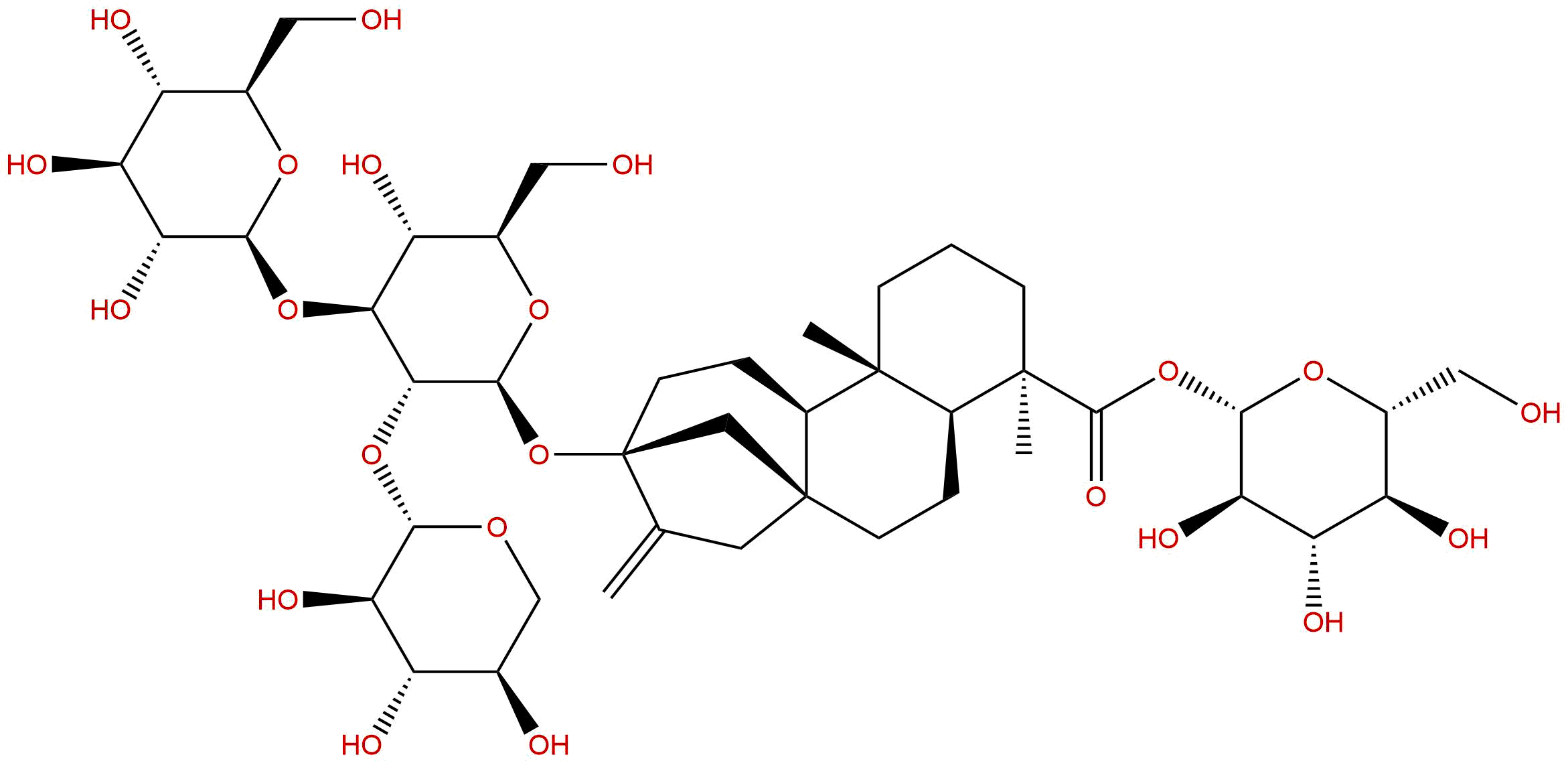


Product name: Rebaudioside F
Synonym name:
Catalogue No.: BP2088
Cas No.: 438045-89-7
Formula: C43H68O22
Mol Weight: 936.995
Botanical Source: Stevia rebaudiana (Bertoni) Hemsl.
Physical Description:
Type of Compound: Diterpenoids
Purity: 95%~99%
Analysis Method: HPLC-DAD or/and HPLC-ELSD
Identification Method: Mass, NMR
Packing: Brown vial or HDPE plastic bottle
Storage: Store in a well closed container, protected from air and light. Put into refrigerate or freeze for long term storage.
The product could be supplied from milligrams to grams
Inquire for bulk scale.
For Reference Standard and R&D, Not for Human Use Directly.
Description:
Reference standards.
References:
Phytochemistry. 2002 Feb;59(4):367-70.
Rebaudioside F, a diterpene glycoside from Stevia rebaudiana.
METHODS AND RESULTS:
The sweet diterpenoid glycoside, Rebaudioside F, was isolated from leaves of a high rebaudioside C producing line of Stevia rebaudiana, and its structure was established by chemical and spectral studies.
FEBS Open Bio. 2016 Aug 30;6(9):937-44.
Gene transcription and steviol glycoside accumulation in Stevia rebaudiana under polyethylene glycol-induced drought stress in greenhouse cultivation.
Stevia rebaudiana is a sweet herb of the Astraceae family, which is cultivated for the natural sweeteners it contains. The aim of this study was to assess the effect of drought, simulated by the application of polyethylene glycol (5%, 10%, and 15% w/v), on the content of steviol glycosides (SVglys) and transcription levels of six genes involved in the biosynthesis of these natural sweeteners.
METHODS AND RESULTS:
The transcription levels of ent-kaurene synthase, ent-kaurene oxidase, ent-kaurenoic acid hydroxylase, and three UDP-dependent glycosyltransferases, UGT85C2,UGT74G1 and UGT76G1 were downregulated under polyethylene glycol treatment. Polyethylene glycol treatment significantly decreased the amount of stevioside, rebaudioside A, rebaudioside B, rebaudioside C andRebaudioside F, steviolbioside, dulcoside A, rubusoside, and total SVglys. These results strongly suggest a close relationship of SVglys content with the transcription of genes involved in the SVglys biosynthesis pathway. Comparing the observations of the present study with other reports provided the knowledge that the Stevia response to drought stress can be influenced by different environmental and experimental factors, in addition to intensity of drought stress.
CONCLUSIONS:
In conclusion, these results strongly suggest that polyethylene glycol-induced drought stress has a negative effect on the content of SVglys and transcription of SVglys biosynthetic genes and that this should be investigated further. We recommend that sufficient irrigation of Stevia is required to obtain a high content of SVglys.
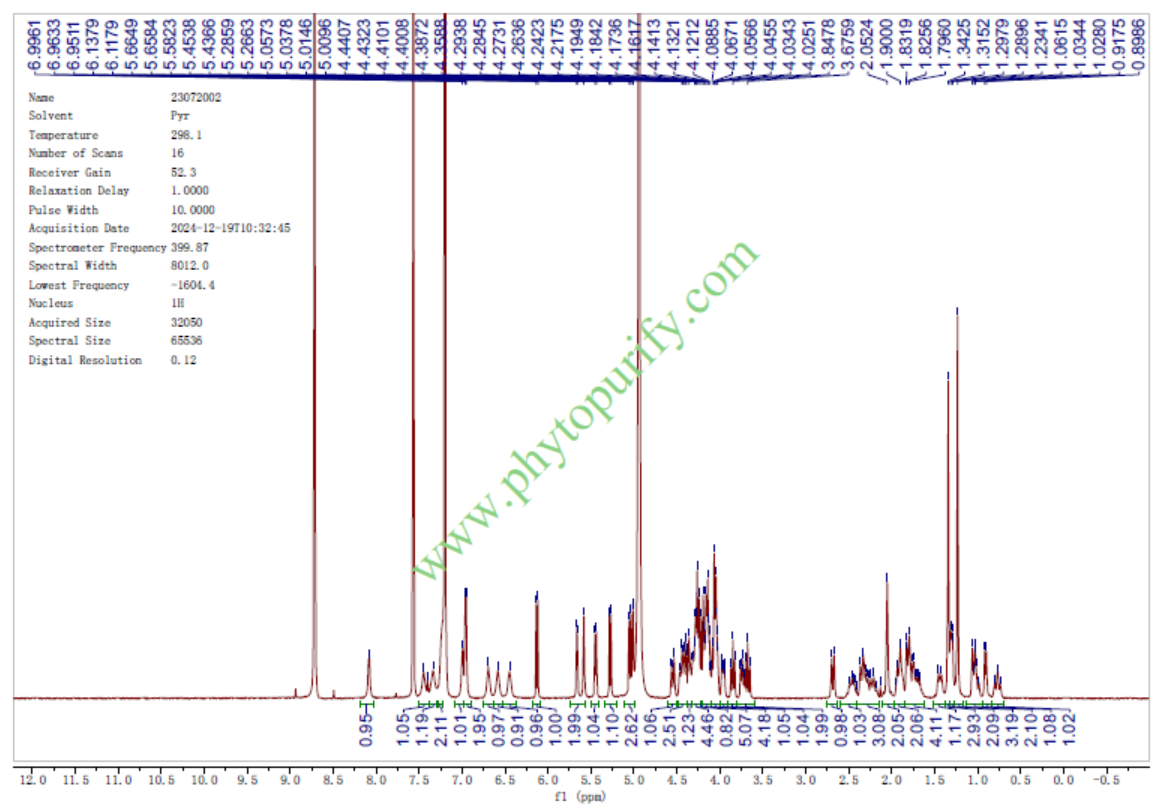
HNMR of Rebaudioside F
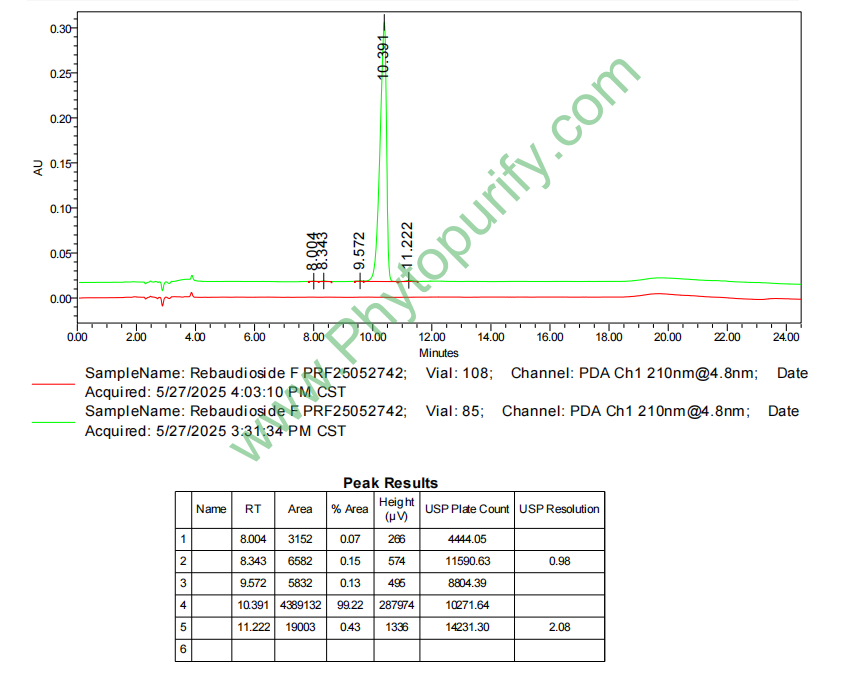
HPLC of Rebaudioside F
Storage conditions:Short-term storage at 2~8℃, long-term storage at -20 ~ -80℃
353.9000
-.4834
-.4834
2.0258
.4411
.2908
Low
58.1555
7.5656
Yes
No
No
No
Yes
No
0.0
Yes
No
No
Yes
Rebaudioside F, also known as Reb F, is a novel steviol glycoside found in the leaves of Stevia rebaudiana Bertoni. In recent years, it has attracted much attention due to its unique sweet taste characteristics and potential pharmacological activities. Stevioside is a type of diterpenoid saponin with natural sweetness, widely used in the food industry as a low calorie sweetener. Compared with traditional sugar sweeteners, stevioside not only has high sweetness and extremely low calories, but also has good safety and heat resistance, which is suitable for diabetes patients and people who lose weight. As a new member of the steviol glycoside family, Rabadioside F, in addition to its sweet taste, has aroused great interest in pharmacology for its potential pharmacological effects in anti diabetes and other metabolic diseases.
This article will provide a systematic review of the chemical structure and physicochemical properties, plant sources, and extraction methods of rebaudin F, with a focus on its pharmacological activity and mechanism of action. Combining current pharmacological evaluation and pharmacokinetic data, the prospects and challenges of its clinical application will be analyzed, providing theoretical basis and practical guidance for subsequent research and development.
The molecular formula of Ribadine F is C ₄₂ H ₆₈ O ₂ ∝, with a molecular weight of 936.9950 and a CAS number of 438045-89-7. Its structure belongs to the diterpenoid saponins of steviol glycosides, with the core being the steviol skeleton, which connects multiple glucose units to form a glycoside structure. The chemical structure of Ribadine F is relatively complex, containing multiple hydroxyl and glycosidic bonds, giving it high hydrophilicity and low lipid solubility.
In terms of physical and chemical properties, the LogP value of Ribadine F is -0.4834, indicating its strong hydrophilicity. Its water solubility is 2.0258 (unit not specified, speculated to be mg/mL or similar indicators), and its polar surface area (TPSA) is as high as 353.9 Å ², indicating its high molecular polarity and difficulty in penetrating lipid membranes. The low permeability of the blood-brain barrier indicates its limited distribution in the central nervous system. The negative result of hERG channel inhibition experiment indicates a low risk of cardiac toxicity. The Ames mutagenicity test result is 0.0, indicating that its genotoxicity risk is extremely low and meets safety requirements.
In summary, the chemical structure of ribavirin F determines its good water solubility and safety, but its high polarity and molecular weight may limit its oral bioavailability and tissue distribution.
The main source of rebaudin F is the leaves of Stevia rebaudiana Bertoni, a perennial herbaceous plant in the Asteraceae family, native to Paraguay and Brazil in South America. Stevia leaves contain various steviol glycosides, including stevioside, rebaudin A, rebaudin D, and rebaudin F. Ruibaodi glycoside F, as a newly discovered steviol glycoside, has a relatively low content and its distribution is greatly affected by variety, planting environment, and harvesting time.
The main methods for extracting rebaudin F include water extraction, alcohol extraction, and supercritical CO ₂ extraction. Traditional processes often use hot water or ethanol solvents for extraction, followed by separation and purification through ion exchange resin, counter current chromatography, or high-performance liquid chromatography (HPLC). In recent years, the application of ultrasound assisted extraction and membrane separation technology has improved extraction efficiency and purity. Researchers have attempted to increase the yield of rebaudin F by using plant cell culture and genetic engineering methods, in response to its low content.
In addition, the extraction and purification process of steviol glycosides needs to balance cost, environmental protection, and product quality, and optimizing process parameters has become the key to industrial production. The high-purity preparation of rabidicin F has laid the foundation for its pharmacological research and application.
As a member of the steviol glycoside family, Rabadioside F has a variety of biological activities, especially in the field of anti diabetes, in addition to its sweet taste. Diabetes is a chronic metabolic disease with a rising incidence rate worldwide. it is of great significance to find safe and effective natural product interventions.
In vitro and in vivo studies have shown that rebaudin F can improve glucose metabolism, enhance insulin sensitivity, and lower blood glucose levels. Its main manifestations are:
In addition to its anti diabetes effect, Rabadioside F also has antioxidant, anti-inflammatory and cardiovascular protective effects. Its antioxidant capacity is helpful to alleviate oxidative stress injury related to diabetes. Its anti-inflammatory effect may alleviate chronic low-grade inflammation. Its cardiovascular protective effect includes improving dyslipidemia and vascular function.
Although the systemic pharmacological study of Rabadioside F is still in its infancy, its multi-target and multi-channel regulatory properties provide important clues for the development of new natural anti diabetes drugs.
The anti diabetes effect of rebaudioside F involves multiple signal pathways and molecular targets, mainly including:
AMPK acts as a cellular energy sensor, regulating the balance of glucose and lipid metabolism. Ruibaodi glycoside F can activate AMPK (PRKAA1 subunit), promote glucose uptake and fatty acid oxidation, inhibit gluconeogenesis, and improve insulin resistance.
SGLT2 is mainly responsible for glucose reabsorption in the renal proximal tubules. Ruibaodi glycoside F may regulate SGLT2 activity, promote urinary glucose excretion, and lower blood glucose levels, similar to the mechanism of action of SGLT2 inhibitors.
GCK, as a key enzyme in glucose metabolism, regulates glucose sensing in the liver and pancreas. Ruibaodi glycoside F may enhance GCK activity and improve glucose metabolism efficiency.
PPAR γ regulates adipocyte differentiation and insulin sensitivity. Ruibaodi glycoside F improves lipid metabolism and insulin signaling by activating PPAR γ.
AKT1 is a key node in the insulin signaling pathway, regulating glucose uptake and cell survival. Ruibaodi glycoside F promotes AKT1 phosphorylation and enhances insulin signaling.
DPP4 degrades GLP-1, while Ribadine F inhibits DPP4 activity, prolongs GLP-1 action time, and promotes insulin secretion.
IRS1 is the core molecule involved in insulin signaling, and Ribadine F promotes IRS1 activity and enhances insulin signaling.
GLUT4 is an insulin-dependent glucose transporter, and rebaudin F promotes its transport to the cell membrane, increasing glucose uptake.
PIK3R1 participates in the PI3K/AKT signaling pathway, which is activated by rebaudin F to promote metabolic regulation.
To sum up, Rabadioside F can improve the disorder of glucose metabolism and play an anti diabetes role through multi target coordinated regulation.
The pharmacological evaluation of Ribadine F shows that it has good safety and low toxicity. The Ames mutagenicity test was negative, and the hERG inhibition test results showed no significant risk of cardiac toxicity, meeting the safety standards for natural product drug development.
The molecular weight of 936.9950 is relatively large, and the LogP is negative, indicating strong hydrophilicity and poor lipid solubility, which may limit oral absorption and bioavailability. The high TPSA value (353.9 Å ²) further indicates its limited transmembrane ability, low blood-brain barrier permeability, and reduced risk of central nervous system side effects.
Moderate water solubility is beneficial for formulation development. There is still a lack of systematic pharmacokinetic data in existing studies, especially in terms of absorption, distribution, metabolism, and excretion (ADME) characteristics, which require further exploration. Based on its structural characteristics, rebaudin F may undergo intestinal hydrolysis or microbial metabolic transformation, affecting its in vivo active form and half-life.
Future research should focus on strategies to improve its oral bioavailability, such as nanocarriers, liposome encapsulation, and structural modification, while evaluating the activity and safety of its metabolites in vivo.
Ruibaodi glycoside F, as a natural sweetener, has shown broad application prospects in the food industry. Its advantages of low calorie, high sweetness and safety make it an ideal alternative to sucrose for diabetes patients and obese people.
Pharmacological studies have shown that rebaudioside F has the potential of multi-target anti diabetes and can be developed as an adjuvant drug in the future, especially in improving insulin resistance and regulating blood sugar. In addition, its antioxidant and anti-inflammatory effects provide a possibility for the prevention and treatment of complications of diabetes.
However, the clinical application of Ribadine F still faces many challenges:
In the future, in combination with modern drug design and natural product research technology, Rabadioside F is expected to become an important natural drug resource in the field of diabetes and metabolic disease prevention.
Ruibaodi glycoside F, as a new natural sweet ingredient found in stevia leaves, has shown wide potential for application due to its unique chemical structure and good safety. Its multi-target regulatory effect in the field of anti diabetes provides a new idea for the development of natural anti diabetes drugs. Although the research on its pharmacokinetics and clinical efficacy is still limited, with the progress of extraction and purification technology and molecular pharmacology, Rabodioside F is expected to become an important candidate drug for the treatment of diabetes and related metabolic diseases in the future.
The in-depth basic research and clinical trials of the system will be the key to promoting the transition of rabidicin F from laboratory to clinical application. Looking forward to more research results on its mechanism of action, pharmacokinetics, and safety in the future, contributing new theoretical and practical value to the field of natural product pharmacology.
