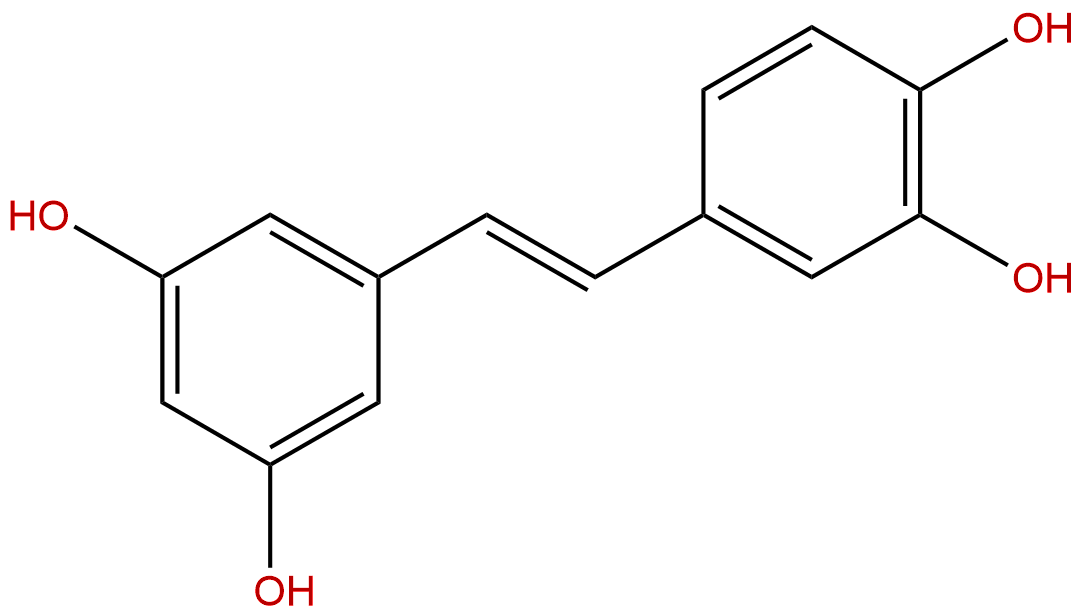


Product name: Piceatannol
Synonym name:
Catalogue No.: BP1525
Cas No.: 10083-24-6
Formula: C14H12O4
Mol Weight: 244.246
Botanical Source: Found in Norway spruce, Vouacapoua macropetala, Pericopsis angolensis and other spp. Constit. of peanuts, Vaccinium sp. berries and grapes
Physical Description: Powder
Type of Compound: Stibene glucosides
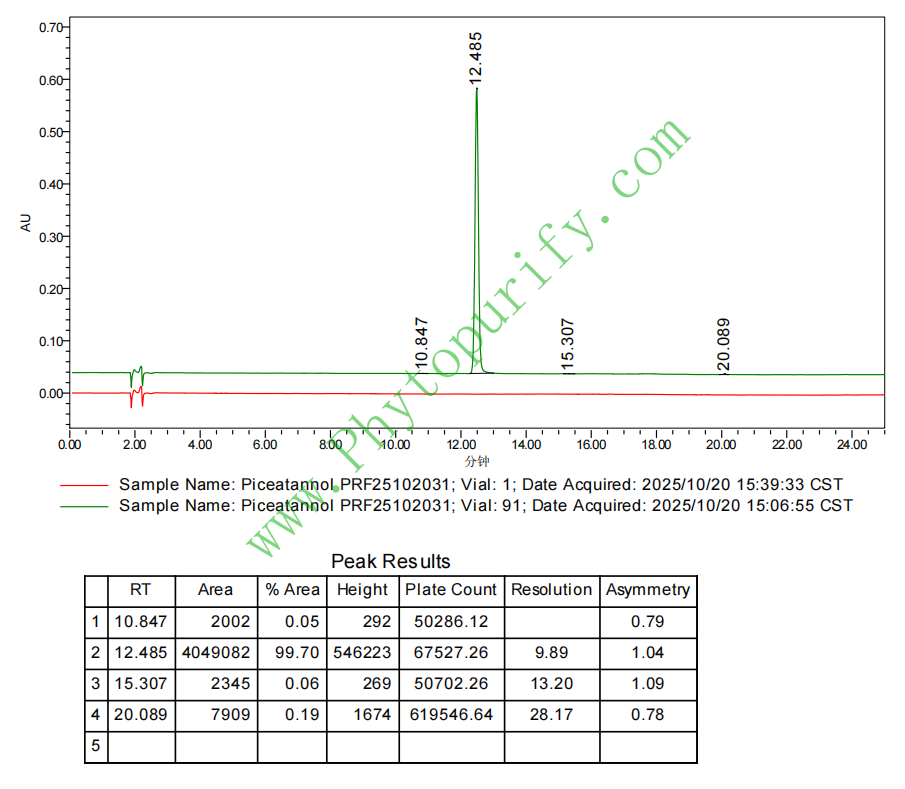
Purity: 95%~99%
Analysis Method: HPLC-DAD or/and HPLC-ELSD
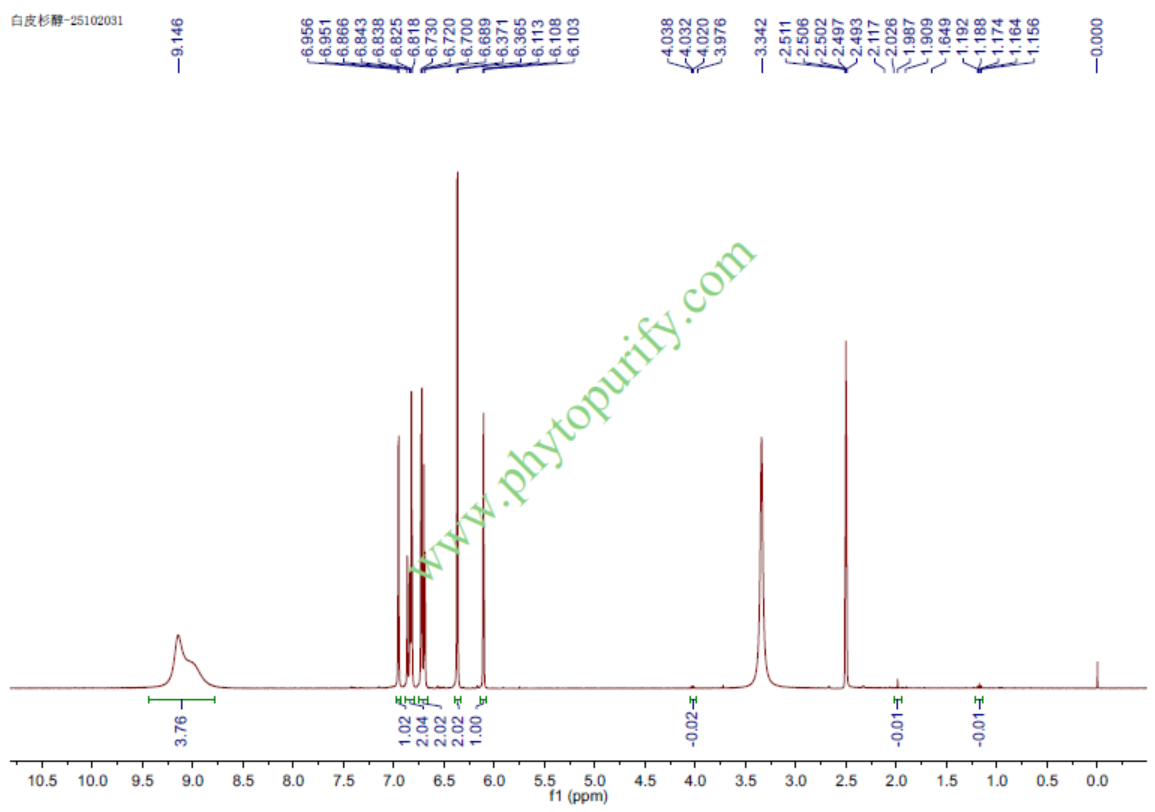
Identification Method: Mass, NMR
Packing: Brown vial or HDPE plastic bottle
Storage: Store in a well closed container, protected from air and light. Put into refrigerate or freeze for long term storage.
Whenever possible, you should prepare and use solutions on the same day. However, if you need to make up stock solutions in advance, we recommend that you store the solution as aliquots in tightly sealed vials at -20℃. Generally, these will be useable for up to two weeks.
The product could be supplied from milligrams to grams, up to kilograms
Inquire for bulk scale.
Descriptions:
Piceatannol , a resveratrol analogue, is a polyphenol present in the skins of grapes and in wine and other foods, it inhibits proliferation and migration of VSMC treated with TNF-α, therefore, piceatannol may be an effective therapeutic approach to treat atherosclerosis.[1]
Piceatannol inhibits the antigen-stimulated tyrosine phosphorylation of Syk and inhibit mast cell Fc epsilon R1-mediated signaling and effector function.[2]
Piceatannol is a closely related stilbene that has antileukaemic and anti-cancer activity, it is converted from resveratrol by the cytochrome P450 enzyme CYP1B1;resveratrol, as well as the hydroxylated analog piceatannol, are potent inducers of apoptotic cell death in BJAB Burkitt-like lymphoma cells with an ED50 concentration of 25 microM; piceatannol is a very efficient inducer of apoptosis in this ex vivo assay with leukemic lymphoblasts of 21 patients suffering from childhood lymphoblastic leukemia.[3,4]
Piceatannol sensitizes TRAIL-induced-apoptosis via Sp1- and ERK-dependent DR5 up-regulation. [5]
Piceatannol is an anti-inflammatory, immunomodulatory, and anti-proliferative stilbene that has been shown to interfere withthe cytokine signaling pathway; piceatannol inhibits TNF-induced NF-κB activation and NF-κB-mediated gene expression through suppression of IκBα kinase and p65 phosphorylation.[6]
Piceatannol inhibits phorbol ester-induced NF-κB activation and cyclooxygenase-2 expression in human breast epithelial cells, the cysteine 179 of IKKβ as a potential target.[7]
Piceatannol, resveratrol and 3,3',4,4',5,5'-hexahydroxy-trans-stilbene manifest potent antioxidant effects on three leukemic cell lines and the presence of ortho-dihydroxy structures enhanced the protective effect against DNA damage caused by .OH radicals.[8]
Piceatannol exerts much stronger protective effects on PC12 cells from oxidative stress than did resveratrol, piceatannol treatment attenuates the intracellular accumulation of ROS induced by treatment of PC12 cells with Beta-amyloid, inhibits Beta-amyloid-induced apoptotic features including internucleosomal DNA fragmentation, nucleus condensation, cleavage of poly(ADP-ribose) polymerase (PARP), and activation of caspase-3. [9]
References:
[1] Lee B, Lee E J, Kim D I, et al. Toxicol in Vitro, 2009, 23(7):1284-91.
[2] Oliver J M, Burg D L, Wilson B S, et al. J Biol Chem, 1994, 269(47):29697-703.
[3] Potter G A, Patterson L H, Wanogho E, et al. Brit J Cancer, 2002, 86(5):774-8.
[4] Wieder T, Prokop A, Bagci B, et al. Leukemia, 2001, 15(11):1735-42.
[5] Kang C H, Moon D O, Choi Y H, et al. Toxicol in Vitro, 2011, 25(3):605-12.
[6] Ashikawa K, Majumdar S, Banerjee S, et al. J Immunol, 2002, 169(11):6490-7.
[7] Pilsoon S, Sinaye P, Na H K, et al. Carcinogenesis, 2010, 31(8):1442-9.
[8] Ovesná Z, Kozics K, Bader Y, et al. Oncol Rep, 2006, 16(3):617-24.
[9] Jin K H, Won L K, Joo L H. Ann NY Acad Sci, 2007, 1095(1):473-82.
[10] Liu B, Xie Y Q. China Medical Herald, 2009, 6(4):40-1.
HPLC of Piceatannol
HNMR of Piceatannol
Storage conditions:Short-term storage at 2~8℃, long-term storage at -20 ~ -80℃
80.9200
2.5595
2.5383
.2697
4.2204
8.7370
Low
85.5863
2.2908
Yes
Yes
Yes
No
Yes
No
1.2
Yes
Yes
Yes
Yes
Polyphenolic compounds are highly regarded in the treasure trove of natural products due to their extensive biological activity and potential health benefits. Piceatannol (CAS number: 10083-24-6), as a naturally occurring stilbene polyphenol, is a hydroxylated analogue of resveratrol. Since its discovery, research has revealed its unique biological activity spectrum beyond its "star precursor" resveratrol. Bai Pi Shan Chun was initially recognized for its properties as a spleen tyrosine kinase (Syk) inhibitor, which can inhibit the expression of inducible nitric oxide synthase (iNOS) induced by tumor necrosis factor (TNF), demonstrating significant anti-inflammatory potential. Subsequent studies have continuously expanded its pharmacological boundaries, confirming its clear activities in anti-cancer, inducing cell apoptosis and autophagy, and protecting against acute lung injury (ALI). In recent years, with the deepening of research on aging biology, the role of resveratrol in regulating aging related signaling pathways (such as AMPK, SIRT1, NRF2, etc.) has become increasingly prominent, making it a rising star in the field of anti-aging research. This article aims to systematically review the chemical properties, plant sources, pharmacological activities, molecular mechanisms of action, pharmacological evaluation, and clinical application prospects of resveratrol, in order to provide comprehensive academic references for the in-depth development and transformation research of this natural product.
The chemical name of white bark cedar alcohol is 3,5,3 ', 4' - tetrahydroxystilbene, with a molecular formula of C ₁₄ H ₁₂ O ₄ and a molecular weight of 244.2460. Its structural core consists of two benzene rings connected by an vinyl group, belonging to the class of stilbene compounds. Compared with resveratrol (3,5,4 '- trihydroxystilbene), resveratrol has an additional hydroxyl group at the 3' position of the benzene ring, forming a hydroxyl substitution pattern of 3,5,3 ', 4'. This structural difference significantly affects its physicochemical properties and biological activity.
In terms of physical and chemical properties, the lipid water partition coefficient (LogP) of resveratrol is 2.5595, indicating that it has a certain degree of lipophilicity, but not highly hydrophobic. Its topological polar surface area (TPSA) is 80.9200 Å ², reflecting the polarity brought by multiple hydroxyl groups in the molecule. The water solubility data is 0.2697 mg/mL, which belongs to the category of slightly soluble to poorly soluble, posing a challenge for its formulation development. Preliminary evaluation of its pharmacological properties shows that its ability to penetrate the blood-brain barrier is relatively low, suggesting that its direct effects on central nervous system diseases may be limited. In terms of safety warning indicators, the hERG channel inhibition test result was negative, reducing its potential risk of inducing QT interval prolongation in the heart; The Ames test value is 1.2, indicating that there is no significant mutagenicity, but further in vitro and in vivo experiments are needed to confirm.
Bai Pi Shan Chun is widely distributed in nature, but its content is usually low. Its main plant sources include:
1. Grape family plants It is one of the most famous sources of resveratrol, especially in grape skins, grape seeds, and red wine. It is a metabolite formed by the hydroxylation of resveratrol catalyzed by cytochrome P450 enzyme CYP1B1 in grapes under stress or UV irradiation.
2. passion fruit The skin and seeds of passion fruit contain high concentrations of resveratrol, which is an important dietary source for it.
3. Other fruits and vegetables Blueberries, kiwis, sweet potatoes, and the roots of Japanese knotweed also contain a certain amount of resveratrol.
4. Wood It has also been found in the heartwood of some spruce plants.
The method for extracting resveratrol needs to be optimized based on the characteristics of the raw materials, and commonly used techniques include:
- Organic solvent extraction method The most commonly used method is to use methanol, ethanol, acetone, or their aqueous solutions for leaching or reflux extraction. Ethanol is often preferred due to its safety and environmental friendliness.
- Ultrasound assisted extraction/Microwave assisted extraction Using physical field effects to destroy plant cell walls significantly improves extraction efficiency and shortens extraction time.
- Supercritical fluid extraction Mainly using supercritical CO ₂, this method has mild conditions, no solvent residue, and good selectivity, but the equipment cost is high, making it suitable for the preparation of high value-added products.
- Separation and purification The crude extract is usually refined through liquid-liquid distribution, column chromatography (such as silica gel column, macroporous adsorption resin column, polyamide column), and high performance liquid chromatography (HPLC) or preparative thin layer chromatography (PTLC) to obtain high-purity resveratrol.
Numerous in vitro and in vivo studies have confirmed that resveratrol has diverse pharmacological activities.
The pleiotropic pharmacological effects of resveratrol stem from its regulation of multiple key molecular targets and signaling pathways.
Direct target and kinase inhibition:Syk kinase It is one of its clear direct targets of action. By binding to the kinase domain of Syk, its phosphorylation and downstream signaling are inhibited, which is the core mechanism of its anti-inflammatory effect. In addition, it may also affect other kinases, but with relatively low specificity.
Aging and stress regulation network:
Cell fate regulation:
Despite its broad pharmacological activity, the development of medicinal properties of resveratrol still faces challenges.
Pharmacokinetic characteristics After oral administration, resveratrol is rapidly absorbed, but its bioavailability is generally low (much lower than resveratrol). This is mainly attributed to:
Formulation strategy To improve its bioavailability and efficacy, researchers have developed various delivery systems:
safety Existing in vitro and partial animal experiments have shown that resveratrol has low toxicity. HERG inhibition negativity is an important cardiovascular safety advantage. The preliminary results of Ames test are optimistic, but comprehensive genetic toxicity, subchronic and chronic toxicity studies still need to be improved.
The clinical application development of Bai Pi Shan Chun is advancing in the following directions:
Disease Prevention and Health Products As a natural ingredient found in various fruits, resveratrol has inherent advantages in the development of functional foods, dietary supplements, and cosmetics. Its anti-inflammatory, antioxidant, and potential anti-aging properties make it promising in preventing diseases related to oxidative stress and chronic inflammation, such as metabolic syndrome, early intervention in neurodegenerative diseases, and skin photoaging.
As a development of therapeutic drugs:
Challenges and Future Directions:
As a natural derived stilbene polyphenol, Bai Pi Shan Chun has shown remarkable pharmacological potential in anti-inflammatory, anticancer, and especially in regulating aging core signaling pathways due to its unique chemical structure and multi-target properties. From being recognized as a Syk inhibitor to playing a key regulatory role in aging regulatory networks such as AMPK/SIRT1/NRF2, its research value is constantly being redefined. Despite significant challenges in drug formulation, particularly in terms of oral bioavailability, modern pharmaceutical and medicinal chemistry strategies provide feasible solutions for this. In the future, through interdisciplinary collaboration, the complex network of its functions will be thoroughly elucidated, delivery bottlenecks will be overcome, and systematic clinical translational research will be promoted. Baipi Shanchun is expected to develop from a promising natural active molecule into a drug or functional factor with practical application value in disease prevention, health maintenance, and even specific disease treatment, contributing its unique strength to the human health cause.
