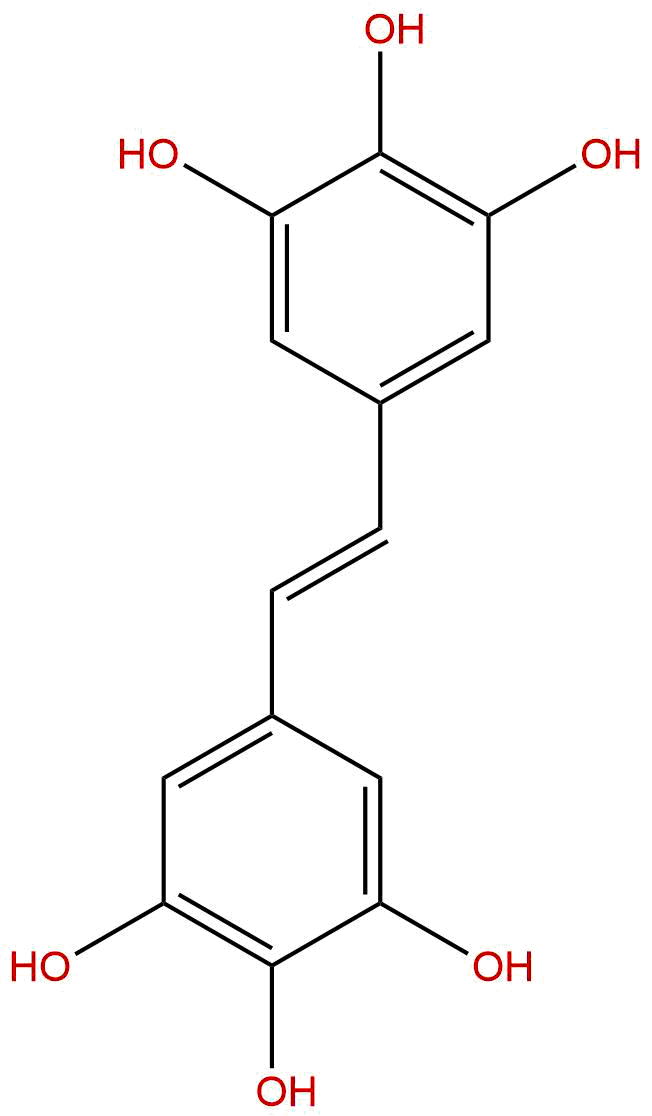


Product name: 4,3',5'-Trihydroxyresveratrol
Synonym name:
Catalogue No.: BP4803
Cas No.: 637776-83-1
Formula: C14H12O6
Mol Weight: 276.244
Botanical Source:
Type of Compound: Stibene glucosides
Purity: 95%~99%
Analysis Method: HPLC-DAD or/and HPLC-ELSD
Identification Method: Mass, NMR
Packing: Brown vial or HDPE plastic bottle
Storage: Store in a well closed container, protected from air and light. Put into refrigerate or freeze for long term storage.
Whenever possible, you should prepare and use solutions on the same day. However, if you need to make up stock solutions in advance, we recommend that you store the solution as aliquots in tightly sealed vials at -20℃. Generally, these will be useable for up to two weeks.
The product could be supplied from milligrams to grams
Inquire for bulk scale.
For Reference Standard and R&D, Not for Human Use Directly.
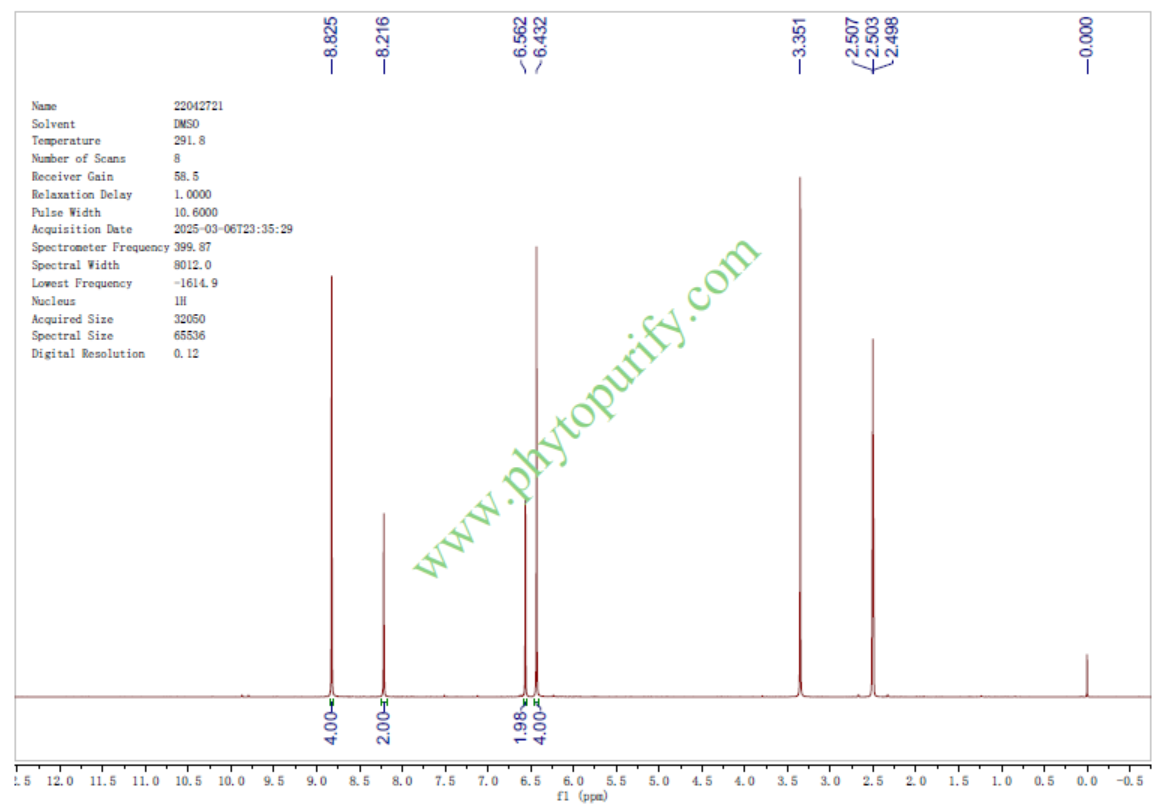
HNMR of 4,3',5'-Trihydroxyresveratrol
Storage conditions:Short-term storage at 2~8℃, long-term storage at -20 ~ -80℃
121.3800
2.1597
1.8027
.1675
4.4726
6.3021
Low
84.8999
2.3627
Yes
Yes
Yes
No
Yes
No
1.2
Yes
No
Yes
Yes
In the field of natural product chemistry and pharmacology research, resveratrol, as an outstanding representative of polyphenolic compounds, has been widely and deeply explored for its anti-aging, cardiovascular protection, and anti-tumor activities. However, with the advancement of research, its structural analogue -4,3 ', 5' - trihydroxyresveratrol (CAS number: 637776-83-1) - has gradually entered the field of scientists and demonstrated unique biological activity and potential application value. This compound can be considered as a hydroxylated derivative of resveratrol, and its subtle structural modifications, such as introducing additional hydroxyl groups on the benzene ring, may significantly alter its physicochemical properties, bioavailability, and interaction patterns with key biological targets.
Aging is a core risk factor for the occurrence and development of various chronic diseases, such as neurodegenerative diseases, cardiovascular diseases, metabolic syndrome, and cancer. At the molecular level, aging involves a series of complex processes such as energy metabolism imbalance, increased oxidative stress, telomere depletion, genomic instability, and cellular aging. Therefore, the search for safe and effective molecules that can intervene in these core aging pathways has become a research hotspot in modern preventive medicine and geriatrics. 4,3 ', 5' - trihydroxyresveratrol has shown promising prospects in anti-aging and related disease intervention due to its potential and potentially superior antioxidant, anti-inflammatory, and cell protective activities compared to the parent resveratrol. This article aims to systematically review the chemical properties, plant sources, pharmacological activities, molecular mechanisms of action, pharmacological evaluation, and clinical application potential of this compound, in order to provide comprehensive scientific references for the deep development and utilization of this natural product.
4,3 ', 5' - trihydroxyresveratrol, chemical name 5- [(E) -2- (3,5-dihydroxyphenyl) vinyl] -1,3-benzenediol, molecular formula C14H12O5, molecular weight 276.2440 g/mol. Its core structure is a stilbene skeleton, which differs from resveratrol (3,5,4 '- trihydroxystilbene) in the position of hydroxyl substituents: in 4,3', 5 '- trihydroxyresveratrol, the two benzene rings (A ring and B ring) have substitution modes of 1,3,5-trihydroxy and 1,3-dihydroxy, respectively. This symmetrical or nearly symmetrical polyhydroxylated structure is the chemical basis for its unique biological activity.
The physicochemical properties of compounds directly affect their bioavailability and in vivo distribution. Calculation and experimental data show that its lipid water partition coefficient (LogP) is about 2.16, indicating that the molecule has a certain degree of lipophilicity. However, compared to resveratrol (LogP of about 3.1), its hydrophilicity has been enhanced, mainly due to the additional hydroxyl groups. The topologically polar surface area (TPSA) is as high as 121.38 Å ², reflecting the strong polarity and hydrogen bonding ability brought by multiple hydroxyl groups in the molecule. The water solubility is about 0.1675 mg/mL, which belongs to the category of slight solubility. This suggests that in the development of formulations, it may be necessary to improve their solubility through techniques such as salt formation, cyclodextrin inclusion, or nanoformulation. Preliminary drug risk assessment shows that its blood-brain barrier permeability is low, which may limit its direct efficacy in central nervous system diseases; Negative in hERG channel inhibition test indicates a low risk of cardiac toxicity; The Ames test result is 1.2 (usually considered negative if it is less than 2), indicating that it has no obvious mutagenicity and has a good safety basis.
4,3 ', 5' - trihydroxyresveratrol is relatively rare in nature and mainly exists in a few plants. The main reported sources of plants currently include:
1. Grape family plants In addition to the common resveratrol, its hydroxylated derivatives have also been detected in the skins, seeds, or wines of certain grape varieties (Vitis vinifera), with typically very low levels.
2. Polygonaceae plants Polygonum cuspidatum is a classic source of resveratrol, and various polyphenolic compounds, including 4,3 ', 5' - trihydroxyresveratrol, have been identified in its rhizome extracts using high-resolution mass spectrometry and other techniques.
3. Leguminous plants The roots and seed coat of Arachis hypogaea.
4. Other sources Similar structural compounds have also been reported in some mosses, fungi, and mulberry plants.
Due to its low natural content and frequent coexistence with structurally similar analogues, its separation and purification are quite challenging. Conventional extraction methods often use organic solvents (such as methanol, ethanol, acetone) for extraction or ultrasound assisted extraction. Subsequently, a variety of chromatographic techniques need to be combined for enrichment and purification, such as silica gel column chromatography, Sephadex gel (LH-20) column chromatography, and high-performance liquid chromatography (HPLC) or preparative thin layer chromatography (PTLC). In recent years, liquid-liquid distribution chromatography techniques such as high-speed countercurrent chromatography (HSCCC) have shown advantages in separating such natural products due to their high recovery rate and avoidance of irreversible adsorption caused by solid adsorbents. In addition, given the difficulty of obtaining sufficient pure products from natural plants, chemical synthesis and biosynthesis (such as using microbial engineering strains or plant cell culture) have become important supplementary pathways for obtaining this compound, providing material guarantees for its in-depth pharmacological research.
Numerous in vitro and in vivo studies have revealed the extensive and significant pharmacological activities of 4,3 ', 5' - trihydroxyresveratrol, particularly in anti-aging and related fields.
1. Antioxidant and free radical scavenging activity
This compound is a potent electron donor due to its dense phenolic hydroxyl groups on the benzene ring, which can directly scavenge reactive oxygen/nitrogen species such as superoxide anions (O ₂•⁻), hydroxyl radicals (• OH), and peroxynitrite (ONOO ⁻). Its antioxidant capacity (ORAC value, etc.) is usually higher than that of resveratrol, which can effectively inhibit lipid peroxidation, protein carbonylation, and DNA oxidative damage, protecting cells from oxidative stress.
2. Anti inflammatory effect
In a macrophage (such as RAW264.7) and microglial inflammation model induced by lipopolysaccharide (LPS) and other stimuli, 4,3 ', 5' - trihydroxyresveratrol can dose dependently inhibit the production of nitric oxide (NO) and prostaglandin E2 (PGE2), and downregulate the expression of inducible nitric oxide synthase (iNOS), cyclooxygenase-2 (COX-2), as well as pro-inflammatory cytokines such as tumor necrosis factor alpha (TNF - α) and interleukin-6 (IL-6). Its anti-inflammatory mechanism is closely related to the regulation of nuclear factor kappa B (NF - κ B) and mitogen activated protein kinase (MAPK) signaling pathways.
3. Cell protection and anti-aging effects
In various cellular aging models such as replicative aging, hydrogen peroxide or D-galactose-induced premature aging, this compound exhibits the ability to delay the aging phenotype. It can reduce the activity of aging associated β - galactosidase (SA - β - gal), maintain cell proliferation potential, and delay telomere shortening rate. At the organizational level, it can improve learning and memory abilities, enhance exercise endurance, and protect important organs such as the heart, brain, liver, and kidneys from age-related functional decline and structural damage in animal models such as aging accelerated mice SAMP8 and D-galactose-induced aging mice.
4. Other potential activities
Preliminary studies also suggest that this compound may have the potential of neuroprotection (antagonizing A β toxicity or glutamate excitotoxicity), improving insulin sensitivity, protecting cardiovascular system (improving endothelial function, anti atherosclerosis) and inhibiting the proliferation of some cancer cells, but these activities need to be verified by more systematic and in-depth research.
The anti-aging and multi effect pharmacological effects of 4,3 ', 5' - trihydroxyresveratrol stem from its precise regulation of multiple key signaling pathways and molecular targets within cells. Its core mechanism of action can be summarized as follows:
1. Activate pathways related to energy metabolism and longevity
* AMPK signaling pathway As the "energy receptor" of cells, AMP activated protein kinase (AMPK) plays a central role in energy homeostasis. This compound can directly or indirectly activate AMPK, promote fatty acid oxidation, glucose uptake, inhibit synthetic metabolism, simulate calorie restriction effects, thereby improving metabolic health and extending healthy lifespan.
* SIRT1 deacetylase Silencing information regulatory factor 1 (SIRT1) is a class III histone deacetylase that relies on NAD+to function. Research has shown that 4,3 ', 5' - trihydroxyresveratrol may be an activator of SIRT1, regulating mitochondrial biosynthesis, antioxidant defense, cellular autophagy, and stress resistance by deacetylating downstream targets such as PGC-1 α, FOXO family, p53, etc.
2. Enhance antioxidant defense system
* NRF2/ARE pathway This compound can promote the dissociation and translocation of nuclear factor E2 related factor 2 (NRF2) from the cytoplasmic inhibitor Keap1 to the nucleus, activate antioxidant response elements (ARE), and upregulate the expression of a series of phase II detoxifying enzymes and antioxidant proteins, including heme oxygenase-1 (HMOX1), superoxide dismutase 1 (SOD1), catalase (CAT), glutathione S-transferase (GST), etc., systematically enhancing the antioxidant capacity of cells.
3. Regulating cell cycle and aging related proteins
* P53 and p21 signaling Tumor suppressor protein p53 (TP53) and its downstream effector molecule p21 (CDKN1A) are key regulators of cell cycle checkpoint and aging process. This compound may moderately regulate the p53-p21 axis under specific conditions (such as DNA damage), induce cell cycle arrest for DNA repair, prevent damaged cell proliferation, but avoid excessive and irreversible aging or apoptosis. This fine regulation helps maintain genomic stability.
* FOXO transcription factor Fork head box protein O (FOXO1, especially FOXO3a) is an important transcription factor associated with longevity. This compound may promote FOXO nuclear translocation by activating AMPK, SIRT1, or inhibiting Akt pathways, thereby upregulating the expression of genes related to antioxidant, DNA repair, and autophagy.
4. Telomere maintenance
* Telomerase activity (TERT)Telomerase is a key enzyme that maintains telomere length. There are studies suggesting that this compound may indirectly affect telomerase activity or the expression of telomere related proteins through certain signaling pathways, such as SIRT1 activation, thereby delaying replicative aging.
In summary, 4,3 ', 5' - trihydroxyresveratrol forms a three-dimensional network through multi-target and multi pathway synergistic effects, from energy metabolism regulation, oxidative stress resistance, to cell cycle and genome stability maintenance, jointly resisting the driving factors of aging. This provides a solid molecular basis for it as a leading anti-aging compound.
Although 4,3 ', 5' - trihydroxyresveratrol exhibits excellent biological activity in vitro, its drug like and in vivo pharmacokinetic (PK) properties are the key bottlenecks determining its successful development as a drug.
Drug Evaluation:
As mentioned earlier, its molecular weight is moderate, and its LogP value suggests a certain degree of membrane permeability, but its high TPSA and low water solubility are the main limiting factors for oral absorption. The blood-brain barrier has low permeability and may require targeted delivery systems to effectively treat central nervous system diseases. At present, there is a lack of systematic toxicological data (such as subacute/chronic toxicity, reproductive toxicity, etc.), which is a gap that preclinical research must fill. The preliminary hERG and Ames negative results provide preliminary safety signals for subsequent development.
Pharmacokinetic characteristics (based on analog inference and limited research):
* absorb After oral administration, it may experience moderate absorption in the gastrointestinal tract. Its polyphenol structure is easily metabolized by gut microbiota and may exhibit first pass effects.
* distribution Due to its moderate lipophilicity and strong binding affinity with plasma proteins (such as albumin), its distribution volume in the body may be limited, mainly distributed in organs with abundant blood flow, but its concentration entering the brain may be lower.
* Metabolism The liver is its main metabolic site, and metabolic pathways include glucuronidation and sulfation binding reactions, generating corresponding glucuronide and sulfate ester complexes. The cytochrome P450 enzyme system (CYP450) may also be involved in its oxidative metabolism. These metabolic processes typically lead to a rapid decrease in plasma concentration of their prototype drug, and their bioavailability may be low (expected to be less than 1% of resveratrol).
* excretion Metabolites are mainly excreted through the kidneys with urine, and some are excreted through bile and feces.
To overcome its drug defects, current research strategies include:
1. Structural modification By preparing prodrugs such as esterification and etherification to protect phenolic hydroxyl groups, their lipid solubility and metabolic stability can be improved.
2. New drug delivery system Develop nanoliposomes, solid lipid nanoparticles, polymer micelles, cyclodextrin inclusion complexes, etc. to improve their solubility, stability, and bioavailability, and even achieve targeted delivery.
3. combination therapy Combined with drugs or absorption enhancers that inhibit its metabolic enzymes (such as UDP glucuronosyltransferase) to increase its blood drug concentration.
4,3 ', 5' - trihydroxyresveratrol, as a natural product with multi-target anti-aging activity, has broad clinical application prospects but also faces many challenges.
Potential application directions:
1. Anti aging and Healthy Aging (Healthspan Extension)As a dietary supplement or functional food ingredient, it is used to delay the overall aging process of the body, prevent age-related functional decline, and improve the quality of life in old age. This is its most direct application scenario.
2. Prevention and treatment of age-related diseases:
* Neurodegenerative diseases For example, Alzheimer's disease and Parkinson's disease may delay disease progression through their antioxidant, anti-inflammatory, neurotrophic, and protective effects.
* Metabolic diseases For example, type 2 diabetes and nonalcoholic fatty liver disease can improve insulin sensitivity and lipid metabolism by activating AMPK/SIRT1.
* cardiovascular disease: Prevent cardiovascular and cerebrovascular events by protecting vascular endothelial function and anti atherosclerosis.
* Aging eye diseases Such as age-related macular degeneration (AMD) and cataracts.
3. Skin anti-aging In cosmetics or topical preparations, utilize its powerful antioxidant and anti-inflammatory properties to combat photoaging, reduce wrinkles, and improve skin elasticity.
Challenges and Future Prospects:
1. Improved bioavailability This is the primary obstacle to its clinical application. Future research needs to focus on the development of efficient and safe delivery systems, or obtaining derivatives with better pharmacokinetic properties through rational drug chemical design.
2. Deep analysis of the mechanism of action Although it is known to act on multiple targets, the specific details of its network regulation, which are direct targets and which are secondary effects, still need to be elucidated using chemical biology methods such as affinity fishing and molecular probes.
3. Preclinical and clinical research Urgent need to conduct systematic and standardized preclinical pharmacodynamic (in disease models closer to humans), pharmacokinetic, and toxicological studies to obtain the complete set of data required for IND (New Drug Clinical Trial) application. Subsequently, rigorous clinical trials were designed to verify its safety, tolerability, and efficacy in humans.
4. Exploration of Personalized Applications To investigate whether its therapeutic effect is related to an individual's genotype (such as SIRT1, NRF2 polymorphism), gut microbiota composition, etc., in order to provide a basis for achieving precise anti-aging interventions.
4,3 ', 5' - trihydroxy resveratrol, as a distinctive member of the resveratrol family, has shown significant potential in antioxidant, anti-inflammatory, cell protection, and multi-target regulation of aging related pathways due to its unique chemical structure and multi hydroxyl properties. It constructs a multidimensional action network against the complexity of aging by synergistically activating the AMPK/SIRT1 energy sensing pathway, enhancing NRF2 mediated antioxidant defense, and finely regulating cell fate determining factors such as p53/p21 and FOXO. However, the low bioavailability and incomplete in vitro and in vivo research data are the gaps that it must cross from the laboratory to clinical practice. In the future, through interdisciplinary collaboration and the latest advances in medicinal chemistry, pharmacy, systems biology, and clinical medicine, it is expected to overcome these obstacles, deeply explore the therapeutic value of this natural molecule, and open up new paths for the development of safe and effective anti-aging and age-related disease prevention and treatment new drugs or health products.
