


Synonym name: Pulmatin
Catalogue No.: BP0349
Cas No.: 4839-60-5
Formula: C21H20O9
Mol Weight: 416.382
Botanical Source: Rheum palmatum (Turkey rhubarb)
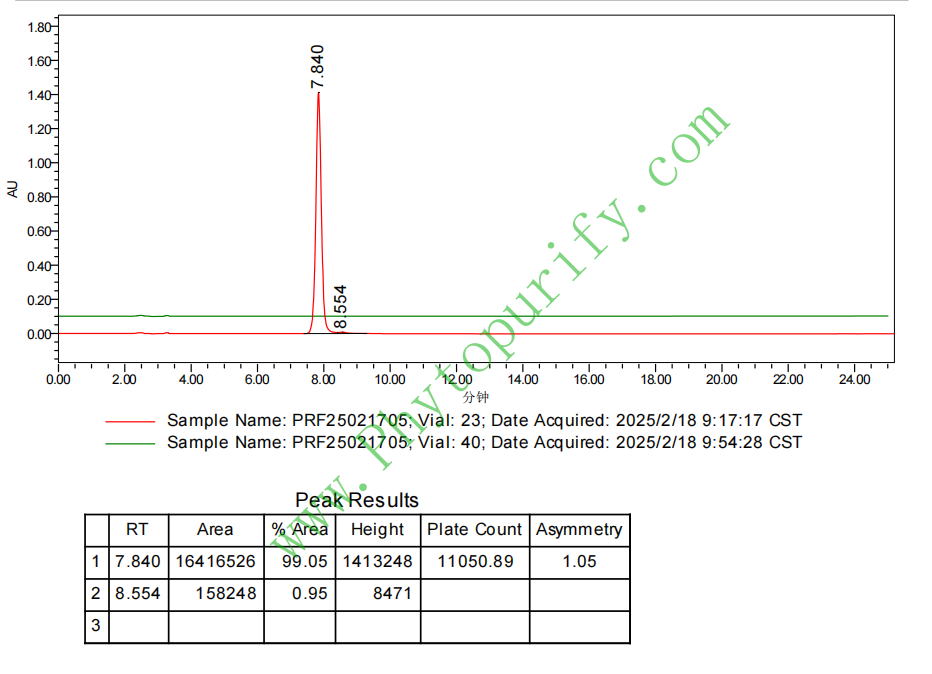
Purity: 95%~99%
Analysis Method: HPLC-DAD or/and HPLC-ELSD
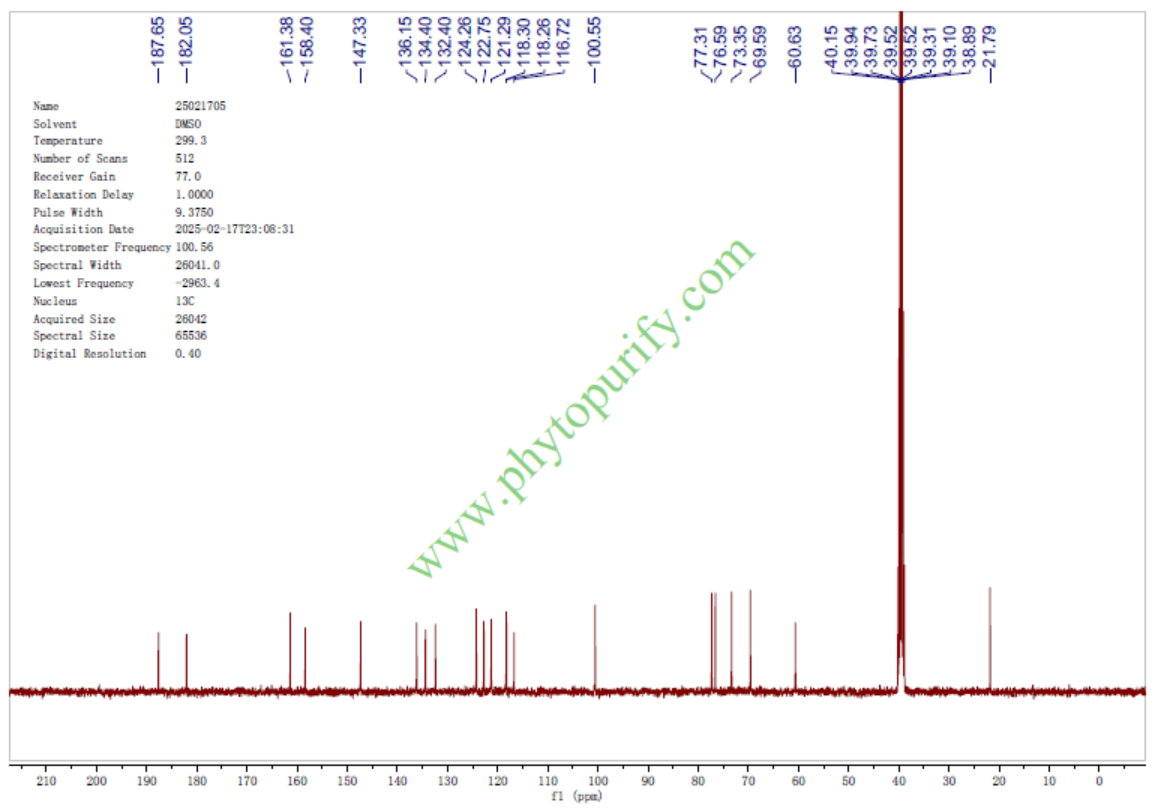
Identification Method: Mass, NMR
Packing: Brown vial or HDPE plastic bottle
Can be supplied from milligrams to grams.
For Reference Standard and R&D, Not for Human Use Directly.
Inquire for bulk scale.
HPLC of Chrysophanol 1-glucoside
NMR of Chrysophanol 1-glucoside
Storage conditions:Short-term storage at 2~8℃, long-term storage at -20 ~ -80℃
Chrysophanol-1-glucoside (CAS number: 4839-60-5) is a natural anthraquinone compound widely present in various traditional Chinese medicinal materials, especially in plants such as Rheum spp. As a glycoside derivative of Chrysophanol, its molecular structure incorporates glucose units, endowing it with unique physicochemical properties and biological activity. In recent years, with the deepening development of natural product pharmacology, emodin 1-O-glucoside has gradually become a research hotspot due to its potential therapeutic value in tumors, inflammation, and metabolic diseases. Numerous in vitro and in vivo experiments have shown that this compound can effectively inhibit epidermal growth factor (EGF) - induced phosphorylation of epidermal growth factor receptor (EGFR), thereby blocking downstream AKT and mTOR/p70S6K signaling pathways, exhibiting significant anti-tumor and anti-inflammatory activities.
The purpose of this article is to systematically review the chemical structure and physicochemical properties, plant sources and extraction methods, pharmacological activities and mechanisms of action of chrysophanol-1-O-glucoside, and explore its clinical application prospects and future research directions based on its pharmacological parameters, providing reference and inspiration for the field of natural product pharmacology.
Rhubarb phenol-1-O-glucoside is the 1-O-glucoside form of anthraquinone compound emodin, with a molecular formula of C21H20O10 and a molecular weight of 416.38. The core of its structure is the anthraquinone tricyclic skeleton, and the hydroxyl group at position 1 is connected to glucose molecules through a glycosidic bond, forming a stable glycosidic bond structure. This structure endows it with high polarity and water solubility, with a LogP value of only 0.19, indicating its strong hydrophilicity, which is conducive to absorption and distribution in vivo.
In terms of physical and chemical properties, the topological polar surface area (TPSA) of emodin 1-O-glucoside is 164.67 Å ², indicating that it has a large number of polar groups, especially hydroxyl and oxygen atoms, which can form multiple hydrogen bonds (with 9 hydrogen bond acceptors), which facilitates its binding to biomolecule targets. Its molecular structure is stable and there is no significant hepatotoxicity or cardiotoxicity. The hERG channel inhibition test and Ames mutagenicity test are both negative, demonstrating good safety.
The detailed analysis of the molecular structure shows that the glycoside portion not only increases the water solubility of the molecule, but may also affect its cell membrane permeability and metabolic stability. Due to its low blood-brain barrier permeability (BBB Low), the compound has limited effects in the central nervous system, but this also reduces the risk of central toxicity.
Rhubarb phenol-1-O-glucoside is mainly found in Rheum spp., especially in traditional Chinese medicinal herbs such as Rheum palmatum L. and Rheum officinale Baill. As a traditional Chinese medicinal herb, rhubarb is widely used in clinical applications such as diarrhea, clearing heat and detoxifying, promoting blood circulation and removing blood stasis. Its active ingredients are complex, among which anthraquinone compounds are one of the main active components.
The extraction method usually uses solvent extraction combined with chromatographic separation technology. Common solvents include ethanol, water, methanol, etc. During extraction, reflux extraction or ultrasound assisted extraction are often used to improve extraction efficiency. The extraction solution undergoes concentration, separation, and column chromatography (such as silica gel column, reverse phase C18 column), and is finally purified by high performance liquid chromatography (HPLC) to obtain high-purity chrysophanol-1-O-glucoside.
In recent years, green extraction techniques such as supercritical CO2 extraction and microwave-assisted extraction have also been applied to the extraction of this compound, significantly improving extraction efficiency and purity, reducing the use of organic solvents, and in line with the environmental trend of modern natural product extraction.
The pharmacological activities of emodin 1-O-glucoside are mainly reflected in anti-tumor, anti-inflammatory, and regulation of cell signaling.
A large number of in vitro cell experiments have shown that emodin 1-O-glucoside can significantly inhibit the proliferation and migration of various tumor cell lines. The mechanism mainly involves blocking EGF induced EGFR phosphorylation, inhibiting downstream AKT and mTOR/p70S6K signaling pathways, thereby inhibiting cell cycle progression and inducing cell apoptosis. For example, in lung cancer, breast cancer and colorectal cancer cells, the compound shows obvious anti-tumor effect, reduces cell activity and promotes apoptosis related protein expression.
Rhubarb phenol-1-O-glucoside also exhibits good anti-inflammatory activity. By inhibiting the activation of the EGFR signaling pathway and reducing the expression of pro-inflammatory factors such as TNF - α and IL-6, the inflammatory response is alleviated. In addition, its regulation of the NF - κ B signaling pathway has also been reported, which helps to reduce the release of inflammatory mediators and alleviate tissue damage.
Some studies indicate that the compound has antioxidant activity, can scavenge free radicals, and protect cells from oxidative stress damage. In addition, its potential regulatory effect on metabolic related diseases such as non-alcoholic fatty liver disease (NAFLD) and diabetes has also been gradually concerned, which may be related to its regulation of mTOR signaling pathway.
The main molecular targets of emodin 1-O-glucoside are epidermal growth factor receptor (EGFR) and its downstream signaling pathway. EGFR is a receptor tyrosine kinase widely involved in regulating cell proliferation, differentiation, and survival. After EGF binds to EGFR, it promotes the phosphorylation of its tyrosine residues, activating multiple signaling pathways including PI3K/AKT and mTOR/p70S6K.
This compound inhibits EGF induced EGFR phosphorylation, blocks signal transduction, leads to a decrease in AKT and mTOR/p70S6K activity, inhibits cell proliferation, and promotes apoptosis. AKT, as a key cell survival signaling molecule, its inhibition helps to alleviate the inhibition of the apoptotic pathway. The mTOR/p70S6K signaling pathway regulates protein synthesis and cell growth, and its downregulation helps to inhibit the metabolic activity of tumor cells.
In addition, glycosidic structures may enhance the water solubility and targeting of molecules, thereby improving their binding affinity and selectivity to receptors. Some studies also suggest that emodin 1-O-glucoside may affect other signaling pathways such as NF - κ B and MAPK, further exerting anti-inflammatory and anti-tumor effects, but the specific mechanism still needs to be further explored.
From the perspective of medicinal properties, emodin 1-O-glucoside exhibits good safety and drug metabolism characteristics.
According to existing data, the compound has no significant hepatotoxicity or cardiac toxicity, and the hERG channel inhibition experiment is negative, indicating a low risk of arrhythmia. The Ames mutagenicity test was negative, indicating a low risk of genotoxicity. These characteristics have laid a solid foundation for its clinical development.
The LogP value of emodin 1-O-glucoside is 0.19, indicating its strong hydrophilicity, which facilitates dissolution and distribution in plasma, but may limit its cell membrane penetration ability. The high TPSA (164.67 Å ²) and numerous hydrogen bond acceptors (9) also support its strong water solubility, but may affect oral bioavailability.
The low permeability of the blood-brain barrier suggests its limited distribution in the central nervous system, making it suitable for non central target diseases. The metabolic pathways in the body are not fully understood, but the glycosidic structure may be hydrolyzed by gut microbiota or liver enzymes, releasing active emodin, which affects its duration of efficacy and metabolic stability.
In the future, it is necessary to clarify its absorption, distribution, metabolism, and excretion (ADME) characteristics through in vivo pharmacokinetic studies, in order to provide a basis for dosage form design and optimization of dosing regimens.
Rhubarb phenol-1-O-glucoside has broad application prospects in the field of tumor therapy due to its significant inhibition of EGFR and downstream signaling pathway activity. Abnormal activation of the EGFR signaling pathway is a key driving factor for the occurrence and development of various tumors, and multiple drugs targeting EGFR have been approved for clinical use. As a natural product, this compound has the advantages of novel structure and high safety, and is expected to become a candidate molecule for novel anti-tumor drugs.
In addition, its anti-inflammatory effect makes it potentially valuable for the treatment of chronic inflammatory diseases such as rheumatoid arthritis and inflammatory bowel disease. Combined with its regulation of mTOR signaling pathway, its application in metabolic diseases such as fatty liver and diabetes can be explored in the future.
Looking ahead, it is necessary to strengthen research in the following areas:
Combining modern drug design and natural product development technologies, emodin 1-O-glucoside is expected to become an innovative multi-target and multifunctional drug, providing new strategies for the treatment of related diseases.
Rhubarb phenol-1-O-glucoside, as a natural anthraquinone compound, exhibits significant anti-tumor and anti-inflammatory activities due to its unique chemical structure and good physicochemical properties. It exerts its effect by inhibiting EGF induced EGFR phosphorylation and downstream AKT and mTOR/p70S6K signaling pathways, with a clear mechanism and good safety. Although the research on its in vivo metabolism and clinical applications is still in its early stages, its potential as a natural product drug development cannot be ignored.
In the future, interdisciplinary research combining modern pharmacology, pharmacokinetics, and medicinal chemistry will promote the clinical application of chrysophanol-1-O-glucoside, assist in the development of new efficient and low toxicity natural medicines, and provide new ideas and choices for the treatment of major diseases such as tumors and inflammation.
