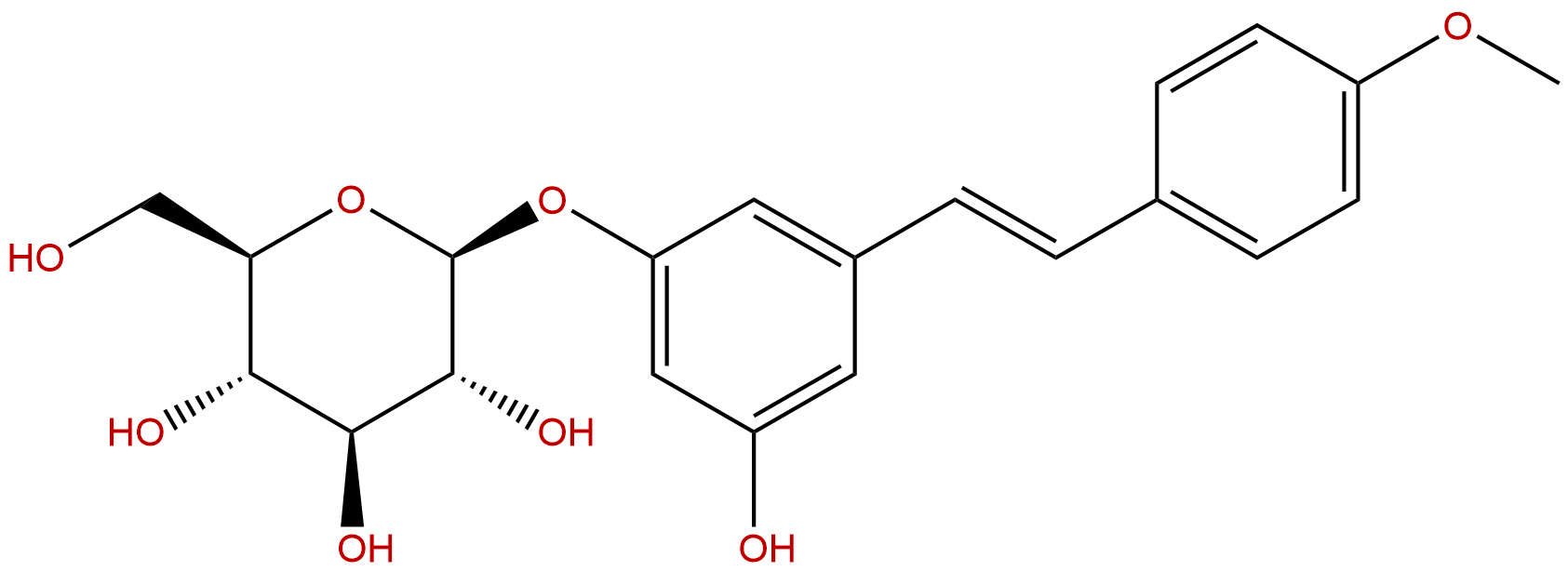


Product name: Desoxyrhaponticin
Synonym name:
Catalogue No.: BP1673
Cas No.: 30197-14-9
Formula: C21H24O8
Mol Weight: 404.415
Botanical Source:
Physical Description:
Type of Compound: Phenols
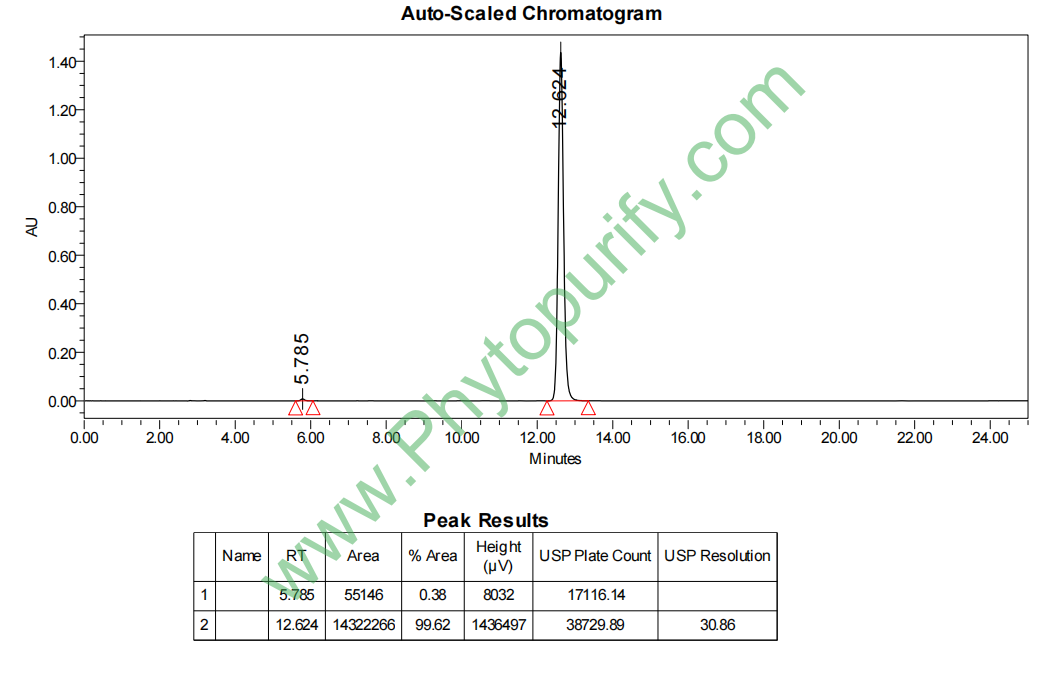
Purity: 95%~99%
Analysis Method: HPLC-DAD or/and HPLC-ELSD
Identification Method: Mass, NMR
Packing: Brown vial or HDPE plastic bottle
The product could be supplied from milligrams to grams. Inquire for bulk scale.
We provide solution to improve the water-solubility of compounds, thereby facilitating the variety of activity tests and clinic uses.
For Reference Standard and R&D, Not for Human Use Directly.
Description:
Desoxyrhaponticin is an agent that is potentially effective in controlling postprandial hyperglycemia in diabetes. Desoxyrhaponticin could be considered as a promising fatty acid synthase(FAS) inhibitor, it could inhibit intracellular FAS activity and downregulate FAS expression in human breast cancer MCF-7 cells.
References:
Food & Function, 2014 , 5 (2) :251-6.
Inhibitory effect of desoxyrhaponticin and rhaponticin, two natural stilbene glycosides from the Tibetan nutritional food Rheum tanguticum Maxim. ex Balf., on fatty acid synthase and human breast cancer cells.
Fatty acid synthase (FAS) has attracted more and more attention as a potential target for cancer treatment. Natural FAS inhibitors are emerging as potential therapeutic agents to treat cancer. Rheum tanguticum Maxim. ex Balf. (rhubarb) is a traditional Chinese nutritional food and has been reported to possess a variety of biological activities, including the ability to induce the apoptosis of cancer cells.
METHODS AND RESULTS:
This study indicates that Desoxyrhaponticin (DC) and rhaponticin (RC), two stilbene glycosides from rhubarb, could be considered as promising FAS inhibitors. We found that both DC and RC could inhibit intracellular FAS activity and downregulate FAS expression in human breast cancer MCF-7 cells. In addition, the apoptotic effect of DC on human cancer cells was announced for the first time.
CONCLUSIONS:
Since FAS plays a key role in the biosynthesis pathway of fatty acids in cancer cells, these findings suggest that DC has potential applications in the prevention and treatment of cancer.
J Pharmacol Exp Ther. 2007 Jan;320(1):38-46.
Desoxyrhaponticin (3,5-dihydroxy-4'-methoxystilbene 3-O-beta-D-glucoside) inhibits glucose uptake in the intestine and kidney: In vitro and in vivo studies.
Rhubarb extracts have been reported to improve oral glucose tolerance in diabetic animals.
METHODS AND RESULTS:
In the present study we have investigated the antidiabetic actions of Desoxyrhaponticin, a major stilbene in rhubarb, as a glucose uptake inhibitor. Desoxyrhaponticin was demonstrated to inhibit glucose uptake in rabbit intestinal membrane vesicles as well as in rat everted gut sleeves, with IC50 values of 148.3 and 30.9 microM, respectively. Kinetics studies revealed that Desoxyrhaponticin is a competitive inhibitor of glucose uptake in both systems. Moreover, Desoxyrhaponticin could reduce glucose uptake in the intestinal membrane vesicles of both normal and diabetic rats. In addition, glucose uptake in the renal membrane vesicles of both normal and diabetic rats was reduced by Desoxyrhaponticin. Under the inhibition of Desoxyrhaponticin, uptake of glucose in both the intestinal and renal membrane vesicles of the normal rats was no different from that of the diabetic rats. The IC50 values of the uptake inhibition in the renal membrane vesicles of normal and diabetic rats were 118.8 and 115.7 microM, respectively. In a type 2 diabetic animal model in which rats have been treated with streptozotocin at the neonatal stage, postprandial hyperglycemia was significantly suppressed by oral administration of this compound (300 mg/kg b.wt.).
CONCLUSIONS:
These results suggest that Desoxyrhaponticin is an agent that is potentially effective in controlling postprandial hyperglycemia in diabetes. The in vivo antidiabetic action of this compound can be explained, in part at least, by inhibition of glucose transport in the small intestine and inhibition of glucose reabsorption in the kidney.
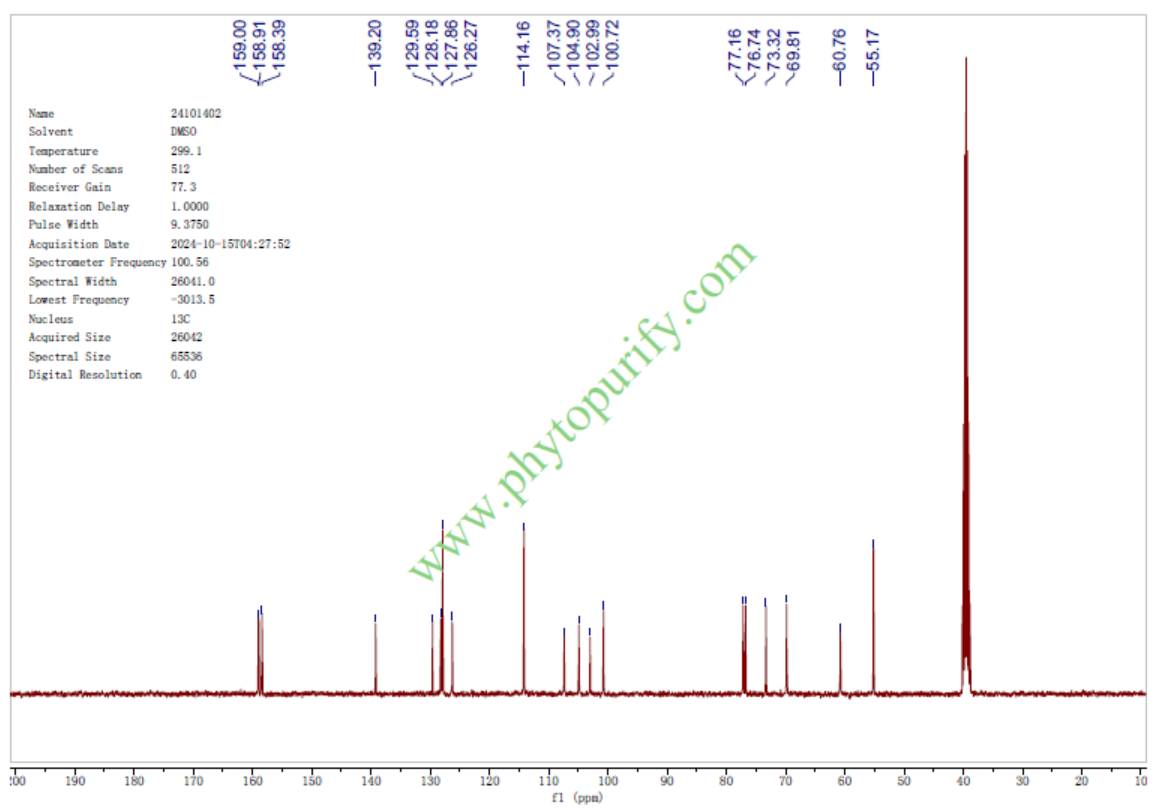
NMR of Desoxyrhaponticin
HPLC of Desoxyrhaponticin
Storage conditions:Short-term storage at 2~8℃, long-term storage at -20 ~ -80℃
128.8400
1.0663
1.0655
1.9727
.6803
.1058
Low
81.1811
3.6067
Yes
No
Yes
No
No
No
0.0
Yes
Yes
Yes
Yes
Natural products, as a treasure trove for drug discovery and development, have played an irreplaceable role in the history of humanity's fight against major diseases such as cancer, metabolic disorders, and inflammation. Among them, stilbene compounds have attracted much attention due to their extensive biological activities, and research on resveratrol and its derivatives is particularly in-depth. Deoxyrhaponticin (CAS number: 30197-14-9), as a structurally unique natural product of stilbene glycosides, has gradually emerged from numerous natural molecules in recent years and demonstrated remarkable multi-target pharmacological activity. Early research mainly focused on its plant sources - traditional medicinal plants such as Rheum and Polygonum, and its role as a secondary metabolite was recognized. However, with the deepening of modern pharmacological research, deoxyuridine has been revealed as an orally effective fatty acid synthase (FASN) inhibitor that can induce apoptosis in various human cancer cells, thus demonstrating potential in the field of tumor therapy. At the same time, its role in the regulation of glucose metabolism has also been found, which is manifested in the inhibition of glucose uptake and the improvement of oral glucose tolerance in diabetes animal models, suggesting that it has the application prospect of anti diabetes. In addition, the compound exhibits significant anti-inflammatory activity in inflammatory disease models such as enteritis by regulating key inflammatory targets such as TNF, IL-6, IL-1 β, PTGS2 (COX-2), and NF - κ B. This combination of anti-tumor, anti diabetes and anti-inflammatory properties makes deoxygenated emodin a leading compound with great research value. This article aims to systematically review the chemical structure, plant origin, pharmacological activity, mechanism of action, pharmacological evaluation, and clinical application prospects of deoxyuridine, in order to provide comprehensive scientific references for the in-depth research and future development of this compound.
The chemical name of deoxyuridine is 3,5-dihydroxy-4 '- methoxystilbene-3' - O - β - D-glucoside, which is a glycoside derivative of stilbene compounds. Its molecular formula is C21H24O9 and its molecular weight is 404.4150. Structurally, its parent nucleus is composed of two benzene rings connected by an vinyl group, belonging to the trans stilbene (stilbene) structure. Compared with the famous resveratrol (3,5,4 '- trihydroxystilbene), deoxyuridine is replaced by a methoxy (- OCH3) group at the 4' position instead of a hydroxyl group, and is linked to a β - D-glucosyl group at the 3 'position through a glycosidic bond. This structural modification significantly altered its physicochemical properties and biological activity.
The key physicochemical property parameters determine its pharmacokinetic behavior. Its lipid water partition coefficient (LogP) is 1.0663, indicating that the compound has moderate lipophilicity, which is conducive to transmembrane absorption, but has not reached the distribution and clearance difficulties that high lipophilicity may bring. The topologically polar surface area (TPSA) is 128.8400 Å ², which is relatively large. This is mainly attributed to the hydrogen bond donor and acceptor sites brought by multiple hydroxyl and glycoside structures in the molecule, which affects its membrane permeability and solubility. Its water solubility value is 1.9727 (usually measured in mg/mL or log mol/L, here it is a calculated value indicating slight solubility to solubility), combined with its TPSA and LogP, it is predicted to have the potential for oral absorption. The molecular weight is slightly higher than 400, but still within the allowable range of the Rule of Five, indicating that it has good drug like properties.
In addition, preliminary pharmacological risk assessment shows that the ability of deoxyuridine to penetrate the blood-brain barrier is low, which limits its direct effects on central nervous system related diseases, but may also reduce potential neurotoxic risks. Importantly, its hERG inhibition risk is' no ', indicating a lower potential risk of inducing cardiac QT interval prolongation. The Ames test result was 0.0, indicating that no mutagenicity was observed in this testing system, providing preliminary favorable evidence for its safety. These physical, chemical, and preliminary toxicological properties together constitute the fundamental characteristics of deoxyuridine as a candidate drug.
Deoxytetracycline is mainly found in the Polygonaceae family, Rheum genus(Rheum)And the Tiger Staff genus(Fallopia)Among plants, these plants have a long history of application in traditional Asian medicine. Its main plant sources include:
1. Palm leaf rhubarb(Rheum palmatum L.)、Tanggu Extra Large Yellow(Rheum tanguticum) Waiting for Medicinal Rhubarb: These are the authentic sources of the traditional Chinese medicine "Rhubarb", and deoxyluteolin often coexists with other stilbene glycosides such as luteolin and resveratrol glycosides.
2. Tiger Staff(Fallopia japonica, formerly known as Polygonum cuspidatum)Tiger cane is rich in various stilbene compounds, such as resveratrol and resveratrol glycosides, and deoxyuridine is also one of its important components.
3. Other Polygonaceae plants How to Shouwu(Fallopia multiflora)There are also trace amounts or related structural derivatives present.
In the plant body, deoxyuridine, as a plant antitoxin, is synthesized and increased in response to biotic or abiotic stress. The extraction method follows the conventional process of natural product chemistry, but there are specific optimizations for its structure and properties:
1. extraction solvent Commonly used solvents with moderate polarity, such as methanol, ethanol, or acetone water mixed systems, are used for reflux extraction or ultrasound assisted extraction. Ethanol is the preferred choice for laboratory and industrial scale due to its low toxicity, moderate cost, and high extraction efficiency.
2. Separation and purification After vacuum concentration, the crude extract was separated using the polarity and solubility differences of deoxygenated emodin. Large pore adsorption resin (such as AB-8, D101) column chromatography is commonly used for initial enrichment, followed by gradient elution with water and different concentrations of ethanol. Deoxidized emodin is usually eluted at the 30% -70% ethanol elution site. Further purification relies on silica gel column chromatography, reverse phase silica gel (such as ODS) column chromatography, and high-performance liquid chromatography (HPLC) preparation. The reverse phase C18 column combined with methanol water or acetonitrile water system is the standard method for HPLC purification.
3. Identification and Quality Control The structural identification of pure compounds comprehensively utilizes ultraviolet spectroscopy (UV, characteristic absorption of styrene), infrared spectroscopy (IR), mass spectrometry (MS, providing molecular weight and fragment information), and nuclear magnetic resonance spectroscopy (NMR, especially 1H-NMR and 13C-NMR, which can accurately resolve glycosidic bond positions and all hydrogen and carbon signals). For the determination of content in plant extracts or preparations, high-performance liquid chromatography ultraviolet detection (HPLC-UV) or high-performance liquid chromatography-mass spectrometry (HPLC-MS/MS) are widely used due to their high sensitivity and good specificity.
Deoxyrhein shows various pharmacological activities, mainly focusing on three fields of anti-tumor, anti diabetes and anti-inflammatory.
1. Antitumor activity
The anticancer effect of deoxygenated rhubarb glycoside is one of its most highly regarded activities. Studies have shown that it can significantly inhibit proliferation and induce apoptosis in a variety of human cancer cell lines, including breast cancer (such as MCF-7, MDA-MB-231), liver cancer (such as HepG2, SMMC-7721), colon cancer (such as HCT-116, HT-29), etc. Its effect is concentration and time-dependent. Mechanistically, the core of its anti-tumor effect lies in the inhibition of fatty acid synthase (FASN). FASN is overexpressed in various malignant tumors and is responsible for catalyzing de novo synthesis of endogenous fatty acids, providing essential lipid membrane components and energy for rapid proliferation of cancer cells. Deoxystrobin inhibits FASN competitively or conformationally, leading to inhibition of long-chain fatty acid synthesis (such as palmitic acid) in cells, triggering endoplasmic reticulum stress, accumulation of reactive oxygen species (ROS), and ultimately activating the Caspase cascade through mitochondrial and death receptor pathways, inducing cancer cell apoptosis. In addition, the study suggests that it may affect the cell cycle, blocking cells in the G0/G1 phase.
2. Anti diabetes and metabolic regulation activity
In terms of metabolic diseases, deoxygenated rhubarb glycoside exhibits a unique "glucose uptake inhibition" effect. This may seem contradictory, but it may actually improve systemic glucose homeostasis by regulating the utilization of glucose by peripheral tissues (such as skeletal muscle and fat) and glucose metabolism in the liver. In diabetes animal models (such as streptozotocin induced or high-fat diet combined with low-dose streptozotocin induced type 2 diabetic rats), oral administration of deoxygenated emodin can significantly reduce fasting blood glucose, improve the results of oral glucose tolerance test (OGTT), and increase insulin sensitivity. The mechanism may involve: inhibiting glucose transporters in the intestine or kidneys (such as SGLT1/2, but further confirmation is needed), reducing glucose absorption; Regulating the expression of key hepatic gluconeogenesis enzymes such as PEPCK and G6Pase; And enhance insulin signaling transduction in peripheral tissues through the AMPK signaling pathway. Its FASN inhibitory activity may also improve insulin resistance by reducing hepatic lipid synthesis.
3. Anti inflammatory activity (especially for enteritis)
Deoxystrobin has clear therapeutic potential for inflammation, especially enteritis. In experimental colitis mouse/rat models induced by dextran sulfate sodium (DSS) or trinitrobenzenesulfonic acid (TNBS), administration of deoxyuridine can effectively alleviate colon tissue damage, shorten colon length, and reduce disease activity index. Its anti-inflammatory effect is closely related to multi-target regulation:
- Inhibit pro-inflammatory cytokines Significantly downregulate the mRNA and protein expression levels of tumor necrosis factor - α (TNF - α), interleukin-6 (IL-6), and interleukin-1 β (IL-1 β) in colon tissue.
- Inhibit inflammatory mediators Inhibiting the expression of cyclooxygenase-2 (PTGS2/COX-2) reduces the production of inflammatory mediators such as prostaglandin E2 (PGE2).
- Regulating the core inflammatory signaling pathway Inhibit the activation of the nuclear factor kappa B (NF - κ B) signaling pathway. It may block the transcriptional drive of NF - κ B on numerous downstream inflammatory genes by inhibiting the degradation of I κ B α or suppressing the nuclear translocation of p65 subunit.
These multi-target effects collectively alleviate inflammation infiltration, oxidative stress, and tissue damage in the intestinal mucosa, providing experimental evidence for its treatment of inflammatory bowel disease (IBD) such as ulcerative colitis and Crohn's disease.
The multiple pharmacological activities of deoxygenated emodin stem from its interactions with multiple key molecular targets, forming a complex network.
1. Core target: Fatty acid synthase (FASN)
FASN is the direct and primary target of the anti-tumor effect of deoxyuridine. FASN catalyzes the synthesis of palmitic acid from acetyl CoA and malonyl CoA. Deoxystrobin interferes with the catalytic function of FASN by directly binding to its ketoacyl synthase (KS) domain or β - ketoacyl reductase (KR) domain. Inhibition of FASN leads to: (a) insufficient synthesis of phospholipids in cancer cell membranes; (b) Accumulation of intracellular toxic intermediates such as acetyl CoA; (c) Disruption of energy metabolism and excessive production of ROS; (d) Endoplasmic reticulum stress and unfolded protein response (UPR) activation. These events ultimately converge on mitochondrial dysfunction, cytochrome C release, activation of Caspase-9/-3, and induction of apoptosis.
2. Inflammation and immune regulatory target network
In terms of anti-inflammatory effects, deoxytetracycline acts on an interconnected target network:
- NF - κ B signaling pathway This is the central hub of its anti-inflammatory effect. Deoxystrobin inhibits the activity of the I κ B kinase (IKK) complex through upstream signaling (possibly involving Toll like receptors or TNF receptors), preventing the phosphorylation and degradation of I κ B α, thereby causing the NF - κ B p65/p50 dimer to remain in the cytoplasm and unable to enter the nucleus to initiate transcription of genes such as TNF, IL6, IL1B, PTGS2, etc.
- Inflammatory cytokines (TNF, IL-6, IL-1 β)As a downstream effector molecule of NF - κ B, it can also positively feedback activate NF - κ B. Deoxystrobin inhibits their production at the transcription and translation levels, cutting off the inflammatory amplification loop.
- Cyclooxygenase-2 (PTGS2/COX-2)As an important downstream target gene of NF - κ B, its expression is inhibited, directly reducing the synthesis of pro-inflammatory prostaglandins.
3. Metabolic related targets and pathways
The anti diabetes effect involves broader metabolic regulation:
- Glucose transporters (GLUTs/SGLTs)Preliminary studies suggest that it may inhibit the activity of certain GLUT subtypes or SGLT, but the specific targets need to be clarified.
- AMP activated protein kinase (AMPK)There is evidence to suggest that deoxyuridine may activate AMPK. AMPK is a cellular energy sensor whose activation can inhibit hepatic gluconeogenesis, promote skeletal muscle glucose uptake, inhibit fatty acid synthesis, and comprehensively improve glucose and lipid metabolism disorders.
- Insulin signaling pathway May improve tyrosine phosphorylation of insulin receptor substrates (IRS), enhance PI3K/Akt pathway signaling, and promote GLUT4 translocation by reducing inflammation and lipotoxicity.
These targets do not exist in isolation. For example, the reprogramming of lipid metabolism caused by FASN inhibition may affect the activation of inflammasomes such as NLRP3, and chronic inflammation is an important driving factor for insulin resistance and cancer development. Therefore, the multi-target properties of deoxyuridine enable it to simultaneously intervene in multiple key stages of the disease process, potentially leading to synergistic therapeutic effects.
It is crucial to conduct a systematic evaluation of the pharmacological properties of deoxyuridine based on its physicochemical properties and preliminary biological data.
1. Absorption, distribution, metabolism, and excretion (ADME)
- absorb Moderate LogP and molecular weight, as well as orally effective in vivo experimental data, support its good gastrointestinal absorption potential. Glycoside structures may be partially hydrolyzed into aglycones (deoxyriboflavin) by gut microbiota or glycosidases on the intestinal mucosa. Glycosides have higher lipid solubility and may be more easily absorbed, but the specific absorption form and site need to be further studied.
- distribution TPSA is relatively large, and its tissue permeability is predicted to be moderate. The blood-brain barrier has a low permeability and is mainly distributed in peripheral tissues and organs. At the site of tumor or inflammation, there may be a certain enrichment effect due to increased vascular permeability.
- Metabolism As phenolic glycosides, their metabolic pathways may include phase I metabolism (demethylation, hydroxylation), phase II metabolism (glucuronidation, sulfation), and gut microbiota mediated glycosidic bond hydrolysis. The liver is the main metabolic organ. Attention should be paid to whether its metabolites are active or toxic.
- excretion The prototype drug and its metabolites may be mainly excreted through the kidneys (urine) and bile (feces). Its pharmacokinetic characteristics, such as half-life and bioavailability, need to be quantitatively studied in more animal models and even in humans.
2. Preliminary evaluation of safety
- Genotoxicity A negative Ames test is an important positive signal, but a more comprehensive genetic toxicity test combination (such as micronucleus test, chromosome aberration test) needs to be completed.
- cardiotoxicity The absence of hERG inhibition suggests a lower risk of QT interval prolongation in the heart, but in vitro cardiomyocyte and in vivo cardiovascular safety pharmacological evaluations are still needed.
- Organ toxicity Repeated administration toxicity tests are required to determine the NOAEL and target organ toxicity. Given that its source plant rhubarb has a laxative effect (mainly derived from anthraquinones), special attention should be paid to the potential effects of deoxyuridine when used alone on the gastrointestinal tract, liver, and kidneys.
- Drug interactions As substances that may be metabolized by CYP450 enzymes and/or affect their activity, their potential as substrates, inhibitors, or inducers needs to be evaluated to predict potential drug drug interactions in clinical settings.
3. Considerations for formulation development
To improve its oral bioavailability, it may be necessary to develop new formulations. For example, using solid dispersion, cyclodextrin inclusion complexes, liposomes, or nanocrystal technology to improve their solubility and dissolution rate. Developing colon targeted delivery systems (such as pH - or time-dependent capsules, polysaccharide prodrugs) for local intestinal diseases such as colitis may directly increase drug concentration at the lesion site, enhance efficacy, and reduce systemic exposure and side effects.
The multi-target and multi activity characteristics of deoxyuridine provide broad prospects for its application in various disease fields, but also face challenges.
1. Potential clinical application directions
- Tumor adjuvant therapy and chemoprevention: As a FASN inhibitor, it can be developed for the treatment of solid tumors with high FASN expression (such as breast cancer, prostate cancer, ovarian cancer, colorectal cancer), especially when combined with existing chemotherapy drugs or targeted drugs, which may produce synergistic effects and reverse drug resistance. Its anti-inflammatory properties may also help control the tumor associated inflammatory microenvironment.
- Type 2 diabetes and metabolic syndrome Its role in improving glucose tolerance and insulin sensitivity makes it possible to become a new anti diabetes drug, especially for patients with obesity and dyslipidemia. Further research is needed to investigate the net effects and mechanisms of its phenotype of "inhibiting glucose uptake" in both animals and humans as a whole.
- Inflammatory bowel disease (IBD)In the treatment of ulcerative colitis and Crohn's disease, deoxytetracycline may provide a new treatment option by targeting multiple inflammatory pathways such as NF - κ B, especially for patients who have poor response or intolerance to traditional drugs such as 5-ASA and glucocorticoids.
- Other inflammatory diseases Its anti-inflammatory mechanism suggests that it may also have potential applications in arthritis, dermatitis, atherosclerosis and other chronic inflammation related diseases.
2. Challenges faced and future research directions
- Deep analysis of mechanism Chemical biological methods (such as photoaffinity labeling and proteomics) need to be used to clarify the direct target proteins and draw more accurate signal network diagrams. It is a priority to clarify the exact molecular mechanism of its anti diabetes effect.
- Pharmacokinetic optimization Systematically study its in vivo ADME process, determine its active form (glycoside or aglycone), and improve its pharmacokinetic properties (such as bioavailability and half-life) through structural modifications (such as synthetic derivatives and prodrugs).
- Comprehensive Security Assessment Complete a comprehensive safety evaluation of preclinical GLP standards to provide support for clinical trial applications.
- Clinical translational research Explore appropriate disease biomarkers (such as tumor FASN expression levels, inflammatory cytokine profiles) for patient stratification and efficacy prediction. Design a reasonable combination therapy plan.
- Intellectual Property and Industrialization Although it is a natural product, solid intellectual property barriers can still be established through novel uses, unique formulations, optimized derivatives, or synthetic methods.
Deoxytyrosine, as a natural product of stilbene glycosides derived from traditional medicinal plants, exhibits multidimensional pharmacological activities by inhibiting fatty acid synthase, regulating glucose metabolism, and multiple anti-inflammatory pathways due to its unique chemical structure. From inducing apoptosis of cancer cells to improving glucose metabolism in diabetes models to alleviating experimental enteritis, its extensive biological effects reveal the potential to intervene in the common pathophysiological nodes of tumors, metabolic diseases and chronic inflammation. Although it exhibits certain advantageous characteristics in drug development, such as moderate drug like properties, preliminary genetic toxicity, and negative cardiac safety results, there is still a long way to go towards clinical application. Future research needs to focus on elucidating the precise molecular mechanisms of its multi-target effects, systematically evaluating its pharmacokinetic and safety characteristics, and optimizing its performance through rational drug chemistry and formulation strategies. The research on deoxyuridine not only has the potential to provide new candidate drugs for related diseases, but also provides a vivid example for understanding the scientific connotation of multi-target synergistic treatment of complex diseases with natural products. With the continuous deepening of research in systems biology and translational medicine, this ancient natural molecule is expected to shine with new vitality in modern medicine.
