Acetyl Resveratrol: Exploring the Natural Anti Aging Molecule Derived from Polygonum cuspidatum
1. Overview
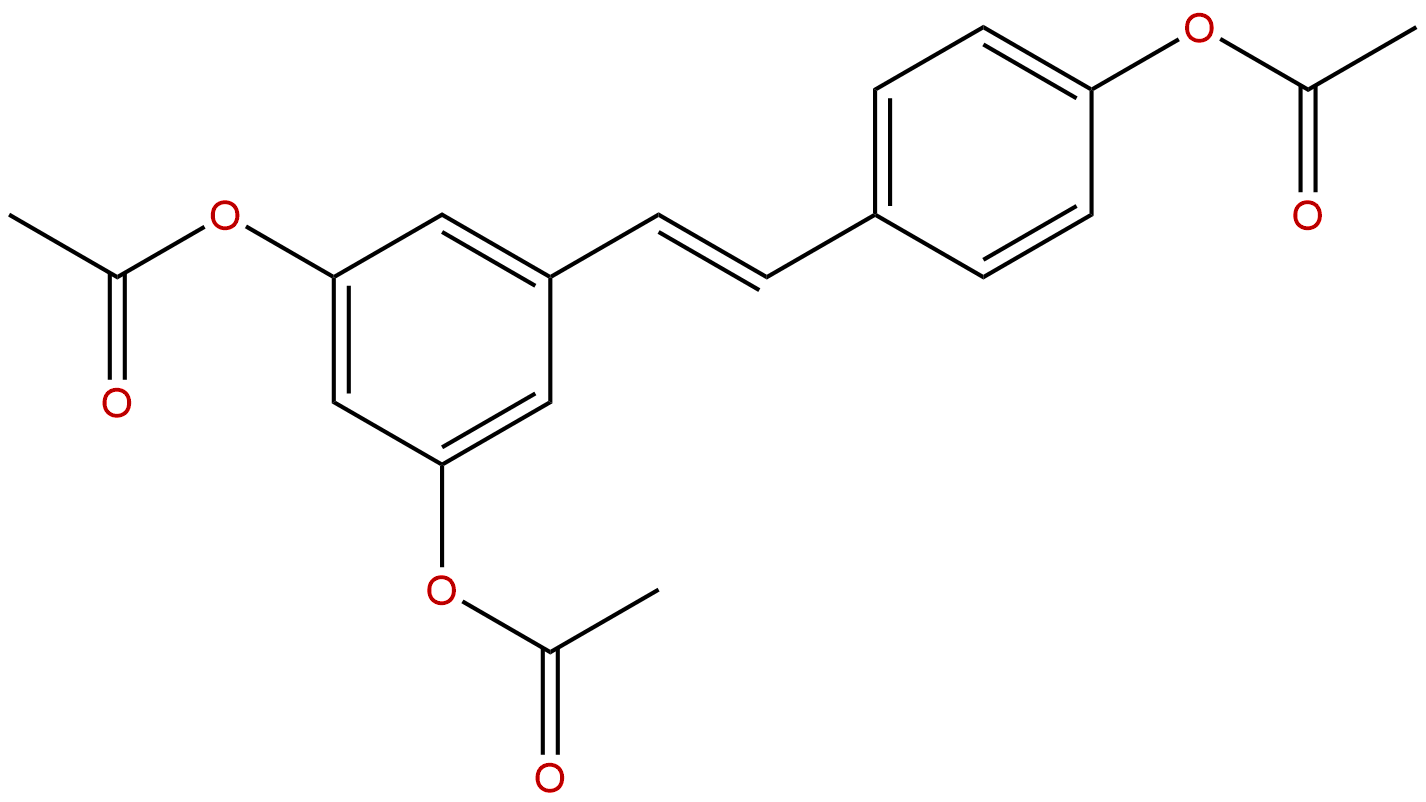
AcetylResveratrol (CAS number: 42206-94-0) is a naturally occurring stilbene compound, with the chemical name acetic acid [4- [2- (3,5-diacetoxyphenyl) vinyl] phenyl] ester. As an acetylated derivative of resveratrol, it retains the core structure of the parent compound and exhibits unique physicochemical properties and biological activity due to the introduction of acetyl groups. This compound was mainly isolated from the Polygonaceae plant Reynoutria japonica, also known as Japanese Knotweed. The tiger cane has a long history of application in traditional East Asian medicine, often used to treat inflammation, infections, and cardiovascular diseases.
In recent years, with the deepening of research on aging mechanisms, acetyl resveratrol has received widespread attention due to its potential anti-aging activity. Research has shown that it can act on multiple key targets related to cellular aging, energy metabolism, and stress resistance, such as SIRT1, TERT, CDKN1A, MTOR, and FOXO3. These targets form a complex network that collectively regulates the survival, proliferation, and aging processes of cells. Therefore, acetyl resveratrol is not only a natural product with research value, but also an important molecular tool for exploring aging biology and developing anti-aging intervention strategies. This article will systematically explain the scientific connotation of this compound from its chemical structure, plant origin, pharmacological mechanism, medicinal evaluation, and research prospects.
2. Chemical structure and physicochemical properties
The molecular formula of acetyl resveratrol is C20H18O6, with a molecular weight of 354.3580 g/mol. Its structure belongs to the class of stilbenes, where two benzene rings are connected by a vinyl bridge. Compared with resveratrol (C14H12O3, molecular weight 228.24), acetyl resveratrol introduces acetyl groups (- OCOCH3) on three phenolic hydroxyl groups, forming a triacetylation product. This structural modification significantly alters its physicochemical properties.
From SMILES representation (CC (=O) Oc1ccc (/C=C/c2cc (OC (C)=O) cc (OC (C)=O) c2) cc1), its structural features can be clearly seen: one benzene ring (corresponding to the 4 '- position of resveratrol) has one acetoxy group, and the other benzene ring (corresponding to the 3,5- position) has two acetoxy groups, connected by a trans vinyl group in the middle. This acetylation modification brings about changes in the following key physicochemical parameters:
- Fat solubility and water solubility The calculated LogP (octanol/water partition coefficient) is 3.5395, indicating that the compound has moderate to high lipophilicity. This is consistent with the decrease in polarity and enhancement of hydrophobicity after acetylation. Its water solubility is relatively low, about 0.0073 mg/mL, indicating that its dissolution and absorption in vivo may need to be improved through formulation technology.
- Membrane permeability The permeability parameter of Caco-2 cells is 6.3116, and the predicted human effective permeability (Peff) is 6.3251, both indicating its good intestinal absorption potential. More noteworthy is that its blood-brain barrier (BBB) permeability is predicted to be "high", which means it may cross the BBB and act on the central nervous system, which is of great significance for intervening in age-related brain diseases such as neurodegenerative disorders.
- Polar Surface Area The topological polar surface area (TPSA) is 78.9 Å ². Typically, compounds with TPSA less than 140 Å ² exhibit good membrane permeability, which is consistent with acetyl resveratrol.
- Protein binding rate The predicted plasma protein binding rate (PPB) is as high as 91.40%, indicating that most of it binds to plasma proteins (mainly albumin) in the bloodstream. High protein binding rate can affect its free drug concentration, distribution volume, and clearance rate, which are important factors to consider in pharmacokinetic design.
3. Plant sources and traditional applications
The main plant source of acetyl resveratrol is Japanese knotweed Reynoutria Japonica, also known as Fallopia Japonica. Tiger cane is a perennial herbaceous plant in the Polygonaceae family, native to East Asia, including China, Japan, and South Korea. It has been widely introduced to Europe and North America and has even become an invasive species in some areas. Despite causing ecological problems as an invasive plant, the rhizome of Polygonum cuspidatum is an important medicinal herb in traditional medicine.
In traditional Chinese medicine, the roots and stems of the tiger cane (often used as medicine under the names "tiger cane" or "flower spotted bamboo") are used to clear heat and dampness, dispel wind and unblock meridians, disperse blood stasis and relieve pain. Commonly used for the treatment of jaundice, gonorrhea, diarrhea, rheumatism, rheumatism, swelling, sores, injuries, and water fire burns. There are records in ancient books such as the Compendium of Materia Medica. In the traditional medical systems of Japan and South Korea, the tiger cane also has similar applications. Modern plant chemistry research has isolated and identified a series of stilbene compounds from Polygonum cuspidatum, including resveratrol, resveratrol glycosides (Polygonatum cuspidatum glycosides), and their various derivatives (such as acetyl resveratrol), which are considered the material basis for their pharmacological activities.
Traditional applications are mostly focused on anti-inflammatory, antibacterial, and hepatoprotective effects, which is consistent with the antioxidant and anti-inflammatory effects of resveratrol and its derivatives revealed by modern research. Acetyl resveratrol, as an active ingredient in Polygonum cuspidatum, its unique acetylation structure may endow it with metabolic stability and bioavailability different from resveratrol, thereby exerting sustained pharmacological effects in vivo. The discovery of molecules with clear anti-aging targeting activity from traditional medicinal plants is a model for the research of "new use of anti-aging drugs" in natural products, and also provides valuable lead compounds for the development of modern anti-aging drugs.
4. Pharmacological activity and mechanism of action
The core pharmacological activity of acetyl resveratrol focuses on anti-aging Its function is not achieved through a single pathway, but through regulating an interconnected target network. The database information suggests that it mainly acts on five key targets: SIRT1, TERT, CDKN1A, MTOR, and FOXO3. The following will analyze their mechanisms of action and their association with anti-aging.
1. SIRT1 (silencing information regulatory factor 2 homologous protein 1)
SIRT1 is a class III histone deacetylase that relies on NAD+to function. It is a core regulatory factor for cellular energy metabolism and stress response, and is known as the "longevity protein". Acetyl resveratrol may act as an activator of SIRT1. Activated SIRT1 works by deacetylating various substrates such as PGC-1 α, FOXO family, p53, etc.: (a) promoting mitochondrial biosynthesis and function, enhancing energy metabolism efficiency; (b) Enhance the antioxidant defense ability of cells and reduce the accumulation of reactive oxygen species (ROS); (c) Inhibiting inflammatory response (such as by inhibiting the NF - κ B pathway); (d) Promote DNA damage repair. These effects collectively delay cellular aging and protect organ function.
2. TERT (telomerase reverse transcriptase)
Telomeres are protective structures at the ends of chromosomes that shorten during cell division. Telomere shortening is one of the important markers of cellular aging. TERT is the catalytic subunit of telomerase, which can maintain telomere length. Research has shown that some SIRT1 activators can upregulate the expression or activity of TERT. Acetyl resveratrol may affect TERT directly or indirectly (such as through SIRT1), thereby helping to maintain telomere stability of stem cells and proliferating cells, and delaying replicative aging.
3. CDKN1A(p21)
The CDKN1A gene encodes the p21 protein, which is a cyclin dependent kinase inhibitor (CKI). P21 is a key regulatory factor at the G1/S checkpoint of the cell cycle, which is induced by p53 expression under stress conditions such as DNA damage, leading to cell cycle arrest for repair or apoptosis. However, sustained high expression of p21 is also closely associated with cellular senescence (senescence associated secretory phenotype, SASP). The effect of acetyl resveratrol may be bidirectional: under normal conditions, it moderately regulates p21 levels and maintains cellular homeostasis through pathways such as SIRT1 deacetylation of p53; Under stress, help cells make appropriate responses to prevent premature aging.
4. MTOR (mammalian target protein of rapamycin)
MTOR is a central hub that regulates cell growth, proliferation, autophagy, and metabolism. Overactive MTOR signaling can inhibit autophagy (the cell's "self-cleaning" process) and accelerate aging. It is known that resveratrol can inhibit the MTOR signaling pathway. Acetyl resveratrol is likely to have similar functions. Inhibition of MTOR can: (a) induce autophagy, clear damaged organelles and protein aggregates, and maintain cellular environmental stability; (b) Simulating the heat restriction (CR) effect is currently one of the most definitive interventions for extending lifespan.
5. FOXO3 (forkhead box protein O3)
The FOXO transcription factor family is a longevity related gene, and FOXO3 is particularly closely associated with human longevity. After deacetylation (such as activation by SIRT1), FOXO3 enters the nucleus and initiates transcription of a series of target genes involved in antioxidant (such as MnSOD, catalase), DNA repair, cell cycle arrest, and apoptosis. Acetyl resveratrol may promote deacetylation and activation of FOXO3 by activating SIRT1, thereby enhancing the stress resistance and survival ability of cells.
Integration of functional networks and anti-aging effects
These five targets do not work in isolation, but form a precise regulatory network:
- SIRT1 is at the core It may directly or indirectly regulate the other four targets.
- Energy metabolism and stress balance SIRT1 activation and MTOR inhibition synergistically simulate heat limitation, optimize energy utilization, and activate FOXO3 mediated antioxidant defense.
- Genome and Cell Stability By affecting TERT (telomere maintenance) and CDKN1A/p21 (cell cycle/DNA damage response), the integrity of the genome and the proliferative potential of cells are jointly maintained.
- Cell quality control The inhibition of autophagy induced by MTOR and the antioxidant effects of SIRT1/FOXO3 work together to clear cellular "garbage" and delay cellular functional decline.
Therefore, acetyl resveratrol intervenes in the basic process of aging from multiple levels such as energy metabolism, oxidative stress, genomic stability, and cellular autophagy through the synergistic effect of multiple targets and pathways, demonstrating its enormous potential as a leading anti-aging compound.
5. Evaluation of drug properties
Based on the provided pharmacological parameters, we can conduct a preliminary evaluation of the potential of developing acetyl resveratrol into an oral medication. The evaluation will be combined with renowned Lipinski's Five Rules(Rule of Five, Ro5) and other key pharmacokinetic and safety indicators.
1. Lipinski's Five Rules Compliance Analysis(Applicable to oral medications):
- Molecular weight (MW):354.36 < 500 Da, Compliant.
- Lipid water partition coefficient (calculated LogP)3.54<5, compliant.
- Number of hydrogen bond donors (HBDs)From a structural perspective, there are no free phenolic hydroxyl groups after acetylation, so the HBD is 0<5, which is consistent.
- Number of hydrogen bond acceptors (HBAs)There are 6 oxygen atoms (ester oxygen) in the molecule, all of which can be used as HBAs, with a number of 6<10, which is consistent.
- Number of rotatable keys Approximately 7 are estimated, and the usual standard is ≤ 10, which meets the criteria.
Conclusion Acetyl resveratrol fully complies with Lipinski's five rules, indicating its good oral absorption potential.
2. Absorption and distribution:
- solubility One of the main challenges for its drug formulation is its extremely low water solubility (0.0073 mg/mL). Low solubility may lead to low oral bioavailability. Formulation strategies such as nanocrystals, solid dispersions, cyclodextrin inclusion, etc. are needed to improve.
- Permeability Caco-2 permeability (6.31) and Peff (6.33) data indicate that it has High permeability Combined with compliance with Ro5 and high LogP values, it is likely to belong to the Biopharmaceutical Classification System (BCS) Class II (low solubility, high permeability) compounds.
- Blood-brain barrier (BBB) penetration Predicted as' high ', this is a significant advantage, indicating that it may be used to treat age-related neurodegenerative diseases such as Alzheimer's disease and Parkinson's disease.
- Plasma protein binding (PPB)As high as 91.4%, it belongs to high protein binding drugs. This will affect the concentration of free drugs and may require higher dosages to achieve effective concentrations, but it may also prolong the half-life.
3. Metabolism and toxicity:
- Cytochrome P450 inhibition, etc Data not provided, but ester bonds may be hydrolyzed by esterases to produce resveratrol and acetic acid, and their metabolic pathways need to be confirmed experimentally.
- Genotoxicity Ames test (0.0) and chromosome aberration (none) predicted negative, indicating no genetic toxicity risk.
- cardiotoxicity HERG inhibition is predicted as' no ', reducing the risk of causing QT interval prolongation in the heart.
- Hepatotoxicity Ser_CGT, Ser_ST, Ser_LT predicted as "Yes", prompt There may be a potential risk of liver damage This is a security signal that requires high vigilance and key monitoring in subsequent development.
- Other toxicities Skin sensitization (Skid_Sens) and respiratory sensitization (Resp_Sens) are predicted to be positive, indicating a possible risk of allergic reactions. Photo_tox is predicted to be no toxicity.
4. Comprehensive evaluation:
Acetyl Resveratrol in Molecular characteristics It is highly suitable as a lead compound for oral medication. Its core advantages lie in its compliance with Ro5, high permeability, ability to penetrate the blood-brain barrier, and clear multi-target anti-aging mechanisms. The main challenge lies in Extremely low water solubility This needs to be solved through advanced formulation technology. The biggest safety hazard is Potential hepatotoxic signals This must be rigorously validated through in vitro liver cell experiments and in vivo animal experiments in preclinical studies. High plasma protein binding rate is also a factor that needs to be carefully considered in pharmacokinetic design.
6. Research Status and Application Prospects
Currently, there is much less specialized research on acetyl resveratrol compared to its parent compound resveratrol. Most research still focuses on resveratrol and its glycosides. However, as a naturally occurring derivative, acetyl resveratrol's unique physicochemical properties (higher lipid solubility, potential metabolic stability) and multi-target anti-aging activity suggested by databases make it a new direction worth exploring in depth.
Research status:
1. basic research The existing data mainly comes from computational predictions and plant chemical separation and identification. There is still a lack of systematic experimental research on its specific in vitro and in vivo pharmacological activities, pharmacokinetic characteristics, as well as precise targets and signaling pathways. Especially its direct binding ability, affinity, and downstream effects with its targets (SIRT1, MTOR, etc.) need to be confirmed through biochemical and cell biology experiments.
2. comparative study Comparative studies with resveratrol are crucial. It is necessary to clarify whether acetylation enhances its stability, bioavailability, and activity, or only acts as a prodrug (hydrolyzing into resveratrol in vivo).
3. safety assessment The predicted liver toxicity warning must be validated through experiments to clarify its dose dependence and reversibility.
Application Prospects:
1. Anti aging intervention agent Developed as a dietary supplement or functional food ingredient. The security and effectiveness assessment of the system needs to be completed first.
2. Medications for the treatment of neurological disorders With its high BBB penetration, it has broad prospects for studying its protective effects in age-related neurodegenerative disease models such as Alzheimer's disease and Parkinson's disease.
3. Skin anti-aging cosmetics Its antioxidant properties and potential activation of SIRT1 can be used to develop high-end anti-aging skincare products.
4. Drug combination therapy May be used in combination with other anti-aging drugs (such as metformin, rapamycin) or natural products to produce synergistic effects.
5. Chemical probe Using it as the core structure, chemical modification is carried out to develop derivatives with higher selectivity, stronger activity, or lower toxicity for research in aging biology and new drug discovery.
Future research directions:
- Deep analysis of the mechanism of action Conduct target validation and signal pathway mapping research.
- Pharmacokinetic study Clarify its absorption, distribution, metabolism, and excretion (ADME) characteristics in animal bodies, especially the stability of ester bonds.
- Formulation development Develop suitable oral or transdermal drug delivery formulations for its low solubility.
- Preclinical efficacy and toxicological evaluation Evaluate the efficacy of delaying aging and improving aging related phenotypes in aging animal models (such as premature aging mice and naturally aging mice), and conduct systematic toxicological studies.
In summary, acetyl resveratrol is a natural compound discovered from traditional medicinal plants with clear anti-aging targeting potential. Despite the challenges ahead, particularly in terms of safety and formulation, its unique chemical structure and multi-target mechanism of action have laid a solid foundation for its development in the fields of anti-aging and age-related diseases. With the continuous development of aging biology and natural product pharmacy, acetyl resveratrol is expected to grow from molecular information in a database to a new star in the field of anti-aging research.