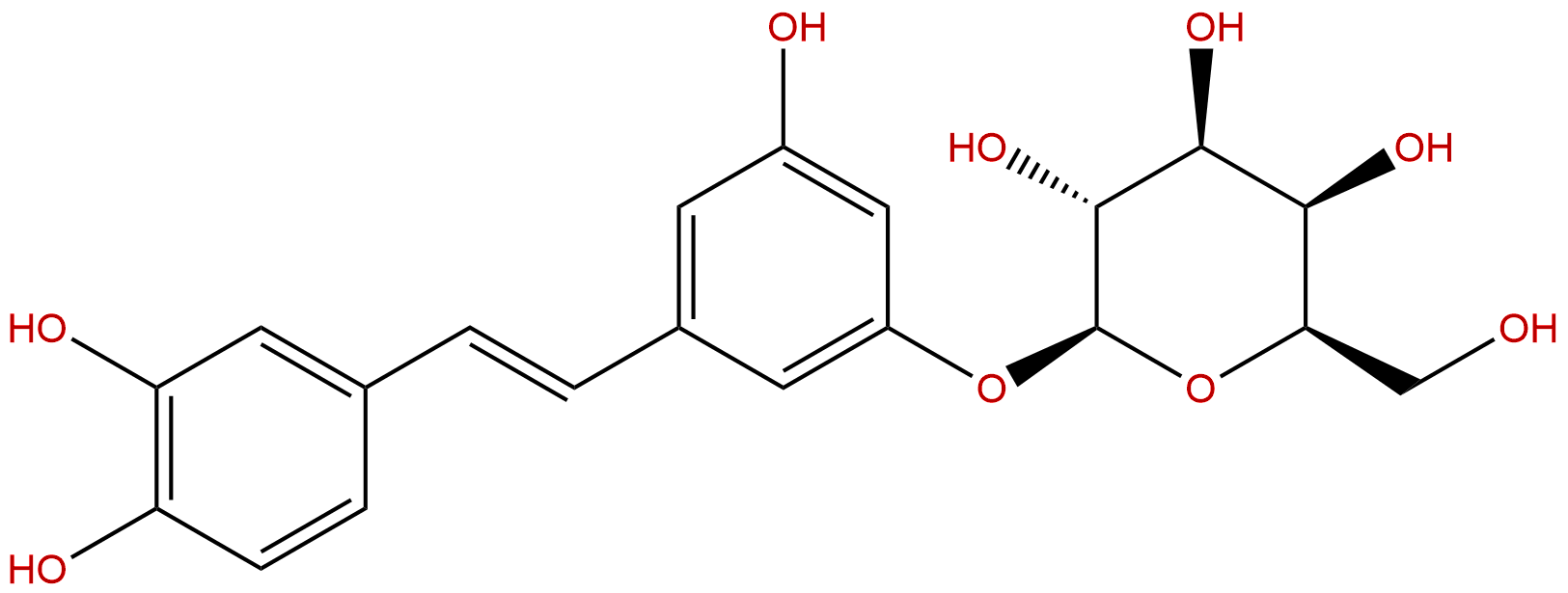


Product name: Astringin
Synonym name: Piceatannol-3-O-beta-D-glucopyranoside; Piceatannol-glucoside; 3,4,3',5'-Tetrahydroxystilbene 3-glucoside
Catalogue No.: BP1672
Cas No.: 94356-26-0
Formula: C20H22O9
Mol Weight: 406.387
Botanical Source:
Physical Description:
Type of Compound: Phenols
Purity: 95%~99%
Analysis Method: HPLC-DAD or/and HPLC-ELSD
Identification Method: Mass, NMR
Packing: Brown vial or HDPE plastic bottle
The product could be supplied from milligrams to grams
Inquire for bulk scale.
For Reference Standard and R&D, Not for Human Use Directly.
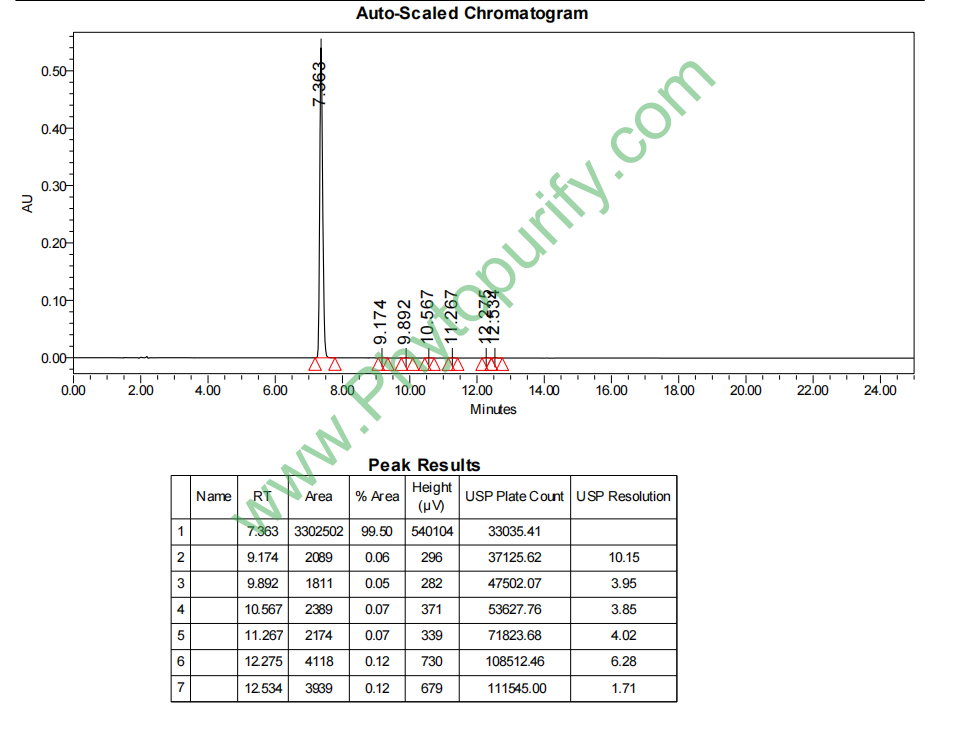
HPLC of Astringin
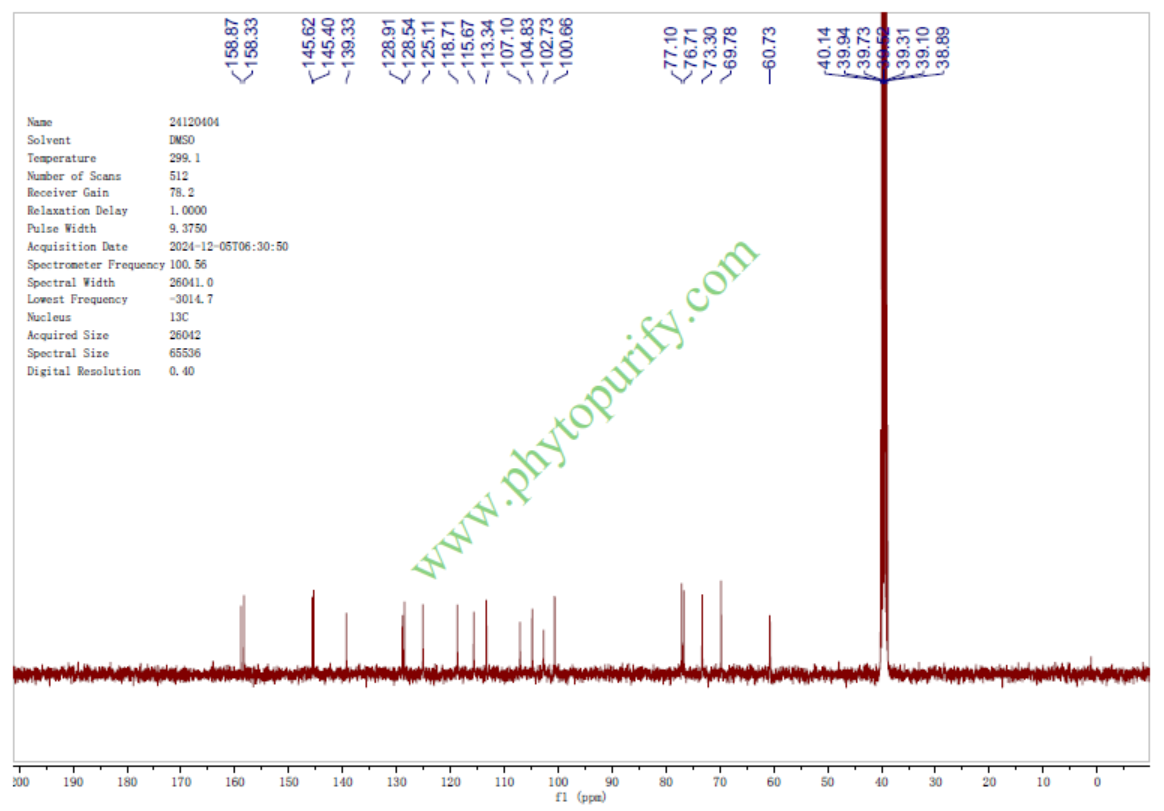
NMR of Astringin
Storage conditions:Short-term storage at 2~8℃, long-term storage at -20 ~ -80℃
160.0700
.5244
.5181
3.3643
.6407
.0686
Low
75.9129
3.8104
Yes
No
No
No
Yes
No
0.0
Yes
Yes
Yes
Yes
In the treasure trove of natural products, flavonoids have always been a hot topic in medicinal chemistry and pharmacology research due to their extensive biological activity and potential therapeutic value. Astritin, also known as trans-3 '- O - β - D-glucoside, is a type of stilbene flavonoid glycoside isolated from various plants. Since its structure was elucidated, this compound has attracted much attention due to its significant antioxidant, anti-inflammatory, and cell protective effects. With the development of modern molecular biology technology, researchers have gradually revealed the core role of Astritin in regulating key pathophysiological processes such as oxidative stress, inflammatory response, and programmed cell death. Especially in recent years, its role in combating ferroptosis, a newly defined, iron dependent regulatory form of cell death, has opened up a new perspective for its application in acute lung injury, neurodegenerative diseases, and even anti-aging fields. This article aims to systematically review the chemical properties, plant sources, pharmacological activities, molecular mechanisms of action, pharmacological characteristics, and clinical application prospects of Astritin, in order to provide comprehensive academic references for the in-depth development and transformation research of this natural product.
The chemical structure of Astritin is composed of a stilbene core (Astritin) and a glucose group. Its parent nucleus Piceatannol is a hydroxylated derivative of resveratrol, which forms a glycosidic compound by connecting a D-glucose unit through a β - glycosidic bond at the 3 'carbon atom. This glycosylation modification significantly alters the physicochemical properties and bioavailability of its parent compound.
Its CAS number is 29884-49-9, molecular formula is C20H22O9, and molecular weight is 406.3870. From the analysis of parameters related to drug properties, its lipophilic water partition coefficient (LogP) is 0.5244, indicating that the compound has moderate lipophilicity but overall leans towards hydrophilicity. Its topological polar surface area (TPSA) is as high as 160.0700 Å ², mainly attributed to the abundant hydroxyl groups and oxygen atoms on the sugar ring in the molecule, which are strong donors and acceptors of hydrogen bonds. Higher TPSA is usually associated with poorer cell membrane permeability. The water solubility data is 3.3643 (usually expressed in log mol/L or similar units, the specific value needs to be interpreted in conjunction with the original data, but this value indicates that it has a certain degree of water solubility), which is consistent with its glycoside structure and enhances its solubility in aqueous environments.
However, these physical and chemical properties also determine its ability to cross biological barriers. The predictive model shows that Astritin has a low ability to cross the blood-brain barrier (BBB), which may limit its direct therapeutic effect on central nervous system diseases. In the preliminary safety screening, the compound did not show significant hERG potassium channel inhibitory activity (hERG inhibition: No), indicating a low potential risk of cardiac toxicity. Meanwhile, the Ames test result was 0.0, indicating that there was no mutagenicity under the experimental conditions, providing preliminary support for its safety.
Astritin, as a natural product, is widely present in various plants, especially abundant in Pinaceae plants. Its main plant sources include:
1. Norwegian spruce (Picea abies)Bark is one of Astritin's traditional and primary sources.
2. Other Picea and Pinus plants This ingredient is also found in the bark and heartwood of various spruce and pine trees.
3. Grapes (Vitis vinifera)It is also detected in grape vines and wine, and is one of the components of polyphenolic substances in wine.
4. Rheum plants It can also be isolated from the rhizomes of certain rhubarb plants.
The extraction of Astritin is usually carried out using organic solvent extraction combined with modern chromatographic techniques for separation and purification. The classic process is as follows:
1. Raw material pretreatment Dry and crush plant materials (such as spruce bark).
2. Solvent extraction Methanol, ethanol, acetone, or their mixed solvents with water are commonly used for leaching or reflux extraction. Ethanol water system is commonly used for safety and environmental protection.
3. Rough classification and enrichment After vacuum concentration, the extract can be subjected to liquid-liquid distribution using solvents such as ethyl acetate and n-butanol to preliminarily enrich the target components. Alternatively, adsorption can be carried out using macroporous adsorption resins such as AB-8 and D101, followed by gradient elution with water and different concentrations of ethanol to collect fractions rich in flavonoid glycosides.
4. Separation and purification: Silica gel column chromatography, Sephadex LH-20 column chromatography, high performance liquid chromatography (HPLC) or preparative thin layer chromatography (PTLC) were further used for fine separation to obtain high-purity Astringin monomer.
In recent years, green technologies such as ultrasound assisted extraction and microwave-assisted extraction have also been applied to improve extraction efficiency and shorten extraction time.
Numerous in vitro and in vivo studies have confirmed that Astritin has diverse and significant pharmacological activities.
antioxidant activity Astritin is a powerful antioxidant. The phenolic hydroxyl group in its molecule can effectively scavenge free radicals such as superoxide anion (O ₂•⁻), hydroxyl radical (• OH), and peroxynitrite (ONOO ⁻). Research has shown that its antioxidant capacity is superior to that of its aglycone resveratrol, which may be due to the introduction of sugar groups enhancing its stability and free radical quenching ability in aqueous systems. In cell models, it can significantly enhance the resistance of cells to oxidative stress stimuli such as hydrogen peroxide (H ₂ O ₂).
anti-inflammatory activity Astritin exerts anti-inflammatory effects by regulating the inflammatory signaling pathway. In the lipopolysaccharide (LPS) - induced macrophage (such as RAW264.7) inflammation model, it can dose dependently inhibit the production of nitric oxide (NO) and prostaglandin E2 (PGE2), and downregulate the protein expression of inducible nitric oxide synthase (iNOS) and cyclooxygenase-2 (COX-2). Meanwhile, it can also inhibit the release of pro-inflammatory cytokines such as interleukin-1 β (IL-1 β) and tumor necrosis factor - α (TNF - α).
Anti apoptotic and cell protective activity Astritin can protect various cells from damage caused by apoptosis inducing agents such as erythromycin, ethanol, etc. The mechanism involves inhibiting the decrease in mitochondrial membrane potential, reducing cytochrome c release, downregulating the expression of pro apoptotic protein Bax, and upregulating the expression of anti apoptotic protein Bcl-2, thereby maintaining cell survival.
Inhibiting ferroptosis Iron induced cell death is a regulatory cell death driven by excessive accumulation of iron dependent lipid peroxidation. The latest research reveals that Astritin is an effective inhibitor of ferroptosis. In the iron death cell model induced by erastin or RSL3, Astritin can significantly restore cell viability, reduce intracellular reactive oxygen species (ROS) and lipid peroxidation products (such as MDA) levels, and upregulate the expression of key antioxidant defense proteins such as glutathione peroxidase 4 (GPX4). This activity lays a solid foundation for its application in diseases closely related to ferroptosis, such as acute lung injury (ALI) and ischemia-reperfusion injury.
Anti-aging potential Based on its powerful antioxidant and cell protective abilities, Astritin has shown potential in the field of anti-aging. Research has shown that it can delay the aging process of model organisms such as yeast and nematodes, and protect human fibroblasts from the effects of senescence associated secretory phenotypes (SASP). Its anti-aging effect is closely related to the activation of longevity related pathways.
The multiple pharmacological activities of Astritin stem from its precise regulation of multiple key signaling pathways within cells, and its target network is complex and synergistic.
Activate NRF2/antioxidant response element (ARE) pathway Nuclear factor E2 related factor 2 (NRF2) is the overall switch for cellular antioxidant defense. At rest, NRF2 binds to Keap1 and is degraded by ubiquitination. Astritin may modify the cysteine residue of Keap1 to promote the dissociation and translocation of NRF2 to the nucleus, binding to ARE, thereby initiating the transcription of a series of downstream phase II detoxifying enzymes and antioxidant proteins, including heme oxygenase-1 (HMOX1), superoxide dismutase 1 (SOD1), catalase (CAT), and glutamate cysteine ligase catalytic subunit (GCLC). This is the core mechanism by which it exerts antioxidant and iron death inhibiting effects.
Activate AMPK/SIRT1 pathway Adenosine activated protein kinase (AMPK) and silencing information regulatory factor 1 (SIRT1) are core regulatory factors for cellular energy metabolism and stress adaptation. Research suggests that Astritin can activate AMPK, thereby upregulating the activity of SIRT1. Activated SIRT1 regulates multiple downstream targets through deacetylation:
Regulating cell cycle and aging related proteins Astritin can indirectly affect cell cycle progression through the aforementioned pathways. For example, activated AMPK and SIRT1 can upregulate the cyclin dependent kinase inhibitor p21 (encoded by the CDKN1A gene), inducing cell cycle arrest in the G1 phase, which may help cells repair under stress and avoid the accumulation of DNA damage. Meanwhile, it may have a regulatory effect on telomerase reverse transcriptase (TERT), although the specific mechanism remains to be elucidated, suggesting its potential role in maintaining genomic stability.
Direct interaction and enzyme inhibition In addition to signal pathway regulation, Astritin may also interact directly with certain enzymes. For example, its glycoside resveratrol is a known Syk kinase inhibitor. Although glycosylation may affect its direct binding ability to certain targets, Astritin may still regulate the activity of specific enzymes through non covalent interactions between its phenolic hydroxyl groups and proteins.
In summary, Astritin has constructed a powerful cellular defense network by activating key nodes such as NRF2, AMPK, SIRT1, etc., synergistically exerting antioxidant, anti-inflammatory, anti apoptotic, and anti ferroptotic effects, ultimately leading to delaying cellular aging and resisting diseases.
Although Astritin exhibits excellent biological activity in vitro, its drug properties, especially its pharmacokinetic properties in vivo, are the key to determining whether it can be successfully converted into a drug.
Absorption and bioavailability As a glycoside compound, the oral absorption of Astritin is influenced by various factors. Its moderate LogP value and high TPSA suggest that its passive transmembrane absorption may be limited. However, there may be specific glycoside transporters (such as SGLT1) present in the intestine or absorbed through passive diffusion. After entering the body, Astritin is easily hydrolyzed by β - glucosidase in the gut microbiota and intestinal mucosal epithelial cells, removing the glucose group and converting it into its glycoside, resveratrol. Therefore, after oral administration, the main metabolites detected in the blood may be resveratrol and its further sulfation or glucuronic acid conjugates, and the concentration of the prototype drug may be very low. Although this may limit the direct action of the prototype drug, the glycoside resveratrol itself also has a wide range of biological activities, constituting a "prodrug" effect.
distribution As mentioned earlier, the ability of Astritin to cross the blood-brain barrier is predicted to be low, mainly due to its high polarity and relatively large molecular weight. Its distribution may be more concentrated in organs with abundant blood supply, such as the liver and kidneys. The specific distribution concentration and retention time in target tissues (such as lungs) need to be further studied through radioactive labeling or high-sensitivity mass spectrometry methods.
Metabolism The main metabolic pathway of Astritin is hydrolysis (deglycosylation). The generated aglycone resveratrol subsequently undergoes extensive phase II metabolism in the liver and intestines, including sulfation, glucuronidation, and methylation, forming various more water-soluble metabolites that are excreted through urine and bile.
Optimization direction of drug properties To improve the bioavailability and targeting of Astritin, the following strategies can be considered:
At present, there is still a relative lack of complete preclinical pharmacokinetic research data on the Astritin system, which is a key gap that needs to be filled in future development.
Based on its solid pharmacological activity foundation, Astritin has broad clinical application prospects in multiple disease fields.
Acute lung injury/acute respiratory distress syndrome (ALI/ARDS)This is currently one of the most promising application directions. The pathological process of ALI/ARDS involves intense oxidative stress, inflammatory storm, and death of lung epithelial/endothelial cells (including apoptosis and ferroptosis). Astritin has multiple effects of antioxidant, anti-inflammatory, and anti ferroptosis, precisely targeting the core pathological process of ALI. Animal experiments have preliminarily demonstrated that it can alleviate pulmonary edema, inflammatory cell infiltration, and tissue damage in ALI models induced by LPS or acid inhalation. Future research needs to clarify the optimal route of administration (such as nebulized inhalation, which may be superior to oral or intravenous injection to directly act on the lungs and avoid first pass effects), treatment time window, and dosage.
Aging related diseases:
As an anti-aging functional factor In the field of health products and functional foods, Astritin or its rich plant extracts (such as spruce bark extract) can be developed as natural ingredients for anti-aging and enhancing the body's antioxidant defense. The preliminary safety data (no hERG inhibition, Ames negative) provide support for this.
Challenges and Prospects The main challenges facing future research include: ① Thoroughly elucidating whether its main form of action in vivo is the prototype drug or a metabolite; ② Overcoming its pharmacokinetic deficiencies and improving bioavailability and targeting through pharmaceutical or chemical methods; ③ Conduct standardized preclinical safety evaluations (long-term toxicity, reproductive toxicity, etc.) and effective human clinical trials to confirm its efficacy and safety. In addition, exploring its synergistic effects with other drugs such as approved antioxidants or anti-inflammatory drugs is also a direction worth paying attention to.
Astritin, as a natural source of stilbene glycoside, exhibits excellent pharmacological activities in antioxidant, anti-inflammatory, and anti cell death (especially anti ferroptosis) aspects due to its unique chemical structure and multi-target mechanism of action. It activates the intracellular defense system by precisely regulating core signaling pathways such as NRF2, AMPK, and SIRT1, thereby combating stress damage in various disease states. Although it has limitations in oral bioavailability and blood-brain barrier penetration, it also provides opportunities for innovation in medicinal chemistry and pharmacy. With the continuous deepening of understanding of its mechanism of action and the application of new delivery technologies, Astritin is expected to develop from a potential natural active molecule into a candidate drug or functional health product for treating important human diseases such as acute lung injury and age-related diseases. Future research should focus on translational medicine, strengthening its pharmacokinetics, pharmacokinetics, and clinical studies to fully unleash the therapeutic potential of this natural treasure.
