


Product name: Emodin
Synonym name: Rheum-emodin; Frangula emodin; Archin; Frangulinic acid; Emodol; Alatinone
Catalogue No.: BP0532
Cas No.: 518-82-1
Formula: C15H10O5
Mol Weight: 270.24
Botanical Source: Present in Cascara sagrada (Rhamnus purshiana), in aloes Aloe spp., Rumex, Polygonum. and other plants. Penicillium spp., Aspergillus spp., Dermocybe sanguinea and Anixiella micropetrusa. First isol. in 1858
Physical Description: Yellow powder
Type of Compound: Anthraquinones
Purity: 95%~99%
Analysis Method: HPLC-DAD or/and HPLC-ELSD
Identification Method: Mass, NMR
Packing: Brown vial or HDPE plastic bottle
Storage: Store in a well closed container, protected from air and light. Put into refrigerate or freeze for long term storage.
Whenever possible, you should prepare and use solutions on the same day. However, if you need to make up stock solutions in advance, we recommend that you store the solution as aliquots in tightly sealed vials at -20℃. Generally, these will be useable for up to two weeks.
The product could be supplied from milligrams to grams, up to kilograms
Inquire for bulk scale.
Descriptions:
Emodin, a natural anthraquinone derivative isolated from Rheum palmatum L., exhibits anti-cancer effect on several human cancers such as liver cancers and lung cancers, treatment with 50 microM emodin resulted in a pronounced release of cytochrome c, activation of caspase-2, -3, and -9, and apoptosis in human lung adenocarcinoma A549 cells.[1]
Emodin has a strong antimicrobial activity and anti-virus effect , can inhibit HBV DNA replication and HBsAg secretion in HepG2.2.15 cells, may be a new modality to treat hepatitis B infection. [2]
Emodin significantly inhibits 12-O-tetradecanoylphorbol-13-acetate (TPA)-induced in vitro invasion of human cancer cells including HSC5 and MDA-MB-231 cells, and inhibits the invasiveness of human cancer cells by suppressing MMP-9 expression through inhibiting AP-1 and NF-kappaB signaling pathways.[3]
References:
[1] Su Y T, Chang H L, Shyue S K, et al. Biochem Pharmacol, 2005, 70(2):229–241.
[2] Shuangsuo D, Zhengguo Z, Yunru C, et al. 2006, 12(9):302-6.
[3] Huang Q, Shen H M, Ong C N. Biochem Pharmacol, 2004, 68(2):361-71.
[4] Shi Y B, Shi Y P, Yang Y B, et al. Chromatographia, 2007, 65(9-10):601-606.
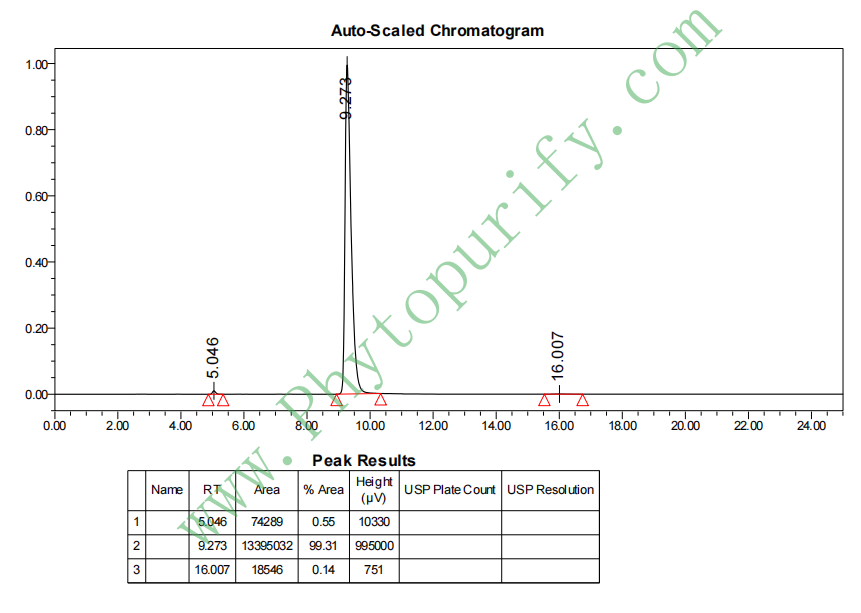
HPLC of Emodin
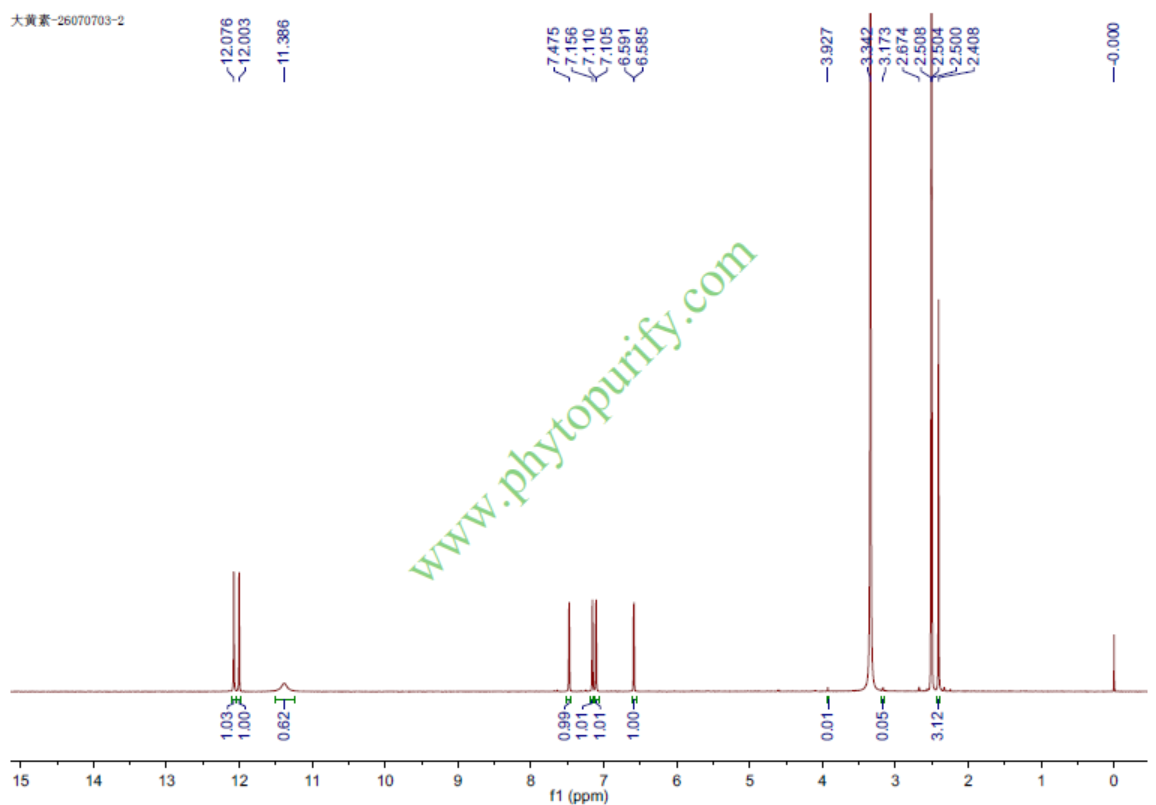
HNMR of Emodin
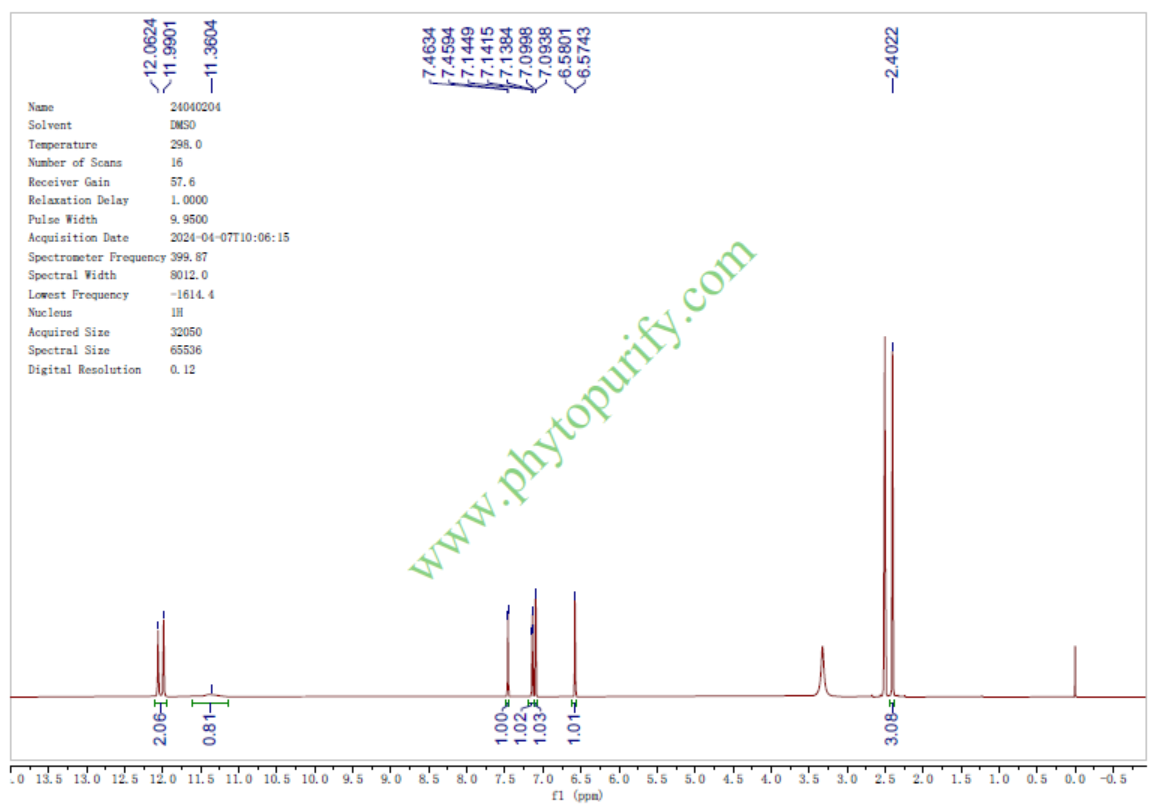
HNMR of Emodin
Storage conditions:Short-term storage at 2~8℃, long-term storage at -20 ~ -80℃
94.8300
2.7951
2.1905
.1380
4.0135
7.5067
Low
91.5176
2.4089
Yes
No
No
No
Yes
Yes
1.2
Yes
No
Yes
No
Natural products, as a treasure trove of drug discovery, have played an irreplaceable role in the long history of human fight against diseases. Among them, anthraquinone compounds have attracted much attention due to their wide range of biological activities. Emodin, also known as 1,3,8-trihydroxy-6-methylanthraquinone, is a natural anthraquinone derivative widely found in various medicinal plants of the Polygonaceae family (such as Rheum palmatum and Polygonum cuspidatum), Leguminosae family (such as Cassia seed), and Rhamnaceae family (such as Rhamnaceae). Its CAS number is 518-82-1, traditionally used for diarrhea, clearing heat and dampness. With the deepening of modern pharmacological research, emodin has far surpassed its traditional uses and demonstrated multiple pharmacological activities including anti-inflammatory, anti-tumor, antiviral, and metabolic regulation, becoming a highly valuable multi-target natural active molecule for research. Especially in the context of the global fight against the COVID-19 pandemic, it has been identified as an antiviral compound capable of blocking the interaction between SARS-CoV-2 spike protein and host cell ACE2 receptor, once again highlighting its potential for modern drug development. This article aims to systematically review the chemical properties, pharmacological activities, mechanisms of action, pharmacological properties, and clinical application prospects of emodin, in order to provide comprehensive scientific references for the in-depth research and development of this compound.
The molecular formula of emodin is C15H10O5, with a molecular weight of 270.24 g/mol. Its basic chemical structure is the anthraquinone nucleus, which is substituted by hydroxyl groups at positions 1, 3, and 8, and connected to a methyl group at position 6. This structure endows it with typical anthraquinone compound characteristics, such as the formation of intramolecular hydrogen bonds, certain planarity, and conjugated systems.
Its physicochemical properties directly affect its biological activity and drug metabolism behavior. According to the provided pharmacological parameters, the lipid water partition coefficient (LogP) of emodin is 2.80, indicating that it has moderate lipophilicity and is conducive to transmembrane transport, but excessively high LogP may also affect water solubility. Its topological polar surface area (TPSA) is 94.83 Å ², which is relatively large and mainly derived from three hydroxyl groups and one quinone oxygen atom. The water solubility data is 0.138 mg/mL, which belongs to the category of slightly soluble to poorly soluble, which to some extent limits its bioavailability. The prediction of blood-brain barrier permeability as "low" suggests that it may be difficult to enter the central nervous system, which is an unfavorable factor for treating central nervous system diseases, but may also reduce the risk of central nervous system side effects. In the preliminary safety screening, its Ames test value is 1.2 (usually considered to be potentially mutagenic positive if>1.5, which needs to be judged based on the specific experimental system), indicating a low risk of mutagenicity under the conditions of this experiment; The inhibition of hERG is' no ', indicating a low potential risk of causing QT interval prolongation in the heart, which is a favorable pharmacological feature.
Emodin is widely distributed in nature and mainly exists in the following medicinal plants:
1. Polygonaceae plants Like palm leaf rhubarb(Rheum palmatum)Tanggu Extra Large Yellow(Rheum tanguticum)Medicinal rhubarb(Rheum officinale)The rhizome and root of rhubarb are one of the main active ingredients in traditional Chinese medicine.
2. Other plants in the Polygonaceae family How to Shouwu(Polygonum multiflorum)The root tuber, tiger cane(Polygonum cuspidatum)The roots and stems.
3. Leguminous plants As determined(Cassia obtusifolia)The seed (Cassia seed).
4. Muridae plants Like the European rat plum(Rhamnus frangula)The bark of the tree, hence the large yellow pigment is also known as Frangula Emodin.
The extraction method of emodin has been continuously optimized with technological progress, mainly including:
1. Solvent extraction method The most classic method. Ethanol, methanol, or alcohol water mixed solvents with different ratios are commonly used for reflux extraction or ultrasound assisted extraction. Preliminary enrichment using the difference in solubility of emodin in different polar solvents.
2. Acid-base treatment method Based on the acidic characteristics of anthraquinone components. First, extract total anthraquinone with organic solvents, and then treat it with alkaline solution (such as sodium hydroxide, sodium bicarbonate solution) to dissolve acidic hydroxy anthraquinone salts such as emodin in the aqueous phase, separate them from lipophilic components, and then acidify to precipitate.
3. Modern Separation Technology Including macroporous adsorption resin chromatography, silica gel column chromatography, preparative high-performance liquid chromatography (HPLC), etc., used for high-purity separation and extraction of emodin from crude extracts. High speed counter current chromatography (HSCCC) is also commonly used for the preparation and separation of natural products due to its advantages of not requiring solid carriers and high recovery rates.
The optimization goal of the extraction process is to improve the yield and purity of emodin while preserving its biological activity as much as possible.
Numerous in vitro and in vivo studies have confirmed that emodin has diverse pharmacological activities, mainly including:
The core of the multifunctional pharmacological effects of emodin lies in its multi-target properties. It affects the functions of multiple key proteins by regulating complex cellular signaling networks. The following will elaborate on the colon cancer related targets provided:
Energy metabolism and apoptosis regulation:
Inflammation and inhibition of survival signaling pathways:
Other specific targets:
In summary, emodin acts like a "versatile hand" by simultaneously acting on multiple key nodes such as AMPK, STAT3, NF - κ B, apoptosis related proteins, and 11 β - HSD1, forming a synergistic network that ultimately achieves a comprehensive effect of anti-tumor, anti-inflammatory, and metabolic regulation.
Despite the significant pharmacological activity of emodin, its pharmacological development still faces challenges, mainly based on its physicochemical properties and pharmacokinetic characteristics:
In terms of safety, traditional long-term or high-dose use of herbal remedies containing emodin may lead to diarrhea, electrolyte imbalances, and even "colonic melanosis". Modern toxicology studies suggest that high concentrations of emodin may also be toxic to normal cells and have potential liver and kidney burdens. Therefore, it is crucial to determine the treatment window and conduct long-term toxicological evaluation.
The transformation of emodin from a traditional herbal ingredient to a modern candidate drug has broad prospects but a winding road ahead.
Potential clinical application directions:
Challenges faced and future research directions:
Emodin, as a classic natural anthraquinone compound, has undergone a cognitive leap from traditional laxatives to modern multi-target active molecules. Its chemical structure is simple, but it contains a powerful ability to intervene in multiple pathological processes such as tumors, inflammation, and metabolic disorders by regulating key targets such as AMPK, STAT3, NF - κ B, and 11 β - HSD1. The anti coronavirus potential demonstrated in the global health crisis once again proves the eternal value of searching for drug lead compounds from natural products. However, its inherent pharmaceutical defects, such as poor solubility and low bioavailability, are obstacles that must be overcome to transform it into an ideal drug. Future research should focus on optimizing its pharmaceutical properties through drug chemical modification and advanced delivery systems, and promoting its clinical application through in-depth translational medicine research. The research paradigm of emodin also provides important references for the development of other multifunctional natural products. With the continuous advancement of science and technology, this molecule derived from ancient herbs is expected to shine with new brilliance in future precision medicine and integrated therapies, contributing unique strength to human health.
