Introduction/Overview
With the acceleration of global population aging, the prevention and treatment of age-related diseases have become a key area of research in life sciences and medicine. Aging is not only a natural process of time, but also a high-risk factor for various chronic diseases such as neurodegenerative diseases, cardiovascular diseases, and metabolic syndrome. In recent years, natural products have become important resources for the development of anti-aging drugs due to their structural diversity and rich biological activity. Oxyresveratrol 2-O - β - D-glucopyranoside (hereinafter referred to as Oxyresveratrol glucoside), as an emerging natural phenolic glucoside, has gradually attracted attention from the pharmaceutical community due to its unique chemical structure and multi-target regulatory ability.
Oxidized resveratrol glucoside mainly exhibits significant antioxidant, anti-inflammatory, and cell protective effects, especially in regulating aging related molecular pathways, demonstrating potential application value. Its target proteins include AMPK, SIRT1, TERT, TP53, NRF2, SOD1, CAT, HMOX1, FOXO1, and CDKN1A, which are closely related to cellular energy metabolism, gene stability, oxidative stress defense, and cell cycle regulation. This demonstrates its multidimensional regulatory ability in delaying aging and preventing related diseases.
This article provides a systematic review of the chemical structure and physicochemical properties, plant sources, and extraction methods of oxidized resveratrol glucoside. Combined with the latest pharmacological activity research, it delves into its mechanism of action and molecular targets, evaluates its pharmacological properties and pharmacokinetic characteristics, and looks forward to its clinical application prospects, providing theoretical basis and research direction for the development of natural anti-aging drugs.
Chemical structure and physicochemical properties
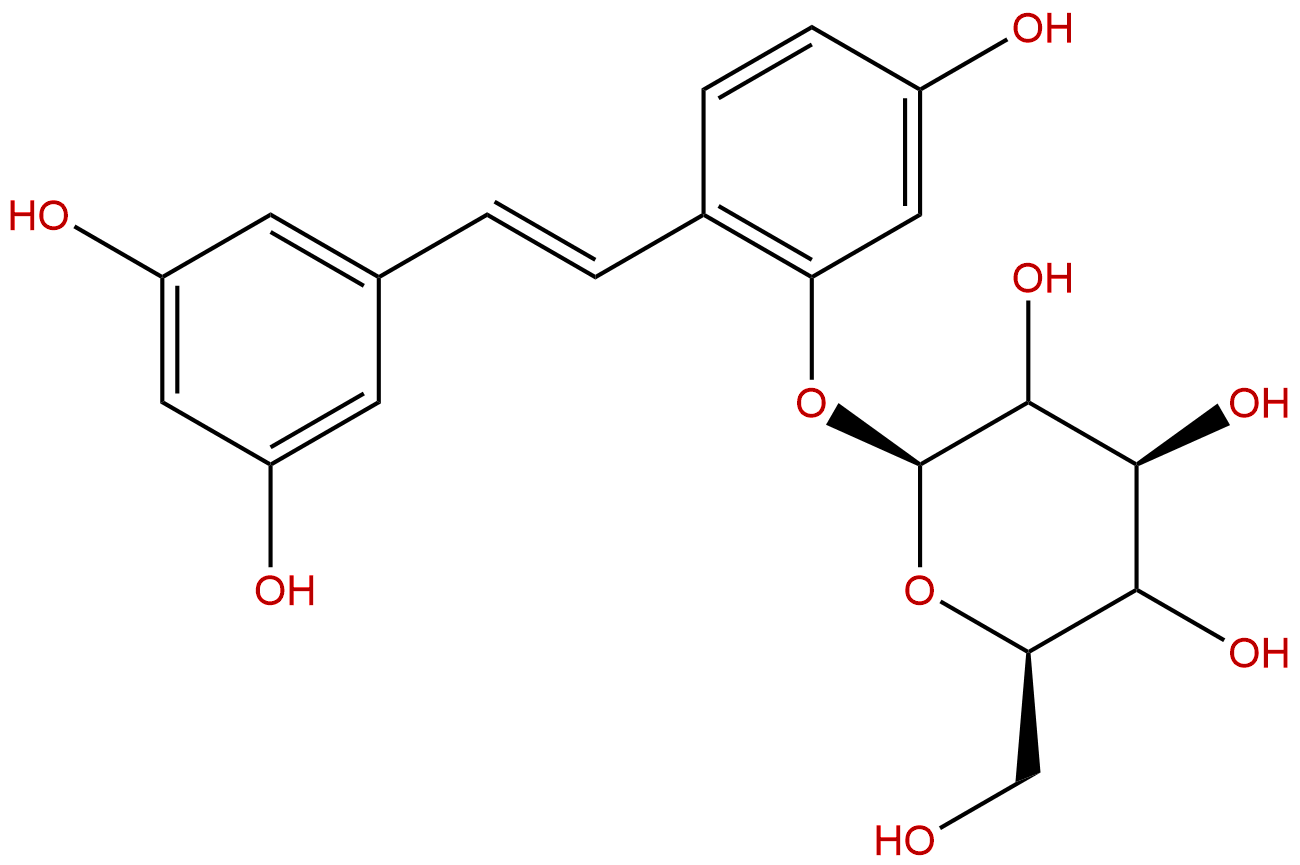
The chemical structure of oxidized resveratrol glucoside is based on oxidized resveratrol, with a molecular formula of C20H22O9 and a molecular weight of 406.3870. This compound binds to glucose molecules through a β - D-glucopyranose bond at the 2-O position, forming a phenolic glucoside structure. The structure contains multiple phenolic hydroxyl groups, endowing it with strong antioxidant activity, while the glycosidic portion enhances its water solubility and bioavailability.
In terms of physicochemical properties, the LogP value of oxidized resveratrol glucoside is 0.3192, indicating its strong hydrophilicity and suitability for dissolution and transport in aqueous environments. The polar surface area (TPSA) is 160.07 Å ², and higher TPSA is usually associated with poorer cell membrane permeability, but is beneficial for binding to polar targets. The water solubility value is 3.1706, indicating good solubility in water, which is beneficial for the development of oral or injectable formulations.
In addition, the compound has a low blood-brain barrier penetration ability, indicating that its application in the central nervous system may be limited, but at the same time, it reduces the risk of potential toxicity to the central nervous system. The hERG channel inhibition test was negative, indicating a low risk of cardiac toxicity. The Ames mutagenicity test result was 0.0, indicating no significant genotoxicity and providing positive evidence for safety evaluation.
Plant sources and extraction methods
Oxidized resveratrol glucoside is mainly found in various traditional medicinal plants, especially in plants rich in resveratrol such as Morus alba, Polygonum cuspidatum, and some grape plants. Its content is greatly influenced by factors such as plant species, growth environment, harvesting period, and processing technology.
The extraction method usually uses polar solvents such as ethanol water mixed solvents, which are separated from plant dried powders through ultrasound assisted extraction or reflux extraction techniques. The extraction solution is purified by concentration, liquid-liquid distribution, and multi-stage column chromatography, and finally the purity and structure are identified by high performance liquid chromatography (HPLC) or mass spectrometry (MS). In recent years, green extraction technologies such as supercritical CO2 extraction and membrane separation have gradually been applied to the extraction of this compound, improving extraction efficiency and environmental friendliness.
In addition, enzymatic hydrolysis and microbial transformation methods have been used to improve the yield and purity of oxidized resveratrol glucoside, especially through the use of specific β - glucosidase catalyzed synthesis or hydrolysis to regulate the formation and cleavage of glycosidic bonds, providing the possibility for its large-scale production.
Pharmacological activity research
The pharmacological activity research of oxidized resveratrol glucoside mainly focuses on its anti-aging, antioxidant, anti-inflammatory, and cell protective effects.
Antioxidant effect
As a polyphenolic compound, oxidized resveratrol glucoside has significant free radical scavenging ability. In vitro studies have shown that it can effectively eliminate hydroxyl radicals, superoxide anions, and hydrogen peroxide, and reduce lipid peroxidation levels. By activating intracellular antioxidant enzyme systems such as SOD1, CAT, and HMOX1, the cell's resistance to oxidative stress is enhanced, and the process of cell damage and apoptosis is slowed down.
anti-inflammatory effect
Oxidized resveratrol glucoside reduces inflammation by inhibiting the NF - κ B signaling pathway and downregulating the expression of pro-inflammatory factors such as TNF - α, IL-6, and IL-1 β. Its anti-inflammatory effect helps alleviate chronic inflammation, delay inflammation related tissue damage and functional decline.
Anti aging effect
Multiple cell and animal model studies have shown that oxidized resveratrol glucoside can prolong cell lifespan and improve aging related phenotypes. Its mechanism of action involves activating energy metabolism regulatory protein AMPK and deacetylase SIRT1, promoting mitochondrial function and cellular metabolic homeostasis. By upregulating the expression of telomerase reverse transcriptase TERT, we protect telomere integrity and delay cellular aging. Regulating the cyclin dependent kinase inhibitor CDKN1A, inhibiting abnormal cell cycle progression, and preventing premature cell aging.
Neuroprotective effect
Despite its low ability to penetrate the blood-brain barrier, oxidized resveratrol glucoside exhibits antioxidant and anti apoptotic effects in an in vitro neural cell model, reducing oxidative stress-induced neuronal damage and suggesting its protective potential for the nervous system through peripheral or indirect mechanisms.
Mechanism of action and molecular targets
The multi-target mechanism of action of oxidized resveratrol glucoside is the basis for its anti-aging and related pharmacological effects. The main targets and their mechanisms of action are as follows:
AMPK(5' AMP-activated protein kinase)
AMPK is a key regulatory factor in cellular energy metabolism, capable of sensing energy status and regulating metabolic balance. Oxidized resveratrol glucoside activates AMPK, promotes fatty acid oxidation and glycolysis, enhances mitochondrial biosynthesis, improves cellular energy supply, and delays metabolic aging.
SIRT1 (silencing information regulatory factor 2 related enzyme 1)
SIRT1 is an NAD+- dependent deacetylase involved in regulating gene expression, DNA repair, and metabolic homeostasis. Oxidative resveratrol glucoside activates SIRT1, promotes deacetylation, regulates various aging related proteins such as TP53 and FOXO1, and enhances cellular antioxidant and repair capabilities.
TERT (telomerase reverse transcriptase)
TERT is the catalytic subunit of telomerase, which maintains telomere length and prevents chromosome end degeneration. Oxidized resveratrol glucoside upregulates TERT expression, delays telomere shortening, protects cellular genetic stability, and prolongs cell lifespan.
TP53 (tumor suppressor protein p53)
TP53 plays a central role in cell cycle regulation and DNA damage response. Oxidized resveratrol glucoside regulates TP53 activity, balances cell proliferation and apoptosis, prevents abnormal cell accumulation, and maintains tissue homeostasis.
NRF2 (Nuclear Factor E2 Related Factor 2)
NRF2 is the main regulator of antioxidant reactions, promoting the expression of antioxidant enzyme genes. Oxidative resveratrol glucoside activates the NRF2 signaling pathway, enhances cellular antioxidant defense, and reduces oxidative damage.
SOD1, CAT, HMOX1 (antioxidant enzymes)
These enzymes directly participate in clearing reactive oxygen species (ROS) and maintaining cellular redox balance. Oxidized resveratrol glucoside upregulates its expression and activity, strengthening the cellular defense system.
FOXO1 (forkhead box protein O1)
FOXO1 regulates cellular stress response and metabolic gene expression. Oxidized resveratrol glucoside promotes cell survival and antioxidant gene expression by regulating FOXO1.
CDKN1A (cyclin dependent kinase inhibitor 1A)
CDKN1A regulates the cell cycle progression, preventing DNA damage and abnormal cell proliferation. Oxidized resveratrol glucoside regulates its expression, promotes cell cycle arrest, and prevents age-related cellular dysfunction.
In summary, oxidized resveratrol glucoside exhibits comprehensive anti-aging potential by synergistically regulating cell metabolism, antioxidant defense, gene stability, and cell cycle through multiple targets and pathways.
Evaluation of drug properties and pharmacokinetics
The pharmacological parameters of oxidized resveratrol glucoside show that it has good potential for drug development. The molecular weight is 406.3870, which falls within the molecular weight range of small molecule drugs. The LogP value of 0.3192 indicates moderate hydrophilicity, which is beneficial for in vivo distribution and dissolution. A higher TPSA (160.07) suggests limited cell membrane penetration ability, but improved bioavailability can be achieved through specific transport mechanisms or drug carrier systems.
Good water solubility (3.1706), convenient for formulation design and oral administration. The low penetration ability of the blood-brain barrier limits its direct application in central nervous system diseases, but reduces the risk of central neurotoxicity. HERG channel inhibition negative and Ames test negative indicate low risk of cardiac toxicity and genotoxicity, and high safety.
In terms of pharmacokinetics, existing research is relatively limited. Preliminary in vivo experiments have shown that oxidized resveratrol glucoside can be detected in plasma after oral administration, but its bioavailability is limited by intestinal enzymatic hydrolysis and first pass effects. Its glycoside structure may be hydrolyzed by gut microbiota into oxidized resveratrol, which has stronger biological activity and better tissue permeability. In the future, it is necessary to conduct in-depth research on its metabolic pathways, half-life, distribution, and excretion characteristics to guide clinical dosage form optimization and dosing regimen design.
Clinical application prospects and prospects
Oxidized resveratrol glucoside, as a multi-target anti-aging natural product, has broad clinical application prospects. It has potential value in delaying aging, preventing and treating chronic diseases related to aging such as cardiovascular disease, metabolic syndrome, neurodegenerative diseases, and immune deficiency.
Future research should focus on the following directions:
-
Preclinical safety and efficacy evaluation
Conduct toxicology research and animal model validation to clarify the safety and dosage range of long-term medication.
-
Pharmacokinetic and pharmacodynamic studies
Thoroughly analyze its metabolic pathway and active ingredient conversion in vivo, optimize the administration route and dosage form, and improve bioavailability.
-
Deepening mechanism research
Combining multiple omics techniques to reveal the systematic regulatory network of aging related signaling pathways and explore potential synergistic targets.
-
Clinical trial design
Design reasonable clinical trials to verify its anti-aging effect and safety in specific populations, and promote its clinical translation.
-
Combination therapy strategy
Explore the combined application with other natural products or existing drugs to achieve synergistic effects and enhance therapeutic efficacy.
In summary, oxidized resveratrol glucoside, as a candidate molecule for natural anti-aging drugs, has good pharmacological activity and safety foundation, and is expected to become an important drug resource in the field of anti-aging in the future.
Conclusion
Oxidized resveratrol 2-O - β - D-glucopyranoside, as a novel natural phenolic glucoside, has shown significant potential in anti-aging research due to its unique chemical structure and multi-target mechanism of action. It delays the process of cell aging by regulating multiple key pathways such as cellular energy metabolism, antioxidant defense, gene stability, and cell cycle, and has a wide range of pharmacological activities.
The drug efficacy evaluation shows that it has good water solubility and safety, although its blood-brain barrier penetration ability is limited, it can be overcome through drug design strategies. In the future, it is necessary to strengthen research on its pharmacokinetic characteristics, promote preclinical and clinical studies, and fully tap into its potential applications in anti-aging and related disease prevention and treatment.
As an important research direction in the field of natural product pharmacology, in-depth study of oxidized resveratrol glucoside not only helps to understand the natural anti-aging mechanism, but also provides new ideas and platforms for the development of safe and effective anti-aging drugs, with important scientific value and broad application prospects.