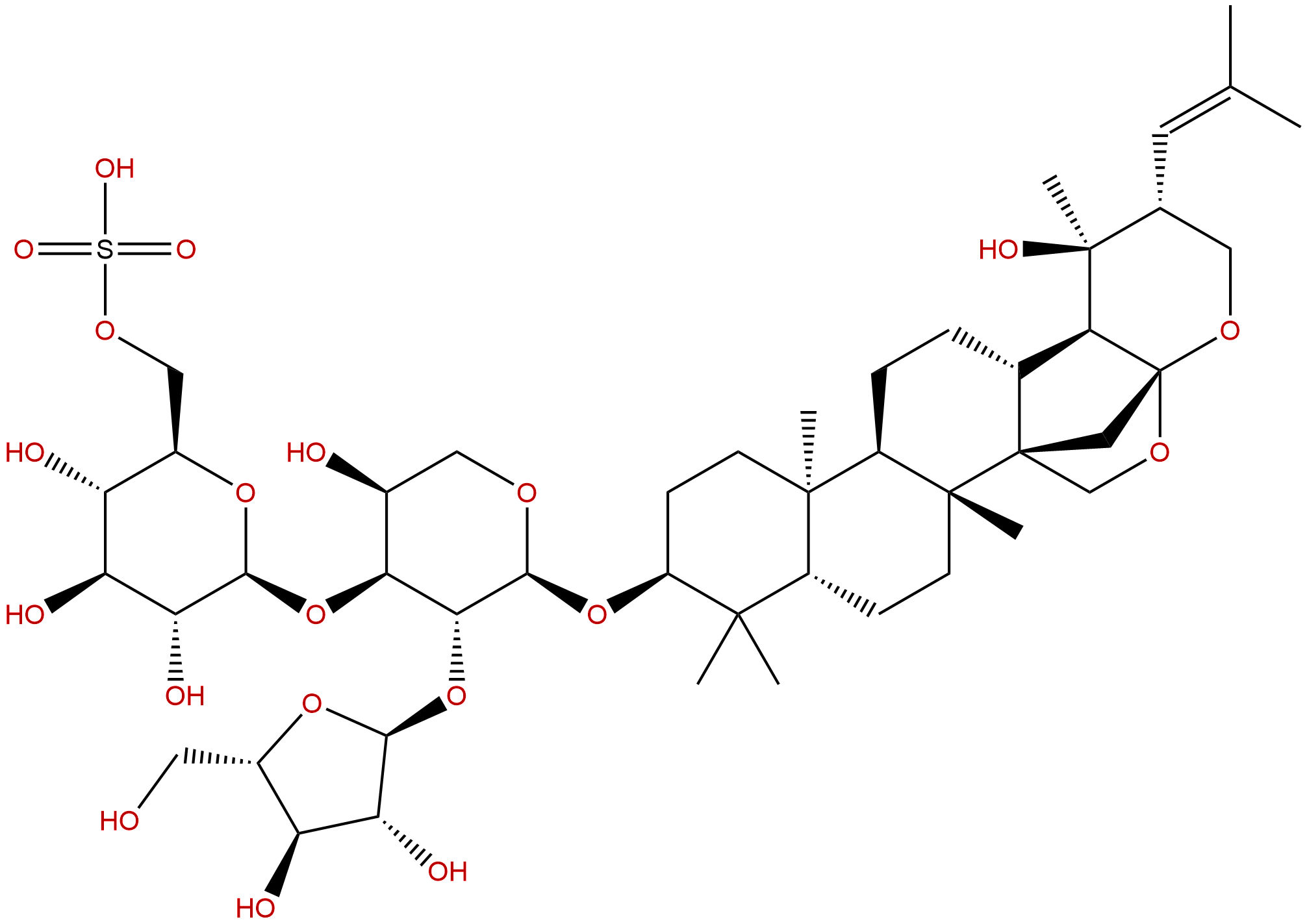


Product name: Bacopaside I
Synonym name:
Catalogue No.: BP3667
Cas No.: 382148-47-2
Formula: C46H74O20S
Mol Weight: 979.138
Botanical Source: Bacopa monnieri
Physical Description:
Type of Compound: Terpenoids
Purity: 95%~99%
Analysis Method: HPLC-DAD or/and HPLC-ELSD
Identification Method: Mass, NMR
Packing: Brown vial or HDPE plastic bottle
The product could be supplied from milligrams to grams. Inquire for bulk scale.
We provide solution to improve the water-solubility of compounds, thereby facilitating the variety of activity tests and clinic uses.
For Reference Standard and R&D, Not for Human Use Directly.
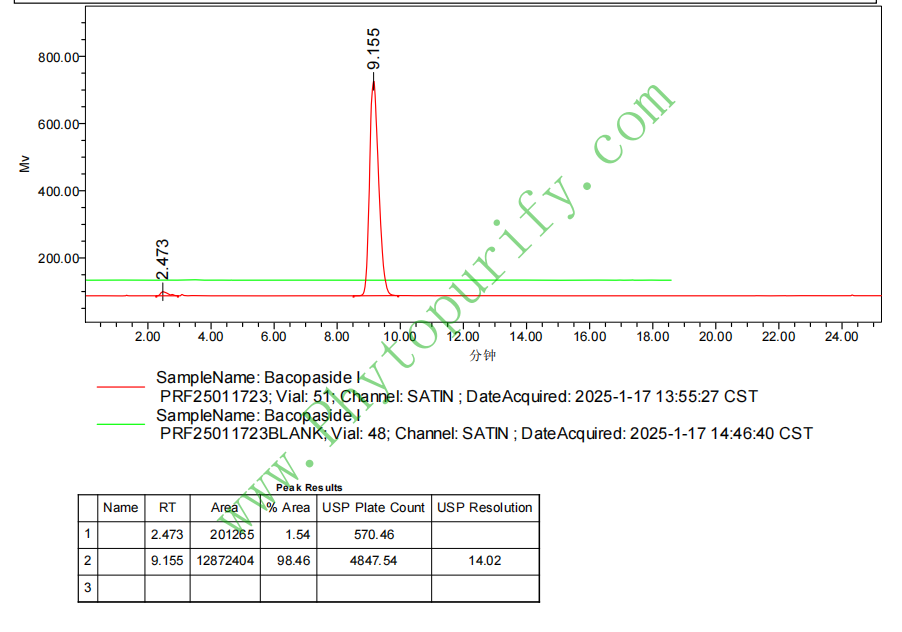
HPLC of Bacopaside I
Storage conditions:Short-term storage at 2~8℃, long-term storage at -20 ~ -80℃
299.2800
1.6854
-.3729
.0870
.4573
.2657
Low
66.6293
4.3395
No
No
Yes
No
No
No
0.3
Yes
No
No
No
At the intersection of traditional medicine and modern pharmacology research, natural products have always been an important treasure trove for discovering new therapeutic lead compounds. Fake purslane(Bacopa monnieri (L.) Wettst.), Also known as Brahmi grass, it has a thousand year history of application in Ayurvedic medicine, mainly used to enhance cognition, improve memory, and alleviate anxiety. Its complex phytochemical composition, especially a series of characteristic dammarane type triterpenoid saponins, is considered the material basis for its extensive pharmacological activity. Bacopaside I (CAS number: 382148-47-2) is an important active saponin monomer isolated from this plant. In recent years, with the advancement of separation and identification techniques and the deepening of neuropsychopharmacology research, the saponin I from Portulaca oleracea has attracted much attention due to its significant antioxidant, neuroprotective, and potential antidepressant activities. Compared with the total extract or mixed saponins of Portulaca oleracea, in-depth research on single components such as Portulaca oleracea saponin I can help to more accurately elucidate its structure-activity relationship, molecular mechanism of action, and potential for drug development, providing scientific basis for the development of new drugs for the treatment of neurological and psychiatric diseases based on natural products. This article aims to systematically review the chemical properties, plant sources, pharmacological activities, mechanisms of action, pharmacological evaluation, and clinical application prospects of saponins I from Portulaca oleracea, in order to provide comprehensive references for researchers in related fields.
Pseudopurslane saponin I is a dammarane type tetracyclic triterpenoid saponin. The molecular formula of this compound is C ₄₈ H ₇₈ O ₁₉, with a molecular weight of 979.1450 Da. The core structure of this compound is a damaane type triterpenoid nucleus, characterized by a β - configured hydroxyl group attached to the C-8 position and an S configuration at the C-20 position. In terms of glycosylation modification, the C-3 hydroxyl group of the saponin I from Portulaca oleracea is linked by a glycosidic bond to a complex oligosaccharide chain consisting of three molecules of glucose and one molecule of arabinose. This unique sugar chain structure is a key feature that distinguishes it from other saponins in Portulaca oleracea (such as Portulaca oleracea saponin A, Bacoside A3, etc.), and profoundly affects its physicochemical properties and biological activity.
Based on the analysis of the parameters related to drug properties, the saponins I from Portulaca oleracea exhibit typical characteristics of saponin compounds. The calculated value of its lipid water partition coefficient (LogP) is 1.6854, indicating that the molecule has a certain lipophilicity, but is not highly lipophilic. Its topological polar surface area (TPSA) is as high as 299.2800 Å ², which is mainly attributed to the abundant hydroxyl and glycosyl oxygen atoms in the molecule, resulting in strong polarity. This characteristic is consistent with the water solubility data (0.0870, usually indicating low solubility, units may be mg/mL or similar), suggesting that the inherent solubility of saponins I from Portulaca oleracea in water is limited, which may be a challenge for their oral bioavailability. It is worth noting that its blood-brain barrier permeability is predicted to be "low", which is a key limiting factor for antidepressant activity targeting the central nervous system, but not absolute, as certain polar molecules can affect the central nervous system through active transport or indirect effects in the periphery. In addition, preliminary toxicity predictions indicate a "no" risk of hERG channel inhibition, with an Ames test value of 0.3 (usually a value less than 1.5 is considered negative, indicating a low risk of mutagenicity), providing preliminary support for its relatively good safety.
Pseudopurslane saponin I specifically originates from the plant Pseudopurslane(Bacopa monnieri). This plant is a perennial creeping herbaceous plant belonging to the family Scrophulariaceae and the genus Pseudopurslane. It is widely distributed in wetlands, swamps, and water fields in tropical and subtropical regions around the world. As a "puzzle medicine" in Ayurvedic medicine, its above ground whole grass is used for medicinal purposes.
Efficient and high-purity extraction of saponins I from plant raw materials is a prerequisite for conducting pharmacological and medicinal chemistry research on it. Traditional extraction methods often use polar solvents, such as methanol, ethanol, or water alcohol mixed systems, to extract total saponins including saponin I to the maximum extent possible through reflux or ultrasound assisted extraction. Due to the complex and structurally similar composition of saponins in Portulaca oleracea, isolating and purifying monomers of Portulaca oleracea saponin I is a challenging task.
Modern separation processes typically employ a strategy that combines multi-step chromatography techniques. The crude extract is first subjected to column chromatography using macroporous adsorption resins (such as D101, AB-8), utilizing their adsorption properties and molecular sieve action. Different concentrations of ethanol aqueous solutions are used for gradient elution to preliminarily enrich the saponin sites. Subsequently, further fine separation was performed using normal phase silica gel column chromatography, reverse phase silica gel column chromatography (such as C18 packing), and high performance liquid chromatography (HPLC) or medium pressure liquid chromatography (MPLC). Preparation HPLC, especially using C18 reverse phase chromatography column with methanol water or acetonitrile water as mobile phase for gradient elution, is currently the most commonly used and effective method for obtaining high-purity monomers of vacation purslane saponins I. In recent years, liquid-liquid distribution chromatography techniques such as high-speed countercurrent chromatography have also been attempted to be applied for the separation of this type of saponin due to their advantages of irreversible adsorption and high recovery rate. The optimization of extraction and separation processes requires comprehensive consideration of multiple variables such as solvent type, temperature, time, chromatographic packing, and elution system to balance the yield, purity, and production cost of the target product.
A large number of pharmacological studies in vitro and in vivo have confirmed that saponins I from Portulaca oleracea have various biological activities, especially outstanding in the protection and regulation of the central nervous system.
Antioxidant and free radical scavenging activity This is one of the most fundamental pharmacological activities of saponins I from Portulaca oleracea. In vitro chemical models (such as DPPH, ABTS free radical scavenging experiments, FRAP iron reduction assay) indicate that saponins I from Portulaca oleracea can effectively scavenge various free radicals, and its activity may be attributed to the active hydroxyl groups on the phenolic or sugar groups in its chemical structure. In cell models, it can alleviate oxidative stress induced by toxic substances such as hydrogen peroxide (H ₂ O ₂) and β - amyloid protein, reduce intracellular reactive oxygen species (ROS) levels, enhance the activity of endogenous antioxidant enzymes such as superoxide dismutase (SOD) and glutathione peroxidase (GSH Px), and inhibit the production of lipid peroxidation product malondialdehyde (MDA). This powerful antioxidant capacity is the cornerstone of its neuroprotective effect.
Neuroprotective effect Based on its antioxidant properties, saponins I from Portulaca oleracea have shown protective effects in various neural injury models. Research has shown that it can improve glutamate induced neuronal excitotoxicity and reduce cell apoptosis. In Alzheimer's disease-related models, it may exert its effects by inhibiting acetylcholinesterase activity, reducing β - amyloid protein aggregation, and its neurotoxicity. In addition, it also has a positive impact on maintaining neuronal mitochondrial function and promoting the expression of neurotrophic factors such as BDNF.
Antidepressant and anti anxiety activity This is the core activity that has attracted much attention in recent years for the saponin I of Portulaca oleracea. In behavioral experiments such as forced swimming and tail suspension experiments in mice (classic depression models), administration of icariin I can significantly shorten the immobility time of animals, exhibiting similar effects to the classic antidepressant fluoxetine. It also showed anti anxiety activity in anxiety models such as elevated cross maze and open field experiments. These effects are not simply sedative effects, as they do not affect the autonomous activity of animals in general activity tests. It is worth noting that its antidepressant onset time may be faster than traditional chemical drugs, providing clues for the development of new rapid acting antidepressants.
Other potential activities Preliminary studies also suggest that saponins I from Portulaca oleracea may have anti-inflammatory, anticonvulsant, and learning and memory improving activities, but the evidence chain for these effects still needs more research to be enriched.
The multiple pharmacological effects of saponin I from Portulaca oleracea on depression stem from its multi-target regulation of the neurotransmitter system, neuroendocrine axis, intracellular signaling pathways, and neuroplasticity.
Regulation of monoamine neurotransmitter system Similar to many antidepressants, icariin I can affect the levels of monoamine neurotransmitters in key brain regions such as the hippocampus and prefrontal cortex. Research has shown that it can upregulate the concentrations of serotonin (5-HT), norepinephrine (NE), and dopamine (DA). The mechanism may involve inhibiting the activity of monoamine oxidase (MAO) and reducing the degradation of monoamine neurotransmitters; Or by regulating the function of presynaptic membrane transporters, it can affect the reuptake of neurotransmitters.
Regulation of hypothalamic pituitary adrenal axis Chronic stress is an important factor in inducing depression, often leading to excessive activation of the HPA axis and sustained elevation of corticosterone (in rodents) or cortisol (in humans) levels. Pseudopurslane saponin I has been shown to reverse the HPA axis hyperfunction caused by chronic stress, reduce serum corticosterone levels, and may alleviate damage to hippocampal neurons through the glucocorticoid receptor signaling pathway, which is a key brain region for HPA axis negative feedback regulation.
Activation of neurotrophic signaling pathway Brain derived neurotrophic factor and its downstream pathways are crucial for neuronal survival, synaptic plasticity, and antidepressant effects. Research has found that saponins I from Portulaca oleracea can significantly increase the protein and mRNA expression of BDNF in the hippocampus. The downstream mechanism involves the activation of the tropomyosin receptor kinase B (TrkB) - extracellular signal regulated kinase (ERK)/protein kinase B (Akt) - cyclic adenosine monophosphate effector binding protein (CREB) signaling pathway. The phosphorylation of CREB can further promote the transcription of antidepressant related genes such as BDNF, forming a positive cycle.
Anti inflammatory and immune regulation Neuroinflammation is considered one of the pathological mechanisms of depression. Pseudopurslane saponin I can exert antidepressant effects by inhibiting the activation of inflammatory signaling pathways such as nuclear factor kappa B (NF - κ B), reducing the production of pro-inflammatory cytokines (such as TNF - α, IL-1 β, IL-6) in brain regions such as the hippocampus.
Antioxidant stress pathway As mentioned earlier, its strong antioxidant capacity directly protects neurons from oxidative damage. It may enhance the overall antioxidant capacity of cells by activating the key cellular antioxidant defense pathway Nrf2/ARE, upregulating the expression of phase II detoxifying enzymes such as heme oxygenase-1 (HO-1).
In summary, the saponin I of Portulaca oleracea does not act on a single target, but through a synergistic network of "multi-component multi-target multi pathway", comprehensively regulates neurotransmitter balance, HPA axis function, neurotrophic support, and inflammatory oxidative stress status, ultimately restoring the function and plasticity of neural circuits. This may be the underlying mechanism of its antidepressant efficacy.
Although the saponin I from Portulaca oleracea has shown clear activity in pharmacological models, its ultimate development into a drug depends on systematic pharmacological evaluation and pharmacokinetic characteristics.
According to the physical and chemical parameters mentioned earlier, saponins I from Portulaca oleracea belong to compounds with high polarity, high molecular weight (>500), and low water solubility, which is consistent with the characteristics of Class II (low solubility and high permeability) or Class IV (low solubility and low permeability) drugs in the Biopharmaceutical Classification System (BCS). The high TPSA and low blood-brain barrier permeability prediction are the main obstacles faced by central administration. However, the oral absorption and central distribution of natural products and their derivatives may be achieved through various non classical pathways, such as: ① Saponins may promote their own or other component absorption due to their surfactant properties; ② The gut microbiota may hydrolyze its glycosides to produce aglycones or secondary glycosides, which may improve the lipid solubility and absorption of these products; ③ Indirectly regulate central function through peripheral anti-inflammatory and antioxidant effects.
At present, there are relatively limited research reports on the pharmacokinetics of the saponin I system in Portulaca oleracea. Limited animal experiments (mainly conducted in rats) suggest that its oral bioavailability may not be high. The exposure of the prototype drug in the blood is limited and may undergo extensive phase I (such as oxidation) and phase II (such as glucuronidation, sulfation) metabolism. The specific characteristics of its distribution, metabolism, and excretion, such as the main metabolites, tissue distribution (especially in brain tissue), half-life, and main excretion pathways (bile or kidneys), still need to be further studied through more sophisticated radioactive labeling or high-sensitivity mass spectrometry analysis methods.
In terms of safety, preliminary computer predictions and some in vitro experiments (such as hERG and Ames tests) have shown promising results. However, a comprehensive preclinical safety evaluation, including acute toxicity, long-term repeated administration toxicity, reproductive toxicity, genetic toxicity, and more in-depth toxicokinetics research, is crucial for advancing its development. In addition, as a natural product, the stability of its raw material sources, the reproducibility of its extraction process, and the quality control standards of the final product are also important aspects that cannot be ignored in the evaluation of drug properties.
As a natural saponin monomer with clear antidepressant and other neuroprotective activities, the clinical application prospects of purslane saponin I are broad, but also full of challenges.
Potential application directions:
1. Development of new antidepressant/anti anxiety drugs In response to the problems of slow onset, limited efficacy, and multiple side effects of existing antidepressants, the multi-target mechanism of action and possible rapid onset characteristics of Pseudopurslane Saponin I have the potential to be developed into a new generation of plant or chemical drugs. It may be used as a single component drug or in combination with drugs with other mechanisms of action to treat severe depression, anxiety, and stress-related disorders.
2. Adjuvant therapy for neurodegenerative diseases Its antioxidant, anti-inflammatory, and neurotrophic properties make it valuable in the adjuvant treatment or prevention of neurodegenerative diseases such as Alzheimer's disease and Parkinson's disease, and may be used to improve cognitive function and delay disease progression.
3. Functional foods and health products Under the premise of regulatory permission, high-purity purslane saponins I or standardized extracts rich in this ingredient can be used as functional food ingredients or dietary supplements to improve mood, relieve stress, and enhance brain function.
Challenges faced and future research directions:
1. Bioaccumulation and formulation optimization Resolving its low solubility and low blood-brain barrier permeability is the key to transformation. Future research should focus on novel drug delivery systems, such as nano formulations (liposomes, polymer nanoparticles, solid lipid nanoparticles), self microemulsions, and prodrug modifications (such as structural modifications of glycosides or glycosides to enhance lipid solubility), to improve their oral absorption and brain targeted delivery.
2. In depth study on the mechanism of action It is necessary to use techniques such as gene knockout/knock in animals, specific inhibitors, molecular docking and probes to more accurately verify their direct interactions with potential targets (such as TrkB receptors, MAO enzymes, inflammasomes, etc.) and draw a more complete signal network map.
3. Preclinical and clinical research of the system GLP toxicology evaluation and IND guided pharmacokinetic studies that comply with international standards must be completed. On this basis, rigorous clinical trials (phases I-III) will be designed to gradually verify its safety, tolerability, and efficacy in humans, and determine the optimal dosage and course of treatment.
4. Chemical synthesis and structural optimization Although currently mainly extracted from plants, fully synthetic or semi synthetic research can not only solve the problem of resource dependence, but also provide a platform for the chemical optimization of drugs based on their parent nucleus structure. Through structural modification, the pharmacological parameters can be optimized while retaining activity.
As a characteristic active ingredient in the traditional puzzle plant, Portulaca oleracea, saponin I is a typical representative of modern natural product pharmacology research moving from traditional experience to scientific interpretation. Its clear antioxidant, neuroprotective, and antidepressant activities, as well as multidimensional mechanisms involving the monoaminergic system, HPA axis, BDNF signaling, and anti-inflammatory effects, reveal its enormous potential for treating neurological and psychiatric disorders. Despite facing challenges such as bioavailability, blood-brain barrier permeability, and insufficient systemic pharmacokinetic and toxicological data on the path towards clinical drug development, these challenges are also the focus and breakthrough point of future research. With the innovation of formulation technology, in-depth analysis of the mechanism of action, and the promotion of standardized clinical translation research, the saponin I of Portulaca oleracea is expected to develop from a potential natural compound into a new drug candidate for the treatment of depression and other related diseases, providing a new choice based on ancient wisdom for the growing global demand for mental and psychological health. The research process has once again confirmed that the continuous cultivation of single active ingredients in traditional medicinal plants is an important bridge connecting traditional medical treasures with modern innovative drug development.
