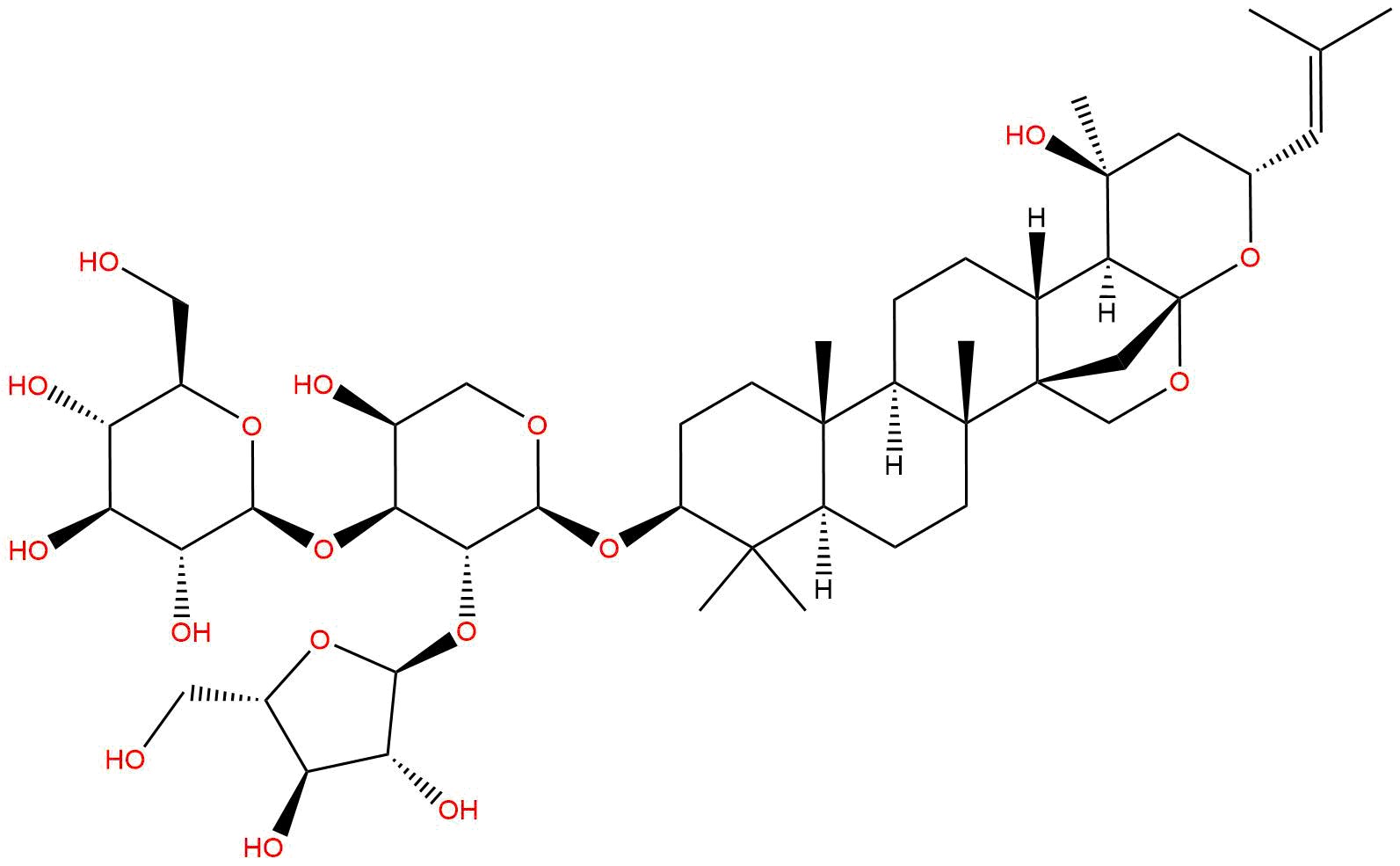


Synonym name: Bacopaside VII
Catalogue No.: BP0228
Cas No.: 94443-88-6
Formula: C46H74O17
Mol Weight: 899.081
Botanical Source: Colubrina retusa, Bacopa monnieri and Zizyphus joazeiro
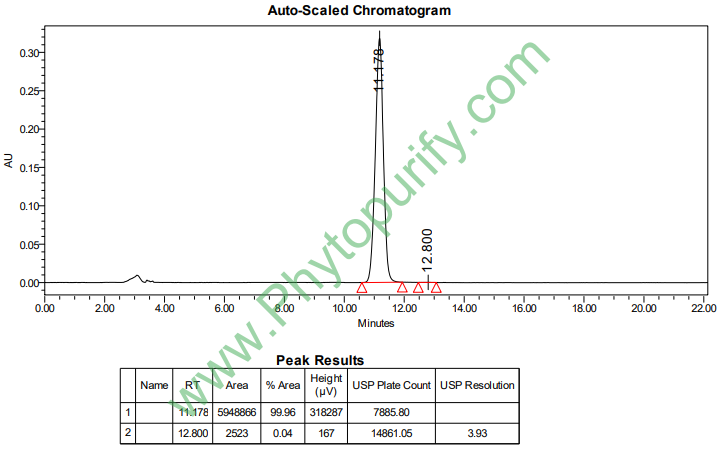
Purity: 95%~99%
Analysis Method: HPLC-DAD or/and HPLC-ELSD
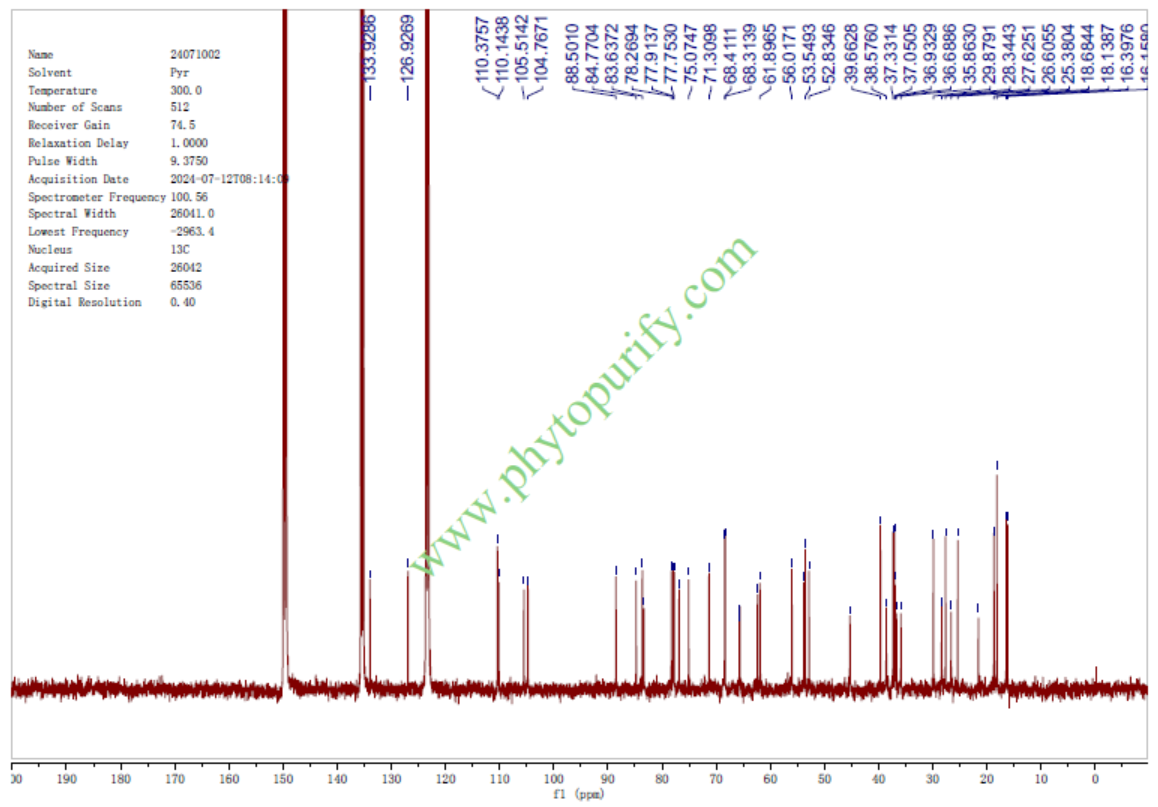
Identification Method: Mass, NMR
Packing: Brown vial or HDPE plastic bottle
Can be supplied from milligrams to grams.
For Reference Standard and R&D, Not for Human Use Directly.
Inquire for bulk scale.
HPLC of Bacopaside X
NMR of Bacopaside VII
Storage conditions:Short-term storage at 2~8℃, long-term storage at -20 ~ -80℃
Bacopaside VII, also known as Bacopaside X, is an important natural triterpenoid saponin isolated from the traditional medicinal plant Bacopa monnieri. With the continuous development of pharmacology of natural products, saponin VII from Portulaca oleracea has gradually become a research hotspot in the fields of neuroprotection, anti-inflammatory, and anti-tumor due to its unique chemical structure and diverse biological activities. This article provides a systematic review of the chemical structure and physicochemical properties, plant sources and extraction methods, pharmacological activity, mechanism of action, evaluation of drug properties, and clinical application prospects of saponin VII from Portulaca oleracea. The aim is to provide theoretical basis and research direction for the further development and application of this compound.
The molecular formula of Pseudopurslane Saponin VII is C47H74O17, with a molecular weight of 890.0900, belonging to the pentacyclic triterpenoid saponin class. Its structural core is a typical saponin triterpenoid skeleton, connecting multiple sugar residues to form a complex glycoside structure. The LogP value of this compound is -2.0000, indicating its strong hydrophilicity and good water solubility. The extremely high topological polar surface area (TPSA) is 301.62 Å ², with 17 hydrogen bond acceptors, indicating the presence of a large number of polar groups in its molecular structure, which may affect its cell membrane permeability and bioavailability.
The chemical structure of Portulaca oleracea saponin VII determines its binding potential with biomolecules such as proteins, enzymes, and receptors, particularly through specific interactions between glycosides and targets. Its physicochemical properties, such as low fat solubility and high molecular weight, suggest that there are certain challenges in its distribution and pharmacokinetics in vivo, but at the same time, it also reduces the ability to penetrate the blood-brain barrier and reduces the risk of central nervous system toxicity.
Bacopa monnieri, a perennial aquatic herbaceous plant widely distributed in tropical and subtropical regions, is mainly derived from Bacopa monnieri. It is traditionally used in Ayurvedic medicine in India and has the effects of enhancing memory, anti anxiety, and sedation. Pseudopurslane saponin VII is one of the multiple saponin components in this plant, with relatively low content, and needs to be obtained through efficient extraction and separation techniques.
Common extraction methods include solvent extraction, ultrasound assisted extraction, and pressurized liquid extraction. Generally, ethanol or methanol is used for crude extraction, followed by multi-step separation and purification through liquid-liquid distribution, silica gel column chromatography, reverse phase high performance liquid chromatography (RP-HPLC), etc., to ultimately obtain high-purity purslane saponin VII. In recent years, supercritical CO2 extraction and molecular imprinting techniques have also been attempted to extract this compound, aiming to improve extraction efficiency and purity, reduce solvent residue and environmental pollution.
The pharmacological activity research of saponins VII from Portulaca oleracea covers multiple directions, including neuroprotection, anti-inflammatory, antioxidant, and anti-tumor effects.
Neuroprotective effect
Pseudopurslane saponin VII exhibits significant neuroprotective effects by regulating neurotransmitter metabolism, inhibiting neuroinflammation, and oxidative stress. In vitro and in vivo experiments have shown that the compound can promote the survival of nerve cells, reduce nerve damage, improve cognitive function, and particularly demonstrate potential therapeutic value in Alzheimer's and Parkinson's disease models.
anti-inflammatory activity
Pseudopurslane saponin VII can inhibit the expression of pro-inflammatory factors such as TNF - α, IL-1 β, and IL-6, reduce the infiltration of inflammatory cells, and exert anti-inflammatory effects. Its anti-inflammatory mechanism involves the regulation of the NF - κ B signaling pathway, demonstrating potential applications in chronic inflammatory diseases.
Antioxidant effect
This compound can scavenge free radicals, enhance intracellular antioxidant enzyme activity, and alleviate oxidative damage. Its antioxidant properties help prevent various diseases related to oxidative stress, such as cardiovascular disease and neurodegenerative diseases.
Antitumor activity
Preliminary studies have shown that saponins VII from Portulaca oleracea have inhibitory effects on proliferation and induce apoptosis in various tumor cells, involving the regulation of cell cycle arrest and apoptosis related proteins, suggesting their potential as anti-tumor candidate drugs.
The mechanism of action of saponin VII in Portulaca oleracea is relatively complex, mainly achieved through multiple signaling pathways to achieve its biological effects.
Neuroprotective mechanism
This compound promotes neurotransmitter balance by regulating the activity of glutamate receptors, NMDA receptors, and acetylcholinesterase. At the same time, activating the PI3K/Akt and MAPK/ERK signaling pathways promotes neuronal survival and neuroplasticity.
Anti inflammatory mechanism
Pseudopurslane saponin VII inhibits the nuclear translocation of NF - κ B, reduces the transcriptional expression of pro-inflammatory genes, and decreases the release of inflammatory mediators. In addition, regulating the JAK/STAT and NLRP3 inflammasome signaling pathways can alleviate inflammatory responses.
Antioxidant mechanism
By activating the Nrf2/ARE signaling pathway, the intracellular antioxidant defense system is enhanced, the activity of enzymes such as glutathione peroxidase (GPx) and superoxide dismutase (SOD) is increased, and excess reactive oxygen species (ROS) are cleared.
Antitumor mechanism
Pseudopurslane saponin VII induces apoptosis in tumor cells, involving activation of the mitochondrial pathway, regulation of Bcl-2 family protein expression, promotion of cytochrome C release, and activation of the caspase cascade reaction. At the same time, it blocks the cell cycle process, inhibits tumor cell proliferation and migration.
The pharmacological parameters of Pseudopurslane Saponin VII show that its molecular weight is relatively high (890.09 Da), with a LogP value of -2, indicating strong hydrophilicity and low lipid solubility, which poses certain limitations on oral absorption and cell membrane penetration. The TPSA is as high as 301.62 Å ², and the number of hydrogen bond acceptors is as high as 17, further indicating its high polarity, which may lead to a decrease in bioavailability.
The ability to penetrate the blood-brain barrier indicates difficulty in entering the central nervous system, but this also reduces the risk of central nervous system toxicity. In vitro hepatotoxicity, cardiotoxicity, and hERG channel inhibition were all negative, demonstrating good safety characteristics. However, the results of Ames mutagenicity test are still unclear, and further evaluation of its genetic toxicity risk is needed.
In terms of pharmacokinetics, existing research is relatively limited. Preliminary in vivo experiments have shown that the absorption of saponins VII from Portulaca oleracea is slow and the plasma concentration is low after oral administration, indicating the presence of first pass effects and low bioavailability issues. The metabolic pathway mainly involves the liver enzyme system, and the glycoside part may be hydrolyzed by intestinal microbiota, affecting its in vivo active form. In the future, drug formulation optimization and structural modification are needed to improve its pharmacokinetic properties.
As an important active ingredient in Portulaca oleracea, saponin VII has shown broad clinical application potential due to its multiple pharmacological activities such as neuroprotection, anti-inflammatory, and anti-tumor effects. Especially in the adjuvant treatment of neurodegenerative diseases such as Alzheimer's disease, Parkinson's disease, and chronic inflammatory diseases, the saponin VII from Portulaca oleracea has unique advantages.
However, its clinical research is still in its infancy and lacks systematic clinical trial data. Future research should focus on:
Pharmacokinetic and safety evaluation
Conduct in-depth research on its absorption, distribution, metabolism, and excretion characteristics in the body, and clarify the safety and toxicological parameters of long-term medication.
Formulation development and optimization of administration routes
By using novel drug delivery systems such as nanocarriers and liposomes, their bioavailability and targeting can be improved.
Systematic interpretation of multi-target mechanisms of action
Using omics techniques and molecular simulations to reveal its complex network of interactions, providing a basis for precise treatment.
Clinical trial design and implementation
Conduct randomized, double-blind, placebo-controlled clinical studies to verify its efficacy and safety, and promote its translational application.
In summary, the saponin VII from Portulaca oleracea has the potential to become a new natural medicine, but it still requires systematic basic and clinical research support to promote its transition from laboratory to clinical use.
As a natural triterpenoid saponin with a unique structure, the saponin VII of Portulaca oleracea reflects its rich medicinal value. Its diverse pharmacological activities and good safety provide important molecular basis for the development of new neuroprotective and anti-inflammatory drugs. Although there are certain limitations to its pharmacological properties, modern drug design and formulation technology have the potential to overcome these obstacles and achieve clinical translation. In the future, combined with interdisciplinary research, new paths will be opened up for the development and application of saponins VII from Portulaca oleracea, promoting the development and innovation of natural product pharmacology.
