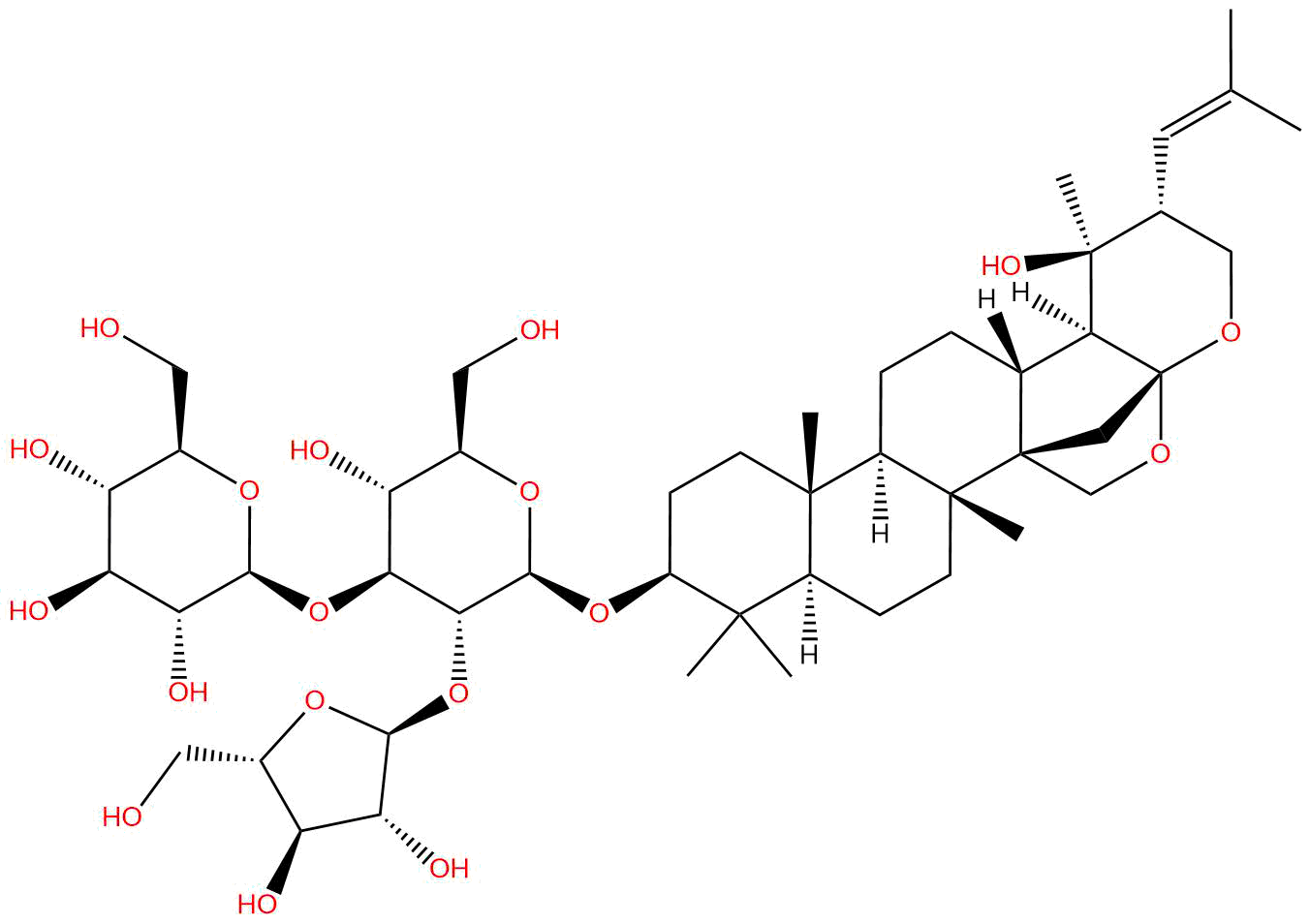


Synonym name: Bacopaside II
Catalogue No.: BP0227
Cas No.: 382146-66-9
Formula: C47H76O18
Mol Weight: 929.107
Botanical Source: Bacopa monnieri
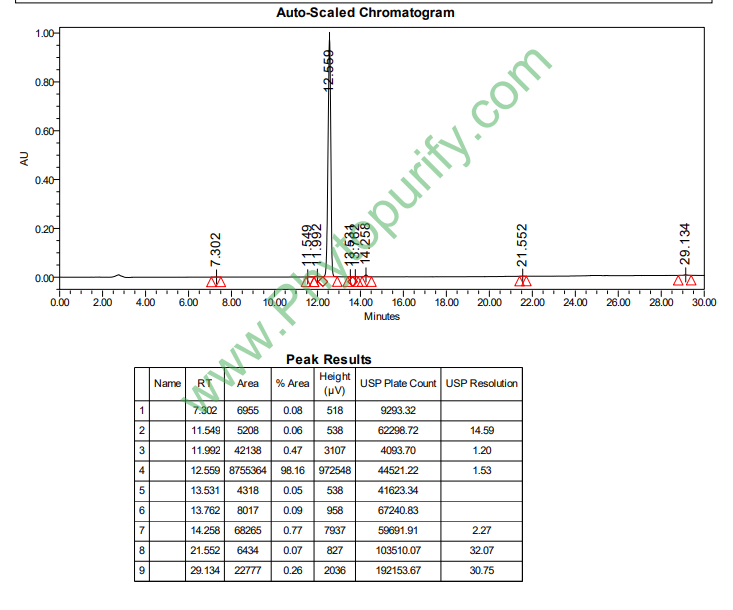
Purity: 95%~99%
Analysis Method: HPLC-DAD or/and HPLC-ELSD
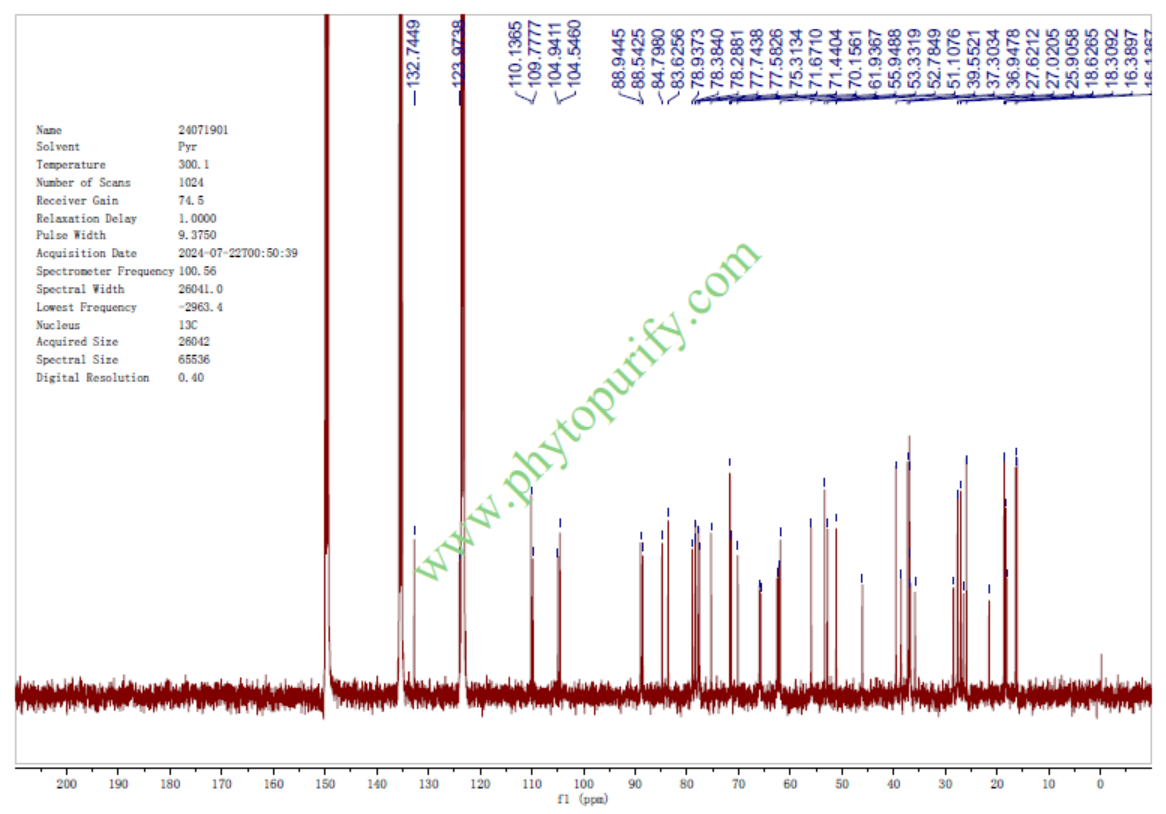
Identification Method: Mass, NMR
Packing: Brown vial or HDPE plastic bottle
Can be supplied from milligrams to grams.
For Reference Standard and R&D, Not for Human Use Directly.
Inquire for bulk scale.
Description:
Bacopaside II is a potential anti-angiogenic agent, it can reduce endothelial cell migration and tubulogenesis and induce apoptosis. Bacopaside II shows antioxidant and antidepressant activities, it can inhibit both basal activity as well as verapamil-stimulated ATPase activity, suggesting its affinity towards P-gp.
References:
Int J Mol Sci. 2018 Feb 26;19(3). pii: E653.
The Aquaporin 1 Inhibitor Bacopaside II Reduces Endothelial Cell Migration and Tubulogenesis and Induces Apoptosis.
Expression of aquaporin-1 (AQP1) in endothelial cells is critical for their migration and angiogenesis in cancer.
METHODS AND RESULTS:
We tested the AQP1 inhibitor, Bacopaside II, derived from medicinal plant Bacopa monnieri, on endothelial cell migration and tube-formation in vitro using mouse endothelial cell lines (2H11 and 3B11) and human umbilical vein endothelial cells (HUVEC). The effect of Bacopaside II on viability, apoptosis, migration and tubulogenesis was assessed by a proliferation assay, annexin-V/propidium iodide flow cytometry, the scratch wound assay and endothelial tube-formation, respectively. Cell viability was reduced significantly for 2H11 at 15 μM (p = 0.037), 3B11 at 12.5 μM (p = 0.017) and HUVEC at 10 μM (p < 0.0001). At 15 μM, the reduced viability was accompanied by an increase in apoptosis of 38%, 50% and 32% for 2H11, 3B11 and HUVEC, respectively. Bacopaside II at ≥10 μM significantly reduced migration of 2H11 (p = 0.0002) and 3B11 (p = 0.034). HUVECs were most sensitive with a significant reduction at ≥7.5 μM (p = 0.037). Tube-formation was reduced with a 15 μM dose for all cell lines and 10 μM for 3B11 (p < 0.0001).
CONCLUSIONS:
These results suggest that Bacopaside II is a potential anti-angiogenic agent.
Heliyon. 2016 Feb 15;2(2):e00068.
Beneficial effects of Bacopa monnieri extract on opioid induced toxicity.
The present study examined the hepatotoxicity and nephrotoxicity of morphine and illicit street heroin and their amelioration by a standardized methanolic extract of Bacopa monnieri (L.) (mBME) in rats.
METHODS AND RESULTS:
Morphine or street heroin was administered at a dose of 20 mg/kg for 14 and 21 days. mBME (40 mg/kg) or ascorbic acid (50 mg/kg) was administered two hours before morphine or street heroin. High performance liquid chromatography (HPLC) was used for the standardization of bacoside-A major components in mBME. The antioxidant potential of mBME was evaluated by 2,2-diphenyl-1-picrylhydrazyl (DPPH) free radical scavenging assay. Administration of morphine and street heroin resulted in marked elevation of serum alanine aminotransferase (ALT), aspartate aminotransferase (AST) and creatinine. Histopathological changes induced by morphine and street heroin after 14 days were of reversible nature while treatment for 21 days was associated with irreversible changes. Pretreatment with mBME or ascorbic acid restored the elevation of serum ALT, AST and creatinine and protected liver and kidneys from the toxicological influence of morphine and street heroin. HPLC analysis showed that mBME contained bacoside-A major components i.e. bacoside A3 (37.5 μg/mg), Bacopaside II (4.62 μg/mg) and bacopasaponin C (1.91 μg/mg). The EC50 for the DPPH free radical scavenging assay revealed that mBME possessed strong antioxidant potential.
METHODS AND RESULTS:
These results concluded that as compared to morphine, street heroin was associated with severe biochemical and histopathological changes in the liver and kidneys. Bacopa monnieri having strong antioxidant potential may provide a beneficial herbal remedy for the efficient management of opioid related hepatotoxicity and nephrotoxicity.
NMR of Bacopaside II
HPLC of Bacopaside II
Storage conditions:Short-term storage at 2~8℃, long-term storage at -20 ~ -80℃
Bacopaside II (CAS number: 382146-66-9) is an important triterpenoid saponin compound isolated from the traditional medicinal plant Bacopa monnieri. As an important medicinal herb in the Indian traditional medicine system - Ayurveda, purslane has been widely studied for its significant neuroprotective, cognitive improving, and anti-inflammatory effects. In recent years, with the deepening development of natural product pharmacology, saponins II from Portulaca oleracea have gradually become a research hotspot due to their unique biological activities, especially their potential roles in anti-tumor, anti angiogenesis, and metabolic disease regulation.
Pseudopurslane saponin II exhibits inhibitory effects on the water channel protein AQP1, thereby exerting anti angiogenic activity, indicating its potential value in regulating the tumor microenvironment. In addition, the compound exhibits significant cytotoxicity and can induce apoptosis in various cancer cells, demonstrating strong anti-cancer potential. At the same time, saponins II from Portulaca oleracea are associated with various metabolic targets such as AMPK and SGLT2, indicating their potential application in metabolic diseases such as hyperglycemia.
This article aims to systematically review the chemical structure and physicochemical properties, plant sources and extraction methods, pharmacological activity and mechanism of action, pharmacological evaluation and pharmacokinetic characteristics of saponins II from Portulaca oleracea, and explore its clinical application prospects in combination with existing research. It is expected to provide theoretical basis and research direction for the in-depth development and application of this natural product.
Pseudopurslane saponin II belongs to the natural triterpenoid saponin class, with a complex molecular formula and a molecular weight of 912.1000 Da. The structural core of this compound is a tetracyclic triterpenoid skeleton, connecting multiple sugar residues to form a typical saponin structure. Its LogP value is -2.0000, indicating that the molecule has strong hydrophilicity and good water solubility. The total polar surface area (TPSA) is as high as 304.76 Å ², reflecting its abundant polar groups, especially hydroxyl and sugar groups, which impose certain limitations on its cell membrane permeability.
The saponin II molecule of Portulaca oleracea contains 18 hydrogen bond receptors, which further enhances its binding ability with biomolecules such as proteins and enzymes, and may be the molecular basis for its multi-target action. Its structure does not show the ability to penetrate the blood-brain barrier, suggesting that its direct role in the central nervous system may be limited.
From the perspective of physicochemical properties, the high polarity and high molecular weight of saponins II from Portulaca oleracea may affect their oral bioavailability and in vivo distribution, but their good water solubility is beneficial for addressing solubility issues in formulation development. In the future, it is expected to improve its pharmacokinetic properties through structural modification or nanocarrier technology.
Bacopa monnieri saponin II mainly exists in the entire plant of Bacopa monnieri, which is widely distributed in tropical and subtropical regions, especially in India and Southeast Asia. As a traditional herb, Portulaca oleracea has been used for thousands of years. Modern pharmacological research has confirmed that it contains various active ingredients, including saponins, flavonoids, phenols, and alkaloids.
The common methods for extracting saponins II from Portulaca oleracea include solvent extraction and chromatographic separation. Usually, ethanol or methanol is used for crude extraction, followed by liquid-liquid partitioning, silica gel column chromatography, high-performance liquid chromatography (HPLC) and other techniques for separating and purifying saponins. In recent years, new technologies such as ultrasound assisted extraction and microwave-assisted extraction have also been applied to improve extraction efficiency and purity.
The optimization of extraction process not only affects the yield and purity of the product, but also affects its biological activity. Research has shown that different extraction solvents and conditions have a significant impact on the content and activity of saponin II in Portulaca oleracea, and process design needs to be tailored to specific application requirements.
The pharmacological activities of saponins II from Portulaca oleracea mainly focus on their anti-tumor, anti angiogenic, and metabolic regulatory effects.
Several in vitro cell experiments showed that Pseudopurslane saponin II had obvious cytotoxicity to many cancer cell lines (such as breast cancer, colon cancer and lung cancer cells). Its mechanism of action involves inducing cell cycle arrest and activating intracellular apoptotic signaling pathways (such as mitochondrial dependent pathways and activation of caspase family proteins), thereby promoting cancer cell apoptosis. In addition, saponins II from Portulaca oleracea can inhibit cancer cell migration and invasion, and slow down tumor progression.
Angiogenesis is a key process in tumor growth and metastasis. Pseudopurslane saponin II exhibits significant anti angiogenic activity by inhibiting the function of water channel protein AQP1, interfering with endothelial cell migration and luminal formation. Research on in vivo tumor models also supports its role in inhibiting tumor growth by blocking angiogenesis in the tumor microenvironment.
There is a potential association between saponins II from Portulaca oleracea and various targets associated with hyperglycemia, such as AMPK, SGLT2, GCK, etc., suggesting that they may exert hypoglycemic and metabolic syndrome improving effects by regulating glucose metabolism, insulin signaling pathways, and glucose transport mechanisms. Although relevant research is still in its preliminary stage, its multi-target regulatory characteristics provide new ideas for the treatment of metabolic diseases.
The mechanism of action of saponins II from Portulaca oleracea is complex, involving multiple signaling pathways and molecular targets.
AQP1 (aquaporin 1) plays an important role in endothelial cell migration and angiogenesis. As an inhibitor of AQP1, purslane saponin II blocks the transmembrane transport of water molecules, interferes with the morphological changes and migration ability of endothelial cells, inhibits neovascularization, and thus limits tumor growth and metastasis.
Pseudopurslane saponin II can activate various apoptosis related proteins in cells, including caspase-3, caspase-9, and Bax proteins, promote mitochondrial membrane potential loss and cytochrome C release, and initiate endogenous apoptosis pathways. At the same time, inhibiting the expression of anti apoptotic protein Bcl-2 enhances apoptosis signaling, ultimately leading to programmed cell death of cancer cells.
There are interactions between saponins II from Portulaca oleracea and various metabolic related targets
The multiple regulation of these targets provides potential advantages for the treatment of metabolic diseases with saponins II from Portulaca oleracea.
The pharmacological evaluation of saponins II from Portulaca oleracea shows that there are certain challenges in their physicochemical properties. The high molecular weight (912 Da) and high polarity (TPSA 304.76 Å ²) limit its ability to pass through the cell membrane, which may result in lower oral bioavailability. LogP is -2, indicating good water solubility but poor lipid solubility, which affects its distribution in the body.
Whether it has the ability to penetrate the blood-brain barrier or not suggests that its direct efficacy in the central nervous system is limited, and it may be more suitable for peripheral target therapy. Safety indicators such as hepatotoxicity, cardiotoxicity, hERG channel inhibition, and Ames mutagenicity are not yet clear and need to be validated through systematic in vitro and in vivo toxicology studies.
In terms of pharmacokinetics, there is currently a lack of systematic in vivo metabolic and pharmacokinetic data. Considering its complex structure, there may be a rapid intestinal hepatic first pass effect and metabolic degradation. In the future, drug carrier technology or structural modification is needed to optimize its in vivo stability and targeting.
As a multifunctional natural product, the saponin II from Portulaca oleracea has broad clinical application potential. Its anti-tumor and anti angiogenic activities make it a potential candidate drug for cancer treatment, especially in combination chemotherapy and targeted therapy, which may exert synergistic effects.
In the field of metabolic diseases, saponins II from Portulaca oleracea can improve glucose metabolism and insulin sensitivity by regulating multiple targets, demonstrating potential applications in the treatment of hyperglycemia and related metabolic syndrome. In the future, by combining modern drug design and nanotechnology, it is expected to break through the limitations of drug efficacy and improve clinical conversion rates.
In addition, the safety of saponins II from Portulaca oleracea still needs further research, especially the toxicological evaluation of long-term use. Preclinical animal models and early clinical trials will be key steps in verifying its efficacy and safety.
With the advancement of molecular biology and pharmacology techniques, the mechanism of action of saponins II from Portulaca oleracea will be further revealed, providing a solid foundation for its clinical development. Multidisciplinary collaboration will promote its transformation from laboratory research to clinical applications.
As an important active ingredient in Portulaca oleracea, saponin II from Portulaca oleracea has shown broad application prospects in the fields of anti-tumor, anti angiogenesis, and metabolic disease treatment due to its unique chemical structure and multi-target pharmacological activity. Although its high polarity and high molecular weight pose certain challenges for drug development, modern drug research and development technologies have the potential to overcome these limitations and achieve clinical translation.
Future research should focus on elucidating its detailed mechanism of action, evaluating its safety, and optimizing its pharmacokinetics, in order to promote the development of Paeonia lactiflora saponin II as a model for new natural medicines and provide new strategies and choices for the treatment of related diseases.
