Introduction/Overview
Cognitive impairment, as a syndrome that seriously affects the quality of life and social function of patients, has complex and diverse causes, covering various pathological states from neurodegenerative diseases (such as Alzheimer's disease, AD) to vascular dementia, traumatic brain injury sequelae, etc. With the increasing aging of the global population, the prevalence of cognitive impairment continues to rise, placing a heavy burden on the public health system. Although drug development for core diseases such as Alzheimer's disease has never stopped, existing treatment methods, such as cholinesterase inhibitors and N-methyl-D-aspartate (NMDA) receptor antagonists, are mainly limited to improving symptoms and difficult to fundamentally delay or reverse disease progression. Therefore, searching for new natural products with multi-target and low toxicity from traditional medicinal plants has become an important direction in neuropharmacology research.
Among the many medicinal plants with promoting intelligence and neuroprotective effects, the fake purslane(Bacopa monnieri (L.) Wettst., Also known as Brahmi or Indian coriander, it has a history of over a thousand years of application in the Ayurvedic medical system of India and is revered as a "brain tonic" (Medhya Rasayana). Modern pharmacological research has confirmed that extracts from Portulaceae can significantly improve learning and memory abilities, and exhibit multiple biological activities such as anti anxiety, anti depression, and antioxidant effects. The main active ingredient is a class of structurally unique damaane type triterpenoid saponins, collectively known as Bacoids. Among them, Bacopaside IV (CAS number: 155545-03-2), as an important member of this family, has attracted widespread attention from researchers in recent years due to its unique chemical structure and significant pharmacological potential, especially its regulatory effect on cognitive impairment related targets.
This review aims to systematically summarize the chemical characteristics, plant sources, pharmacological activities, molecular mechanisms, and pharmacological evaluation of saponins IV from Portulaca oleracea, and explore its application prospects in the treatment of cognitive impairment and related diseases, in order to provide theoretical basis for the in-depth development and clinical translation of this natural product.
Chemical structure and physicochemical properties
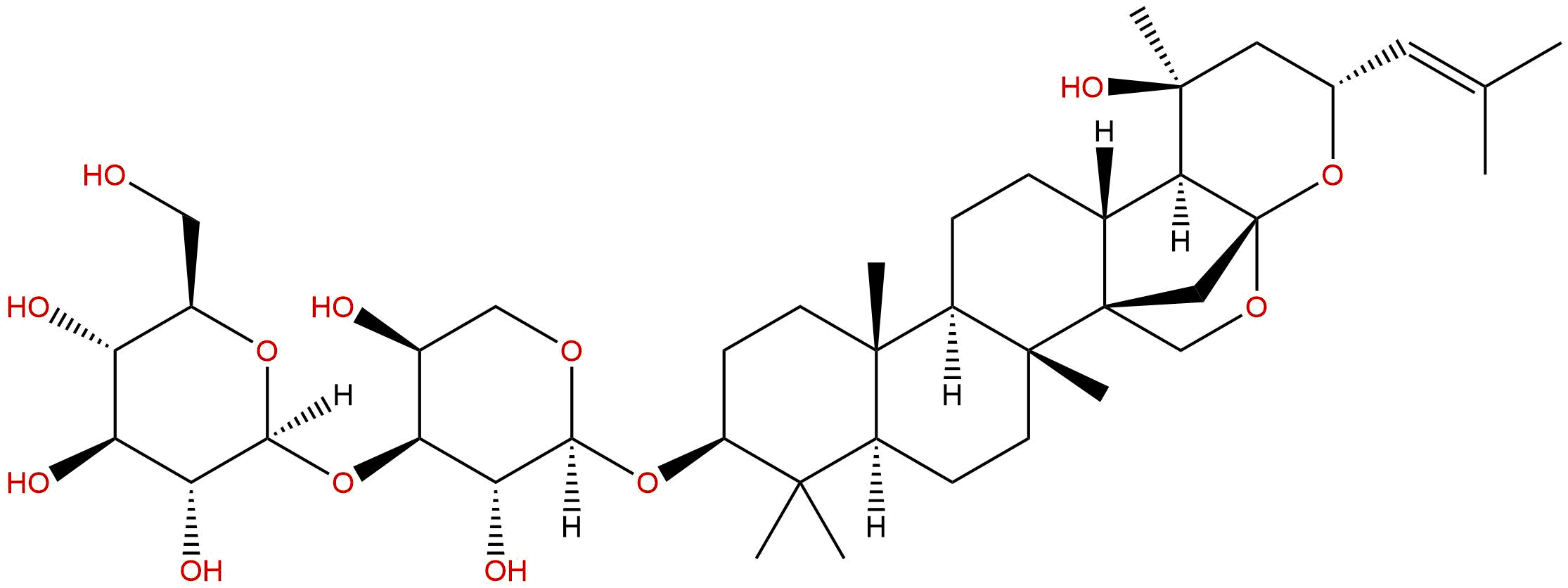
Pseudopurslane saponin IV belongs to the Dammarane type tetracyclic triterpenoid saponin. Its chemical structure consists of two parts: Aglycone and Glycone. The aglycone skeleton is composed of 20 (S), 24 (R) - epoxidamarine-3 β, 12 β, 25 triol (i.e. Bacogenin A1), which is a common feature of a series of active saponins in plants of the genus Bacopa. A disaccharide chain consisting of two sugar groups is connected to the C-3 hydroxyl group of the aglycone through a glycosidic bond. Specifically, the sugar chain is typically composed of a β - D-glucopyranosyl group and an α - L-arabinopyranosyl group connected by a (1 → 2) glycosidic bond, namely 3-O - [α - L-arabinopyranosyl - (1 → 2) - β - D-glucopyranosyl] - purslane sapogenin A.
From the perspective of physicochemical properties, the molecular formula of Pseudopurslane Saponin IV is C ₄₁ H ₆₆ O ₁ ∝, with a molecular weight of 766.9660 Da. As a typical saponin, it exhibits amphiphilic characteristics: its sugar chain gives it a certain degree of water solubility, while the triterpenoid glycoside skeleton has lipid solubility. The calculated lipid water partition coefficient (LogP) is 2.8131, indicating that its overall lipophilicity is moderate, which is beneficial for its passage through biofilms. The polar surface area (TPSA) is 196.9900 Å ², which is a relatively high value and is typically associated with poor passive transmembrane diffusion ability, particularly in penetrating the blood-brain barrier (BBB). Its low water solubility (0.0176 mg/mL) limits its bioavailability to some extent. In addition, the predictive model showed that saponins IV from Portulaca oleracea had no inhibitory activity on hERG potassium channels (hERG inhibition: no), and the Ames test result was negative (0.0), indicating low risks of cardiac and genetic toxicity and good preliminary safety characteristics. These physicochemical parameters provide fundamental data for its subsequent formulation design and pharmacokinetic studies.
Plant sources and extraction methods
The main source of saponins IV from Portulaca oleracea is the Scrophulariaceae plant(Bacopa monnieri). This plant is a creeping perennial herb widely distributed in wetlands, swamps, and riverbanks in the Indian subcontinent, Southeast Asia, southern China, and southern United States. In traditional medicine, its whole plant is used to prepare drugs.
The content of saponins in fake purslane varies depending on the place of origin, harvesting season, plant part, and variety. Usually, the aboveground parts (stems and leaves) are the main medicinal parts, with a total saponin content of up to 2% -5% of dry weight. Pseudopurslane saponin IV is one of the monomers with a relatively high content, but it often coexists with structural analogues such as pseudopurslane saponins I, II, III, V, and pseudopurslane glycoside A, making isolation and purification challenging.
Classic extraction methods often use polar solvents. The traditional process involves using methanol or ethanol (70% -95%) for reflux extraction or cold soaking extraction of the dried and crushed whole plant of Portulaca oleracea. After vacuum concentration, the extract is dispersed with water and then subjected to liquid-liquid extraction using n-butanol or ethyl acetate to enrich saponin components. The n-butanol extract is the crude saponin fraction. In order to obtain high-purity saponins IV from Portulaca oleracea, further separation and purification steps are required. Modern separation technology mainly includes:
- Column chromatography method This is the most commonly used method. Firstly, silica gel column chromatography is used to perform preliminary separation using gradient elution systems such as chloroform methanol water (e.g. 65:35:10 lower phase) or dichloromethane methanol. Subsequently, combined with reverse phase silica gel column chromatography (such as ODS-C18), fine separation was performed using methanol water or acetonitrile water systems.
- High performance liquid chromatography (HPLC)Preparation HPLC is a key method for obtaining high-purity monomers (purity>98%). Usually, C18 reverse phase chromatography column is used, with acetonitrile water or methanol water as mobile phase, combined with ultraviolet detector (UV, usually detecting the end absorption of saponins at 205-210 nm) or evaporative light scattering detector (ELSD) for separation.
- High Speed Counter Current Chromatography (HSCCC)As a liquid-liquid distribution chromatography technique, HSCCC avoids irreversible adsorption of samples on solid stationary phases and has the advantages of high recovery and large separation capacity. In recent years, it has been successfully applied to the separation of saponins from Portulaca oleracea, which can obtain multiple high-purity saponin monomers in one step.
During the extraction and separation process, it is important to control the temperature to avoid high temperatures that may cause glycosidic bond breakage or dehydration, cyclization, and other side reactions in the saponin structure. In addition, establishing standardized extraction processes to ensure stable content and purity of saponins IV in different batches of Portulaca oleracea is a prerequisite for its subsequent research as a candidate drug.
Pharmacological activity research
The pharmacological activity research of Paeonia lactiflora saponin IV mainly focuses on its improvement effect on the central nervous system, especially cognitive function, and also involves other systems.
1. Neuroprotective and Intelligence Promoting Effects
A large number of in vitro and in vivo experiments have confirmed the neuroprotective activity of purslane saponin IV.
- Improve cognitive function In various animal models of cognitive impairment, such as scopolamine induced amnesia rats, chronic cerebral hypoperfusion rats, and transgenic Alzheimer's disease mouse models, oral or intraperitoneal injection of pseudopurslane saponin IV can significantly improve its performance in behavioral tests such as Morris water maze, Y maze, and passive avoidance. The experimental animals showed shorter escape latency, longer target quadrant dwell time, and higher correct response rate, indicating that they can effectively improve spatial learning and working memory.
- Combat neurotoxicity At the cellular level, saponins IV from Portulaca oleracea can protect primary cultured neurons or PC12 cells from various damaging factors such as beta amyloid (A β) oligomers, glutamate, hydrogen peroxide (H ₂ O ₂), and hypoxia/reoxygenation. It can reduce cell apoptosis rate, maintain mitochondrial membrane potential, and decrease the release of lactate dehydrogenase (LDH).
2. Antioxidant and anti-inflammatory activities
Oxidative stress and neuroinflammation are key pathological processes in the occurrence and development of cognitive impairment.
- antioxidant Pseudopurslane saponin IV has been proven to be an effective free radical scavenger. It can directly scavenge 1,1-diphenyl-2-trinitrophenylhydrazine (DPPH) radicals, superoxide anions, and hydroxyl radicals. In the body, it can increase the activity of superoxide dismutase (SOD), glutathione peroxidase (GSH Px), and catalase (CAT) in brain tissue, while reducing the levels of malondialdehyde (MDA) and reactive oxygen species (ROS), thereby alleviating oxidative damage.
- anti-inflammatory Pseudopurslane saponin IV can inhibit the activation of microglia (such as BV-2 cells) stimulated by lipopolysaccharide (LPS) or A β. It significantly reduces the release of pro-inflammatory cytokines such as tumor necrosis factor - α (TNF - α), interleukin-1 β (IL-1 β), and interleukin-6 (IL-6), and reduces the expression of inducible nitric oxide synthase (iNOS) and cyclooxygenase-2 (COX-2), thereby inhibiting neuroinflammatory responses.
3. Anticholinesterase activity
The decline in cholinergic system function is one of the core features of cognitive impairment in AD. Research has shown that saponins IV from Portulaca oleracea exhibit certain inhibitory effects on acetylcholinesterase (AChE) and butyrylcholinesterase (BuChE). Although its inhibitory strength may be weaker than classical AChE inhibitors such as donepezil, this mild inhibitory effect helps to increase the level of acetylcholine in the synaptic cleft, thereby improving cholinergic neurotransmission, which may be one of the mechanisms of its pro intellectual effect.
4. Other pharmacological activities
In addition to its core role in cognitive impairment, purslane saponin IV also exhibits other potential activities, such as antidepressant, anti anxiety, anti ulcer, and liver protection, which may be related to its regulation of neurotransmitter levels (such as serotonin, dopamine) and antioxidant and anti-inflammatory mechanisms.
Mechanism of action and molecular targets
The pharmacological effects of saponins IV from Portulaca oleracea are not achieved through a single target, but through the synergistic action of multiple targets and pathways. Based on the targets provided in the compound information, the mechanism of action can be summarized as follows:
1. Regulating the amyloid (A β) metabolic pathway
The abnormal production and deposition of A β is one of the core hypotheses underlying the pathogenesis of AD.
- Inhibit BACE1β - secretase 1 (BACE1) is a key enzyme that cleaves amyloid precursor protein (APP) to generate A β. Research has shown that saponins IV from Portulaca oleracea can directly or indirectly downregulate the expression and activity of BACE1, thereby reducing the production of A β.
- Adjust APP processing By inhibiting BACE1, saponins IV from Portulaca oleracea can alter the processing pathway of APP, tilting it towards the non amyloid protein generation pathway (mediated by alpha secretase), producing soluble APP alpha (sAPP alpha) with neurotrophic and protective effects.
- Promote the clearance of A βAlthough direct evidence is still needed, by improving blood-brain barrier function (see below) and regulating autophagy pathways, saponins IV from Portulaca oleracea may indirectly promote the clearance of A β from the brain.
2. Inhibit neuroinflammation and oxidative stress pathways
- Targeting IDO1 Indoleamine 2,3-dioxygenase 1 (IDO1) is the rate limiting enzyme in the tryptophan kynurenine metabolic pathway. In the state of neuroinflammation, IDO1 is strongly induced by pro-inflammatory factors such as IFN - γ, leading to the accumulation of kynurenine metabolites (such as quinoline acid, a neurotoxin) and the consumption of tryptophan (a precursor of serotonin). Pseudopurslane saponin IV may alleviate neurotoxicity and maintain neurotransmitter balance by inhibiting IDO1 activity.
- Adjust PTPN1 Protein tyrosine phosphatase non receptor type 1 (PTPN1, PTP1B) is a negative regulator of the insulin and leptin signaling pathways. Elevated activity of PTP1B in the brain is associated with insulin resistance and cognitive decline. Pseudopurslane saponin IV may improve energy metabolism and synaptic plasticity by inhibiting PTPN1 and enhancing insulin signaling in the brain. In addition, PTPN1 is also involved in regulating inflammatory signaling pathways (such as the JAK/STAT pathway), and its inhibition helps alleviate neuroinflammation.
- Antioxidant defense By activating the nuclear factor E2 related factor 2 (Nrf2)/antioxidant response element (ARE) pathway, upregulating the expression of a series of antioxidant enzymes (such as SOD, HO-1) is the core mechanism by which it exerts antioxidant effects.
3. Regulating neurotransmitters and synaptic function
- Inhibition of AChE As mentioned earlier, by inhibiting acetylcholinesterase, the efficiency of cholinergic neurotransmission is improved.
- Adjust MAPT The excessive phosphorylation of microtubule associated protein tau (MAPT) leads to the formation of neurofibrillary tangles (NFTs), which is another pathological marker of AD. Pseudopurslane saponin IV may reduce the phosphorylation of tau protein at Ser396, Ser404 and other sites by inhibiting the activity of glycogen synthase kinase-3 β (GSK-3 β) or activating protein phosphatase 2A (PP2A), thereby maintaining microtubule stability and protecting axonal transport.
- Targeting SYNJ2 Synaptocalin 2 (SYNJ2) is a phosphoinositol phosphatase that participates in the circulation and recycling of synaptic vesicles. Its functional abnormalities are related to neurodevelopment and degenerative diseases. The regulation of SYNJ2 by Pseudopurslane Saponin IV may help maintain the normal function of presynaptic terminals, ensuring effective release of neurotransmitters and vesicle recovery.
4. Improve blood-brain barrier function and drug efflux
- Adjust ABCB1 and ABCG2 ABCB1 (P-glycoprotein, P-gp) and ABCG2 (breast cancer resistant protein, BCRP) are important drug efflux transporters on the blood brain barrier. They pump various endogenous metabolic waste and exogenous substances (including A β) back into the bloodstream from the brain. In pathological conditions such as AD, the function of these transporters may undergo changes. Pseudopurslane saponin IV may promote the clearance of toxic substances such as A β by regulating the expression or activity of ABCB1 and ABCG2, and may also affect its own and other drug concentrations in the brain. It is worth noting that it is considered a substrate or regulator of ABCB1, which is consistent with its low blood-brain barrier penetration as a drug, suggesting that it may indirectly exert a central role by regulating transporter function.
- Targeting USP2 Ubiquitin specific protease 2 (USP2) is a deubiquitinase involved in regulating the stability of various proteins, including those related to cell cycle, inflammation, and neurodegeneration. The abnormal expression of USP2 may affect the degradation of tau protein or the sustained activation of inflammatory signaling pathways. The regulation of USP2 by saponins IV from Portulaca oleracea may exert neuroprotective effects by affecting protein homeostasis.
In summary, the saponins IV from Portulaca oleracea L. form a complex network regulatory mechanism by acting on multiple key nodes such as A β production (BACE1, APP), tau phosphorylation (MAPT), neuroinflammation (IDO1, PTPN1), oxidative stress, cholinergic system (AChE), synaptic function (SYNJ2), blood-brain barrier efflux (ABCB1, ABCG2), and protein homeostasis (USP2), demonstrating multi-target advantages in the prevention and treatment of cognitive impairment.
Evaluation of drug properties and pharmacokinetics
Although the pharmacological activity of saponins IV from Portulaca oleracea is encouraging, their pharmacological properties, especially pharmacokinetic characteristics, are the key bottleneck for their potential as clinical drugs.
1. Analysis of pharmacological parameters
- Molecular weight and LogP The molecular weight (766.97 Da) far exceeds the limit of molecular weight<500 in Lipinski's Rule of Five. LogP (2.81) is within a reasonable range. High molecular weight typically means poor membrane permeability and oral absorption.
- TPSA and water solubility The extremely high TPSA (196.99 Å ²) and extremely low water solubility (0.0176 mg/mL) are the main obstacles to its drug development. High TPSA makes it difficult for it to passively diffuse through cell membranes, especially the blood-brain barrier. Low water solubility directly affects its dissolution and absorption in the gastrointestinal tract, resulting in extremely low oral bioavailability.
- Blood-brain barrier penetrability The predicted result is' low ', which is consistent with its physicochemical properties. However, in vivo studies have observed its central nervous system activity. Possible explanations for this contradictory phenomenon include: ① active transport mediated by transporters (such as the OATP family) into the brain; ② Its metabolites are active and can penetrate the blood-brain barrier; ③ By regulating the efflux transporters (such as ABCB1) on the blood-brain barrier, the brain microenvironment is indirectly altered, rather than directly entering the brain parenchyma in large quantities; ④ Acting on peripheral targets such as the intestinal nervous system and peripheral immune cells, indirectly affecting brain function through the "gut brain axis" or "peripheral central" signaling pathway.
- safety HERG inhibition negative and Ames test negative indicate that it has a good preliminary safety window and low risks of cardiac and genetic toxicity.
2. Pharmacokinetic characteristics
At present, there is relatively limited specialized research on the pharmacokinetics of saponins IV from Portulaca oleracea, but it can be inferred from studies on the total extract or related saponins of Portulaca oleracea.
- absorb Poor oral absorption and low bioavailability. This is a common issue with saponin compounds. It may be metabolized by gut microbiota in the small intestine, partially converted into more easily absorbable secondary glycosides or aglycones.
- distribution Due to its high polarity and binding to plasma proteins, its apparent distribution volume may be relatively small. As mentioned earlier, its distribution concentration in brain tissue may not be high.
- Metabolism The main metabolic pathways include deglycosylation (gradual hydrolysis of sugar chains), hydroxylation, oxidation, and glucuronidation in the liver and intestine. Its metabolites may have pharmacological activities different from those of the original drug.
- excretion Mainly excreted through bile and feces, with a small amount excreted through urine.
3. Strategies for improving drug properties
Due to its pharmacokinetic deficiencies, the development of Pseudopurslane Saponin IV requires an effective formulation strategy:
- Nano drug delivery system By utilizing carriers such as liposomes, polymer nanoparticles, and solid lipid nanoparticles, their water solubility, encapsulation efficiency, and oral bioavailability can be significantly improved, and brain targeted delivery may be achieved through surface modification (such as connecting transferrin receptor antibodies).
- Phospholipid complex Forming complexes with phospholipids can enhance their lipid solubility and improve transmembrane transport.
- Prodrug design Modify the hydroxyl groups on the sugar chain, such as preparing ester prodrugs, to enhance their lipophilicity and intestinal permeability, and release the original drug after enzymatic hydrolysis in vivo.
- Structural modification Simplify or replace sugar chains, or modify aglycones to reduce molecular weight and polarity and improve "drug like properties" while retaining key pharmacophores.
Clinical application prospects and prospects
As a natural product derived from traditional medicinal plants, the saponin IV from Portulaca oleracea has shown unique advantages and application prospects in the field of cognitive impairment treatment.
1. Advantages of multi-target therapy
Unlike chemically synthesized drugs that act on a single target, purslane saponin IV acts on multiple pathological processes such as A β metabolism, tau protein phosphorylation, neuroinflammation, oxidative stress, and cholinergic system, in line with the current treatment concept of "multi-target, multi pathway" for neurodegenerative diseases. This synergistic mode of action may have potential advantages in delaying disease progression, improving multiple symptoms, and potentially reducing common resistance and side effects of single target drugs.
2. As a dietary supplement or adjuvant therapy medication
Given its long history of civilian use and good safety record, the saponin IV (or standardized extract) of Portulaca oleracea has the potential to be developed as a dietary supplement to improve memory and cognitive function, for early intervention in healthy individuals or those with mild cognitive impairment (MCI). In addition, it can also be used as an adjuvant medication for existing AD treatment drugs such as donepezil and memantine. Through its anti-inflammatory and antioxidant mechanisms, it may enhance the efficacy of the main drug and reduce its side effects.
3. Challenges faced and future research directions
Despite its promising prospects, the clinical translation of saponins IV from Portulaca oleracea still faces many challenges:
- Pharmacokinetic bottleneck Low oral bioavailability and low blood-brain barrier penetration are the biggest obstacles. Future research must focus on developing efficient delivery systems and systematically elucidating their metabolites and activities in vivo.
- In depth elucidation of the mechanism of action Although multiple targets have been identified, the primary secondary relationships between these targets, the integration mechanisms of signal networks, and their specific modes of action in the peripheral and central nervous systems still require further analysis through modern technologies such as gene knockout, proteomics, and metabolomics.
- Lack of clinical evidence Currently, all studies are still in the preclinical stage. Strict Phase I, II, and III clinical trials are required to verify its safety, tolerability, pharmacokinetic characteristics, and actual efficacy in patients with cognitive impairment in humans.
- Quality Control and Standardization Establishing quality control standards for the entire process from plant cultivation, extraction to final products, ensuring consistency in purity, content, and biological activity of saponins IV from Portulaca oleracea, is the foundation of industrial development.
Conclusion
As a representative dammarane type triterpenoid saponin in Portulaca oleracea, saponin IV plays an important role in the prevention and treatment of cognitive impairment due to its unique chemical structure and multi-target pharmacological mechanism. It exhibits comprehensive advantages in anti A β, anti tau, anti-inflammatory, antioxidant, and improving synaptic function by regulating a series of key targets such as BACE1, APP, MAPT, IDO1, PTPN1, ABCB1, etc. However, as a natural macromolecule, its inherent pharmacokinetic defects - low water solubility, low oral bioavailability, and low blood-brain barrier penetration - are the biggest obstacles to its transition from laboratory to clinical application. Future research needs to focus on tackling formulation challenges while delving into the complex network of action, developing novel nano drug delivery systems, or conducting rational prodrug/structural modifications. Only by successfully overcoming the barriers to drug development, can the precious gem of traditional Chinese medicine, Pseudopurslane Saponin IV, truly be transformed into an effective drug that benefits patients with cognitive impairment.