


Synonym name:
Catalogue No.: BP0226
Cas No.: 178064-13-6
Formula: C46H74O17
Mol Weight: 899.081
Botanical Source: Bacopa monnieri
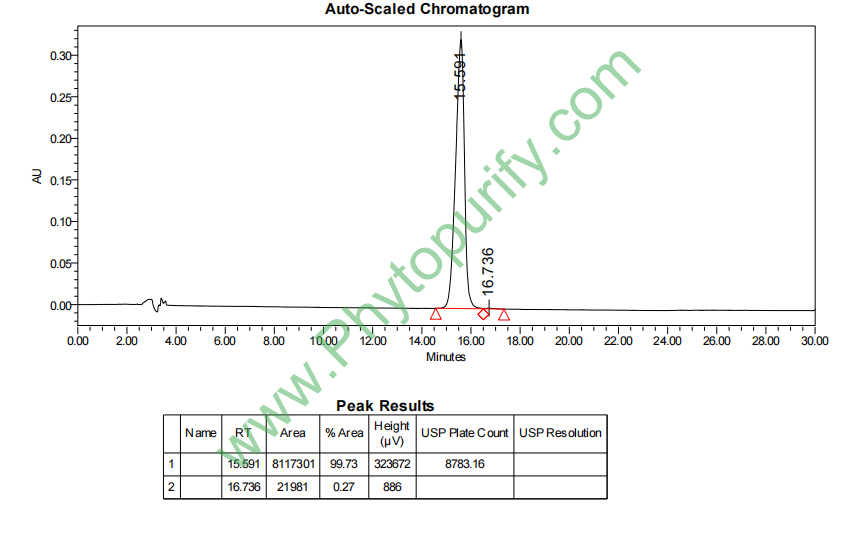
Purity: 95%~99%
Analysis Method: HPLC-DAD or/and HPLC-ELSD
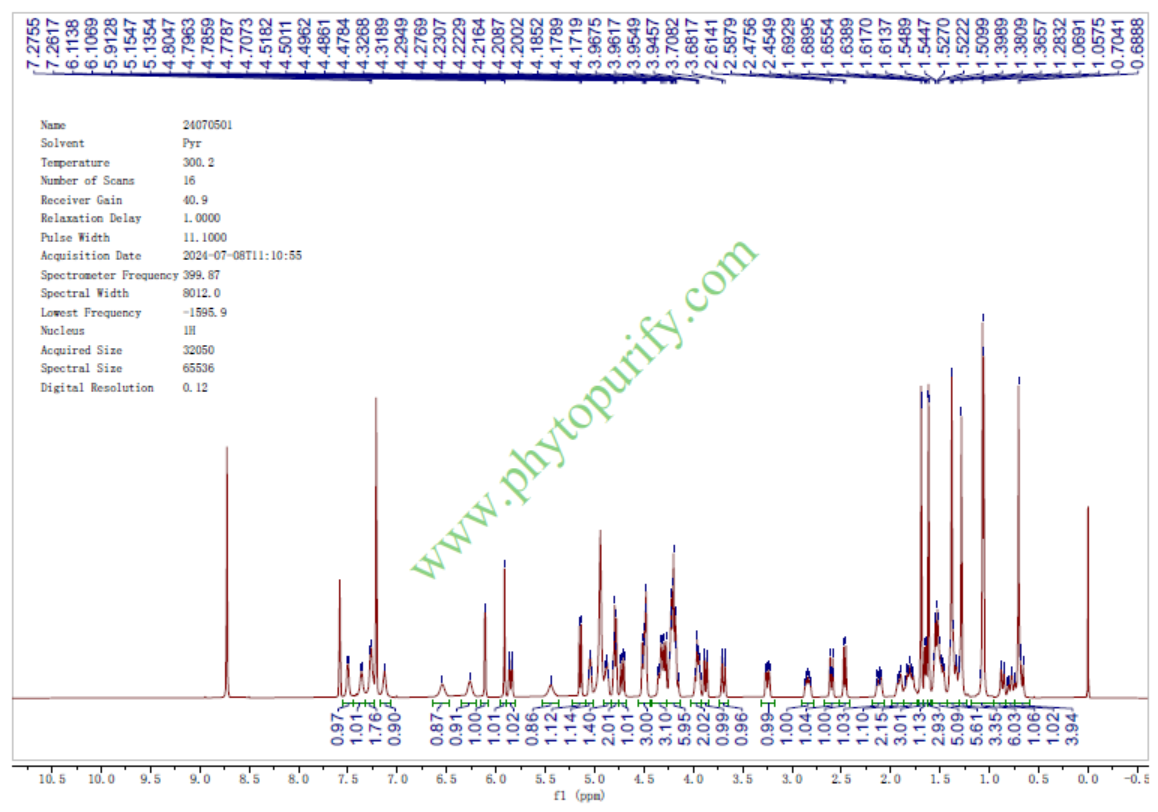
Identification Method: Mass, NMR
Packing: Brown vial or HDPE plastic bottle
Can be supplied from milligrams to grams.
For Reference Standard and R&D, Not for Human Use Directly.
Inquire for bulk scale.
Description:
Bacopasaponin C may have antioxidant activity, it also shows anti-leishmanial property.
References:
Curr Neuropharmacol. 2018 Apr 19.
Insights into the molecular aspects of neuroprotective Bacoside A and Bacopaside I.
Bacopa monnieri, commonly known as Brahmi, has been extensively used as a neuromedicine for various disorders such as anxiety, depression and memory loss.
METHODS AND RESULTS:
Chemical characterization studies revealed the major active constituents of the herb as the triterpenoid saponins, bacosides. Bacoside A, the vital neuroprotective constituent, is composed of four constituents viz., bacoside A3, bacopaside II, jujubogenin isomer of Bacopasaponin C (bacopaside X) and Bacopasaponin C. B. monnieri extracts as well as bacosides successfully establish a healthy antioxidant environment in various tissues especially in liver and brain. Free radical scavenging, suppression of lipid peroxidation and activation of antioxidant enzymes by bacosides help to attain a physiological state of minimized oxidative stress. The molecular basis of neuroprotective activity of bacosides is attributed to the regulation of mRNA translation and surface expression of neuroreceptors such as AMPAR, NMDAR and GABAR in the various parts of the brain. Bioavailability as well as binding of neuroprotective agents (such as bacosides) to these receptors is controlled by the Blood Brain Barrier (BBB). However, nano conversion of these drug candidates easily resolves the BBB restriction and carries a promising role in future therapies.
CONCLUSIONS:
This review summarizes the neuroprotective functions of the B. monnieri extracts as well as its active compounds (bacoside A, bacopaside I) and the molecular mechanisms responsible for these pharmacological activities.
Phytother Res. 2010 Jun;24(6):864-8.
Antitumor activities of dammarane triterpene saponins from Bacopa monniera.
Bioassay-guided methods were used to test the antitumor activity of methanol extract of the whole plant of Bacopa monniera (L.) Wettst. and four different fractions (petroleum ether, CHCl(3), EtOAc, and n-BuOH fractions) of the methanol extract.
METHODS AND RESULTS:
Among the five crude samples, n-BuOH fraction was noted to have the highest antitumor activity. The dammarane triterpene saponins isolated from n-BuOH fraction, bacopaside E (1) and bacopaside VII (3), had potential antitumor effect. 1 and 3 showed cytotoxicity of all the tested human tumor cell lines MDA-MB-231, SHG-44, HCT-8, A-549 and PC-3M in MTT assay in vitro, and showed 90.52 % and 84.13 % inhibition in mouse implanted with sarcoma S180 in vivo at the concentration of 50 micromol/kg, respectively. The remaining two compounds, bacopaside II (2) and Bacopasaponin C (4) were found to be much less potent compared with 1 and 3. 1 and 3 significantly inhibited human breast cancer cell line MDA-MB-231 adhesion, migration and Matrigel invasion in vitro at the concentration of 50 micromol/L.
CONCLUSIONS:
Since no antitumor activities about the monomers from Bacopa monniera (L.) Wettst. have been reported, these results indicate that the mechanism of action of 1 and 3 needs further study.
Heliyon. 2016 Feb 15;2(2):e00068.
Beneficial effects of Bacopa monnieri extract on opioid induced toxicity.
The present study examined the hepatotoxicity and nephrotoxicity of morphine and illicit street heroin and their amelioration by a standardized methanolic extract of Bacopa monnieri (L.) (mBME) in rats.
METHODS AND RESULTS:
Morphine or street heroin was administered at a dose of 20 mg/kg for 14 and 21 days. mBME (40 mg/kg) or ascorbic acid (50 mg/kg) was administered two hours before morphine or street heroin. High performance liquid chromatography (HPLC) was used for the standardization of bacoside-A major components in mBME. The antioxidant potential of mBME was evaluated by 2,2-diphenyl-1-picrylhydrazyl (DPPH) free radical scavenging assay. Administration of morphine and street heroin resulted in marked elevation of serum alanine aminotransferase (ALT), aspartate aminotransferase (AST) and creatinine. Histopathological changes induced by morphine and street heroin after 14 days were of reversible nature while treatment for 21 days was associated with irreversible changes. Pretreatment with mBME or ascorbic acid restored the elevation of serum ALT, AST and creatinine and protected liver and kidneys from the toxicological influence of morphine and street heroin. HPLC analysis showed that mBME contained bacoside-A major components i.e. bacoside-A3 (37.5 μg/mg), bacopaside-II (4.62 μg/mg) and Bacopasaponin C (1.91 μg/mg). The EC50 for the DPPH free radical scavenging assay revealed that mBME possessed strong antioxidant potential.
CONCLUSIONS:
These results concluded that as compared to morphine, street heroin was associated with severe biochemical and histopathological changes in the liver and kidneys. Bacopa monnieri having strong antioxidant potential may provide a beneficial herbal remedy for the efficient management of opioid related hepatotoxicity and nephrotoxicity.
HPLC of Bacopasaponin C
HNMR of Bacopasaponin C
Storage conditions:Short-term storage at 2~8℃, long-term storage at -20 ~ -80℃
270.8300
-2.0000
No
Unknown
Unknown
Unknown
Unknown
No
Unknown
Bacopa saponin C (CAS number 178064-13-6) is a natural triterpenoid saponin derived from the traditional medicinal plant Bacopa monniera. Pseudopurslane is widely used in the Ayurveda system of traditional Indian medicine, mainly for the adjuvant treatment of various diseases such as cognitive impairment, neurodegenerative diseases, and anti-inflammatory effects. In recent years, with the deepening of natural product pharmacology and molecular pharmacology research, the saponin C of Portulaca oleracea has received high attention from the academic community due to its unique biological activity and good oral activity. It has shown significant pharmacological potential in the fields of anti-tumor, antiparasitic, and multidrug resistance related protein regulation, especially in the treatment research of malignant tumors such as pancreatic tumors.
This article aims to systematically review the chemical structure and physicochemical properties, plant sources and extraction methods, pharmacological activity and mechanism of action, pharmacological evaluation and pharmacokinetic characteristics of saponins C from Portulaca oleracea, and explore its clinical application prospects and development directions, providing theoretical basis and reference for subsequent basic research and drug development.
Pseudopurslane saponin C is a typical triterpenoid saponin with a molecular weight of 995.0700. Its chemical structure contains polysaccharide chains that bind to triterpenoid parent nuclei, exhibiting highly polar characteristics. Its LogP value is -2.0000, indicating that the molecule has strong hydrophilicity and is not easily able to pass through lipid membranes. Its polar surface area (TPSA) is as high as 270.83 Å ², and the number of hydrogen bond acceptors is 17, further verifying its high polarity and rich ability to form hydrogen bonds.
Structurally, the saponin C of Portulaca oleracea is composed of a triterpenoid mother nucleus connected to multiple sugar residues through glycosidic bonds. The diversity of sugar residues and the modification of the mother nucleus endow it with unique biological activity. Its high structural complexity and large molecular weight limit its ability to penetrate the blood-brain barrier (BBB prediction is negative), which may pose certain limitations on the role of the central nervous system.
In terms of physical and chemical properties, the water solubility of saponin C from Portulaca oleracea is good, but its large molecular weight and polarity affect its oral bioavailability to some extent. The stability, solubility, and binding properties with biomolecules of this compound are important determinants of its pharmacokinetic behavior, and further research is needed.
Bacopa monniera saponins C are mainly isolated from Bacopa monniera. Pseudopurslane is a perennial herbaceous plant widely distributed in the Indian subcontinent and Southeast Asia. The whole plant and roots of this plant contain abundant triterpenoid saponins, especially saponins with similar structures such as A, B, and C from Portulaca oleracea.
The traditional method for extracting saponins C from Portulaca oleracea mainly includes the following steps:
Raw material pretreatment Collect dried whole plant of Portulaca oleracea and grind it to an appropriate particle size to increase the solvent contact area.
Solvent extraction Using polar organic solvents such as methanol or ethanol for reflux or ultrasound assisted extraction, the extraction time and temperature are optimized according to experimental conditions.
Crude extract concentration Obtain a concentrated crude extract by reducing pressure and concentrating to remove organic solvents.
Separation and purification Using column chromatography techniques (such as silica gel column, reverse phase C18 column) combined with gradient elution, extract saponins C from Portulaca oleracea. High performance liquid chromatography (HPLC) and mass spectrometry (MS) techniques are used for purity detection and structural confirmation.
In recent years, the application of supercritical fluid extraction and membrane separation technology has provided new ideas for the efficient extraction and purification of saponins C from Portulaca oleracea, significantly improving yield and purity and reducing production costs.
Pseudopurslane saponin C exhibits various pharmacological activities, including anti-tumor, antiparasitic, and multidrug resistance protein regulation.
Pseudopurslane saponin C exhibits inhibitory effects on various tumor cell lines, especially in sarcoma and pancreatic tumor models, showing significant anti proliferative and pro apoptotic effects. Its mechanism of action involves regulating the cell cycle, inducing cell apoptosis, and inhibiting tumor related signaling pathways. Related studies have shown that saponins C from Portulaca oleracea can inhibit the growth and metastasis of tumor cells by affecting transcription factors such as STAT3 and RELA, as well as regulatory proteins such as PTPN1 and SIRT1.
Pseudopurslane saponin C exhibits a good inhibitory effect on the parasite Leishmania donovani, indicating its potential application value in the treatment of leishmaniasis. This activity may be related to its regulation of parasite energy metabolism and membrane protein function, but the specific mechanism still needs further clarification.
Pseudopurslane saponin C can inhibit the activity of P-glycoprotein (P-gp) ATPase stimulated by the drug Verapamil, with an IC50 of 57.83 μ g/mL. P-gp, as an important efflux pump on the cell membrane, is involved in the efflux and resistance formation of various drugs. The inhibitory effect of purslane saponin C on P-gp suggests its potential adjuvant therapeutic role in overcoming tumor multidrug resistance (MDR).
The pharmacological effects of purslane saponin C involve multiple molecular targets and signaling pathways, especially exhibiting multi-target regulatory characteristics in complex disease models such as pancreatic tumors.
APP (Amyloid precursor protein)Participating in cell signaling and apoptosis regulation, the saponin C of Portulaca oleracea may affect tumor cell survival by regulating APP expression.
PTPN1 (Protein tyrosine phosphatase non-receptor type 1)Regulating multiple signaling pathways and participating in the proliferation and metabolic regulation of tumor cells.
STAT3 (Signal transducer and activator of transcription 3)As an important regulatory factor for tumor cell proliferation and immune escape, purslane saponin C blocks tumor signaling by inhibiting the activation of STAT3.
ABCB1 (ATP binding cassette subfamily B member 1)P-gp, which participates in drug efflux, regulates its activity to help overcome tumor resistance.
PRKCA (Protein kinase C alpha)Regulating cell proliferation and apoptosis, pseudopurslane saponin C may affect the fate of tumor cells by regulating PRKCA.
CLEC4E (C-type lectin domain family 4 member E)Participate in immune regulation and may affect the tumor microenvironment.
IDH1 (Isocitrate dehydrogenase 1)Metabolic enzymes regulate the metabolic status of cells.
SIRT1 (Sirtuin 1)Deacetylase, involved in cellular stress response and metabolic regulation.
PAX8 (Paired box gene 8)Transcription factors regulate cell differentiation and tumorigenesis.
RELA (p65 sub unit of NF - κ B)The key inflammatory and tumor signaling factor, purslane saponin C, reduces the inflammatory response and survival ability of tumor cells by inhibiting RELA activity.
Pseudopurslane saponin C achieves its pharmacological effects through multi-target and multi pathway synergistic effects. Its anti-tumor mechanism mainly includes:
Inhibiting tumor cell proliferation and inducing cell apoptosis involve the regulation of cell cycle proteins and changes in the expression of apoptosis related proteins.
Inhibiting the STAT3 and NF - κ B signaling pathways weakens the immune escape and inflammatory environment of tumor cells.
Regulating P-gp activity, overcoming multidrug resistance in tumor cells, and improving the efficacy of chemotherapy drugs.
Affects tumor metabolic enzymes IDH1 and deacetylase SIRT1, and intervenes in metabolic reprogramming of tumor cells.
In addition, its anti parasitic activity may be achieved by disrupting the parasite's membrane structure and energy metabolism pathways.
The pharmacological characteristics of saponins C from Portulaca oleracea have certain challenges:
High molecular weight (995.07 Da)Exceeding the recommended range of traditional "drug similarity rules" may affect oral absorption and membrane permeability.
The LogP value is -2.0 It shows strong hydrophilicity, which limits its lipophilic penetration ability, especially the blood-brain barrier penetration ability is predicted to be negative.
TPSA up to 270.83 Å ²This indicates that its polarity is high, which may lead to a decrease in oral bioavailability.
Up to 17 hydrogen bond acceptors Although it is beneficial for binding to the target, it may increase metabolic instability and excretion rate.
Toxicity assessment is not yet complete The liver toxicity, cardiac toxicity (hERG inhibition), and mutagenicity (Ames test) are not clear, and further systematic safety evaluation is needed.
In terms of pharmacokinetics, there is currently a lack of systematic in vivo absorption, distribution, metabolism, and excretion (ADME) data. Preliminary studies have shown that saponin C from Portulaca oleracea has certain biological activity after oral administration, indicating its stable existence in vivo. However, its metabolic pathway, half-life, and tissue distribution still need further research.
In response to its pharmacological limitations, its bioavailability and targeting can be improved through structural modification, nanocarrier encapsulation, and combination therapy strategies.
Due to its multi-target regulatory ability and extensive pharmacological activity, the saponin C from Portulaca oleracea has shown great potential in the fields of anti-tumor, antiparasitic, and multidrug resistance reversal. Especially in the adjuvant therapy of high mortality malignant tumors such as pancreatic tumors, purslane saponin C is expected to serve as a novel natural drug or drug candidate molecule, improving patient prognosis.
The key to future clinical applications lies in:
safety assessment The system conducts liver and kidney toxicity, cardiac toxicity, and genetic toxicity tests to ensure medication safety.
Pharmacokinetic optimization By improving drug formulations and innovating delivery routes, we aim to enhance oral bioavailability and targeting.
In depth study of mechanisms Combining modern molecular biology techniques, elucidate its interactions with key molecular targets and signal pathway regulatory networks.
Preclinical and clinical trials Establish animal models and human trials to verify their efficacy and safety, laying the foundation for clinical promotion.
In addition, the anti parasitic activity of saponins C from Portulaca oleracea also provides a new research direction for its application in the prevention and control of tropical and parasitic diseases.
As a natural triterpenoid saponin with rich pharmacological activity, Pseudopurslane Saponin C exhibits multi-target and multi mechanism therapeutic potential, especially in the fields of anti-tumor and antiparasitic effects. Although there are certain limitations to its pharmacological properties, it is expected to overcome these challenges and promote its clinical application through modern medicinal chemistry and formulation methods. Future research should focus on the systematic analysis of its mechanism of action, safety evaluation, and pharmacokinetic optimization, in order to fully leverage the value of purslane saponin C in natural drug development and promote it as an important candidate for the new generation of multifunctional drugs.
