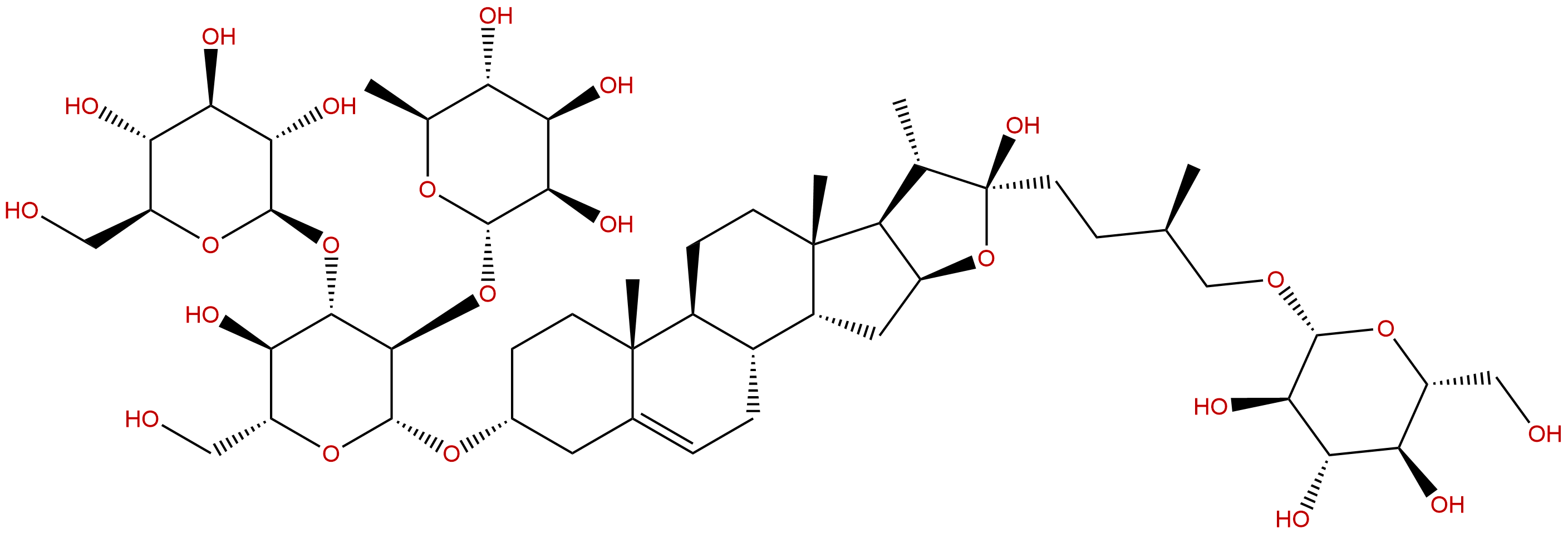


Product name: Protogracillin
Synonym name:
Catalogue No.: BP3328
Cas No.: 54848-30-5
Formula: C51H84O23
Mol Weight: 1065.21
Botanical Source:
Physical Description:
Type of Compound: Steroids
Purity: 95%~99%
Analysis Method: HPLC-DAD or/and HPLC-ELSD
Identification Method: Mass, NMR
Packing: Brown vial or HDPE plastic bottle
The product could be supplied from milligrams to grams. Inquire for bulk scale.
We provide solution to improve the water-solubility of compounds, thereby facilitating the variety of activity tests and clinic uses.
For Reference Standard and R&D, Not for Human Use Directly.
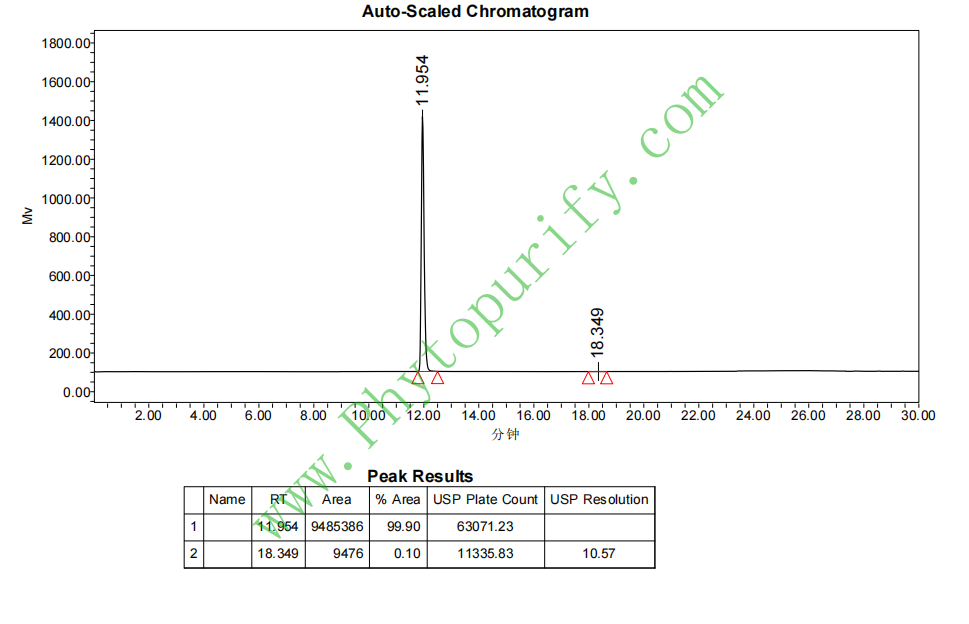
HPLC of Protogracillin
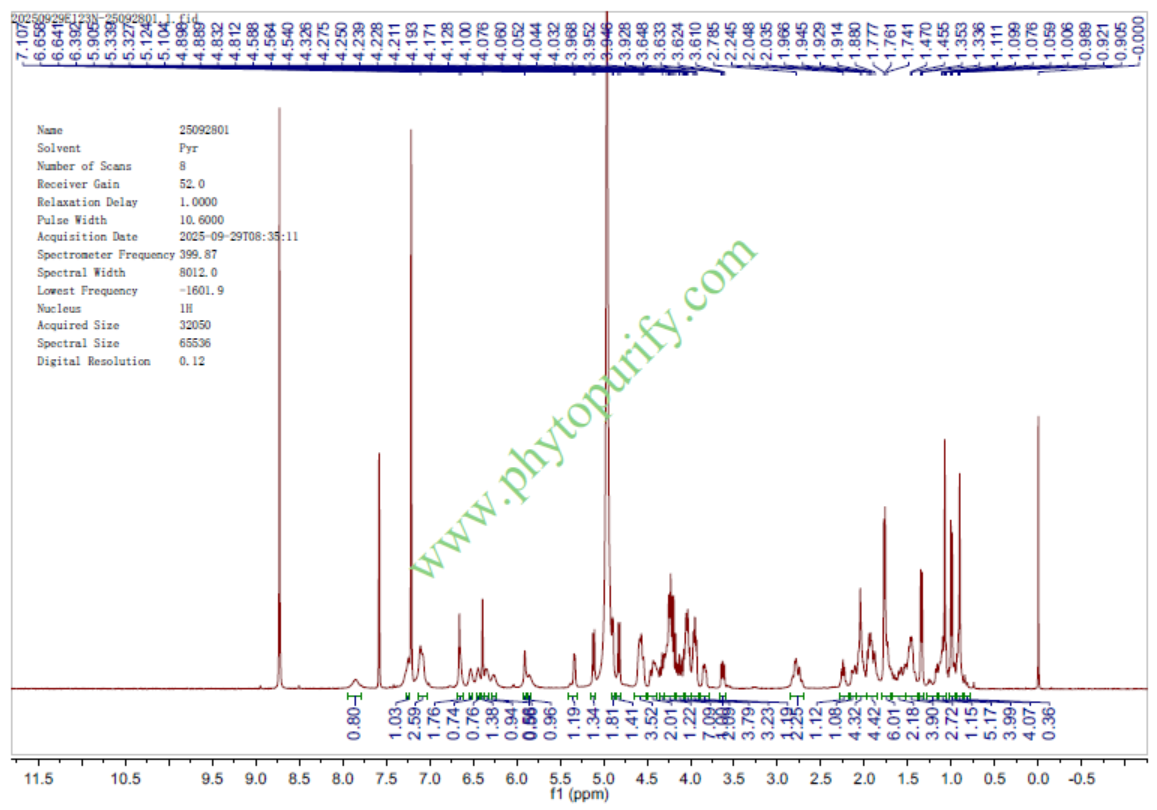
HNMR of Protogracillin
Storage conditions:Short-term storage at 2~8℃, long-term storage at -20 ~ -80℃
366.2900
1.0915
1.0914
.3568
.4249
.4188
Low
56.0229
6.8022
No
No
No
No
No
No
0.0
Yes
No
Yes
Yes
Cardiovascular disease (CVD) is one of the major causes of death and disability worldwide. Its pathological process involves atherosclerosis, thrombosis, myocardial ischemia, heart failure and other complex links. Although modern medicine has made significant progress in the prevention and treatment of CVD, existing drugs still face issues such as side effects, drug resistance, and high costs. Therefore, searching for efficient and low toxicity new therapeutic drugs from natural products has always been an important direction in the field of drug development. Steroid saponins are a type of natural active ingredient widely present in the plant kingdom, especially in Dioscoreaceae plants, with various pharmacological activities such as anti-inflammatory, antioxidant, anti-tumor, and cardiovascular protection. Protoglobulin (CAS number: 54848-30-5) is an important steroidal saponin isolated from the rhizomes of Dioscorea zingiberensis Wright (DZW). In recent years, research has found that it has significant antithrombotic effects, demonstrating enormous potential for reducing the risk of cardiovascular disease. This article aims to provide a systematic review of the chemical structure, plant origin, pharmacological activity, mechanism of action, pharmacological evaluation, and clinical application prospects of original slender yam saponins, in order to provide comprehensive scientific references for the in-depth research and development of this compound.
Original slender yam saponins belong to the class of steroidal saponins, with a molecular formula of C51H84O22 and a molecular weight of 1065.2100. Its basic skeleton is the spirostane or furostane steroid nucleus, which is usually connected to the sugar chain through the C-3 hydroxyl group to form glycosides. Its specific structural feature is that multiple sugar groups, such as glucose and rhamnose, are connected to the steroid mother nucleus, forming complex oligosaccharide chains, which are the key structural basis for its biological activity.
In terms of physicochemical properties, the calculated lipid water partition coefficient (LogP) is 1.0915, indicating that the compound has a certain degree of lipophilicity, but overall it still leans towards amphiphilic properties. Its topological polar surface area (TPSA) is as high as 366.2900 Å ², which is mainly attributed to the presence of a large number of hydroxyl groups and oxygen atoms in glycosidic bonds in the molecule, resulting in strong molecular polarity. The water solubility value is 0.3568 (usually referring to logS or related indicators), indicating limited solubility in water and belonging to slightly soluble or poorly soluble compounds. These physical and chemical parameters collectively determine the absorption, distribution, metabolism, and excretion characteristics of the original slender yam saponins in organisms. High TPSA and larger molecular weight (>500) make it difficult for it to penetrate the blood-brain barrier (predicted as low permeability), which to some extent limits its direct effects on central nervous system related targets, but may also reduce potential neurotoxicity. In addition, preliminary pharmacological predictions indicate that it has no significant hERG potassium channel inhibitory activity or genotoxicity (predicted negative by Ames test), providing preliminary favorable evidence for its cardiovascular safety.
The original slender dioscin mainly comes from the Dioscorea zingiberensis Wright (DZW) plant in the Dioscoreaceae family. Dioscorea opposita is a unique medicinal plant in China, mainly distributed in Hubei, Shaanxi, Sichuan, Yunnan and other places. Its rhizomes are rich in various steroidal saponins and are important industrial raw materials for the synthesis of steroid hormone drugs, known as the "golden medicine".
The extraction and separation of original slender dioscin from DZW usually follow the conventional process of natural product chemistry. Firstly, the dried rhizomes of Dioscorea nipponica are crushed and subjected to reflux extraction or ultrasound assisted extraction using polar solvents such as methanol, ethanol, or aqueous ethanol to fully extract saponin components. Subsequently, crude extract was obtained by vacuum concentration. The crude extract needs further purification, which is often carried out by using macroporous adsorption resin (such as D101, AB-8, etc.) column chromatography for initial enrichment, gradient elution with water and different concentrations of ethanol, and saponin components are usually concentrated in the medium polarity elution site. After obtaining the saponin enrichment site, various modern chromatographic techniques need to be used for fine separation, including normal phase silica gel column chromatography, reverse phase silica gel (such as ODS) column chromatography, as well as high performance liquid chromatography (HPLC) or preparative liquid chromatography (pre HPLC). By comparing the physicochemical properties of the compounds (such as thin-layer chromatography behavior, HPLC retention time) and spectral data (such as nuclear magnetic resonance hydrogen spectrum, carbon spectrum, mass spectrometry) with literature reports, high-purity original slender dioscin monomers were finally identified and obtained. Optimizing the extraction solvent, temperature, time, and developing efficient separation and purification processes are key to improving its yield and promoting subsequent research.
A large number of in vitro and in vivo pharmacological studies have shown that the original slender yam saponins have various biological activities, especially outstanding in the protection of the cardiovascular and cerebrovascular systems.
The pharmacological effects of original slender yam saponins are not achieved through a single target, but through a synergistic network of multiple pathways and targets. Based on existing research and related target predictions, its mechanism of action may involve the following key molecular targets and pathways:
Although the original slender yam saponins have shown good pharmacological activity, their drug likeness still faces challenges and requires systematic pharmacokinetic (PK) and toxicological evaluation.
Based on its physicochemical parameters (molecular weight>500, TPSA>140, high number of rotatable bonds), this compound may belong to Class IV (low solubility, low permeability) in the Biopharmaceutical Classification System (BCS), which may result in lower oral bioavailability. The presence of highly polar sugar chains increases water solubility, but may also make it difficult for them to cross the intestinal epithelial cell membrane through passive diffusion. Predict low blood-brain barrier permeability, which is consistent with high TPSA.
At present, there are insufficient reports on the pharmacokinetic studies of the original slender dioscin system, which is a gap that must be filled for its preclinical development. Based on the study of similar steroidal saponins, it can be inferred that their possible PK characteristics: after oral administration, they may be partially hydrolyzed in the gastrointestinal tract (sugar chains are degraded by gut microbiota or enzymes), generating secondary glycosides or aglycones, whose activity and toxicity may differ from the prototype drug. After absorption, the prototype drug and its metabolites may undergo extensive liver metabolism (such as Phase I oxidation and Phase II binding reactions). Its distribution may be concentrated in organs with abundant blood flow, but limited by permeability, the amount entering specific tissues may be limited. The main pathways of excretion may be through bile and feces.
Future research requires the use of technologies such as liquid chromatography-mass spectrometry (LC-MS/MS) to establish sensitive and specific biological sample analysis methods, systematically investigate their absorption, distribution, metabolism, and excretion processes in experimental animals such as rats and dogs, and clarify their absolute bioavailability, half-life, plasma protein binding rate, major metabolites, and excretion pathways. At the same time, a comprehensive preclinical toxicology evaluation is required, including acute toxicity, long-term toxicity, reproductive toxicity, etc., to assess its safety window.
As a natural steroidal saponin with multi target cardiovascular protection, protoslender dioscin has broad clinical application prospects, but there are also many challenges.
prospect:
1. New antithrombotic/antiatherosclerotic drug candidates: Its multi target mechanism of action may lead to a comprehensive effect superior to that of single target drugs, especially for the primary and secondary prevention of thrombotic diseases (such as acute coronary syndrome, ischemic stroke), as well as the long-term management of atherosclerotic diseases.
2. Potential therapeutic drugs for comorbidities of cardiovascular disease: Its effects on AMPK, PTPN1, AKR1B1 and other targets suggest that it may have unique advantages in the treatment of cardiovascular patients with diabetes and metabolic syndrome.
3. Modernization and Value Mining of Traditional Chinese Medicine As one of the active ingredients of the traditional medicinal plant Dioscorea opposita, in-depth research on it can help clarify the modern scientific connotation of DZW's traditional efficacy of "promoting blood circulation and removing blood stasis", and promote the secondary development and quality standards improvement of related traditional Chinese medicine compound preparations.
Challenges and Prospects:
1. Optimization of drug properties In response to the shortcomings of poor solubility and permeability, future research can explore new drug delivery systems, such as nanocrystals, liposomes, solid dispersions, phospholipid complexes, etc., to improve their oral bioavailability. Structural modifications can also be considered to simplify sugar chains or introduce specific functional groups while retaining pharmacophores, in order to improve their PK properties.
2. In depth mechanism research At present, the target of action is mostly based on prediction and preliminary verification, and more advanced technologies such as gene knockout/knockdown, chromatin immunoprecipitation, proteomics, etc. need to be used to confirm its direct target of action in cell and animal models, and elucidate the signaling network it regulates.
3. Strengthen research on pharmacokinetics and toxicology Systematic and standardized preclinical pharmacokinetic and toxicological studies must be conducted as soon as possible to obtain key data that supports their entry into clinical trials.
4. Explore combination therapy Consider combining it with existing cardiovascular drugs such as statins and aspirin to investigate whether it has a synergistic effect or reduces side effects.
5. Expand activity spectrum Explore its potential activities in the fields of anti-tumor and neuroprotection, and broaden its application scope.
Original slender Dioscin is a steroid saponin with important biological activity isolated from the traditional medicinal plant Dioscorea zingiberensis. A large number of studies have shown that it exhibits significant comprehensive pharmacological effects in antithrombotic, antiatherosclerotic, myocardial protection and other aspects by regulating multiple key targets such as AMPK, BCL2, TLR4, PTPN1, and SERPINE1, providing new candidate molecules for the prevention and treatment of cardiovascular diseases. However, the potential pharmacological challenges posed by its large molecular weight, high polarity, and incomplete pharmacokinetic and systemic toxicology data are obstacles that it must overcome on the path to clinical translation. Future research should focus on improving its bioavailability through pharmaceutical strategies, utilizing multi omics techniques to deeply reveal its multi-target action network, and completing systematic preclinical evaluations. With the continuous deepening of these studies, the original slender dioscin is expected to gradually develop from a potential natural active molecule into a new type of cardiovascular treatment drug with clinical application value, providing an example for the modern research and development of natural products.
