


Synonym name:
Catalogue No.: BP1172
Cas No.: 102115-79-7
Formula: C51H82O21
Mol Weight: 1031.2
Botanical Source: Asparagus cochinchinensis and Trachycarpus wagnerianus
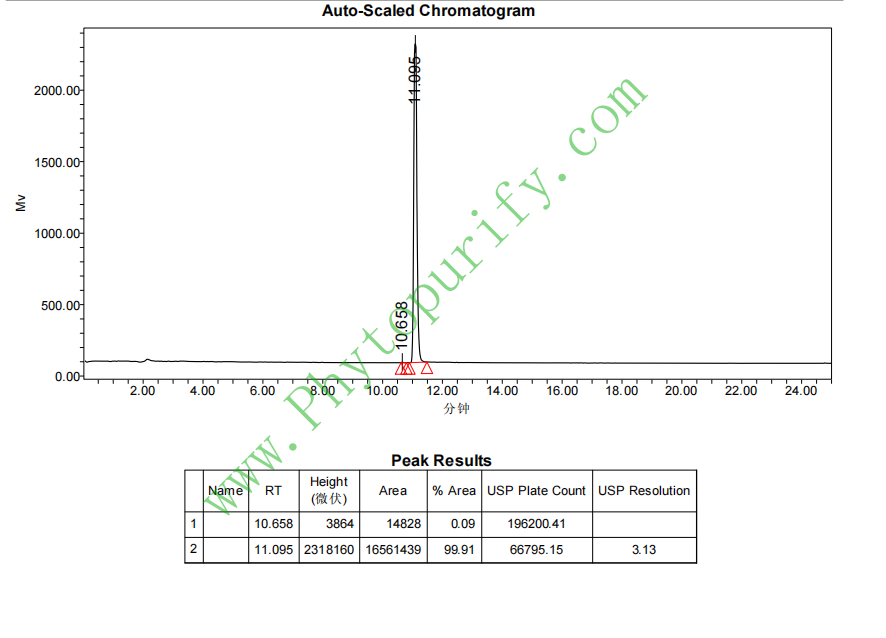
Purity: 95%~99%
Analysis Method: HPLC-DAD or/and HPLC-ELSD
Identification Method: Mass, NMR
Packing: Brown vial or HDPE plastic bottle
Can be supplied from milligrams to grams.
For Reference Standard and R&D, Not for Human Use Directly.
Inquire for bulk scale.
Description:
Pseudoprotodioscin exhibits anti-inflammatory and anticancer activities, it shows a weaker suppressing effect on the production of inflammatory cytokines, and can suppress melanogenesis in B16F1 cells.
References:
Planta Med. 2011 May;77(7):705-10.
Anti-inflammatory and anti-melanogenic steroidal saponin glycosides from Fenugreek (Trigonella foenum-graecum L.) seeds.
Fenugreek seed ( Trigonella foenum-graecum L.) is used as an herbal medicine for treating metabolic and nutritive dysfunctions.
METHODS AND RESULTS:
To determine if this plant has other beneficial effects, we tested the inhibitory activities of a methanol (MeOH) extract of fenugreek seed on the production of inflammatory cytokines and melanin synthesis in cultured cell lines in vitro. The MeOH extract inhibited the production of phorbol-12-myristate-13-acetate-induced inflammatory cytokines such as tumor necrosis factor (TNF)-α in cultured THP-1 cells, and also restrained the intracellular synthesis of melanin in murine melanoma B16F1 cells. We isolated three active constituents from fenugreek seed extracts. These were identified as the steroidal saponins 26- O-β-D-glucopyranosyl-(25 R)-furost-5(6)-en-3 β,22 β,26-triol-3- O-α-L-rhamno-pyranosyl-(1'' → 2')-O-[β-D-glucopyranosyl-(1''' → 6')- O]-β-D-glucopyranoside 1, minutoside B 2, and Pseudoprotodioscin 3. Compounds 1 and 2 strongly suppressed the production of inflammatory cytokines, whereas 3 showed a weaker suppressing effect. Melanogenesis in B16F1 cells was significantly suppressed by 1 and 3, and weakly suppressed by 2. All three compounds showed moderate cytotoxicities.
CONCLUSIONS:
These results indicate that fenugreek extract and its active constituents could protect against skin damage.
Planta Med. 2001 Dec;67(9):853-7.
Two new steroidal saponins from the rhizomes of Dioscorea panthaica and their cytotoxic activity.
Two new steroidal saponins, dioscoresides C (1) and D (2), along with a new natural product, pregnadienolone 3-O-beta-gracillimatriose (3), and two known compounds, pregnadienolone 3-O-beta-chacotrioside (4) and Pseudoprotodioscin (5), were isolated from the rhizomes of Dioscorea panthaica Prain et Burkill.
METHODS AND RESULTS:
On the basis of extensive NMR studies and chemical evidence, dioscoresides C and D were determined to be 26-O-beta-D-glucopyranosyl-3 beta,26-dihydroxy-23(S)-methoxy-25(R)-furosta-5,20(22)-dien-3-O-alpha-L-rhamnopyranosyl-(1-->2)-[alpha-L-rhamnopyranosyl-(1-->4)]-beta-D-glucopyranoside and 26-O-beta-D-glucopyranosyl-3 beta,26-dihydroxy-20,22-seco-25(R)-furosta-5-en-20,22-dine-3-O-alpha-L-rhamnopyranosyl-(1-->2)-[alpha-L-rhamnopyranosyl-(1--> 4)]-beta-D-glucopyranoside.
CONCLUSIONS:
These compounds showed mild cytotoxicity against the cancer cell lines, A375, L929, and HeLa, in a dose-dependent manner.
HPLC of Pseudoprotodioscin
Storage conditions:Short-term storage at 2~8℃, long-term storage at -20 ~ -80℃
325.8300
1.7135
1.7135
.2832
.4605
.5535
Low
64.2601
6.7093
No
No
No
No
No
No
0.0
Yes
No
Yes
No
Pseudo protodioscin (CAS number: 102115-79-7) is a natural steroidal saponin with significant biological activity, belonging to the class of furan glucosides. Since its discovery, it has increasingly become a research hotspot in the fields of pharmacology and medicinal chemistry due to its significant potential in regulating lipid metabolism and anti-tumor effects. This compound was initially recognized for its inhibitory effect on sterol regulatory element binding proteins (SREBPs) and downstream lipid synthesis pathways, and has shown clear pharmacological activity in reducing cholesterol and triglycerides. With the deepening of research, its anti-tumor activity has been widely revealed, involving multiple aspects such as inducing apoptosis, inhibiting proliferation, and resisting invasion and metastasis. The target network is complex and critical. This article aims to systematically review the chemical properties, plant sources, pharmacological activities, molecular mechanisms of action, medicinal characteristics, and clinical application prospects of pseudo yam saponins, in order to provide comprehensive scientific references for the deep development and utilization of this natural product.
The molecular formula of pseudo yam saponins is C51H82O21, with a molecular weight of 1031.1960. Its chemical structure belongs to the spirostane type steroidal saponins, with diosgenin as the aglycone, and sugar chains connected to glucose, rhamnose, and other sugar groups, forming a specific furan glucoside structure. This complex glycosylation structure is an important material basis for its biological activity and directly affects its physicochemical properties.
In terms of physicochemical parameters related to medicinal properties, the lipid water partition coefficient (LogP) of pseudo yam saponins is 1.7135, indicating that they have a certain degree of lipophilicity but are not highly lipophilic. Its topological polar surface area (TPSA) is as high as 325.8300 Å ², mainly attributed to the strong polarity brought by the abundant hydroxyl and sugar ring structures in the molecule. A high TPSA value usually indicates poor cell membrane permeability. Consistent with this, its water solubility value is 0.2832 (usually measured in mg/mL or log mol/L, here relative), indicating limited solubility in water and belonging to insoluble compounds. These physicochemical properties (high polarity, high molecular weight, low solubility) collectively determine its pharmacokinetic behavior, for example, its blood-brain barrier (BBB) permeability is predicted to be "low", meaning it is difficult to enter the central nervous system to exert its effects. In addition, preliminary drug safety screening showed no significant inhibitory effect on hERG potassium channels (hERG inhibition: No), and the Ames test result was 0.0, suggesting that it may not have mutagenicity, providing preliminary safety evidence for subsequent development.
Pseudo original dioscin mainly exists in various plants such as Dioscoreaceae and Liliaceae. Among them, Dioscorea nipponica, Dioscorea zingiberensis, and Tribulus terrestris are its main plant sources. In these plants, pseudo protodioscin often coexists with other structurally similar saponins (such as protodioscin and dioscin), increasing the difficulty of separation and purification.
Its extraction and separation usually follow the conventional process of natural product chemistry. Firstly, dry plant rhizomes or whole plants are subjected to reflux extraction or ultrasound assisted extraction using methanol, ethanol, or ethanol water mixed solvents to obtain crude total saponin extracts. Subsequently, macroporous adsorption resins (such as D101, AB-8) were used for preliminary enrichment and decolorization, followed by water washing to remove polar impurities such as polysaccharides and inorganic salts. Then, different concentrations of ethanol were used for gradient elution to collect fractions rich in target saponins. Further purification relies on modern chromatographic techniques, including normal or reverse phase silica gel column chromatography, high performance liquid chromatography (HPLC), and preparative liquid chromatography (pre HPLC). Due to the weak UV absorption of saponin compounds, evaporative light scattering detectors (ELSD) or mass spectrometry detectors are often used for monitoring. Structural identification involves the comprehensive use of techniques such as nuclear magnetic resonance (NMR, including 1H-NMR, 13C-NMR, 2D-NMR), mass spectrometry (MS), and infrared spectroscopy (IR).
The pharmacological activity research of pseudo yam saponins mainly focuses on two fields: lipid-lowering and anti-tumor, and the latter exhibits a wider spectrum of activities.
1. Lipid lowering activity:
Pseudo Dioscin has been proven to be an effective inhibitor of intracellular cholesterol and triglyceride synthesis. Its core function is to downregulate the mature forms of sterol regulatory element binding proteins 1 and 2 (SREBP-1 and SREB-2) and the expression of downstream target genes. SREBP-1 mainly regulates genes related to fatty acid and triglyceride synthesis (such as FASN, ACC), while SREB-2 mainly regulates genes related to cholesterol synthesis (such as HMGCR, LDLR). Meanwhile, the study also found that it can reduce the levels of microRNA-33a/b, which is a non coding RNA located within the SREBP gene and negatively regulates the expression of cholesterol efflux protein ABCA1. Through this dual regulation, pseudoprotodioscin can effectively reduce the lipid accumulation in hepatocytes and macrophages, and shows a good potential in reducing blood lipids and anti atherosclerosis in animal models.
2. Antitumor activity:
Pseudo yam saponins exhibit significant growth inhibition and pro apoptotic effects on various human cancer cell lines, and their anti-tumor activity involves multiple key targets and pathways.
* Inducing cell apoptosis: This compound can upregulate pro apoptotic proteins such as Bax, while downregulating the expression of key anti apoptotic proteins MCL1 and BCL2, thereby disrupting mitochondrial membrane potential, activating Caspase cascade reaction, and ultimately leading to programmed cell death of tumor cells.
* Inhibition of cell proliferation and signal transduction: Pseudo yam saponins can inhibit the phosphorylation and activation of signal transduction and transcription activator 3 (STAT3). STAT3 is an important oncogenic transcription factor, and its sustained activation is closely related to cell proliferation, survival, and angiogenesis. In addition, it can also inhibit proliferation related signaling pathways such as mitogen activated protein kinase 1 (MAPK1, ERK2).
* Inhibition of invasion and metastasis: This compound can downregulate the expression of matrix metalloproteinase 2 (MMP2). MMP2 is a key enzyme that degrades the extracellular matrix, and its overexpression is directly related to the invasion and metastasis ability of tumors. By inhibiting MMP2, pseudo protodioscin can weaken the migration and invasion potential of cancer cells.
* Affects DNA topoisomerase activity: Research has shown that pseudo yam saponins have inhibitory effects on topoisomerase I (TOP1) and topoisomerase II alpha (TOP2A). These two enzymes are crucial for DNA replication, transcription, and repair. Inhibiting their activity can lead to DNA damage and cell death, which is the mechanism of action of many classic chemotherapy drugs.
* Regulating hormone related pathways: In hormone dependent tumors (such as breast cancer), pseudoprotodioscin has shown regulatory effects on estrogen receptor α (ESR1) and aromatase (CYP19A1). Inhibition of CYP19A1 can reduce estrogen biosynthesis, while affecting ESR1 signaling can interfere with estrogen driven tumor growth.
* Inhibition of tumor hypoxia adaptation: This compound can also downregulate the expression of hypoxia inducible factor 1 alpha (HIF1A). HIF1A is a core regulatory factor for cells to adapt to hypoxic environments, and its activation can promote angiogenesis, glucose metabolism recombination, etc., which is beneficial for tumor survival in harsh microenvironments.
The multiple pharmacological activities of pseudo yam saponins stem from their interactions with multiple molecular targets, forming a complex network.
In Lipid lowering mechanism Among them, its core target is the SREBP pathway. Pseudo protodioscin may reduce the production of mature SREBP (nSREBP) by interfering with the transport of SREBP activating protein (SCAP) - SREBP complex from the endoplasmic reticulum to the Golgi apparatus, or inhibiting the cleavage of SREBP by site 1 and site 2 proteases (S1P/S2P). The reduction of nSREBP directly leads to downregulation of downstream lipid synthesis genes transcription. At the same time, its inhibition of miR-33a/b released the inhibition of cholesterol transporter ABCA1, promoted cholesterol reverse transport, and formed a synergistic lipid-lowering effect.
In Antitumor mechanism Among them, its target network is more extensive:
* Apoptosis pathway targets: Directly or indirectly downregulating MCL1 and BCL2, two key anti apoptotic guards, is the core of triggering the mitochondrial apoptosis pathway.
* Signal transduction targets: Inhibiting the phosphorylation activation of STAT3 and MAPK1 (ERK2) blocks the transmission of pro survival and proliferation signals to the nucleus.
* Extracellular matrix remodeling targets: Inhibiting the transcription or activity of MMP2 directly weakens the invasive tool of tumor cells.
* DNA damage targets: As an inhibitor of TOP1 and TOP2A, it causes DNA double strand breaks, activates DNA damage response, and leads to cell cycle arrest and apoptosis.
* Tumor microenvironment targets: Downregulation of HIF1A disrupts the adaptability and invasiveness of tumor cells under hypoxic conditions.
* Hormone signaling targets: The regulation of ESR1 and CYP19A1 provides a possible pathway for the treatment of hormone dependent tumors.
These targets do not exist in isolation, but are intertwined with each other. For example, activation of STAT3 can upregulate the expression of BCL2, MCL1, and HIF1 α; And HIF1 α can promote the expression of MMP2. Pseudo yam saponins may achieve "multi-target" regulation of this network by acting on upstream or common regulatory nodes, which is also a potential advantage of their high anti-tumor efficacy and may not easily develop drug resistance.
Despite the significant pharmacological activity of pseudo original dioscin, its medicinal properties face challenges, mainly due to its inherent properties as a natural steroidal saponin.
Pharmacokinetic challenges:
1. Absorption and oral bioavailability: High molecular weight (>1000 Da), high polarity (TPSA>300 Å ²), and moderate water solubility make it difficult to cross the intestinal epithelial cell membrane through passive diffusion, leading to poor oral absorption and possibly low bioavailability.
2. Distribution: The predicted blood-brain barrier permeability is low, which limits its application in central nervous system tumors, but may also reduce the risk of central nervous system side effects. More experimental data is needed to clarify the distribution characteristics of its internal tissues.
3. Metabolism and excretion: Saponin compounds are easily hydrolyzed by gut microbiota in the gastrointestinal tract, losing their glycosides and becoming glycosides, which may fundamentally alter their efficacy and toxicity. Phase I (such as oxidation) and phase II (such as glucuronidation and sulfation) metabolism may also occur in the liver. The prototype drug and its metabolites are mainly excreted through bile and kidneys.
Preliminary safety evaluation:
The existing data suggests some positive signals. The negative inhibition of hERG channel reduces the potential risk of causing QT interval prolongation and apical torsion ventricular tachycardia in the heart. A negative Ames test indicates no genetic toxicity in the initial screening. However, comprehensive preclinical safety evaluations (such as acute toxicity, chronic toxicity, reproductive toxicity, etc.) have not been systematically reported, which is a necessary step to advance their development.
Formulation strategy:
To improve its pharmacological properties, advanced formulation technology may be required. For example, using drug delivery systems such as nanocrystals, liposomes, polymer micelles, or self microemulsions can improve their solubility and dissolution rate, enhance gastrointestinal absorption, and potentially achieve targeted delivery. Structural modification of compounds (such as preparing prodrugs) is also a common strategy to improve their pharmacokinetic properties.
The clinical application prospects of pseudo yam saponins mainly revolve around their two core activities.
1. Development of lipid-lowering drugs: In the field of metabolic diseases, especially hypercholesterolemia, nonalcoholic fatty liver disease (NAFLD) and atherosclerosis prevention and treatment, pseudoprotodioscin plays a role through the unique SREBP/miR-33 dual inhibition mechanism, which is different from the existing statins, Ezetimibe and other drugs, and is expected to become a new lipid regulating drug or dietary supplement, especially for patients who are intolerant of statins. But its oral bioavailability is the primary bottleneck to be addressed.
2. Development of anti-tumor drugs: Its multi-target anti-tumor properties endow it with multiple advantages:
* Broad spectrum anti-tumor potential: It has shown activity in a variety of solid tumors such as breast cancer (through ESR1/CYP19A1), liver cancer (possibly cooperating with lipid-lowering activity), colorectal cancer and possible leukemia (through BCL2 family and STAT3).
* Overcoming drug resistance potential: Multi target effects may help overcome drug resistance caused by single target mutations or compensatory activation of pathways.
* Combination therapy sensitizer: May have a synergistic effect with existing chemotherapy drugs such as topoisomerase inhibitors and DNA damaging agents, reducing their dosage and toxic side effects.
Future research directions may include developing inhibitors targeting specific targets such as STAT3 and TOP2A; As an adjuvant drug in combination with immune checkpoint inhibitors, it regulates the tumor immune microenvironment; Developing targeted delivery systems using nanotechnology to increase local tumor concentration and reduce systemic toxicity.
Challenges and Prospects:
Current research mostly remains at the stage of cell and animal experiments, and in order to move towards clinical practice, it must be systematically completed:
1. In depth pharmacokinetic studies: Clarify its ADME (absorption, distribution, metabolism, excretion) processes in animals and humans.
2. Toxicological evaluation of the system: Complete preclinical safety evaluation of GLP standards.
3. Accurate analysis of the mechanism of action: Using chemical biology methods (such as probe labeling) to identify its direct target and distinguish between direct effects and downstream indirect effects.
4. Breakthroughs in Pharmaceutical Science: Develop practical formulations that can significantly improve their bioavailability.
Pseudo Dioscin is a natural steroidal saponin with abundant sources, unique structure, and diverse biological activities. Its strong efficacy in regulating lipid metabolism and anti-tumor effects, especially through multidimensional pharmacological effects formed by acting on multiple key targets such as SREBP, STAT3, BCL2 family, topoisomerases, etc., makes it a highly valuable lead compound for development. Although its inherent physicochemical properties, such as high polarity and low bioavailability, pose significant challenges to drug development, advances in modern medicinal chemistry, pharmacy, and delivery technologies provide potential tools to address these challenges. In the future, through interdisciplinary collaboration and in-depth elucidation of its precise molecular mechanism, efforts will be made to break through its pharmacokinetic bottleneck. Pseudo protodioscin is expected to gradually develop from a potential natural product into an innovative drug or therapeutic adjuvant for the treatment of metabolic diseases and malignant tumors, contributing its unique value to human health.
