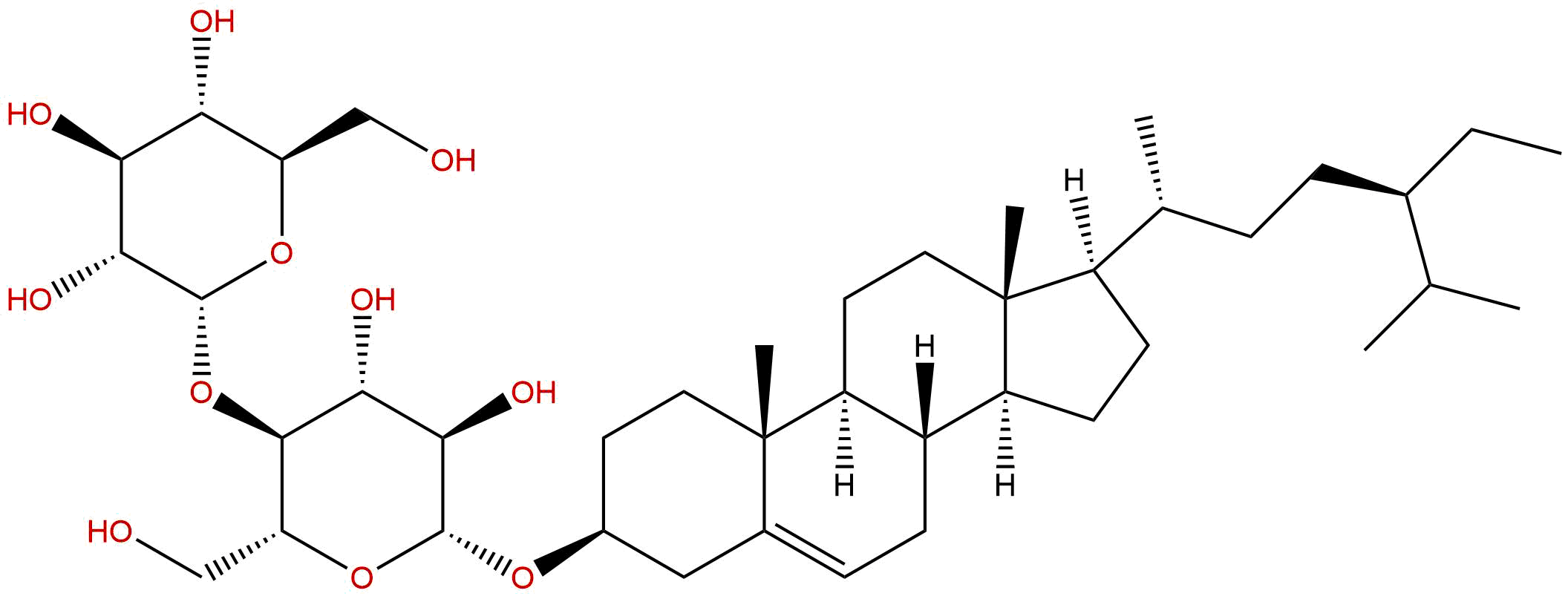


Product name: β-Sitosterol β-maltoside
Synonym name: β-Sitosteryl β-maltoside
Catalogue No.: BP2451
Cas No.: 40653-10-9
Formula: C41H70O11
Mol Weight: 739
Botanical Source:
Type of Compound: Steroids
Purity: 95%~99%
Analysis Method: HPLC-DAD or/and HPLC-ELSD
Identification Method: Mass, NMR
Packing: Brown vial or HDPE plastic bottle
Storage: Store in a well closed container, protected from air and light. Put into refrigerate or freeze for long term storage.
Whenever possible, you should prepare and use solutions on the same day. However, if you need to make up stock solutions in advance, we recommend that you store the solution as aliquots in tightly sealed vials at -20℃. Generally, these will be useable for up to two weeks.
The product could be supplied from milligrams to grams
Inquire for bulk scale.
For Reference Standard and R&D, Not for Human Use Directly.
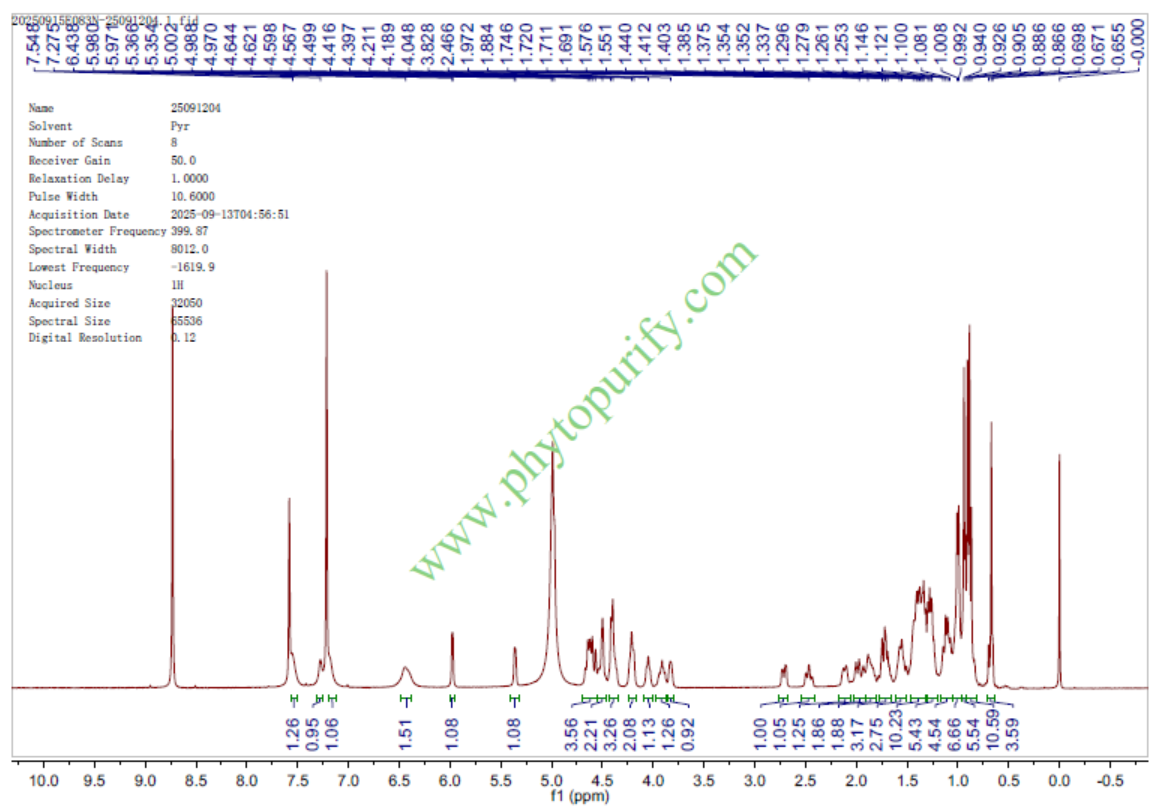
HNMR of β-Sitosterol β-maltoside
Storage conditions:Short-term storage at 2~8℃, long-term storage at -20 ~ -80℃
199.1400
No
No
No
No
No
No
No
Natural products, as an important source of drug discovery, play an indispensable role in the long struggle between humans and diseases. Plant sterols and their derivatives, as important components of plant cell membranes, have long been of great concern to pharmaceutical researchers due to their diverse biological activities and good safety. β - Sitosterol is one of the most abundant plant sterols in nature, which has been proven to have various pharmacological effects such as cholesterol lowering, anti-inflammatory, immune regulation, and anti-tumor effects. However, natural sterols generally suffer from poor water solubility and low bioavailability, which limits their further clinical applications. Glycosylation modification is an important strategy in nature to improve the physical and chemical properties of compounds and regulate biological activity. β - Sitosterol β - maltoside (CAS number: 40653-10-9) is a glycoside derivative formed by connecting β - sitosterol to a maltose group (a disaccharide composed of two glucose molecules linked by an alpha-1,4 glycosidic bond) via a β - glycosidic bond on the C-3 hydroxyl group. This structural modification not only significantly enhances the water solubility of the parent compound, but also endows it with a unique spectrum of biological activity.
In recent years, the research on β - sitosterol -3-maltoside has been increasingly in-depth, revealing its great potential in many fields such as anti-inflammatory, anti-cancer, antioxidant, antibacterial, anti diabetes and analgesia. Especially its molecular mechanisms in regulating inflammatory signaling pathways, inducing tumor cell apoptosis, and regulating the immune microenvironment provide a solid theoretical basis for the development of new therapeutic drugs for arthritis, various cancers, and metabolic diseases. This article aims to systematically review the chemical properties, natural sources, pharmacological activities, molecular mechanisms, and pharmacological characteristics of β - sitosterol-3-methylglucoside, in order to provide comprehensive references for the in-depth research, development, and application of this natural product.
The chemical structure of β - sitosterol 3-maltoside is the material basis for its biological activity. Structurally, the compound consists of two parts: a hydrophobic glycoside - β - sitosterol, and a hydrophilic sugar moiety - maltose.
Glycoside componentβ - sitosterol belongs to 4-demethylated sterols, with a core skeleton of cyclopentane dihydrophenanthrene structure. The C-17 position is connected to a 9-carbon side chain (ethyl substituted cholestane side chain), and the C-3 position has a β - configured hydroxyl group. This structure endows it with physical properties similar to mammalian cell membrane cholesterol, allowing it to embed into the cell membrane and affect membrane fluidity and signal transduction.
Glycosyl portion Maltose is a disaccharide composed of two D-glucose molecules connected by an alpha-1,4 glycosidic bond. In β - sitosterol 3-maltoside, maltose is connected to the C-3 hydroxyl group of β - sitosterol through its reducing end β - glycosidic bond. This glycosylation modification is the key to the transformation of compound properties. Maltose groups contain multiple hydroxyl groups and have strong hydrophilicity, greatly improving the water solubility of β - sitosterol. Meanwhile, the presence of sugar groups also increases the spatial hindrance of molecules, which may affect their interaction with biological targets.
Physicochemical parameters According to computational chemistry and experimental data, the molecular weight of β - sitosterol-3-methylglucoside is 734.9700 Da, which belongs to the category of large molecule natural products. Its topological polar surface area (TPSA) is as high as 199.1400 Å ², far exceeding the recommended upper limit of 140 Å ² for oral drugs, mainly due to the 11 hydrogen bond receptors in the molecule (mainly oxygen atoms on the sugar group). A high TPSA value typically indicates poor membrane permeability, which is consistent with the compound's inability to penetrate the blood-brain barrier (BBB: No). In addition, its LogP value (oil-water partition coefficient) significantly decreases due to the presence of sugar groups, indicating enhanced hydrophilicity. These physicochemical properties collectively determine the absorption, distribution, metabolism, and excretion (ADME) characteristics of the compound.
β - sitosterol 3-maltoside is not a widely distributed common plant metabolite. Its natural source is relatively specific and mainly exists in specific parts of certain medicinal plants or economic crops. The currently known plant sources rich in this compound include:
Extraction and Separation Methods Given that β - sitosterol 3-maltoside is usually not abundant in plants and often coexists with structurally similar sterol glycosides, its extraction and purification require systematic phytochemical methods.
β - sitosterol 3-maltoside exhibits broad and significant pharmacological activities, covering multiple pathophysiological processes such as inflammation, tumors, metabolism, and oxidative stress.
1. Anti inflammatory activity
Inflammation is the common pathological basis of various chronic diseases. β - sitosterol 3-maltoside exhibits strong anti-inflammatory effects in both in vivo and in vitro models.
- In vitro research In the lipopolysaccharide (LPS) - induced inflammatory model of bovine mammary epithelial cells (BMECs), this compound can significantly inhibit the inflammatory response. Specifically, it manifests as a decrease in intracellular reactive oxygen species (ROS) levels and downregulation of mRNA and protein expression of key pro-inflammatory cytokines such as tumor necrosis factor - α (TNF - α) and interleukin-1 β (IL-1 β). More importantly, it can inhibit the activation of the nuclear factor kappa B (NF - κ B) signaling pathway by reducing the phosphorylation and nuclear translocation levels of the p65 subunit.
- In vivo research In a mouse model of rheumatoid arthritis, β - sitosterol-3-methylglucoside can effectively alleviate pathological changes such as joint swelling, bone erosion, and synovial hyperplasia. The mechanism is related to regulating macrophage polarization, which promotes the transformation of pro-inflammatory M1 macrophages into anti-inflammatory M2 macrophages, thereby reshaping the inflammatory microenvironment.
2. Anti cancer activity
β - sitosterol 3-maltoside has shown significant cytotoxicity against multiple cancer cell lines and has demonstrated antitumor effects in various animal tumor models.
- Inducing cell apoptosis This compound mainly induces cancer cell apoptosis through endogenous (mitochondrial) pathways. In lung cancer, breast cancer and other cell lines, it can:
-Raise intracellular ROS levels and trigger oxidative stress.
-Inducing the loss of mitochondrial membrane potential (MMP), leading to mitochondrial dysfunction.
-Promote the release of cytochrome c from mitochondria to the cytoplasm.
-Upregulation of pro apoptotic protein Bax expression, downregulation of anti apoptotic protein Bcl-2 expression, and alteration of Bcl-2/Bax ratio.
-Activate the caspase cascade reaction, including caspase-9 (initiating caspase), caspase-3, and caspase-8 (executing caspase).
-Resulting in inactivation of poly ADP ribose polymerase (PARP), ultimately leading to DNA fragmentation and cell apoptosis.
-Activation of tumor suppressor protein p53 further promotes the transcription of apoptosis related genes.
- In vivo tumor suppression: In xenograft tumor mouse models (such as lung cancer and breast cancer models), oral or intraperitoneal injection of β - sitosterol -3- maltoside can inhibit tumor growth in a dose-dependent manner, and no significant weight loss and other systemic toxic reactions were observed.
3. Antioxidant activity
Oxidative stress is an important trigger for aging and various diseases. This compound exhibits direct antioxidant capacity, capable of clearing free radicals and enhancing the body's own antioxidant defense system. Research has shown that it can enhance the activity of antioxidant enzymes such as superoxide dismutase (SOD) and glutathione peroxidase (GSH Px), thereby protecting cells from oxidative damage.
4. Anti diabetes activity
In diabetes related studies, β - sitosterol -3- maltoside has shown the potential to improve insulin resistance and regulate glucose and lipid metabolism. The mechanism may be related to the activation of the AMP activated protein kinase (AMPK) signaling pathway, which is a key regulator of cellular energy metabolism. In addition, its anti-inflammatory and antioxidant activities also help to improve diabetes related complications.
5. Antibacterial and analgesic activity
Preliminary studies also indicate that the compound has inhibitory effects on certain bacteria and fungi. Meanwhile, in classic pain models such as hot plate method and acetic acid writhing method, it exhibits significant analgesic effects, and its mechanism may be related to the inhibition of the production of inflammatory mediators or its action on the central nervous system (although BBB penetration is poor, it may be through peripheral mechanisms).
The pharmacological activity of β - sitosterol 3-maltoside is not achieved through a single target, but rather through the synergistic effect of multiple targets and pathways. The core mechanism can be summarized as follows:
1. Regulating redox balance and mitochondrial function
This is the intersection of its anti-inflammatory and anticancer activities. In inflammatory cells, this compound reduces intracellular oxidative stress levels by clearing ROS or inhibiting enzyme activity such as NADPH oxidase, thereby inhibiting the activation of redox sensitive transcription factors such as NF - κ B. On the contrary, in cancer cells, it can selectively induce a large amount of ROS production, causing mitochondrial damage and triggering apoptosis of the mitochondrial pathway. This differential regulation of ROS levels between normal cells and cancer cells is the key to its therapeutic effect and low toxicity. Specific targets include mitochondrial permeability transition pores (mPTP), electron transport chain complexes, etc.
2. Inhibit the NF - κ B signaling pathway
NF - κ B is the core transcription factor of inflammatory response. β - sitosterol 3-maltoside inhibits the activity of I κ B kinase (IKK), preventing the phosphorylation and degradation of I κ B α, thereby locking the NF - κ B p65/p50 dimer in the cytoplasm and preventing it from entering the nucleus to initiate the transcription of pro-inflammatory genes (such as TNF - α, IL-1 β, IL-6, COX-2, iNOS). This is the core mechanism by which it exerts anti-inflammatory effects.
3. Regulating the HIF-1 α/mTOR signaling pathway
In the study of bovine mammary epithelial cells, the compound was found to restore the activity of the hypoxia inducible factor-1 alpha (HIF-1 alpha)/mammalian rapamycin target protein (mTOR) signaling pathway, which was disrupted by inflammatory stimuli. HIF-1 α is a key regulatory factor for cells to respond to hypoxia and inflammation, while mTOR controls cell growth and metabolism. The restoration of this pathway helps maintain cellular homeostasis, inhibit fat production disorders, and thus protect breast function.
4. Activate endogenous apoptotic pathways
As mentioned earlier, in cancer cells, this compound activates caspase-9 through ROS mediated mitochondrial damage, which in turn activates downstream caspase-3/7, ultimately leading to cell apoptosis. Meanwhile, the activation of p53 also participates in this process. p53 can upregulate pro apoptotic genes such as Bax and downregulate anti apoptotic genes such as Bcl-2. In addition, the activation of caspase-8 suggests the possible involvement of exogenous death receptor pathways or feedback amplification effects after caspase-3 activation.
5. Regulating immune cell function
In the rheumatoid arthritis model, this compound regulates macrophage polarization to transform pro-inflammatory M1 type (producing TNF - α, IL-1 β) into anti-inflammatory M2 type (producing IL-10, TGF - β), thereby inhibiting the activation of adaptive immune cells such as Th17 cells, reducing joint inflammation and bone destruction. Its specific molecular targets may involve signaling pathways such as JAK/STAT and PI3K/Akt.
Translating natural products into clinical drugs and evaluating their pharmacological properties is a crucial step. Based on existing data, β - sitosterol-3-methylglucoside exhibits some favorable pharmacological characteristics, but also faces challenges.
Beneficial features:
- low toxicity The acute toxicity test showed that its median lethal dose (LD50) is 2000 mg/kg, which belongs to low toxicity substances. Long term toxicity studies (such as in mouse tumor models) have not reported severe liver, kidney, or cardiac toxicity.
- No genetic toxicity The Ames test result is negative, indicating that it has no mutagenicity and reduces the risk of cancer.
- No cardiac toxicity A negative hERG inhibition test indicates a lower risk of causing QT interval prolongation and fatal arrhythmias.
- No hepatotoxicity Preliminary assessment did not reveal any significant signs of liver toxicity.
Challenges and Shortcomings:
- Oral bioavailability This is the biggest challenge faced by the compound. Its high molecular weight (>700 Da), high TPSA (>140 Å ²), and numerous hydrogen bond donors/acceptors are all unfavorable for intestinal absorption. The presence of sugar groups makes it too hydrophilic and difficult to passively diffuse through the lipid bilayer of intestinal epithelial cells. At present, there is no precise oral bioavailability data available, but according to the Lipinski Five Rules and Veber Rules, its oral absorption may be extremely poor.
- Blood-brain barrier penetrability Due to its high polarity and large molecular weight, this compound cannot penetrate the blood-brain barrier, which limits its application in central nervous system diseases such as brain tumors and neurodegenerative diseases.
- Metabolic stability As a glycoside, it may be hydrolyzed by glycosidases in the gastrointestinal tract and liver, releasing glycosides such as β - sitosterol and maltose. It is currently unclear whether the prototype drug, hydrolysis product, or a combination of both exert pharmacological activity. Further pharmacokinetic studies are needed to clarify this.
Pharmacokinetic characteristics Given its physical and chemical properties, it can be inferred that:
- absorb Poor oral absorption and low bioavailability. There may be a small amount of absorption through the intestinal lymphatic system or carrier mediated transport (such as glucose transporters).
- distribution Due to its good water solubility, it is mainly distributed in extracellular fluid. Due to the inability to penetrate the BBB, there is very little central distribution.
- Metabolism Mainly hydrolyzed by β - glucosidase in the intestine and liver into β - sitosterol and maltose. β - sitosterol can be further metabolized into bile acids or excreted.
- excretion The prototype drug and its metabolites may be mainly excreted from the body through bile and feces.
Despite the challenge of low oral bioavailability, the unique pharmacological activity and good safety of β - sitosterol-3-methylglucoside still have broad clinical application prospects, especially in the following fields:
1. Development of local or topical preparations
In view of its strong anti-inflammatory, antioxidant and analgesic activities, and poor oral absorption, the development of topical preparations (such as cream, gel, patch) is a promising direction. Can be used for treatment:
- Rheumatoid arthritis and osteoarthritis Directly acting on the joint area, reducing inflammation and pain, and avoiding systemic side effects.
- Skin inflammatory diseases Such as eczema, psoriasis, contact dermatitis, etc.
- wound healing Utilize its anti-inflammatory and antibacterial activities to promote wound repair.
2. Development of injectable formulations
For systemic treatment (such as cancer), intravenous or intraperitoneal injection formulations can be developed. Although injection administration has poor compliance, it can directly bypass the absorption barrier and ensure that the drug reaches the target tissue. Its effectiveness in various mouse tumor models has provided direct evidence for this.
3. Modify the structure as a lead compound
To solve the problem of oral absorption, this compound can be used as a lead for structural optimization:
- Prodrug design Esterification or etherification modification of hydroxyl groups on sugar groups to improve lipid solubility, allowing them to be enzymatically hydrolyzed in vivo and release the original drug.
- Sugar substitution Replace maltose with monosaccharides (such as glucose) or other small molecule sugars to reduce molecular weight and polarity.
- nano-formulation Using delivery systems such as liposomes, polymer nanoparticles, and solid lipid nanoparticles to encapsulate the compound, improve its oral bioavailability, and achieve targeted delivery.
4. Combination therapy strategy
β - sitosterol 3-maltoside can be used as a sensitizer for chemotherapy or radiotherapy. By inducing ROS and apoptosis mechanisms, it may have a synergistic effect with conventional chemotherapy drugs such as cisplatin and paclitaxel, reducing the dosage and toxic side effects of chemotherapy drugs. Meanwhile, its anti-inflammatory effect also helps to improve the tumor microenvironment and enhance anti-tumor immunity.
5. As a functional food or health product ingredient
In view of its low toxicity, anti-inflammatory, antioxidant and anti diabetes activities, it has the potential to be developed as a dietary supplement for auxiliary treatment of hyperglycemia, hyperlipidemia and chronic inflammation related diseases after solving the bioavailability problem.
β - sitosterol 3-maltoside, as a maltoside derivative of β - sitosterol, achieved dual optimization of physicochemical properties and biological activity through glycosylation modification. It not only performs well in classic anti-inflammatory and antioxidant fields, but also exhibits unique molecular mechanisms in anti-cancer and immune regulation, especially by regulating ROS balance, mitochondrial function, NF - κ B and HIF-1 α/mTOR signaling pathways, as well as regulating macrophage polarization, forming the basis of its multi-target pharmacological effects. Its excellent safety (low toxicity, no genetic toxicity, no cardiac toxicity) is a huge advantage as a drug candidate.
However, the compound also faces a typical dilemma in natural product development - low oral bioavailability. Future research should focus on: 1) further elucidating its pharmacokinetic characteristics in vivo, especially its absorption and metabolic pathways; 2) Utilize modern medicinal chemistry and pharmaceutical techniques, such as prodrug design and nano delivery systems, to overcome absorption barriers; 3) Explore its clinical application potential in local treatment and injection administration; 4) Conduct more extensive in vivo pharmacological studies to validate its therapeutic value in arthritis and specific types of cancer. In summary, β - sitosterol-3-methylglucoside is a natural product with great research value and development potential, and its in-depth exploration is expected to provide new weapons for humans to overcome inflammatory diseases and cancer.
