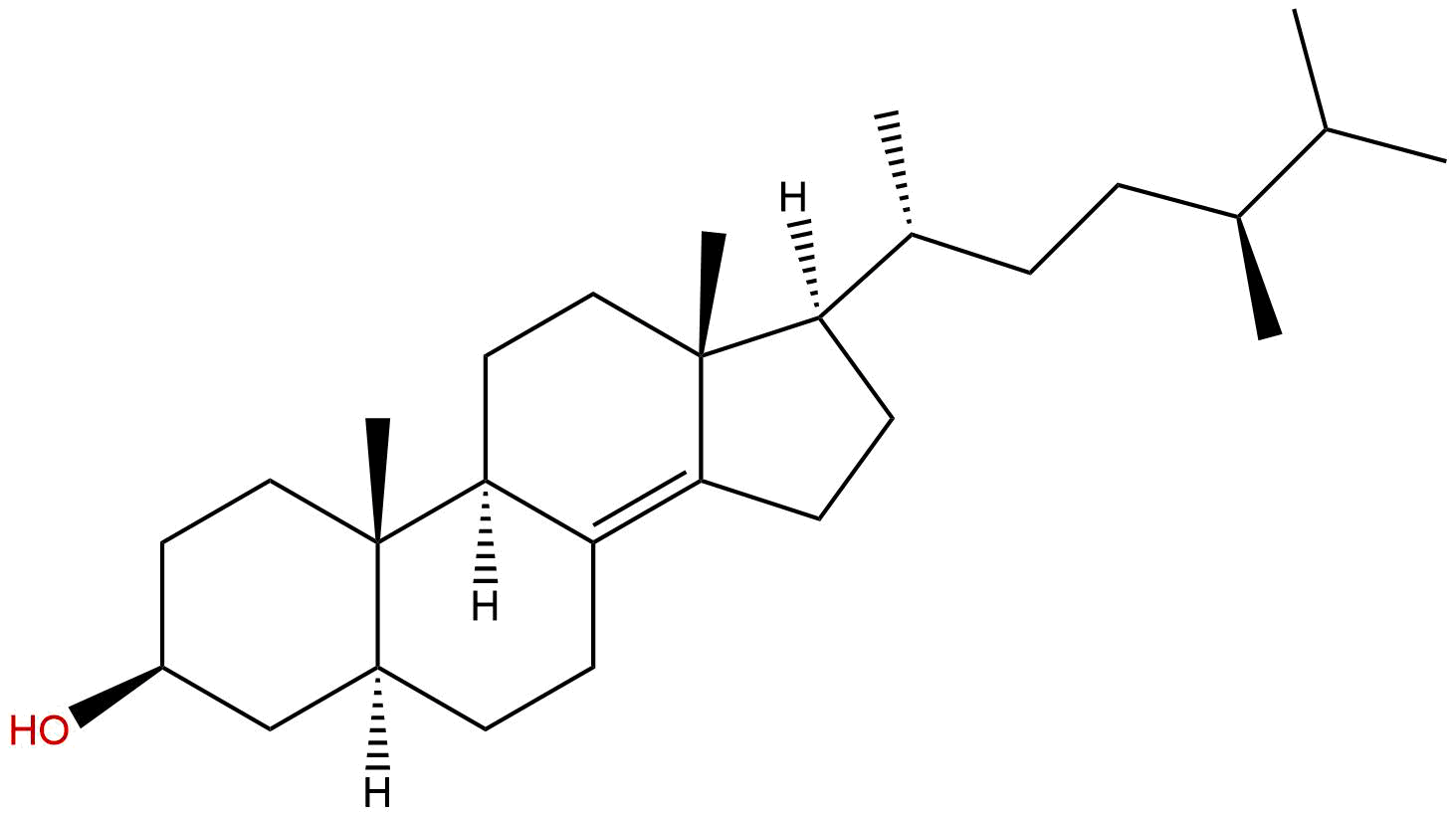


Product name: α-Ergostenol
Synonym name: (3β,5α)-Ergost-8(14)-en-3-ol;5α-Ergost-8(14)-en-3β-ol;8(14)-Ergostenol
Catalogue No.: BP2391
Cas No.: 632-32-6
Formula: C28H48O
Mol Weight: 400.691
Botanical Source:
Type of Compound: Steroids
Purity: 95%~99%
Analysis Method: HPLC-DAD or/and HPLC-ELSD
Identification Method: Mass, NMR
Packing: Brown vial or HDPE plastic bottle
Storage: Store in a well closed container, protected from air and light. Put into refrigerate or freeze for long term storage.
Whenever possible, you should prepare and use solutions on the same day. However, if you need to make up stock solutions in advance, we recommend that you store the solution as aliquots in tightly sealed vials at -20℃. Generally, these will be useable for up to two weeks.
The product could be supplied from milligrams to grams
Inquire for bulk scale.
For Reference Standard and R&D, Not for Human Use Directly.
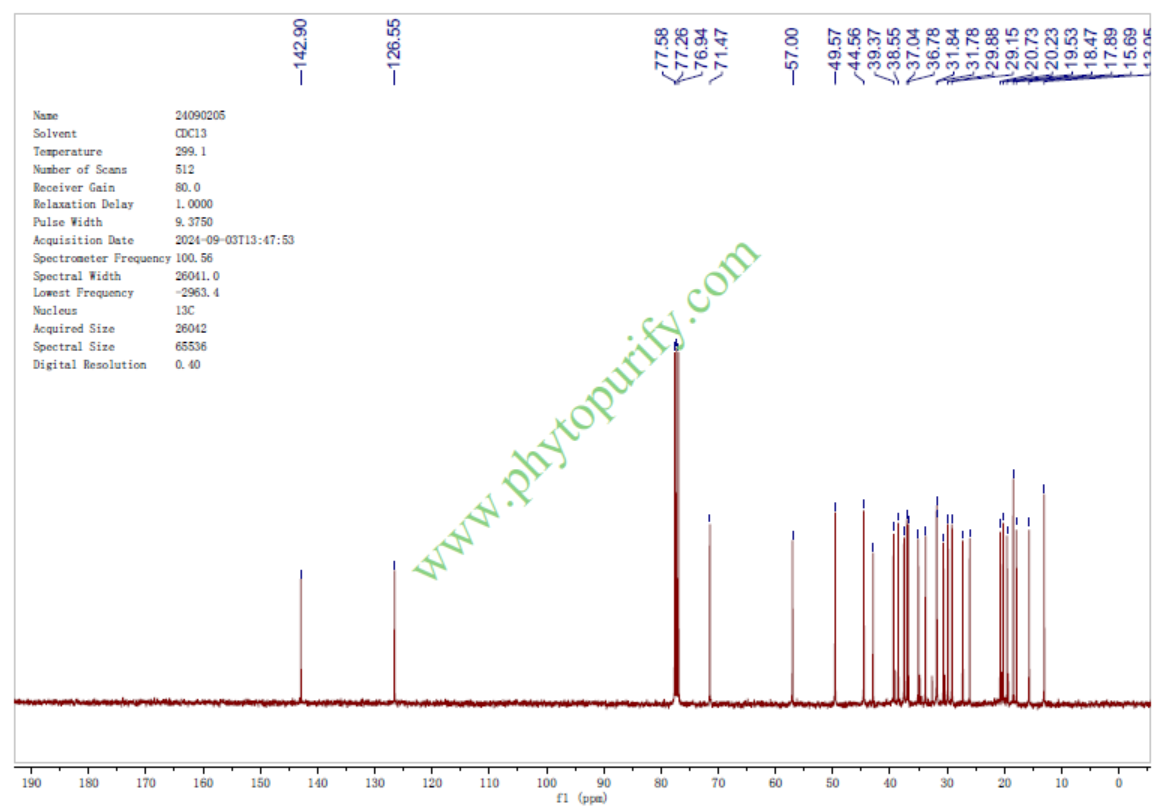
NMR of α-Ergostenol
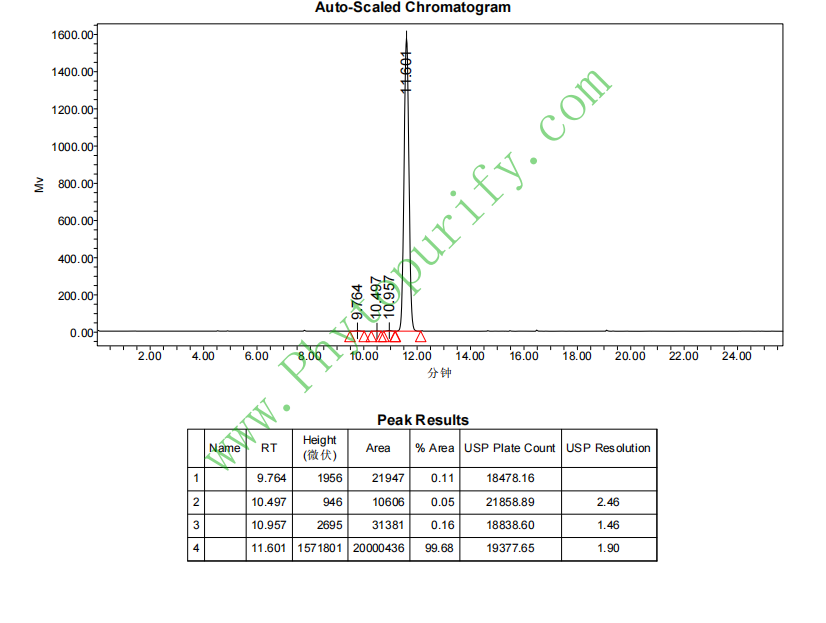
HPLC of α-Ergostenol
Storage conditions:Short-term storage at 2~8℃, long-term storage at -20 ~ -80℃
20.2300
8.3277
8.3289
.0001
8.4944
7.9335
High
93.1971
4.5810
No
No
No
No
No
No
0.0
No
No
No
No
Natural products, as an important source of drug discovery, have always played an irreplaceable role in the long struggle between humans and diseases. Steroids, as a class of structurally diverse and widely active natural products, have long been a hot topic in medicinal chemistry and pharmacology research. Ergostane type steroids are a unique class of steroid compounds found in fungi and certain plants. Their structural feature is the presence of a methyl branch on the C-17 side chain, which endows these compounds with unique biological and pharmacological activities.
Alpha ergosterol (CAS number: 632-32-6), also known as (14) - ergosterol, is a typical ergosterol compound. This compound was first isolated from Claviceps purpurea and subsequently discovered in various medicinal fungi and higher plants. In recent years, with the continuous increase of the incidence rate of bone metabolic diseases and the increasingly prominent limitations of existing therapeutic drugs, α - ergosterol has attracted extensive attention because of its potential application value in anti osteoporosis. Osteoporosis, as a systemic bone disease characterized by reduced bone mass and destruction of bone microstructure, has become a global public health issue. Although existing therapeutic drugs such as bisphosphonates and selective estrogen receptor modulators have certain therapeutic effects, the adverse reactions and drug resistance issues caused by long-term use have prompted researchers to continuously explore new therapeutic targets and lead compounds.
This article aims to systematically review the research progress on the chemical structure characteristics, plant sources, pharmacological activities, mechanism of action, and pharmacological evaluation of alpha ergosterol, in order to provide theoretical basis for the further development and clinical translation of this compound.
Alpha ergosterol belongs to the ergosterol class of compounds, and its basic skeleton is a cyclopentane dihydrophenanthrene (gonane) structure, which has a methyl substitution at positions C-10 and C-13 of the steroid nucleus, and a side chain containing 8 carbon atoms connected at position C-17. Compared to cholesterol, ergosterol compounds are characterized by the presence of a methyl branch at the C-24 position of the side chain. The chemical structural formula of α - ergosterol is C28H48O, with a molecular weight of 400.6910 g/mol. The double bond in its structure is located at the C-14 position, and the hydroxyl group is located at the C-3 position (β configuration).
From the perspective of stereochemistry, the steroid nucleus of α - ergosterol has a typical trans trans trans configuration, where the A/B, B/C, and C/D rings are all trans fused. This rigid structure endows the molecule with good spatial stability. The β - hydroxyl group at position C-3 is a common functional group in steroid compounds and a key site for its interaction with biological targets. The double bond at position C-14 increases the unsaturation of the molecule, which may affect its binding mode with the receptor.
The physicochemical properties of α - ergosterol have a significant impact on its bioavailability and medicinal properties. The lipid water partition coefficient (LogP) of this compound is 8.3277, indicating its extremely high lipid solubility, which is consistent with the hydrophobic properties of its steroid parent nucleus. High lipid solubility is beneficial for compounds to penetrate cell membranes, but it may also lead to poor water solubility and limited distribution in vivo. The topological polar surface area (TPSA) is 20.2300 Å ², which is much lower than the upper limit of 140 Å ² typically required for oral drugs, indicating that the compound has good membrane permeability.
In terms of water solubility, alpha ergosterol alcohol has extremely low water solubility, only 0.0001 mg/mL, which poses a challenge for its oral administration and in vivo absorption. It is worth noting that the compound's blood-brain barrier penetration rating is "high", indicating that it may have central nervous system activity, but at the same time, it also increases the risk of central toxicity. The hERG inhibition test result was negative, indicating that the compound has a low risk of causing QT interval prolongation in the heart. The Ames test result is 0.0, indicating that it does not have significant mutagenicity and has a low risk of genetic toxicity.
Alpha ergosterol was initially isolated from Claviceps purpurea, a fungus that parasitizes the ovaries of grasses such as rye. Its fungus, ergot, has long been used in traditional medicine. With the deepening of research, α - ergosterol has been gradually discovered in various medicinal fungi and higher plants.
In terms of fungal sources, besides ergot fungus, alpha ergosterol also exists in commonly used medicinal fungi such as Ganoderma lucidum, Poria cocos, and Polyporus umbellatus. Lingzhi, as a traditional precious Chinese medicine, contains abundant ergosterol compounds, among which α - ergosterol is one of its main active ingredients. Poria cocos and Poria cocos, as traditional Chinese medicines that promote diuresis and promote diuresis, are also considered to have steroid components closely related to their pharmacological activities.
In terms of plant sources, α - ergosterol has also been found in plants such as Solanaceae and Scrophulariaceae. For example, the presence of this compound has been detected in the fruit and root bark of Lycium barbarum. In addition, some marine organisms such as sponges also contain ergosterol compounds, but there are relatively few reports of alpha ergosterol in marine sources.
The extraction of alpha ergosterol alcohol is usually carried out using organic solvent extraction method. Due to its strong lipophilicity, commonly used extraction solvents include petroleum ether, n-hexane, chloroform, ethyl acetate, and other medium to low polarity solvents. In practical operation, ethanol or methanol is often used for reflux extraction of medicinal materials, and then the steroid components are enriched into a low polarity solvent phase through liquid-liquid extraction.
Modern extraction techniques such as supercritical fluid extraction (SFE) have also been applied to the extraction of α - ergosterol alcohol. Using carbon dioxide as the solvent, selective extraction can be achieved by adjusting pressure and temperature, which has the advantages of high extraction efficiency and no solvent residue. Microwave assisted extraction and ultrasound assisted extraction can significantly shorten the extraction time and improve the extraction rate.
In terms of separation and purification, silica gel column chromatography is the most commonly used method, usually using gradient elution (such as petroleum ether ethyl acetate system or chloroform methanol system) to separate the crude extract. For steroid compounds with similar structures, reverse phase high performance liquid chromatography (RP-HPLC) can provide higher separation efficiency. The commonly used stationary phase is C18 column, and the mobile phase is methanol water or acetonitrile water system. High speed counter current chromatography (HSCCC), as a liquid-liquid distribution chromatography technique, has also shown unique advantages in the separation of steroid compounds, avoiding sample loss caused by irreversible adsorption.
Osteoporosis is a metabolic bone disease characterized by reduced bone mass and degeneration of bone microstructure, and its pathogenesis involves a dynamic imbalance between bone formation and resorption. In recent years, significant progress has been made in the research of alpha ergosterol in the treatment of osteoporosis.
In vitro studies have shown that alpha ergosterol can promote the proliferation and differentiation of osteoblasts. In the MC3T3-E1 osteogenic precursor cell model, this compound significantly increases alkaline phosphatase (ALP) activity, promotes the formation of mineralized nodules, and upregulates the expression of osteogenic related genes. Meanwhile, alpha ergosterol alcohol has an inhibitory effect on the differentiation and activity of osteoclasts, reducing the formation of bone resorption pits and lowering the expression levels of osteoclast specific markers.
In animal models, alpha ergosterol has a significant therapeutic effect on ovariectomy induced osteoporosis in rats. After 8 weeks of continuous administration, the bone mineral density (BMD) of the model rats significantly increased, the number and thickness of bone trabeculae improved, and bone biomechanical parameters (such as maximum load and elastic modulus) significantly increased. Histomorphological analysis shows that alpha ergosterol can increase bone formation parameters (such as mineralization deposition rate and bone formation rate) while reducing bone resorption parameters (such as osteoclast count and percentage of eroded surface).
In addition to its anti osteoporosis activity, alpha ergosterol also exhibits various other pharmacological effects. In terms of anti-inflammatory activity, this compound can inhibit the release of pro-inflammatory factors such as tumor necrosis factor - α (TNF - α) and interleukin-6 (IL-6) in macrophages induced by lipopolysaccharide (LPS), and its mechanism may be related to the inhibition of the nuclear factor kappa B (NF - κ B) signaling pathway. In terms of antioxidant activity, alpha ergosterol can scavenge free radicals, reduce oxidative stress levels, and protect cells from oxidative damage.
In addition, α - ergosterol also showed certain anti-tumor activity, and had a proliferation inhibitory effect on some tumor cell lines (such as breast cancer MCF-7 cells, prostate cancer PC-3 cells). Its anti-tumor mechanism may involve inducing cell apoptosis, cell cycle arrest, and other pathways. It is worth noting that alpha ergosterol has low toxicity to normal cells and exhibits a certain degree of selectivity.
Based on existing research, the anti osteoporosis effect of alpha ergosterol involves multiple molecular targets, which form a complex signaling network. Estrogen receptor alpha (ESR1) is one of the important targets of alpha ergosterol. As a steroid compound, alpha ergosterol can bind to ESR1 and exert estrogen like effects, thereby promoting osteoblast activity and inhibiting osteoclast differentiation. Molecular docking studies have shown that the C-3 hydroxyl group of α - ergosterol can form hydrogen bonds with key amino acid residues in the binding domain of ESR1 ligand, while its steroid core is stably bound through hydrophobic interactions.
Matrix metalloproteinase-9 (MMP9) is a key enzyme involved in the degradation of bone matrix during bone resorption. Alpha ergosterol can downregulate the expression and activity of MMP9, reducing osteoclast mediated bone matrix degradation. Vitamin D receptor (VDR) is an important nuclear receptor that regulates calcium and phosphorus metabolism and bone formation. Alpha ergosterol may promote intestinal calcium absorption and bone mineralization by activating the VDR signaling pathway.
Runt related transcription factor 2 (RUNX2) is the main regulatory transcription factor for osteoblast differentiation, and its expression and activity are strictly regulated. Alpha ergosterol can upregulate the expression of RUNX2 and promote its nuclear translocation and transcriptional activity. SP7 (also known as Osterix) is a key transcription factor downstream of RUNX2, jointly regulating the expression of osteoblast specific genes. Research has confirmed that treatment with alpha ergosterol can significantly increase the expression level of SP7, thereby promoting the transcription of osteogenic marker genes such as type I collagen alpha 1 chain (COL1A1) and osteocalcin (BGLAP).
Cathepsin K (CTSK) is the main collagenase secreted by osteoclasts, responsible for degrading type I collagen in the bone matrix. Alpha ergosterol can inhibit the expression and enzymatic activity of CTSK, reducing the degradation of bone collagen. Osteoprotegerin (TNFRSF11B, also known as OPG) is a bait receptor for receptor activator of nuclear factor kappa B ligand (RANKL), which can block the binding of RANKL and RANK, thereby inhibiting osteoclast differentiation. Alpha ergosterol can upregulate the expression of OPG and downregulate the expression of RANKL, increasing the OPG/RANKL ratio. This balance change is a key mechanism for inhibiting osteoclastogenesis.
Osteocalcin (SOST) is a Wnt signaling pathway inhibitor secreted by bone cells, which blocks Wnt signaling by binding to low-density lipoprotein receptor associated protein 5/6 (LRP5/6), thereby inhibiting bone formation. Alpha ergosterol can downregulate the expression of SOST, relieve the inhibition of Wnt/β - catenin signaling pathway, promote osteoblast differentiation and bone formation. This mechanism is similar to the target of the anti osteoporosis drug rosozumab, suggesting that alpha ergosterol may exert bone synthesis metabolism by regulating SOST.
In summary, alpha ergosterol alcohol synergistically regulates bone metabolism through multiple targets and pathways. On the one hand, it promotes osteoblast activity through nuclear receptors such as ESR1 and VDR, upregulates osteogenic transcription factors such as RUNX2 and SP7, and increases the synthesis of bone matrix proteins such as COL1A1 and BGLAP; On the other hand, by inhibiting bone resorption enzymes such as MMP9 and CTSK, the OPG/RANKL ratio is upregulated, SOST expression is downregulated, and osteoclast differentiation and bone resorption activity are inhibited. This bidirectional regulatory mechanism gives alpha ergosterol a unique advantage in the treatment of osteoporosis.
The evaluation of drug properties is a crucial step in the discovery and clinical application of natural products. The physicochemical parameters of α - ergosterol alcohol show typical steroid compound characteristics. The molecular weight of 400.6910 Da conforms to Lipinski's five rules (<500 Da), and although LogP 8.3277 exceeds the requirement of LogP<5 in the five rules, considering the specificity of steroid drugs (such as dexamethasone LogP 1.8, but more steroid hormones have LogP between 3-7), this value is still within an acceptable range. TPSA 20.2300 Å ² is much lower than the threshold of 150 Å ², indicating its good membrane permeability.
Water solubility (0.0001 mg/mL) is the main limiting factor for the pharmacological properties of alpha ergosterol. Extremely low water solubility may lead to poor oral absorption and low bioavailability. However, the formulation technology of steroid drugs has become relatively mature, and their solubility and dissolution rate can be effectively improved through formulation technologies such as cyclodextrin inclusion, solid dispersion, liposomes, nanoemulsions, etc. In addition, prodrug design strategies, such as introducing phosphate or amino acid ester groups into the C-3 hydroxyl group, can improve water solubility and release the original drug through enzymatic interpretation in vivo.
At present, there is insufficient systematic pharmacokinetic research on alpha ergosterol alcohol, but reasonable speculation can be made based on its physicochemical properties and studies of similar compounds. In terms of absorption, high lipid solubility is beneficial for passive diffusion through intestinal epithelial cells, but poor water solubility may limit the dissolution rate, leading to incomplete oral absorption. In terms of distribution, high LogP values suggest that it may be widely distributed in adipose tissue and cell membranes, and its apparent distribution volume may be relatively large. In terms of metabolism, steroid compounds are mainly metabolized by the cytochrome P450 enzyme system (CYP450) in the liver, including hydroxylation, oxidation, reduction, and other reactions. Metabolites may be excreted through bile or urine after binding with glucuronic acid or sulfuric acid.
Evaluating blood-brain barrier penetration as' high 'is a double-edged sword. On the one hand, it may be advantageous for indications that require central involvement, such as neurodegenerative diseases; On the other hand, for peripheral diseases such as osteoporosis, central penetration may bring unnecessary neurological side effects. Therefore, in drug design, it may be necessary to restrict the central distribution through structural modification or formulation methods.
The negative results of hERG inhibition reduced the risk of cardiac toxicity, and the negative results of Ames test ruled out genetic toxicity hazards. These preliminary safety data are encouraging. However, as a steroid compound, alpha ergosterol may have hormone like activity, and long-term use may cause endocrine disorders. In addition, highly lipophilic compounds may accumulate in the body, leading to the accumulation of toxicity. Therefore, a systematic toxicological study is needed, including acute toxicity, chronic toxicity, reproductive toxicity, carcinogenicity, etc., to comprehensively evaluate its safety.
The treatment drugs for osteoporosis mainly include anti bone resorption drugs (such as bisphosphonates, denosumab) and bone formation promoting drugs (such as teriparatide, Romosomab). Alpha ergosterol alcohol has a dual effect of inhibiting bone resorption and promoting bone formation, which gives it a unique advantage in the development of anti osteoporosis drugs. Compared with existing drugs, alpha ergosterol may provide more comprehensive regulation of bone metabolism and reduce adverse reactions caused by single mechanism drugs.
However, the transformation from natural products to innovative drugs still faces many challenges. Firstly, it is necessary to establish efficient and economical extraction or synthesis processes to ensure a stable supply of compounds. Chemical total synthesis or semi synthesis routes are feasible ways to solve the source problem. Secondly, systematic pharmacological studies are needed to clarify its efficacy in different osteoporosis models, such as postmenopausal osteoporosis, senile osteoporosis, and glucocorticoid induced osteoporosis. Again, it is necessary to conduct in-depth pharmacokinetic and toxicological studies, optimize dosing regimens, and evaluate long-term medication safety.
The steroid skeleton of α - ergosterol provides abundant possibilities for structural modification. By studying the structure-activity relationship, its structure can be optimized to enhance activity, improve pharmacokinetic properties, and reduce toxic side effects. Possible modification sites include esterification or etherification of the C-3 hydroxyl group to regulate lipid solubility and metabolic stability; Reduction or epoxidation of the C-14 double bond to alter molecular conformation and receptor binding ability; Modification of side chains, such as introducing polar groups to improve water solubility.
Based on the structural skeleton of α - ergosterol alcohol, a series of analogues can be designed and synthesized, and stronger lead compounds can be identified through systematic activity screening. Computer aided drug design (CADD) technologies, such as molecular docking, pharmacophore modeling, quantitative structure-activity relationship (QSAR), can accelerate this process and improve research and development efficiency.
The combined use of alpha ergosterol and other anti osteoporosis drugs is worth exploring. For example, the combination with bisphosphonates may produce a synergistic effect, promoting bone formation while inhibiting bone resorption, achieving bidirectional regulation of bone metabolism. Combined use with calcium supplements and vitamin D can enhance bone mineralization. In addition, the anti-inflammatory and antioxidant activities of alpha ergosterol alcohol suggest that it may have therapeutic potential in other bone diseases such as osteoarthritis and rheumatoid arthritis.
Besides skeletal diseases, the central penetrability of alpha ergosterol suggests its potential role in neurological disorders. Previous studies have shown that certain steroid compounds have neuroprotective, antidepressant, and cognitive improvement activities. Therefore, the application of alpha ergosterol in neurodegenerative diseases such as Alzheimer's disease and Parkinson's disease deserves further research.
Alpha ergosterol, as a natural ergosterol compound, exhibits significant pharmacological activity and unique mechanism of action in the treatment of osteoporosis. It synergistically regulates bone metabolism through multiple targets and pathways, with dual effects of promoting bone formation and inhibiting bone resorption, providing a new approach for the treatment of osteoporosis. Although the physicochemical properties of this compound face challenges such as poor water solubility, it is expected to be improved through formulation techniques and structural modifications. The preliminary safety evaluation results are encouraging, but systematic toxicological studies are still needed.
The transformation from natural products to innovative drugs is a long and complex process that requires collaborative efforts from multiple disciplines such as chemistry, biology, pharmacology, and pharmacy. With the continuous deepening of research on alpha ergosterol, its mechanism of action will become clearer, its pharmacological properties will be improved, and its clinical application prospects will also be broader. We have reason to believe that in the near future, alpha ergosterol or its derivatives are expected to become important members of the anti osteoporosis drug family, bringing new treatment options for osteoporosis patients worldwide.
