Introduction/Overview
Natural products, as an important source of drug discovery, play an irreplaceable role in the history of human health maintenance and disease treatment. Among the diverse natural products, plant sterols and their derivatives have attracted much attention due to their extensive biological activity and good safety. β - sitosterol is one of the most abundant and widely distributed plant sterols in nature, found in various plant oils, nuts, grains, and vegetables. Its chemical structure is highly similar to animal cholesterol, with only an additional ethyl group on the side chain. This subtle difference in structure endows it with unique biological functions, especially in regulating cholesterol metabolism, showing significant advantages.
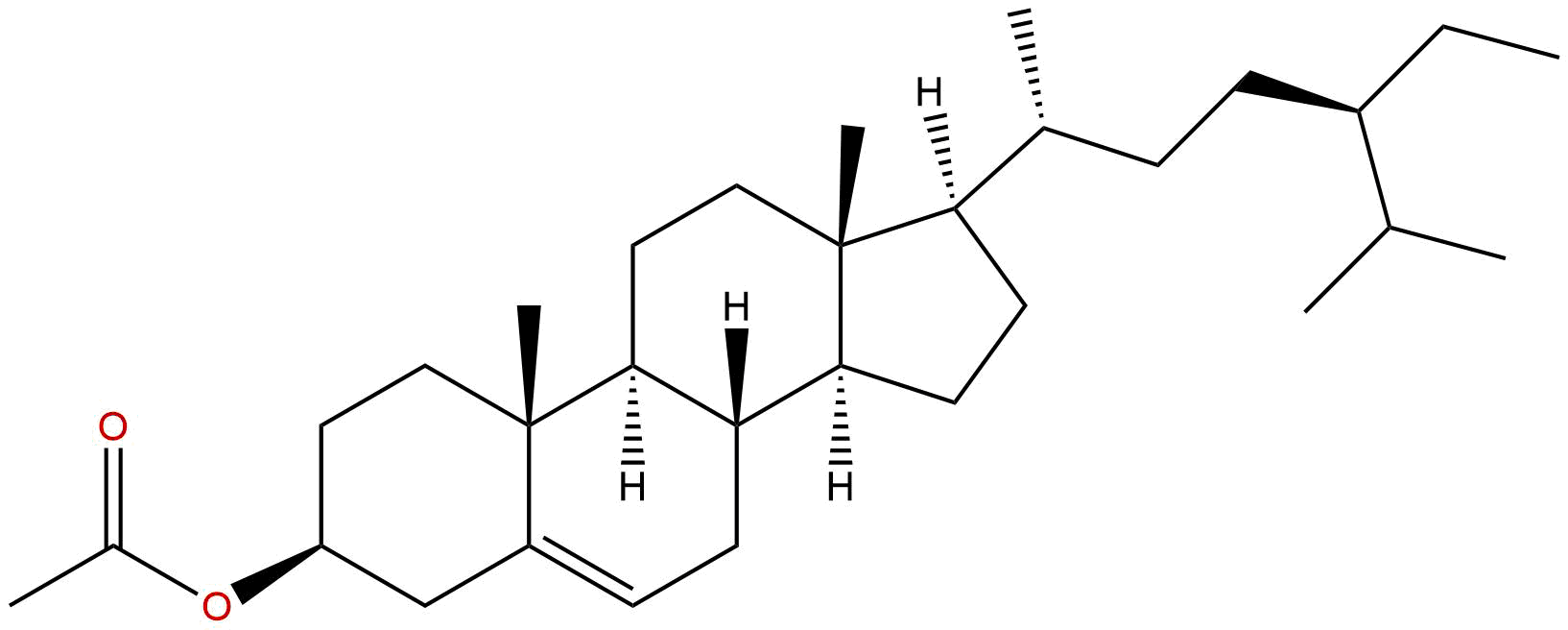
β - Sitosterol acetate (CAS number: 915-05-9), also known as β - Sitosterol 3-O-acetate, is a steroid ester derivative formed by the esterification reaction between the 3rd hydroxyl group of β - Sitosterol and acetic acid. This structural modification not only changes the physicochemical properties of the parent compound, but may also affect its bioavailability and pharmacological activity spectrum. β - sitosterol acetate was originally derived from Cordyceps sinensis(Cordyceps sinensis)The isolation and identification of mycelium, as a natural product with dual identities of plant metabolites and fungal metabolites, connects the research fields of plant chemistry and fungal chemistry. In recent years, with the deepening of research on natural sterol compounds, the potential value of β - sitosterol acetate in regulating lipid metabolism, anti-inflammatory, antioxidant and other aspects has gradually been revealed, especially in the treatment of hyperlipidemia and related metabolic diseases, showing remarkable prospects.
Hyperlipidemia is a major risk factor for cardiovascular and cerebrovascular diseases such as atherosclerosis, coronary heart disease and stroke. Its pathological core lies in the disorder of lipid metabolism, which is manifested by the increase of plasma total cholesterol (TC), triglycerides (TG), low-density lipoprotein cholesterol (LDL-C) levels, and the decrease of high-density lipoprotein cholesterol (HDL-C) levels. Although the current commonly used lipid-lowering drugs such as statins, fibrates and nicotinic acid are effective, long-term use may be accompanied by liver injury, muscle toxicity, new onset diabetes and other adverse reactions. Therefore, searching for efficient and low toxicity lipid-lowering active ingredients from natural products has always been a hot topic in drug development. The research on the lipid-lowering activity and related molecular mechanisms of β - sitosterol acetate, as an esterification derivative of β - sitosterol, provides important scientific basis for the development of new lipid-lowering drugs or functional food additives.
This article will systematically review the research progress of β - sitosterol acetate from the aspects of chemical structure and physicochemical properties, plant sources and extraction methods, pharmacological activity research, mechanism of action and molecular targets, drug evaluation and pharmacokinetics, clinical application prospects and prospects, in order to provide reference for the in-depth research and development of this natural product.
Chemical structure and physicochemical properties
The chemical structure of β - sitosterol acetate is based on the steroid parent nucleus, with its core skeleton being cyclopentane hydrophenanthrene, which is composed of three hexagonal rings (A, B, C) and one pentagonal ring (D) fused together. At the C-3 position, the original β - hydroxyl group (- OH) of β - sitosterol is replaced by an acetoxy group (- OCOCH ∝) to form an ester bond, which is its most significant structural difference from β - sitosterol. A side chain consisting of 8 carbon atoms is connected at position C-17, which has an ethyl branch (located at position C-24) and a double bond (located between positions C-22 and C-23). This side chain structure is a key feature that distinguishes different plant sterols. The molecular formula of β - sitosterol acetate is C ∝₁ H ₅₂ O ₂, with a molecular weight of 456.7550 g/mol. From the perspective of stereochemistry, this compound has multiple chiral centers and its natural configuration is 3 β - acetoxy-5-stigmasterol, which belongs to the hydride derivatives of stigmastane.
In terms of physicochemical properties, β - sitosterol acetate exhibits typical lipid soluble steroid ester characteristics. Its oil-water partition coefficient (LogP) is as high as 9.1296, indicating that the compound has strong lipophilicity and is easily soluble in organic solvents such as chloroform, ether, ethyl acetate, n-hexane, etc., while it is almost insoluble in water, with a water solubility of only 0.0002 mg/mL. This extremely low water solubility has a profound impact on its absorption, distribution, metabolism, and excretion processes in the body. The polar surface area (TPSA) is 26.3000 Å ², far below the upper limit of 140 Å ² typically required for oral medications, indicating that the molecule has good membrane permeability. In fact, the predictive model shows that β - sitosterol acetate has a high blood-brain barrier (BBB) penetration ability, which suggests that it may have direct or indirect pharmacological effects on the central nervous system, but also increases the potential risk of central nervous system toxicity.
It is worth noting that the ester bond structure of β - sitosterol acetate may be hydrolyzed by esterases in vivo, releasing the parent β - sitosterol and acetic acid. This prodrug like property may affect its pharmacokinetic behavior and pharmacological activity profile. Compared to free β - sitosterol, the esterified form typically has higher lipid solubility and better intestinal lymphatic absorption tendency, which helps to improve its oral bioavailability. In addition, the introduction of acetyl groups may alter the interaction mode between molecules and biological targets such as enzymes, receptors, and transporters, resulting in pharmacological effects different from those of the parent compound.
Plant sources and extraction methods
The distribution of β - sitosterol acetate in nature has a unique dual property: it exists in certain higher plants and is also a component of fungal metabolites. Initially, the compound was derived from Cordyceps sinensis(Cordyceps sinensis)Separated from mycelium. Cordyceps sinensis is a precious traditional Chinese medicinal herb, formed by the infection of bat moth larvae by Cordyceps sinensis. It has traditional effects such as nourishing the kidneys and lungs, stopping bleeding and resolving phlegm. Modern research has shown that Cordyceps sinensis contains various sterols, among which β - sitosterol acetate is one of the representative active ingredients. In addition, in Ganoderma lucidum(Ganoderma lucidum)Poria cocos(Poria cocos)The presence of this compound has also been detected in medicinal fungi.
In the plant kingdom, β - sitosterol acetate is commonly present as a companion ester component of β - sitosterol. Various plant oils rich in plant sterols, such as corn oil, soybean oil, rapeseed oil, sunflower seed oil, etc., may contain trace amounts of β - sitosterol acetate during the refining process. In addition, in some medicinal plants such as Danshen(Salvia miltiorrhiza)Scutellaria baicalensis(Scutellaria baicalensis)Goji berries(Lycium barbarum)The detection of this compound was also reported in the waiting section. However, compared to free β - sitosterol, the content of its acetate form in plant tissues is usually lower, which may be because the esterification of sterols in plants mainly occurs on fatty acids rather than acetic acid, forming sterol fatty acid esters rather than acetate esters.
The extraction of β - sitosterol acetate usually follows the general method for natural sterol compounds. Due to the strong lipophilicity of the compound, non-polar or moderately polar organic solvents are often used as extraction solvents. The commonly used extraction methods include: ① Organic solvent extraction method: using solvents such as n-hexane, petroleum ether, chloroform, ethyl acetate, etc. to extract dried and crushed plant or fungal materials by cold soaking or hot reflux; ② Supercritical fluid extraction (SFE): using supercritical CO ₂ as the extractant, selectively extracting lipophilic components by adjusting pressure and temperature. This method has the advantages of green environmental protection and high extraction efficiency; ③ Microwave assisted extraction (MAE) and ultrasound assisted extraction (UAE): By enhancing the mass transfer process through physical fields, the extraction time is shortened and the yield is improved.
The crude extract after extraction needs to undergo a series of purification steps to obtain high-purity β - sitosterol acetate. Common separation and purification techniques include: ① Silica gel column chromatography: gradient elution using solvent systems such as n-hexane ethyl acetate or petroleum ether acetone to separate target compounds based on polarity differences; ② Preparation type high performance liquid chromatography (Prep HPLC): using a reverse phase C18 column and methanol water or acetonitrile water as the mobile phase to achieve high-purity separation; ③ Recrystallization: Using the difference in solubility of β - sitosterol acetate in specific solvents, pure crystals are obtained through multiple recrystallizations. Structural identification usually relies on techniques such as nuclear magnetic resonance spectroscopy (¹ H-NMR, ¹ ³ C-NMR), mass spectrometry (MS), infrared spectroscopy (IR), etc., to confirm the structure by comparing with literature data or standard samples.
It is worth noting that due to the low content of β - sitosterol acetate in natural products and its structural similarity with β - sitosterol and other sterol esters, separation and purification are somewhat difficult. In recent years, the application of new separation techniques such as molecular imprinting technology and high-speed countercurrent chromatography (HSCCC) has provided a new way to efficiently obtain this compound.
Pharmacological activity research
The pharmacological activity research of β - sitosterol acetate mainly focuses on its lipid-lowering effect, involving multiple aspects such as anti-inflammatory, antioxidant, and anti-tumor effects. Among them, the activity research on hyperlipidemia is the most systematic and in-depth.
Hypolipidemic activity It is the pharmacological effect of β - sitosterol acetate that has received the most attention. Multiple in vitro and in vivo experiments have confirmed that this compound can effectively reduce total cholesterol (TC) and low-density lipoprotein cholesterol (LDL-C) levels. In the animal model of hyperlipidemia induced by high-fat diet, treatment with β - sitosterol acetate can significantly reduce the content of serum TC, TG and LDL-C, increase the level of HDL-C, and improve atherosclerosis index. Its lipid-lowering effect is comparable or slightly better than positive control drugs such as simvastatin, but it exhibits lower liver and muscle toxicity. It is worth noting that the lipid-lowering mechanism of β - sitosterol acetate is different from that of classical HMG CoA reductase inhibitors (statins). It mainly improves lipid metabolism through comprehensive regulation of multiple targets and pathways, which provides a structural basis for its safety advantages.
anti-inflammatory activity It is another important pharmacological property of β - sitosterol acetate. Chronic low-grade inflammation is the common pathological basis of metabolic syndrome and atherosclerosis. Research has shown that β - sitosterol acetate can inhibit lipopolysaccharide (LPS) - induced macrophage inflammatory response, reduce the expression of pro-inflammatory cytokines such as tumor necrosis factor - α (TNF - α), interleukin-6 (IL-6), and interleukin-1 β (IL-1 β), and upregulate the level of anti-inflammatory cytokine interleukin-10 (IL-10). In animal models, this compound can alleviate vascular wall inflammation and hepatic inflammatory infiltration induced by high-fat diet, and improve insulin resistance. Its anti-inflammatory mechanism is closely related to the inhibition of the nuclear factor kappa B (NF - κ B) signaling pathway and the activation of the nuclear factor E2 related factor 2 (Nrf2) antioxidant pathway.
antioxidant activity In terms of aspect, β - sitosterol acetate has been shown to clear free radicals and enhance the body's antioxidant defense ability. In vitro chemical experiments have shown that the compound has a certain ability to scavenge DPPH free radicals and ABTS cationic free radicals, and can inhibit lipid peroxidation. In cell models, treatment with β - sitosterol acetate can reduce the levels of oxidative stress markers such as malondialdehyde (MDA) and reactive oxygen species (ROS), and increase the activity of antioxidant enzymes such as superoxide dismutase (SOD) and glutathione peroxidase (GSH Px). This antioxidant effect may be partially attributed to the conjugated double bond structure on its steroid mother nucleus, but more importantly, it is achieved by regulating intracellular antioxidant signaling pathways.
Other pharmacological activities It also includes anti-tumor, liver protection, immune regulation, etc. Preliminary studies have shown that β - sitosterol acetate can inhibit the proliferation of some tumor cell lines (such as HepG2, breast cancer MCF-7, and colon cancer HT-29), and can induce cell cycle arrest and apoptosis. In liver injury models, this compound can reduce transaminase levels, alleviate hepatic steatosis and necrosis. In addition, β - sitosterol acetate also exhibits certain antifungal activity, which may be related to its natural function as a fungal metabolite.
Mechanism of action and molecular targets
The pharmacological activity of β - sitosterol acetate, especially its lipid-lowering effect, involves a complex network regulation of multiple molecular targets and signaling pathways. Based on existing research, its mechanism of action can be elucidated from the following aspects.
Activation of AMPK signaling pathway AMP activated protein kinase (AMPK, encoded by the PRKAA1 gene) is a core sensor of cellular energy metabolism and plays a critical role in regulating lipid metabolism. β - sitosterol acetate can promote AMPK phosphorylation activation by increasing the intracellular AMP/ATP ratio or directly binding to AMPK conformational sites. Activated AMPK phosphorylates downstream target proteins, inhibits acetyl CoA carboxylase (ACC) activity, and reduces fatty acid synthesis; Simultaneously activate carnitine palmitoyltransferase 1 (CPT1) to promote fatty acid beta oxidation. In addition, AMPK can also inhibit the nuclear translocation and transcriptional activity of SREBF1 (sterol regulatory element binding protein 1) by phosphorylating it, thereby downregulating the expression of genes related to fatty acid and cholesterol synthesis.
Promotion of cholesterol reverse transport ATP binding cassette transporter A1 (ABCA1) is a key transporter that mediates the efflux of intracellular cholesterol to apolipoprotein A-I (apoA-I) and plays a rate limiting role in cholesterol reverse transport (RCT). β - sitosterol acetate can upregulate the expression of ABCA1 by activating the liver X receptor (LXR, encoded by the NR1H3 gene) and farnesol X receptor (FXR, encoded by the NR1H4 gene), promoting cholesterol efflux from macrophages and liver cells, accelerating cholesterol transport from peripheral tissues to the liver, and bile acid excretion. This mechanism is particularly important for anti atherosclerosis.
Inhibition of cholesterol absorption Nieman Pick C1 like protein 1 (NPC1L1) is a key transporter protein for small intestinal epithelial cells to absorb dietary cholesterol and plant sterols. β - sitosterol acetate, as a derivative of plant sterols, may reduce intestinal cholesterol absorption by competing with cholesterol for the binding site of NPC1L1. In addition, the compound may also reduce the solubility and absorption efficiency of cholesterol by affecting the formation of bile acid micelles. The mechanism of inhibiting cholesterol absorption is similar to the target of ezetimibe, but the mode of action may be milder.
Regulation of cholesterol esterification Acyl CoA: Cholesterol Acyltransferase (SOAT1, also known as ACAT1) catalyzes the esterification reaction of free cholesterol and fatty acids in cells, producing cholesterol esters that are stored in lipid droplets. β - sitosterol acetate can inhibit the activity of SOAT1, reduce the synthesis of cholesterol esters, thereby reducing intracellular cholesterol storage and promoting the efflux of free cholesterol. This effect is particularly important in the formation of macrophage foam cells.
Regulation of HMG CoA reductase 3-hydroxy-3-methylglutaryl-CoA reductase (HMGCR) is the rate limiting enzyme in cholesterol biosynthesis. Unlike statins, which directly and competitively inhibit HMGCR, β - sitosterol acetate mainly downregulates the expression or activity of HMGCR through a post transcriptional regulatory mechanism. This may involve indirectly affecting the gene transcription and protein stability of HMGCR by activating the AMPK or SREBP pathways. This indirect regulatory approach may explain its relatively mild lipid-lowering effect but minimal side effects.
Regulation of PPAR γPeroxisome proliferator activated receptor gamma (PPARG) is a key nuclear receptor that regulates adipocyte differentiation and lipid metabolism. β - sitosterol acetate can act as a partial agonist of PPAR γ, regulating its transcriptional activity and affecting lipid storage and release in adipose tissue. In addition, the activation of PPAR γ is also associated with improving insulin sensitivity and inhibiting inflammatory responses, which may be one of the mechanisms by which β - sitosterol acetate improves metabolic syndrome.
Inhibition of cholesterol ester transfer protein (CETP)CETP mediates the exchange of cholesterol esters in HDL with triglycerides in VLDL/LDL, which is a key factor affecting HDL-C levels. Preliminary studies suggest that β - sitosterol acetate may have an inhibitory effect on CETP activity, thereby increasing HDL-C levels and improving lipoprotein profiles. This mechanism is consistent with the target of CETP inhibitor drugs under development, such as anacetrapib.
In summary, β - sitosterol acetate comprehensively improves lipid metabolism disorders through synergistic effects of multiple targets and pathways, including inhibiting cholesterol absorption, reducing endogenous cholesterol synthesis, promoting cholesterol reverse transport, and regulating lipid metabolism. This multi-target mode of action is the molecular basis for its precise lipid-lowering effect and good safety.
Evaluation of drug properties and pharmacokinetics
The pharmacological evaluation of β - sitosterol acetate involves multiple dimensions such as physicochemical properties, pharmacokinetic properties, and safety. Based on existing computational predictions and experimental data, a preliminary assessment of its drug development potential can be conducted.
Physical and chemical properties and drug like properties According to Lipinski's "Rule of Five", the molecular weight of β - sitosterol acetate (456.76 Da) is slightly higher than the threshold of 500 Da, the LogP (9.13) is much higher than the upper limit of 5, the number of hydrogen bond donors is 0 (≤ 5), and the number of hydrogen bond acceptors is 2 (≤ 10). This compound violates two of the "Five Rules" (molecular weight and LogP), indicating a possible oral bioavailability issue. However, for natural sterols, due to their unique absorption mechanism (such as lymphatic absorption), traditional pharmacological rules may not be fully applicable. The TPSA is 26.30 Å ², much lower than 140 Å ², indicating good membrane permeability, which is consistent with its predicted high BBB penetration ability.
Pharmacokinetic properties The pharmacokinetic study of β - sitosterol acetate is not yet sufficient, but reasonable inference can be made based on its structural characteristics and data of related compounds. In terms of absorption, due to its strong lipophilicity, the solubility of this compound in the gastrointestinal tract is extremely low, possibly mainly through micelle solubilization and lymphatic system absorption. Compared with free β - sitosterol, the acetate form may have a higher lymphatic absorption tendency, which helps to improve its bioavailability and avoid the first pass effect in the liver. In terms of distribution, high lipophilicity and high BBB penetration ability indicate a wide tissue distribution, including liver, adipose tissue, vascular wall, and central nervous system. In terms of metabolism, β - sitosterol acetate may be hydrolyzed by esterases in the intestine and liver to β - sitosterol and acetic acid. Subsequently, β - sitosterol can be further metabolized into bile acids or excreted after oxidation and binding reactions. In terms of excretion, plant sterols and their metabolites are mainly excreted into the intestine through bile and excreted with feces, with only a small amount excreted through urine.
safety evaluation The Ames test result is 0.0, indicating that β - sitosterol acetate does not exhibit significant mutagenicity and has a low risk of genetic toxicity. HERG inhibition prediction is negative, indicating a low risk of cardiac toxicity. As a naturally occurring plant sterol derivative, β - sitosterol acetate is generally considered to have good safety. However, its high BBB penetration ability suggests the need to pay attention to potential central nervous system side effects, especially in the case of long-term high-dose use. In addition, plant sterols may cause adverse reactions in a very small number of genetically susceptible individuals, such as those with phytosterolemia, which needs to be considered in clinical applications.
Challenges and Strategies in Drug Development The main challenge for the pharmacological development of β - sitosterol acetate lies in its extremely low water solubility and high lipophilicity, which may lead to unstable oral absorption and low bioavailability. To address this issue, the following strategies can be adopted: ① Formulation technology: using modern formulation technologies such as liposomes, nanoemulsions, solid dispersions, cyclodextrin inclusion complexes, etc. to improve their solubility and dissolution rate; ② Prodrug design: On the basis of retaining the active parent nucleus, introducing ionizable groups or hydrophilic fragments to improve water solubility; ③ Structural modification: Explore other esterification forms or side chain modifications at the C-3 position to optimize pharmacokinetic properties while maintaining activity; ④ Administration route: Consider non oral administration routes such as transdermal and nasal administration to avoid first pass effects and absorption issues.
Clinical application prospects and prospects
β - sitosterol acetate, as a natural sterol ester with dual plant and fungal sources, has shown broad application prospects in the fields of medicine and health industry.
Treatment of Hyperlipidemia Based on its multi-target lipid-lowering mechanism and good safety, β - sitosterol acetate is expected to be developed as a novel lipid-lowering drug or functional food additive. Compared with existing statins, its advantages lie in: ① complementary mechanism of action, which can be used in combination with statins to achieve synergistic enhancement; ② Minor side effects, especially suitable for statin intolerant patients; ③ It has multiple pharmacological activities such as anti-inflammatory and antioxidant, which is more beneficial to the comprehensive prevention and treatment of atherosclerosis. Future research should focus on conducting systematic preclinical toxicology evaluations and standardized clinical trials to clarify their effective dosage, safety window, and long-term medication risks.
Comprehensive intervention for metabolic syndrome Metabolic syndrome is characterized by central obesity, hyperglycemia, hyperlipidemia, and hypertension, and is a high-risk state for cardiovascular and cerebrovascular diseases. β - sitosterol acetate may have beneficial effects on multiple components of metabolic syndrome by regulating lipid metabolism, improving insulin resistance, and inhibiting inflammatory responses. Developing compound preparations or combination products for metabolic syndrome is a direction worth exploring.
Functional foods and health products Given that β - sitosterol acetate naturally exists in edible fungi and vegetable oils, it has a high level of safety acceptance as a functional food ingredient or dietary supplement. It can be developed as a lipid-lowering health food for the prevention and adjuvant treatment of hyperlipidemia. In the food industry, it can be added to vegetable oils, dairy products, baked goods, etc. to develop fortified foods with lipid-lowering functions.
Combination use with other drugs The combination of β - sitosterol acetate with lipid-lowering drugs such as statins, ezetimibe, and beta blockers has theoretical synergistic advantages. By acting on different stages of cholesterol metabolism (absorption, synthesis, transport, excretion), a more comprehensive and efficient lipid-lowering effect can be achieved, while potentially reducing the dosage of various drugs and lowering the incidence of adverse reactions. In addition, the combination with anti-inflammatory drugs and antioxidants is also worth exploring.
Research Prospects Although some progress has been made in the study of β - sitosterol acetate, there are still many key scientific questions that need to be clarified: ① Its pharmacokinetic characteristics in vivo, especially absorption mechanism, bioavailability, tissue distribution, and metabolic pathways; ② Differences in in in vivo and in vitro activities and structure-activity relationships with β - sitosterol and other sterol ester components; ③ The safety of long-term medication, especially its impact on the central nervous system and endocrine system; ④ Systematic pharmacological evaluation in atherosclerosis, non-alcoholic fatty liver disease (NAFLD), diabetes and other complex disease models; ⑤ Deep analysis of the mechanism of action based on multiple omics technologies (genomics, proteomics, metabolomics). In addition, the development of synthetic biology and green chemistry technologies is expected to achieve efficient and sustainable production of β - sitosterol acetate, laying the foundation for its industrial application.
Conclusion
β - sitosterol acetate, as a natural esterification derivative of β - sitosterol, occupies an important position in the field of natural product pharmacology due to its unique chemical structure and multi-target pharmacological activity. From the first isolation from the mycelium of Cordyceps sinensis, to the gradual revelation of its multiple pharmacological activities such as lipid-lowering, anti-inflammatory, and antioxidant, and to the in-depth analysis of molecular targets such as AMPK, ABCA1, and NPC1L1, people's understanding of this compound continues to deepen. It comprehensively regulates lipid metabolism through multiple pathways such as inhibiting cholesterol absorption, reducing endogenous synthesis, promoting cholesterol reverse transport, and regulating lipid metabolism enzyme activity, reflecting the multi-target and multi pathway characteristics of natural products. It also provides a unique molecular template for the development of new lipid-lowering drugs.
Of course, research on β - sitosterol acetate is still in its early stages, and there is still a long way to go from laboratory discovery to clinical application. The pharmacokinetic challenges posed by its extremely low water solubility and high lipophilicity need to be overcome through formulation techniques or structural modifications; The safety of long-term medication, especially the potential impact on the central nervous system, needs to be systematically evaluated; Its exact clinical efficacy needs to be validated through standardized clinical trials. However, based on its clear pharmacological activity, good safety record, and unique advantages of natural sources, β - sitosterol acetate is undoubtedly a natural lead compound with great potential for development.
In the future, with the deepening of interdisciplinary research, especially the collaborative innovation in the fields of medicinal chemistry, pharmacology, pharmacy, metabolomics, etc., β - sitosterol acetate and its derivatives are expected to play a greater role in the prevention and treatment of hyperlipidemia and related metabolic diseases, and make contributions to human health. The continuous research on this natural product will not only contribute to the development of new drugs, but also deepen our understanding of the biological functions of plant sterols and promote the progress of natural product drug research and development.