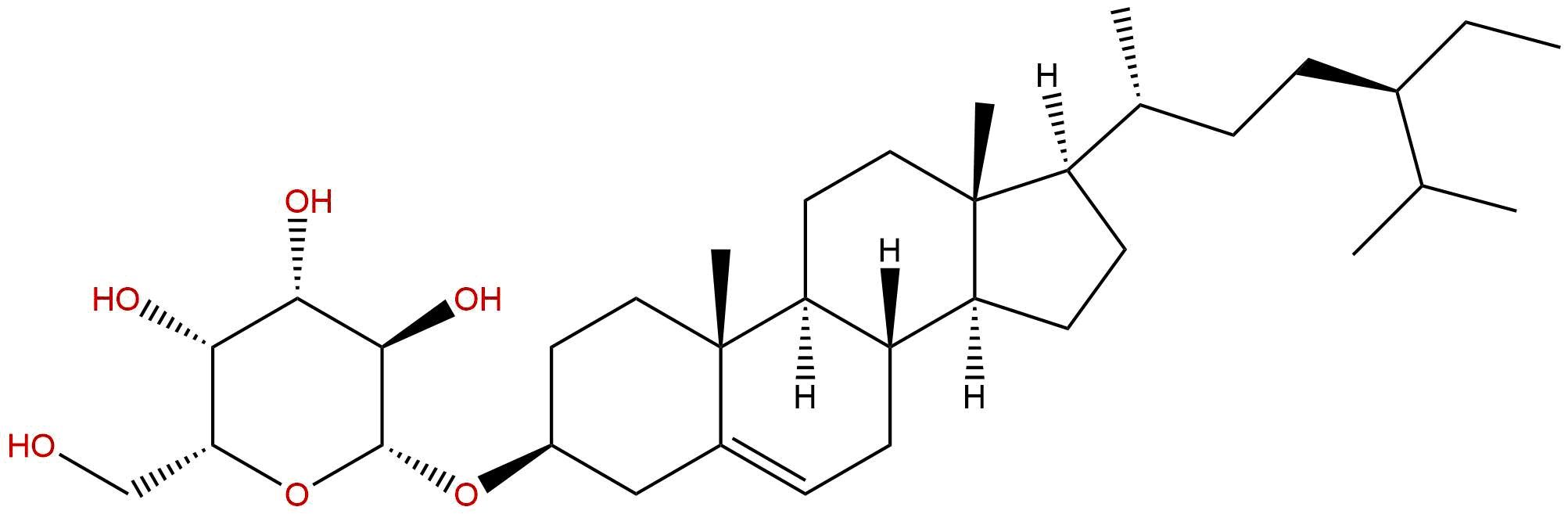


Product name: β-Sitosterol 3-O-galactopyranoside
Synonym name: β-Sitosterol 3-O-β-D-galactopyranoside;β-Sitosteryl β-D-galactopyranoside
Catalogue No.: BP2405
Cas No.: 55057-29-9
Formula: C35H60O6
Mol Weight: 576.859
Botanical Source:
Type of Compound: Steroids
Purity: 95%~99%
Analysis Method: HPLC-DAD or/and HPLC-ELSD
Identification Method: Mass, NMR
Packing: Brown vial or HDPE plastic bottle
Storage: Store in a well closed container, protected from air and light. Put into refrigerate or freeze for long term storage.
Whenever possible, you should prepare and use solutions on the same day. However, if you need to make up stock solutions in advance, we recommend that you store the solution as aliquots in tightly sealed vials at -20℃. Generally, these will be useable for up to two weeks.
The product could be supplied from milligrams to grams
Inquire for bulk scale.
For Reference Standard and R&D, Not for Human Use Directly.
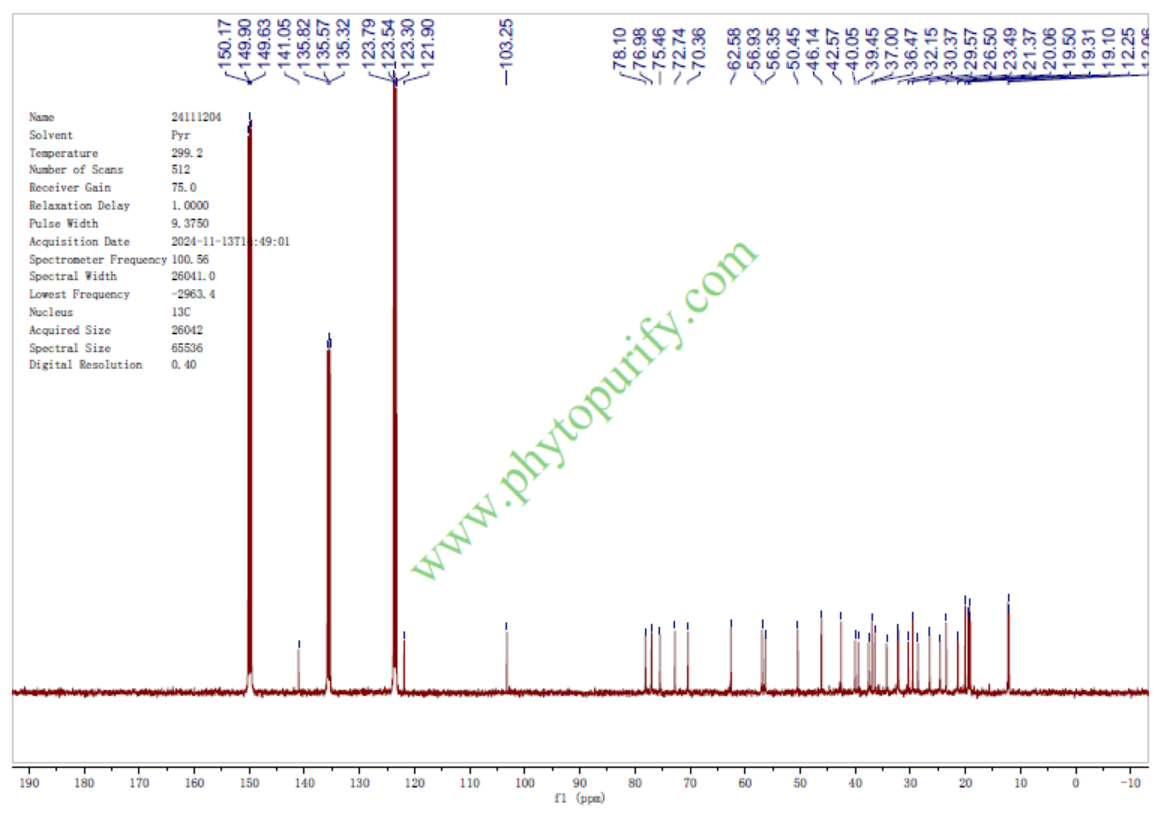
NMR of β-Sitosterol 3-O-galactopyranoside
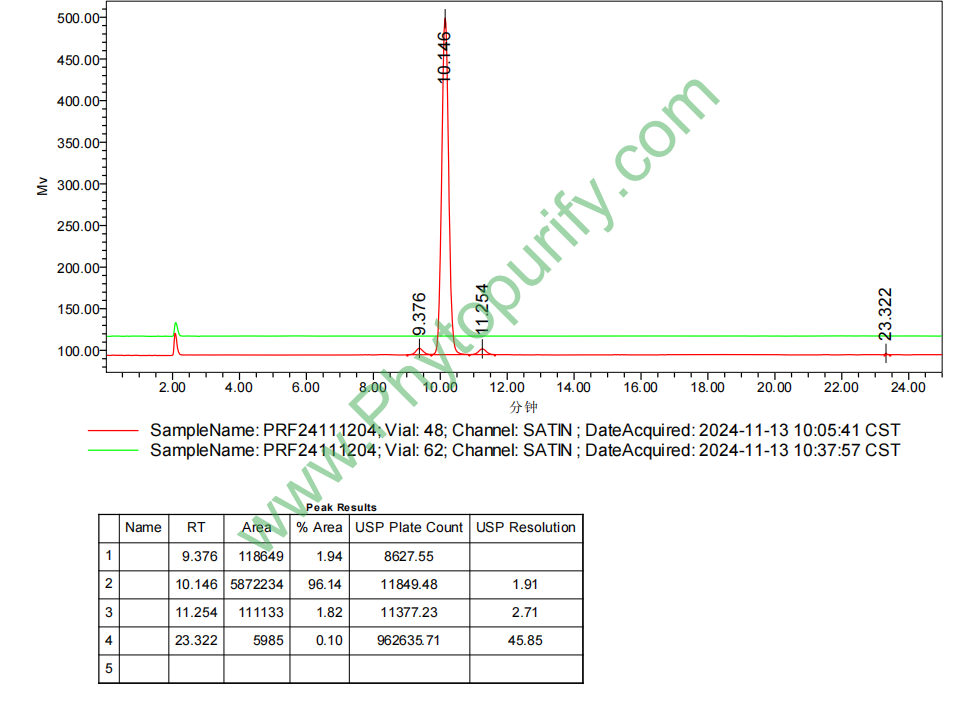
HPLC of β-Sitosterol 3-O-galactopyranoside
Storage conditions:Short-term storage at 2~8℃, long-term storage at -20 ~ -80℃
99.3800
5.9997
5.9997
.0016
.7757
.8202
Low
90.3447
4.9895
No
No
No
No
No
No
0.0
No
No
No
No
Natural products, as an important source of drug discovery, play an irreplaceable role in the long history of human struggle against diseases. Plant sterols and their derivatives, as a class of natural active substances widely present in the plant kingdom, have attracted much attention due to their significant cholesterol lowering activity and diverse biological functions. β - Sitosterol is one of the most abundant and extensively studied plant sterols, with a structure highly similar to animal sterol cholesterol, except for an additional ethyl group on the side chain. This structural similarity enables it to competitively inhibit cholesterol absorption in the intestine, thereby exerting a lipid-lowering effect. However, the bioavailability of free β - sitosterol is limited, and its glycosylated derivative, β - sitosterol 3-O-galactopyranoside (CAS number: 55057-29-9), exhibits more unique pharmacological properties and potential therapeutic advantages.
β - sitosterol-3-O-galactoside, also commonly known as β - sitosterol-3-O - β - D-galactopyranoside, is a sterol glycoside formed by connecting the hydroxyl group at position 3 of β - sitosterol with a molecule of galactose through a glycosidic bond. This structural modification not only changes the hydrophilic lipophilic balance of the molecule, but may also profoundly affect its interaction mode with target molecules in the organism. In recent years, with the continuous deepening of understanding of the pathogenesis of metabolic diseases, especially hyperlipidemia and its related cardiovascular complications, the search for natural active molecules that are safe, effective, and multi-target interventions has become a research hotspot. The potential of β - sitosterol-3-O-galactoside in regulating lipid metabolism, especially its potential association with multiple key targets such as AMPK, ABCA1, HMGCR, makes it a highly valuable lead compound for research.
This article aims to provide a systematic professional review of β - sitosterol-3-O-galactoside. We will start from its chemical structure and physicochemical properties, trace its plant origin and extraction and separation methods, deeply explore its pharmacological activity, mechanism of action, and molecular targets, and evaluate its pharmacokinetic characteristics based on drug parameters. Finally, we will look forward to its clinical application prospects and future research directions in the treatment of metabolic diseases such as hyperlipidemia, in order to provide comprehensive scientific basis for the in-depth development and utilization of this natural product.
The chemical structure of β - sitosterol-3-O-galactoside is the basis of its biological function. Its core skeleton is β - sitosterol, a C29 steroid compound with a cyclopentane dihydrophenanthrene core. At the C-3 position of β - sitosterol, there exists a β - configured hydroxyl group that is connected to a molecule of D-galactopyranose through a β - glycosidic bond, forming a complete glycosidic structure. The introduction of lactose gives the molecule a polar "head", while the hydrophobic skeleton of sterols forms a non-polar "tail", making it an amphiphilic molecule with both hydrophilic and lipophilic properties. This structural feature is crucial for its transmembrane transport and interaction with cell membranes or lipoproteins.
From the perspective of physical and chemical properties, the molecular formula of this compound is C ∝₅ H ₆₀ O ₆, with a molecular weight of 576.8590 g/mol. Its lipophilic water partition coefficient (LogP) is 5.9997, which is a relatively high value, indicating that the compound has significant lipophilicity. A high LogP value means that it is easily soluble in lipid environments, such as the bilayer of cell membranes or the core of lipoproteins, which is consistent with its properties as a sterol compound. However, this also suggests that its solubility in aqueous media such as blood may be poor. The calculated topological polar surface area (TPSA) is 99.3800 Å ², which is mainly contributed by multiple hydroxyl groups on the galactose moiety. TPSA is an important parameter for predicting drug oral absorption and blood-brain barrier penetration ability. It is generally believed that molecules with TPSA greater than 140 Å ² have poor oral absorption, while molecules with TPSA less than 60-70 Å ² are more likely to penetrate the blood-brain barrier. The TPSA of β - sitosterol-3-O-galactoside is 99.38 Å ², which is between the two, indicating that it may have some oral absorption potential, but its ability to penetrate the blood-brain barrier is low (consistent with the "blood-brain barrier: low" parameter in subsequent drug development parameters). Its water solubility prediction value is 0.0016 mg/mL, which belongs to the category of extremely insoluble in water. This is consistent with its high LogP value and is one of the main obstacles that need to be overcome when developing oral formulations. In addition, pharmacological evaluation showed that the compound has no inhibitory risk on hERG potassium channels (hERG inhibition: No), and the Ames test result was 0.0, indicating a low risk of genotoxicity, which provides an important safety basis for its candidate drug.
β - sitosterol-3-O-galactoside is not a rare isolated compound, but a secondary metabolite widely distributed in various plant communities. It often coexists with other plant sterols and their glycosides such as β - sitosterol and stigmasterol. The reported plant sources containing this compound include but are not limited to: Solanaceae plants (such as goji berries, eggplants, and chili peppers), leguminous plants (such as soybeans and astragalus), Asteraceae plants (such as dandelion and Atractylodes macrocephala), Araliaceae plants (such as ginseng and Panax notoginseng), Lamiaceae plants (such as Scutellaria baicalensis and Salvia miltiorrhiza), as well as some medicinal fungi (such as Poria cocos) and marine organisms (such as certain seaweeds). Its content varies significantly among different plants, usually closely related to the plant species, growth environment, harvest season, and parts (roots, stems, leaves, fruits, seeds). For example, in goji berry fruit and astragalus root, this compound is often studied as one of the quality control or active ingredients.
The classic strategy for extracting β - sitosterol-3-O-galactoside is to utilize its "moderate polarity" property. Due to the strong lipophilicity of the sterol skeleton and the weak hydrophilicity of the sugar group in the molecule, gradient extraction is often performed using solvents with low to high polarity. Traditional extraction methods include:
1. Organic solvent extraction method This is the most commonly used method. Dry and crushed plant materials are usually defatted with low polarity solvents such as petroleum ether and n-hexane to remove a large amount of oil and chlorophyll. Subsequently, medium polarity solvents such as ethyl acetate, acetone, or ethanol (especially 70% -95% ethanol) were used for repeated extraction. Ethanol has become the most commonly used extraction solvent due to its good permeability and ability to dissolve compounds in various polar ranges. The extraction process can be supplemented with heating reflux, ultrasound assistance, or microwave assistance to improve extraction efficiency and shorten time.
2. Soxhlet extraction method Suitable for small-scale extraction in the laboratory, the target compound can be thoroughly extracted through repeated solvent reflux and rinsing, but it takes a long time and high temperatures may affect the thermal instability of the components.
3. Supercritical fluid extraction (SFE)As a green extraction technology, supercritical CO ₂ is used as a solvent to selectively extract non-polar to moderately polar substances by adjusting pressure and temperature. Although requiring high equipment, SFE has the advantages of high extraction efficiency, no solvent residue, and environmental friendliness, showing promising prospects in the extraction of plant sterols and their glycosides.
The crude extract obtained is complex in composition and requires further separation and purification to obtain high-purity β - sitosterol-3-O-galactoside. The main separation and purification methods include:
1. Solvent Extraction Method Use different solvents (such as petroleum ether, chloroform, ethyl acetate, n-butanol, water) to perform liquid-liquid extraction on the crude extract, and conduct preliminary enrichment based on the difference in distribution coefficients of the target compound in different solvents. β - sitosterol-3-O-galactoside is usually enriched in the n-butanol or ethyl acetate extraction layer.
2. Column chromatography method This is the most crucial purification step. The most commonly used method is silica gel column chromatography, which uses solvent systems such as chloroform methanol water or ethyl acetate methanol for gradient elution. For sterol glycosides with similar structures, it may be necessary to combine other chromatographic techniques, such as:
- Reverse phase column chromatography (such as ODS-C18)Separation is achieved through hydrophobic interactions between the target substance and the stationary phase (C18 chain), commonly using methanol water or acetonitrile water systems for elution.
- Gel column chromatography (such as Sephadex LH-20)Separation based on molecular size is commonly used to remove large molecular impurities such as pigments and polysaccharides.
- Preparation type high performance liquid chromatography (Prep HPLC)For high-purity requirements or separation of trace components, Prep HPLC is the most effective method to obtain high-purity monomer compounds.
3. Structural Identification The isolated pure product requires structural confirmation through modern spectroscopic techniques, mainly including nuclear magnetic resonance spectroscopy (¹ H-NMR, ¹ ³ C-NMR, DEPT, COSY, HSQC, HMBC) and mass spectrometry (MS, especially high-resolution mass spectrometry HR-ESI-MS). By comparing with known literature data, its structure can be accurately identified, including the connection position of the sugar group (C-3), configuration (β), and the type of sugar (D-galactose).
The pharmacological activity research of β - sitosterol-3-O-galactoside mainly focuses on the known biological functions of its parent compound β - sitosterol, and gradually reveals the unique effects brought by glycosylation modification. At present, its most concerned pharmacological activities are focused on regulating lipid metabolism, anti-inflammatory, antioxidant, and potential anti-tumor effects.
1. Hypolipidemic and anti atherosclerosis activity
This is the core research area of the compound. Similar to free β - sitosterol, β - sitosterol-3-O-galactoside has been shown to have significant cholesterol lowering effects. In vitro cell experiments have shown that the compound can effectively reduce the levels of total cholesterol and free cholesterol in liver cells (such as HepG2 cells). The mechanism may involve multiple aspects: firstly, it may competitively inhibit the absorption of cholesterol by NPC1L1 protein in the intestine, reducing the entry of exogenous cholesterol into the body; Secondly, it can upregulate the expression of liver low-density lipoprotein receptor (LDLR) and promote the clearance of low-density lipoprotein cholesterol (LDL-C) in the blood; More importantly, it has been found to activate the AMPK signaling pathway, thereby inhibiting the activity of HMGCR (the rate limiting enzyme in cholesterol biosynthesis) and reducing endogenous cholesterol synthesis. In addition, the study also found that the compound can upregulate the expression of ABCA1, promote cholesterol reverse transport, that is, transport excess cholesterol in cells to apolipoprotein A-I (ApoA-I) to form high-density lipoprotein (HDL), and ultimately transport it back to the liver for metabolism and excretion. The synergistic effect of these multiple targets makes them show potential in reducing the levels of total cholesterol, LDL-C and triglycerides, and possibly increasing the level of HDL-C, thus playing the role of anti atherosclerosis.
2. Anti inflammatory activity
Chronic low-grade inflammation is an important pathological basis for metabolic syndrome and cardiovascular disease. β - sitosterol-3-O-galactoside exhibits good anti-inflammatory activity. In a macrophage model stimulated by lipopolysaccharide (LPS), this compound can significantly inhibit the production of pro-inflammatory cytokines such as tumor necrosis factor - α (TNF - α), interleukin-6 (IL-6), and interleukin-1 β (IL-1 β). The mechanism may be related to the inhibition of the activation of the nuclear factor kappa B (NF - κ B) signaling pathway. NF - κ B is a core transcription factor in inflammatory response, and this compound may downregulate the expression of various inflammatory genes by blocking the phosphorylation and degradation of I κ B α, preventing the translocation of NF - κ B p65 subunit to the nucleus. This anti-inflammatory activity and its hypolipidemic effect complement each other and jointly inhibit the formation and development of atherosclerotic plaque.
3. Antioxidant activity
Oxidative stress plays a crucial role in the occurrence and development of various diseases. Research has shown that β - sitosterol-3-O-galactoside has a certain antioxidant capacity. It can directly scavenge free radicals such as DPPH free radicals and ABTS cationic free radicals, and reduce the production of lipid peroxidation product malondialdehyde (MDA). In addition, it can upregulate the activity of intracellular antioxidant enzymes such as superoxide dismutase (SOD), glutathione peroxidase (GSH Px), and catalase (CAT), enhancing the body's own antioxidant defense system. This antioxidant property helps protect endothelial cells from oxidative damage and maintain vascular function.
4. Other potential activities
Preliminary studies also suggest that the compound may have other pharmacological activities. For example, some studies have reported its anti-tumor activity, especially in prostate cancer and breast cancer cell lines, which can induce cell cycle arrest and apoptosis. In addition, there are sporadic reports about its liver protection, anti diabetes and neuroprotective effects, but these studies are not in-depth and need to be further verified. It is worth noting that its glycosidic form may have better water solubility and bioavailability than free β - sitosterol, thus exhibiting stronger efficacy in certain pharmacological activities.
The pharmacological activity of β - sitosterol-3-O-galactoside is the result of multi-target and multi pathway synergistic effects. Based on its outstanding performance in the field of hyperlipidemia, the following will focus on elucidating its molecular mechanisms and targets related to lipid metabolism.
1. Activate the AMPK signaling pathway
AMP activated protein kinase (AMPK) is a core sensor of cellular energy metabolism, known as the "energy switch". Activation of AMPK can promote catabolic metabolism (such as fatty acid oxidation, glucose uptake) and inhibit synthetic metabolism (such as cholesterol, fatty acid, and protein synthesis). β - sitosterol-3-O-galactoside has been found to activate AMPK (target: PRKAA1, the catalytic subunit α 1 of AMPK). Activated AMPK directly inhibits the activity of HMGCR (3-hydroxy-3-methylglutaryl-CoA reductase, the rate limiting enzyme for cholesterol synthesis) through phosphorylation modification, thereby reducing de novo cholesterol synthesis in the liver. This is one of the core mechanisms of its cholesterol lowering effect. Meanwhile, the activation of AMPK can also inhibit the activity of SREBF1 (sterol regulatory element binding protein 1), which is a key transcription factor regulating the expression of genes related to fatty acid and triglyceride synthesis. Therefore, this compound can indirectly inhibit triglyceride synthesis.
2. Regulate cholesterol absorption and transport
- Inhibit intestinal absorption NPC1L1 (Nieman Pick C1 like protein 1) is a cholesterol transporter located on the brush border membrane of intestinal epithelial cells, responsible for uptake of cholesterol from diet and bile into intestinal cells. β - sitosterol-3-O-galactoside may inhibit cholesterol absorption by competing with NPC1L1 for binding. This is the classic mechanism by which plant sterols exert cholesterol lowering effects.
- Promote cholesterol reverse transport ABCA1 (ATP binding cassette transporter A1) is a key transporter that mediates the efflux of intracellular cholesterol to apolipoprotein A-I (ApoA-I) to form new HDL. This compound was found to be able to up regulate the expression of ABCA1, thus promoting the outflow of cholesterol from macrophages and hepatocytes, accelerating the reverse transport of cholesterol, helping to remove cholesterol deposited in vascular walls, and playing an anti atherosclerotic role.
3. Regulating nuclear receptors and transcription factors
- Activate LXR signal The liver X receptor (LXR, including NR1H3 or LXR α and NR1H2 or LXR β) is a cholesterol sensor that is activated when intracellular cholesterol levels rise. Activated LXR upregulates the expression of cholesterol efflux transporters such as ABCA1 and ABCG1, while also inducing the expression of SREBF1, promoting fatty acid synthesis. β - sitosterol-3-O-galactoside or its metabolites may act as weak agonists of LXR, upregulating ABCA1 by activating LXR, which is another important mechanism for promoting cholesterol reverse transport. However, activation of LXR may also lead to elevated triglycerides, which is a potential side effect that requires attention.
- Suppress FXR signal The farnesyl ester X receptor (FXR, NR1H4) is a bile acid receptor that plays a critical role in regulating bile acid synthesis and lipid metabolism. The activation of FXR inhibits the synthesis of bile acids and affects lipoprotein metabolism. Some studies suggest that plant sterols may affect bile acid metabolism and cholesterol excretion by inhibiting FXR signaling.
- Regulating PPAR γ activity Peroxisome proliferator activated receptor gamma (PPARG, PPAR gamma) is a key regulatory factor for adipogenesis and insulin sensitization. Although the excessive activation of PPAR γ is associated with fat accumulation, its activation in macrophages has anti-inflammatory effects. The regulatory effect of β - sitosterol-3-O-galactoside on PPAR γ is not yet clear and may be a weak regulator, and its net effect needs further investigation.
4. Inhibit cholesterol esterification
SOAT1 (sterol O-acyltransferase 1, also known as ACAT1) is responsible for esterifying free cholesterol into cholesterol esters for storage or assembly into lipoproteins within cells. Inhibition of SOAT1 can reduce the deposition of cholesterol esters in macrophages and vascular walls, thereby inhibiting the formation of foam cells, which is an important target of anti atherosclerosis. This compound may have a certain inhibitory effect on SOAT1.
5. Affects other targets
CETP (Cholesterol Ester Transfer Protein) is responsible for transferring cholesterol esters from HDL to LDL and VLDL. Inhibition of CETP can increase HDL-C levels and decrease LDL-C levels. The potential impact of this compound on CETP remains to be elucidated. In addition, its anti-inflammatory effect mainly involves inhibiting the NF - κ B and MAPK signaling pathways, while its antioxidant effect is related to activating the Nrf2/ARE pathway.
In conclusion, β - sitosterol -3-O-galactoside has formed a three-dimensional regulatory network from inhibiting synthesis, reducing absorption, promoting clearance to inhibiting esterification by acting on multiple targets closely related to lipid metabolism, such as AMPK, HMGCR, NPC1L1, ABCA1, LXR, FXR, SOAT1, so as to effectively exert its pharmacological effects of lowering blood lipids and anti atherosclerosis.
To promote β - sitosterol-3-O-galactoside from a natural active molecule to clinical candidate drugs, rigorous evaluation of its pharmacological properties is necessary, with pharmacokinetic properties being the core link. By combining its physical and chemical parameters, its in vivo behavior can be preliminarily predicted and analyzed.
1. Absorption
The most significant challenge of this compound lies in its extremely low water solubility (0.0016 mg/mL) and high LogP value (5.9997). According to the Lipinski Five Rules, a LogP greater than 5 usually indicates poor oral absorption. Extremely low water solubility means that its solubility in gastrointestinal fluids is extremely low, which is the limiting step for oral absorption. Therefore, its oral bioavailability is expected to be very low. In order to improve its oral absorption, pharmaceutical methods such as:
- Solid dispersion technology Disperse the drug in a water-soluble carrier (such as polyvinylpyrrolidone, hydroxypropyl methylcellulose) to form an amorphous or molecular dispersion, increasing the dissolution rate.
- Lipid preparations Such as self microemulsifying drug delivery systems (SMEDS) or lipid nanoparticles, which encapsulate drugs in lipids or surfactants, utilize lymphatic system absorption, and bypass the first pass effect of the liver.
- Cyclodextrin inclusion complex Using the cavity structure of β - cyclodextrin and its derivatives to encapsulate drugs, improving their apparent solubility and dissolution rate.
- Particle size reduction By using micronization or nanotechnology, the specific surface area of drugs can be increased to accelerate dissolution.
2. Distribution
Due to its high lipophilicity, this compound is likely to be widely distributed in lipid rich tissues and organs such as the liver, adipose tissue, adrenal gland, and cell membrane after absorption in the body. Its binding rate with plasma proteins, especially lipoproteins and albumin, is expected to be high. Low blood-brain barrier penetration ability (BBB: low) is an advantageous characteristic that can reduce the risk of central nervous system toxicity.
3. Metabolism
The metabolic pathway of this compound may include two main aspects:
- Hydrolysis of glycosidic bonds In the intestine or liver, its galactoside bond may be hydrolyzed by glycosidases in the gut microbiota or liver (such as lactase root glycoside hydrolase LPH or cytoplasmic β - glucosidase CBG), releasing free β - sitosterol and galactose. Free β - sitosterol subsequently undergoes metabolic processes similar to cholesterol, including oxidation in the liver (such as CYP450 enzyme system) and binding (such as glucuronidation and sulfation). Therefore, the active form of its action in the body may be the prototype drug, free β - sitosterol, or a combination of both.
- Oxidation of sterol skeleton The sterol ring and side chains may be hydroxylated by cytochrome P450 enzymes (such as CYP3A4) in the liver, producing more polar metabolites that are easier to excrete.
4. Excretion
The prototype drug and its metabolites are mainly excreted into the intestine through bile, and then some may be reabsorbed (enterohepatic circulation), while others are excreted with feces. Renal excretion (urine) may not be its main clearance pathway due to its high molecular weight and strong lipophilicity.
5. Safety evaluation
The pharmacological parameters provide preliminary safety clues. HERG inhibition is' no ', indicating a lower risk of causing QT interval prolongation and apical torsion type ventricular tachycardia in the heart. The Ames test result is 0.0, indicating that it has no mutagenicity in the bacterial recovery mutation test and low genetic toxicity risk. These are positive signals in the early stages of drug development. However, as a derivative of plant sterols, its long-term safety, especially its potential impact on sex hormone metabolism, bile acid metabolism, and lipid soluble vitamin absorption, still needs to be further evaluated in subsequent toxicological studies. For example, patients with phytosterolemia (a rare genetic disease) need to avoid excessive intake of phytosterols.
Overall, the pharmaceutical challenge of β - sitosterol-3-O-galactoside mainly lies in its extremely poor water solubility and the resulting low oral bioavailability. Its metabolic stability, low hERG risk, and low genetic toxicity are its advantages. Future pharmacokinetic studies require the use of advanced formulation technologies to overcome absorption barriers and clarify their metabolic fate and active forms in vivo.
β - sitosterol-3-O-galactoside, as a natural product with multi-target regulation of lipid metabolism, has shown clear clinical application prospects in the prevention and treatment of hyperlipidemia and related cardiovascular diseases.
1. As a candidate molecule for novel lipid-lowering drugs
The commonly used lipid-lowering drugs in clinical practice, such as statins (inhibiting HMGCR), ezetimibe (inhibiting NPC1L1), and PCSK9 inhibitors, have significant therapeutic effects, but each has its own limitations. Statins may cause muscle pain and elevated liver enzymes, ezetimibe has limited lipid-lowering intensity, and PCSK9 inhibitors are expensive and require injection administration. The mechanism of action of β - sitosterol-3-O-galactoside involves multiple steps such as inhibition of synthesis (HMGCR), inhibition of absorption (NPC1L1), and promotion of reverse transport (ABCA1), similar to a "natural multi-target drug". This multi-target synergistic mode theoretically can produce stronger lipid-lowering effects, while potentially reducing the side effects caused by excessive inhibition of a single target by acting on different targets. It is particularly suitable as an adjuvant therapy for statins, achieving more comprehensive lipid management through combination therapy, and may allow for the use of lower doses of statins to reduce their side effects.
2. Application in functional foods and dietary supplements
Given its natural plant origin and preliminary safety data (low hERG risk, no Ames toxicity), β - sitosterol-3-O-galactoside is highly suitable for development as a functional food or dietary supplement. For patients with elevated blood lipid margins or mild hyperlipidemia, as well as those who wish to achieve primary prevention through lifestyle interventions, this compound can be used as a safe and effective natural lipid-lowering ingredient. Adding it to edible oils, dairy products, beverages, or health products to make "plant sterol fortified foods" is a convenient way to bring it to the market. However, it is necessary to solve the problems of poor water solubility and low bioavailability, and improve its dispersibility in food matrix and absorption efficiency in human body through preparation technology (such as nano lotion and liposome).
3. Future research directions
In order to promote the transition of this compound from laboratory to clinical applications, future research should focus on the following key directions:
- In depth pharmacokinetic research Develop sensitive and specific biological sample analysis methods (such as LC-MS/MS) to systematically study their absorption, distribution, metabolism, and excretion (ADME) processes in animal bodies. Clarify whether its active form is the prototype or a metabolite (free β - sitosterol), and elucidate its metabolic pathway. This is the basis for conducting subsequent pharmacological and toxicological studies.
- Efficient formulation development Take pharmaceutical science as the core breakthrough point. Focus on developing formulations that can significantly improve their oral bioavailability, such as self microemulsifying drug delivery systems (SMEDS), phospholipid complexes, nanocrystals, or lipid nanoparticles. Select the optimal formulation through in vitro and in vivo evaluation.
- Pharmacodynamic and toxicological evaluation of the system: In hyperlipidemia animal models (such as ApoE -/- or LDLR -/- mice, golden hamsters), verify its efficacy in reducing blood lipids and anti atherosclerosis, and explore its dose effect relationship and time effect relationship. At the same time, conduct comprehensive toxicology research, including acute toxicity, long-term toxicity, reproductive toxicity, and carcinogenicity tests, to fully evaluate its safety.
- In depth molecular mechanism research Using gene knockout or RNA interference techniques, verify the mediating effect of key targets (such as AMPK, ABCA1, NPC1L1) at the cellular and animal levels. By combining omics techniques such as transcriptomics and metabolomics, we aim to comprehensively reveal the network mechanisms regulating lipid metabolism and explore the underlying connections between its anti-inflammatory, antioxidant, and lipid-lowering mechanisms.
- Clinical translational research After completing sufficient preclinical studies, rigorous clinical trials are designed, first conducting tolerance and pharmacokinetic studies in healthy volunteers, followed by preliminary efficacy and safety exploration in patients with mild to moderate hyperlipidemia.
β - sitosterol-3-O-galactoside, a natural sterol glycoside derived from ancient Chinese medicine and daily food, is emerging on the stage of modern drug development due to its unique chemical structure and multi-target pharmacological activity. By acting on a series of targets closely related to lipid metabolism, such as AMPK, HMGCR, NPC1L1, ABCA1, etc., it has constructed a three-dimensional regulatory network from inhibiting synthesis, reducing absorption to promoting clearance, showing great potential in treating hyperlipidemia and atherosclerosis. Its good preliminary safety characteristics (low hERG risk, no genetic toxicity) have added important weight to its development.
However, the road from natural products to clinical drugs is still long and challenging. Its extremely poor water solubility and resulting low oral bioavailability are the primary obstacles on the road ahead, and innovative formulation technologies are urgently needed to overcome them. In addition, its metabolic fate in the body, the safety of long-term medication, and the exact clinical efficacy all need to be elucidated through more in-depth and systematic research.
Nevertheless, β - sitosterol-3-O-galactoside undoubtedly provides us with a valuable natural molecular template. It is not only expected to be developed as a novel, multi-target lipid-lowering drug or functional food ingredient, but more importantly, in-depth research on its mechanism of action will help us better understand the mysteries of plant sterols and their derivatives regulating human metabolism, providing new ideas and directions for future drug design based on natural products. In the context of the parallel development of "returning to nature" and "precision medicine", the continuous exploration of this type of natural active molecule will surely bring new dawn to the human health cause.
