


Synonym name:
Catalogue No.: BP0688
Cas No.: 19083-00-2
Formula: C45H72O17
Mol Weight: 885.054
Botanical Source: Dioscorea gracillima
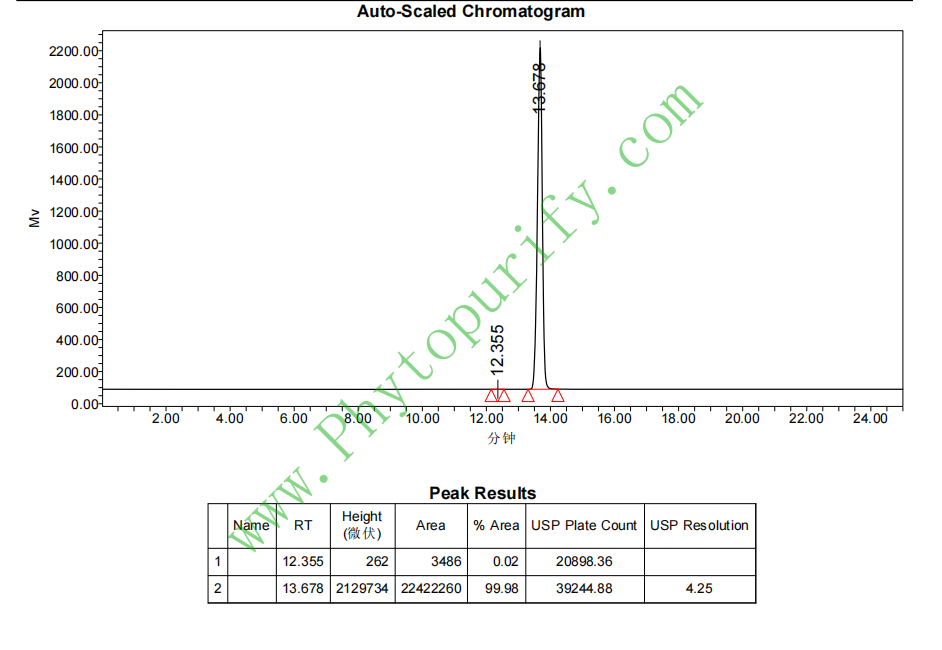
Purity: 95%~99%
Analysis Method: HPLC-DAD or/and HPLC-ELSD
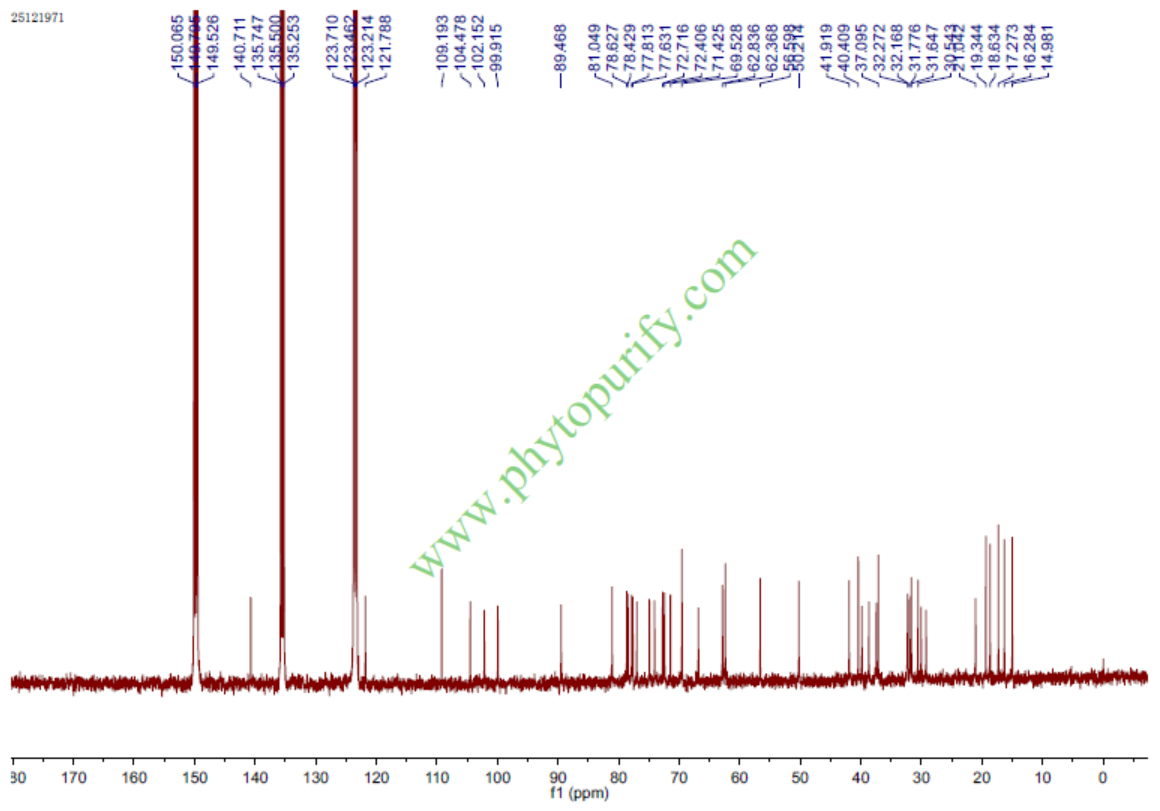
Identification Method: Mass, NMR
Packing: Brown vial or HDPE plastic bottle
Can be supplied from milligrams to grams.
For Reference Standard and R&D, Not for Human Use Directly.
Inquire for bulk scale.
Description:
Gracillin has anti-tumor activity, can induce cell cycle arrest, oxidative stress, and apoptosis in HL60 cells, and has the potential to be developed as an antitumor agent.
References:
Pharmazie. 2015 Mar;70(3):199-204.
Gracillin induces apoptosis in HL60 human leukemic cell line via oxidative stress and cell cycle arrest of G1.
Gracillin, a kind of steroidal saponin isolated from the root bark of wild yam Dioscorea nipponica has been reported to exert antitumor activity.
METHODS AND RESULTS:
In the present study, we investigated the anticancer activity of Gracillin against HL60 cells, and evaluated the possible mechanism involved in its antineoplastic action. The cell proliferation was evaluated by cell counting Kit-8 (CCK-8) assay, Gracillin inhibited the growth of HL60 cells in a time- and concentration-dependent manner. Flow cytometry was used to analyze the cell cycle distribution whereas Annexin V-FITC/PI flow cytometry analysis was carried out to confirm apoptosis induced by Gracillin, Our results demonstrated that Gracillin could induce cell cycle arrest of G1 and apoptosis in HL60 cells. Furthermore, based on the biochemical methods, induction of oxidative stress by Gracillin was indicated by increased the content of malondialdehyde (MDA), and decreased superoxide dismutase (SOD) activity. In addition, real time-PCR verified the expression of apoptosis-related genes, the mRNA level of Bcl-2 was decreased dramatically, while Bax was remarkably increased by Gracillin.
CONCLUSIONS:
Taken together, Gracillin could induce cell cycle arrest, oxidative stress, and apoptosis in HL60 cells, and has the potential to be developed as an antitumor agent.
HPLC of Gracillin
NMR of Gracillin
Storage conditions:Short-term storage at 2~8℃, long-term storage at -20 ~ -80℃
255.9100
1.9623
1.9626
.0587
.5397
.4331
Low
64.2001
6.6871
No
No
No
No
No
No
0.3
Yes
No
Yes
Yes
Gracillin is a typical natural product of steroidal saponins, mainly extracted from the roots of certain Dioscoreaceae plants. As an important member of the steroidal saponin family, slender dioscin has attracted widespread attention in recent years due to its unique chemical structure and diverse biological activities, especially its potential in the field of anti-tumor. A large number of in vitro and in vivo studies have shown that slender diosgenin can play a significant anti-tumor role by inducing apoptosis and autophagy of cancer cells, especially in the treatment of breast cancer. This article will provide a systematic review of the chemical structure, plant origin, pharmacological activity, mechanism of action, pharmacological evaluation, and clinical application prospects of Dioscorea slender saponins, aiming to provide theoretical basis and reference for further research and development of this natural product.
Thin Dioscin (CAS number: 19083-00-2) belongs to the class of steroidal saponins, with a molecular weight of 885.0540. Its molecular structure is composed of a steroid core skeleton and multiple glycosides connected by glycosidic bonds. Its LogP value is 1.9623, indicating that it has moderate lipid solubility, which is beneficial for membrane penetration. The TPSA (topological polar surface area) is 255.9100, indicating its high polarity, which may affect its bioavailability and intracellular distribution. Low water solubility (0.0587 mg/mL) suggests limited solubility in aqueous phase and may require formulation optimization to enhance bioavailability. The low permeability of the blood-brain barrier indicates that it is difficult to enter the central nervous system, reducing the risk of central neurotoxicity. The hERG channel inhibition experiment was negative, indicating a low risk of cardiac toxicity. The Ames test value is 0.3, indicating a low risk of genotoxicity and a good safety basis.
The steroid skeleton of slender dioscin endows it with strong biological activity, while the sugar moiety affects its water solubility and binding properties with the target. The complexity of the overall structure provides the possibility of multi-target action for its biological activity, but also brings challenges in pharmacokinetics.
Fine Dioscin is mainly found in the roots of Dioscoreaceae plants, especially in wild or cultivated varieties such as Dioscorea gracillima. Dioscorea plants play an important role in both traditional Chinese medicine and modern pharmaceutical research due to their rich content of steroidal saponins.
The common methods for extracting saponins from slender yam include:
During the extraction process, attention should be paid to controlling temperature and pH to avoid hydrolysis and structural damage of saponins. The purified slender dioscin was subjected to structural identification and purity confirmation by mass spectrometry (MS), nuclear magnetic resonance (NMR) and other methods.
The pharmacological activities of slender dioscin are mainly concentrated in the field of anti-tumor, especially for breast cancer. The mechanism of its anti-tumor effect is complex, involving the regulation of multiple signaling pathways, specifically manifested as:
Inducing apoptosis of cancer cells
Dioscin can activate endogenous apoptotic pathways, promote mitochondrial membrane potential loss, release cytochrome C, activate the caspases family, and ultimately lead to programmed cell death. Its function is closely related to the regulation of BCL2 family proteins, which can downregulate the expression of anti apoptotic protein BCL2 and promote the transmission of apoptotic signals.
Promote autophagy
Autophagy, as an intracellular degradation and cycling mechanism, plays a dual role in the survival and death of cancer cells. Thin yam saponins activate the AMPK signaling pathway, inhibit mTOR activity, induce autophagosome formation, promote autophagic cell death in cancer cells, and enhance anti-tumor effects.
Inhibit tumor cell proliferation and migration
Fine dioscin can inhibit the proliferation of breast cancer cells, block the process of cell cycle, and reduce the ability of cell migration and invasion. Its mechanism of action involves downregulation of matrix metalloproteinases such as MMP2, reducing the matrix degradation activity of tumor cells, and inhibiting tumor metastasis.
Reverse drug tolerance
Thin yam saponins have inhibitory effects on multidrug resistance related proteins ABCB1 and ABCG2, which can enhance the accumulation of chemotherapy drugs in tumor cells, improve chemotherapy sensitivity, and have potential adjuvant therapeutic value.
In addition, slender dioscin also exhibits various biological activities such as anti-inflammatory and antioxidant effects, providing multidimensional support for its comprehensive treatment of tumors.
The anti breast cancer effect of slender dioscin involves multiple molecular targets and signal pathways, mainly including:
AMPK(PRKAA1)
As a cellular energy sensor, activation of AMPK can inhibit the mTOR signaling pathway, promote autophagy, and inhibit cell proliferation. Diosgenin can induce autophagic cell death and inhibit the growth of breast cancer cells by activating AMPK.
BCL2(BCL2)
BCL2 protein is a member of the anti apoptotic family and regulates mitochondrial permeability. Sophora japonica saponins can downregulate BCL2 expression, relieve inhibition of apoptosis, and promote cell apoptosis.
STAT3(STAT3)
The STAT3 signaling pathway plays a crucial role in the proliferation, survival, and immune escape of tumor cells. Thin yam saponins inhibit the phosphorylation and activation of STAT3, block its transcriptional regulatory function, and inhibit tumor progression.
ESR2 (estrogen receptor beta)
The hormone dependence of breast cancer is closely related to estrogen receptor. The regulation of ESR2 expression by slender yam saponins may affect hormone signaling pathways and exert anti-tumor effects.
ABCB1 and ABCG2
These two ATP binding cassette transporters are key mediators of multidrug resistance. Thin yam saponins inhibit its function, increase the concentration of chemotherapy drugs in cancer cells, and reverse drug resistance.
PRKCA (protein kinase C alpha)
PRKCA is involved in cell proliferation and migration signal transduction. Fine Dioscin affects tumor cell behavior by regulating PRKCA activity.
MAPT (microtubule associated protein Tau)
MAPT is involved in cell cytoskeleton stability and cell division. Thin yam saponins may affect cell cycle and migration by regulating MAPT.
MMP2 (Matrix Metalloproteinase 2)
MMP2 promotes the degradation and metastasis of tumor cell matrix. Thin yam saponins inhibit MMP2 expression and prevent tumor invasion.
LCK (lymphocyte specific tyrosine kinase)
LCK plays a role in tumor immune regulation, and dioscin may affect the tumor microenvironment by regulating LCK.
To sum up, slender diosgenin exerts its comprehensive anti breast cancer effect through multi target and multi-channel synergistic action, reflecting the advantages of natural products in multi target pharmacology.
The pharmacological evaluation of slender dioscin shows that it has certain development potential, but there are also challenges:
Molecular weight and solubility
The high molecular weight (885.0540) and low water solubility (0.0587 mg/mL) may limit its oral absorption and bioavailability. It is necessary to improve solubility and stability through drug formulation technologies such as nanocarriers, liposomes, or solid dispersions.
Fat solubility and polarity
The LogP value is 1.9623, indicating moderate lipid solubility and favorable cell membrane penetration. A higher TPSA (255.9100) indicates stronger polarity, which may affect passive diffusion and membrane permeation.
Low permeability of blood-brain barrier
Beneficial for reducing central nervous system side effects, but limits its application in diseases such as brain tumors.
safety
The hERG channel inhibition test was negative, indicating a low risk of cardiac toxicity. The Ames test value is 0.3, indicating a low risk of genotoxicity and good safety.
pharmacokinetics
At present, there is limited pharmacokinetic data on slender dioscin in vivo. Preliminary studies have shown that its oral bioavailability is limited, and its metabolism in vivo is mainly through the liver enzyme system, which may have a first pass effect. In the future, it is necessary to systematically evaluate its absorption, distribution, metabolism, and excretion (ADME) characteristics.
Overall, slender dioscin has good safety and multi-target advantages, but it needs to overcome the limitations of low water solubility and bioavailability, optimize the administration route and formulation form.
As a natural steroidal saponin, slender diosgenin, with its remarkable anti breast cancer activity and good safety, shows broad clinical application potential. Its multi-target and multi mechanism anti-tumor effects provide new ideas for overcoming single target drug resistance. The future clinical application prospects are mainly reflected in the following aspects:
Adjuvant treatment of breast cancer
Thin yam saponins can enhance the efficacy of chemotherapy drugs, reverse drug resistance, and are suitable as adjuvant chemotherapy drugs to improve treatment efficacy and reduce the risk of recurrence.
Combination therapy targeting multiple signaling pathways
It can be used in combination with other targeted drugs to synergistically inhibit tumor proliferation, migration, and immune escape, improving the comprehensiveness and persistence of treatment.
Development of new formulations
By utilizing modern pharmaceutical techniques such as nanotechnology, liposomes, and solid dispersions, the solubility and bioavailability of the drug can be improved, thereby enhancing its clinical efficacy.
Security advantage
The low risk of cardiac toxicity and genotoxicity makes it safer for long-term treatment, making it suitable for chronic medication and maintenance therapy.
Expand indications
In addition to breast cancer, slender diosgenin also has potential application value in other tumor types and inflammation related diseases, and future research can further expand its scope of indications.
However, the clinical translation of slender dioscin still faces many challenges, including insufficient systematic pharmacokinetic studies, difficulties in formulation development, and insufficient preclinical safety and efficacy validation. In the future, it is necessary to strengthen interdisciplinary cooperation and promote its transformation from laboratory research to clinical applications.
As a natural product with unique steroidal saponin structure, slender diosgenin has become a hotspot in the field of natural drug research due to its anti-tumor activity with multiple targets and mechanisms, especially its potential in the treatment of breast cancer. It provides a new strategy for tumor treatment by inducing cancer cell apoptosis and autophagy, inhibiting tumor proliferation and metastasis, reversing multidrug resistance. Although there are certain limitations to its pharmacological properties, it is expected to overcome these bottlenecks and achieve clinical application through the optimization of modern pharmaceutical and pharmacological methods.
Future research should focus on in-depth analysis of its molecular mechanism of action, systematic evaluation of pharmacokinetic characteristics, optimization of drug delivery strategies, and conducting preclinical and clinical studies to promote the transformation of slender yam saponins into safe and effective anti-tumor drugs. As an important representative in the field of natural product pharmacology, the development of slender dioscin not only enriches the anti-cancer drug library, but also sets an example for the application of natural products in modern medicine.
