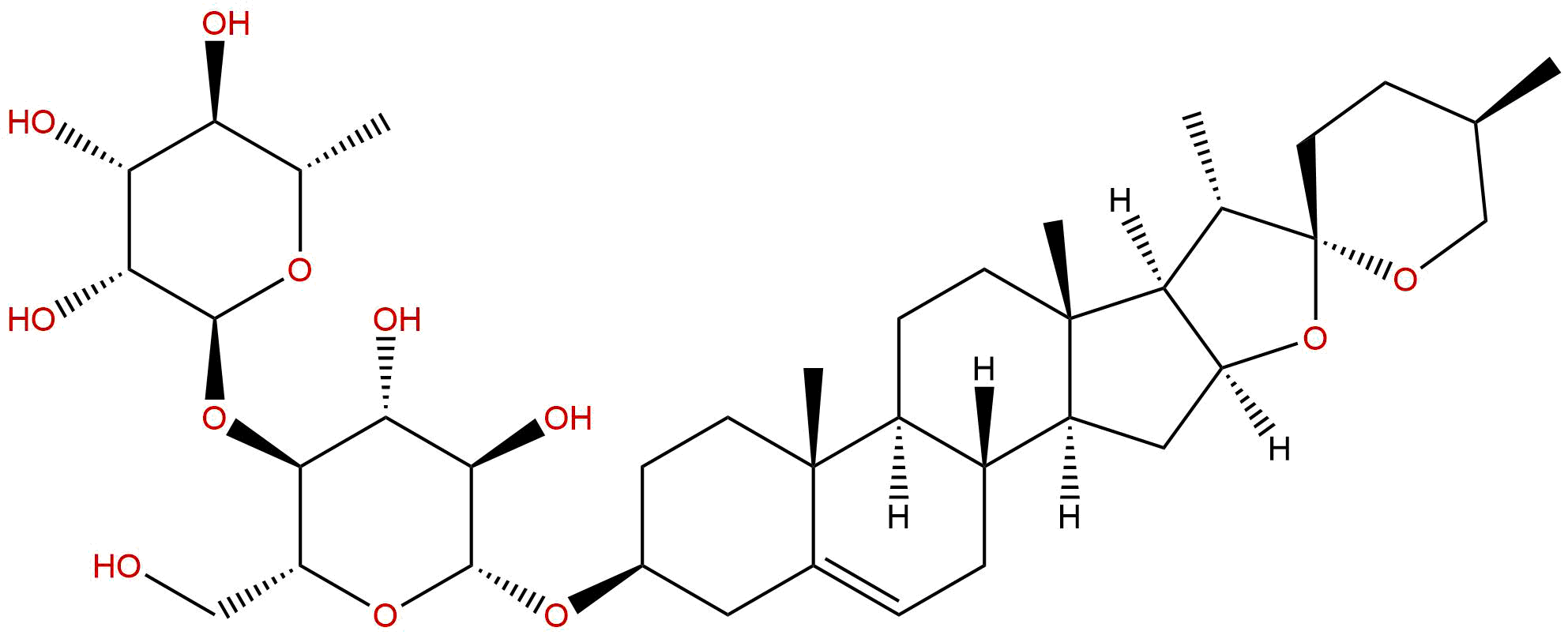


Product name: Progenin II
Synonym name: Prosapogenin B;Prosapogenin B of dioscin
Catalogue No.: BP5459
Cas No.: 19057-68-2
Formula: C39H62O12
Mol Weight: 722.913
Botanical Source:
Type of Compound: Steroids
Purity: 95%~99%
Analysis Method: HPLC-DAD or/and HPLC-ELSD
Identification Method: Mass, NMR
Packing: Brown vial or HDPE plastic bottle
Storage: Store in a well closed container, protected from air and light. Put into refrigerate or freeze for long term storage.
Whenever possible, you should prepare and use solutions on the same day. However, if you need to make up stock solutions in advance, we recommend that you store the solution as aliquots in tightly sealed vials at -20℃. Generally, these will be useable for up to two weeks.
The product could be supplied from milligrams to grams
Inquire for bulk scale.
For Reference Standard and R&D, Not for Human Use Directly.
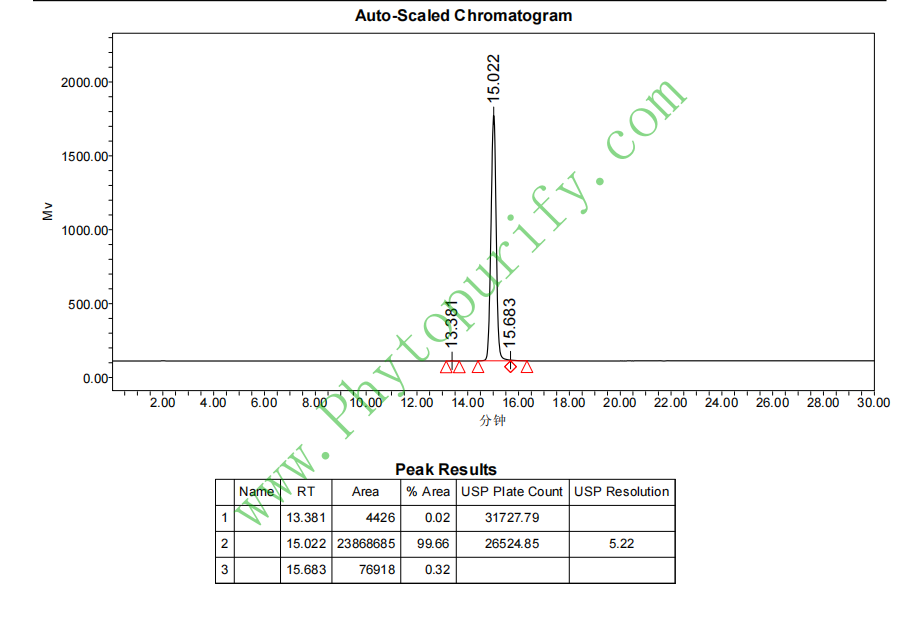
HPLC of Progenin II
Storage conditions:Short-term storage at 2~8℃, long-term storage at -20 ~ -80℃
221.8900
No
Unknown
Unknown
Unknown
Unknown
Unknown
Unknown
Unknown
Natural products, as an important source of drug discovery, play an irreplaceable role in the long history of human fight against diseases. Steroid saponins have always been a hot topic in natural product chemistry and pharmacology research due to their structural diversity and wide range of biological activities. Dioscin B (Progenin II), as a typical natural product of steroidal saponins, has received widespread attention in academia in recent years due to its significant anti-tumor, anti-inflammatory, and immunomodulatory activities.
Dioscin B, also known as (25R) - spirostane-5-en-3 β - ol-3-O - α - L-rhamnopyranosyl - (1 → 2) - [α - L-rhamnopyranosyl - (1 → 4)] - β - D-glucopyranoside, is a furostane type saponin isolated from plants in the Dioscoreaceae family, such as Dioscorea nipponica and Dioscorea nipponica. This compound belongs to the secondary glycoside of dioscin, and its parent nucleus is Diosgenin. The sugar chain is composed of two xylose sugars and one glucose. Compared with Dioscin, Dioscin B lacks one rhamnose unit in its sugar chain structure, which endows it with unique pharmacological and bioavailability characteristics.
In recent years, with the advancement of separation and purification technology and the improvement of biological activity screening methods, the pharmacological effects of dioscin B in various disease models have gradually been revealed. Studies have shown that this compound can play the role of anti-tumor, anti-inflammatory, antioxidant and immune regulation by regulating multiple signal pathways, especially in the treatment of liver cancer, lung cancer, breast cancer and other malignant tumors. However, its complex sugar chain structure leads to poor water solubility and low bioavailability, which also poses challenges to its medicinal properties. This article will provide a systematic review of the research progress of Dioscin B from the aspects of chemical structure, plant origin, pharmacological activity, mechanism of action, and medicinal properties, in order to provide reference for the in-depth research and development of this compound.
Dioscin B belongs to the spirostane type steroidal saponins, and its chemical structure consists of two parts: aglycones and sugar chains. The glycoside component is Diosgenin, which has a typical steroid skeleton and contains a spirostane ring system (A/B/C/D fused). The C-3 hydroxyl group is connected to the sugar chain, and the C-25 position is in the R configuration. The sugar chain is composed of three monosaccharide units: a β - D-glucopyranose (Glc) as the core sugar, connected to an alpha-L-pyranose rhamnose (Rha) through the C-2 position, and another alpha-L-pyranose rhamnose through the C-4 position. Therefore, its complete structure can be represented as: Diosgenin-3-O - α - L-Rha - (1 → 2) - [α - L-Rha - (1 → 4)] - β - D-Glc.
The molecular formula of this compound is C ③₉ H ₆₂ O ₁₆, with a molecular weight of 690.90 Da. Compared with the parent compound Dioscin (which contains two rhamnose and one glucose, with a molecular weight of 869.05 Da), Dioscin B lacks one rhamnose unit and a molecular weight reduction of about 178 Da. This structural difference leads to changes in its polarity and water solubility, which in turn affects its biological activity spectrum and pharmacokinetic characteristics.
According to computational chemical analysis, the topological polar surface area (TPSA) of Dioscin B is 221.89 Å ², which is much higher than the 140 Å ² threshold typically required for oral medication, indicating poor membrane permeability. The number of hydrogen bond acceptors is 12 (mainly from hydroxyl and ether oxygen atoms on the sugar chain), and the number of hydrogen bond donors is 8. These parameters indicate that the compound has strong hydrophilicity, but at the same time, it also means that it is difficult to pass through the cell membrane through passive diffusion.
In terms of solubility, Dioscin B is easily soluble in polar organic solvents such as methanol, ethanol, and dimethyl sulfoxide, slightly soluble in water, and difficult to dissolve in non-polar solvents such as petroleum ether and n-hexane. Its solubility in water is usually less than 1 mg/mL, which limits its absorption and distribution in organisms. In terms of stability, the compound is relatively stable under acidic conditions, but it is prone to glycosidic bond hydrolysis in strongly alkaline environments, leading to the separation of glycosides and sugar chains. In addition, light exposure and high temperature may also cause structural degradation, so attention should be paid to avoiding light and storing at low temperatures during storage and experimentation.
The UV absorption spectrum of Dioscin B shows terminal absorption at 200-210 nm, which is a typical characteristic of steroidal saponins. In the infrared spectrum, the broad peak at 3400-3500 cm ⁻¹ corresponds to the stretching vibration of hydroxyl groups, the strong peak at 1050-1150 cm ⁻¹ corresponds to the stretching vibration of C-O-C, and the characteristic peak near 980 cm ⁻¹ is related to the spirostane ring system. In the nuclear magnetic resonance hydrogen spectrum, the signal of the end proton of the sugar chain appears in the range of δ 4.5-6.5 ppm, where the end proton of glucose (H-1) usually appears in the range of δ 4.8-5.0 ppm (J=7-8 Hz, β configuration), while the end protons of two rhamnoses appear in the range of δ 5.0-6.0 ppm (J=1-2 Hz, α configuration). In the carbon spectrum, the C-3 signal appears at δ 78-80 ppm, while the characteristic signals of C-22 and C-25 in the spirostane ring system appear at δ 109-110 ppm and δ 30-32 ppm, respectively.
Dioscin B is mainly found in plants of the Dioscoreaceae family and the Dioscorea genus. There are over 600 species of this genus of plants worldwide, widely distributed in tropical and subtropical regions. In China, important medicinal yam plants include Dioscorea nipponica Makino, Dioscorea zingiberensis C.H. Wright, Dioscorea bulbifera L., and Dioscorea opposita Thunb.
Among them, Dioscorea nipponica (also known as Dioscorea nipponica) is one of the main sources of dioscin B. This plant is widely distributed in Northeast, North, and Northwest China, and its rhizomes are rich in various steroidal saponins, including dioscin, dioscin A, B, C, etc. Research has shown that the content of dioscin B in the rhizomes of Dioscorea nipponica is approximately 0.1% -0.5% (dry weight), which varies depending on the place of origin, harvesting season, and growth period. Dioscorea zingiberensis (also known as Huangjiang) is another important source plant, with a high content of diosgenin in its rhizomes, but a relatively low content of dioscin B. In addition, the presence of dioscin B was also detected in the tubers of Huangdu, but the content is usually lower than that of Dioscorea nipponica.
It is worth noting that Dioscin B does not exist in large quantities in the plant body in free form, but rather as a metabolic intermediate or degradation product of Dioscin. In plant tissues, dioscin can gradually hydrolyze and remove the rhamnose units at the end of the sugar chain under the action of specific glycosidases, producing dioscin B and dioscin A (containing only one rhamnose and one glucose). Therefore, the content of dioscin B in plants is influenced by endogenous glycosidase activity and may undergo dynamic changes during plant growth, development, and stress response.
The traditional methods for extracting dioscin B mainly include solvent extraction and reflux extraction. The commonly used extraction solvents are methanol, ethanol, or methanol water mixed solvents. Due to its good solubility in alcohol solvents, the compound is usually extracted by heating reflux with 70% -80% ethanol or methanol. The extraction conditions are generally as follows: material to liquid ratio of 1:10-1:20 (w/v), extraction temperature of 60-80 ℃, extraction time of 2-4 hours, and repeated extraction 2-3 times. After the extraction solution is concentrated under reduced pressure, crude extract is obtained.
In addition to dioscin B, the crude extract also contains a large amount of impurities such as other saponins, polysaccharides, flavonoids, etc. Therefore, further separation and purification are required. Common purification methods include macroporous adsorption resin column chromatography, silica gel column chromatography, and high-performance liquid chromatography (HPLC).
Macroporous adsorption resins (such as D101, AB-8, etc.) are commonly used materials for separating saponin compounds. Load the crude extract onto a resin column, first wash with water to remove water-soluble impurities (such as polysaccharides, proteins, etc.), and then use gradient elution with different concentrations of ethanol (30%, 50%, 70%, 95%). Dioscin B is usually enriched in the elution site of 70% -80% ethanol. After concentration, this part can be further purified by silica gel column chromatography using chloroform methanol water (65:35:10, lower layer) as the mobile phase for isocratic elution. The target component is collected and purified by recrystallization.
In recent years, some new extraction techniques have been applied to the extraction of dioscin B from Dioscorea opposita to improve extraction efficiency and purity. Ultrasonic assisted extraction (UAE) utilizes the cavitation effect of ultrasound to destroy plant cell walls, promote solvent penetration, and facilitate target dissolution. Research has shown that under the conditions of ultrasound power of 300 W, temperature of 50 ℃, and time of 30 minutes, the extraction rate of Dioscin B can be increased by 30% -50% compared to traditional reflux method. Microwave assisted extraction (MAE) utilizes the heating effect of microwaves to rapidly increase the internal temperature of plants, accelerating the release of target compounds. This method has the advantages of short extraction time (usually 5-15 minutes) and low solvent usage.
Supercritical fluid extraction (SFE) is a green extraction technique that typically uses CO ₂ as the extraction solvent. Due to the high polarity of dioscin B, it is difficult to effectively extract it using only CO ₂, and methanol or ethanol needs to be added as entrainers. Although SFE has a high extraction efficiency, the equipment cost is expensive and it has not yet been widely applied in industrial production.
Given the low content of Dioscin B in plants and its role as a degradation product of Dioscin, researchers have explored the use of biotransformation to prepare Dioscin B from Dioscin. Some microorganisms (such as Aspergillus and Penicillium) and endophytic bacteria in plants can produce specific glycosidases that can selectively hydrolyze the rhamnose units at the end of the sugar chain of dioscin, producing dioscin B. For example, the endophytic fungus Fusarium oxysporum Dzf17 isolated from the rhizome of Dioscorea nipponica contains highly active rhamnosidase in its fermentation broth, which can efficiently convert dioscin into dioscin B with a conversion rate of over 85%. This method provides a new approach for the large-scale preparation of dioscin B.
The anti-tumor activity of Dioscin B is one of its most concerned pharmacological effects. Numerous in vitro and in vivo studies have shown that this compound has significant inhibitory effects on proliferation and induces apoptosis in various malignant tumor cells.
In liver cancer research, dioscin B exhibited dose - and time-dependent cytotoxic effects on human liver cancer cell lines HepG2, Huh7, and SMMC-7721. The MTT assay results showed that the half maximal inhibitory concentration (IC ₅₀) was approximately 5-15 μ M after 24 hours of treatment, and decreased to 2-8 μ M after 48 hours of treatment. Morphological observation revealed that liver cancer cells treated with dioscin B exhibited typical apoptotic features, including cell shrinkage, nuclear chromatin condensation, and formation of apoptotic bodies. Flow cytometry analysis further confirmed that the compound can induce cell cycle arrest in the G2/M phase and promote mitochondrial pathway apoptosis by activating caspase-3 and caspase-9.
For lung cancer, dioscin B has a significant inhibitory effect on non-small cell lung cancer cell lines A549 and H1299. Research has found that this compound can inhibit the migration and invasion ability of lung cancer cells, which may be related to its downregulation of the expression of matrix metalloproteinases (MMP-2 and MMP-9). In addition, dioscin B can enhance the killing effect of chemotherapy drugs such as cisplatin on lung cancer cells, demonstrating a synergistic anti-tumor effect. In the A549 xenograft tumor mouse model, intraperitoneal injection of dioscin B (10 mg/kg/day, for 14 consecutive days) reduced tumor volume by approximately 50%, and no significant weight loss or organ toxicity was observed.
In the field of breast cancer, diosgenin B showed activity on MCF-7 (estrogen receptor positive) and MDA-MB-231 (triple negative) breast cancer cells. It is worth noting that this compound has a lower IC ≮ value (about 3 μ M) on MDA-MB-231 cells than on MCF-7 cells (about 8 μ M), suggesting that it may have a better therapeutic effect on more invasive triple negative breast cancer. Mechanism research shows that diosgenin B can inhibit Wnt/β - catenin signaling pathway, down regulate the expression of cyclin D1, c-Myc and other downstream target genes, thereby inhibiting the proliferation and dryness maintenance of breast cancer cells.
In addition to the aforementioned tumors, dioscin B also exhibits varying degrees of inhibitory effects on cell lines such as colon cancer (HT-29, HCT-116), gastric cancer (SGC-7901, BGC-823), prostate cancer (PC-3, DU-145), and cervical cancer (HeLa). Overall, the compound has a wide range of activities against solid tumor cells, but there are differences in sensitivity among different cell lines, which may be related to the expression levels of glycoside transporters on the cell surface and the constitutive activation status of intracellular signaling pathways.
Dioscin B has shown significant anti-inflammatory effects in various inflammatory models. In the RAW264.7 macrophage model stimulated by lipopolysaccharide (LPS), this compound can dose dependently inhibit the production of nitric oxide (NO) and prostaglandin E ₂ (PGE ₂), while reducing the secretion of pro-inflammatory cytokines such as tumor necrosis factor - α (TNF - α), interleukin-1 β (IL-1 β), and interleukin-6 (IL-6). Further research has found that dioscin B can inhibit the activation of nuclear factor kappa B (NF - κ B), prevent the translocation of p65 subunit into the nucleus, and thus reduce the transcription of inflammation related genes.
In the in vivo inflammation model, dioscin B showed significant inhibitory effects on the mouse ear xylene induced inflammation model and the rat carrageenan induced paw swelling model. Oral administration (50-100 mg/kg) can significantly reduce inflammatory reactions, and its effect is comparable to the positive control drug indomethacin, but the gastrointestinal irritation is relatively small. In addition, in a mouse colitis model induced by dextran sulfate sodium (DSS), dioscin B can alleviate colonic mucosal damage, reduce myeloperoxidase (MPO) activity and inflammatory cytokine levels, suggesting its potential value in the treatment of inflammatory bowel disease.
Dioscin B has a bidirectional regulatory effect on the immune system. On the one hand, under immunosuppressive conditions, this compound can enhance immune function. For example, in a cyclophosphamide induced immunosuppression mouse model, dioscin B can increase spleen index and thymus index, increase the proportion of CD4 ⁺ and CD8 ⁺ T lymphocytes in peripheral blood, promote spleen lymphocyte proliferation and antibody production. On the other hand, in the state of excessive immune activation, dioscin B exhibits immunosuppressive effects. In autoimmune disease models, such as collagen induced arthritis (CIA) mice, this compound can inhibit Th17 cell differentiation, reduce serum IL-17 and TNF - α levels, alleviate joint inflammation and bone destruction.
This bidirectional regulatory effect may be related to the differential regulation of dioscin B on various immune cells, including T cells, B cells, macrophages, and dendritic cells. Specifically, this compound may affect the balance of different T helper cell subsets (Th1, Th2, Th17, and Treg) by regulating the phosphorylation levels of the signal transducer and activator of transcription (STAT) family, thereby achieving the restoration of immune homeostasis.
Dioscin B has a certain antioxidant capacity. In chemical antioxidant experiments, the compound was able to scavenge 1,1-diphenyl-2-trinitrophenylhydrazine (DPPH) free radicals and 2,2 '- diazo-bis-3-ethylbenzothiazoline-6-sulfonic acid (ABTS) cationic free radicals, with EC ₅₀ values of 25 μ M and 18 μ M, respectively. In cell models, dioscin B can reduce oxidative stress levels induced by hydrogen peroxide (H ₂ O ₂), decrease the generation of reactive oxygen species (ROS), and increase the activity of superoxide dismutase (SOD) and glutathione peroxidase (GSH Px). However, compared to classic antioxidants such as vitamin C or quercetin, the antioxidant activity of Dioscorea saponins B is relatively weak, which may not be its main pharmacological mechanism of action.
In addition to the main activities mentioned above, Dioscin B also exhibits some other pharmacological effects. For example, in the cardiovascular system, this compound can inhibit angiotensin II induced myocardial cell hypertrophy and reduce the expression of genes related to myocardial fibrosis. In terms of metabolic diseases, dioscin B can improve high-fat diet induced insulin resistance, reduce blood glucose and lipid levels, and its mechanism may be related to the activation of the AMP activated protein kinase (AMPK) signaling pathway. In addition, some studies have reported that the compound also has antiviral (such as influenza virus, herpes simplex virus) and antibacterial activity, but related research is still in the preliminary stage.
The pharmacological effects of Dioscin B involve the regulation of multiple signaling pathways, among which the most important are the PI3K/Akt/mTOR pathway, MAPK pathway, and NF - κ B pathway.
The PI3K/Akt/mTOR pathway is a core signaling pathway that regulates cell growth, proliferation, and metabolism, and is overactivated in various tumors. Dioscin B can inhibit the activity of PI3K, reduce the phosphorylation level of Akt, and thus inhibit the activation of downstream mTOR. This effect leads to reduced protein synthesis, cell cycle arrest, and autophagy induction. In liver cancer cells, treatment with dioscin B can reduce the phosphorylation level of Akt Ser473 site by 60% -80%, while upregulating the proportion of autophagy marker protein LC3-II/I and Beclin-1 expression. It is worth noting that the use of PI3K agonists or Akt constitutive activation mutants can partially reverse the anti-tumor effect of dioscin B, confirming that this pathway is one of its key targets.
The mitogen activated protein kinase (MAPK) pathway includes three main branches: ERK, JNK, and p38, which are involved in regulating cell proliferation, differentiation, and apoptosis. There are differences in the regulatory effects of dioscin B on different MAPK branches. In most tumor cells, this compound can inhibit the phosphorylation of ERK while activating the phosphorylation of JNK and p38. This differential regulation leads to a decrease in cell proliferation signals and an increase in apoptosis signals. For example, in A549 lung cancer cells, after treatment with dioscin B for 30 minutes, p-ERK levels decreased by about 50%, while p-JNK and p-p38 levels increased by 2-3 times, respectively. The use of JNK inhibitor SP600125 or p38 inhibitor SB203580 can partially block the apoptosis induced by dioscin B, indicating that the activation of JNK and p38 is an important mechanism for their pro apoptotic effects.
NF - κ B is a core transcription factor in inflammatory response and also participates in the occurrence and development of tumors. Dioscin B can inhibit the phosphorylation and degradation of I κ B α, prevent the translocation of NF - κ B p65 subunit into the nucleus, and thus reduce the transcription of downstream pro-inflammatory and pro survival genes. In LPS stimulated macrophages, dioscin B can completely block the DNA binding activity of NF - κ B and reduce the mRNA levels of TNF - α, IL-6, and COX-2. In addition, the compound can also inhibit the binding of NF - κ B to DNA, which may be related to its direct binding to the DNA binding domain of p65 protein, but the specific molecular mechanism still needs further investigation.
The mechanism by which dioscin B induces cell death involves two pathways: apoptosis and autophagy, and there is a complex interaction between the two.
In terms of apoptosis, dioscin B mainly exerts its effects through the mitochondrial pathway (endogenous pathway). This compound can induce a decrease in mitochondrial membrane potential (Δ PSI m), promote the release of cytochrome c from mitochondria to cytoplasm, activate caspase-9 and caspase-3, and ultimately lead to DNA fragmentation and cell apoptosis. Meanwhile, Dioscin B can upregulate the expression of pro apoptotic protein Bax, downregulate the expression of anti apoptotic proteins Bcl-2 and Mcl-1, increase the Bax/Bcl-2 ratio, and promote increased mitochondrial outer membrane permeability. In addition, the death receptor pathway (exogenous pathway) may also be involved, as dioscin B can upregulate the expression of Fas and FasL and activate caspase-8.
In terms of autophagy, dioscin B can induce protective autophagy or lethal autophagy, depending on cell type and processing conditions. In HepG2 liver cancer cells, the autophagy induced by dioscin B mainly exhibits a protective effect, and inhibiting autophagy (using 3-methyladenine or knocking down Atg5) can enhance its cytotoxicity. In MDA-MB-231 breast cancer cells, the autophagy induced by diosgenin B is lethal, and inhibition of autophagy can reduce its anti-tumor effect. This difference may be related to the baseline activity of the PI3K/Akt/mTOR pathway in cells and the expression levels of autophagy related proteins.
In recent years, researchers have explored the direct molecular targets of dioscin B using various methods. The drug affinity response target stability (DARTS) technique found that dioscin B can directly bind to heat shock protein 90 (Hsp90), inhibit its ATPase activity, and lead to the degradation of Hsp90 client proteins such as Akt, HER2, Cdk4, etc. Molecular docking simulations showed that the sugar chain portion of Dioscin B interacts with the N-terminal ATP binding pocket of Hsp90, while the glycoside portion is embedded in the hydrophobic region. In addition, surface plasmon resonance (SPR) experiments confirmed that the binding constant (KD) between dioscin B and Hsp90 is approximately 2.5 μ M, indicating a moderate affinity between the two.
In addition to Hsp90, dioscin B may also interact with other proteins. Research has shown that this compound can inhibit the activity of topoisomerase I, interfere with DNA replication and transcription processes. In addition, dioscin B can also bind to cholesterol on the cell membrane, altering membrane fluidity and lipid raft structure, thereby affecting signal transduction of membrane receptors. These multi-target action characteristics are in line with the typical characteristics of natural product "multi-target drugs", but also increase the complexity of their mechanism of action research.
According to calculations, predictions, and experimental data, the pharmacological properties of Dioscin B face certain challenges. Its molecular weight is 690.90 Da, exceeding the requirement of molecular weight<500 Da in the Lipinski Five Rules. The TPSA is 221.89 Å ², much higher than the recommended upper limit of 140 Å ² for oral medications. The number of hydrogen bond acceptors is 12, which also exceeds the threshold of 10. These parameters indicate that the compound does not meet the pharmacological standards of traditional oral drugs, and its membrane permeability and oral bioavailability may be poor.
In terms of safety, there is currently limited toxicity data on dioscin B. The Ames test results are unknown, making it impossible to determine whether it has mutagenicity. There is also a lack of data on liver toxicity and cardiac toxicity. The inhibitory activity of hERG is unknown, indicating that its potential risk for cardiac repolarization is not yet clear. However, in animal experiments, no significant acute toxicity reactions were observed with dioscin B at therapeutic doses (10-50 mg/kg), but long-term toxicity studies have not yet been conducted. It is worth noting that the blood-brain barrier permeability prediction of this compound is "No", indicating that it is not easy to enter the central nervous system, which to some extent reduces the risk of neurotoxicity, but also limits its application in the treatment of brain diseases.
Pharmacokinetic studies are an important step in evaluating the pharmacological properties of compounds. At present, the pharmacokinetic data of Dioscin B mainly come from animal experiments.
Due to its high molecular weight and strong polarity, the oral absorption of dioscin B is poor. After oral administration to rats (50 mg/kg), the drug concentration in plasma was extremely low, with a peak concentration (Cmax) of only 0.5-1.0 μ g/mL and a peak time (Tmax) of about 2-4 hours. The estimated absolute bioavailability is less than 5%, far below the ideal drug efficacy requirements. After intravenous injection (5 mg/kg), the drug rapidly distributes to various tissues, with a plasma half-life (t ₁/₂) of approximately 1.5-2 hours. Organizational distribution studies have shown that dioscin B is mainly distributed in the liver, kidneys, and lungs, and is almost undetectable in brain tissue, consistent with the prediction results of the blood-brain barrier.
The metabolism of Dioscin B in vivo is mainly through two pathways: glycosidic bond hydrolysis and glycoside modification. In the intestine and liver, endogenous glycosidases such as lactase root bark hydrolase LPH and cytoplasmic β - glucosidase CBG can gradually hydrolyze their sugar chains, producing dioscin A (removing one xylose) and diosgenin (completely deglycosylated). Diosgenin is further hydroxylated and oxidized by cytochrome P450 enzymes (mainly CYP3A4) to produce various metabolites. In addition, some dioscin B can also bind with glucuronic acid or sulfuric acid to form more water-soluble bound metabolites, which are excreted through urine and bile.
The excretion of dioscin B and its metabolites is mainly through bile and fecal pathways. After intravenous injection in rats, about 60% -70% of the drug is excreted through feces within 48 hours, and 20% -30% is excreted through urine. Bile excretion is its main clearance pathway, indicating the possibility of enterohepatic circulation. The proportion of prototype drugs detected in feces is relatively low (<10%), and most of them are deglycosylated metabolites, indicating that intestinal metabolism plays an important role in the clearance of dioscin B.
Researchers have proposed various improvement strategies to address the problem of poor medicinal properties of Dioscorea nipponica saponins B.
By chemically modifying the sugar chain, its pharmacokinetic properties can be improved. For example, acetylation or methylation protection of hydroxyl groups on sugar chains can reduce polarity and increase membrane permeability. Prodrug design is another effective strategy that couples dioscin B with amino acids, phosphoric acid, or polyethylene glycol (PEG) groups to improve its water solubility or targeting. For example, phosphate prodrugs can be hydrolyzed by alkaline phosphatase in the body to release the prototype drug, thereby improving oral bioavailability.
Nanoformulation technology provides a new approach to improve the bioavailability of dioscin B. Liposomes, polymer nanoparticles, solid lipid nanoparticles, and micelles are carrier systems that can encapsulate dioscin B, improve its water dispersibility and stability, and prolong its in vivo circulation time. For example, the oral bioavailability of dioscin B encapsulated in polylactic acid hydroxyacetic acid copolymer (PLGA) nanoparticles can be increased by 3-5 times, and the anti-tumor effect is significantly enhanced. In addition, phospholipid complexes and self microemulsifying drug delivery systems (SMEDS) have also been used to improve the oral absorption of the compound.
The combination of dioscin B and other drugs can produce a synergistic effect, reduce the effective dose, and thus alleviate toxicity. For example, when used in combination with chemotherapy drugs cisplatin, doxorubicin, or paclitaxel, dioscin B can enhance the sensitivity of tumor cells to chemotherapy drugs and reduce the development of drug resistance. The combination use with natural products such as curcumin and resveratrol has also shown synergistic anti-tumor and anti-inflammatory effects. These combination therapy strategies provide new possibilities for the clinical application of dioscin B.
Based on existing pharmacological research, dioscin B has potential clinical application prospects in the following disease areas:
The inhibitory effect of dioscin B on various solid tumors makes it a potential anti-tumor candidate drug. Especially for liver cancer, lung cancer, triple negative breast cancer and other refractory tumors, the compound shows good therapeutic potential. Its multi-target mechanism of action may help overcome the resistance problem of traditional chemotherapy drugs. In addition, the combination of dioscin B and immune checkpoint inhibitors (such as PD-1/PD-L1 antibodies) may produce synergistic anti-tumor immune effects, which is worth further exploration.
The anti-inflammatory activity of Dioscin B suggests its therapeutic potential in chronic inflammatory diseases such as inflammatory bowel disease, rheumatoid arthritis, and chronic obstructive pulmonary disease. Compared with traditional nonsteroidal anti-inflammatory drugs (NSAIDs), dioscin B has less gastrointestinal irritation and may have better safety. However, its low oral bioavailability limits its application in the long-term treatment of chronic diseases.
Diosgenin B can improve insulin resistance and regulate lipid metabolism, making it potentially valuable in the treatment of type 2 diabetes and non-alcoholic fatty liver disease (NAFLD). Preliminary studies have shown that this compound can improve liver lipid metabolism and alleviate steatosis by activating the AMPK pathway. However, relevant research is still in its early stages and requires more preclinical and clinical data support.
Although dioscin B has various pharmacological activities, its transformation from laboratory research to clinical application still faces many challenges.
Firstly, poor pharmacokinetic properties are the main obstacle. The low oral bioavailability, short half-life, and limited tissue distribution seriously restrict the efficacy of its in vivo drugs. Even with delivery systems such as nanomedicine, it is difficult to completely solve these problems. Secondly, there is a lack of security data. At present, there is no systematic toxicology research, including acute toxicity, chronic toxicity, reproductive toxicity, and genetic toxicity. Especially the potential toxicity to the liver and heart requires special attention. Thirdly, the mechanism of action is not yet fully understood. Although multiple possible molecular targets have been identified, there is a lack of clear target validation and structure-activity relationship studies, which poses difficulties for structural optimization and drug design. Fourthly, large-scale preparation is difficult. The plant extraction method has low yield and high cost, while the chemical synthesis method is difficult to achieve due to the complex sugar chain structure. Although biotransformation has certain advantages, the conversion efficiency and product purity still need to be improved.
In response to the above challenges, future research should focus on the following directions:
Research on Structural Optimization and Structure Performance Relationship Through systematic structural modification, clarify the effects of sugar chain length, sugar group type, and connection mode on activity and pharmacokinetics, and search for derivatives with stronger activity and better drug properties.
Target identification and mechanism elucidation By comprehensively utilizing chemical proteomics, biophysical techniques, and gene editing techniques, the direct target of Dioscorea opposita B was identified, and its multi-target regulatory network was elucidated, providing a theoretical basis for precision therapy.
Development of a new delivery system Exploring targeted nano delivery systems, such as ligand modified liposomes or polymer nanoparticles, to achieve tumor targeted delivery of dioscin B, improve therapeutic efficacy, and reduce systemic toxicity.
Systematic Toxicological Evaluation Conduct comprehensive toxicology studies in accordance with Good Laboratory Practice (GLP) requirements, including genetic toxicity, reproductive toxicity, carcinogenicity, and cardiotoxicity, to provide safety data support for clinical trials.
Optimization of combination therapy plan Based on tumor molecular typing and immune microenvironment characteristics, screen the optimal combination therapy regimen and explore the synergistic effects of dioscin B with chemotherapy, targeted therapy, and immunotherapy.
Dioscin B, as a typical natural product of steroidal saponins, has shown significant research value and application potential in the fields of anti-tumor, anti-inflammatory, and immune regulation due to its diverse pharmacological activities and unique mechanism of action. However, the challenges posed by its complex chemical structure, particularly its low oral bioavailability and unclear toxicological characteristics, severely limit its clinical translation process.
From natural products to innovative drugs, it is a challenging path. The research process of Dioscin B is a microcosm of this process. It not only showcases the ingenuity and diversity of molecular structures in nature, but also reveals the common challenges in the development of natural product drugs. In the future, with the continuous development of structural modification technology, nano delivery systems, and precision medicine concepts, dioscin B and its derivatives are expected to overcome current obstacles and ultimately achieve a leap from laboratory to clinical practice. This will not only provide new treatment options for patients with malignant tumors and inflammatory diseases, but also provide valuable experience and reference for the development of other natural saponin compounds.
In today's increasingly in-depth pharmacological research on natural products, we have reason to believe that dioscin B, an active molecule in ancient plants, will be revitalized under the promotion of modern pharmaceutical science and make due contributions to human health.
