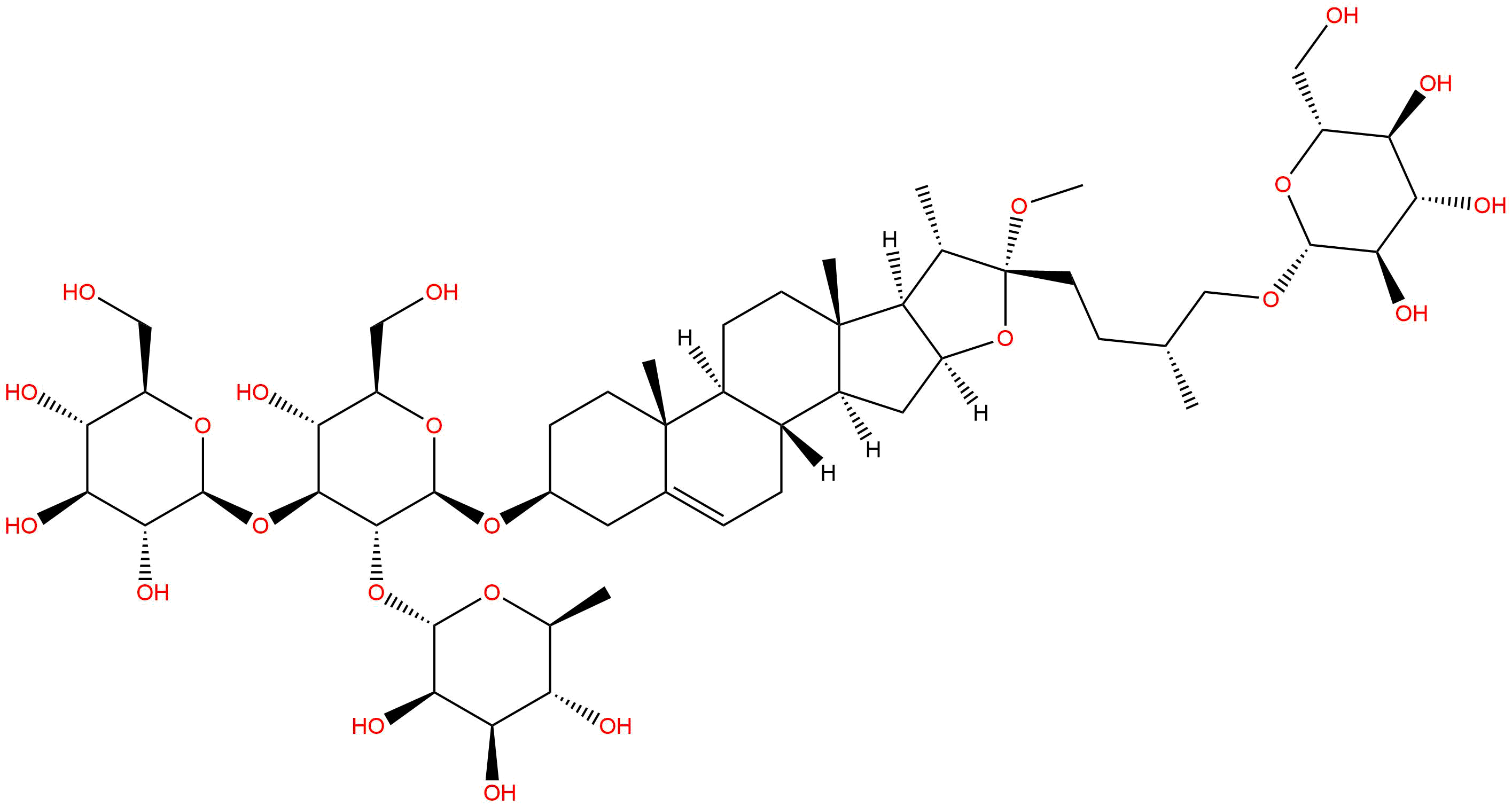


Product name: Methylprotogracillin
Synonym name:
Catalogue No.: BP3258
Cas No.: 54522-53-1
Formula: C52H86O23
Mol Weight: 1079.24
Botanical Source:
Physical Description:
Type of Compound: Flavonoids
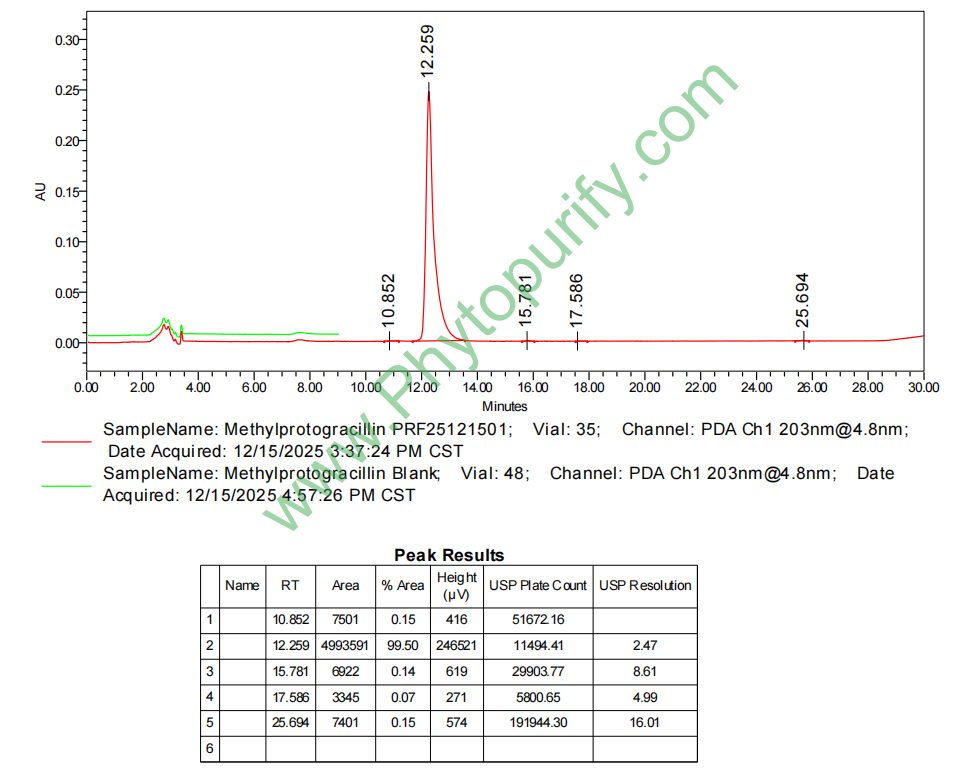
Purity: 95%~99%
Analysis Method: HPLC-DAD or/and HPLC-ELSD
Identification Method: Mass, NMR
Packing: Brown vial or HDPE plastic bottle
The product could be supplied from milligrams to grams. Inquire for bulk scale.
We provide solution to improve the water-solubility of compounds, thereby facilitating the variety of activity tests and clinic uses.
For Reference Standard and R&D, Not for Human Use Directly.
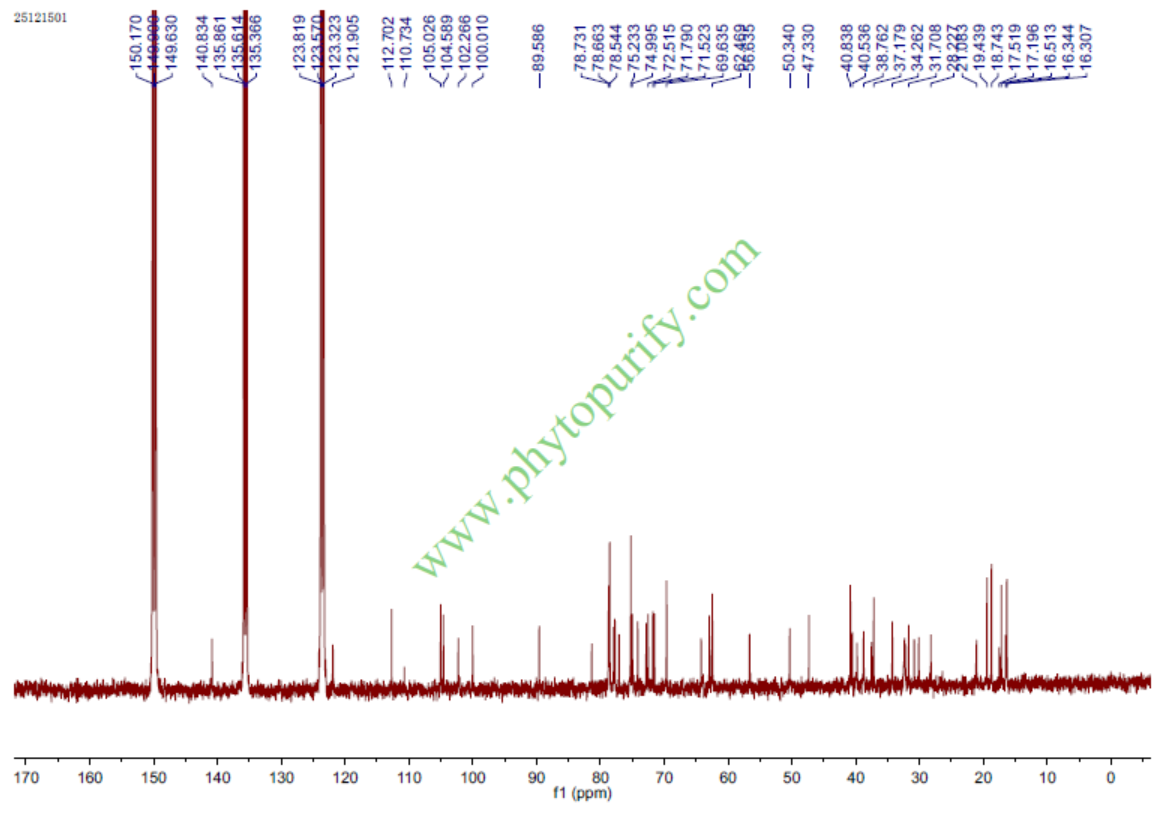
NMR of Methylprotogracillin
HPLC of Methylprotogracillin
Storage conditions:Short-term storage at 2~8℃, long-term storage at -20 ~ -80℃
355.2900
1.3247
1.3242
.3052
.4071
.4386
Low
58.6886
6.8580
No
No
No
No
No
No
0.3
Yes
No
No
No
Osteoporosis is a systemic bone disease characterized by reduced bone mass, destruction of bone microstructure, and increased bone fragility. It is the main factor leading to an increased risk of fractures in middle-aged and elderly people, especially postmenopausal women. With the acceleration of global population aging, osteoporosis has become a serious public health challenge. The current mainstream therapeutic drugs, such as bisphosphonates, selective estrogen receptor modulators, RANKL inhibitors, and parathyroid hormone analogues, can effectively inhibit bone resorption or promote bone formation, but long-term use often accompanies potential side effects such as mandibular necrosis, atypical femoral fractures, and increased cardiovascular risk. Therefore, searching for efficient and low toxicity new anti osteoporosis lead compounds from natural products has always been an important direction in drug development.
As an important component of traditional Chinese medicine, Dioscoreaceae plants are rich in steroidal saponins, which have been proven to have a wide range of biological activities, including anti-inflammatory, anti-tumor, immune regulation, and affecting bone metabolism. Methylpyroglobulin (CAS: 54522-53-1) is one of the steroidal saponins with significant anti osteoporosis potential. In recent years, with the deepening of modern isolation and identification techniques and molecular pharmacology research, the unique role of this compound in regulating the dynamic balance between osteoblasts and osteoclasts has gradually been revealed, demonstrating the potential of multi-target and multi pathway intervention in bone metabolism disorders. This article aims to systematically review the chemical properties, plant sources, pharmacological activities, mechanisms of action, and medicinal properties of methyl protodioscin, in order to provide comprehensive scientific references for the in-depth research and development of this natural product.
Methyl protodioscin is a spirostane type steroid saponin. Its molecular formula is C ₅₂ H ₈₆ O ₂, with a molecular weight of 1079.2370 Da. Its basic skeleton is composed of hydrophobic spirostane glycosides (usually diosgenin or its derivatives) connected to hydrophilic oligosaccharide chains through glycosidic bonds. The sugar chain is usually composed of multiple monosaccharides such as glucose and xylose, which is the main reason for its high molecular weight and polarity.
Based on its chemical structure, this compound exhibits typical physicochemical properties of steroidal saponins. The calculated lipid water partition coefficient (LogP) is 1.3247, indicating that the molecule as a whole has a certain degree of amphiphilicity, but hydrophilicity dominates. Its topological polar surface area (TPSA) is as high as 355.2900 Å ², which is mainly attributed to the abundant hydroxyl and glycosidic oxygen atoms in the molecule, further confirming its strong polarity characteristics. The theoretically calculated water solubility value is 0.3052 mg/mL, which belongs to the category of slightly soluble to poorly soluble. This is a key factor that needs to be considered in practical extraction and formulation research. In addition, its larger molecular weight and higher polarity make it difficult to penetrate the blood-brain barrier (predicted as low permeability), which to some extent limits its effects on the central nervous system, but may also reduce the associated risk of neurotoxicity. Preliminary pharmacological risk assessment shows that the hERG channel inhibition risk is negative, indicating a low potential risk of arrhythmia; The Ames test predicted a value of 0.3, indicating a low likelihood of mutagenicity, providing preliminary chemical information support for its safety.
Methyl protodioscin mainly comes from the Dioscoreaceae family and Dioscorea genus(Dioscorea)Various plants, especially those traditionally used to treat rheumatism, rheumatism, and muscle weakness, such as slender yam(Dioscorea gracillima)Chuanlong Dioscorea(Dioscorea nipponica)And Dioscorea opposita with shield leaves(Dioscorea zingiberensis)Wait. The steroidal saponins in these plants often exist in the form of glycosides bound to different sugar chains, and methyl protodioscin is one of the specific glycosylated products.
Its extraction and separation usually follow the conventional process of natural product chemistry. Firstly, the dried plant rhizomes are crushed and subjected to heating reflux or ultrasound assisted extraction using medium polarity solvents such as methanol, ethanol, or aqueous ethanol to fully extract saponin components. After vacuum concentration, the crude extract was preliminarily enriched and decolorized using macroporous adsorption resins (such as D101, AB-8). Strong polar impurities such as polysaccharides and inorganic salts were removed by water washing, and then gradient elution was performed with different concentrations of ethanol to collect the saponin rich fraction.
Further purification relies on modern chromatographic techniques. Separation is often performed using silica gel column chromatography, reverse phase silica gel column chromatography (such as ODS-C18), and high-performance liquid chromatography (HPLC) or preparative liquid chromatography (pre HPLC). Due to the weak UV absorption of saponin components, evaporative light scattering detectors (ELSD) or mass spectrometry detectors are often used for monitoring. The final structural confirmation of methyl protodioscin requires the comprehensive use of various spectroscopic methods, including nuclear magnetic resonance (NMR, including ¹ H-NMR, ¹ ³ C-NMR, 2D-NMR such as HSQC, HMBC), mass spectrometry (MS, especially high-resolution mass spectrometry HR-MS), and chemical degradation (such as acid hydrolysis to identify glycosides and glycosylation).
Numerous in vitro and in vivo pharmacological studies have confirmed that the core biological activity of methyl protodioscin is focused on anti osteoporosis, and its effect is reflected in the bidirectional regulation of bone metabolism: promoting bone formation and inhibiting bone resorption.
1. Promote osteoblast activity and bone formation:
In cell models, methyl protodioscin can significantly promote the proliferation, differentiation, and mineralization of pre osteoblasts (such as MC3T3-E1, hFOB1.19). Research has shown that this compound can upregulate the expression of key markers of osteogenic differentiation, such as type I collagen (COL1A1), osteocalcin (BGLAP), alkaline phosphatase (ALP), etc. In the postmenopausal osteoporosis rat model induced by ovariectomy (OVX) or dexamethasone induced osteoporosis mouse model, long-term administration of methylprednisolone can effectively increase bone density (BMD), improve the microstructure of bone trabeculae (increase the number and thickness of bone trabeculae, reduce separation), and enhance the biomechanical properties of bones (such as maximum load and elastic modulus).
2. Inhibit osteoclastogenesis and bone resorption:
In osteoclast research, methyl protodioscin can dose dependently inhibit the differentiation of osteoclast precursor cells (such as RAW264.7 cells) induced by nuclear factor kappa B receptor activator ligand (RANKL) into mature osteoclasts. It can reduce the formation of tartrate resistant acid phosphatase (TRAP) positive multinucleated giant cells and inhibit the expression of osteoclast specific genes such as protease K and CTSK. In the analysis of bone resorption cavities in vitro, this compound can significantly reduce the bone resorption activity of osteoclasts. Its anti bone resorption effect in vivo has also been validated in the OVX rat model, manifested by reducing the levels of serum bone resorption markers such as TRAP5b and CTX-I.
3. Other related activities:
In addition to directly acting on bone cells, methyl protodioscin may also indirectly protect bones through anti-inflammatory and antioxidant pathways. Chronic inflammation is one of the important driving factors of osteoporosis. This compound has been reported to inhibit the excessive production of pro-inflammatory mediators such as nitric oxide (NO), prostaglandin E2 (PGE2), tumor necrosis factor - α (TNF - α), interleukin-6 (IL-6), etc. in macrophages stimulated by lipopolysaccharide (LPS) or inflammatory factors, which may help alleviate inflammation related bone loss.
The anti osteoporosis effect of methyl protodioscin is not achieved through a single target, but through a complex molecular network that coordinates multiple signaling pathways. Its known and potential targets include:
Although methyl protodioscin exhibits excellent pharmacological activity, its drug like properties face common challenges from typical steroidal saponins.
Pharmacokinetic (ADME) prediction and challenges:
* Absorption: The high molecular weight (>1000 Da), high polarity (high TPSA), and low water solubility indicate that its oral bioavailability may be low. The sugar chain structure may make it susceptible to hydrolysis by gastrointestinal digestive enzymes and gut microbiota, converting it into aglycones or secondary glycosides, thereby altering its activity and absorption characteristics.
* Distribution: The predicted blood-brain barrier permeability is low, which limits central function, but it is not a disadvantage for bone targeting. Whether it can be effectively enriched in bone tissue depends on its affinity with hydroxyapatite, which needs to be experimentally verified.
* Metabolism: Steroid saponins mainly undergo metabolic processes such as hydrolysis (deglycosylation), oxidation, and binding in the body. The liver cytochrome P450 enzyme system and intestinal microbiota enzymes are its main metabolic sites. The comparison of the activity of prototype drugs and their metabolites is the key to research.
* Excretion: Expected to be primarily excreted through the kidneys and bile.
Preliminary safety assessment:
Based on computational toxicology, its hERG inhibition and Ames mutagenicity risk are low, which is a positive signal. However, steroidal saponins may have hemolytic potential (due to their surface activity) and gastrointestinal irritation at high doses, which requires strict evaluation through systematic in vitro hemolysis tests and acute and long-term toxicity animal experiments.
Prospects for formulation strategy:
To enhance its pharmacological properties, advanced drug delivery technologies may be required. For example, preparing Phospholipid complexes, nanosuspensions, solid dispersions, or liposomes Wait to improve its solubility and oral absorption. Development can also be considered Transdermal drug delivery system or Injection lipid microspheres To bypass the first pass effect and improve bioavailability.
Methyl protodioscin, as a natural candidate molecule for multi-target action against osteoporosis, has broad clinical application prospects, but the road ahead is long.
Potential advantages:
1. Multi target synergistic effect: Unlike most Western medicines with a single mechanism of action, it intervenes in both bone formation and bone resorption processes, which may be more effective in rebuilding bone homeostasis.
2. Plant sources and traditional application foundations: Originating from traditional medicinal plants, it has a certain history of folk application, providing cultural identity and preliminary safety clues for development.
3. Potential cardiovascular and metabolic benefits: Some diosgenins have been reported to have the effects of lowering blood lipid and anti atherosclerosis. If methyl proto slender diosgenin has this kind of activity, it is particularly beneficial to osteoporosis patients who often have cardiovascular risks.
Challenges and future research directions:
1. In depth pharmacological and mechanistic research: It is necessary to validate the efficacy in disease models closer to humans, such as primate models, and use techniques such as gene knockout, chromatin immunoprecipitation (ChIP), proteomics, etc. to more accurately elucidate their direct targets and signaling networks.
2. Pharmacokinetic study of the system: A complete in vivo ADME study must be conducted to clarify the drug time curves, tissue distribution (especially bone tissue), metabolic pathways, and excretion modes of its prototype and main metabolites.
3. Comprehensive security evaluation: Complete standardized preclinical toxicology studies, including genetic toxicity, reproductive toxicity, and long-term carcinogenicity testing, with a focus on their potential hemolytic and organ specific toxicity.
4. Structural optimization and derivative development: Using it as a lead compound, a series of derivatives are synthesized through chemical modifications such as glycosylation and aglycone modification, aiming to enhance activity, improve solubility and metabolic stability, and screen for candidate molecules with better drug properties.
5. Innovative formulation research and development: Actively exploring delivery systems that are suitable for its physical and chemical properties is a key technical link in promoting its clinical application.
6. Exploring the potential of combination therapy: Study whether its combination with existing anti osteoporosis drugs such as bisphosphonates and teriparatide has synergistic effects or reduces side effects.
Methyl protodioscin is a natural steroidal saponin with significant anti osteoporosis potential discovered from traditional medicinal plants. It upregulates RUNX2, SP7, OPG, downregulates key targets such as SOST, MMP9, CTSK, and synergistically regulates core signaling pathways such as Wnt/β - catenin, BMP/Smad, and RANKL/RANK, exerting a dual effect of promoting bone formation and inhibiting bone resorption, reflecting the advantages of natural products with multi-component and multi-target effects. However, its large molecular weight, poor solubility, and potentially complex metabolic characteristics constitute the main bottleneck for its conversion into drugs. Future research needs to focus on solving the problem of drug formation based on a deeper understanding of the mechanism. Through systematic pharmacokinetic and toxicological evaluations, as well as innovative formulation and structural modification strategies, this promising natural molecule can be promoted from the laboratory to clinical practice, providing new and safer treatment options for patients with osteoporosis.
