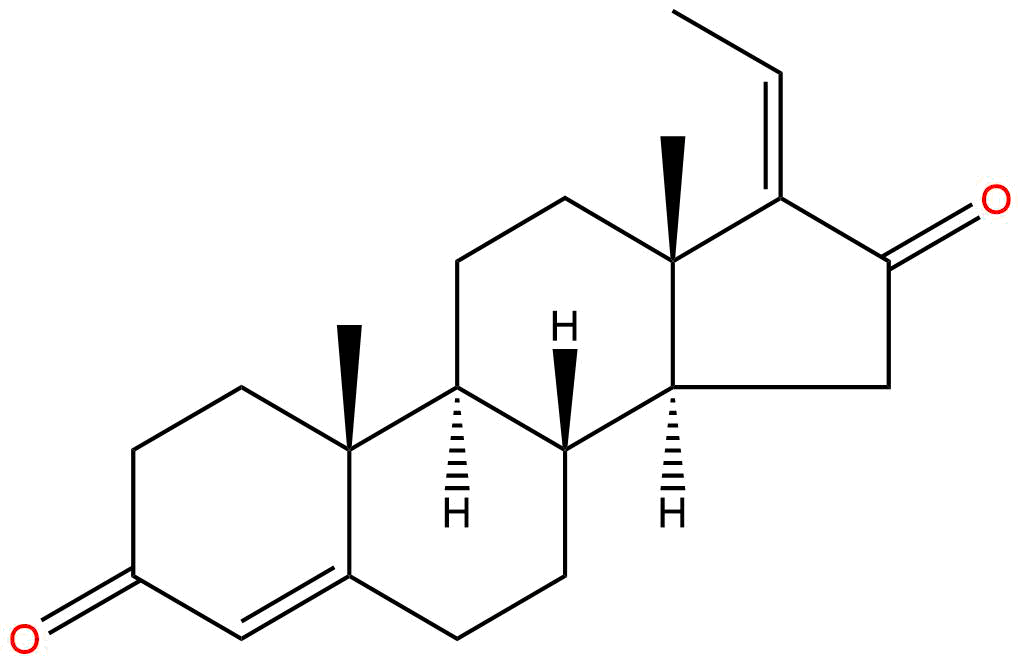


Product Name: (E)-Guggulsterone
Synonym name: E-Guggulsterone; trans-Guggulsterone; Guggulsterone E
Catalogue No.: BP1402
Cas No.: 39025-24-6
Formula: C21H28O2
Mol Weight: 312.453
Botanical Source: Commiphora mukul and Ailanthus grandis
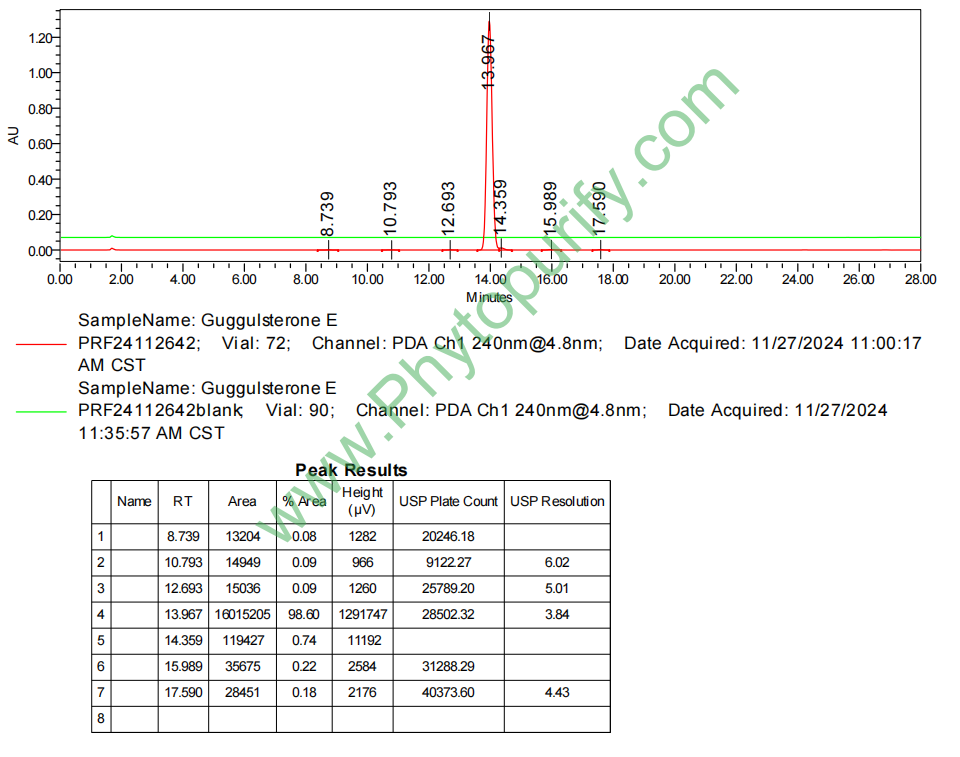
Purity: 95%~99%
Analysis Method: HPLC-DAD or/and HPLC-ELSD
Identification Method: Mass, NMR
Packing: Brown vial or HDPE plastic bottle
Can be supplied from milligrams to grams.
For Reference Standard and R&D, Not for Human Use Directly.
Inquire for bulk scale.
HPLC of (E)-Guggulsterone
Storage conditions:Short-term storage at 2~8℃, long-term storage at -20 ~ -80℃
(E) - Guggulsterone is a 3-hydroxysteroid compound with significant biological activity, molecular formula C21H28O2, molecular weight 312.45, CAS number 39025-24-6. As one of the main active ingredients in the Comiphora wightii resin, trans myrrh steroid has attracted much attention due to its multi-target regulatory ability, especially in the fields of anti-inflammatory, metabolic regulation, and hormone regulation, showing potential medicinal value. Its molecular structure contains a typical steroid skeleton, which endows it with androgen like activity and can regulate multiple cellular signaling pathways, participating in the regulation of inflammatory responses.
In recent years, with the deepening development of pharmacology of natural products, significant progress has been made in the pharmacological effects and molecular mechanisms of trans myrrh steroids, especially in the exploration of their potential applications in inflammation related diseases. This article provides a systematic review of the chemical structure and physicochemical properties, plant sources and extraction methods, pharmacological activity and mechanism of action, pharmacological evaluation and pharmacokinetic characteristics of trans myrrh steroid ketone, combined with its clinical application prospects, aiming to provide theoretical basis and reference for further research and development of this compound.
Trans myrrh ketone belongs to the steroid class of compounds, with a typical four ring steroid skeleton in structure. The presence of a hydroxyl group at position 3 endows it with specific polarity and biological activity. Its chemical name is (3 β) -3-hydroxy-20-ene-17-one-4-ene-steroid, with a molecular weight of 312.45 and a LogP value of 4.15, indicating that it has good lipid solubility and is conducive to cell membrane penetration. The TPSA (topological polar surface area) is 34.14 Å ² and the number of hydrogen bond acceptors is 2, indicating that it has moderate polarity in intermolecular interactions, which may affect its receptor binding affinity and bioavailability.
In the structure of trans myrrh steroid ketone, the double bond configuration is trans (E-type), which has a significant impact on its biological activity. The rigid structure of the steroid skeleton and the presence of 3-hydroxy groups enable it to bind to various nuclear receptors and signaling molecules, exerting regulatory effects. In addition, its physicochemical properties such as moderate lipid solubility and molecular size are beneficial for the in vivo distribution and cellular uptake of drugs, but its blood-brain barrier penetration ability is not yet clear and further experimental verification is needed.
Trans myrrh steroids are mainly derived from the resin of the myrrh tree (Commiphora wightii, formerly known as Commiphora mukul), commonly known as "myrrh" or "gul resin". The myrrh tree is widely distributed in arid and semi-arid regions of the Indian subcontinent, and its resin is used as a natural medicinal herb for anti-inflammatory, lipid-lowering, and arthritis treatment in traditional Indian medicine (Ayurveda).
The content of trans myrrh ketone in the resin is relatively high, and extraction is usually carried out using organic solvent extraction combined with column chromatography separation technology. Common extraction solvents include ethanol, methanol, or ethyl acetate, and the extraction process requires temperature and time control to prevent degradation of active ingredients. After extraction, purity identification and content determination were performed using high-performance liquid chromatography (HPLC) and mass spectrometry (MS) techniques. In recent years, the application of ultrasound assisted extraction and supercritical CO2 extraction technology has improved the extraction efficiency and purity of trans myrrh steroid ketone, reduced solvent residue, and complied with the principles of green chemistry.
In addition, the diversity of plant sources and environmental factors have a significant impact on the content of trans myrrh steroid ketone. The content of this compound in resins from different origins and collection seasons fluctuates, indicating that subsequent research needs to pay attention to raw material standardization and quality control.
The pharmacological activity research of trans myrrh steroid mainly focuses on its anti-inflammatory, metabolic regulation, and hormone regulatory effects. As a 3-hydroxysteroid, it exhibits androgen like activity and can regulate multiple nuclear receptors and signaling pathways, exerting pharmacological effects with multiple targets and mechanisms.
The research on trans steroidal anti-inflammatory drugs is the most extensive in the field of anti-inflammatory. It inhibits the occurrence and development of inflammatory reactions by regulating various inflammatory mediators and signaling molecules. Both in vitro cell models and animal inflammation models have shown that the compound can significantly reduce the expression of pro-inflammatory cytokines such as IL-6 and TNF - α, inhibit the activation of inflammatory signaling pathways such as NF - κ B and STAT3, thereby reducing inflammatory damage.
Specifically, trans steroidal anti-inflammatory drugs can inhibit the activity of CASP1 (inflammasome associated caspase 1), reducing inflammasome mediated cytokine maturation and release. In addition, it has a regulatory effect on TRPV1 and TRPA1 plasma channels, affecting neuroinflammation and pain perception. The inhibition of PTGS1 and PTGS2 (cyclooxygenase 1 and 2) further reduces the synthesis of prostaglandins and alleviates inflammatory reactions. The downregulation of NOS2 (inducible nitric oxide synthase) expression also helps alleviate oxidative stress and inflammation.
In addition to anti-inflammatory effects, trans myrrh steroids have also been reported to have potential activities such as regulating lipid metabolism, anti-tumor effects, and neuroprotection. Its androgen like structure gives it a certain regulatory effect in hormone related diseases, but the relevant mechanisms still need to be further studied.
The mechanism of action of trans myrrh steroid ketone is complex, involving multiple signaling pathways and molecular targets, reflecting its multi-target pharmacological properties.
As a compound with steroid structure, trans steroidal steroids can bind to various nuclear receptors and regulate gene transcription. Research has shown that it can antagonize Farnesoid X receptor (FXR) related to cholesterol metabolism, affecting bile acid metabolism and lipid homeostasis. In addition, it has partial excitatory activity on the androgen receptor (AR) and may be involved in physiological and pathological processes related to hormone regulation.
Trans myrrh ketone inhibits the NF - κ B signaling pathway, blocks the transcriptional expression of pro-inflammatory genes, and reduces the production of key inflammatory mediators such as IL-6 and TNF - α. STAT3 (Signal Transduction and Transcription Activation Factor 3) is also one of its targets, and inhibiting this pathway can help alleviate chronic inflammation and the inflammatory state of the tumor microenvironment.
TRPV1 and TRPA1 are ion channels involved in pain and inflammation perception, and trans steroidal steroids alleviate inflammation related pain and neuroinflammatory responses by regulating the activity of these channels.
CASP1, as a key enzyme in inflammasomes, is involved in the maturation and secretion of IL-1 β. Trans myrrh ketone inhibits CASP1 activity and reduces inflammasome mediated inflammatory response. Meanwhile, by downregulating the expression of NOS2, excessive production of nitric oxide is reduced, oxidative stress is alleviated, and tissues are protected from inflammatory damage.
The pharmacological evaluation of trans myrrh steroid ketone shows that it has certain potential for drug development, but there are also several challenges.
Its molecular weight is 312.45, LogP 4.15, Indicating good lipid solubility, which is beneficial for cell membrane penetration and oral absorption. The TPSA is 34.14 Å ², with 2 hydrogen bond acceptors, which conforms to Lipinski's rule and is expected to have good bioavailability.
However, there is currently a lack of safety data regarding its blood-brain barrier penetration ability, liver toxicity, cardiac toxicity (including hERG channel inhibition), and genotoxicity (Ames test), and further systematic evaluation is needed.
A small number of in vivo pharmacokinetic studies have shown that trans myrrh ketone is absorbed quickly after oral administration, but its bioavailability is limited by first pass effects and metabolic stability. Its metabolic pathway mainly involves the liver cytochrome P450 enzyme system, and the activity and toxicity of metabolites have not been fully elucidated.
At present, there is a lack of systematic toxicology research, especially the safety assessment of long-term medication. Given its androgen like activity, potential hormone related side effects such as endocrine disruption and changes in sex hormone levels need to be considered.
As a multi-target anti-inflammatory natural product, trans myrrh ketone has broad clinical application potential. Its application prospects in chronic inflammatory diseases (such as rheumatoid arthritis, inflammatory bowel disease), metabolic syndrome, and certain hormone related diseases are worth looking forward to.
Based on its regulation of key inflammatory factors such as IL-6, TNF - α, NF - κ B, and STAT3, trans steroidal anti-inflammatory drugs have the potential to become candidate molecules for novel anti-inflammatory drugs. Especially in cases where traditional anti-inflammatory drugs have significant side effects, natural products provide a new treatment approach.
Trans myristone may play an auxiliary role in the treatment of metabolic diseases such as hyperlipidemia and atherosclerosis by regulating cholesterol metabolism related nuclear receptors. Animal experiments have supported its potential for lipid-lowering and anti arteriosclerosis effects, but clinical data is still lacking.
Despite exhibiting good pharmacological activity, the pharmacological properties and safety of trans myrrh steroids still need to be systematically evaluated. Future research should focus on:
In addition, based on modern molecular biology techniques, in-depth analysis of its targets and signaling pathways will help to accurately locate its therapeutic indications and promote its clinical translation.
As a 3-hydroxysteroid compound derived from traditional medicinal plant myrrh, trans myrrh steroid has become a hot topic in natural product pharmacology research due to its multi-target regulatory ability and significant anti-inflammatory activity. Its potential applications in anti-inflammatory, metabolic regulation, and hormone related diseases demonstrate rich drug development value.
However, current research on its safety, pharmacokinetics, and clinical applications is still in its preliminary stage, and there is an urgent need for systematic pharmacological and toxicological evaluation and clinical validation. In the future, through interdisciplinary collaboration, combined with modern medicinal chemistry, molecular biology, and clinical medicine methods, it is expected to promote trans steroidal steroids as an important component of new natural medicines, providing new strategies and choices for the treatment of inflammation and metabolic diseases.
