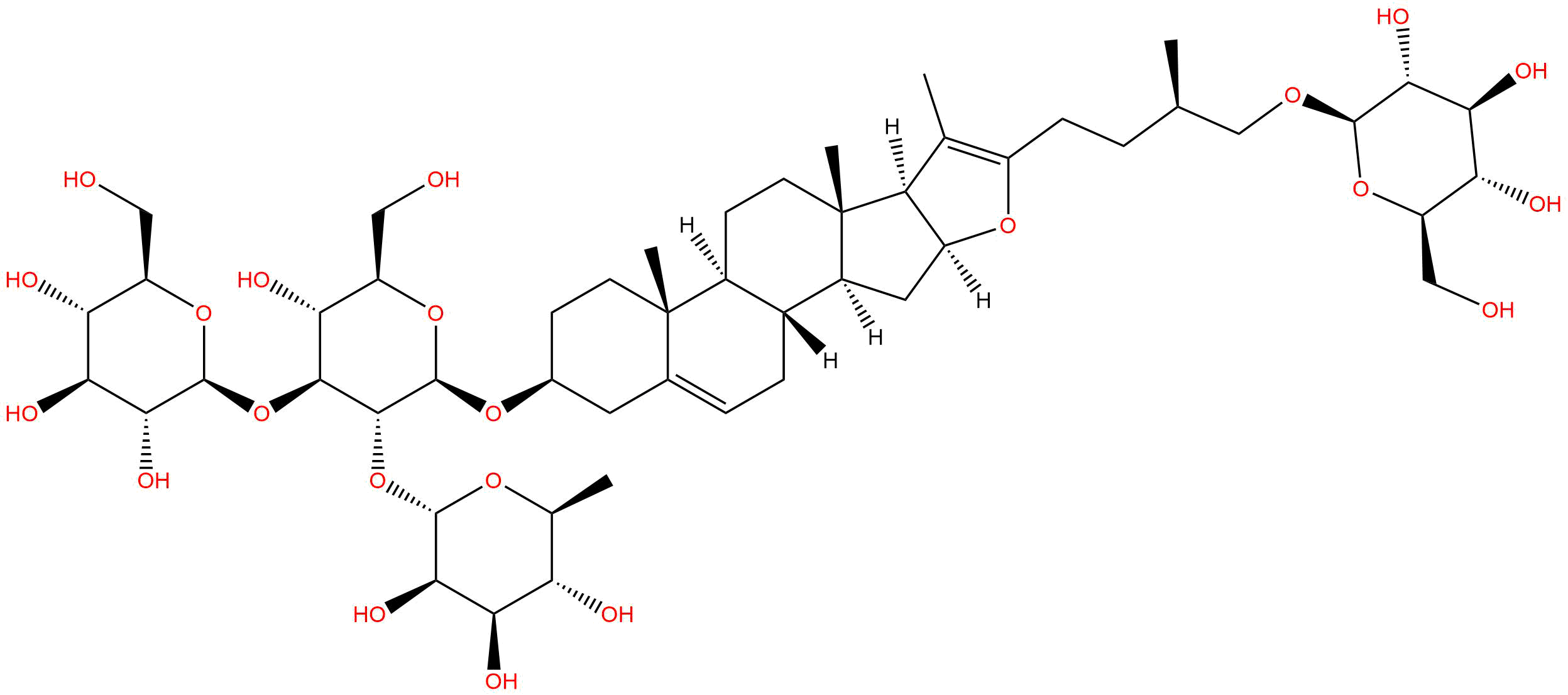


Product name: Pseudoprotogracillin
Synonym name:
Catalogue No.: BP3334
Cas No.: 637349-03-2
Formula: C51H82O22
Mol Weight: 1047.2
Botanical Source:
Physical Description:
Type of Compound: Steroids
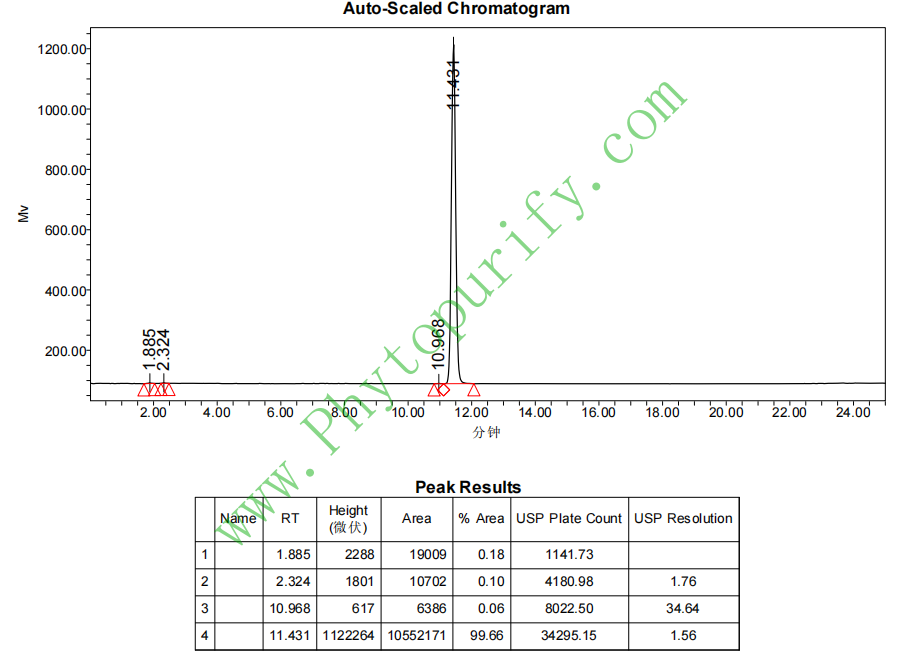
Purity: 95%~99%
Analysis Method: HPLC-DAD or/and HPLC-ELSD
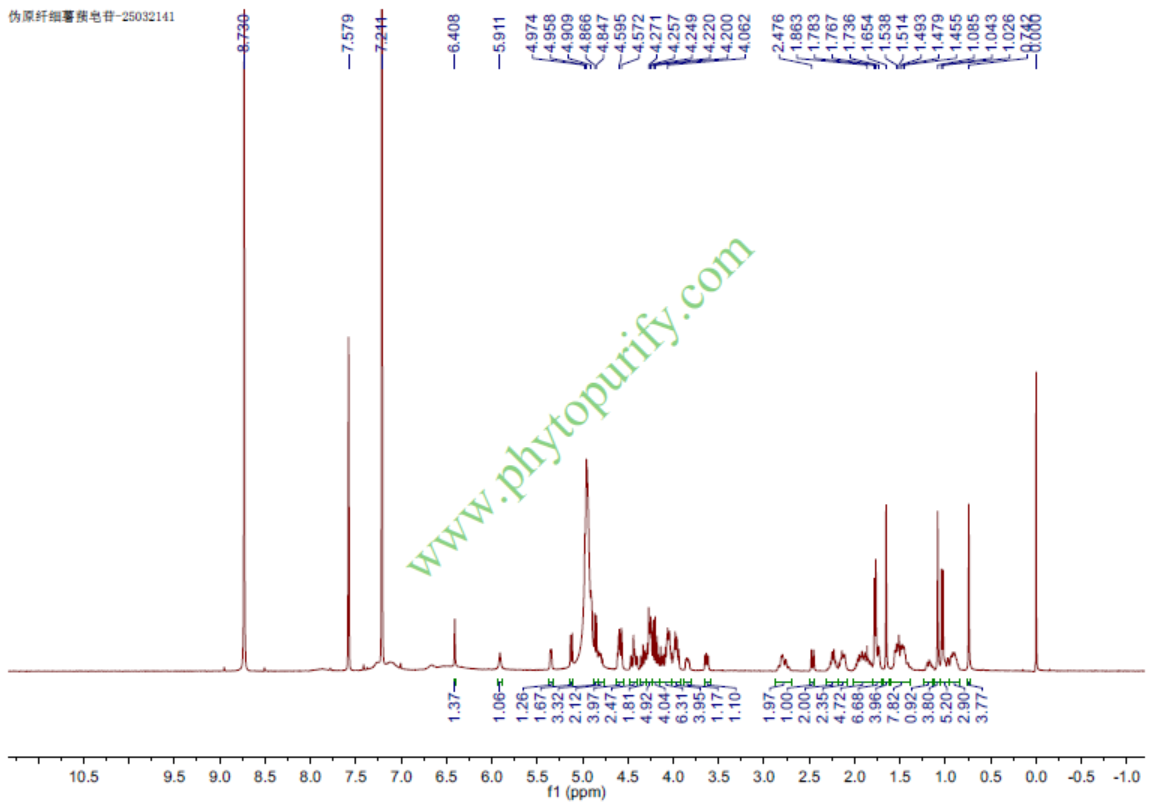
Identification Method: Mass, NMR
Packing: Brown vial or HDPE plastic bottle
The product could be supplied from milligrams to grams. Inquire for bulk scale.
We provide solution to improve the water-solubility of compounds, thereby facilitating the variety of activity tests and clinic uses.
For Reference Standard and R&D, Not for Human Use Directly.
HPLC of Pseudoprotogracillin
HNMR of Pseudoprotogracillin
Storage conditions:Short-term storage at 2~8℃, long-term storage at -20 ~ -80℃
346.0600
1.3422
1.3419
.4080
.3910
.6173
Low
59.2684
6.7261
No
No
No
No
No
No
0.3
Yes
No
Yes
No
Steroid saponins are a class of secondary metabolites widely present in nature, known for their complex and diverse chemical structures and extensive biological activities. They have shown great potential for applications in fields such as anti-inflammatory, anti-tumor, and immune regulation. Dioscoreae plants, as an important source of traditional medicinal plants, are rich in various steroidal saponins with significant pharmacological activity. They have long been used to treat rheumatism, inflammation, and related diseases. Pseudoproteoglycin (CAS number: 637349-03-2) is a representative steroid saponin isolated and identified from Dioscorea plants in recent years. With the deepening of modern pharmacological research, the outstanding anti-inflammatory activity of this compound has gradually become a research hotspot. Its function involves the regulation of multiple targets such as interleukin-6 (IL-6), signal transduction and transcription activator 3 (STAT3), tumor necrosis factor (TNF), and key proteins in the nuclear factor kappa B (NF - κ B) pathway (such as RELA, IKBKB), indicating its broad prospects in the treatment of chronic inflammatory diseases. This article aims to provide a systematic review of the chemical structure, plant origin, pharmacological activity, mechanism of action, and medicinal properties of pseudo original slender yam saponins, in order to provide comprehensive scientific references for the in-depth research and development of this natural product.
Pseudo original slender Dioscin is a steroid saponin with a molecular weight of 1047.1950 Da. Its basic skeleton is the steroid mother nucleus (cyclopentane dihydrophenanthrene), which belongs to spirostanol saponins. The structural feature is that the C-3 and C-26 positions are usually connected by oligosaccharide chains, and the composition, connection order, and position of these sugar groups are key factors determining their physicochemical properties and biological activity. The sugar chain structure of pseudo original slender dioscin is relatively complex, resulting in its high polarity.
From the calculation of chemical parameters, the lipophilic water partition coefficient (LogP) of the compound is 1.3422, indicating that it has a certain degree of lipophilicity, but not high lipophilicity. Its topological polar surface area (TPSA) is as high as 346.0600 Å ², which is mainly attributed to the presence of multiple hydroxyl and glycosidic bonds in the molecule, making the overall polarity of the molecule strong. This characteristic also directly affects its water solubility, with a calculated water solubility of about 0.4080 mg/mL, belonging to the category of slightly soluble to poorly soluble, which poses certain challenges for subsequent formulation development. In terms of drug absorption and distribution, its higher TPSA and molecular weight indicate a lower ability to cross the blood-brain barrier (BBB), which limits its direct effects on central nervous system diseases, but may also reduce the potential risk of neurotoxicity. In addition, preliminary safety assessments of the drug indicate that the compound is negative in hERG channel inhibition assays, suggesting a low risk of causing cardiac QT interval prolongation; The Ames test result is 0.3, indicating a weak mutagenic potential and a relatively good genotoxic safety profile.
Pseudo original slender dioscin mainly comes from various plants in the Dioscoreaceae family, Dioscorea genus. Dioscorea plants are widely distributed worldwide, and many species such as Dioscorea nipponica and Dioscorea gracillima have long been renowned in traditional Chinese medicine. They are commonly used for dispelling wind and dampness, relaxing tendons and promoting blood circulation. Pseudo original slender dioscin, as one of the characteristic active ingredients in these plants, often coexists with other saponins such as diosgenin derivatives.
Its extraction and separation usually follow the conventional process of natural product chemistry. Firstly, the dried plant rhizomes are crushed and subjected to reflux extraction or ultrasound assisted extraction using polar solvents such as methanol, ethanol, or aqueous ethanol to fully extract saponin components. After vacuum concentration, the obtained crude extract was preliminarily enriched and decolorized using macroporous adsorption resins (such as D101, AB-8). Impurities such as polysaccharides and inorganic salts were removed by water washing, and then gradient elution was performed with different concentrations of ethanol to collect the elution sites rich in saponins.
Further purification relies on modern chromatographic techniques. Silica gel column chromatography and reverse phase silica gel (such as ODS) column chromatography are commonly used for separation, combined with thin layer chromatography (TLC) or high-performance liquid chromatography (HPLC) for activity tracking and purity detection. Finally, high-purity pseudo protodioscin monomers can be obtained through preparative high-performance liquid chromatography (pre HPLC) or repeated column chromatography. Structural identification is accomplished through the comprehensive use of techniques such as nuclear magnetic resonance (NMR, including 1H-NMR, 13C-NMR, 2D-NMR), mass spectrometry (MS, such as ESI-MS, HR-ESI-MS), and infrared spectroscopy (IR).
A large number of in vitro and in vivo pharmacological studies have shown that the core biological activity of pseudo original slender Dioscin is concentrated in the powerful anti-inflammatory effect It has shown significant effects in various inflammatory models.
At the cellular level, this compound can effectively inhibit macrophage activation induced by lipopolysaccharide (LPS) or other inflammatory stimuli, such as RAW 264.7 cells. It can dose dependently reduce the excessive production of inflammatory mediators such as nitric oxide (NO) and prostaglandin E2 (PGE2). Meanwhile, it has a strong inhibitory effect on the expression and secretion of various pro-inflammatory cytokines, including tumor necrosis factor - α (TNF - α), interleukin-1 β (IL-1 β), and interleukin-6 (IL-6). These cytokines are key messengers connecting acute inflammation and chronic pathological processes, and their overexpression is closely related to rheumatoid arthritis, inflammatory bowel disease, atherosclerosis and other diseases.
The anti-inflammatory effect of pseudo original slender yam saponins has been further validated in animal models. For example, in mouse ear xylene induced inflammation models, carrageenan induced rat paw swelling models, and cotton ball induced granuloma models, pre - or therapeutic administration of this compound can significantly reduce tissue edema, decrease inflammatory cell infiltration, and inhibit granulation tissue proliferation. In addition, in more complex autoimmune inflammation models, such as the collagen induced arthritis (CIA) mouse model, it has also shown effects in improving joint swelling, reducing arthritis scores, and protecting cartilage damage. These studies collectively confirm that pseudo original slender yam saponins have broad-spectrum and highly effective anti-inflammatory potential.
The anti-inflammatory effect of pseudo original slender yam saponins is not achieved through a single pathway, but involves a complex multi-target regulatory network, and its mechanism of action has been deeply studied at the molecular and signaling pathway levels.
Inhibition of NF - κ B signaling pathway Nuclear factor kappa B (NF - κ B) is the core transcription factor in inflammatory response. Pseudo original slender yam saponins can effectively inhibit the activation of NF - κ B. Its action points include: inhibiting the activity of I κ B kinase (IKK, especially IKBKB), preventing the phosphorylation and degradation of I κ B α; Furthermore, it inhibits the translocation of NF - κ B p65 subunit (RELA) to the nucleus. This ultimately leads to the inhibition of transcription of a series of downstream pro-inflammatory genes, such as TNF - α, IL-6, IL-1 β, NOS2, COX-2.
Regulating the JAK/STAT signaling pathway This compound can significantly inhibit the activation of the JAK/STAT3 signaling pathway induced by IL-6. It inhibits STAT3 dependent inflammatory gene expression by reducing the tyrosine phosphorylation level of STAT3, hindering its dimerization and translocation into the nucleus. This pathway is closely related to the occurrence and development of chronic inflammation and cancer.
Affects inflammasome activation Research has shown that pseudo original slender yam saponins have inhibitory effects on the assembly and activation of NLRP3 inflammasomes. It can reduce the activation level of caspase-1 (CASP1), thereby reducing its ability to cleave substrates pro-IL-1 β and pro-IL-18 into mature active forms, and inhibiting pyroptosis, a strong pro-inflammatory cell death mechanism.
Regulating pain related ion channels This compound may have a regulatory effect on transient receptor potential vanillic acid subtype 1 (TRPV1) and transient receptor potential anchor protein subtype 1 (TRPA1) channels. These two channels are key sensors mediating inflammatory pain and neurogenic inflammation, and their inhibition helps alleviate pain symptoms associated with inflammation.
Inhibit inflammation related enzyme activity Pseudo original slender yam saponins also have a certain inhibitory effect on the expression or activity of cyclooxygenase-1 (PTGS1/COX-1) and nitric oxide synthase (NOS2/iNOS), which is consistent with their reduction of PGE2 and NO production.
In summary, pseudo original slender yam saponins exert synergistic anti-inflammatory effects by simultaneously acting on upstream or core components of multiple key inflammatory signaling nodes such as NF - κ B, STAT3, and inflammasomes, which may be the molecular basis for their potent anti-inflammatory effects.
Although pseudo original slender yam saponins exhibit excellent pharmacological activity, their drug like and pharmacokinetic properties are obstacles that must be overcome for their clinical application.
According to its physicochemical properties analysis, this compound belongs to Class IV (low solubility, low permeability) in the Biopharmaceutical Classification System (BCS). The high molecular weight (>1000 Da) and high polarity surface area (TPSA>140 Å ²) severely limit its ability to cross biofilms through passive diffusion, resulting in potentially extremely low oral bioavailability. Its slightly soluble nature also affects the dissolution rate in gastrointestinal fluids. The prediction of low blood-brain barrier permeability reduces the risk of central side effects, but also rules out the possibility of direct treatment of central nervous system inflammation.
At present, there are insufficient reports on the pharmacokinetic studies of the pseudo original slender dioscin system, which is often a weak link in the research of natural product monomers. Based on the research experience of similar saponins, it can be inferred that they may face the following challenges in vivo: they are easily hydrolyzed by acids or enzymes in the gastrointestinal tract after oral administration; Even if absorbed, it is prone to undergo extensive first pass effects in the liver, including phase I metabolism (such as hydroxylation) and phase II combined metabolism (such as glucuronidation and sulfation); The concentration of the prototype drug in the blood may be low and eliminated quickly.
In order to enhance its pharmacological properties, future research strategies may include:
1. Structural modification Appropriate chemical modifications should be made to the sugar moiety or steroid core to improve its lipid solubility and metabolic stability.
2. Formulation technology Using nanotechnology, such as preparing liposomes, nanoparticles, micelles, or solid dispersions, to improve their solubility, delay release, enhance targeting, and improve oral absorption.
3. Prodrug strategy Make saponins into prodrugs to mask polar groups, improve membrane permeability, and then convert them into active forms in vivo.
4. In depth research on PK/PD Comprehensive in vivo pharmacokinetic studies (absorption, distribution, metabolism, excretion) and their association with pharmacodynamics (PK/PD) must be conducted to provide a basis for dose design and dosing regimens.
Pseudo original slender yam saponins, as a multi-target anti-inflammatory natural compound, have shown promising application prospects in the prevention and treatment of various chronic inflammatory diseases.
Its most direct application direction is as Anti inflammatory and analgesic drugs The lead compound. Given its dual inhibition of classical inflammatory pathways (NF - κ B, STAT3) and non classical inflammatory pathways (inflammasomes), as well as its potential regulatory effect on pain sensing channels (TRPV1/TRPA1), it may be used to treat patients who are insensitive or intolerant to existing nonsteroidal anti-inflammatory drugs (NSAIDs) for their gastrointestinal and cardiovascular side effects, particularly in Rheumatoid arthritis, osteoarthritis, gouty arthritis Waiting for the disease.
Secondly, due to chronic inflammation being the "soil" for tumor occurrence and development, STAT3 and NF - κ B are also important tumor promoting signaling pathways. Therefore, pseudo original slender dioscin is Cancer chemoprevention It is also worth exploring as an adjuvant therapy drug. It may indirectly exert anti-tumor effects by inhibiting inflammation in the tumor microenvironment.
In addition, in Inflammatory bowel disease (IBD), psoriasis, atherosclerosis In the field of diseases closely related to immune inflammation disorders, this compound may also have therapeutic potential.
Future research prospects should focus on the following aspects:
1. Deep exploration of mechanisms Using proteomics, transcriptomics, and gene editing techniques, further clarify its direct target (possibly a kinase or receptor) and downstream signaling network.
2. Optimization of drug properties As mentioned earlier, we will concentrate our efforts on tackling the challenges of poor solubility, permeability, and metabolic stability, and optimize them through multidisciplinary approaches such as chemistry and pharmacy.
3. Preclinical systematic review In animal models closer to human diseases, such as humanized mouse models, systematically evaluate their long-term efficacy and safety, and complete standardized preclinical studies.
4. Explore combination therapy Studying its synergistic effect with existing anti-inflammatory drugs may help reduce their respective doses, minimize side effects, and improve efficacy.
Pseudo original slender dioscin is an active steroid saponin isolated from the traditional medicinal plant Dioscorea, which exhibits excellent anti-inflammatory pharmacological activity through a unique mechanism of multi-target and multi pathway synergistic effects. The molecular mechanism of action, from inhibiting NF - κ B and STAT3 transcription factors to regulating inflammasome activation, is becoming increasingly clear, providing a solid scientific basis for its therapeutic value. However, the inherent physicochemical properties leading to drug defects such as low solubility and low oral bioavailability are currently the main challenges in developing it into modern drugs. Future research needs to deepen the analysis of its action details while vigorously leveraging the power of medicinal chemistry and novel drug delivery systems to improve its pharmacokinetic behavior. In summary, pseudo original slender dioscin is a highly promising natural drug lead molecule, and continuous in-depth research on it not only helps to reveal the traditional pharmacological substance basis of Dioscorea plants, but also provides important candidate structures and ideas for the development of new generation multi-target anti-inflammatory drugs.
