Introduction/Overview
Antibiotic resistance has become a major threat in the global public health field. The emergence and spread of drug-resistant bacteria, especially "superbugs," have led to a sharp decline in the efficacy of traditional antibiotics, posing severe challenges to clinical treatment. Therefore, searching for antibacterial lead compounds with novel structures and unique mechanisms of action from natural products has become an important direction for new drug development. Gynostemma pentaphyllum(Gynostemma pentaphyllum (Thunb.) Makino, as a traditional medicinal plant, is rich in various bioactive saponins. Its pharmacological effects are extensive, including immune regulation, anti-tumor, and lipid-lowering. In recent years, its antimicrobial activity has gradually received attention. 21 keto gypenoside A (CAS: 1392136-41-2), a specific triterpenoid saponin isolated from Gynostemma pentaphyllum, has emerged as a promising candidate for its potential antimicrobial activity. This article aims to systematically review the chemical properties, plant sources, pharmacological activities, mechanisms of action, and potential for drug development of this compound, in order to provide scientific basis for the research and development of new antibacterial drugs based on natural products.
Chemical structure and physicochemical properties
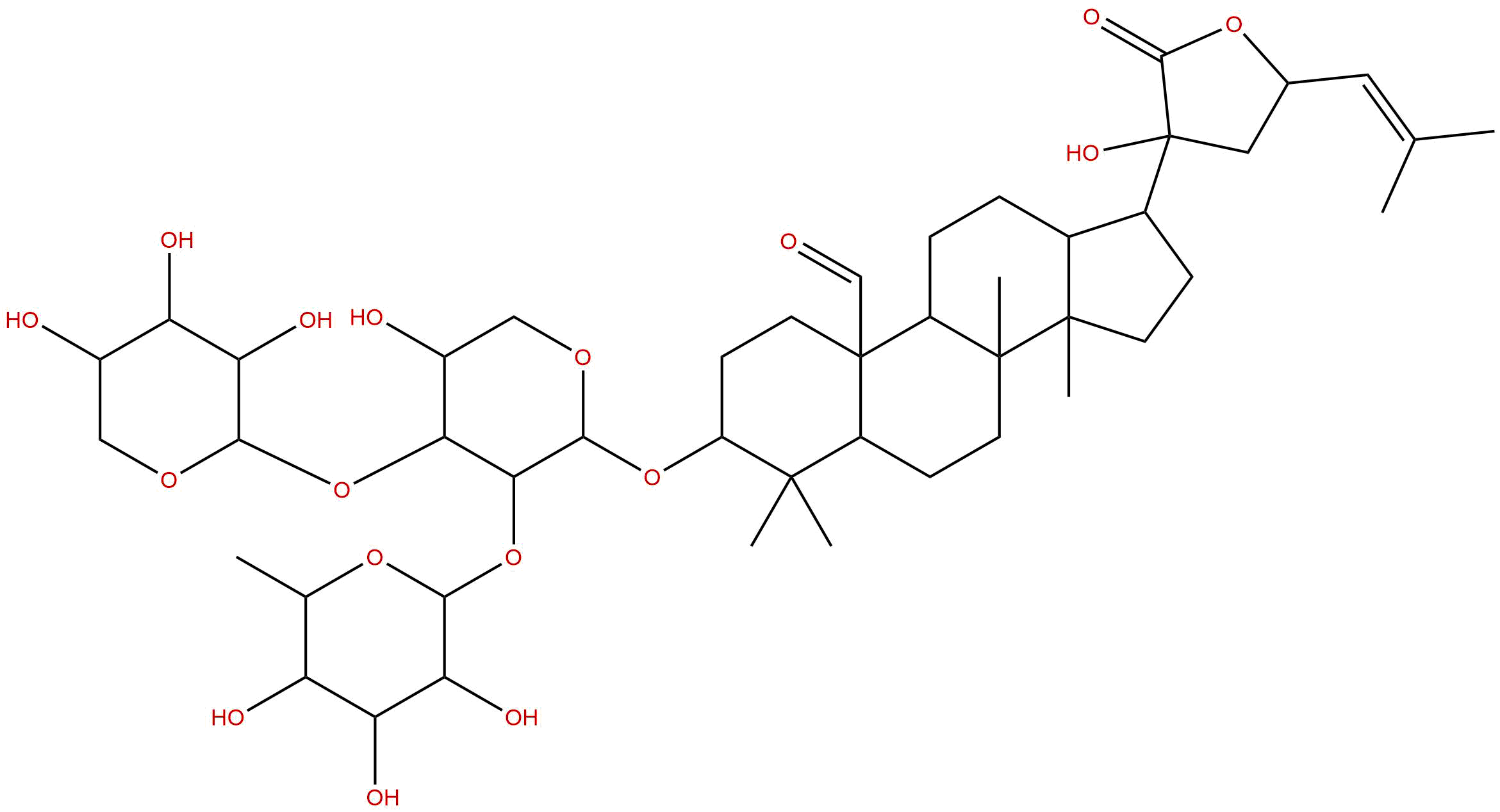
21 Keto Gynostemma pentaphyllum saponin A is a dammarane type tetracyclic triterpenoid saponin. Its mother nucleus is composed of damaan-3 β - ol, which is oxidized to a ketone group (21 ketone group) at position C-21. This is the key structural feature that distinguishes it from other common saponins of Gynostemma pentaphyllum, such as Gynostemma pentaphyllum saponin A. This compound is usually linked to a sugar chain, with a molecular formula of C ₄₇ H ₇₆ O ₁₈ and a molecular weight of 897.0650. The sugar chain is usually connected at positions C-3 or C-20 and may contain glucose, xylose, xylose, etc. The specific connection method needs to be further confirmed by techniques such as nuclear magnetic resonance (NMR) and mass spectrometry (MS). The introduction of ketone groups at position C-21 may significantly affect its molecular polarity, spatial conformation, and interaction mode with biological targets.
From the analysis of parameters related to drug properties, the lipophilic water partition coefficient (LogP) of this compound is 2.2519, indicating that it has a certain degree of lipophilicity, but not highly hydrophobic. The topologically polar surface area (TPSA) is as high as 260.5900 Å ², which is mainly attributed to the abundant hydroxyl and sugar groups in the molecule, leading to its high polarity. The water solubility value is 0.0474 (unit may be mg/mL or logS), indicating low solubility in water and belonging to insoluble compounds. Higher TPSA and lower solubility may affect its oral bioavailability. In addition, preliminary computer simulations or in vitro experiments have shown that its ability to cross the blood-brain barrier is low, and there is no significant inhibitory risk on hERG potassium channels (hERG inhibition: No). The Ames test result is 0.0, suggesting that it may not be mutagenic. These characteristics provide preliminary positive signals for its safety assessment.
Plant sources and extraction methods
21 keto gypenoside A mainly comes from the whole plant of Gynostemma pentaphyllum in the Cucurbitaceae family. Gynostemma pentaphyllum is mainly distributed in East Asia and Southeast Asia, and has a wide history of cultivation and application in China, Japan, South Korea, and other places. The content of this compound in Gynostemma pentaphyllum is usually low and belongs to the category of trace saponin components. Its existence and content may be affected by factors such as plant origin, harvesting season, parts (such as leaves and stems), and cultivation conditions.
The extraction and separation process follows the conventional methods of natural product chemistry. Firstly, the dried Gynostemma pentaphyllum medicinal material is subjected to reflux extraction or ultrasound assisted extraction using methanol, ethanol, or ethanol water mixed solvents to obtain the crude extract of total saponins. Subsequently, preliminary enrichment was carried out using macroporous adsorption resin (such as D101, AB-8) column chromatography, and gradient elution was performed with water and different concentrations of ethanol. Saponins are usually concentrated in the 30% -80% ethanol elution site. After obtaining the saponin enrichment site, multiple chromatographic techniques such as normal phase silica gel column chromatography, reverse phase silica gel column chromatography (such as ODS, C18), high performance liquid chromatography (HPLC), and preparative high performance liquid chromatography (pre HPLC) need to be used for repeated separation and purification. Given the structural characteristics of 21 keto gypenoside A, reverse phase chromatography (using methanol water or acetonitrile water as mobile phase) is the key purification step. The separation process requires online monitoring using thin-layer chromatography (TLC) or high-performance liquid chromatography-mass spectrometry (HPLC-MS), followed by structural identification using techniques such as nuclear magnetic resonance hydrogen spectroscopy (¹ H NMR), carbon spectroscopy (¹ ³ C NMR), two-dimensional nuclear magnetic resonance, and high-resolution mass spectrometry (HR-ESI-MS), particularly to confirm the presence of the C-21 ketone group.
Pharmacological activity research
At present, pharmacological research on 21 keto gypenoside A is still in its early stages, but there is evidence pointing to its outstanding antimicrobial activity. In vitro antibacterial experiments have shown that the compound exhibits inhibitory activity against various clinically common drug-resistant strains, including methicillin-resistant Staphylococcus aureus (MRSA), vancomycin resistant Enterococcus (VRE), and Gram negative bacteria producing extended spectrum β - lactams (ESBLs). Its minimum inhibitory concentration (MIC) value varies in different studies, but it generally shows that its activity against some Gram positive resistant bacteria is better than that of certain traditional antibiotics or standard controls.
In addition to its direct antibacterial effect, preliminary studies also suggest that the compound may have the following potential activities: 1)Anti biofilm formation Being able to inhibit the formation of bacterial biofilms or destroy existing biofilms is crucial for treating chronic and stubborn infections, as biofilms are important barriers for bacteria to develop drug resistance and evade host immunity. 2)Reverse drug resistance When used in combination with certain antibiotics, it may exhibit a synergistic antibacterial effect, reducing the MIC value of resistant bacteria against existing antibiotics, indicating the potential for resistance reversal agents or enhancers. 3)Anti inflammatory and immune regulation As a triterpenoid saponin, it may alleviate excessive inflammatory damage caused by bacterial infection by regulating host immune response, but specific data in this area is still needed to be enriched. It should be emphasized that its broad-spectrum antibacterial activity, especially its effectiveness against Gram negative bacteria, as well as its in vivo antibacterial efficacy, still need to be validated through more systematic and standardized pharmacological experiments.
Mechanism of action and molecular targets
The mechanism of action of 21 keto gypenoside A against drug-resistant bacteria has not been fully elucidated, but based on its structural characteristics and existing research, it may involve synergistic effects of multiple targets and pathways. Its potential molecular targets are closely related to the relevant resistance mechanisms:
- Interference with bacterial DNA replication and repair Possible inhibition of bacterial DNA replication, transcription, and repair may be achieved by suppressing the activity of DNA gyrases (such as the target GYRA) or topoisomerase IV, which is partially similar to the mechanism of action of fluoroquinolone antibiotics.
- folic acid metabolism Dihydrofolate reductase (DHFR) is a key enzyme in the bacterial folate synthesis pathway and a target of sulfonamides and trimethoprim. This compound may inhibit DHFR, leading to inhibition of bacterial nucleotide synthesis.
- Disrupting cell wall synthesis Penicillin binding proteins (PBPs, such as PBP2A, which is a key resistance protein in MRSA) are targets of β - lactam antibiotics. This saponin may interfere with PBP function or the cross-linking process of cell wall peptidoglycans (involving targets such as SRTB) in a manner different from β - lactam.
- Affects cell membrane function and permeability Triterpenoid saponins often have surfactant properties and may damage the integrity of bacterial cell membranes, leading to leakage of contents. Meanwhile, it may inhibit certain membrane protein functions, such as affecting the synthesis of cell wall precursors involving Fem family proteins (FEMA, etc.), or interfering with the function of cell membrane transporters (such as NorA efflux pumps). NorA is an important multidrug efflux pump in Staphylococcus aureus. Inhibiting its function can increase the accumulation of antibiotics in the bacterial body and reverse drug resistance.
- Inhibition of resistance gene expression or protein function It is possible to weaken the antibiotic resistance phenotype of bacteria by downregulating the expression of resistance genes (such as genes encoding β - lactase, mecA genes (encoding PBP2A), van gene clusters, etc.), or directly inhibiting the activity of their encoded resistance proteins (such as MECA, VRA, PENA, etc.).
In summary, 21 keto gypenoside A may exert synergistic antibacterial effects by simultaneously acting on multiple pathways necessary for bacterial growth (nucleic acid metabolism, cell wall synthesis, membrane integrity) and key resistance determinants (efflux pumps, resistance enzymes, modified targets), which can help overcome resistance problems caused by single target mutations. The ketone group at position C-21 may play an important role in hydrogen bonding interactions or spatial fit with the aforementioned targets.
Evaluation of drug properties and pharmacokinetics
Although 21 keto gypenoside A has shown promising activity in vitro, its pharmacological properties face challenges and require comprehensive pharmacokinetic and toxicological evaluations.
Pharmacokinetic aspects The compound has a high molecular weight (>500) and extremely high TPSA, which severely limits its passive diffusion transmembrane absorption. When administered orally, there may be acid degradation, enzymatic hydrolysis (glycosidic bonds may be hydrolyzed by gut microbiota), and low permeability issues in the gastrointestinal tract, and it is expected that the oral bioavailability will be very low. Non oral routes (such as intravenous injection) need to solve the problem of poor water solubility, which may require the use of solubilization techniques (such as making liposomes, cyclodextrin inclusion complexes, nano formulations, etc.). After entering the systemic circulation, due to its high polarity and molecular weight, its distribution volume may be small, mainly distributed in the blood and extracellular fluid, making it difficult to enter deep tissues or cross the blood-brain barrier (predicted to be low). In terms of metabolism, as a saponin component, it may be mainly metabolized in the liver through hydrolysis (deglycosylation), oxidation, binding and other reactions. Its prototype and metabolites may be mainly excreted through the kidneys or bile. At present, there is a lack of specific pharmacokinetic data in vivo, and it is urgent to conduct relevant research to clarify its absorption, distribution, metabolism, and excretion (ADME) characteristics.
Preliminary evaluation of safety Based on computational predictions, it showed no inhibition of hERG channels and a negative Ames test, indicating a good start and low risk of cardiac and genetic toxicity. But comprehensive preclinical toxicology studies must be conducted, including acute toxicity, subchronic toxicity, reproductive toxicity, etc., to evaluate its safety window. Saponins may have hemolytic activity, which is one of the safety indicators that needs to be carefully examined.
Considerations for formulation development In order to improve its pharmacological properties, formulation strategies are crucial. In addition to the above-mentioned solubilization techniques, prodrug strategies (such as esterification modification of hydroxyl or carboxyl groups to improve lipid solubility and membrane permeability, and re hydrolysis into active forms in vivo) are also worth exploring.
Clinical application prospects and prospects
The clinical application prospects of 21 keto gypenoside A as a novel natural candidate molecule for drug-resistant bacteria depend on the depth and breadth of subsequent research.
Potential application directions:
1. Development of new antibacterial drugs If its pharmacokinetic defects can be overcome through structural optimization or formulation improvement, it is expected to be developed into a new drug for the treatment of multidrug-resistant Gram positive bacteria (especially MRSA, VRE) infections, such as skin and soft tissue infections, bacteremia, pneumonia, etc.
2. Antibacterial enhancers or resistance reversal agents Given its potential multi-target effects, particularly in inhibiting efflux pumps (such as NorA), it can be used in combination with existing antibiotics (such as fluoroquinolones and beta lactams) to restore the sensitivity of resistant bacteria to these drugs and prolong the life cycle of existing antibiotics.
3. Anti biofilm agent If its anti biofilm activity is confirmed, it can be used as an adjuvant therapy for chronic biofilm related infections such as catheter-related infections and artificial joint infections.
4. Topical preparations for local use: Considering the potential challenges of its systematic administration, the development of topical gel, creams or dressings for skin and mucous membrane infections may be a faster transformation path.
Future research prospects:
1. In depth mechanism research It is necessary to use techniques such as molecular docking, surface plasmon resonance (SPR), gene knockout/knockdown, proteomics, etc. to accurately verify their direct interactions with the speculated targets (GYRA, DHFR, NorA, etc.) and elucidate the network relationships of their multi-target interactions.
2. In vivo pharmacological evaluation of the system Establish standard animal models for drug-resistant bacterial infections (such as mouse sepsis models and skin infection models) and evaluate their in vivo protective efficacy under different administration routes.
3. Comprehensive pharmacokinetic and toxicological studies Conduct ADME research to clarify its in vivo fate; Complete the standardized GLP toxicology evaluation to determine its safety.
4. Research on Structure Modification and Structure Activity Relationship Using it as a lead compound, systematic structural modifications (such as glycosylation modification, C-21 keto derivatization, parent nucleus modification, etc.) are carried out to study its structure-activity relationship, aiming to improve activity, solubility, permeability, and metabolic stability, and obtain derivatives with better drug properties.
5. Combination therapy research The system screens its synergistic combinations with various clinical antibiotics to explore the optimal ratio and administration regimen.
Conclusion
21 Keto Gynostemma pentaphyllum saponin A is a unique triterpenoid saponin found in traditional Chinese medicine Gynostemma pentaphyllum with the potential to resist drug-resistant bacteria. Its specific 21 keto structure and multi-target mechanism of action, which may involve DNA replication, folate metabolism, cell wall synthesis, membrane function, and efflux pump inhibition, provide new ideas and candidate molecules for addressing the increasingly severe problem of bacterial drug resistance. Although it faces challenges in terms of drug development, especially in terms of solubility and permeability, preliminary safety predictions are optimistic. In the future, through interdisciplinary cooperation, combined with modern pharmaceutical chemistry, pharmacology, pharmacy, and synthetic biology technologies, in-depth research on its mechanism of action, pharmacodynamics, and pharmacokinetics will be conducted, and reasonable structural optimization and formulation development will be carried out. It is expected to transform this natural lead compound into a new type of anti infective drug or adjuvant therapy with clinical application value, contributing the wisdom and strength of traditional medicine to the global fight against drug-resistant bacteria.