| Catalog No | Package | Original Price | Price | Inventory | Quantity | Operating |
|---|---|---|---|---|---|---|
| SBP01992-5mg | 5mg | $290.00 | Sign in |
|


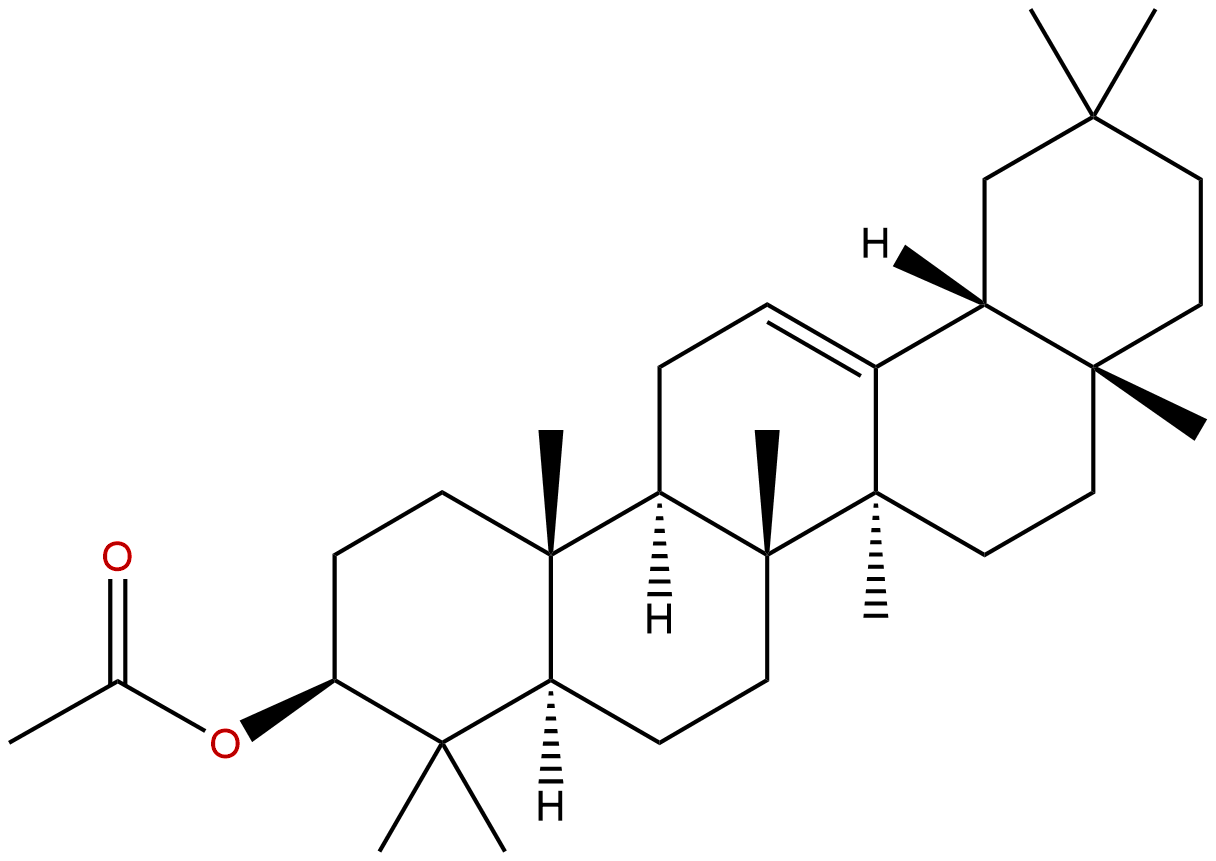
Product name: β-Amyrin acetate
Synonym name:
Catalogue No.: SBP01992
Cas No.: 1616-93-9
Formula: C32H52O2
Mol Weight: 468.766
Botanical Source:
Type of Compound:
Purity: 95%~99%
Analysis Method: HPLC-DAD or/and HPLC-ELSD
Identification Method: Mass, NMR
Packing: Brown vial or HDPE plastic bottle
Storage: Store in a well closed container, protected from air and light. Put into refrigerate or freeze for long term storage.
Whenever possible, you should prepare and use solutions on the same day. However, if you need to make up stock solutions in advance, we recommend that you store the solution as aliquots in tightly sealed vials at -20℃. Generally, these will be useable for up to two weeks.
The product could be supplied from milligrams to grams
Inquire for bulk scale.
For Reference Standard and R&D, Not for Human Use Directly.
Storage conditions:Short-term storage at 2~8℃, long-term storage at -20 ~ -80℃
26.3000
9.1385
9.1396
.0002
9.6421
3.7575
High
91.3710
4.5874
No
No
No
No
No
No
0.0
No
No
No
No
Alzheimer's disease (AD), as a progressive neurodegenerative disease, has become a major challenge in the global public health field. With the acceleration of the aging process of the population, the incidence rate of AD continues to rise, bringing a heavy burden to patients' families and the social medical system. Despite significant investment in drug development for AD over the past few decades, clinically effective treatment options are still limited, especially drugs that can simultaneously intervene in multiple pathological stages of the disease are scarce. In this context, natural products have become an important source of drug discovery for AD and other complex diseases due to their structural diversity, multi-target action characteristics, and relatively low toxicity and side effects.
Triterpenoids are a class of secondary metabolites widely present in nature, with a structural skeleton consisting of six isoprene units and significant biological diversity. β - Myrin and its derivatives, as typical representatives of pentacyclic triterpenoids, have long been of interest due to their pharmacological activities such as anti-inflammatory, antioxidant, and hepatoprotective effects. In recent years, β - amyrin acetate (CAS number: 1616-93-9) has shown remarkable pharmacological potential as an acetylated derivative of β - amyrin in various fields such as neuroprotection, anti-inflammatory, anti fibrotic, and antibacterial. Of particular note is that β - coumarin acetate can effectively counteract the long-term potentiation (LTP) damage induced by β - amyloid protein (A β), providing important experimental evidence for its application in AD treatment.
This article will provide a systematic review of the research progress of β - cinnamyl alcohol acetate from multiple dimensions, including chemical structure, plant origin, pharmacological activity, molecular mechanism, drug evaluation, and clinical application prospects. The aim is to provide reference for the in-depth development and transformation application of this natural product.
The chemical name of β - aromatic resin alcohol acetate is olean-12-en-3 β - ol acetate, which belongs to the oleanane type derivatives of pentacyclic triterpenoids. Its core skeleton consists of five fused rings, including rings A, B, C, D, and E. Among them, rings A/B, B/C, and C/D are all trans fused, while ring D/E is cis fused. The C-3 hydroxyl group is modified by acetyl to form an acetate structure, which is the most significant structural difference between it and the parent compound β - coumarin. There is a double bond between C-12 and C-13, forming a typical Δ 12 ene structural feature. The molecular formula is C32H52O2 and the molecular weight is 468.7660 Da.
From the perspective of physicochemical properties, β - aromatic resin alcohol acetate exhibits typical lipid soluble triterpenoid characteristics. Its lipid water partition coefficient (LogP) is as high as 9.1385, indicating that the compound has strong lipophilicity, which is consistent with its structural characteristics of multi ring rigid skeleton and lack of polar substituents. The extremely low topological polarity surface area (TPSA=26.3000 Å ²) further confirms its non-polar properties. The water solubility data (0.0002 mg/mL) shows that the compound is almost insoluble in water, which poses a challenge for its formulation development, but also provides favorable conditions for its crossing of biofilm barriers.
It is worth noting that β - cinnamyl alcohol acetate has a high blood-brain barrier (BBB) penetration ability. This property is crucial for central nervous system (CNS) targeted drugs, meaning that the compound can effectively enter the brain parenchyma and directly act on nerve cells, thereby exerting its neuroprotective effects against A β - induced LTP damage. From the perspective of medicinal chemistry, the molecular weight of β - cinnamyl alcohol acetate (<500 Da) meets the requirements of Lipinski's "Five Rules" for molecular weight, but its LogP value significantly exceeds the ideal range (usually recommended LogP<5), indicating that the compound may have potential pharmaceutical issues such as poor solubility and low oral bioavailability. However, the high LogP value also endows it with excellent membrane permeability, which to some extent compensates for the lack of water solubility.
β - coumarin acetate is widely present in the higher plant kingdom, especially in plant families and genera such as Asteraceae, Lamiaceae, Fabaceae, Euphorbiaceae, etc. As a common secondary metabolite in plants, β - coumarin acetate typically coexists with other triterpenoid compounds such as α - coumarin, lupinol, etc. in plant tissues such as resin, bark, leaves, and rhizomes.
Specifically, Boswellia spp. are one of the abundant sources of β - aromatic resin esters, with particularly prominent content in their resins. In addition, the presence of this compound has been detected in rosemary (Rosmarinus officinalis), sage (Salvia officinalis), centella asiatica, dandelion (Taraxacum officinale), and various medicinal plants. It is worth noting that different plant sources, growth environments, and harvest seasons can all affect the content and distribution of β - cinnamyl alcohol acetate, which brings complexity to resource development and quality control.
In terms of extraction methods, the extraction of β - aromatic resin alcohol acetate is usually carried out using organic solvent extraction. Due to its strong lipophilicity, non-polar or moderately polar solvents such as n-hexane, petroleum ether, ethyl acetate, chloroform, etc. are commonly used extraction solvents. The traditional Soxhlet extraction method, cold impregnation method, and hot reflux extraction method can all achieve effective extraction, among which the Soxhlet extraction method using n-hexane or petroleum ether as solvents is the most widely used due to its simple operation and high extraction efficiency. In recent years, with the promotion of green chemistry concepts, supercritical fluid extraction (SFE) technology, especially supercritical CO ₂ extraction, has gradually become the preferred method for extracting fat soluble natural products due to its advantages of no solvent residue and adjustable selectivity.
The crude extract after extraction needs to undergo further separation and purification steps to obtain high-purity β - aromatic resin alcohol acetate. Column chromatography is the most commonly used separation method, with silica gel as the stationary phase and gradient elution systems such as n-hexane ethyl acetate or petroleum ether acetone as the mobile phase. High performance liquid chromatography (HPLC) and preparative thin layer chromatography (TLC) can also be used for fine separation. In recent years, high-speed counter current chromatography (HSCCC) has shown unique advantages in the separation and purification of triterpenoids due to its irreversible adsorption and high sample recovery rate. The structural identification of β - aromatic resin alcohol acetate usually relies on modern analytical techniques such as nuclear magnetic resonance spectroscopy (NMR), mass spectrometry (MS), and infrared spectroscopy (IR), which are confirmed by comparing with literature data or standard samples.
The research results of β - cinnamyl alcohol acetate in the field of neuroprotection are one of its most concerned pharmacological activities. The pathological features of Alzheimer's disease include senile plaques formed by the deposition of beta amyloid protein (A β), neurofibrillary tangles caused by excessive phosphorylation of Tau protein, and synaptic dysfunction. Long term potentiation (LTP), as an important manifestation of synaptic plasticity, is the cellular basis of learning and memory. A β oligomers can significantly inhibit LTP in hippocampal slices, which is considered one of the key mechanisms of early cognitive dysfunction in AD.
Research has shown that β - cinnamyl alcohol acetate can effectively counteract A β - induced LTP damage. In in vitro brain slice electrophysiological experiments, pre-treatment with β - coumarin acetate significantly restored the amplitude of LTP inhibited by A β, suggesting that this compound has the potential to protect synaptic plasticity and improve cognitive function. Further research has found that β - cinnamyl alcohol acetate may exert neuroprotective effects through multiple mechanisms such as inhibiting A β - induced oxidative stress, reducing neuroinflammatory responses, and regulating glutamate receptor function. In addition, the high penetration of the compound into the blood-brain barrier provides a pharmacokinetic basis for its application in CNS targeted therapy.
Inflammatory response is a common pathological basis for various diseases, including AD, pulmonary fibrosis, arthritis, etc. β - cinnamyl alcohol acetate exhibits broad-spectrum anti-inflammatory activity, and its mechanism of action involves multiple inflammatory signaling pathways. In a macrophage model stimulated by lipopolysaccharide (LPS), β - coumarinol acetate can significantly inhibit the expression of pro-inflammatory cytokines such as tumor necrosis factor - α (TNF - α), interleukin-6 (IL-6), and nitric oxide synthase (iNOS/NOS2). In addition, the compound can downregulate the expression of cyclooxygenase-2 (COX-2/PTGS2), reduce the synthesis of prostaglandin E ₂ (PGE ₂), and thus exert anti-inflammatory effects.
It is worth noting that the anti-inflammatory effect of β - coumarin acetate interacts with multiple inflammation related targets. Research has shown that this compound can inhibit the activation of the nuclear factor kappa B (NF - κ B) signaling pathway by blocking the phosphorylation of I κ B kinase (IKK/IKBKB), preventing the nuclear translocation of the NF - κ B subunit RELA (p65), and thereby reducing the transcription of downstream inflammatory genes. In addition, β - coumarin acetate can regulate the phosphorylation level of signal transduction and transcription activator 3 (STAT3), affecting the activity of the IL-6/STAT3 signaling axis. These multi-target action characteristics endow β - cinnamyl alcohol acetate with potential application value in the treatment of inflammation related diseases.
Pulmonary fibrosis is a progressive lung disease characterized by abnormal proliferation of fibroblasts and excessive deposition of extracellular matrix, and currently lacks effective treatment methods. The research on β - cinnamyl alcohol acetate in anti pulmonary fibrosis has expanded new directions for its clinical application. In the animal model of pulmonary fibrosis induced by bleomycin, administration of β - coumarin acetate can significantly alleviate alveolar inflammation, inhibit collagen deposition, and improve lung function indicators.
Mechanism studies have shown that β - coumarin acetate may exert anti fibrotic effects by inhibiting the transforming growth factor - β (TGF - β)/Smad signaling pathway. This compound can downregulate the expression of TGF - β 1, inhibit the phosphorylation of Smad2/3, thereby reducing the differentiation of fibroblasts into myofibroblasts, and decrease the expression of α - smooth muscle actin (α - SMA) and type I collagen. In addition, β - cinnamyl alcohol acetate can synergistically exert anti fibrotic effects through indirect pathways such as inhibiting inflammatory reactions and reducing oxidative stress.
β - aromatic resin alcohol acetate exhibits significant antibacterial activity against various pathogenic microorganisms. Research has shown that this compound has a certain inhibitory effect on both Gram positive bacteria (such as Staphylococcus aureus and Bacillus subtilis) and Gram negative bacteria (such as Escherichia coli and Pseudomonas aeruginosa). Its antibacterial mechanism may involve disrupting the integrity of bacterial cell membranes, inhibiting bacterial biofilm formation, and interfering with bacterial metabolic processes.
It is worth noting that the antibacterial activity of β - aromatic resin alcohol acetate is closely related to its acetyl modification in the structure. Compared with the parent compound β - coumarin, acetylated derivatives typically exhibit stronger lipid solubility, which helps them penetrate bacterial cell membranes and enhance antibacterial efficacy. In addition, β - cinnamyl alcohol acetate can also have a synergistic effect with conventional antibiotics, reducing the resistance of drug-resistant strains. This discovery is of great significance for addressing the increasingly severe problem of bacterial resistance.
The pharmacological activity of β - cinnamyl alcohol acetate stems from its interactions with multiple molecular targets. Based on existing research data, this compound mainly exerts its biological effects through the following signaling pathways and targets:
NF - κ B signaling pathwayβ - cinnamyl alcohol acetate can inhibit the activity of I κ B kinase (IKBKB), prevent the phosphorylation and degradation of I κ B α, and thus block the nuclear translocation of NF - κ B dimer (p50/RELA). This mechanism leads to the inhibition of transcription of downstream pro-inflammatory genes, including TNF, IL6, NOS2, PTGS1, etc. Research has shown that this compound has a direct inhibitory effect on the DNA binding activity of the RELA (p65) subunit.
STAT3 signaling pathwayβ - cinnamyl alcohol acetate can regulate the phosphorylation level of STAT3. Under inflammatory stimulation, IL-6 binds to receptors and activates JAK kinase, which phosphorylates STAT3, promotes its nuclear translocation, and regulates target gene expression. β - cinnamyl alcohol acetate inhibits the phosphorylation of STAT3 and blocks the pro-inflammatory effect of the IL-6/STAT3 signaling axis.
Inflammasome pathway CASP1/Caspase-1 is a key effector molecule for inflammasome activation. Research has shown that β - cinnamyl alcohol acetate can inhibit the assembly and activation of NLRP3 inflammasomes, reduce the cleavage and activation of CASP1, and thus decrease the maturation and secretion of IL-1 β and IL-18.
A β - induced synaptic toxicityβ - cinnamyl alcohol acetate can protect hippocampal slices from A β - induced LTP damage. This effect may involve regulating the function of glutamate receptors (especially AMPA receptors and NMDA receptors), as well as protecting the expression of postsynaptic dense zone (PSD) proteins.
Oxidative stress and neuroinflammation This compound reduces A β - induced oxidative stress damage by inhibiting NADPH oxidase activity and enhancing the expression of antioxidant enzymes such as superoxide dismutase and glutathione peroxidase. Meanwhile, by inhibiting the excessive activation of microglia and astrocytes, the release of neuroinflammatory mediators is reduced.
β - cinnamyl alcohol acetate has a regulatory effect on transient receptor potential (TRP) channel family members. Research has shown that this compound can inhibit the activity of TRPV1 and TRPA1 channels, which is closely related to its anti-inflammatory and analgesic effects. TRPV1, as a nociceptive heat receptor, plays a crucial role in inflammatory pain; TRPA1 is involved in the perception of chemical stimuli and inflammatory mediators. The inhibitory effect of β - cinnamyl alcohol acetate on these two channels provides a molecular basis for its application in pain and inflammation treatment.
In addition, β - coumarin acetate may exert its biological effects by regulating apoptosis related proteins (such as Bcl-2 family, Caspase family), affecting autophagy pathways, and regulating epigenetic modifications. These multi-target and multi pathway action characteristics make β - coumarin acetate a natural lead compound with "multi pharmacological" features.
Based on computational medicinal chemistry methods, the pharmacological properties of β - cinnamyl alcohol acetate can be evaluated, and the following conclusions can be drawn:
Molecular weight and lipid solubility The molecular weight of 468.7660 Da conforms to the Lipinski rule (<500 Da), but the LogP value of 9.1385 significantly exceeds the ideal range (<5), indicating that the compound has strong lipophilicity. Although high LogP values are beneficial for membrane permeability, they may also lead to poor water solubility, incomplete oral absorption, rapid metabolic clearance, and potential toxicity issues.
Water solubility The water solubility is only 0.0002 mg/mL, making it an extremely insoluble compound in water. This property severely limits its oral bioavailability and poses challenges for formulation development. The use of solid dispersion, lipid nanoparticles, cyclodextrin inclusion complexes and other formulation technologies may be an effective strategy to improve their solubility.
Blood-brain barrier penetrability High BBB penetration is a significant advantage of β - coumarin acetate, providing a pharmacokinetic basis for its application in the treatment of CNS diseases such as AD. This property is closely related to its high lipid solubility, low polarity surface area, and moderate molecular weight.
Security prediction The prediction result of hERG inhibition is negative, indicating that the compound has a low risk of causing QT interval prolongation in the heart. The Ames test result is 0.0, indicating a low risk of genetic toxicity. These safety data provide positive signals for the further development of β - aromatic resin alcohol acetate.
At present, there is insufficient systematic research on the pharmacokinetics of β - aromatic resin alcohol acetate in vivo, but based on its physicochemical properties and studies of similar compounds, reasonable speculation can be made:
absorb Due to extremely poor water solubility, the oral absorption of β - coumarin acetate may be severely limited. Its high LogP value suggests that it may be taken up by intestinal epithelial cells through passive diffusion, but the dissolution rate may be the limiting step. Combined use with lipid carriers or surfactants may improve their oral bioavailability.
distribution High lipid solubility tends to distribute β - coumarin acetate to lipid rich tissues, including brain tissue, adipose tissue, and cell membranes. A high plasma protein binding rate (presumably>99%) may result in lower free drug concentrations, but it also prolongs the drug's retention time in the body.
Metabolism As a triterpenoid compound, β - coumarin acetate is mainly metabolized by the liver cytochrome P450 enzyme system (CYP450), which may involve hydroxylation, oxidation, and hydrolysis reactions. Acetyl groups may be hydrolyzed by esterases to form the parent compound β - coumarinol, which is further metabolized into glucuronic acid or sulfate complexes and excreted from the body.
excretion Metabolites are mainly excreted into the intestine through bile, some are excreted through feces, and a small amount is excreted through the kidneys in the form of urine. Due to its large molecular weight and high lipid solubility, the glomerular filtration rate may be low, and bile excretion is its main clearance pathway.
The application prospects of β - aromatic resin alcohol acetate in the field of AD treatment have attracted the most attention. It can effectively counteract LTP damage induced by A β and has high BBB penetration, making it a potential candidate drug for the treatment of AD. Future research directions should include: (1) validating the effect of AD transgenic animal models on improving cognitive function; (2) Elucidate the molecular mechanism by which it protects synaptic plasticity; (3) Explore combination therapy strategies with existing AD treatment drugs such as acetylcholinesterase inhibitors and memantine.
Based on its multi-target anti-inflammatory activity, β - cinnamyl alcohol acetate has potential application value in inflammation related diseases such as rheumatoid arthritis, inflammatory bowel disease, and acute lung injury. It may have better efficacy and lower resistance risk than single target drugs by inhibiting the multiple mechanisms of NF - κ B, STAT3, and inflammasome pathways.
The anti pulmonary fibrosis activity makes β - cinnamyl alcohol acetate a potential candidate therapeutic drug for idiopathic pulmonary fibrosis (IPF). At present, only two drugs, pirfenidone and nintedanib, have been approved for the treatment of IPF in clinical practice, with limited efficacy and significant side effects. The natural source characteristics and multi-target mechanism of β - cinnamyl alcohol acetate may provide a new option for its treatment in fibrotic diseases.
Given the increasingly severe problem of bacterial resistance, the antibacterial activity of β - cinnamyl alcohol acetate deserves further exploration. Its synergistic effect with conventional antibiotics suggests that this compound may serve as an antibiotic enhancer for the treatment of drug-resistant bacterial infections. In addition, its anti biofilm activity has potential value for the treatment of chronic infections related to biofilms, such as pulmonary infections in patients with cystic fibrosis.
Although β - cinnamyl alcohol acetate exhibits various pharmacological activities, its clinical translation still faces many challenges. Firstly, the extremely low water solubility is the main bottleneck restricting its medicinal properties, and advanced formulation technologies (such as nanocrystals, liposomes, phospholipid complexes, etc.) need to be developed to improve its bioavailability. Secondly, high LogP values may lead to non-specific tissue distribution and potential toxicity issues, requiring systematic toxicological evaluation. In addition, the pharmacokinetic characteristics of the compound are not yet clear, and comprehensive in vivo ADME studies are needed.
Future research should also focus on the structural optimization of β - aromatic resin alcohol acetate. By rational drug chemical modification and introducing appropriate polar groups while retaining the core pharmacophore, it is expected to obtain derivatives with improved water solubility, increased selectivity, and reduced toxic side effects. In addition, based on its multi-target action characteristics, the development of multi-target oriented hybrid molecules or combination drug strategies may provide new ideas for the treatment of complex diseases.
β - aromatic resin alcohol acetate, as a natural pentacyclic triterpenoid compound, has attracted widespread research interest due to its various pharmacological activities. From combating LTP damage induced by A β to broad-spectrum anti-inflammatory, anti fibrotic, and antibacterial effects, this compound exhibits great potential as a multi-target drug lead. Its high blood-brain barrier penetration provides unique advantages for the treatment of central nervous system diseases, and good safety prediction data lays the foundation for its further development.
However, there is still a huge gap between natural products and clinical drugs. The pharmacokinetic challenges posed by the extremely poor water solubility and high lipid solubility of β - cinnamyl alcohol acetate, as well as the unclear in vivo metabolic characteristics, are the key bottlenecks restricting its clinical translation. Future research needs to focus on the development of formulation technology and structural optimization while thoroughly elucidating its mechanism of action, in order to overcome these obstacles.
With the cross integration of natural product chemistry, pharmacology, pharmaceutical chemistry, pharmaceutics and other disciplines, β - aromatic resin alcohol acetate and its derivatives are expected to achieve clinical transformation in Alzheimer's disease, inflammatory disease, fibrosis disease, infectious diseases and other fields, making contributions to human health. This natural triterpenoid compound, with its unique chemical structure and rich biological activity, is writing a wonderful chapter from plant secondary metabolites to modern drug lead compounds.
Batch can search by a CAS number,one per line
