


Product name: Gypenoside XVII
Synonym name: Gynosaponin S
Catalogue No.: BP0694
Cas No.: 80321-69-3
Formula: C48H82O18
Mol Weight: 947.166
Botanical Source: Gynostemma pentaphyllum (Thunb.) Makino
Physical Description:
Type of Compound: Triterpenoids
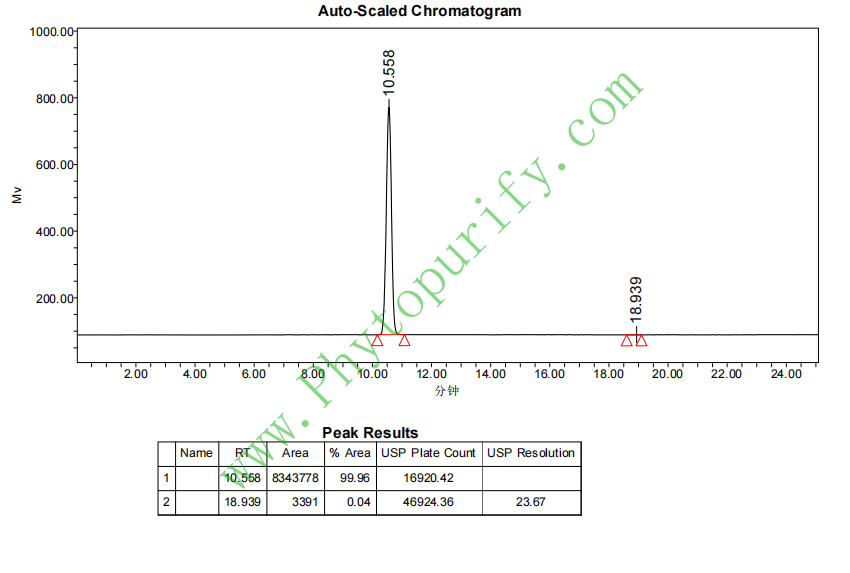
Purity: 95%~99%
Analysis Method: HPLC-DAD or/and HPLC-ELSD
Identification Method: Mass, NMR
Packing: Brown vial or HDPE plastic bottle
Storage: Store in a well closed container, protected from air and light. Put into refrigerate or freeze for long term storage.
Whenever possible, you should prepare and use solutions on the same day. However, if you need to make up stock solutions in advance, we recommend that you store the solution as aliquots in tightly sealed vials at -20℃. Generally, these will be useable for up to two weeks.
The product could be supplied from milligrams to grams
Inquire for bulk scale.
Chengdu Biopurify Phytochemicals Ltd. is a leading company in the research, development, manufacture and marketing of High Quality Phytochemicals and Extracts(especially Active Ingredients from Traditional Chinese Medicine,TCM), Natural Active Pharmaceutical Ingredients worldwide.
The main services:
A. Supply active ingredients and reference standards of TCM, from mgs to kgs scale
B. Custom extraction and purification, target Herb Active Ingredients
C. Custom synthesis and semi-synthesis for Natural Active Ingredients
D. CR(contract research), CM(contract manufacture) and PD(process development) services from lab scale, pilot scale to commercial scale(GMP is also available)
E. TCM compounds library for drug screen,more than 3000 compounds available, many of them are rare and unique.
HPLC of Gypenoside XVII
Storage conditions:Short-term storage at 2~8℃, long-term storage at -20 ~ -80℃
298.1400
2.5096
2.5097
.0912
.5058
.1458
Low
71.8401
6.3809
No
No
No
No
No
No
0.0
Yes
No
No
No
Natural products, as an important treasure trove for drug discovery and development, play an irreplaceable role in the history of human disease prevention and treatment. Among them, saponin compounds have always been a hot topic in pharmacological research due to their structural diversity and wide range of biological activities. Gypenoside XVII (CAS: 80321-69-3), as a type of dammarane triterpenoid saponin, is not only one of the key active ingredients in the traditional medicinal plant Gynostemma pentaphyllum, but also found in ginseng, belonging to the ginsenoside class. In recent years, with the deepening of research, Gynostemma pentaphyllum saponin XVII has attracted much attention due to its unique "phytoestrogenic" like activity and significant anti-tumor effects. It can selectively activate estrogen receptors (ERs) and intervene in the occurrence and development of tumors through multi-target and multi pathway approaches, demonstrating great potential as a novel anti-tumor candidate drug or functional supplement. This article aims to systematically review the chemical structure, plant origin, pharmacological activity, mechanism of action, pharmacological evaluation, and clinical application prospects of Gynostemma pentaphyllum saponin XVII, in order to provide comprehensive scientific references for the in-depth research and development of this compound.
The molecular formula of Gynostemma pentaphyllum saponin XVII is C48H82O18, with a molecular weight of 947.1660. Its chemical structure belongs to the Damane type tetracyclic triterpenoid saponin, with the following core characteristics:
1. Mother nucleus modification The Damatane skeleton is replaced by hydroxyl groups at positions 3 β, 12 β, and 20 pro-S. Among them, the hydroxyl group at position C-3 is connected to a β - D-glucopyranose group; The hydroxyl group at position C-20 is connected to a disaccharide chain, namely β - D-glucopyranosyl - (1 → 6) - β - D-glucopyranoside. This glycosylation pattern is an important structural basis for its biological activity.
2. Unsaturated bond A double bond has been introduced between positions C-24 and C-25, which sets it apart from some other dammarane saponins and may affect its hydrophobicity and interaction with the target protein.
3. Stereochemical configuration The glycosidic bonds are all in the β configuration, ensuring their specific spatial conformation.
Based on the above structure, its physical and chemical properties parameters are as follows:
* Lipid water partition coefficient (LogP)The calculated value is approximately 2.5096, indicating that the compound has a certain lipophilicity but is not highly lipophilic, which is consistent with its structure containing multiple hydrophilic sugar groups.
* Topological Polarity Surface Area (TPSA)Up to 298.1400 Å ², mainly attributed to the abundant hydroxyl groups and oxygen atoms on the sugar ring in the molecule, indicating strong molecular polarity and abundant hydrogen bond donor and acceptor sites.
* Water solubility The value is 0.0912, which belongs to slightly soluble or poorly soluble in water. This is a common feature of most saponin compounds, and solubilization strategies need to be considered in formulation development.
* Preliminary prediction of drug properties Its ability to cross the blood-brain barrier (BBB) is predicted to be "low", meaning it may not easily enter the central nervous system, which may reduce the risk of central side effects for drugs primarily targeting peripheral system diseases. The prediction of hERG channel inhibition is' no ', indicating a low potential risk of arrhythmia. The Ames test predicted a value of 0.0, indicating that it may not have direct genetic toxicity.
These physicochemical properties and pharmacological parameters together constitute the physical and chemical profile of Gynostemma pentaphyllum saponin XVII, providing a key basis for its subsequent pharmacological research, formulation design, and pharmacokinetic optimization.
Gynostemma pentaphyllum (Thunb.) Makino, a plant in the Cucurbitaceae family, is mainly derived from the dried whole plant of Gynostemma pentaphyllum (Thunb.) Makino. Gynostemma pentaphyllum is widely used as a traditional herb ("southern ginseng") in Asia, especially in China, Japan, South Korea, and Southeast Asian countries, for clearing heat, tonifying deficiency, stopping cough, and resolving phlegm. In addition, as a type of ginsenoside, it is also detected in plants of the Panax genus in the Araliaceae family (such as ginseng and American ginseng), but its content is usually lower than that of Gynostemma pentaphyllum.
Efficient and high-purity extraction of saponins XVII from plant materials is a prerequisite for research and application. The commonly used extraction and separation methods currently include:
1. extraction process:
* Solvent extraction method The most commonly used method. Usually, methanol, ethanol, or ethanol water systems with different ratios are used for reflux extraction or ultrasound assisted extraction. Ethanol has become the preferred choice due to its safety, low cost, and high efficiency in extracting saponins.
* Modern assisted extraction technology Methods such as microwave-assisted extraction (MAE), ultrasound assisted extraction (UAE), and supercritical fluid extraction (SFE, commonly using CO ₂ and adding entrainers such as ethanol) can significantly shorten extraction time, improve yield, and reduce solvent consumption.
2. Separation and purification:
*After the crude extract is concentrated under reduced pressure, macroporous adsorption resins (such as D101, AB-8, HPD series) are often used for preliminary enrichment. Different concentrations of ethanol aqueous solutions are used for gradient elution to remove impurities such as polysaccharides and pigments, and to enrich saponin components.
*Further purification relies on chromatographic techniques. Monomers are often separated and purified using methods such as silica gel column chromatography, reverse phase silica gel column chromatography (such as ODS-C18), preparative high-performance liquid chromatography (Prep HPLC), and high-speed countercurrent chromatography (HSCCC). Among them, HSCCC exhibits unique advantages in saponin monomer separation due to its irreversible adsorption and high recovery rate.
*The structural identification of the final compound is carried out using spectroscopic techniques such as mass spectrometry (MS) and nuclear magnetic resonance (NMR, including 1H-NMR, 13C-NMR, 2D-NMR).
Optimizing the extraction and separation process aims to achieve high yield, high purity, and large-scale preparation of Gynostemma pentaphyllum saponin XVII, which is a key link in promoting its industrial application from laboratory research.
A large number of in vitro and in vivo pharmacological studies have shown that saponins XVII from Gynostemma pentaphyllum have various biological activities, among which the most prominent is their anti-tumor effect. In addition, their phytoestrogenic activity is also associated with a wide range of physiological regulatory functions.
1. Antitumor activity
Gynostemma pentaphyllum saponin XVII exhibits inhibitory effects on proliferation, induces apoptosis, inhibits migration and invasion in various human tumor cell lines. The types of cancer cells involved in the study include but are not limited to breast cancer, liver cancer, lung cancer, colon cancer, prostate cancer, etc. Its anti-tumor effect is concentration - and time-dependent. Animal models (such as nude mouse transplant tumor models) further confirmed that the administration of Gynostemma pentaphyllum saponin XVII can significantly inhibit tumor growth, and did not show significant systemic toxicity within a certain dose range, indicating that it has a good therapeutic window.
2. Plant estrogen like activity
As a new type of plant estrogen, Gynostemma pentaphyllum saponin XVII can bind to estrogen receptors (especially ER α and ER β) and exert selective estrogen receptor modulator (SERM) like effects. This means that it can produce differentiated effects in different tissues: in bone tissue and cardiovascular system, it may simulate the protective effect of estrogen (such as promoting bone formation and improving blood lipids), while in breast and endometrium and other tissues, it may show anti estrogen effect or weak stimulation effect, thus potentially reducing the risk of breast cancer and endometrial cancer brought by traditional estrogen replacement therapy. This characteristic makes it potentially valuable in the prevention and treatment of postmenopausal syndrome, osteoporosis, and cardiovascular diseases.
3. Other potential activities
Based on the pharmacological research background of total saponins of Gynostemma pentaphyllum, Gynostemma pentaphyllum saponin XVII may also be involved in regulating immune, anti-inflammatory, antioxidant, neuroprotective, and metabolic processes, but these activities need to be confirmed through in-depth research on this monomer.
The anti-tumor and other pharmacological effects of Gynostemma pentaphyllum saponin XVII are not achieved through a single pathway, but involve a complex multi-target and multi-path network. Existing research has revealed its interactions with multiple key target proteins:
In summary, Gynostemma pentaphyllum saponin XVII exerts anti-tumor effects from multiple dimensions, including inducing apoptosis, inhibiting proliferation, blocking cell cycle, anti angiogenesis, and inhibiting invasion and metastasis, by synergistically acting on the aforementioned targets, forming the molecular basis of its multi-target mechanism of action.
Although Gynostemma pentaphyllum saponin XVII exhibits good pharmacological activity, its success as a drug depends on its drug affinity and pharmacokinetic (PK) behavior in vivo.
1. Evaluation of drug properties
Based on the physical and chemical parameters mentioned earlier, including a high molecular weight (947) and TPSA value, as well as its slightly soluble properties, it is suggested that Gynostemma pentaphyllum saponin XVII may belong to class IV (low solubility, low permeability) compounds in the Biopharmaceutical Classification System (BCS). This usually leads to lower oral bioavailability (BA). The prediction of its low ability to cross the blood-brain barrier limits its therapeutic application in central nervous system diseases, but may be beneficial for avoiding neurotoxicity. The negative inhibition of hERG and the negative prediction of Ames test are favorable signals for its preliminary safety, but it is necessary to comprehensively evaluate its acute toxicity, subchronic toxicity, reproductive toxicity, etc. through real in vitro and in vivo toxicology experiments.
2. Current status of pharmacokinetic research
At present, pharmacokinetic studies on the monomeric system of Gynostemma pentaphyllum saponins XVII are relatively limited, and some information can be referred to studies on total saponins or related saponins of Gynostemma pentaphyllum.
* absorb After oral administration, saponins may undergo hydrolysis (deglycosylation) in the gastrointestinal tract, producing secondary glycosides or aglycones, and their absorption forms and degrees are complex. The prototype drug may be partially absorbed through passive diffusion or active transport, but the first pass effect may be significant.
* distribution Predicted to have a wide tissue distribution, but limited by specific data such as plasma protein binding rate and tissue affinity. Low BBB penetration indicates lower concentration in brain tissue.
* Metabolism The liver is its main metabolic site and may undergo phase I metabolism (such as oxidation and reduction) and phase II metabolism (such as glucuronidation and sulfation). The CYP450 enzyme system, especially CYP3A4, may be involved in its metabolism.
* excretion The prototype drug and its metabolites may be mainly excreted through bile and kidneys.
To enhance its pharmacological properties, future research strategies include:Structural modification(such as preparing prodrugs, modifying sugar chains to improve solubility and membrane permeability)Develop a new drug delivery system(such as nanoparticles, liposomes, microemulsions, solid dispersions, etc. to improve solubility and bioavailability, or to achieve targeted delivery), as well as to carry out systematic Preclinical pharmacokinetic and toxicological studies Clarify its ADMET (absorption, distribution, metabolism, excretion, and toxicity) characteristics.
The diverse pharmacological activities of Gynostemma pentaphyllum saponin XVII, especially its multi-target anti-tumor mechanism and unique phytoestrogenic properties, have depicted broad prospects for its clinical application, but also face challenges.
1. Potential application directions
* Antitumor adjuvant therapy and new drug development It can be used as a sensitizer or detoxifier for traditional chemotherapy and radiotherapy, utilizing its multi-target properties to enhance efficacy and reduce drug resistance. It also has the potential to be developed as a single or combined drug for specific tumors such as breast cancer (especially ER positive) and liver cancer. Its anti metastatic properties are of great significance in preventing tumor recurrence.
* Women's health field As a selective estrogen receptor modulator (SERM), it has the potential to alleviate symptoms such as menopausal hot flashes, night sweats, and emotional fluctuations, as well as prevent and treat postmenopausal osteoporosis, and may have better safety than traditional hormone therapy.
* Chronic Disease Management and Functional Foods Its potential role in regulating blood lipids, blood sugar, anti-inflammatory and antioxidant properties makes it possible for auxiliary management of cardiovascular diseases and metabolic syndrome. Can be used as an active ingredient in functional foods or dietary supplements.
* combination therapy The combination with existing anti-tumor drugs (such as tamoxifen, paclitaxel, etc.) or other natural products may produce synergistic effects, which is an important strategy to improve efficacy, reduce dosage and side effects.
2. Challenges and Prospects
* Bioavailability bottleneck Low water solubility and potential first pass effects are the main challenges faced by its oral administration. Future research needs to focus on advanced drug delivery technologies.
* Deep analysis of the mechanism of action Although some targets are known, their precise molecular binding patterns, upstream and downstream networks of signaling pathways, and specific regulatory mechanisms in different tissues or disease states still need to be further elucidated. Systems biology and computational simulations (such as molecular docking and network pharmacology) can provide powerful tools for this.
* Lack of clinical evidence The current research mainly focuses on the preclinical stage. It is urgent to design rigorous clinical trials to evaluate its safety, tolerability, pharmacokinetics, and initial efficacy in the human body, which is the necessary path for it to enter the market.
* Quality Control and Standardization Ensuring stable raw material sources, controllable extraction processes, and standardized content of Gynostemma pentaphyllum saponin XVII in the final product are the basis for ensuring its consistent efficacy and safety.
Gynostemma pentaphyllum saponin XVII, as a type of dammarane saponin derived from traditional medicinal plants, has become a highlight in natural product pharmacology research due to its novel phytoestrogenic activity and multi-target anti-tumor mechanism. From chemical structure, plant origin to pharmacological activity and molecular mechanism, the research has preliminarily outlined its application blueprint as a potential therapeutic agent. However, its inherent pharmaceutical defects, especially the issue of bioavailability, and the long path from laboratory to clinical translation, are the main challenges currently faced. In the future, through interdisciplinary integration, combined with modern research methods in medicinal chemistry, pharmacy, systems biology, and clinical medicine, we will explore in-depth strategies for structural optimization, innovative drug delivery systems, precise mechanisms of action, and promote clinical translation research. It is expected that the natural molecule of Gynostemma pentaphyllum saponin XVII will be successfully transformed into a drug or functional product that benefits human health, fully demonstrating the scientific value of transitioning from traditional wisdom to modern innovation.
