| Catalog No | Package | Original Price | Price | Inventory | Quantity | Operating |
|---|---|---|---|---|---|---|
| BP4525-5mg | 5mg | $290.00 | Sign in |
|


Storage conditions:Short-term storage at 2~8℃, long-term storage at -20 ~ -80℃
239.2200
2.6982
2.6977
.0617
.5842
.2110
Low
68.7769
5.9911
No
No
No
No
No
No
0.0
Yes
No
No
No
Natural products, as a treasure trove of drug discovery, play an irreplaceable role in the history of human disease prevention and treatment. Among them, saponin compounds have always been a hot topic in pharmacological research due to their structural diversity and wide range of biological activities. Gynostemma pentaphyllum(Gynostemma pentaphyllum (Thunb.) Makino), Known as the "southern ginseng", it is a perennial herbaceous plant in the Cucurbitaceae family. Its rich content of Gypenosides is considered the main active ingredient that exerts various pharmacological effects. Gypenoside LI (CAS number: 94987-10-7) is one of the many monomers of Gypenosides, which has attracted much attention in recent years due to its significant anti-tumor activity. Research has shown that Gypenoside LI can effectively induce apoptosis, arrest the cell cycle, and inhibit migration of cancer cells, demonstrating its potential as an anti-tumor candidate drug.
More notably, in addition to its classic anti-tumor effects, predictions based on systems pharmacology and network pharmacology, as well as preliminary experimental evidence, suggest that the target of Gypenoside LI highly overlaps with the core pathways of aging regulation. Aging is a complex biological process that involves imbalances in energy metabolism, oxidative stress, telomere maintenance, genomic stability, and cellular autophagy. Key proteins such as AMPK, SIRT1, NRF2, TP53, FOXO1, etc. form a sophisticated regulatory network that collectively determines the fate of cells towards aging or maintaining homeostasis. Therefore, exploring whether Gypenoside LI intervenes in aging and related diseases (such as neurodegenerative diseases, metabolic syndrome, etc.) by regulating these core targets has important scientific significance and application prospects.
This article aims to provide a systematic review of Gynostemma pentaphyllum saponins LI, elaborating on its chemical structure, plant origin and extraction, pharmacological activity, molecular mechanism of action, and pharmacological evaluation. It also focuses on exploring its potential value in the field of anti-aging, in order to provide comprehensive academic references for the in-depth research and development of this compound.
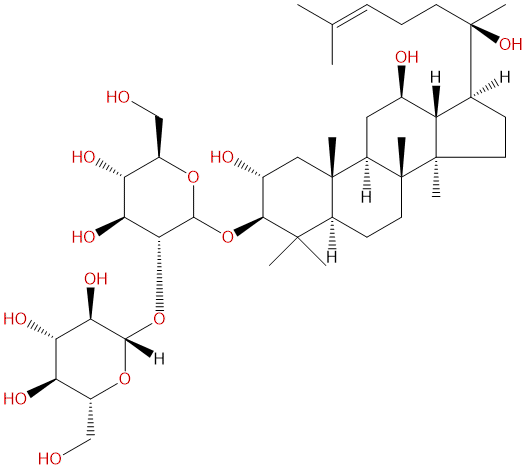
Gynostemma pentaphyllum saponins LI belong to the Damane type tetracyclic triterpenoid saponins, which is a typical structural type of Gynostemma pentaphyllum saponins. Its molecular formula is C ₄₂ H ₇₂ O ₁₅, and its molecular weight is 801.0240. The core of its structure is the Damanane steroid nucleus, which is usually connected to sugar chains at positions C-3 and C-20. This is the structural basis of its saponin properties and a key determinant of its biological activity and water solubility.
From the analysis of the provided pharmacological parameters, the lipid water partition coefficient (LogP) of Gypenoside LI is 2.6982, indicating that the compound has a certain lipophilicity but is not highly lipophilic. Its topological polar surface area (TPSA) is as high as 239.2200 Å ², mainly attributed to the abundant hydrogen bond donor and acceptor sites brought by multiple hydroxyl and sugar groups in the molecule. High TPSA usually means strong interaction ability between molecules and polar environments (such as water), but it may also affect their transmembrane permeability. This characteristic may seem contradictory to its water solubility data (0.0617, low value, may indicate solubility units of log mol/L or similar, actual solubility needs to be combined with experiments), but it actually reflects the typical properties of saponin compounds: due to the presence of sugar chains, they have a certain hydrophilicity, but the entire molecule is large and has a certain hydrophobic steroid nucleus, resulting in limited absolute solubility, often forming micelles or requiring solubilization assistance.
In terms of predicting pharmacokinetic properties, the blood-brain barrier (BBB) permeability of Gypenoside LI is predicted to be "low". This is consistent with its larger molecular weight and high TPSA, suggesting that it may be difficult to freely pass through the intact blood-brain barrier, which is a challenge for the treatment of central nervous system diseases, but may also reduce potential central side effects. The prediction of hERG channel inhibition is' no ', which is a positive signal indicating that it may not have a potential risk of causing QT interval prolongation in the heart and has good cardiovascular safety. The Ames test predicted a value of 0.0, indicating that it may not be mutagenic and has a low risk of genetic toxicity. These preliminary computer predictions provide favorable clues for subsequent in vitro and in vivo safety evaluations.
Gynostemma pentaphyllum saponins LI naturally exist in the whole plant of Gynostemma pentaphyllum, but the content is usually low and fluctuates with the place of origin, harvest season, plant part (the content in leaves is often higher than that in stems), and variety differences. Gynostemma pentaphyllum is mainly distributed in East Asia and Southeast Asia, and is widely distributed and cultivated in various provinces south of the Yangtze River in China.
Extracting and separating Gypenoside LI from Gynostemma pentaphyllum is a complex multi-step process that typically follows the following steps:
1. Extract Firstly, solvent extraction method is used to obtain total saponins from dried Gynostemma pentaphyllum medicinal materials. Common solvents include methanol, ethanol, or ethanol water systems of different concentrations. Modern extraction techniques such as ultrasound assisted extraction, microwave-assisted extraction, and pressurized solvent extraction have been widely used, which can significantly improve extraction efficiency, shorten time, and reduce solvent consumption.
2. Enrichment and Coarse Separation After concentration, the extract is often enriched and purified using macroporous adsorption resins (such as D101 and AB-8). By washing with water to remove impurities and then gradient elution with different concentrations of ethanol, a fraction rich in saponins can be collected.
3. Separation and purification After obtaining the total saponins of Gynostemma pentaphyllum, further separation is needed to obtain the monomeric Gypenoside LI. Conventional chromatography techniques are key means, including:
* silica gel column chromatography As a preliminary separation method, gradient elution is often performed using mixed solvent systems such as chloroform methanol water.
* Reverse phase column chromatography The use of C18 reverse phase packing with methanol water or acetonitrile water as mobile phase is an effective method for separating highly polar saponin monomers.
* Preparation type high-performance liquid chromatography This is the final and most critical step in obtaining high-purity Gypenoside LI. Typically, reverse phase C18 columns are used to achieve precise separation of monomers by optimizing the mobile phase ratio and detection wavelength (saponins often have terminal absorption between 203-210 nm).
4. Identification and characterization The isolated monomer compounds need to be structurally confirmed by spectroscopic techniques such as nuclear magnetic resonance (NMR, including ¹ H-NMR, ¹ ³ C-NMR, 2D-NMR) and mass spectrometry (MS, such as ESI-MS, HR-MS), and compared with literature data or standard samples.
Due to the limited natural extraction yield and high cost, chemical synthesis or biosynthesis (such as using yeast cell factories) of Gypenoside LI is an important research direction for ensuring drug supply in the future, but it is still in the exploratory stage.
The pharmacological activity research of Gynostemma pentaphyllum saponins LI is currently mainly focused on the field of anti-tumor, and has shown emerging potential in anti-aging and related metabolic regulation.
1. Antitumor activity
This is the most concentrated direction of Gypenoside LI research, which has shown multiple pathways of anti-cancer effects in various cancer cell models.
* Inducing cell apoptosis Research has shown that Gypenoside LI can induce cancer cell apoptosis through the mitochondrial pathway (endogenous pathway). Its characteristics include a decrease in mitochondrial membrane potential, release of cytochrome C, activation of caspase-9 and caspase-3, and cleavage of PARP. In certain cell types, activation of the death receptor pathway (exogenous pathway) may also be involved.
* Causing cell cycle arrest Gypenoside LI can block cancer cells at specific cell cycle checkpoints, most commonly G0/G1 or G2/M phase arrest. This is usually associated with regulating the expression of cell cycle proteins (such as Cyclin D1, Cyclin B1) and cyclin dependent kinase inhibitors (such as p21), thereby inhibiting cell proliferation.
* Inhibit cell migration and invasion Preliminary studies suggest that Gypenoside LI can downregulate the expression of matrix metalloproteinases (MMPs) such as MMP-2 and MMP-9, and upregulate the levels of tissue metalloproteinase inhibitors (TIMPs), thereby inhibiting the migration and invasion ability of cancer cells, suggesting its potential for anti-tumor metastasis.
* Induce autophagy In certain research contexts, Gypenoside LI has also been observed to induce protective autophagy or cytotoxic autophagy, and its ultimate role (pro survival or pro death) may depend on the cellular environment and drug concentration.
2. Anti aging and related activities
Although there are not yet abundant reports on anti-aging research directly targeting Gypenoside LI, extensive research on its structural analogues (such as Gypenoside XLIX, Gypenoside XVII, etc.) and its target prediction network suggest its potential value in this field. The core markers of aging include genomic instability, telomere depletion, epigenetic changes, loss of protein homeostasis, dysregulation of nutrient sensing, mitochondrial dysfunction, cellular aging, and stem cell exhaustion. The predicted targets of Gypenoside LI almost cover multiple key links:
* Activate energy and metabolic sensing pathways By potentially activating AMPK and SIRT1, Gypenoside LI may simulate the heat restriction effect, enhance cellular energy metabolism homeostasis, promote mitochondrial biosynthesis and autophagy, and clear senescent cells.
* Enhance antioxidant defense By activating the NRF2 signaling pathway, Gypenoside LI may upregulate the expression of downstream antioxidant enzyme genes, such as SOD1 (superoxide dismutase), CAT (catalase), and HMOX1 (heme oxygenase-1), thereby enhancing the ability of cells to resist oxidative stress, which is one of the main driving factors of aging.
* Regulating cellular aging and cycle By affecting the expression of TP53 and its downstream target CDKN1A (p21), Gypenoside LI may be involved in regulating the cellular aging process. Meanwhile, activation of FOXO1 can further regulate gene networks related to longevity, stress resistance, and metabolism.
* Telomere maintenance The association of the target TERT (telomerase reverse transcriptase) suggests that Gypenoside LI may indirectly affect telomere stability, although the specific mechanism remains to be elucidated.
These predicted activities have broad research prospects in delaying body aging, preventing and treating age-related diseases (such as Alzheimer's disease, atherosclerosis, type 2 diabetes, sarcopenia, etc.).
Gypenoside LI exerts its multifunctional pharmacological effects, especially its potential anti-aging effect, which is likely to be achieved through a synergistic network of multiple targets and pathways. The following is a summary of its core mechanism of action and key molecular targets:
1. AMPK/SIRT1 signaling axis: the core regulation of energy and metabolism
AMPK (AMP activated protein kinase) is an energy receptor in cells that is activated when energy is insufficient. SIRT1 (silencing information regulatory factor 1) is an NAD ⁺ - dependent deacetylase. There is a close mutual activation relationship between the two. Gypenoside LI may act as an inducer or direct activator of metabolic stress, activating AMPK. Activated AMPK directly phosphorylates downstream targets (such as PGC-1 α) to regulate metabolism; On the other hand, SIRT1 is activated by increasing intracellular NAD ⁺ levels or direct interactions. The deacetylation of SIRT1 extensively affects the activity of transcription factors such as TP53, FOXO family, NF - κ B, PGC-1 α, etc., thereby:
* Promote mitochondrial function and biosynthesis Activate PGC-1 α through deacetylation.
* Enhance antioxidant defense(Activating FOXO1 through deacetylation, thereby upregulating SOD2, CAT, etc.).
* Inhibit inflammatory response(Inhibiting NF - κ B through deacetylation).
* Regulating cellular aging and apoptosis(Regulating TP53 activity through deacetylation).
The activation of this axis is a classic molecular mechanism that simulates heat limitation and delays aging.
2. NRF2/ARE antioxidant pathway
NRF2 (nuclear factor E2 related factor 2) is the main regulatory factor of antioxidant response. Under oxidative stress, NRF2 dissociates from its cytoplasmic partner Keap1, enters the nucleus, and binds to ARE (antioxidant response element), initiating the transcription of a series of phase II detoxifying enzymes and antioxidant proteins. Gypenoside LI may stabilize NRF2 and promote its nuclear translocation by modifying cysteine residues on Keap1 or affecting its interaction with NRF2. Its downstream target genes include HMOX1、SOD1、CAT Glutathione synthesis related enzymes, together form a powerful cellular defense system to combat oxidative damage associated with aging.
3. TP53-CDKN1A/p21 pathway: Guardian of cell cycle and aging
TP53 (tumor protein p53) is an important tumor suppressor and the core of cellular stress response. Under conditions such as DNA damage and oxidative stress, TP53 is activated, inducing cell cycle arrest, DNA repair, or apoptosis. Gypenoside LI may affect the stability and activity of TP53 through upstream signals (such as AMPK) or direct action. Activated TP53 upregulates its key target gene transcription CDKN1A(Encoding p21 protein). P21 is a potent cyclin dependent kinase inhibitor, and its sustained high expression is an important marker and executor of cellular aging. The regulation of this pathway by Gypenoside LI may be the dual basis for its induction of cancer cell cycle arrest and potential impact on the accumulation of senescent cells.
4. FOXO transcription factor family
FOXO1 (forkhead box protein O1) is a key transcription factor downstream of the insulin/IGF-1 signaling pathway and plays a significant role in longevity regulation. Under low insulin signaling or stress conditions, FOXO1 undergoes dephosphorylation and enters the nucleus. Gypenoside LI may promote nuclear localization of FOXO1 by activating AMPK or inhibiting Akt. FOXO1 in the nucleus can be deacetylated by SIRT1 and further activated, thereby transcriptional regulation of a series of genes related to cell cycle arrest (such as p27), antioxidant (such as MnSOD), DNA repair, and autophagy, promoting stress resistance and prolonging lifespan.
5. Potential association of telomerase (TERT)
Telomere shortening is the main mechanism of cellular replicative aging. TERT is the catalytic subunit of telomerase, and its activity is associated with cellular immortalization. The predictive association mechanism between Gypenoside LI and TERT is not yet clear. One possibility is that it indirectly protects telomeres through the aforementioned antioxidant (reducing telomere oxidative damage) and anti-inflammatory effects; Another possibility is to indirectly affect the expression of TERT by regulating epigenetic or signaling pathways, but this requires rigorous experimental verification.
In summary, Gypenoside LI may serve as a multi-target regulator that synergistically activates the AMPK/SIRT1 and NRF2 pathways, and finely regulates nodes such as TP53/p21 and FOXO1, forming a network that promotes metabolic health, enhances stress resistance, and clears damaged cells, thereby exerting its anti-tumor and potential anti-aging effects.
Although some progress has been made in the pharmacological activity research of Gynostemma pentaphyllum saponins LI, there is still a relative lack of systematic pharmacological evaluation and pharmacokinetic studies, which is an obstacle that must be overcome to move towards drug development.
1. Evaluation of drug properties
* Solubility and permeability As mentioned earlier, Gypenoside LI belongs to the Biopharmaceutical Classification System (BCS) and may belong to Class IV (low solubility, low permeability) or Class II (low solubility, high permeability) compounds. Its high TPSA and molecular weight are the main factors limiting its membrane permeability. This may result in lower oral bioavailability.
* Metabolic stability Saponin compounds are easily hydrolyzed by acid or metabolized by gut microbiota in the gastrointestinal tract, and the glycosyl portion may be gradually degraded to generate secondary glycosides, which may alter their activity and toxicity. In the liver, it may also undergo phase I (such as oxidation) and phase II (such as glucuronidation, sulfation) metabolism.
* Preliminary Safety Prediction The computer prediction suggests that there is no hERG inhibition or mutagenic risk (Ames negative), which is a good starting point. But a comprehensive preclinical safety evaluation is needed, including acute toxicity, long-term toxicity, reproductive toxicity, etc., to assess its safety window.
2. Pharmacodynamics
At present, there is very little in vivo pharmacokinetic research data on Gypenoside LI, and it can usually be inferred by referring to studies on similar Gypenosides
* absorb After oral administration, absorption may be poor and irregular. The number and type of sugar groups significantly affect absorption. Some saponins may be absorbed in small amounts in the intestine through active transport (such as relying on glucose transporters) or passive diffusion. Developing novel drug delivery systems, such as nanoparticles, liposomes, and self microemulsions, is a potential strategy to enhance their oral absorption.
* distribution Due to its low BBB permeability, its distribution in brain tissue may be limited. It may be mainly distributed in organs with abundant blood flow, such as the liver and kidneys. Its binding rate with plasma proteins is still unknown, which can affect its free drug concentration and distribution volume.
* Metabolism The main metabolic sites are the intestine and liver. The hydrolysis of gut microbiota is its main metabolic pathway, converting saponins into aglycones or deglycosylated secondary glycosides, and the activity of these metabolites needs to be evaluated separately. Liver microsomal enzymes may be involved in further modification of their glycosides.
* excretion The prototype drug and its metabolites may be mainly excreted through bile and kidneys. Due to its large molecular weight, bile excretion may dominate.
Future research urgently needs to establish sensitive and specific biological analysis methods (such as LC-MS/MS) to systematically study the ADME (absorption, distribution, metabolism, excretion) of Gypenoside LI in animals, providing a basis for formulation design and optimization of dosing regimens.
Gynostemma pentaphyllum saponins LI, as a natural product monomer with multi-target activity, has broad clinical application prospects, but also faces many challenges.
1. Potential application directions
* Antitumor adjuvant therapy As an adjuvant drug for chemotherapy or targeted therapy, its advantages of inhibiting tumors through multiple pathways (inducing apoptosis, cycle arrest, anti migration) and predicting low cardiac toxicity may play a role in enhancing efficacy and reducing toxicity. Especially suitable for tumor types that are insensitive to conventional chemotherapy or prone to metastasis.
* Anti aging and prevention and treatment of age-related diseases This is a highly attractive new direction. If its role in regulating the AMPK/SIRT1/NRF2 network is confirmed in vivo, it may be developed for:
* Metabolic diseases Such as improving insulin resistance and non-alcoholic fatty liver disease.
* Neurodegenerative diseases By enhancing the antioxidant capacity and mitochondrial function in the brain, it may have a preventive effect on Alzheimer's disease and Parkinson's disease. But it needs to overcome the problem of poor BBB permeability.
* Cardiovascular aging: Prevent atherosclerosis through antioxidant, anti-inflammatory, improving endothelial function.
* Generalized healthy aging As a nutritional supplement or prescription drug, it is used to delay the overall aging process of the body and improve healthy lifespan.
2. Challenges faced and future research directions
* Drug source and synthesis We need to develop efficient and sustainable large-scale preparation processes, whether through plant cell culture, microbial synthesis, or chemical semi synthesis.
* Improved bioavailability This is the core bottleneck of its drug development. Pharmaceutical methods must be utilized, such as developing nano drug delivery systems, prodrug strategies, eutectic technology, etc., to improve their solubility and permeability.
* Deep analysis of the mechanism of action Current mechanism research is mostly speculative and based on extensions of analogues. It is necessary to use techniques such as gene knockout/knockdown, reporter genes, molecular docking, and surface plasmon resonance to directly verify the interaction mode and affinity of Gypenoside LI with key targets such as AMPK, SIRT1, and NRF2.
* Rigorous preclinical and clinical evaluation Design reasonable animal disease models (such as aging accelerated mice, tumor transplantation models, etc.) based on clear mechanisms, and conduct systematic effectiveness and safety evaluations. Ultimately advancing to human clinical trials to explore its dosage, efficacy, and safety in different indications.
* Research on the synergistic effect of multiple components Natural products often work synergistically with multiple components and targets. Studying the combined effects of Gypenoside LI with other Gypenosides or known drugs may lead to the discovery of better treatment strategies.
Gynostemma pentaphyllum saponin LI is a Damane type saponin monomer isolated from the traditional medicinal plant Gynostemma pentaphyllum. It not only exhibits clear anti-tumor activity, can induce cancer cell apoptosis, cycle arrest, and inhibit migration, but also becomes a highly promising candidate molecule in the field of anti-aging and age-related disease research due to its highly compatible target with the core network of aging regulation (AMPK, SIRT1, NRF2, TP53, FOXO, etc.). Although it has been partially revealed in terms of chemical structure, plant origin, and preliminary pharmacological activity, its in-depth molecular mechanism of action, systematic pharmacokinetic behavior, and the urgent need to improve drug efficacy (especially oral bioavailability) remain the focus and difficulty of future research. With the continuous development of modern pharmacology, pharmacy, and synthetic biology technologies, interdisciplinary cooperation is expected to overcome these obstacles and fully tap into the medicinal value of Gynostemma pentaphyllum saponins LI, transforming it from a promising natural compound into innovative drugs or functional products that can be used to improve human health, fight tumors, and delay aging.
Batch can search by a CAS number,one per line
