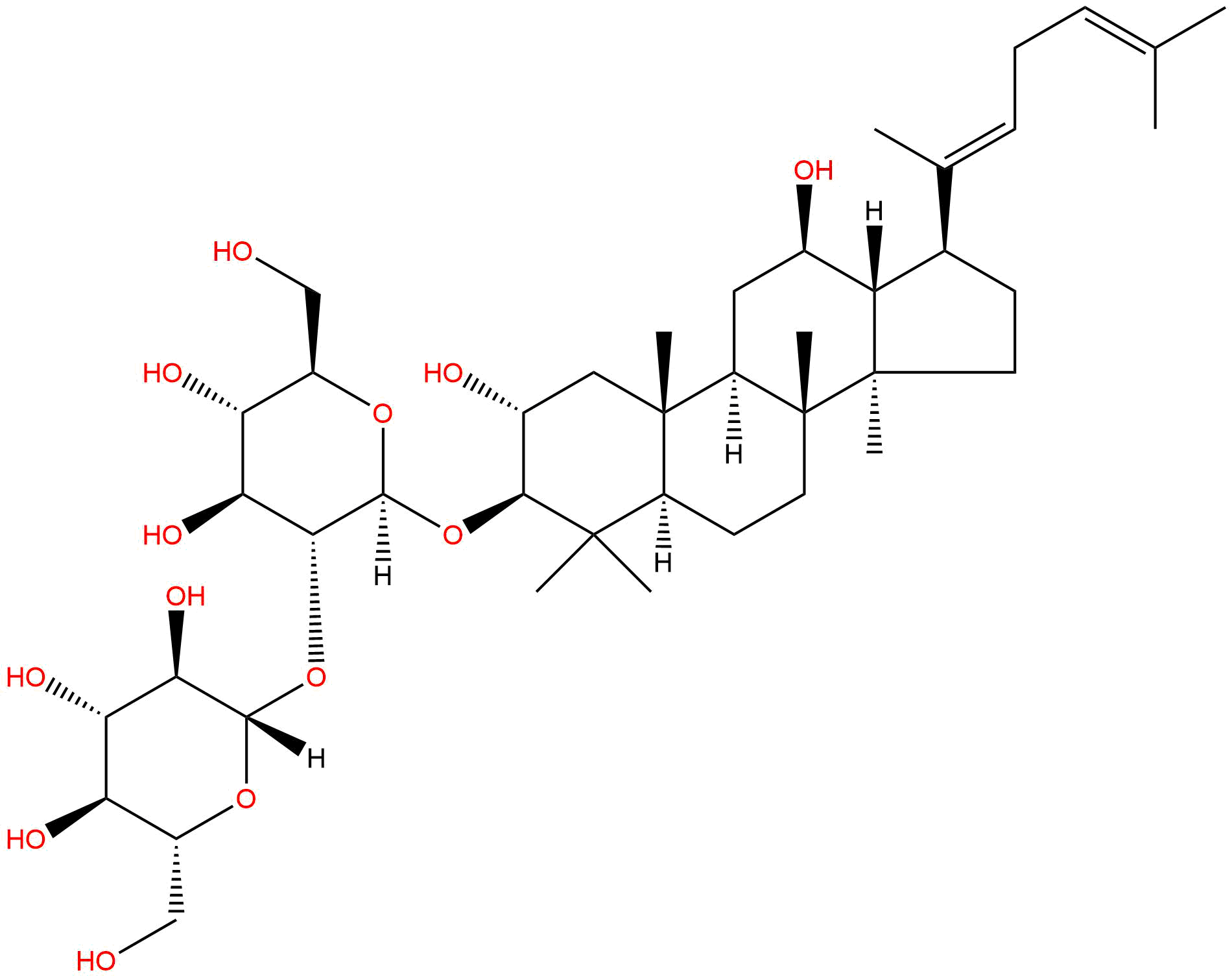


Product name: Damulin A
Synonym name:
Catalogue No.: BP4517
Cas No.: 1202868-74-3
Formula: C42H70O13
Mol Weight: 783.009
Botanical Source:
Type of Compound:
Purity: 95%~99%
Analysis Method: HPLC-DAD or/and HPLC-ELSD
Identification Method: Mass, NMR
Packing: Brown vial or HDPE plastic bottle
Storage: Store in a well closed container, protected from air and light. Put into refrigerate or freeze for long term storage.
Whenever possible, you should prepare and use solutions on the same day. However, if you need to make up stock solutions in advance, we recommend that you store the solution as aliquots in tightly sealed vials at -20℃. Generally, these will be useable for up to two weeks.
The product could be supplied from milligrams to grams
Inquire for bulk scale.
For Reference Standard and R&D, Not for Human Use Directly.
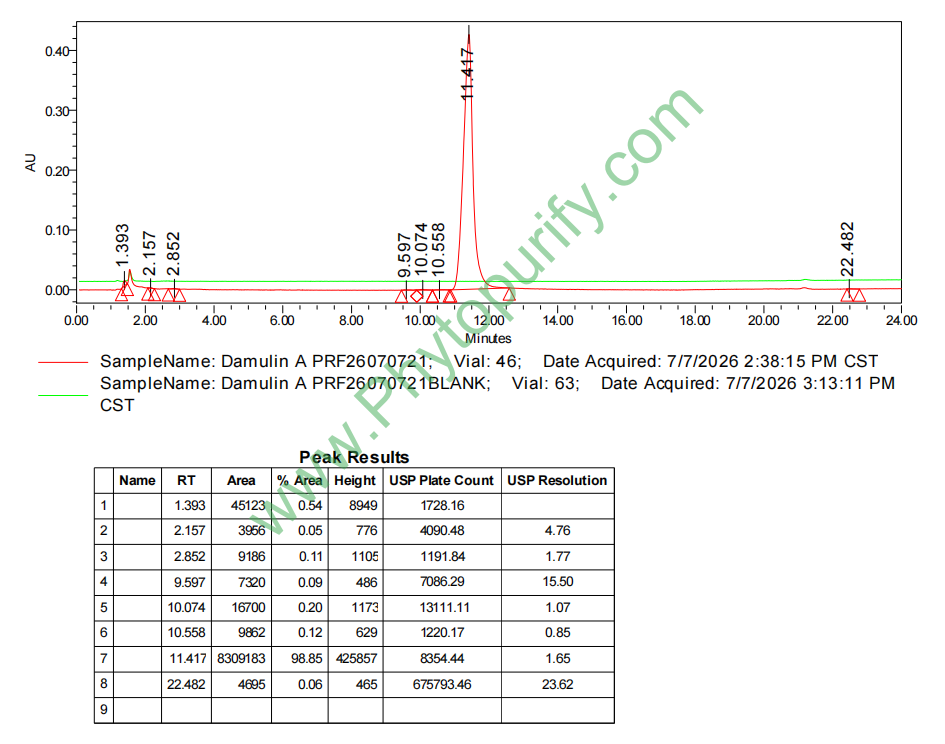
HPLC of Damulin A
Storage conditions:Short-term storage at 2~8℃, long-term storage at -20 ~ -80℃
218.9900
3.0497
3.0494
.0371
.5963
.5005
Low
78.9019
5.9767
No
No
No
No
No
No
0.0
Yes
No
No
No
Malignant tumors are a major disease that seriously threatens human health, and their occurrence and development involve multiple complex biological processes such as uncontrolled cell proliferation, apoptosis escape, invasion and metastasis, and angiogenesis. Although modern medicine has made significant progress in fields such as surgery, radiation therapy, and chemotherapy, traditional chemotherapy drugs suffer from poor selectivity, significant toxic side effects, and susceptibility to drug resistance, prompting researchers to continuously search for highly efficient and low toxicity anti-cancer lead compounds from natural products. Saponins have become an important source of research and development for anti-tumor drugs due to their extensive and significant biological activities.
Damulin A (CAS number: 1202868-74-3) is derived from the traditional medicinal plant Gynostemma pentaphyllum(Gynostemma pentaphyllum)A novel dammarane type triterpenoid saponin isolated from the middle. Gynostemma pentaphyllum is known as the "southern ginseng" and is often used in traditional Asian medicine to clear heat and detoxify, nourish qi and invigorate the spleen. Modern pharmacological research has shown that its extracts and monomeric components have various activities such as anti-tumor, immune regulation, and lipid-lowering. Damulin A, as one of the active ingredients with significant anti-cancer potential, has attracted high attention in the field of natural product pharmacology in recent years. Preliminary studies have revealed that Damulin A can interfere with the survival, proliferation, invasion, and metastasis of tumor cells by acting on multiple key molecular targets, exhibiting multi-target and multi pathway characteristics. This article aims to systematically review the research progress on the chemical structure, plant origin, pharmacological activity, mechanism of action, and medicinal properties of Damulin A, in order to provide comprehensive scientific references for the in-depth research and development of this compound.
The molecular formula of Damulin A is C ₄₂ H ₇₀ O ₁₄, with a molecular weight of 783.0090 Da. Its core skeleton is a damaane type tetracyclic triterpenoid, which is a characteristic structure of saponins in Gynostemma pentaphyllum. This structure is typically linked with sugar chains at positions C-3 and C-20, forming the basic characteristic of saponins. The specific structural differences of Damulin A are reflected in the types, quantities, connection positions, and order of sugar groups, which determine its unique physicochemical properties and biological activities.
From the analysis of parameters related to drug properties, the lipid water partition coefficient (LogP) of Damulin A is 3.0497, indicating its lipophilicity, which is beneficial for its penetration of cell membranes and binding to intracellular targets, but may also affect its water solubility and in vivo distribution. Its topological polar surface area (TPSA) is as high as 218.9900 Å ², which is mainly attributed to the presence of multiple hydroxyl and sugar groups in the molecule. High TPSA is usually unfavorable for passive transmembrane transport. The calculated water solubility value is relatively low (about 0.0371 mg/mL), indicating that Damulin A is a poorly soluble compound, which may be one of the main challenges facing its oral bioavailability. In terms of preliminary safety prediction, existing data indicates that the risk of hERG channel inhibition is "no", and the Ames test result is 0.0 (negative), which preliminarily suggests that the risk of cardiac toxicity and genetic toxicity is low, but needs to be verified through more comprehensive in vitro and in vivo experiments. In addition, its blood-brain barrier permeability is predicted to be "low", indicating that it may not easily enter the central nervous system, which may reduce central nervous system side effects for the treatment of peripheral tumors, but also limit its therapeutic potential for brain tumors.
Damulin A is mainly derived from the gourd family plant Gynostemma pentaphyllum(Gynostemma pentaphyllum (Thunb.) Makino)。 Gynostemma pentaphyllum is a perennial herbaceous vine widely distributed in areas south of the Yangtze River in China, Southeast Asia, Japan, South Korea, and other regions. The whole plant can be used as medicine and is rich in various active ingredients such as saponins, polysaccharides, flavonoids, etc. Among them, dammarane type saponins are considered the most important pharmacological substance basis.
The content of Damulin A in Gynostemma pentaphyllum is usually low and is significantly affected by factors such as origin, harvesting season, plant location, and growth years. Therefore, an efficient extraction and separation process is a key prerequisite for its research and development. At present, its extraction and separation mainly follow the following process:
1. Extract Solvent extraction method is often used. After crushing the dried whole plant of Gynostemma pentaphyllum, methanol, ethanol, or their aqueous solutions (such as 70% -95% ethanol) are usually used for heating reflux extraction or ultrasound assisted extraction. In recent years, green extraction technologies such as supercritical CO ₂ fluid extraction have also been explored to improve efficiency and reduce the use of organic solvents.
2. Enrichment and Coarse Separation The extract obtained by vacuum concentration of the extract is often divided into different polar solvents such as petroleum ether, ethyl acetate, n-butanol, etc. The saponin components such as Damulin A are mainly enriched in the n-butanol extraction site. In addition, macroporous adsorption resin (such as D101, AB-8 type) column chromatography is also commonly used for preliminary enrichment and decolorization to remove impurities.
3. Separation and purification Further isolation and purification of Damulin A from saponin rich parts mainly rely on the combination of multiple column chromatography techniques. Silica gel column chromatography is commonly used for preliminary separation, with gradient elution using chloroform methanol or chloroform methanol water systems in different ratios. Then, fine purification was carried out by combining reversed-phase silica gel column chromatography (such as ODS, C18 packing), dextran gel column chromatography (such as Sephadex LH-20), and high performance liquid chromatography (HPLC) or preparative high performance liquid chromatography (prep HPLC) to finally obtain high-purity damelin A monomer complex. Structural identification involves the comprehensive use of spectroscopic techniques such as nuclear magnetic resonance (NMR, including ¹ H-NMR, ¹ ³ C-NMR, 2D-NMR), mass spectrometry (MS), infrared spectroscopy (IR), and optical rotation.
Numerous in vitro and in vivo pharmacological studies have confirmed that Damulin A has broad-spectrum and significant anti-tumor activity, which is its core pharmacological action.
In vitro anti-tumor activity: Damulin A has a concentration dependent growth inhibition and cytotoxic effect on a variety of human tumor cell lines, including but not limited to liver cancer (such as HepG2, SMMC-7721), breast cancer (such as MCF-7, MDA MB-231), lung cancer (such as A549), colon cancer (such as HCT-116, SW480), prostate cancer (such as PC-3) and leukemia (such as HL-60) cells. Its half maximal inhibitory concentration (IC ₅₀) is usually at the micromolar (μ M) level, exhibiting strong cytotoxic activity. In addition to directly inhibiting cell proliferation, Damulin A can significantly induce apoptosis in tumor cells, characterized by typical features such as cell morphological shrinkage, chromatin condensation, DNA fragmentation, and phosphatidylserine eversion. In addition, the study also found that Damulin A can inhibit the migration and invasion ability of tumor cells, and downregulate the expression of angiogenesis related factors, indicating its potential for anti metastasis and anti angiogenesis.
In vivo anti-tumor activity: In nude mice transplanted tumor models (such as human liver cancer HepG2, human breast cancer MDA-MB-231 transplanted tumor models), intraperitoneal injection or intragastric administration of damelin A can significantly inhibit tumor growth in a dose-dependent manner. Compared with positive control drugs (such as 5-fluorouracil), Damulin A has a smaller effect on mouse body weight at effective doses, suggesting that it may have better tolerance. Histopathological analysis showed that the tumor tissue treated with Damulin A exhibited a large number of apoptotic cells, increased necrotic areas, and decreased microvascular density.
The anti-tumor effect of Damulin A is not achieved through a single pathway, but involves the coordinated regulation of multiple key targets and signaling pathways, reflecting the advantages of natural products with multi-target effects. According to existing research, its main mechanism of action is closely related to the following targets:
Inducing cell apoptosis and regulating Bcl-2 family proteins Damulin A can significantly upregulate the expression of pro apoptotic proteins such as Bax and Bak, while downregulating anti apoptotic proteins MCL1 and BCL2 The expression of caspase leads to a decrease in mitochondrial membrane potential, release of cytochrome C, activation of caspase cascade reaction, and ultimately triggers cell apoptosis. This is one of the core pathways through which it induces tumor cell death.
Inhibition of STAT3 signaling pathway Signal Transduction and Transcription Activation Factor 3(STAT3)It is an important oncogenic transcription factor that is continuously activated in various tumors. Damulin A can inhibit the phosphorylation (activated form) of STAT3, block its nuclear translocation and binding to DNA, thereby downregulating the expression of downstream target genes (such as Cyclin D1, Bcl-2, Survivor, VEGF), achieving multiple effects of inhibiting proliferation, promoting apoptosis, and anti angiogenesis.
Inhibition of matrix metalloproteinases and invasion and metastasis Damulin A can downregulate matrix metalloproteinase-2(MMP2)Expression and activity. MMP2 is a key enzyme that degrades the extracellular matrix (ECM) and basement membrane, and is closely related to tumor invasion and metastasis. By inhibiting MMP2, Damulin A effectively weakened the invasion and migration ability of tumor cells.
Interference with DNA Topoisomerase Function Research suggests that Damulin A may interfere with TOP1 and TOP2A The activity affects the replication, transcription, and repair processes of DNA, leading to the accumulation of DNA damage and triggering cell cycle arrest and apoptosis.
Inhibition of tumor adaptation mediated by HIF-1 αHypoxia inducible factor-1 α(HIF1A)It is the core regulatory factor for tumors to adapt to the hypoxic microenvironment. Damulin A can inhibit the accumulation of HIF-1 α protein under normoxic and hypoxic conditions, thereby suppressing the expression of downstream genes related to angiogenesis (such as VEGF) and glucose metabolism (such as GLUT1), cutting off the energy supply and neovascularization of tumors.
Regulating the MAPK/ERK signaling pathway Damalin A affects mitogen activated protein kinase 1(MAPK1 The activity of ERK2 has a regulatory effect. The MAPK/ERK pathway regulates cell proliferation and survival, and Damulin A may participate in its regulation of cell fate by affecting the activation status of this pathway.
Regulation of hormone related targets: For hormone dependent tumors (such as breast cancer), Damulin A showed a significant effect on estrogen receptor α(ESR1)Signal and aromatase(CYP19A1)Potential regulatory effects of activity. This may inhibit the growth of related tumor cells by interfering with estrogen synthesis or signal transduction.
In summary, Damulin A forms a multidimensional and networked anti-tumor mechanism by simultaneously acting on multiple key targets such as MCL1, BCL2, STAT3, MMP2, TOP1/2A, and HIF1A, synergistically inhibiting the survival, proliferation, invasion, metastasis, and angiogenesis of tumor cells.
Although Damulin A exhibits excellent pharmacological activity, its drug like and pharmacokinetic properties are key bottlenecks in its successful development as a drug.
Drug analysis As mentioned earlier, Damulin A has a high molecular weight (>500), high TPSA (>140), and poor water solubility, all of which do not conform to the classic description of orally active compounds in Lipinski's "Rule of Five", indicating that its oral absorption may be poor. Although high LogP values are beneficial for membrane permeation, they may also lead to metabolic instability, large distribution volume, and other issues. Therefore, Damulin A is more likely to serve as a lead compound and requires structural modifications such as prodrug preparation, sugar modification, and introduction of solubilizing groups to optimize its physicochemical properties, improve solubility, and bioavailability.
Pharmacokinetic study At present, there are relatively limited reports on the pharmacokinetic studies of the Damulin A system, which is related to the difficulty of separation and the scarcity of standard samples. Based on the commonality of its saponin compounds, it can be inferred that its possible PK characteristics may be: after oral administration, it may be partially hydrolyzed by acids or enzymes in the gastrointestinal tract, or metabolized by gut microbiota, resulting in lower absorption rates and significant individual differences. After absorption, it may mainly be distributed in organs with abundant blood flow such as the liver, kidneys, and lungs, with low blood-brain barrier permeability. Saponins typically undergo extensive metabolism, including hydrolysis, oxidation, and binding (such as glucuronidation, sulfation). The prototype drug and its metabolites may be mainly excreted through bile and kidneys. In the future, it is urgent to use modern analytical techniques such as LC-MS/MS to conduct systematic in vitro and in vivo ADME (absorption, distribution, metabolism, excretion) studies, clarify key PK parameters such as absolute bioavailability, plasma protein binding rate, major metabolites and pathways, elimination half-life, etc., and provide a basis for dosage form design and administration regimen optimization.
As a natural saponin with multi-target anti-tumor activity, Damulin A has broad clinical application prospects, but also faces many challenges.
Potential application directions:
1. Development of anti-tumor drugs As a novel multi-target anti-tumor candidate drug, it is particularly suitable for malignant tumors that develop resistance to single target drugs or have complex signaling pathways. Consider developing it into an injectable form or encapsulating it with nano delivery systems (such as liposomes, polymer micelles) to improve its water solubility and targeting, enhance efficacy, and reduce systemic toxicity.
2. combination therapy Given its unique mechanism of action, the combination of Damulin A with existing chemotherapy drugs (such as paclitaxel, cisplatin) or targeted drugs may produce synergistic effects, reduce their respective dosages, thereby reducing toxic side effects and overcoming drug resistance.
3. Adjuvant therapy and cancer prevention Based on the traditional medicinal history of Gynostemma pentaphyllum and the relative safety of its extracts, Damulin A or its structurally simplified compounds or derivatives are expected to be developed as tumor adjuvant therapy products or health food ingredients with anti-cancer effects.
Challenges faced and future research directions:
1. Resources and Synthesis Damalin A has low content in plants and high extraction cost. In the future, it is necessary to strengthen its full synthesis or semi synthesis research, as well as to use synthetic biology techniques (such as microbial heterologous synthesis) to achieve large-scale production and ensure the supply of drug sources.
2. Structural optimization and structure-activity relationship Systematically study the structure-activity relationship (SAR) of Damulin A and clarify its pharmacophores and toxic groups. By rational drug chemical modification, its water solubility, metabolic stability, and oral bioavailability can be significantly improved while retaining or enhancing its activity.
3. In depth study on the mechanism of action Further validate and discover its direct target using chemical biology methods such as affinity fishing, molecular docking, gene knockout/knock in techniques, and elucidate the precise network and temporal relationships of its multi-target effects.
4. Comprehensive preclinical evaluation Complete standardized preclinical pharmacodynamic, pharmacokinetic, and toxicological studies, clarify their therapeutic window, potential toxic target organs, and safe dose range, and provide solid data for clinical trial applications (IND).
5. Explore new indications In addition to anti-tumor effects, the potential activity of Damulin A in other diseases such as inflammation and metabolic disorders can be explored to expand its application scope.
Damulin A is a Damaran type saponin with significant research value discovered from the traditional medicinal plant Gynostemma pentaphyllum. It exhibits multi pathway and multi link anti-tumor pharmacological activity by synergistically targeting multiple key targets in tumor development, such as MCL1, BCL2, STAT3, MMP2, TOP1/2A, HIF1A, etc., demonstrating the unique advantages of natural product multi-target intervention in complex diseases. Although it faces challenges such as poor water solubility and potential poor oral absorption in drug development, this is precisely the direction that modern pharmaceutical chemistry and pharmacy can focus on optimizing. With in-depth research on its structure-activity relationship, mechanism of action, pharmacokinetic properties, and structural modification through synthetic biology and drug design methods, Damulin A is expected to be developed into a new, efficient, and low toxicity multi-target anti-tumor drug or lead compound, providing new strategies and choices for the treatment of malignant tumors. The research process once again confirms the eternal value of seeking inspiration for modern drug development from traditional medicinal plants.
