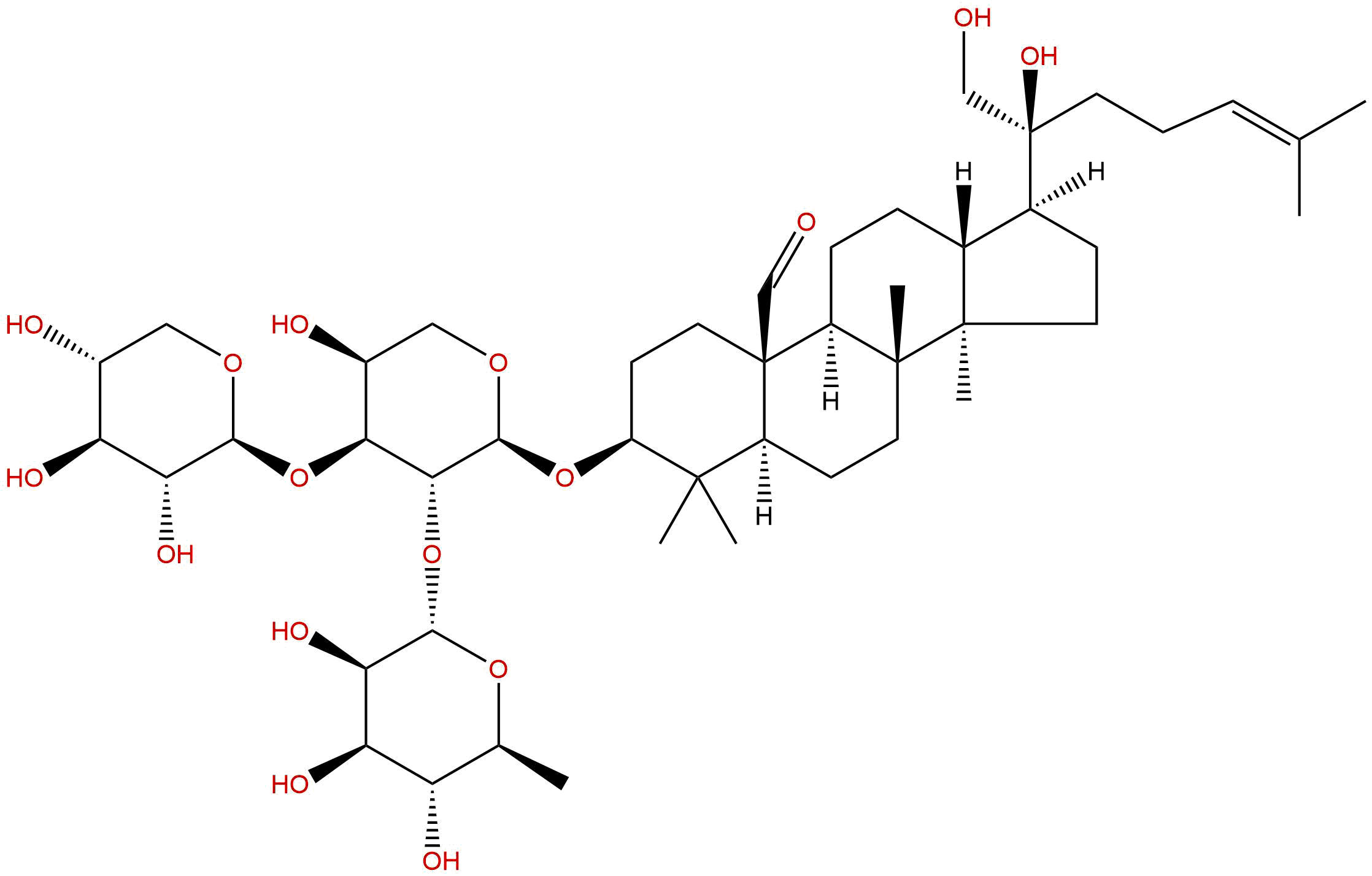


Product name: Gylongiposide I
Synonym name:
Catalogue No.: BP2228
Cas No.: 206876-12-2
Formula: C46H76O16
Mol Weight: 885.098
Botanical Source:
Type of Compound: Triterpenoids
Purity: 95%~99%
Analysis Method: HPLC-DAD or/and HPLC-ELSD
Identification Method: Mass, NMR
Packing: Brown vial or HDPE plastic bottle
Storage: Store in a well closed container, protected from air and light. Put into refrigerate or freeze for long term storage.
Whenever possible, you should prepare and use solutions on the same day. However, if you need to make up stock solutions in advance, we recommend that you store the solution as aliquots in tightly sealed vials at -20℃. Generally, these will be useable for up to two weeks.
The product could be supplied from milligrams to grams
Inquire for bulk scale.
For Reference Standard and R&D, Not for Human Use Directly.
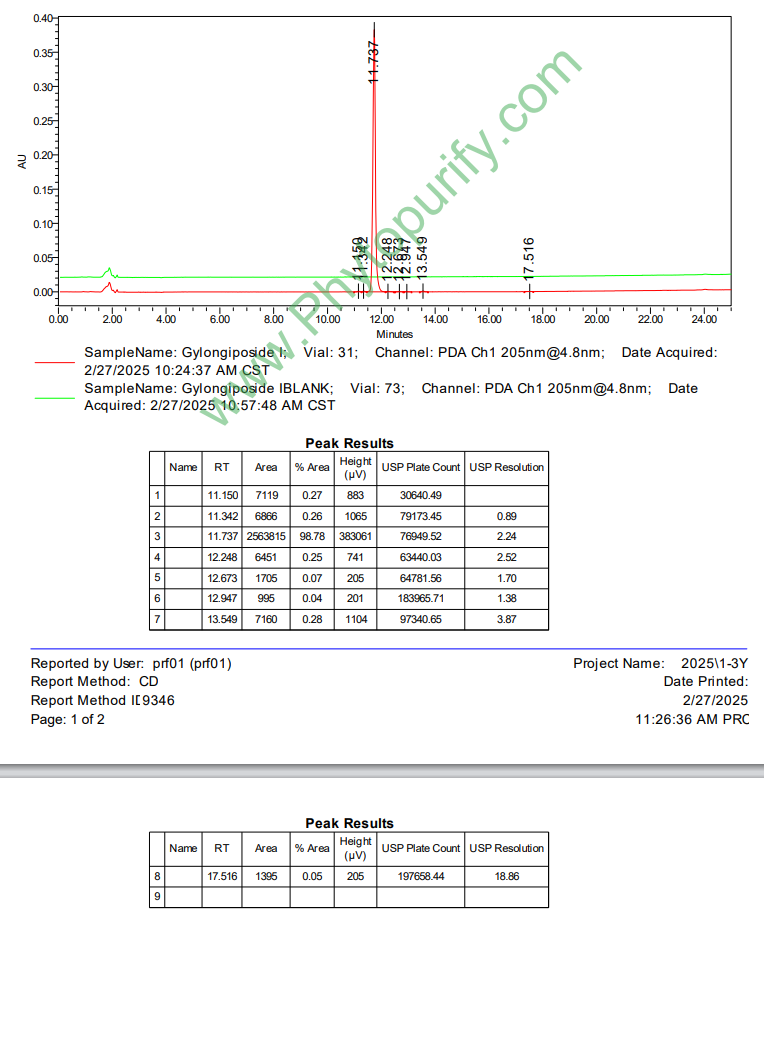
HPLC of Gylongiposide I
Storage conditions:Short-term storage at 2~8℃, long-term storage at -20 ~ -80℃
254.5200
2.5867
2.5864
.0783
.5728
.2023
Low
75.1248
6.4374
No
No
No
No
No
No
0.0
Yes
No
No
Yes
Enterovirus 71 (EV71) is one of the main pathogens causing Hand Foot Mouth Disease (HFMD), particularly associated with severe neurological complications, posing a serious threat to global children's health. Although vaccines have been developed, there is still a shortage of specific antiviral drugs for EV71 infection. Developing new, efficient, and low toxicity anti EV71 drugs is currently an important research direction. Natural products have always been an important source of innovative drug discovery due to their structural diversity and rich biological activity. Gynostemma pentaphyllum(Gynostemma pentaphyllum)As a traditional medicinal plant, it is rich in various bioactive saponins, which have shown extensive potential in anti-inflammatory, antioxidant, anti-tumor, and immune regulation.
Gylongiposide I (CAS number: 206876-12-2) is a dammarane type triterpenoid saponin isolated from plants of the genus Gynostemma. In recent years, studies have found that this compound exhibits significant and selective inhibitory activity against EV71 virus, with a half maximal effective concentration (EC50) reaching the micromolar level. It can also effectively reduce the levels of viral protein and genomic RNA, indicating its enormous potential as a lead compound against EV71. Even more interestingly, preliminary bioinformatics and cross disciplinary studies suggest that the biological effects of Gylongiposide I may not be limited to the antiviral field. Its structural skeleton is related to the regulation of multiple signaling pathways, making it potentially valuable for research in other disease models, including colorectal cancer. Colorectal cancer is a highly prevalent malignant tumor worldwide, and its occurrence and development involve complex molecular networks, including dysregulation of cell apoptosis (such as MCL1, BCL2), abnormal energy metabolism (AMPK), abnormal activation of inflammatory signals (TLR4, STAT3), overexpression of drug efflux pumps (ABCB1, ABCG2), and extracellular matrix degradation (MMP2). Whether Gylongiposide I can exert pleiotropic pharmacological effects by regulating these key targets is a scientific question worthy of further exploration.
The purpose of this article is to provide a systematic review of saponins I from Gynostemma pentaphyllum, focusing on their chemical structure, plant sources, extraction methods, resistance to EV71 and other potential pharmacological activities, mechanisms of action and molecular targets, pharmacological evaluation, and clinical application prospects. The aim is to provide comprehensive scientific references for the in-depth research and drug development of this natural product.
Long stemmed Gynostemma pentaphyllum saponin I is a dammarane type tetracyclic triterpenoid saponin compound. Its molecular formula is C ₄₅ H ₇₄ O ₁₇, and its molecular weight is 885.0980. The core structure of this compound is a damane type steroid nucleus, characterized by β - methyl groups attached to the C-8 and C-10 positions, β - hydrogen groups attached to the C-13 position, and a β - side chain at the C-17 position. In Gylongiposide I, the C-3 and C-20 positions of the mother nucleus are usually replaced by hydroxyl groups and further connected to the sugar chain, forming a double sugar chain saponin structure. A typical sugar group combination may include glucose, xylose, xylose, etc. The connection position and order of these sugar groups are key to their specific biological activities. The precise two-dimensional and three-dimensional spatial structures require final confirmation through techniques such as nuclear magnetic resonance (NMR) and X-ray single crystal diffraction.
From the perspective of computational chemistry and preliminary analysis of drug properties, the lipid water partition coefficient (LogP) of Gylongiposide I is 2.5867, indicating that the compound has a certain lipophilicity but is not highly hydrophobic, which is beneficial for its penetration and distribution in biofilms. Its topological polar surface area (TPSA) is as high as 254.5200 Å ², which is mainly attributed to the numerous oxygen atoms on the hydroxyl and sugar groups in the molecule, which form a strong hydrogen bonding network. High TPSA is an important factor limiting the transmembrane permeability of compounds. Consistent with this, its calculated water solubility value is 0.0783 mg/mL, belonging to the category of slightly soluble or poorly soluble, which poses a challenge for its formulation development. In terms of biological distribution, predictions indicate a lower ability to cross the blood-brain barrier (BBB), which may not be a disadvantage for drugs primarily targeting the peripheral system (such as the initial site of enterovirus infection), but suggests that special delivery strategies may be required for the treatment of central nervous system viral infections. The preliminary safety warning shows that the risk of hERG channel inhibition is "no", and the predicted value of Ames mutagenicity test is 0.0, indicating that its potential risks of cardiac toxicity and genetic toxicity are low, and it has good preliminary safety characteristics.
Long stemmed Gynostemma saponins I mainly come from the genus Gynostemma in the Cucurbitaceae family(Gynostemma)Plants. Gynostemma genus plants are widely distributed in East Asia and Southeast Asia, and are known as "southern ginseng" in China, with a long history of medicinal use. among which,Gynostemma pentaphyllum(Gynostemma pentaphyllum) and Gynostemma longipes(Long stemmed Gynostemma pentaphyllum) is the most studied species in this genus, with abundant saponin content. Gylongiposide I was initially isolated and identified from Gynostemma pentaphyllum, hence its name, but subsequent studies have also found this component or its analogues in other species of Gynostemma pentaphyllum.
The extraction and purification of Gylongiposide I from plant materials typically follow the conventional process of natural product chemistry. Firstly, crush the dried whole plant of Gynostemma pentaphyllum. Solvent extraction is commonly used for extraction, with commonly used solvents including methanol, ethanol, or ethanol water mixed solutions in different ratios. Heating reflux or ultrasound assisted extraction is used to improve efficiency. After the crude extract is concentrated under reduced pressure, a paste is obtained.
Subsequently, various chromatographic techniques need to be used to separate and purify the extract to obtain monomeric compounds. Preliminary separation is often carried out using macroporous adsorption resin column chromatography, with gradient elution using water and different concentrations of ethanol to enrich saponin components. Further purification depends on normal phase silica gel column chromatography, reverse phase silica gel column chromatography (such as ODS-C18), dextran gel column chromatography (such as Sephadex LH-20) and high performance liquid chromatography (HPLC). Among them, preparative or semi preparative reverse phase HPLC is currently the key technology for obtaining high-purity Gylongiposide I monomers, usually using methanol water or acetonitrile water as the mobile phase. During the entire separation process, thin-layer chromatography (TLC) or analytical HPLC is required for tracking and detection. The final compound was structurally identified by mass spectrometry (MS), one-dimensional and two-dimensional nuclear magnetic resonance spectra (¹ H-NMR, ¹ ³ C-NMR, HSQC, HMBC, etc.).
Modern extraction techniques such as microwave-assisted extraction and supercritical fluid extraction may also be applied to improve extraction efficiency and selectivity, but further research is needed to optimize the process specifically for Gylongiposide I. In addition, considering its potential medicinal value, exploring biosynthesis through plant cell culture or synthetic biology methods is also a future direction for solving the problem of sustainable resource supply.
1. Antiviral activity (core activity)
The most clear and prominent pharmacological activity of Gylongiposide I is its antiviral effect against enterovirus 71 (EV71). In vitro cell experiments (usually conducted on rhabdomyosarcoma RD cells or human malignant embryonic rhabdomyosarcoma cells) have shown that Gylongiposide I can effectively inhibit the replication of EV71 virus, with an EC50 value of 1.53 μ M, demonstrating strong inhibitory efficacy. More importantly, the compound has low toxicity to host cells at effective concentrations and a high selectivity index (SI, CC50/EC50), indicating that it has a good therapeutic window. Further mechanism validation experiments confirmed that after treatment with Gylongiposide I, the expression level of viral capsid protein VP1 in infected cells significantly decreased, and the copy number of viral genomic RNA also significantly decreased. These results directly demonstrate that Gylongiposide I exerts its antiviral effect by interfering with the lifecycle of EV71, rather than simply providing cell protection. In addition to EV71, its antiviral activity against other enteroviruses (such as Coxsackievirus A16) or related viruses still needs further research.
2. Potential anti-tumor activity (taking colorectal cancer as an example)
Although there are few reports on the direct anti-tumor research of Gylongiposide I, based on its saponin structure characteristics and related target prediction, it has potential research value in the field of tumor prevention and treatment, especially in colorectal cancer. Many saponins of Gynostemma pentaphyllum have been proven to exert anti-tumor effects through inducing cell apoptosis, inhibiting proliferation, blocking cell cycle, and anti metastasis pathways.
* Inducing apoptosis and regulating apoptosis related proteins Saponins often induce tumor cell apoptosis through the mitochondrial pathway. The predicted targets MCL1 and BCL2 are important anti apoptotic proteins, and their overexpression is closely related to chemotherapy resistance in colorectal cancer. Gylongiposide I may promote cytochrome C release by downregulating the expression of MCL1 and BCL2, thereby activating the caspase cascade reaction and inducing apoptosis in colorectal cancer cells.
* Regulating energy metabolism and autophagy AMPK (PRKAA1) is a core regulatory factor of cellular energy metabolism, and its activation can inhibit the mTOR pathway, thereby affecting cell growth, proliferation, and autophagy. Activation of AMPK is a common mechanism for many natural products to combat tumors. Gylongiposide I may act as an activator of AMPK, restoring energy balance and inhibiting abnormal proliferation in colorectal cancer cells.
* Inhibiting inflammation and immune escape Chronic inflammation is an important driving factor for the occurrence of colorectal cancer. The TLR4/STAT3 signaling pathway plays a crucial role in connecting inflammation and cancer. The sustained activation of STAT3 promotes tumor cell survival, proliferation, and immune suppression. Gylongiposide I may block this oncogenic pathway by interfering with TLR4 signaling or directly inhibiting STAT3 phosphorylation and nuclear translocation.
* Reverse multidrug resistance ABCB1 (P-gp) and ABCG2 (BCRP) are drug efflux pumps overexpressed by tumor cells, leading to chemotherapy failure. Some natural saponins have been confirmed to be inhibitors of these efflux pumps. Gylongiposide I may reverse multidrug resistance by competitively inhibiting the function of ABCB1/ABCG2, increasing the accumulation of conventional chemotherapy drugs in colorectal cancer cells.
* Inhibit invasion and metastasis MMP2 is a key enzyme that degrades extracellular matrix and promotes tumor invasion and metastasis. Inhibiting the activity or expression of MMP2 is an important strategy for anti metastatic therapy. Gylongiposide I may inhibit the migration and invasion ability of colorectal cancer cells by downregulating the expression of MMP2.
* Potential for prodrug conversion CES1 and CES2 are carboxylesterases highly expressed in the intestine and liver, capable of converting certain ester prodrugs into active forms. Whether the structure of Gylongiposide I can be modified by these enzymes to affect its own activity or serve as the basis for prodrug design is an interesting exploration direction.
3. Other potential activities
As a member of the Gylongiposide saponin family, Gylongiposide I may also inherit the antioxidant, anti-inflammatory, and immunomodulatory activities shared by this class of compounds. These activities may be related to their antiviral and anti-tumor auxiliary mechanisms, such as by reducing oxidative stress and inflammatory responses in the viral or tumor microenvironment.
The exact mechanism of action of Gylongiposide I has not been fully elucidated, but based on existing research and target prediction, a possible network of its multi-level effects can be outlined.
1. Anti EV71 virus mechanism:
Current research suggests that its mechanism of action may occur in the early replication stage after the virus enters the cell. The specific mechanism may include:
* Inhibit virus shedding or genome release Interference with the interaction between viral particles and the intracellular environment, preventing their release of genetic material.
* Interference with viral RNA replication or protein translation It may inhibit the synthesis of viral RNA or the translation of viral proteins (such as VP1) by acting on key components in host factors or viral replication complexes.
* Regulating host antiviral response It may indirectly inhibit virus replication by activating the host's natural immune pathways (such as RIG-I/MDA5 or interferon pathways), enhancing the cell's own antiviral status. It is worth exploring whether it interacts with pattern recognition receptors such as TLR4.
2. Potential anti colorectal cancer network:
It may exert anti-tumor effects through multi-target and multi pathway synergy:
* AMPK/mTOR axis Activation of AMPK inhibits downstream mTORC1 activity, leading to protein synthesis inhibition and autophagy activation, thereby suppressing tumor cell growth and promoting its death.
* Mitochondrial apoptosis pathway Downregulate the expression of anti apoptotic proteins such as MCL1 and BCL2, disrupt mitochondrial membrane potential, promote the release of apoptotic factors, ultimately activate caspase-3, and execute the cell apoptosis program.
* TLR4/MyD88/STAT3 signaling pathway Inhibiting the activation of TLR4 or interfering with its downstream signaling, blocking the abnormal activation of NF - κ B and STAT3, thereby inhibiting the production of inflammatory factors, cell proliferation, and the formation of an immunosuppressive microenvironment.
* Direct targeting effect May directly interact with the drug binding sites of ABCB1/ABCG2, inhibit their ATPase activity, and block drug efflux function. It is also possible to suppress the gene expression of MMP2 by regulating transcription factors.
* Metabolic intervention Its saponin structure may affect cell membrane fluidity or interact with certain metabolic enzymes, interfering with the metabolic reprogramming of tumor cells.
These mechanism assumptions form a complex regulatory network, in which Gylongiposide I may play the role of a "multi-target regulator". Future research needs to confirm their direct targets and precise signaling pathways through methods such as gene knockout/knockout, reporter gene testing, proteomics, molecular docking, and validation experiments.
Based on its physical and chemical properties, a preliminary analysis of the pharmacological properties of Gylongiposide I is conducted
Advantage:
1. Clear activity The EC50 value of anti-EV71 is at the micromolar level, indicating strong activity.
2. Good selectivity Preliminary data shows that it has low toxicity to host cells and high selectivity index.
3. Good security warning There is no significant risk of hERG inhibition and Ames mutagenicity.
4. LogP moderate LogP is about 2.59, which is beneficial for distribution in the body.
Challenge:
1. Poor solubility Low water solubility (0.0783 mg/mL) is its main drawback, which will seriously affect its oral bioavailability and the development of injectable formulations.
2. Restricted membrane permeability High TPSA (254.52 Å ²) indicates weak passive transmembrane diffusion ability, which may affect intestinal absorption and cellular uptake.
3. High molecular weight The molecular weight is close to 900, which is a relatively large molecule, which is usually not conducive to oral absorption and distribution.
4. Metabolism and stability unknown As saponin compounds, they are easily hydrolyzed by acids or enzymes in the gastrointestinal tract, or undergo extensive metabolism in the liver (such as deglycosylation), resulting in low exposure to the prototype drug. Whether it is a substrate of P-glycoprotein (ABCB1) also needs to be verified. If so, it will exacerbate the problems of poor oral absorption and low brain permeability.
5. Low blood-brain barrier penetration Predicting low BBB penetration is unfavorable for the treatment of central nervous system infections that may be caused by EV71.
Prospects for pharmacokinetic (PK) research:
Currently, there is a lack of in vivo pharmacokinetic data on the Gylongiposide I system. Future research requires the establishment of sensitive and specific biological analysis methods (such as LC-MS/MS) to investigate their effects in animal models such as mice and rats
* absorb Exploring the bioavailability and absorption site and mechanism after oral administration.
* distribution The distribution in various tissues, especially target organs such as the intestine and liver.
* Metabolism Identify its main metabolites and metabolic pathways, and clarify metabolic enzymes (such as CES1/CES2, CYP450).
* excretion The main excretion pathways are bile and urine.
Formulation strategy:
To enhance its pharmacological properties, advanced formulation technology may be required:
* Solubilization technology The use of cyclodextrin inclusion, solid dispersion, nanocrystals, liposomes, micelles and other dosage forms significantly improves their solubility and dissolution rate.
* Prodrug design: Modify the sugar or hydroxyl groups to prepare lipophilic prodrugs for improved absorption, or release the original drug under the action of specific enzymes (such as CES2) in vivo to achieve targeted delivery.
* route of administration: In the treatment of hand, foot and mouth disease, consider developing oral sprays, gel and other local drug delivery agents to directly affect the oral and intestinal lesions; For systemic infections or anti-tumor applications, it is necessary to optimize the oral or injectable dosing regimen.
The clinical application prospects of Long stemmed Gynostemma pentaphyllum saponins I mainly revolve around their core anti EV71 activity, and are expected to be expanded to other fields.
1. Anti EV71 infection treatment drugs:
* Treatment of Hand, Foot and Mouth Disease As an antiviral drug for oral or local use, it is used to treat common hand, foot, and mouth disease caused by EV71, reduce viral load, shorten the course of the disease, and alleviate symptoms.
* Severe prevention and adjuvant therapy Combined with supportive therapy for children with high-risk factors for severe illness, it may help prevent the virus from spreading to the nervous system and reduce the incidence of severe illness. Given its poor BBB penetration, for patients who have already experienced central infections, it may be necessary to develop special delivery systems (such as nanocarriers) or combine them with other drugs that can enter the brain.
* combination therapy Can be used in combination with existing broad-spectrum antiviral drugs such as interferon and ribavirin, or other investigational EV71 inhibitors with different mechanisms of action, in order to produce synergistic effects and reduce the risk of drug resistance.
2. Potential applications in the prevention and treatment of colorectal cancer:
* Chemical preventive agent Based on its potential for anti-inflammatory, antioxidant, and modulation of signaling pathways, it may be used as a chemopreventive agent for colorectal cancer in high-risk populations such as patients with inflammatory bowel disease.
* Adjuvant therapy and sensitizers Combined with conventional chemotherapy drugs such as 5-fluorouracil and oxaliplatin, it enhances chemotherapy efficacy, reduces chemotherapy dose and toxic side effects by reversing ABCB1/ABCG2 mediated multidrug resistance, inhibiting STAT3 survival signaling, and other pathways.
* Exploration of Targeted Therapy Develop more precise derivatives targeting specific targets such as AMPK and STAT3 for the treatment of specific molecular subtypes of colorectal cancer.
3. Outlook and future research directions:
* In depth mechanism research Using chemical biology methods such as affinity fishing and molecular probes to identify its direct target and elucidate its precise molecular mechanisms for antiviral and anti-tumor effects.
* Structural optimization and structure-activity relationship Systematically study the relationship between the types of sugar groups, connection modes, and biological activity. By modifying its structure to improve its water solubility, metabolic stability, and targeting ability, derivatives with better drug properties can be obtained.
* System preclinical evaluation Complete comprehensive in vivo pharmacological (different animal models), pharmacokinetic, and toxicological studies to provide solid data for its clinical trial application.
* Expand indications Explore its activity against other viruses (such as other enteroviruses, coronaviruses) or cancers (such as liver cancer, lung cancer).
* Multi omics integration research Combining transcriptomics, proteomics, and metabolomics, systematically revealing its functional network at the cellular and animal levels.
As a natural saponin derived from traditional medicinal plants, Long stemmed Gynostemma pentaphyllum saponins I have demonstrated unique drug development value due to their clear anti EV71 virus activity and potential to act on multiple disease-related targets such as AMPK, STAT3, BCL2, etc. It not only provides new candidate molecules for addressing the important public health issue of hand, foot, and mouth disease, but also brings new ideas for intervention strategies for multifactorial complex diseases such as colorectal cancer. However, its inherent pharmaceutical defects, particularly low water solubility and potential metabolic instability, are the main obstacles on the path to clinical application. Future research requires close collaboration among multiple disciplines such as chemistry, pharmacology, and pharmacy. Based on a thorough analysis of its mechanism of action, reasonable structural modifications and advanced formulation techniques are used to overcome its shortcomings and fully unleash its therapeutic potential. From the research process of long stem Gynostemma pentaphyllum saponins I, it can be seen that natural products are still an indispensable treasure trove for discovering novel lead compounds and revealing new biological mechanisms, and their modern translational research has sustained and important significance for innovative drug development.
