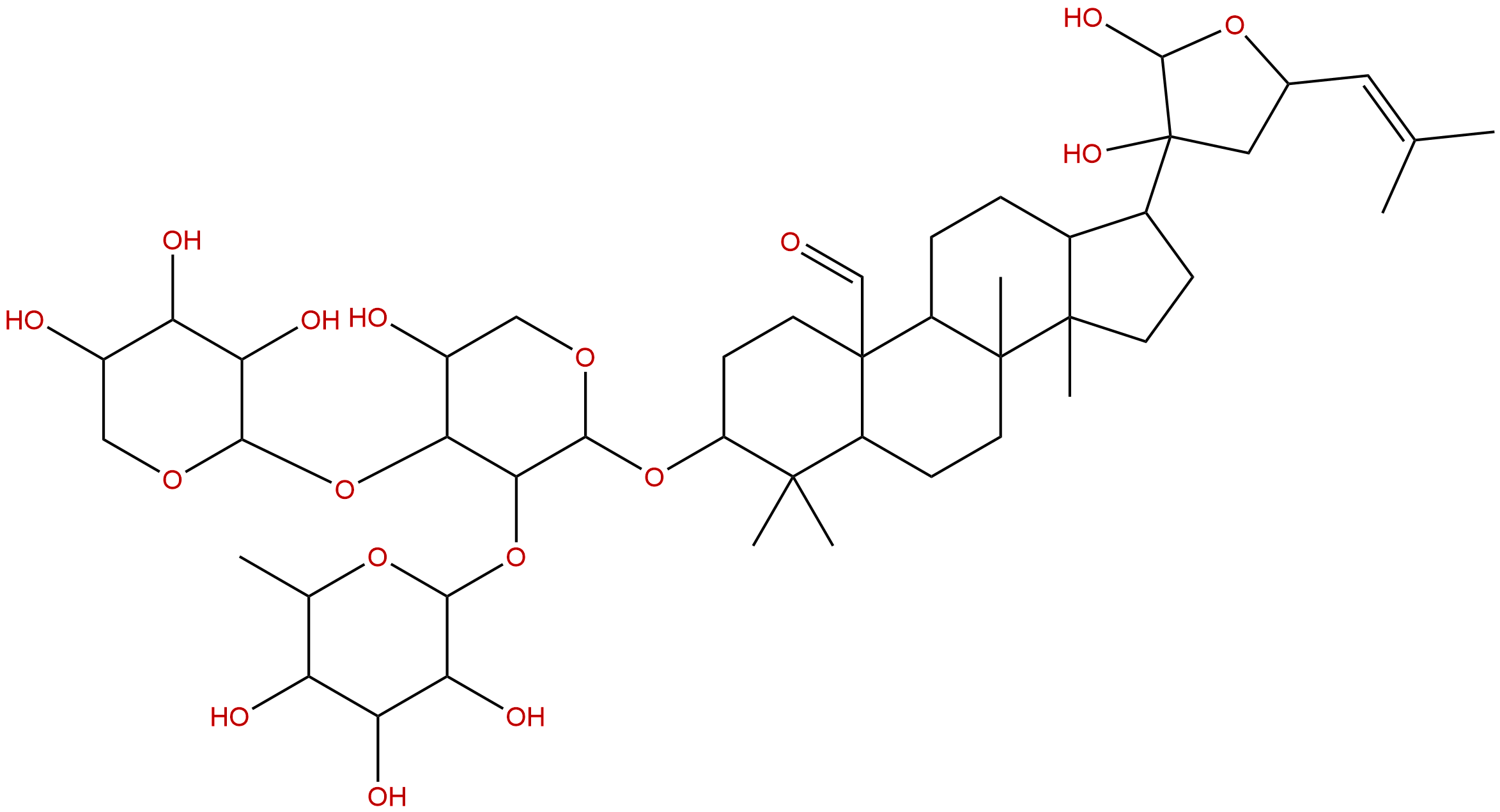


Product name: Gypenoside A
Synonym name:
Catalogue No.: BP3728
Cas No.: 157752-01-7
Formula: C46H74O17
Mol Weight: 899.081
Botanical Source:
Physical Description:
Type of Compound:
Purity: 95%~99%
Analysis Method: HPLC-DAD or/and HPLC-ELSD
Identification Method: Mass, NMR
Packing: Brown vial or HDPE plastic bottle
The product could be supplied from milligrams to grams. Inquire for bulk scale.
We provide solution to improve the water-solubility of compounds, thereby facilitating the variety of activity tests and clinic uses.
For Reference Standard and R&D, Not for Human Use Directly.
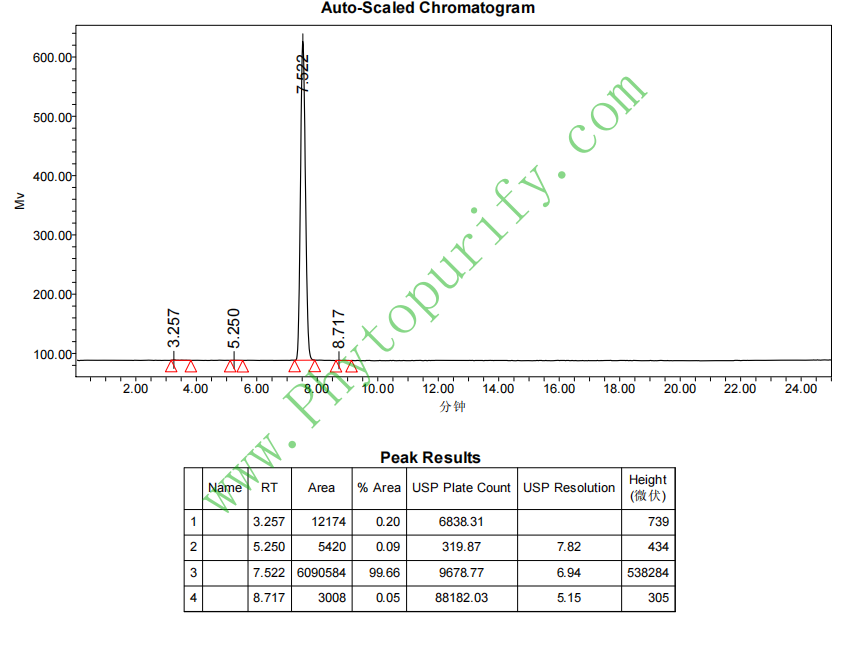
HPLC of Gypenoside A
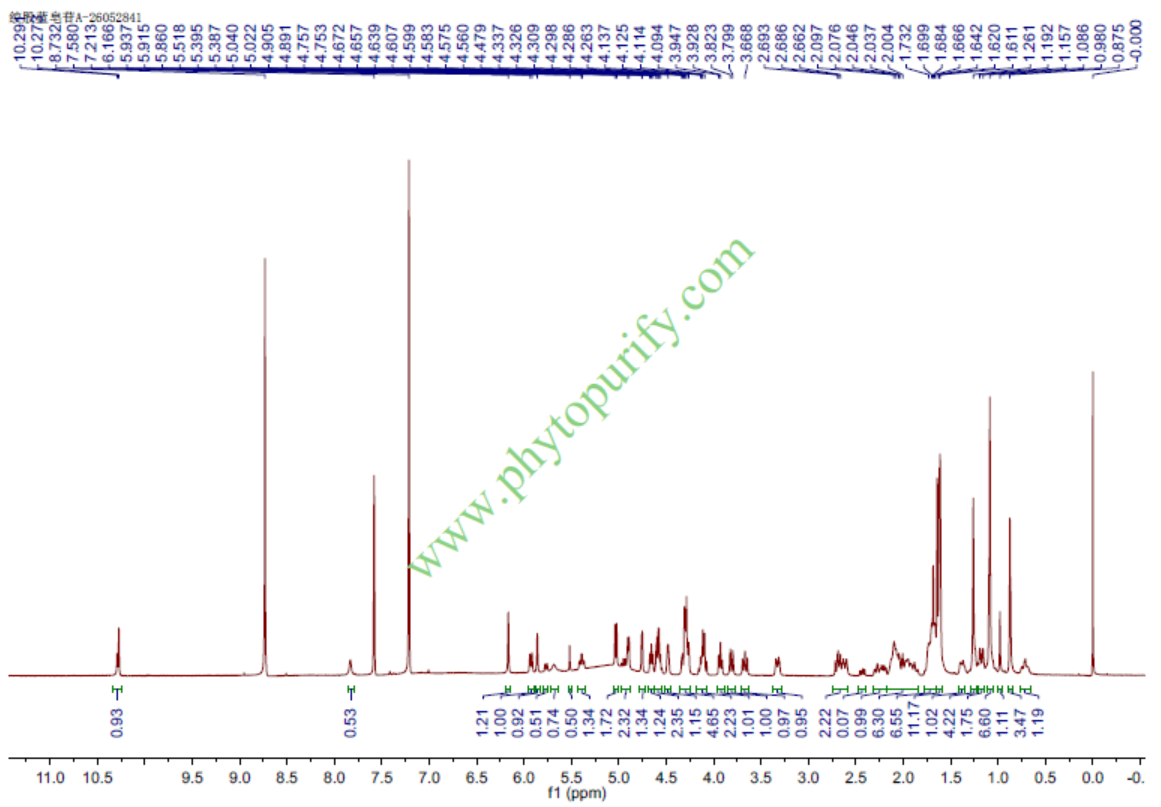
HNMR of Gypenoside A
Storage conditions:Short-term storage at 2~8℃, long-term storage at -20 ~ -80℃
263.7500
2.2047
2.2052
.0708
.6213
.7285
Low
70.5222
6.6053
No
No
No
No
No
No
0.0
Yes
No
No
Yes
Natural products, as an important source of drug discovery, play an irreplaceable role in the long history of human struggle against diseases. Among numerous natural compounds with biological activity, triterpenoid saponins derived from traditional medicinal plants have attracted much attention due to their structural diversity and extensive pharmacological activities. Gypenoside A, derived from the gourd family plant Gynostemma pentaphyllum(Gynostemma pentaphyllum The dammarane type triterpenoid saponins isolated from (Thunb.) Makino have gradually become a research hotspot in the field of natural product pharmacology in recent years. Gynostemma pentaphyllum, especially in East Asia, China, Japan, and South Korea, has a long history of medicinal and edible homology. It is often used as "southern ginseng" or "seven leaf gallbladder" to clear heat and detoxify, relieve cough and phlegm, and invigorate qi and spleen. Modern scientific research has confirmed that the extract of Gynostemma pentaphyllum and its active ingredients have various pharmacological effects, including anti-inflammatory, antioxidant, anti-tumor, immune regulation, and protection of the cardiovascular and cerebrovascular systems.
Gynostemma pentaphyllum saponin A (CAS number: 157752-01-7) is one of the representative saponin monomers with high content and significant activity in Gynostemma pentaphyllum. Its chemical structure belongs to the damaane type tetracyclic triterpenoid, and it has a high degree of structural similarity with ginsenosides (such as Rb1, Rd, etc.) in the same genus of ginseng plants. Therefore, it is also considered an analog of "protopanaxadiol type" saponins. This structural similarity suggests that it may have similar biological activities, but at the same time exhibits unique pharmacological properties due to its unique sugar substitution pattern. Early research mainly focused on its anti-inflammatory and antioxidant activities, while recent studies have revealed its enormous potential in cardiovascular protection, anti-tumor, and metabolic regulation.
This article aims to provide a systematic professional review of Gynostemma pentaphyllum saponins A. The article will first explain its chemical structure and physicochemical properties, and then trace its plant origin and extraction and separation process. On this basis, the pharmacological activities of MCL1, BCL2, STAT3, MMP2, TOP1, HIF1A, TOP2A, MAPK1, ESR1, CYP19A1 and other key proteins are summarized in detail, focusing on their anti-inflammatory, antioxidant, cardiovascular protection, and anti-tumor effects. The mechanism of action and molecular targets are also explored in depth, especially the interactions with MCL1, BCL2, STAT3, MMP2, TOP1, HIF1A, TOP2A, MAPK1, ESR1, CYP19A1 and other key proteins. In addition, this article will conduct preliminary pharmacological evaluation and pharmacokinetic analysis based on its pharmacological parameters, such as molecular weight, lipid water partition coefficient, topological polar surface area, water solubility, blood-brain barrier permeability, hERG inhibition risk, and Ames mutagenicity. Finally, this article will look forward to its clinical application prospects in the fields of cardiovascular disease, inflammation related diseases, and tumor treatment, and point out the challenges faced by current research and future development directions, in order to provide comprehensive references for the in-depth research and development of this natural product.
The chemical structure of Gynostemma pentaphyllum saponin A is the basis for its biological activity. From a chemical classification perspective, it belongs to the Dammarane type tetracyclic triterpenoid saponin. Its glycoside is 20 (S) - protopanaxadiol (PPD), which is a common glycoside structure in the ginsenoside family. The sugar chain connected to the aglycone is the key to its structural characteristics. Specifically, the sugar moiety of Gynostemma pentaphyllum saponin A consists of two glucose molecules and one xylose molecule. Among them, one glucose molecule is connected to the C-3 hydroxyl group of the aglycone through a β - glycosidic bond, forming a monosaccharide chain; And another glucose and xylose molecule is connected to the C-20 hydroxyl group of the glycoside through a β - glycosidic bond, forming a disaccharide chain. Therefore, its complete chemical name is usually described as: 20 (S) - protopanaxadiol 3-O - β - D-glucopyranosyl-20-O - β - D-glucopyranosyl (1 → 6) - β - D-xylopyranoside, or simply one of the isomers of Gypenoside XLVI. This specific sugar based linkage, especially the glucose (1 → 6) xylose structure at C-20 position, is the key to distinguishing Gynostemma pentaphyllum saponin A from other similar saponins (such as ginsenoside Rb1, Rd).
From the perspective of physicochemical properties, Gynostemma pentaphyllum saponin A exhibits typical triterpenoid saponin characteristics. Its molecular formula is C ₄₆ H ₇₈ O ₁₇, and its molecular weight is 899.0810 g/mol. It belongs to the category of macromolecular compounds. Its lipid water partition coefficient (LogP) is 2.2047, indicating that it has a certain lipophilicity, but at the same time, it exhibits a certain hydrophilicity due to the presence of multiple hydroxyl groups (from sugar groups) in the molecule, showing an overall amphiphilic characteristic. This amphiphilicity enables it to interact with biofilms, which is an important prerequisite for its biological activity. Its topological polar surface area (TPSA) is as high as 263.7500 Å ², mainly attributed to the large number of hydroxyl and ether oxygen atoms in its molecules. A high TPSA value typically indicates that the compound has lower membrane permeability, especially when crossing the blood-brain barrier. In fact, its blood-brain barrier penetration has been evaluated as' low ', which limits its application in central nervous system diseases, but for peripheral targets such as the cardiovascular system, liver, and immune cells, this may reduce central nervous system side effects. Its water solubility (LogS) is 0.0708 mg/mL, belonging to the category of slight solubility, which is consistent with its high TPSA and molecular weight. In drug development, poor water solubility is often one of the main factors limiting its bioavailability. In addition, preliminary in vitro safety assessment showed that the inhibitory risk of Gynostemma pentaphyllum saponins A on hERG potassium channels was "no", and the Ames test result was 0.0, indicating that it does not have significant mutagenicity and cardiotoxicity risks, which provides a good safety basis for its further development.
The main natural source of Gynostemma pentaphyllum saponin A is Gynostemma pentaphyllum, a plant of the genus Gynostemma in the family Cucurbitaceae(Gynostemma pentaphyllum). This plant is widely distributed in areas south of the Yangtze River in China, Japan, South Korea, Southeast Asia, and India. It prefers shady and humid environments and often grows under forests and along ravines. The medicinal parts of Gynostemma pentaphyllum are mainly the aboveground parts (stems and leaves). There are significant differences in the content of saponins A in Gynostemma pentaphyllum from different origins, harvest seasons, and varieties. Generally speaking, the resources of Gynostemma pentaphyllum in Shaanxi, Guangxi, Yunnan and other regions of China are relatively abundant, and their saponin content is relatively high. In addition, cell culture and hairy root culture techniques of Gynostemma pentaphyllum have also been studied for in vitro production of Gynostemma saponins, but there is still a distance from industrial large-scale production, and currently it mainly relies on plant extraction.
The extraction and purification of Gynostemma pentaphyllum saponins A from plant materials is a multi-step process, typically involving extraction, preliminary purification, and chromatographic separation.
Extract The most commonly used extraction method is solvent extraction. Considering the polarity of Gynostemma pentaphyllum saponins A, water, methanol, ethanol, or their aqueous solutions are usually used as extraction solvents. Among them, ethanol water mixed solvents (such as 70% -80% ethanol) are widely used due to their high extraction efficiency, good safety, and easy recovery. Extraction methods include traditional immersion, percolation, reflux extraction, as well as more efficient ultrasound assisted extraction, microwave-assisted extraction, and enzyme assisted extraction. These modern extraction techniques can significantly shorten extraction time and improve the extraction rate of target compounds. The crude extract is obtained by filtering and concentrating the extract under reduced pressure.
Preliminary purification The crude extract contains a large amount of impurities, such as polysaccharides, proteins, pigments, lipids, etc. Therefore, preliminary purification is required. Common methods include:
chromatographic separation In order to obtain high-purity monomers of Gynostemma pentaphyllum saponins A, further chromatographic separation is required. The most classic method is silica gel column chromatography. The preliminarily purified saponin sample is loaded onto a silica gel column and eluted using a solvent system such as chloroform methanol water (e.g. 8:2:0.1, 7:3:0.5, etc.) or ethyl acetate methanol water for isocratic or gradient elution. Combined with thin-layer chromatography (TLC) detection, a fraction rich in saponins A from Gynostemma pentaphyllum can be collected. Due to the structural similarity between Gynostemma pentaphyllum saponin A and other saponins such as Gynostemma pentaphyllum saponin XLVI and ginsenoside Rb1, a single silica gel column chromatography often fails to achieve complete separation. Therefore, it is usually necessary to combine other chromatographic techniques, such as:
Finally, the isolated compound was structurally identified as Gynostemma pentaphyllum saponin A using techniques such as mass spectrometry (MS) and nuclear magnetic resonance spectroscopy (NMR, including ¹ H-NMR, ¹ ³ C-NMR, 2D-NMR).
The pharmacological activity research of Gynostemma pentaphyllum saponins A covers multiple fields such as anti-inflammatory, antioxidant, cardiovascular protection, and anti-tumor effects, demonstrating multiple pharmacological characteristics.
Inflammation is a defensive response of the body to injury and infection, but excessive or persistent inflammation is the pathological basis of various diseases such as cardiovascular disease, arthritis, and metabolic syndrome. Research has shown that saponins A from Gynostemma pentaphyllum have significant anti-inflammatory activity. In the lipopolysaccharide (LPS) - stimulated macrophage model (such as RAW264.7 cells), gypenoside A can significantly inhibit the production of pro-inflammatory cytokines such as tumor necrosis factor - α (TNF - α), interleukin-1 β (IL-1 β), and interleukin-6 (IL-6). Meanwhile, it can also downregulate the expression of inducible nitric oxide synthase (iNOS) and cyclooxygenase-2 (COX-2), thereby reducing the release of inflammatory mediators such as nitric oxide (NO) and prostaglandin E2 (PGE2). In animal models, such as the carrageenan induced rat foot swelling model and the acetic acid induced mouse peritoneal capillary permeability increase model, Gynostemma pentaphyllum saponin A showed significant anti-inflammatory effects, and its strength of action was comparable to that of the positive control drug.
Oxidative stress is caused by the excessive production of reactive oxygen species (ROS) and reactive nitrogen species (RNS) in the body, which exceeds the body's antioxidant defense capacity. It is closely related to various pathological processes such as aging, cancer, and cardiovascular disease. Gynostemma pentaphyllum saponin A has been proven to be an effective antioxidant. In vitro chemical experiments, it can scavenge 1,1-diphenyl-2-trinitrophenylhydrazine (DPPH) free radicals, 2,2 '- diazo-bis-3-ethylbenzothiazoline-6-sulfonic acid (ABTS) cationic free radicals, and has reducing ability. At the cellular level, saponins A from Gynostemma pentaphyllum can protect various cells, such as cardiomyocytes, hepatocytes, and neurons, from oxidative damage. For example, in oxidative damage models induced by hydrogen peroxide (H ₂ O ₂) or tert butyl hydroperoxide (t-BHP), pretreatment with gypenoside A can significantly increase cell viability, reduce intracellular ROS levels, decrease the content of lipid peroxidation product malondialdehyde (MDA), and enhance the activity of endogenous antioxidant enzymes such as superoxide dismutase (SOD), catalase (CAT), and glutathione peroxidase (GPx) in cells.
Cardiovascular disease is the leading cause of death worldwide. The protective effect of saponins A from Gynostemma pentaphyllum on the cardiovascular system is one of the important research directions. Numerous in vitro and in vivo studies have confirmed that saponins A from Gynostemma pentaphyllum have a direct protective effect on myocardial cells.
In recent years, the anti-tumor activity of Gynostemma pentaphyllum saponins A has attracted widespread attention. Studies have shown that it can inhibit the proliferation and induce apoptosis of many tumor cell lines, such as liver cancer (HepG2), lung cancer (A549), breast cancer (MCF-7, MDA MB-231), colorectal cancer (HCT-116), prostate cancer (PC-3) and leukemia (K562). Its anti-tumor mechanism is multi-target and multi pathway.
The pharmacological activity of Gynostemma pentaphyllum saponin A is not derived from a single target, but is achieved through the synergistic action of multiple targets and pathways. Its core mechanism of action can be summarized as follows:
Regulating cell apoptosis and survival signals This is the core mechanism by which saponins A from Gynostemma pentaphyllum exert cardiovascular protection and anti-tumor effects. In cardiomyocytes, it activates survival signaling pathways such as PI3K/Akt, upregulates BCL2, inhibits mitochondrial apoptosis pathway, and protects cells from damage. In tumor cells, it inhibits the STAT3 signaling pathway, downregulates MCL1 and BCL2, activates Caspase, and induces apoptosis. This "bidirectional regulation" effect is an important characteristic of its pharmacological activity, reflecting the fine regulation of natural product effects.
Anti inflammatory and antioxidant signaling network Gynostemma pentaphyllum saponins A reduce the production of pro-inflammatory factors by inhibiting the activation of nuclear factor kappa B (NF - κ B) and MAPK signaling pathways. At the same time, it upregulates the expression of a series of antioxidant enzymes by activating the nuclear factor E2 related factor 2 (Nrf2)/antioxidant response element (ARE) signaling pathway, thereby enhancing the body's antioxidant defense ability. The cross-talk between NF - κ B and Nrf2 pathways is the key to their synergistic anti-inflammatory and antioxidant effects.
Intervention in tumor cell cycle and metastasis By regulating the expression of cyclins and cyclin dependent kinases (CDKs), tumor cells are arrested in specific cycles. By inhibiting the expression and activity of MMP2/9, as well as suppressing the epithelial mesenchymal transition (EMT) process, the invasion and metastasis of tumor cells can be suppressed.
Affects tumor microenvironment and metabolism By inhibiting HIF1A, reducing VEGF secretion, and inhibiting tumor angiogenesis. Meanwhile, by affecting key enzymes involved in glycolysis, it interferes with the energy metabolism of tumor cells (Warburg effect).
Targeted Topoisomerase and Hormone Receptors Directly inhibit the activity of TOP1 and TOP2A, causing DNA damage. Combining with ESR1 to exert anti estrogenic effects; Inhibit CYP19A1 and reduce estrogen synthesis.
In summary, the molecular target network of Gynostemma pentaphyllum saponins A involves multiple levels such as apoptosis (BCL2, MCL1), transcription (STAT3, HIF1A), extracellular matrix remodeling (MMP2), DNA topology (TOP1, TOP2A), signal transduction (MAPK1), hormone signaling (ESR1, CYP19A1), etc. This multi-target characteristic gives it potential advantages in treating complex diseases such as cancer, but also increases the complexity of its mechanism of action research.
To promote the clinical application of Gynostemma pentaphyllum saponins A from laboratory research, a systematic evaluation of its pharmacological properties is necessary. Based on the provided parameters, we can conduct preliminary analysis.
Regarding pharmacokinetics (ADME), current research on saponins A from Gynostemma pentaphyllum is not sufficient, but inferences can be made based on their structural characteristics and knowledge of similar compounds such as ginsenoside Rb1.
Overall, the pharmaceutical challenge of Gynostemma pentaphyllum saponin A lies mainly in its poor oral bioavailability. The future drug development strategy needs to focus on how to improve its bioavailability, such as designing prodrugs, using nanocarriers (such as liposomes, polymer nanoparticles), combining with absorption enhancers, changing the route of administration (such as injection, transdermal administration), etc.
Gynostemma pentaphyllum saponin A, as a natural product with multiple pharmacological activities, has shown broad clinical application prospects in various disease fields.
cardiovascular disease Given its clear cardioprotective, anti apoptotic, anti fibrotic, and heart function improving effects, Gynostemma pentaphyllum saponin A is expected to be developed as a novel drug for the treatment of cardiovascular diseases such as myocardial ischemia/reperfusion injury, heart failure, and cardiomyopathy. Its anti-inflammatory and antioxidant properties also help to delay the progression of atherosclerosis.
Inflammatory related diseases Its strong anti-inflammatory activity makes it potential for treating chronic inflammatory diseases such as rheumatoid arthritis, inflammatory bowel disease, hepatitis, nephritis, etc. By regulating immune cell function and inhibiting the release of inflammatory mediators, new treatment options may be provided for these diseases.
neoadjuvant therapy The multi-target anti-tumor activity of Gynostemma pentaphyllum saponin A, particularly its ability to induce apoptosis, inhibit metastasis, target the tumor microenvironment, and regulate hormone signaling, makes it a highly promising candidate compound for anti-tumor treatment. It can serve as a sensitizer for chemotherapy or radiotherapy, alleviate the side effects of traditional therapies, or be used to prevent tumor recurrence and metastasis. Its inhibitory effect on TOP1/TOP2A suggests that it may have direct cytotoxic effects, which is worth further exploration.
Metabolic diseases: The preliminary study also suggested that Gynostemma pentaphyllum saponin A may have hypoglycemic, hypolipidemic and liver protective effects, which provided clues for its application in metabolic diseases such as type 2 diabetes and non-alcoholic fatty liver disease.
Despite its broad prospects, the clinical translation of Gynostemma pentaphyllum saponin A still faces many challenges:
Gynostemma pentaphyllum saponin A, a dammarane type triterpenoid saponin derived from the traditional Chinese medicine Gynostemma pentaphyllum, has become a shining pearl in the field of natural product pharmacology research due to its unique chemical structure and pleiotropic pharmacological activity. From anti-inflammatory and antioxidant effects to cardiovascular protection, and then to multi-target anti-tumor effects, its extensive biological activity demonstrates the enormous potential of natural products in the treatment of complex diseases. Especially by regulating multiple key targets such as BCL2 family proteins, STAT3, HIF1A, MMP2, TOP1/2A, ESR1/CYP19A1, it plays a precise regulatory role in cell survival, apoptosis, inflammation, metabolism, and metastasis, reflecting the modern drug development concept of "multi-target therapy".
However, the journey from laboratory discovery to clinical application of Gynostemma pentaphyllum saponin A remains long and challenging. The inherent low oral bioavailability of it as a large molecule saponin is the core bottleneck for its drug development. Future research should focus on: 1) developing innovative drug delivery systems to improve their bioavailability; 2) Utilizing modern omics techniques and systems biology methods to deeply analyze the substance basis and action network of its in vivo pharmacological effects; 3) Conduct rigorous preclinical pharmacological and toxicological evaluations to lay the foundation for clinical trials; 4) Establish a standardized extraction, purification, and quality control system.
Despite the numerous challenges ahead, the unique chemical space and rich pharmacological activity of Gynostemma pentaphyllum saponin A make it a highly promising lead compound for the development of novel cardiovascular protectants, anti-inflammatory drugs, and anti-tumor adjuvant therapies. With the continuous deepening of research and the advancement of technology, we have reason to believe that Gynostemma pentaphyllum saponin A and its derivatives will eventually play their due value in the field of human health, contributing the wisdom and power from natural products to overcome major diseases.
