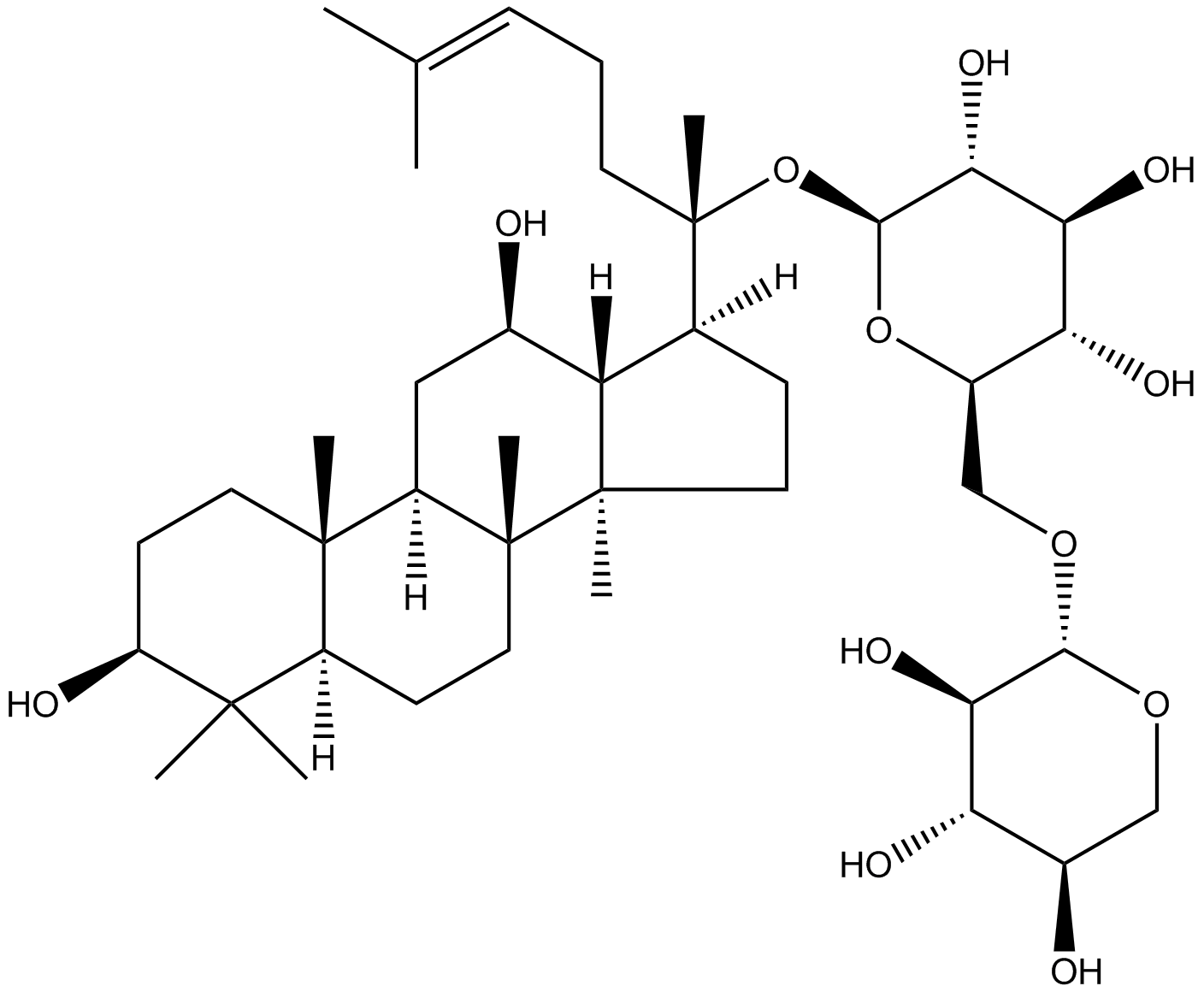


Product name: Gypenoside XIII
Synonym name: Ginsenoside Mx; Gynosaponin M
Catalogue No.: BP2101
Cas No.: 80325-22-0
Formula: C41H70O12
Mol Weight: 754.999
Botanical Source: Gynostemma pentaphyllum (Thunb.) Makino
Type of Compound: Triterpenoids
Purity: 95%~99%
Analysis Method: HPLC-DAD or/and HPLC-ELSD
Identification Method: Mass, NMR
Packing: Brown vial or HDPE plastic bottle
Storage: Store in a well closed container, protected from air and light. Put into refrigerate or freeze for long term storage.
Whenever possible, you should prepare and use solutions on the same day. However, if you need to make up stock solutions in advance, we recommend that you store the solution as aliquots in tightly sealed vials at -20℃. Generally, these will be useable for up to two weeks.
The product could be supplied from milligrams to grams
Inquire for bulk scale.
For Reference Standard and R&D, Not for Human Use Directly.
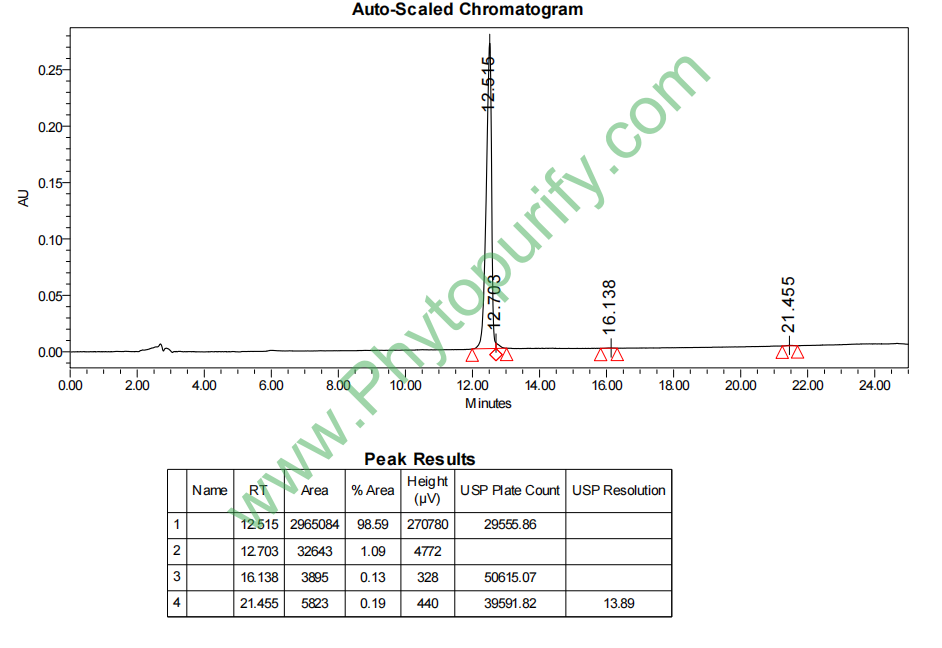
HPLC of Gypenoside XIII
Storage conditions:Short-term storage at 2~8℃, long-term storage at -20 ~ -80℃
198.7600
3.5019
3.5019
.0112
.6141
.2920
Low
80.0348
5.8757
No
No
No
No
No
No
0.0
Yes
No
No
No
Gypenoside XIII, as one of the important active ingredients in Gynostemma pentaphyllum, has attracted widespread attention in the field of natural product pharmacology in recent years. Gynostemma pentaphyllum is a traditional Chinese medicinal herb, known as the "southern ginseng" due to its rich saponin components. It has various biological activities, especially in the prevention and treatment of cardiovascular diseases, showing significant potential. Gypenosides, a type of triterpenoid saponin mixture with diverse structures, have become a hot research topic due to their unique structure and multi-target mechanism of action. Gypenoside XIII, as a monomeric component, is one of them.
This review focuses on the chemical structure, physicochemical properties, plant sources, and extraction methods of saponins XIII from Gynostemma pentaphyllum, and explores its pharmacological activity and mechanism of action in depth. Combined with pharmacological evaluation and pharmacokinetic data, it looks forward to its clinical application prospects. By systematically reviewing relevant literature, the aim is to provide a theoretical basis and research direction for the drug development of this natural product.
The molecular formula of Gynostemma pentaphyllum saponin XIII is C42H70O13, with a molecular weight of 754.9990. Its structure belongs to pentacyclic triterpenoid saponins, with the core being the ginsenoside skeleton that connects multiple sugar residues. The LogP value of this compound is 3.5019, indicating moderate lipid solubility and facilitating membrane penetration. The polar surface area (TPSA) is 198.7600, indicating a high number of polar groups, which may affect its water solubility and bioavailability. The water solubility measured in the experiment is 0.0112 mg/mL, which belongs to low water solubility compounds.
Gynostemma pentaphyllum saponins XIII exhibit low blood-brain barrier permeability, indicating difficulty in entering the central nervous system. The hERG channel inhibition experiment result was negative, indicating that the compound has a low risk of cardiac toxicity. The Ames mutagenicity test result was 0.0, indicating no significant mutagenicity and good safety.
From a chemical structure perspective, the polysaccharide chains and triterpenoid skeleton of Gynostemma pentaphyllum saponins XIII provide the basis for their biological activity, but also pose challenges in terms of drug properties, such as poor water solubility and low bioavailability.
Gynostemma pentaphyllum, a plant in the Cucurbitaceae family, is the main source of saponins XIII from Gynostemma pentaphyllum, which is widely distributed in southern China and Southeast Asia. Gynostemma pentaphyllum is widely cultivated and studied for its medicinal value, and its entire plant contains abundant saponin compounds.
The common methods for extracting saponins XIII from Gynostemma pentaphyllum include solvent extraction, column chromatography separation, and high-performance liquid chromatography (HPLC) purification. Generally, 70% -80% ethanol or methanol is used for crude extraction, followed by separation and purification through silica gel column or reverse phase C18 column. In recent years, the application of ultrasound assisted extraction and microwave-assisted extraction technologies has improved extraction efficiency and purity.
The purified Gynostemma pentaphyllum saponin XIII was structurally identified using techniques such as mass spectrometry (MS), nuclear magnetic resonance (NMR), and infrared spectroscopy (IR) to ensure its purity and structural accuracy. Due to the complex composition of saponins in Gynostemma pentaphyllum, optimizing the extraction process is crucial for obtaining high-purity Gynostemma pentaphyllum saponins XIII.
As a monomeric component of total saponins in Gynostemma pentaphyllum, saponins XIII exhibit various pharmacological activities, particularly in the fields of cardiovascular protection and anti-tumor effects.
Gynostemma pentaphyllum saponins have been proved to improve blood lipid metabolism and inhibit the formation of atherosclerosis, and Gynostemma pentaphyllum saponin XIII plays a key role in it. In vitro and in vivo studies have shown that saponins XIII from Gynostemma pentaphyllum can regulate the expression of cholesterol metabolism related genes, promote the production of high-density lipoprotein cholesterol (HDL-C), inhibit the oxidation of low-density lipoprotein (LDL), and slow down arterial endothelial cell damage. In addition, its anti-inflammatory effect helps to reduce the inflammatory reaction of vascular wall and block the progress of atherosclerosis.
In recent years, saponins XIII from Gynostemma pentaphyllum have shown potential anti-tumor activity in tumor models such as lung cancer. It inhibits tumor cell proliferation, induces apoptosis, suppresses migration and invasion by regulating multiple signaling pathways. In vitro experiments have shown that saponins XIII from Gynostemma pentaphyllum can downregulate the expression of anti apoptotic protein BCL2, activate apoptosis related enzyme systems, and inhibit the survival ability of tumor cells.
In addition, saponins XIII from Gynostemma pentaphyllum have a regulatory effect on the inflammatory response in the tumor microenvironment, reducing the expression of tumor promoting factors such as MMP2 and STAT3, and inhibiting tumor angiogenesis and metastasis. Its multi-target action characteristics make it a powerful candidate for the development of anti-tumor drugs.
Gynostemma pentaphyllum saponins XIII also exhibit multiple biological activities such as antioxidant, immune regulation, and neuroprotection. Its antioxidant effect is achieved by clearing free radicals and enhancing endogenous antioxidant enzyme activity, which helps alleviate pathological damage in oxidative stress-related diseases.
The pharmacological mechanism of Gynostemma pentaphyllum saponins XIII involves multiple signaling pathways and molecular targets, especially in the treatment of lung cancer. The main targets include:
Gynostemma pentaphyllum saponin XIII achieves its complex biological effects through multi-target and multi pathway synergistic effects. This multi-target characteristic not only enhances its therapeutic effect, but also reduces the risk of drug resistance.
The pharmacological parameters of Gynostemma pentaphyllum saponin XIII indicate that it has certain potential for development. Although the molecular weight of 754.9990 is relatively large, it falls within the common range of natural product drugs. LogP is 3.5, indicating moderate lipid solubility and favorable cell membrane penetration. A high TPSA value (198.76) suggests strong polarity, which may limit oral absorption and bioavailability.
The low water solubility (0.0112 mg/mL) is a major challenge for its drug development, and it is necessary to improve solubility and stability through formulation techniques such as nanocarriers and solid dispersions. The low permeability of the blood-brain barrier limits its application in central nervous system diseases, but it is more suitable for peripheral diseases such as cardiovascular and lung cancer.
In terms of safety, saponins XIII from Gynostemma pentaphyllum have no hERG channel inhibitory effect, reducing the risk of cardiac toxicity. The Ames test is negative, indicating no mutagenicity and high safety.
Pharmacokinetic studies are still in the preliminary stage, and the metabolic pathways in vivo mainly involve the liver enzyme system, which may be metabolized through glycoside hydrolysis and oxidation reactions. The bioavailability is limited by its water solubility and metabolic rate. In the future, further research is needed on its absorption, distribution, metabolism, and excretion (ADME) characteristics to guide clinical dosage form design and dosing regimens.
Gynostemma pentaphyllum saponin XIII, with its multiple pharmacological activities, particularly in the prevention of cardiovascular diseases and treatment of lung cancer, has shown broad clinical application prospects. Its antiatherosclerotic effect provides a new natural drug choice for patients with cardiovascular disease, especially suitable for long-term conditioning and adjuvant treatment.
In the field of oncology, saponins XIII from Gynostemma pentaphyllum, as a multi-target natural product, are expected to be used in combination with existing chemotherapy drugs to improve efficacy and reduce side effects. Its immune regulation and anti-inflammatory properties also provide auxiliary support for tumor immunotherapy.
Future research should focus on the following aspects:
Gynostemma pentaphyllum saponins XIII, as a model for natural product drug development, have important scientific research value and application potential.
In summary, as an important active ingredient in total saponins of Gynostemma pentaphyllum, saponins XIII of Gynostemma pentaphyllum exhibit multi-target and multi pathway pharmacological activities, particularly in the prevention and treatment of cardiovascular diseases and lung cancer. Its unique chemical structure and physicochemical properties provide a foundation for drug development, but the issues of poor water solubility and low bioavailability in drug development urgently need to be addressed.
In the future, through in-depth mechanism research, pharmacokinetic optimization, and clinical validation, Gynostemma pentaphyllum saponin XIII is expected to become an important candidate for new natural medicines, bringing new hope for the treatment of related diseases. The diversity and complexity of natural products provide abundant resources for modern drug development, and the research progress of saponins XIII from Gynostemma pentaphyllum will also promote the development and innovation of natural product pharmacology.
