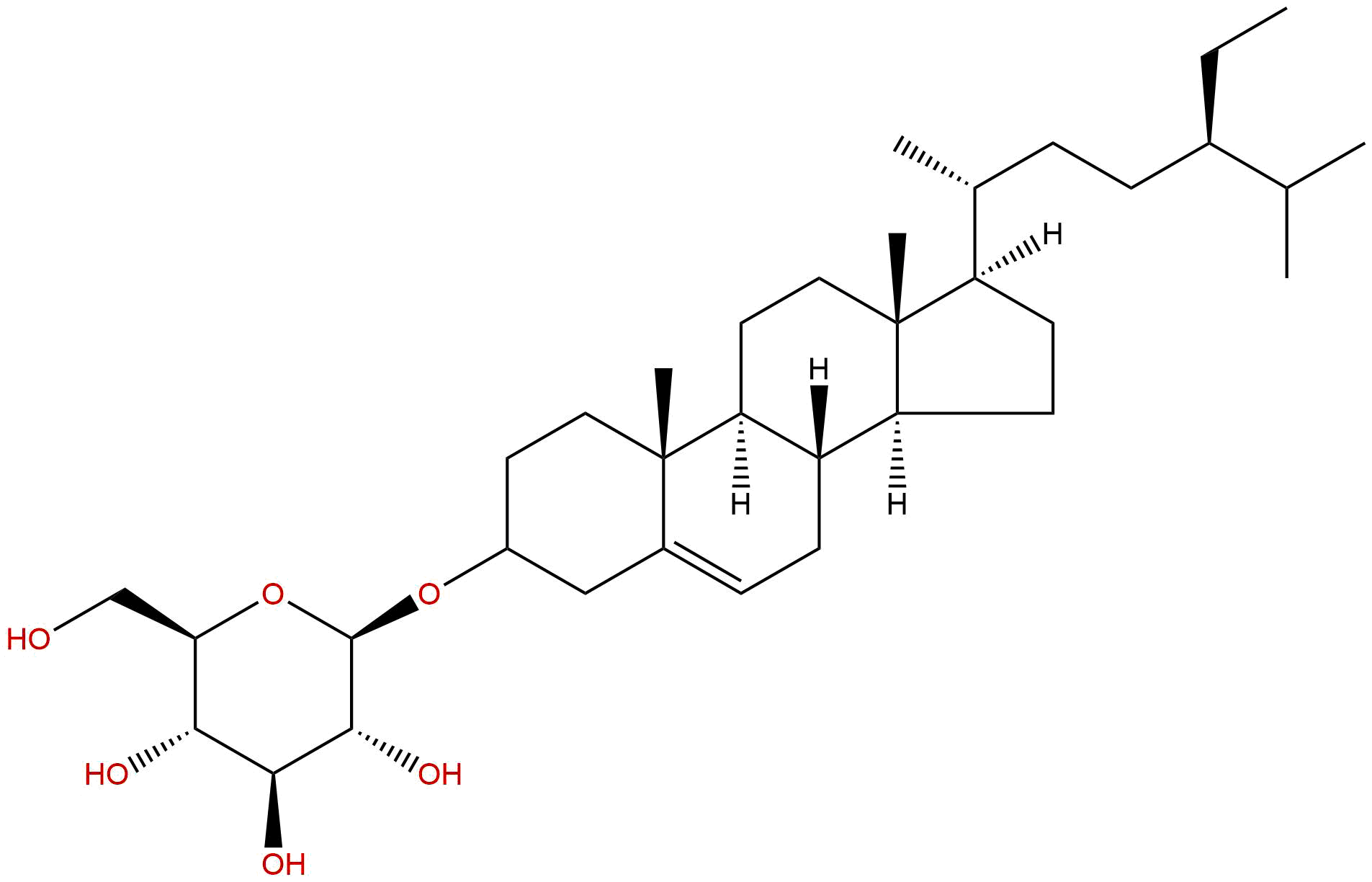


Product name: Sitogluside
Synonym name: Beta-Sitosterol-D-glucoside;Daucosterol; Alexandrin; Daucosterin; Eleutheroside A
Catalogue No.: BP0524
Cas No.: 474-58-8
Formula: C35H60O6
Mol Weight: 576.859
Botanical Source: many plants
Physical Description: Powder
Type of Compound: Steroids
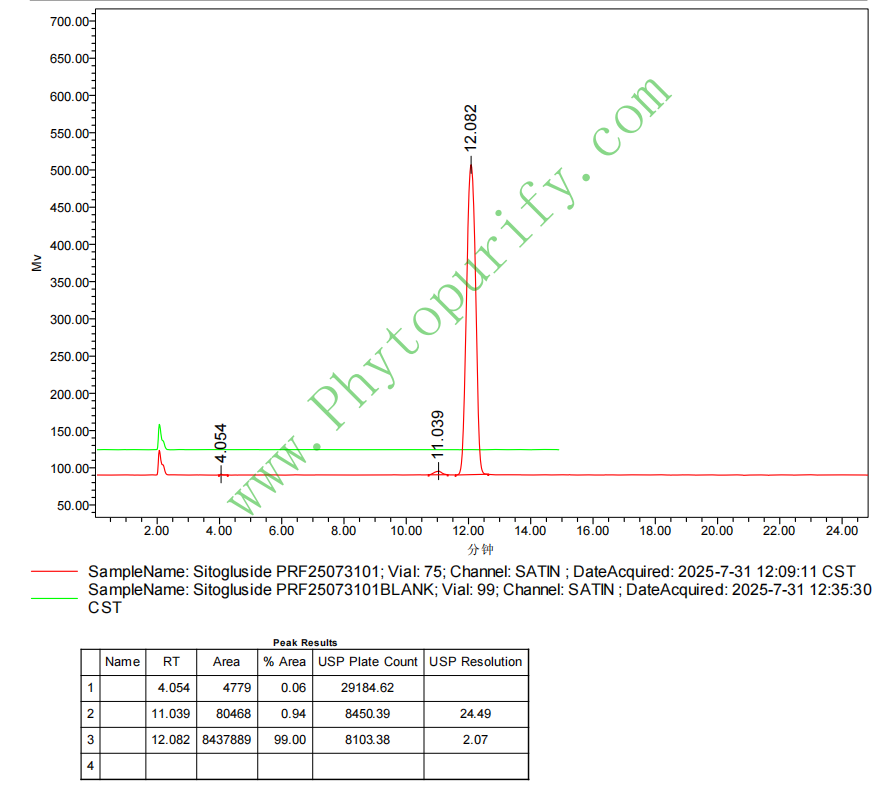
Purity: 95%~99%
Analysis Method: HPLC-DAD or/and HPLC-ELSD
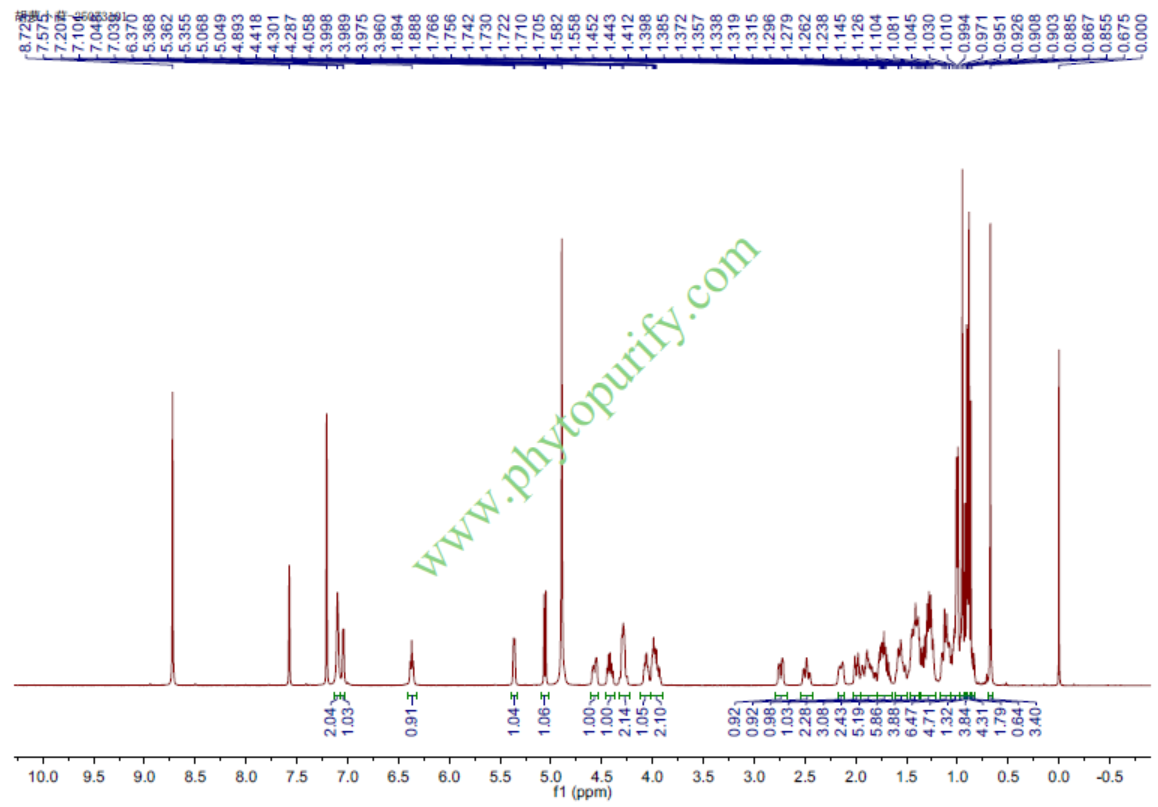
Identification Method: Mass, NMR
Packing: Brown vial or HDPE plastic bottle
The product can meet the large demand from grams to kilograms, and 90% of the products are in stock at kilogram level to meet the needs of food, cosmetics and health care products, please consult for details.
Inquire for bulk scale.
Descriptions:
Daucosterol can protect mice against disseminated candidiasis by the CD4+ Th1 immune response.[1]
Daucosterol has proliferation-enhancing activity for neural stem cells (NSCs), may be involved in IGF1-AKT pathway, and it as an efficient and inexpensive growth factor alternative that could be used in clinical medicine and research applications.[2]
Daucosterol exhibits moderate antibacterial activity against Bacillus subtilis and Staphylococcus aureus.[3]
Daucosterol can inhibit cancer cell proliferation by inducing autophagy through reactive oxygen species-dependent manner.[4]
Daucosterol has neuroprotective activity, could be potentially developed as a medicine for ischemic stroke treatment, can significantly reduce neuronal loss, as well as apoptotic rate and caspase-3 activity, increase the expression level of protein, diminish the down-regulation of p-AKT3 and p-GSK-3β4, thus activating the AKT5 signal pathway, diminish the down-regulation of the anti-apoptotic proteins Mcl-16 and Bcl-27, and decrease the expression level of the pro-apoptotic protein Bax8, thus raising the ratio of Bcl-2/Bax.[5]
Daucosterol has anti-cancer and apoptotic effects in human colon cancer cell line HCT-116, at different doses induces cell cycle arrest at sub-G1 phase of the cell cycle.[6]
References:
[1] Lee J H, Ju Y L, Ji H P, et al. Vaccine, 2007, 25(19):3834-40.
[2] Jiang L H, Yang N Y, Yuan X L, et al. J Steroid Biochem, 2014, 140(2):90-9.
[3] Sultana N, Afolayan A J. Nat Prod Res, 2007, 21(10):889-96.
[4] Zhao C, She T, Wang L, et al. Life Sci, 2015, 137:37-43.
[5] Jiang L H, Yuan X L, Yang N Y, et al. J Steroid Biochem 2015, 152:45-52.
[6] Wang G Q, Gu J F, Gao Y C, et al. Bangl J Pharmacol, 2016, 11(2).
[7] Hui-Ning L I, Liu H J, Xiao-Shuai F U, et al. 2013, 19(01):119-21.
HNMR of Sitogluside
HPLC of Sitogluside
Storage conditions:Short-term storage at 2~8℃, long-term storage at -20 ~ -80℃
99.3800
6.0047
6.0047
.0015
.7894
.8210
Low
90.3847
4.9895
No
No
No
No
No
No
0.0
No
No
No
No
Natural products, as an important treasure trove for drug discovery, play an irreplaceable role in the history of human disease prevention and treatment. Among them, saponins derived from plants have always been a hot topic in medicinal chemistry and pharmacology research due to their structural diversity and wide range of biological activities. Sitogluside (CAS number: 474-58-8), as a typical steroid saponin, is a monoglycoside formed by Sitosterol connecting to a β - D-glucopyranosyl group via a β - glycosidic bond at the C-3 position. This compound was originally derived from the Araliaceae plant, Panax notoginseng(Panax japonicus var. major)And the Euphorbiaceae plant Black faced God(Breynia fruticosa)Once isolated from plants, it is classified as a secondary metabolite of plants.
Although the chemical structure of carotenoids is relatively clear, its in-depth and systematic pharmacological research, especially its role as an active ingredient in complex disease networks, still needs to be fully revealed. In recent years, as the core role of oxidative stress in the occurrence and development of various chronic diseases such as neurodegenerative diseases, cardiovascular diseases, metabolic syndrome, and cancer has been continuously elucidated, the search for efficient and low toxicity natural antioxidants has become a research frontier. Carotenoids have re entered the research field due to their potential antioxidant damage activity. Preliminary studies suggest that its pharmacological effects may be related to the regulation of nuclear factor E2 associated factor 2 (NRF2), which is regulated by NFE2L2 The key antioxidant signaling pathways, such as gene coding, are closely related. This article aims to systematically review the chemical properties, plant sources, pharmacological activities, especially the mechanism and molecular targets of antioxidant damage of carotenoids, and evaluate and prospect their medicinal properties and clinical application prospects, in order to provide scientific basis for the deep development and utilization of this natural product.
The molecular formula of carotenoids is C35H60O6, with a molecular weight of 576.8590. Its core structure consists of two parts: a hydrophobic steroid core (derived from soybean steroidal hydrocarbons) and a hydrophilic sugar group. The steroid parent nucleus is a sitosterol structure, which is a plant sterol widely present in plants and has a cyclopentane dihydrophenanthrene skeleton similar to cholesterol. The sugar moiety is a β - D-glucopyranose, which is connected to the hydroxyl group at the C-3 position of sitosterol through a β -1-glycosidic bond, thus forming a typical steroid saponin structure. This amphiphilic structure (lipophilic at one end and hydrophilic at the other) is the basis for the surface activity and complex biological activity of many saponin compounds.
In terms of physicochemical properties, the lipid water partition coefficient (LogP) of carotenoids is 6.0047, indicating its high lipophilicity. Its topological polar surface area (TPSA) is 99.38 Å ², which is relatively low, mainly due to the fact that only one glucose unit contributes polarity in the molecule. The water solubility is extremely low, about 0.0015 mg/mL, which is consistent with its high LogP value, indicating that it is difficult to dissolve in water, but has good solubility in organic solvents such as methanol, ethanol, and chloroform. This low water solubility is one of the key physical and chemical barriers that need to be overcome in the drug development process.
From the perspective of chemical taxonomy, carotenoids belong to β - D-glucoside, steroid saponins, and monosaccharide derivatives. It is a direct glycosylated product of sitosterol, and therefore closely related to sitosterol in biosynthesis and metabolism. This glycosylation modification often significantly changes the solubility, biofilm permeability, and biological activity of the parent compound, giving carotenoids pharmacological properties different from those of free sitosterol.
Carotenoids are relatively widely distributed in nature and mainly exist in various medicinal plants.
1. Main plant sources:
* Araliaceae plants Bamboo knot ginseng(Panax japonicus var. major)It is one of the classic sources of carotenoids. As a plant of the ginseng genus, bamboo ginseng is rich in various saponin components, and carotenoids are the representative of its steroidal saponins.
* Euphorbiaceae plants Black faced God(Breynia fruticosa)Carotenoids were also isolated from the branches and leaves of the plant, which expanded the diversity of its plant sources.
* Other sources Carotenoids are also commonly found in other plants rich in plant sterols, such as beans, nuts, seeds, and some traditional medicinal plants (such as some Solanaceae and Amaranthaceae plants), often coexisting with other sterols such as β - sitosterol.
2. Extraction and Separation Methods:
Due to the fact that carotenoids are moderately polar compounds, their extraction and separation usually follow the general strategy for saponin components in plant chemistry.
* Extract Organic solvent reflux extraction or ultrasound assisted extraction are commonly used. Common solvent systems include methanol water, ethanol water, or chloroform methanol mixed solvents in different ratios. Methanol and ethanol are widely used due to their good solubility and penetration of saponins.
* Separation and purification After the crude extract is concentrated under reduced pressure, the saponin fraction is usually initially enriched using solvent partitioning (such as n-butanol water partitioning). Further purification relies on column chromatography techniques, including:
* Positive phase silica gel column chromatography Preliminary separation was performed using a chloroform methanol water gradient elution system.
* Reverse phase silica gel column chromatography (such as ODS-C18)Elution with methanol water or acetonitrile water system is the key step to obtain high-purity carotenoids.
* Gel column chromatography (such as Sephadex LH-20)Separation based on molecular size is commonly used for final purification and refinement.
* appraisal The purified compound was structurally confirmed by spectroscopic techniques such as nuclear magnetic resonance (NMR, including 1H-NMR and 13C-NMR), mass spectrometry (MS), and infrared spectroscopy (IR), and compared with literature data or standard samples.
Although the pharmacological activity research of carotenoids is not as in-depth as its triterpenoid saponins (such as ginsenosides), there is evidence to suggest that they have multiple biological effects, with antioxidant damage as the core.
Core activity: antioxidant damage
Oxidative stress is a state in which the imbalance between the production and clearance of reactive oxygen species (ROS) in the body leads to tissue damage. Multiple in vitro studies have shown that carotenoids can effectively alleviate cellular oxidative damage models induced by various oxidants such as hydrogen peroxide, tert butyl hydroperoxide, iron ions, etc. In models of liver cells, nerve cells, and endothelial cells, carrot glycoside pretreatment can significantly improve cell survival rate, reduce intracellular ROS levels, decrease the generation of lipid peroxidation products (such as MDA), and increase the content of endogenous antioxidant substances in cells. These effects suggest that carotenoids have direct free radical scavenging ability and/or indirect activation of cellular endogenous antioxidant defense system.
Related pharmacological activities
Based on its antioxidant activity, carotenoids have also shown potential benefits in other pathological processes:
The molecular mechanism by which carotenoids exert pharmacological effects, particularly their core antioxidant damage activity, is gradually being revealed. The existing research mainly focuses on its regulation of the endogenous antioxidant defense system in cells, among which the NRF2/ARE signaling pathway is considered a key hub.
Core pathway: activation of NRF2/ARE signaling pathway
Other potential mechanisms
Based on the provided pharmacological parameters and existing research, a preliminary evaluation of the pharmacological properties of carotenoids is conducted
Analysis of Physical and Chemical Properties and ADME Properties:
Current status of pharmacokinetic research:
At present, research on the pharmacokinetics of the carrot glycoside system is very limited, which limits a comprehensive understanding of its in vivo processes (absorption, distribution, metabolism, excretion). It can be inferred that:
Challenges and improvement strategies for drug development:
Carotenoids, as a natural product with a clear antioxidant mechanism, have potential for clinical application development, but also face many challenges.
Potential application directions:
Future research focus and prospects:
As a structurally clear plant steroidal saponin, the research value of carotenoids is gradually shifting from simple identification of plant chemical components to pharmacological exploration based on clear molecular targets. The existing evidence strongly suggests that by activating the core antioxidant defense pathway NRF2/ARE and upregulating the expression of a series of key antioxidant enzymes such as HMOX1, SOD, CAT, GPX1, carotenoids can effectively resist oxidative stress damage, and thus derive multiple potential pharmacological activities such as anti-inflammatory, neuroprotective, and cardiovascular protection. This provides theoretical basis and application prospects for its prevention and treatment of various oxidative stress-related chronic diseases.
However, the road from "active compounds" to "candidate drugs" is still long. Its inherent low water solubility, potential low oral bioavailability, and limited in vivo pharmacokinetic and systemic toxicology data constitute the main bottlenecks in its drug development. Future research needs to focus on solving these pharmaceutical and pharmacokinetic challenges based on a deeper understanding of the mechanisms, and improve their in vivo behavior through modern formulation technology and rational drug design strategies. At the same time, rigorous preclinical and clinical studies should be conducted to confirm its safety and efficacy. In summary, carotenoids are a promising natural lead compound, and continuous and in-depth research on them not only helps to reveal the biological significance of plant steroidal saponins, but also may provide new ideas and candidate molecules for the development of novel antioxidant therapeutic drugs.
