| Catalog No | Package | Original Price | Price | Inventory | Quantity | Operating |
|---|---|---|---|---|---|---|
| BP5274-5mg | 5mg | $190.00 | Sign in |
|


Storage conditions:Short-term storage at 2~8℃, long-term storage at -20 ~ -80℃
339.7400
2.6717
2.6719
.0713
.6286
.2002
Low
74.6083
6.7753
Yes
No
No
No
No
No
0.0
Yes
No
No
Yes
Natural products, as an important source of drug discovery, play an irreplaceable role in the long history of human struggle against diseases. Isolating, identifying, and elucidating the pharmacological effects of active ingredients from traditional herbs is an important paradigm in modern medicinal chemistry and pharmacology research. Ciwujia(Acanthopanax senticosus, also known as Eleutherococcus senticosus)As a famous medicinal herb, it has a long history of medicinal use in East Asia, especially in China, Russia, and Japan. Traditionally, Acanthopanax senticosus has been used to enhance physical strength, combat fatigue, improve cognitive function, and regulate the immune system. Its pharmacological activity is believed to be closely related to the various active ingredients it contains, among which saponins are one of its main pharmacological substances.
In the complex chemical composition spectrum of Acanthopanax senticosus, Ciwujianoside D1, as a triterpenoid saponin with a unique structure, has gradually attracted the attention of researchers in recent years. Its initial reported biological activity was to inhibit histamine release induced by immunoglobulin E (IgE) in rat peritoneal mast cells, suggesting its potential for anti allergic and anti-inflammatory effects. However, with the deepening of research, especially the systematic prediction based on network pharmacology and molecular docking technology, Ciwujia saponin D1 has shown potential therapeutic value in a wider range of disease fields, especially in skeletal system diseases. Preliminary target prediction analysis shows that the compound may interact with multiple key proteins closely related to bone metabolism regulation, providing important theoretical clues for its application prospects in the field of anti osteoporosis.
Osteoporosis is a systemic bone disease characterized by low bone mass, destruction of bone microstructure, increased bone fragility, and susceptibility to fractures. With the acceleration of global population aging, osteoporosis and the resulting fractures have become a serious public health problem, bringing heavy economic and medical burdens to patients, families, and society. The commonly used anti osteoporosis drugs in clinical practice, such as bisphosphonates, selective estrogen receptor modulators (SERMs), parathyroid hormone analogues, etc., although have certain therapeutic effects, long-term use often accompanies side effects (such as jawbone necrosis, atypical femoral fractures, thrombotic risk, etc.) or poor patient compliance. Therefore, searching for efficient and low toxicity new anti osteoporosis candidate molecules from natural products has important scientific significance and clinical translational value.
This article aims to provide a systematic professional review of saponins D1 from Acanthopanax senticosus. The article will first introduce its chemical structure and physicochemical properties, then elaborate on its sources and extraction methods in plants, with a focus on summarizing its reported pharmacological activities. Based on existing research, the article will further explore its potential mechanisms of action and molecular targets, especially analyzing its potential for anti osteoporosis. In addition, the pharmacological parameters and pharmacokinetic characteristics of this natural product will be evaluated, and its prospects and challenges in clinical applications will be discussed, in order to provide comprehensive references for the subsequent research and development of this natural product.
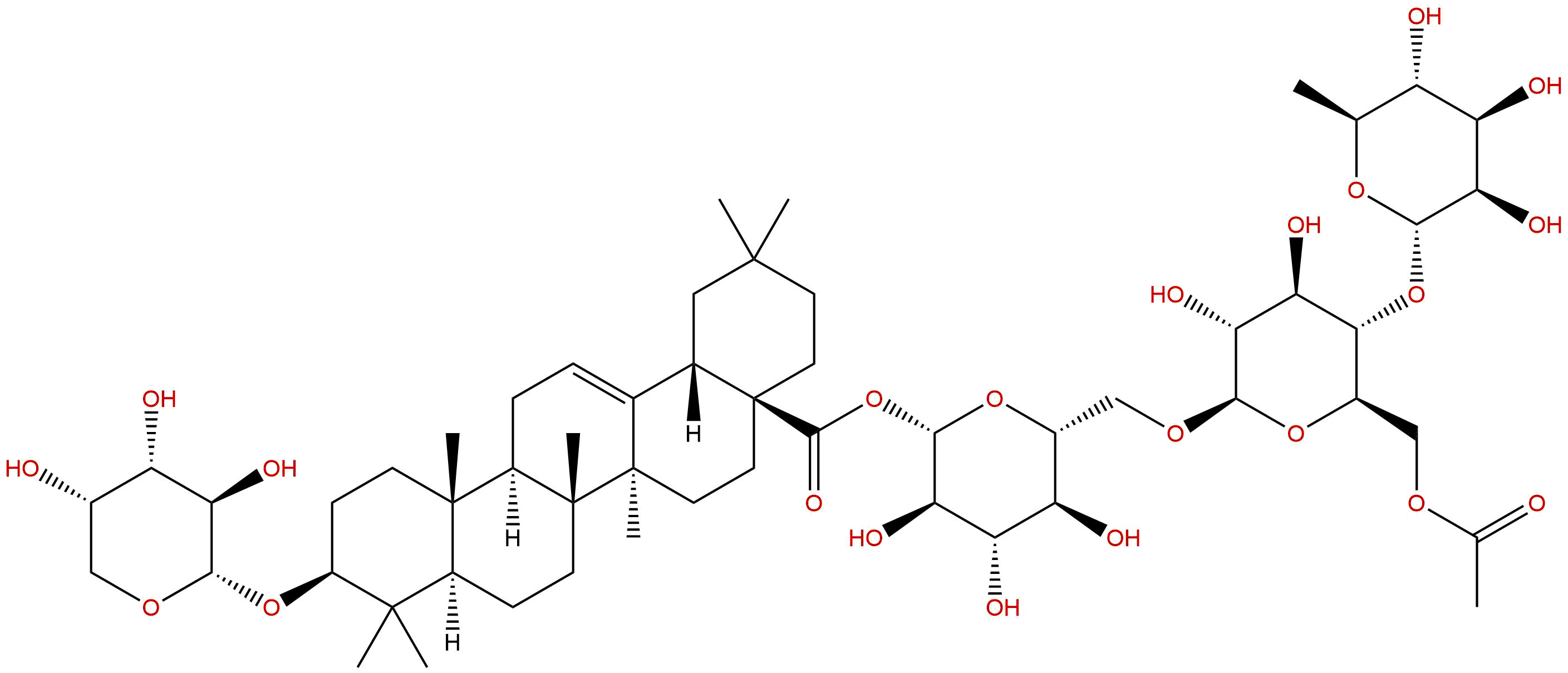
Ciwuqianoside D1 is a complex natural triterpenoid saponin compound. Its chemical structure belongs to the Oleanane type pentacyclic triterpenoid saponins, which are widely present in nature and have significant biological activity. The core skeleton of this compound is oleanolic acid, and the C-3 and C-28 positions of its parent nucleus are usually replaced by sugar chains, forming monosaccharide or disaccharide chain saponins. For Ciwujia saponin D1, its structural characteristics lie in the composition of sugar chains, connection modes, and possible acylation modifications, which together determine its unique physicochemical properties and biological activity.
According to existing literature and chemical database information, the molecular formula of Acanthopanax senticosus saponin D1 is C ₅₄ H ₈₈ O ₂ ∝, with a molecular weight of up to 1101.2870 Da. Such a high molecular weight is a typical characteristic of it as a complex natural product. Its lipophilic water partition coefficient (LogP) is 2.6717, indicating that the compound has a certain degree of lipophilicity, but also contains a large number of hydroxyl groups, making it exhibit a certain degree of hydrophilicity and presenting an overall amphiphilic characteristic. This amphiphilicity is crucial for its ability to cross biological membranes, bind to target proteins, and maintain a dissolved state in aqueous environments. Its topological polar surface area (TPSA) is as high as 339.7400 Å ², which is much higher than the recommended threshold for oral medication (about 140 Å ²), indicating that the compound may face poor intestinal transmembrane absorption problems during oral administration. The water solubility data (0.0713 mg/mL) also confirms its low solubility in water, which may be an important factor limiting its oral bioavailability.
From the perspective of Structure Activity Relationship (SAR), the large sugar chain portion of Acanthopanax senticosus saponin D1 is not only the main contributor to its water solubility, but also a key structural domain for its specific recognition and binding to biological targets such as cell membrane receptors and enzymes. The type of sugar chain (such as glucose, xylose, arabinose, etc.), the order of connection (such as 1 → 2, 1 → 3, 1 → 6, etc.), and the modification of the terminal sugar group all directly affect the pharmacological properties of compounds. For example, the sugar chains of certain saponins are crucial for activating or inhibiting specific signaling pathways. In addition, the rigid planar structure of its oleanane type mother nucleus provides a good framework for binding with the hydrophobic pocket of the target protein. Therefore, any chemical modification of sugar chains or parent nuclei may significantly alter their pharmacological activity and pharmacokinetic behavior.
Ciwujia saponin D1 mainly comes from the Araliaceae plant, Ciwujia(Acanthopanax senticosus (Rupr. & Maxim.) Harms)。 Ciwujia is a deciduous shrub widely distributed in Northeast China, North China, the Far East of Russia, the Korean Peninsula, and Japan. Its medicinal parts are mainly roots and rhizomes, but recent studies have found that its stems and leaves also contain similar active ingredients. The content of Ciwujia saponin D1 in plants is usually low and belongs to trace active ingredients, which puts high demands on its extraction, separation, and purification processes.
Traditional extraction methods often use solvent extraction. Given the polarity of Ciwujia saponin D1, commonly used extraction solvents include methanol, ethanol, or their aqueous solutions. Usually, the dried root powder of Acanthopanax senticosus is subjected to reflux extraction or cold soaking extraction with a certain concentration of ethanol (such as 70% -95%) to obtain the crude extract of total saponins. In order to improve the extraction efficiency and yield of target components, modern extraction techniques such as ultrasound assisted extraction, microwave-assisted extraction, and enzyme assisted extraction have also been applied to the extraction of saponins from Acanthopanax senticosus. These techniques achieve higher extraction rates in a shorter period of time by disrupting the cell wall structure and accelerating solvent penetration.
After obtaining the crude extract of total saponins, a series of separation and purification steps are required to obtain high-purity Ciwujia saponin D1. The classic separation process usually includes:
1. Preliminary purification Use macroporous adsorption resins (such as D101, AB-8, etc.) to perform column chromatography on the crude extract. By gradient elution using ethanol water systems of different concentrations, saponin components can be enriched and most impurities such as sugars and pigments can be removed.
2. Further separation Perform silica gel column chromatography on the enriched saponin components. Use solvent systems such as chloroform methanol water for isocratic or gradient elution, and perform preliminary separation based on the differences in polarity of each saponin component.
3. Fine purification For saponins with similar structures that are difficult to separate, such as Ciwujia saponin D1 and its isomers or analogues, higher resolution separation techniques are required. Reverse phase silica gel column chromatography (such as ODS C18) is a commonly used method, typically using methanol water or acetonitrile water systems for elution. In addition, preparative high-performance liquid chromatography (Prep HPLC) is a key technology for achieving the separation of high-purity monomer compounds at the milligram to gram level. By optimizing chromatographic conditions such as stationary phase, mobile phase composition, flow rate, detection wavelength, etc., it is possible to efficiently separate saponins D1 from complex mixtures.
4. Structural Identification The final purified product requires structural confirmation through modern spectroscopic techniques, including nuclear magnetic resonance spectroscopy (NMR, including ¹ H-NMR, ¹ ³ C-NMR, 2D-NMR such as HSQC, HMBC, COSY, etc.) and high-resolution mass spectrometry (HR-MS). By comparing with known literature data or conducting detailed spectral analysis, its chemical structure is ultimately determined.
It is worth noting that due to the extremely low content of Ciwujia saponin D1 in plants and its coexistence with multiple structurally similar saponins, its large-scale, high-purity, and low-cost preparation remains a technical challenge. Developing efficient and green extraction and purification processes is crucial for advancing its in-depth pharmacological research and potential clinical applications.
At present, there are relatively limited reports on the direct pharmacological activity of saponins D1 from Acanthopanax senticosus. However, the preliminary discovery of its activity and the potential predicted based on network pharmacology provide clues for its application in multiple disease fields.
The biological activity of Ciwujia saponin D1 was initially reported to inhibit histamine release induced by immunoglobulin E (IgE) in rat peritoneal mast cells. Mast cells are key effector cells in allergic and inflammatory reactions. When allergens crosslink with IgE antibodies bound to the surface of mast cells, they trigger degranulation of mast cells, releasing various inflammatory mediators such as histamine, leukotrienes, prostaglandins, etc., thereby triggering a series of allergic symptoms (such as urticaria, asthma, allergic rhinitis, etc.). Ciwujia saponin D1 can inhibit this process, suggesting that it may exert anti allergic and anti-inflammatory effects by stabilizing mast cell membranes or interfering with their intracellular signaling pathways. This discovery provides preliminary experimental evidence for its application in the treatment of allergic diseases and certain inflammatory diseases.
In recent years, with the development of network pharmacology and computer-aided drug design technology, researchers have begun to systematically predict potential targets and pharmacological effects of natural products. The target prediction analysis of Ciwujia saponin D1 shows that it may interact with multiple proteins closely related to bone metabolism regulation, providing strong theoretical support for its anti osteoporosis activity.
The predicted targets include:
- ESR1 (Estrogen Receptor 1)Estrogen receptor alpha. Estrogen plays a central role in maintaining bone health by inhibiting osteoclast activity and promoting osteoblast function through the ESR1 signaling pathway. The loss or downregulation of ESR1 function is one of the main causes of postmenopausal osteoporosis.
- RUNX2 (Runt-related transcription factor 2) and SP7 (Osterix)Key transcription factors involved in osteoblast differentiation and bone formation. RUNX2 is the main regulator of osteoblast differentiation, while SP7 is a downstream target of RUNX2, jointly regulating the expression of bone matrix proteins such as COL1A1.
- COL1A1 (Collagen Type I Alpha 1 Chain)Type I collagen alpha 1 chain. Type I collagen is the most important organic component in bone matrix, providing structural support and toughness for bones.
- BGLAP (Bone Gamma carbohydrate Protein)Non collagen secreted by osteoblasts is a biomarker of bone formation and participates in the process of bone mineralization.
- MMP9 (Matrix Metalloproteinase 9)Matrix metalloproteinase 9. During bone resorption, osteoclasts secrete MMP9 to degrade collagen in the bone matrix.
- CTSK (Cathepsin K)Cathepsin K. The main cysteine protease secreted by osteoclasts, responsible for degrading type I collagen in the bone matrix, is a key enzyme in bone resorption.
- TNFRSF11B (Tumor Necrosis Factor Receptor Superfamily Member 11B, osteoprotegerin, OPG)OPG is a bait receptor for RANKL, which inhibits the differentiation and activity of osteoclasts by blocking the binding of RANKL and RANK, and is a key factor in bone protection.
- VDR (Vitamin D Receptor)Vitamin D receptor. Vitamin D regulates calcium and phosphorus metabolism and bone mineralization through VDR, which is crucial for bone health.
- SOST (Sclerostin): Osteocalcin. Secreted by bone cells, it is a potent inhibitor of the Wnt/β - catenin signaling pathway, negatively regulating bone formation.
These targets cover multiple key links in the bone metabolism regulatory network, including hormone signaling (ESR1, VDR), osteoblast differentiation (RUNX2, SP7), bone matrix formation (COL1A1, BGLAP), osteoclast activity (MMP9, CTSK, TNFRSF11B/OPG), and negative regulation of bone formation (SOST). Ciwujia saponin D1 can simultaneously target such a wide range of bone metabolism related proteins, suggesting that it may exert anti osteoporosis effects through multi-target and multi pathway synergistic effects. For example, it may mimic the bone protective effect of estrogen by activating the ESR1 signal, while upregulating RUNX2 and SP7 to promote osteogenic differentiation, and inhibiting the activity of MMP9 and CTSK to reduce bone resorption. This multi-target mode of action is its unique advantage as a natural product that distinguishes it from single target chemical drugs.
Based on the pharmacological activity mentioned above, especially the potential for anti osteoporosis, the mechanism of action of Ciwujia saponin D1 can be further explored at the molecular level. Although direct experimental evidence is not yet sufficient, a reasonable mechanism of action hypothesis can be constructed by combining target prediction with known bone metabolism signaling pathways.
Ciwujia saponin D1 may promote the differentiation and maturation of osteoblasts by activating key transcription factors RUNX2 and SP7. RUNX2 is the "main switch" for osteoblast differentiation, and its expression and activity are regulated by multiple upstream signaling pathways, such as BMP/Smad, Wnt/β - catenin, and MAPK pathways. Ciwujia saponin D1 may exert its effects through the following ways:
- Activate BMP/Smad pathway Binding and activating BMP receptors leads to phosphorylation of Smad1/5/8, forming a complex with Smad4 and entering the nucleus, initiating transcription of RUNX2 and SP7.
- Activate Wnt/β - catenin pathway It is possible to release the inhibition of Wnt signaling by SOST by inhibiting its expression or activity, leading to the accumulation and translocation of β - catenin in the cytoplasm, binding to TCF/LEF transcription factors, and upregulating the expression of RUNX2.
- Upregulation of COL1A1 and BGLAP As downstream target genes of RUNX2 and SP7, upregulation of COL1A1 and BGLAP expression will directly promote the synthesis and mineralization of bone matrix, increasing bone mass.
Ciwujia saponin D1 may inhibit the differentiation and function of osteoclasts through various pathways, thereby reducing bone resorption.
- Simulating estrogenic effects By binding and activating ESR1, Ciwujia saponin D1 may exert a bone protective effect similar to estrogen. Activated ESR1 can upregulate the expression of OPG and downregulate the expression of RANKL, thereby increasing the ratio of OPG/RANKL. OPG, as a bait receptor for RANKL, can effectively block the binding of RANKL to RANK receptors on the surface of osteoclast precursor cells, inhibiting the differentiation and maturation of osteoclasts.
- Directly inhibit key enzymes of osteoclasts Ciwujia saponin D1 may directly bind to the active sites of MMP9 and CTSK, inhibiting their enzymatic activity. MMP9 and CTSK are key enzymes involved in the degradation of bone matrix collagen by osteoclasts, and inhibiting their activity directly reduces the rate of bone resorption.
- Regulating the NF - κ B pathway The downstream of the RANKL/RANK signaling pathway mainly activates the NF - κ B and MAPK pathways, which are crucial for the differentiation and survival of osteoclasts. Ciwujia saponin D1 may inhibit the formation of osteoclasts by interfering with these signal transduction pathways.
By targeting VDR, Ciwujia saponin D1 may affect the biological effects of vitamin D. After combining with VDR, vitamin D can promote the absorption of calcium and phosphorus in the intestine and regulate the reabsorption of calcium in the kidneys, thereby maintaining the balance of blood calcium and phosphorus and providing sufficient raw materials for bone mineralization. In addition, VDR signals can also directly act on osteoblasts and osteoclasts, regulating bone metabolism.
In summary, the mechanism of action of Ciwujia saponin D1 exhibits typical "multi-target, multi pathway" network regulation characteristics. It may achieve a balance of bone metabolism by simultaneously acting on both osteogenesis and osteoclastogenesis processes, promoting bone formation (through RUNX2, SP7, COL1A1, BGLAP) and inhibiting bone resorption (through ESR1, OPG/RANKL, MMP9, CTSK), thereby exerting anti osteoporosis effects. This collaborative mode is its potential advantage.
To promote the clinical application of Ciwujia saponin D1 from a natural product candidate molecule, it is necessary to rigorously evaluate its drug like and pharmacokinetic properties. Based on the provided pharmacological parameters, a preliminary assessment of its potential for oral administration can be made.
molecular weight 1101.2870 Da. This value is much higher than the standard of molecular weight less than 500 Da in the Lipinski Five Rules. High molecular weight usually means that the molecular volume is large, making it difficult to cross the cell membrane through passive diffusion, which poses a huge challenge for its oral absorption.
LogP: 2.6717. This value is within the ideal range (LogP is generally considered to be better between 1-3), indicating that the compound has appropriate lipophilicity, which facilitates its binding to the hydrophobic region of the target protein. However, considering its high molecular weight, a simple LogP value cannot guarantee good membrane permeability.
TPSA 339.7400 Å ². This is a very high value, far exceeding the usual upper limit of oral medication (about 140 Å ²). High TPSA means that there are a large number of polar atoms (such as oxygen, nitrogen atoms, and their attached hydrogen) on the surface of the molecule, which can lead to the formation of numerous hydrogen bonds with water molecules, thereby hindering their passage through the lipid bilayer of the cell membrane. Therefore, high TPSA is a strong predictor of oral malabsorption.
Water solubility:0.0713 mg/mL。 This value is relatively low and belongs to poorly soluble drugs. Low water solubility not only affects oral absorption, but also brings difficulties to the development of formulations, requiring the use of special formulation technologies (such as nanocrystals, liposomes, cyclodextrin inclusion complexes, etc.) to improve their solubility and dissolution rate.
Blood-brain barrier (BBB): Low. This is a favorable feature, indicating that the compound is not easily able to penetrate the blood-brain barrier into the central nervous system, thereby reducing the potential risk of neurotoxicity.
HERG inhibition: No. HERG potassium channel inhibition is the main cause of drug-induced cardiac toxicity (QT interval prolongation). Ciwujia saponin D1 does not inhibit hERG channels, which is an important safety advantage.
Ames test: 0.0. The Ames test is used to evaluate the mutagenicity (genotoxicity) of compounds. The result of 0.0 indicates that it has no mutagenicity under the testing conditions, which is a positive signal suggesting that it may have a lower risk of genetic toxicity.
Comprehensive evaluation of drug properties Ciwujia saponin D1 shows good potential in terms of safety (no hERG inhibition, no Ames mutagenicity), but its physicochemical properties (high molecular weight, high TPSA, low water solubility) severely limit its oral bioavailability. This indicates that developing it as an oral medication will face significant pharmaceutical challenges. However, this does not mean that the compound has no development value. For such natural products, the following alternative routes of administration can be considered:
- Non oral administration Injection administration (intravenous, subcutaneous, muscular) can completely avoid absorption barriers and directly enter the systemic circulation. For short-term treatment of acute or severe diseases such as fracture healing and severe osteoporosis, injectable form is a feasible option.
- Local administration For local bone diseases (such as osteoarthritis and local bone defects), local injections (such as intra-articular injections) or implants can be developed to achieve high concentration local administration and reduce systemic exposure.
- Prodrug strategy By chemical modification, groups that can promote absorption (such as esterified hydroxyl groups) are introduced into molecules to make prodrugs, which are then released in vivo through enzymatic or chemical hydrolysis.
- New formulation technology Using nanotechnology (such as lipid nanoparticles and polymer micelles) to encapsulate drugs, improving their water solubility and membrane permeability, and enhancing oral absorption.
There is currently very little publicly reported data on the pharmacokinetic study of Ciwujia saponin D1. Its absorption, distribution, metabolism, and excretion (ADME) characteristics are not yet clear. Future research requires systematic in vivo PK studies, including establishing sensitive and specific biological sample analysis methods (such as LC-MS/MS), determining their blood drug concentration time curves in animals, calculating pharmacokinetic parameters (such as Cmax, Tmax, AUC, t1/2, bioavailability, etc.), and studying their metabolic pathways and metabolites. These data are crucial for evaluating its pharmacological properties, predicting in vivo efficacy and toxicity, and guiding the design of clinical dosing regimens.
Although the research on Ciwujia saponin D1 is still in its early stages, its unique pharmacological activity spectrum and potential molecular target network depict promising prospects for its clinical application in specific disease fields.
1. Development of anti osteoporosis drugs
This is the most promising application direction of Ciwujia saponin D1. Its multi-target mode of action, especially targeting both osteogenesis and osteoclastogenesis processes simultaneously, makes it a promising "bone metabolism regulator" with dual effects of promoting bone formation and inhibiting bone resorption. This may have better efficacy and lower risk of side effects compared to drugs with a single mechanism of action in clinical practice, such as bisphosphonates that only inhibit bone resorption or teriparatide that only promote bone formation. In the future, if it can be confirmed through in vitro and in vivo experiments that it can indeed upregulate the OPG/RANKL ratio, activate RUNX2, inhibit CTSK, etc., it will become an extremely attractive candidate drug for anti osteoporosis. Especially for postmenopausal osteoporosis patients, its potential estrogen like effects (via ESR1) may provide a safer alternative.
2. Adjuvant treatment for allergic and inflammatory diseases
Its activity of inhibiting histamine release from mast cells provides the possibility for its application in the treatment of allergic rhinitis, urticaria, asthma and other diseases. It can be explored to develop it into local medication (such as nasal spray, skin topical preparation) or oral preparation (to solve the bioavailability problem) as an auxiliary treatment of existing antihistamines or glucocorticoids to reduce the dosage and side effects of the latter.
3. Fracture healing and bone defect repair
Given its potential to promote bone formation and inhibit bone resorption, Ciwujia saponin D1 may play a role in accelerating fracture healing and promoting bone defect repair. It can be loaded into biomaterials (such as hydroxyapatite, β - tricalcium phosphate, hydrogel, etc.) to make bone repair scaffolds or local implants, which can achieve local and continuous drug release at the fracture site or bone defect area, thus promoting the generation of new bones.
Challenges faced and future research directions
Despite its broad prospects, the clinical translation of Ciwujia saponin D1 still faces many challenges:
Ciwujia saponin D1, as a natural triterpenoid saponin derived from the traditional herb Ciwujia, reflects the transformation from traditional experience to modern science in its research process. Although there is currently limited direct pharmacological research data on this compound, its activity in inhibiting degranulation of mast cells, especially its multi-target anti osteoporosis potential predicted based on network pharmacology, makes it a natural product lead compound worthy of further exploration. Its complex chemical structure, unique physicochemical properties, and potential "dual regulation of bone metabolism" mechanism are not only the charm of it as a candidate drug, but also the main obstacles on its clinical translation path.
Future research should focus on verifying its exact efficacy in osteoporosis and related diseases through rigorous experimental design, and systematically elucidating its mechanism of action. At the same time, it is necessary to address the shortcomings in its pharmacological properties and actively explore non oral administration routes or develop new formulation technologies to overcome its absorption difficulties. The in-depth study of Ciwujia saponin D1 is not only expected to provide a new, multi-target candidate drug for the treatment of osteoporosis, but also to provide a beneficial example for mining active ingredients with unique mechanisms of action from traditional Chinese medicine. Although the road from laboratory discovery to clinical application is long and challenging, based on its unique chemical and biological properties, Ciwujia saponin D1 is undoubtedly a valuable natural product resource worth continuous investment and in-depth exploration.
Batch can search by a CAS number,one per line
