| Catalog No | Package | Original Price | Price | Inventory | Quantity | Operating |
|---|---|---|---|---|---|---|
| BP5272-5mg | 5mg | $420.00 | Sign in |
|


Storage conditions:Short-term storage at 2~8℃, long-term storage at -20 ~ -80℃
333.6700
2.5236
2.5236
.1103
.6375
.1908
Low
74.1168
6.6928
Yes
No
No
No
No
No
0.0
Yes
No
No
No
Neurodegenerative diseases, such as Alzheimer's disease (AD) and Parkinson's disease (PD), have become significant public health issues globally that pose a serious threat to the health and quality of life of the elderly population. The pathological mechanisms of these diseases are complex, involving multiple links such as oxidative stress, neuroinflammation, protein misfolding and aggregation, mitochondrial dysfunction, and neuronal apoptosis. Although modern medicine has made significant progress in the field of neuroscience, most of the therapeutic drugs currently available for these diseases can only alleviate symptoms and cannot effectively delay or reverse the disease progression. Therefore, searching for neuroprotective active molecules with multi-target regulatory ability, low toxicity and the ability to penetrate the blood-brain barrier (BBB) from natural products has become an important direction for new drug development.
Ciwujia(Acanthopanax senticosus (Rupr. & Maxim.) Harms), Also known as Siberian ginseng, it is a medicinal plant belonging to the Araliaceae family and the Araliaceae genus. It is widely distributed in northeastern China, the Russian Far East, and the Korean Peninsula. Ciwujia enjoys a high reputation in traditional Chinese medicine and is used as a nourishing and strengthening medicine for "strengthening the body and consolidating the foundation". It has the effects of nourishing qi and spleen, tonifying the kidneys and calming the nerves, and is commonly used to treat symptoms such as physical weakness, insomnia, and memory loss. Modern pharmacological research has confirmed that the extract of Acanthopanax senticosus has significant anti fatigue, anti stress, immune regulation, anti-inflammatory, and neuroprotective effects. Ciwuqianoside is an important active ingredient in Ciwuqianoside, belonging to the triterpenoid saponin class. Among them, Ciwuqianoside C3 has received widespread attention due to its unique pharmacological activity.
Ciwujia saponin C3 (CAS number: 114906-74-0) is a natural triterpenoid saponin isolated from Ciwujia leaves. Research has shown that the compound has oral activity and can penetrate the blood-brain barrier, laying a key foundation for its application in the treatment of central nervous system diseases. Preliminary pharmacological experiments have shown that Ciwujia saponin C3 has significant anti-inflammatory effects and can enhance individual recognition and memory in mice, suggesting its potential application value in improving cognitive function and neuroprotection. This article will provide a systematic review of the research progress of Ciwujia saponin C3 from the aspects of chemical structure, plant origin, pharmacological activity, mechanism of action, pharmacological evaluation, and clinical application prospects.
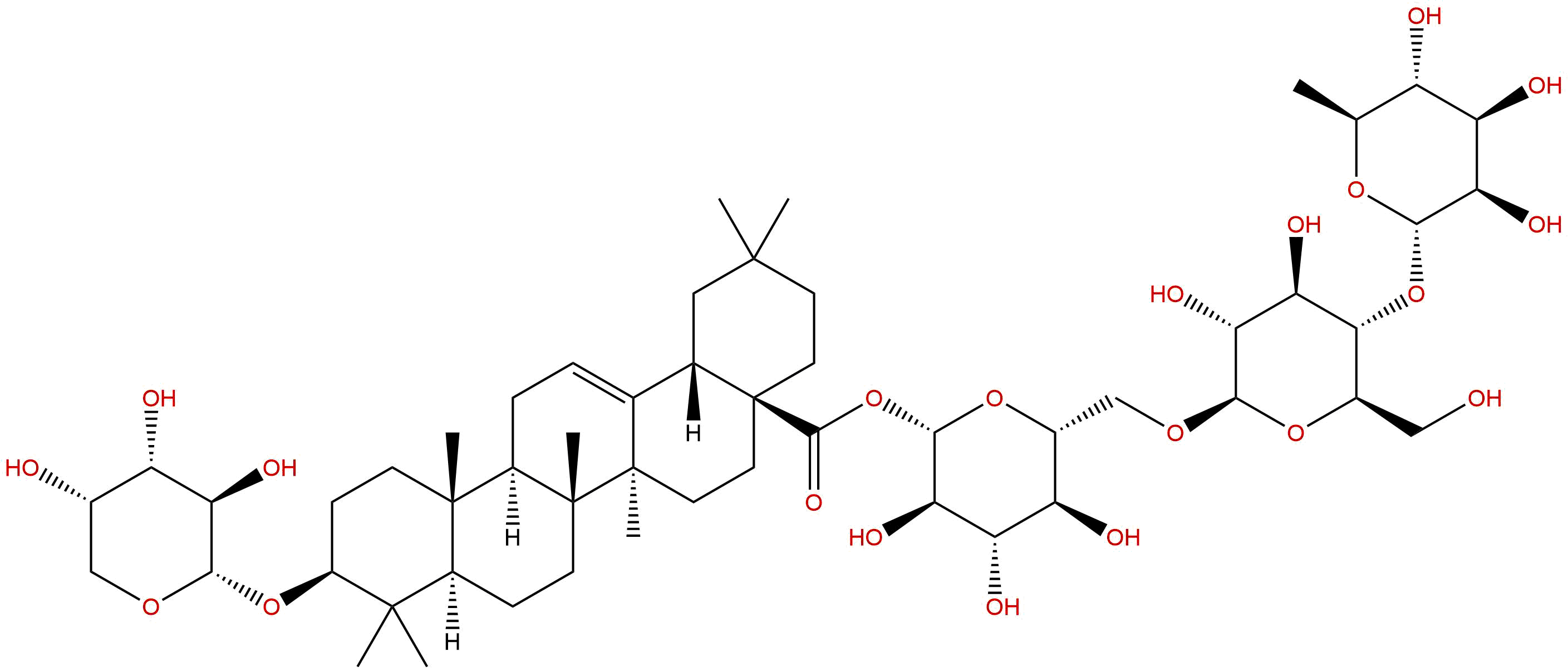
Ciwujia saponin C3 belongs to oleanane type pentacyclic triterpenoid saponins. Its chemical structure consists of two parts: aglycone and glycosidic chain. The glycoside moiety is a derivative of oleanolic acid, and its parent nucleus structure consists of five rings (A, B, C, D, E), with hydroxyl and carboxyl functional groups on the A and C rings, respectively. The sugar chain is usually composed of multiple monosaccharide units connected by glycosidic bonds. Common monosaccharides include glucose, rhamnose, arabinose, etc. The sugar chain structure of Ciwujia saponin C3 is relatively complex, usually connected to the C-3 or C-28 positions of the glycoside, forming a monosaccharide or disaccharide chain structure. The specific sugar chain composition and connection sequence need to be accurately identified through spectroscopic techniques such as nuclear magnetic resonance (NMR) and mass spectrometry (MS).
From the perspective of physical and chemical properties, the molecular weight of Ciwujia saponin C3 is 1059.2500 Da, which belongs to a medium to large molecule. Its lipophilic water partition coefficient (LogP) is 2.5236, indicating that the compound has a certain lipophilicity, which is consistent with its ability to penetrate the blood-brain barrier. However, its polar surface area (TPSA) is as high as 333.6700 Å ², much higher than the threshold commonly believed to passively diffuse through the blood-brain barrier (approximately 60-70 Å ²). This contradiction suggests that the mechanism by which Ciwujia saponin C3 penetrates the blood-brain barrier may not be simply passive diffusion, but rather involve active transport or endocytosis processes. The water solubility data (0.1103 mg/mL) shows that its solubility in water is low, which may affect its oral bioavailability and formulation development. It is worth noting that the hERG inhibition test result was negative, indicating that the compound has good potential in terms of cardiac safety. The Ames test result is 0.0, indicating no significant mutagenicity and a low risk of genetic toxicity.
Ciwujia saponin C3 mainly comes from the leaves of Ciwujia plants. As a perennial shrub, Ciwujia can be used as medicine in its roots, stems, leaves, and fruits, but the chemical composition of different parts varies. Research has shown that the leaves of Acanthopanax senticosus are rich in various saponin components, among which the content of saponin C3 in Acanthopanax senticosus is relatively high and is one of the main active ingredients in the leaves. In addition, the roots and rhizomes of Acanthopanax senticosus also contain a certain amount of saponins, but the types and contents are different from those in the leaves. Therefore, in industrial production, the leaves of Acanthopanax senticosus are often used as the main raw material for extracting saponins C3 from Acanthopanax senticosus.
The extraction and purification of Ciwujia saponin C3 are usually carried out using classical natural product chemistry methods. Firstly, the dried leaves of Acanthopanax senticosus are crushed and subjected to reflux extraction or cold soaking extraction using organic solvents such as ethanol or methanol. After filtration and concentration of the extract, crude extract is obtained. Subsequently, liquid-liquid extraction (such as petroleum ether, ethyl acetate, n-butanol, etc.) was used to preliminarily separate the crude extract, removing lipid soluble impurities and water-soluble impurities such as sugars. The n-butanol extract is usually rich in saponins. Further purification can be achieved by using macroporous adsorption resin column chromatography (such as D101, AB-8, etc.) with gradient elution in ethanol water systems of different concentrations to enrich saponin components. Finally, the high-purity Acanthopanax senticosus saponin C3 monomer was obtained by silica gel column chromatography, ODS reverse phase column chromatography, Sephadex LH-20 gel column chromatography, preparative high-performance liquid chromatography (prep HPLC) and other modern separation technologies. The entire extraction and separation process requires real-time monitoring using thin-layer chromatography (TLC) and high-performance liquid chromatography (HPLC) to ensure the purity and yield of the target compound.
Neuroprotection is one of the most closely studied pharmacological activities of Ciwujia saponin C3. Multiple in vitro and in vivo experiments have confirmed that this compound can effectively protect neurons from various damaging factors. In cell models, pre-treatment with Ciwujia saponin C3 can significantly alleviate neuronal damage induced by β - amyloid protein (A β), glutamate, hydrogen peroxide (H ₂ O ₂), or oxygen glucose deprivation/reoxygenation (OGD/R), improve cell survival, reduce lactate dehydrogenase (LDH) release, and inhibit cell apoptosis. In animal models, oral administration of Ciwujia saponin C3 can improve learning and memory impairments caused by scopolamine, A β injection, or natural aging. In particular, the compound can enhance individual recognition memory in mice, which was clearly demonstrated in social recognition tests. This cognitive improvement effect may be related to the regulation of synaptic plasticity by Ciwujia saponin C3, the promotion of neurogenesis in the hippocampus, and the inhibition of neuroinflammation.
Inflammatory response plays a key role in the pathogenesis of neurodegenerative diseases. The excessive activation of microglia and astrocytes can lead to the release of pro-inflammatory cytokines (such as TNF - α, IL-1 β, IL-6) and chemokines, thereby exacerbating neuronal damage. Research has shown that Ciwujia saponin C3 has significant anti-inflammatory activity. In a small glial cell model stimulated by lipopolysaccharide (LPS), saponins C3 from Acanthopanax senticosus can significantly inhibit the production of nitric oxide (NO) and prostaglandin E ₂ (PGE ₂), and reduce the expression levels of inducible nitric oxide synthase (iNOS) and cyclooxygenase-2 (COX-2). Meanwhile, the compound can also downregulate the mRNA and protein levels of pro-inflammatory factors such as TNF - α, IL-1 β, and IL-6. In in vivo experiments, Ciwujia saponin C3 can alleviate the neuroinflammatory response induced by LPS, inhibit the activation of microglia, and protect hippocampal neurons from damage by inflammatory mediators. This anti-inflammatory effect is considered one of the important mechanisms by which it exerts neuroprotective effects.
In addition to neuroprotective and anti-inflammatory effects, Ciwujia saponin C3 also exhibits other potential pharmacological activities. For example, studies have reported that it has antioxidant activity, can clear free radicals, increase the activity of intracellular superoxide dismutase (SOD) and glutathione peroxidase (GSH Px), and reduce malondialdehyde (MDA) levels. In addition, the compound may also have anti fatigue, immune regulation, and anti-tumor effects, but research in these areas is still in its early stages and further exploration is needed.
The pharmacological activity of Ciwujia saponin C3 involves multiple signaling pathways and molecular targets, reflecting the multi-target and multi pathway characteristics of natural products. According to existing research, its neuroprotective effect is mainly achieved through the following mechanisms:
Apoptosis is one of the main forms of neuronal death. Ciwujia saponin C3 can inhibit neuronal apoptosis by regulating the expression of Bcl-2 family proteins. Specifically, the compound can upregulate the expression of anti apoptotic protein Bcl-2 and downregulate the expression of pro apoptotic protein Bax, thereby maintaining mitochondrial membrane potential, inhibiting the release of cytochrome c, and blocking the cascade activation of Caspase-9 (CASP9) and Caspase-3. This mechanism has been validated in the A β - induced neuronal damage model. In addition, Ciwujia saponin C3 may also affect the balance between cell survival and apoptosis by regulating the phosphorylation levels of MAPK signaling pathways such as ERK1/2, JNK, and p38 MAPK.
One of the core pathological features of Alzheimer's disease is the abnormal deposition of beta amyloid protein (A β). A β is produced by the sequential cleavage of amyloid precursor protein (APP) by β - secretase (BACE1) and γ - secretase. Research has shown that saponins C3 from Acanthopanax senticosus can downregulate the expression and activity of BACE1, reduce the β - cleavage of APP, and thus decrease the production of A β. Meanwhile, the compound may also promote the degradation and clearance of A β, alleviating its toxic effects on neurons. In addition, Ciwujia saponin C3 may also have an inhibitory effect on the excessive phosphorylation of Tau protein (MAPT), which helps maintain microtubule stability and prevent the formation of neurofibrillary tangles.
Oxidative stress is a common pathological feature of neurodegenerative diseases. Ciwujia saponin C3 can activate the nuclear factor E2 related factor 2 (NFE2L2, also known as Nrf2) signaling pathway. Nrf2 is a key transcription factor in the cellular antioxidant defense system. Upon activation, it can enter the nucleus and bind to antioxidant response elements (ARE), initiating the transcription of downstream antioxidant enzyme genes such as HO-1, NQO1, SOD, GST, etc. By upregulating the expression of these antioxidant enzymes, Ciwujia saponin C3 can enhance the ability of neurons to resist oxidative damage, reduce the accumulation of reactive oxygen species (ROS), and protect cells from oxidative stress.
Silencing information regulatory factor 1 (SIRT1) is an NAD ⁺ - dependent deacetylase that plays an important role in energy metabolism, stress resistance, and neuroprotection. Research has shown that Ciwujia saponin C3 can upregulate the expression and activity of SIRT1. The activation of SIRT1 can deacetylate and inhibit the activity of transcription factors such as p53 and FOXO, thereby reducing cell apoptosis and inflammatory response. In addition, SIRT1 can improve mitochondrial function and enhance neuronal energy metabolism by regulating downstream molecules such as PGC-1 α. Therefore, the SIRT1 signaling pathway may be one of the important targets for the neuroprotective effects of Ciwujia saponin C3.
Glycogen synthase kinase-3 β (GSK3 β) is a multifunctional serine/threonine kinase, and its abnormal activation is closely related to Tau protein hyperphosphorylation, neuronal apoptosis, and synaptic dysfunction. Ciwujia saponin C3 can inhibit its activity by promoting phosphorylation of the Ser9 site of GSK3 β. The inactivation of GSK3 β not only reduces the phosphorylation of Tau protein, but also promotes neuronal survival and synaptic plasticity by regulating the Wnt/β - catenin signaling pathway.
In summary, Ciwujia saponin C3 achieves comprehensive protection of neurons through the synergistic effect of multiple targets and pathways. Its targets include apoptosis regulation (BCL2, CASP9), amyloid metabolism (APP, BACE1), Tau protein phosphorylation (MAPT, GSK3B), antioxidant defense (NFE2L2), as well as energy metabolism and stress resistance (SIRT1, MAPK1) and other key links.
The evaluation of drug properties is a crucial step in determining whether natural products can enter the process of new drug development. From the perspective of physical and chemical properties, the molecular weight of Ciwujia saponin C3 (1059.25 Da) is relatively high, exceeding the threshold of molecular weight less than 500 Da in Lipinski's Rule of Five. This usually indicates that its oral absorption may be poor. However, its LogP value (2.5236) is within an ideal range (1-3), indicating that it has appropriate lipophilicity and is conducive to membrane permeation. The high TPSA value (333.67 Å ²) suggests that it may be difficult for it to pass through the cell membrane through passive diffusion, but as mentioned earlier, it may achieve transmembrane transport through active transport mechanisms.
In terms of safety, a negative hERG inhibition test indicates that the compound has no significant inhibitory effect on cardiac potassium ion channels, reducing the risk of arrhythmia. If the Ames test is negative, the potential genetic toxicity as a DNA damaging agent is ruled out. These preliminary safety data provide favorable conditions for the further development of Ciwujia saponin C3. However, a comprehensive toxicological evaluation, including acute toxicity, chronic toxicity, reproductive toxicity, and carcinogenicity, is still necessary.
Pharmacokinetic studies are crucial for understanding the in vivo processes of drugs. At present, there is insufficient systematic research on the pharmacokinetics of Ciwujia saponin C3, but some preliminary findings have been made. This compound has oral activity, indicating that it can be absorbed into the bloodstream through the gastrointestinal tract. However, due to its high molecular weight and polarity, its oral bioavailability may be low, which may be caused by factors such as intestinal barrier, liver first pass effect, and gut microbiota metabolism. It is worth noting that Ciwujia saponin C3 can penetrate the blood-brain barrier, which is a prerequisite for its central nervous system activity. The mechanism by which it penetrates the BBB is not fully understood, and it is speculated that it may involve active transport mediated by glucose transporter (GLUT1) or other transporters, or transmembrane transport through endocytosis/endocytosis. In addition, the metabolic pathways, distribution, and excretion characteristics of this compound in the body still need further clarification.
Based on the multiple pharmacological activities of Ciwujia saponin C3, including neuroprotection, anti-inflammatory, antioxidant, and improvement of cognitive function, it has potential clinical application prospects in the following disease fields:
Alzheimer's disease (AD)Ciwujia saponin C3 can reduce A β production, inhibit Tau protein hyperphosphorylation, and alleviate neuroinflammation and oxidative stress by inhibiting BACE1 activity, making it a candidate compound for treating AD. The effect of improving individual recognition memory also directly points to the core symptom of AD - memory impairment.
Parkinson's disease (PD)Although there is currently limited research on the use of Ciwujia saponin C3 in PD models, its antioxidant and anti-inflammatory properties may have potential value in protecting dopaminergic neurons from neurotoxins such as MPTP or 6-OHDA.
Ischemic stroke Ciwujia saponin C3 can alleviate OGD/R-induced neuronal damage, suggesting its potential protective effect in cerebral ischemia-reperfusion injury. Its anti apoptotic and anti-inflammatory mechanisms help to reduce infarct volume and improve neurological deficits.
Other neurodegenerative diseases Diseases such as amyotrophic lateral sclerosis (ALS) and Huntington's disease (HD) also involve oxidative stress, inflammation, and neuronal apoptosis. Ciwujia saponin C3 may exert therapeutic potential through its multi-target effects.
Despite the promising development prospects of Ciwujia saponin C3, there is still a long way to go before clinical application. Future research should focus on the following aspects:
Thoroughly elucidate the mechanism of action Using techniques such as gene knockout, RNA interference, proteomics, and metabolomics, systematically analyze the molecular targets and signaling network of Ciwujia saponin C3, especially its molecular mechanism of crossing the blood-brain barrier.
Optimize pharmacokinetic properties By structural modification (such as introducing specific functional groups, altering sugar chain structure) or formulation techniques (such as liposomes, nanoparticles, phospholipid complexes, etc.), its oral bioavailability and brain targeting can be improved.
Conduct systematic toxicology research Conduct acute and chronic toxicity tests in various animal models, evaluate their safe dose range, and monitor potential adverse reactions such as hepatotoxicity and nephrotoxicity.
Establish appropriate animal models Using transgenic AD mice (such as APP/PS1, 3xTg AD, etc.) or PD model mice, conduct long-term drug administration experiments to evaluate their effects on pathological markers and cognitive behavior.
Explore combination therapy strategies Given the complexity of neurodegenerative diseases, the combination of Ciwujia saponin C3 with other drugs such as cholinesterase inhibitors and NMDA receptor antagonists may produce synergistic effects.
Ciwujia saponin C3, as a natural triterpenoid saponin isolated from the traditional medicinal plant Ciwujia leaves, has become a research hotspot in the field of natural product neuropharmacology due to its unique chemical structure and various pharmacological activities, especially its ability to penetrate the blood-brain barrier and exert neuroprotective, anti-inflammatory, and cognitive improvement effects. This compound demonstrates the advantages of multi-target and multi pathway integrated regulation by regulating multiple molecular targets closely related to neurodegenerative diseases, such as BCL2, APP, BACE1, MAPT, NFE2L2, SIRT1, MAPK1, CASP9, GSK3B, etc. The preliminary drug efficacy evaluation shows that it has good safety characteristics, but the problem of low oral bioavailability still needs to be solved through structural optimization and formulation technology.
In the future, with the in-depth revelation of the mechanism of action of Ciwujia saponin C3 and the improvement of its pharmacokinetic properties, this natural product is expected to develop into a lead compound or candidate drug for the treatment of neurodegenerative diseases such as Alzheimer's disease. Extracting natural molecules with neuroprotective activity from the treasure trove of traditional Chinese medicine and conducting systematic research using modern pharmacology and medicinal chemistry methods not only helps to clarify the scientific connotation of traditional medicines, but also provides an important source for the development of new neuroprotective drugs. The research process of Ciwujia saponin C3 is a vivid example of the combination of traditional wisdom and modern science.
Batch can search by a CAS number,one per line
