| Catalog No | Package | Original Price | Price | Inventory | Quantity | Operating |
|---|---|---|---|---|---|---|
| BP5273-5mg | 5mg | $450.00 | Sign in |
|


Storage conditions:Short-term storage at 2~8℃, long-term storage at -20 ~ -80℃
398.6600
2.4626
2.4623
.1458
.5906
.1468
Low
72.7439
7.2583
Yes
No
No
No
No
No
0.0
Yes
No
No
Yes
Cardiovascular diseases (CVDs), as one of the leading causes of death and disability worldwide, involve complex pathological mechanisms such as lipid metabolism disorders, inflammatory reactions, oxidative stress, endothelial dysfunction, and thrombosis. Although existing drugs such as statins, ACE inhibitors, beta blockers, etc. have achieved significant results in clinical treatment, issues such as drug resistance, adverse reactions, and the need for multi-target interventions still need to be urgently addressed. Therefore, searching for active molecules with multi-target regulatory potential from natural products has become an important direction for new drug development.
Ciwujia(Acanthopanax senticosus Siberian ginseng, also known as Siberian ginseng, is an important medicinal herb in traditional Chinese medicine that has been used for a long time to enhance physical strength, resist fatigue, improve immune function, and protect the cardiovascular system. Modern plant chemistry research has isolated various active ingredients from Acanthopanax senticosus, including saponins, lignans, flavonoids, and polysaccharides. Among them, Ciwuqianoside C4, as a triterpenoid saponin with unique pharmacological activity, has attracted widespread attention from researchers in recent years.
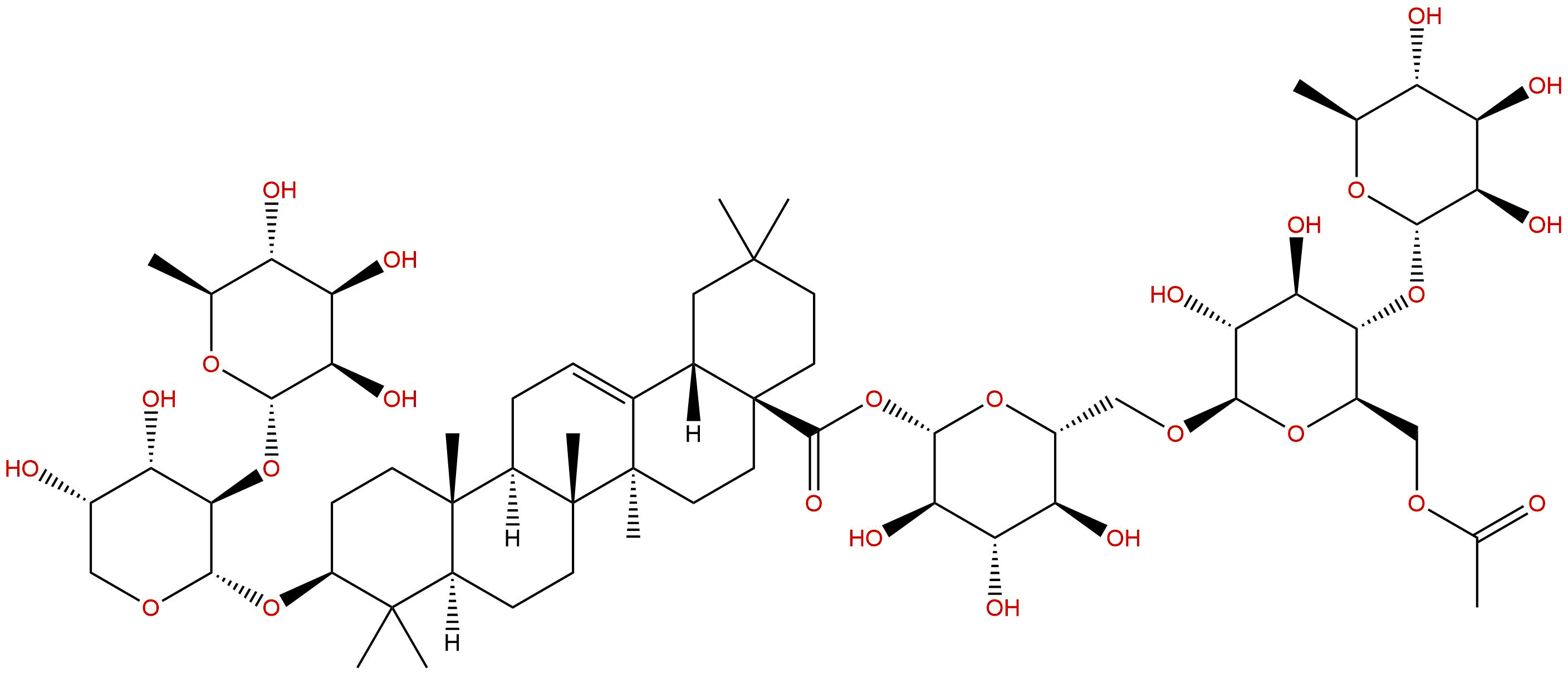
Ciwujia saponin C4 (CAS number: 114906-75-1) is a saponin compound that has been shown to enhance pancreatic lipase activity in vitro experiments. This characteristic makes it potentially valuable in regulating lipid metabolism. More importantly, based on network pharmacology and molecular docking studies, this compound is predicted to interact with multiple cardiovascular disease-related targets, including SELP (P-selectin), HMGCR (3-hydroxy-3-methylglutaryl-CoA reductase), PPARG (peroxisome proliferator activated receptor gamma), ACE (angiotensin-converting enzyme), AKT1 (protein kinase B), ADRB2 (β 2 adrenergic receptor), KCNH2 (human ether - à - go related gene potassium channel), NOS3 (endothelial nitric oxide synthase), ICAM1 (intercellular adhesion molecule-1), and VCAM1 (vascular cell adhesion molecule-1). This multi-target characteristic suggests that saponins C4 from Acanthopanax senticosus may exert cardiovascular protective effects by integrating and regulating multiple pathways such as lipid metabolism, inflammatory response, vascular relaxation and contraction function, and endothelial protection.
This article will provide a systematic review of the research progress of Ciwujia saponin C4 from the aspects of chemical structure and physicochemical properties, plant sources and extraction methods, pharmacological activity research, mechanism of action and molecular targets, pharmacological evaluation and pharmacokinetics, clinical application prospects and prospects, in order to provide scientific basis for the in-depth development and transformation application of this natural product.
Ciwujia saponin C4 belongs to the Damane type tetracyclic triterpenoid saponin, and its aglycone is a protopanaxadiol type structure. The molecular formula of this compound is C ₅₈ H ₉₈ O ₂₈, with a molecular weight of 1247.4290 Da. Its structural feature is that the sugar chain is composed of multiple monosaccharide units connected by glycosidic bonds, usually including glucose, xylose, arabinose, etc. Specifically, the sugar chain of Ciwujia saponin C4 is connected to oligosaccharide chains at positions C-3 and C-20, forming a double sugar chain saponin structure. This structural feature significantly affects its water solubility and biological activity.
From the perspective of stereochemistry, the ring configurations of Damaran type saponins are 5 α, 8 β, 9 β, 10 α, 13 β, 14 α, and 17 β, with the configuration at C-20 being S-type. The connection mode of the sugar chain (including the type of sugar, connection order, glycosidic bond configuration) determines the structural differences between this compound and other saponins of Acanthopanax senticosus (such as Acanthopanax senticosus saponins B, C1, C2, C3, etc.). High resolution mass spectrometry (HR-MS) and nuclear magnetic resonance spectroscopy (NMR, including ¹ H-NMR, ¹ ³ C-NMR, COSY, HSQC, HMBC, etc.) are the main methods for analyzing its fine structure.
The physicochemical properties of Ciwujia saponin C4 have a significant impact on its bioavailability and medicinal properties. The lipid water partition coefficient (LogP) of this compound is 2.4626, indicating that it has a certain degree of lipophilicity, but overall leans towards moderate polarity. The topological polar surface area (TPSA) is as high as 398.6600 Å ², mainly attributed to the presence of a large number of hydroxyl and glycosidic bonds in the molecule. A high TPSA value usually means that the compound is difficult to passively diffuse through the cell membrane, especially the blood-brain barrier.
The water solubility parameter is 0.1458 mg/mL, which belongs to low water solubility compounds. This characteristic may limit its dissolution and absorption in the gastrointestinal tract, thereby affecting oral bioavailability. However, saponin compounds can often improve their solubility by forming micelles or complexes with bile acids, which may play a positive role in intestinal absorption.
The compound has low permeability to the blood-brain barrier, indicating its limited distribution in the central nervous system, which may reduce the risk of central related adverse reactions, but also limits its potential application in the treatment of brain diseases. The hERG inhibition test result was negative, indicating that the compound is unlikely to cause ventricular arrhythmia risk associated with QT interval prolongation at therapeutic concentrations. The Ames test result is 0.0, indicating no significant mutagenicity and a low risk of genetic toxicity.
Ciwujia saponin C4 mainly comes from the family Araliaceae plant Ciwujia(Acanthopanax senticosus (Rupr. & Maxim.) Harms), This plant is mainly distributed in Northeast China, the Far East of Russia, the Korean Peninsula, and northern Japan. In China, Acanthopanax senticosus is mainly produced in provinces such as Heilongjiang, Jilin, Liaoning, Hebei, and Shanxi. The roots, rhizomes, stems, and leaves of Acanthopanax senticosus can all be used as medicine, among which the roots and rhizomes are considered to have the highest content of active ingredients.
It is worth noting that different origins, harvest seasons, growth years, and processing methods can all affect the content and composition of saponins in Acanthopanax senticosus. Research has shown that the saponin content in wild Acanthopanax senticosus is usually higher than that in artificially cultivated varieties, and the accumulation of saponins is highest in the rhizomes harvested in autumn. In addition, other species in the genus Acanthopanax, such as Acanthopanax sessiliflorus(Wujia without memes) and Acanthopanax gracilistylus There are also saponin compounds with similar structures in (Acanthopanax senticosus), but further chemical taxonomy research is needed to confirm whether saponin C4 is a unique component of Acanthopanax senticosus.
The extraction of saponins C4 from Acanthopanax senticosus is usually carried out using solvent extraction method, and an appropriate solvent system is selected based on its polarity characteristics. The traditional method uses ethanol water mixed solvents (usually 50% -80% ethanol) for reflux extraction or percolation extraction, and the extraction temperature is controlled at 60-80 ℃ to balance the extraction efficiency and thermal stability. After vacuum concentration, the extract is preliminarily enriched with saponin components through liquid-liquid extraction (such as n-butanol water system).
Modern extraction techniques such as ultrasound assisted extraction (UAE), microwave-assisted extraction (MAE), and supercritical fluid extraction (SFE) have been applied to the extraction of saponins from Acanthopanax senticosus. Ultrasound assisted extraction utilizes cavitation effect to destroy cell walls, which can significantly shorten extraction time and improve yield; Microwave assisted extraction accelerates the dissolution of target components by generating internal thermal effects through the rapid vibration of polar molecules in a microwave field. However, these methods have not been widely applied in the specialized extraction of saponins C4 from Acanthopanax senticosus, mainly due to the relatively low content of this compound in total saponins.
The separation and purification of saponins C4 from crude extracts of Acanthopanax senticosus usually require multi-step chromatographic techniques. Macroporous adsorption resin (such as D101, AB-8 type) chromatography is a commonly used method for initial purification, which can preliminarily separate saponin components of different polarities by gradient ethanol elution (30% -95%). Subsequently, further refinement was carried out using normal phase silica gel column chromatography (chloroform methanol water system) and reverse phase ODS column chromatography (methanol water system). For saponin isomers with highly similar structures, high-performance liquid chromatography (HPLC) column preparation (such as C18 column, acetonitrile water or methanol water gradient elution) is a key means to achieve monomer separation.
In recent years, high-speed countercurrent chromatography (HSCCC) and preparative liquid chromatography-mass spectrometry (pre LC-MS) techniques have shown advantages in the purification of saponins C4 from Acanthopanax senticosus due to their high separation efficiency and recovery rate. However, due to the typically low content of this compound in plants (about 0.01% -0.1% of dry weight), large-scale preparation still faces cost and technical challenges.
One of the most notable pharmacological properties of Ciwujia saponin C4 is its enhanced activity on pancreatic lipase. Pancreatic lipase is a key enzyme in the digestion and absorption of dietary fats, catalyzing the hydrolysis of triglycerides into monoglycerides and free fatty acids. Unlike most natural products that inhibit pancreatic lipase activity (such as green tea catechins, soy saponins, etc.), Ciwujia saponin C4 exhibits a unique activating effect.
In vitro enzyme activity assays have shown that within an appropriate concentration range (usually 10-100 μ M), saponins C4 from Acanthopanax senticosus can significantly enhance the catalytic efficiency of porcine pancreatic lipase. Dynamics analysis shows that the compound may enhance enzyme activity by changing the conformation of the enzyme or promoting the formation of enzyme substrate complexes. This discovery has important physiological significance: on the one hand, enhanced lipase activity may promote the digestion and absorption of dietary fat, which may have therapeutic value in certain pathological states of digestive dysfunction or poor fat absorption; On the other hand, the enhancement of lipase activity may also lead to the rapid release of free fatty acids, thereby affecting the subsequent stages of lipid metabolism.
Based on network pharmacology prediction and preliminary experimental verification, Ciwujia saponin C4 exhibits multiple pharmacological activities in cardiovascular protection:
1. Regulation of lipid metabolism By targeting HMGCR and PPARG, Ciwujia saponin C4 may participate in the regulation of cholesterol synthesis and adipocyte differentiation. HMGCR is the rate limiting enzyme in cholesterol biosynthesis, and its activity inhibition is the main mechanism of action of statins; PPARG is a key nuclear receptor that regulates adipogenesis and insulin sensitivity. The potential regulatory effect of Ciwujia saponin C4 on these two targets suggests that it may have dual effects of regulating lipids and improving insulin resistance.
2. Protection of vascular endothelium NOS3 (eNOS) is a key enzyme in the production of nitric oxide (NO) in endothelial cells. The appropriate release of NO is crucial for maintaining vasodilation, inhibiting platelet aggregation, and leukocyte adhesion. Ciwujia saponin C4 may activate the AKT1 signaling pathway, promote phosphorylation activation of eNOS, thereby increasing the bioavailability of NO and improving endothelial function. In addition, inhibition of ICAM1 and VCAM1 expression can reduce the adhesion and migration of monocytes to endothelial cells, thus delaying the progression of atherosclerosis.
3. Anti inflammatory and anti thrombotic effects SELP (P-selectin) is a key adhesion molecule that mediates the initial adhesion between white blood cells and endothelial cells, playing an important role in inflammatory responses and thrombus formation. The regulation of SELP by Ciwujia saponin C4 may inhibit the rolling and adhesion of white blood cells, and alleviate the inflammatory response of vascular walls. Meanwhile, inhibition of ACE can reduce the production of angiotensin II, thereby lowering blood pressure, inhibiting vascular remodeling, and oxidative stress.
4. Electrophysiological regulation of the heart The potential effects of ADRB2 and KCNH2 suggest that this compound may affect the β - adrenergic signaling and potassium channel function of the heart. The sympathetic nervous system excitation mediated by ADRB2 can enhance myocardial contractility and heart rate, while the hERG potassium channel encoded by KCNH2 is an important determinant of myocardial action potential repolarization. Although the hERG inhibition test results were negative, the regulation of KCNH2 by saponins C4 from Acanthopanax senticosus still needs to be evaluated for safety at both cellular and overall levels.
The cardiovascular protective effect of Ciwujia saponin C4 is not achieved through a single target or pathway, but presents a network regulatory feature of "multi-target, multi pathway". Based on network pharmacology methods, researchers constructed a "compound target disease" interaction network and identified the above 10 core targets (SELP, HMGCR, PPARG, ACE, AKT1, ADRB2, KCNH2, NOS3, ICAM1, VCAM1), which belong to different functional modules such as lipid metabolism, inflammatory response, vascular relaxation regulation, cell proliferation and survival, and cardiac electrophysiology.
1. PI3K/AKT/eNOS signaling pathway AKT1, as the core node of this pathway, can be activated by various upstream signals such as growth factors and mechanical stress. Phosphorylated AKT1 (p-AKT) directly phosphorylates the Ser1177 site of eNOS, enhancing its enzymatic activity and promoting NO production. Ciwujia saponin C4 may enhance the NO synthesis ability of endothelial cells by activating the PI3K/AKT pathway, thereby exerting vasodilatory and endothelial protective effects.
2. NF - κ B-mediated inflammatory pathway The expression of ICAM1 and VCAM1 is regulated by the transcription factor NF - κ B. Under inflammatory stimulation, NF - κ B is activated and translocated into the nucleus, initiating transcription of adhesion molecule genes. Ciwujia saponin C4 may inhibit the phosphorylation degradation of I κ B α, block the nuclear translocation of NF - κ B, thereby downregulating the expression of ICAM1 and VCAM1, and reducing vascular inflammatory response.
3. Renin angiotensin system (RAS)ACE is a key enzyme in the RAS system that catalyzes the conversion of angiotensin I into the potent vasoconstrictor angiotensin II. The inhibitory effect of saponins C4 from Acanthopanax senticosus on ACE may reduce the level of angiotensin II, thereby reducing vascular constriction, aldosterone release, and oxidative stress, resulting in hypotension and target organ protection effects.
4. Regulation of cholesterol metabolism The regulation of HMGCR activity directly affects the synthesis of intracellular cholesterol. Acanthopanax senticosus saponin C4 may affect cholesterol metabolism through post transcriptional regulation (such as accelerating the degradation of HMGCR protein) or transcriptional level regulation (such as activating SREBP-2 feedback regulation). Meanwhile, the activation of PPARG can promote the differentiation of adipocytes, improve the insulin sensitivity of peripheral tissues, and indirectly affect lipid metabolism.
The molecular docking simulation study provides a structural explanation for the interaction between Ciwujia saponin C4 and the aforementioned targets. The high molecular weight (1247 Da) and polysaccharide chain structure of this compound enable it to form a wide range of hydrogen bonding networks and hydrophobic interactions with multiple amino acid residues on the surface of the target protein. For example, in binding with ACE, the sugar chain portion of saponins may coordinate with zinc ions at the active site or form hydrogen bonds with key catalytic residues such as His353, His513, Glu384; In the binding with HMGCR, the glycoside moiety may be embedded in the hydrophobic pocket of the enzyme, while the sugar chain interacts with surrounding polar residues. However, these computational predictions still need to be validated through experimental methods such as X-ray crystallography or surface plasmon resonance (SPR).
The pharmacological parameters of Ciwujia saponin C4 exhibit typical characteristics of natural saponin compounds. The molecular weight of 1247 Da far exceeds the threshold of Lipinski's Rule of Five (molecular weight<500 Da), which usually means that the compound faces challenges in oral absorption. The LogP value is 2.4626, which falls within the acceptable range of -0.4 to 5.6, indicating moderate lipophilicity. However, the TPSA reached 398.66 Å ² (much higher than the threshold of 140 Å ²), indicating that the compound is difficult to passively diffuse through the cell membrane, and its transmembrane transport may depend on carrier mediated active transport or endocytosis.
Water solubility (0.1458 mg/mL) belongs to the low solubility category, which may limit its dissolution rate in the gastrointestinal tract. The low permeability of the blood-brain barrier is beneficial for reducing the risk of adverse reactions in the central nervous system, but it also limits its application in the treatment of brain diseases. The negative results of hERG inhibition and Ames test provide preliminary safety guarantees from the perspectives of cardiac safety and genetic toxicity, respectively.
At present, the systematic study on the pharmacokinetics of Ciwujia saponin C4 in vivo is not sufficient, but it can be reasonably inferred based on the research of similar Damaran type saponins (such as ginsenoside Rb1, Rg1, etc.):
1. Absorption After oral administration, the absorption rate of Ciwujia saponin C4 in the gastrointestinal tract is usually low. Its high molecular weight and polarity characteristics limit passive diffusion, while the role of efflux transporters such as P-glycoprotein (P-gp) may further reduce its absorption. However, saponin compounds can form mixed micelles with bile acids, which to some extent promote their absorption in the small intestine. In addition, the gut microbiota can produce secondary glycosides or aglycones through the metabolism of saponins, such as the hydrolysis of sugar chains, which may have higher membrane permeability.
2. Distribution After absorption into the bloodstream, Ciwujia saponin C4 mainly binds to plasma proteins (especially albumin), and the binding rate may be high. Its distribution volume may be small, mainly distributed in blood and well perfused tissues such as the liver and kidneys. Low blood-brain barrier permeability limits its central distribution.
3. Metabolism The liver and intestine are the main sites of saponin metabolism. The metabolic pathways include: (1) gradual hydrolysis of sugar chains to generate secondary saponins or aglycones; (2) Hydroxylation, oxidation, or glucuronic acid binding reactions of aglycones; (3) Deglycosylation reaction mediated by gut microbiota. These metabolites may retain some biological activity and even generate new pharmacological effects.
4. Excretion Ciwujia saponin C4 and its metabolites are mainly excreted into the intestine through bile, and some are excreted from the body through feces. Renal excretion may not be the main pathway, as its molecular weight and polarity characteristics are not conducive to glomerular filtration. After bile excretion, some metabolites can be reabsorbed in the intestine (enterohepatic circulation), thereby prolonging their retention time in the body.
Given that the oral bioavailability of Ciwujia saponin C4 may be low, developing a suitable drug delivery system is key to enhancing its pharmacological properties. Possible strategies include: (1) encapsulation with liposomes or nanoparticles to enhance their solubility and membrane permeability; (2) Phytosome technology enhances lipid solubility; (3) Self microemulsifying drug delivery system (SMEDDS) promotes its dispersion and absorption in the gastrointestinal tract; (4) Pre drug design, such as introducing ester or phosphate groups, improves membrane permeability and is converted into an active form through in vivo enzymatic hydrolysis.
Based on the multi-target pharmacological activity of Ciwujia saponin C4, its potential clinical applications mainly focus on the following areas:
1. Atherosclerotic cardiovascular disease: By regulating lipid metabolism (HMGCR, PPARG), inhibiting vascular inflammation (ICAM1, VCAM1, SELP) and improving endothelial function (NOS3, AKT1), this compound may be used for the prevention and treatment of atherosclerosis. Its unique pancreatic lipase activation effect may provide a new treatment option for certain metabolic syndrome patients with digestive dysfunction.
2. Hypertension and vascular remodeling The inhibitory effect of ACE gives it the potential to lower blood pressure, while endothelial protective function can delay hypertension related vascular damage and target organ damage. Compared with existing ACE inhibitors, the multi-target characteristics of Ciwujia saponin C4 may bring more comprehensive cardiovascular protective effects.
3. Vascular complications of diabetes The activation of PPARG can improve insulin sensitivity, while endothelial protection and anti-inflammatory effects can help delay the occurrence and development of microvascular and macrovascular complications in diabetes.
4. Diseases related to decreased digestive function The activation of pancreatic lipase may be used to treat diseases such as pancreatic exocrine dysfunction and fat indigestion, but this direction still requires more preclinical research support.
Ciwujia saponin C4 may be used in combination with statins (synergistic lipid-lowering), ACE inhibitors (synergistic antihypertensive), or antiplatelet drugs (synergistic antithrombotic) to enhance efficacy through multi-target synergistic effects and potentially reduce the dosage and adverse reactions of a single drug. However, pharmacokinetic interactions and safety assessment of combination therapy are important directions for future research.
Despite the promising pharmacological activity of Ciwujia saponin C4, its transformation from a natural product to a clinical drug still faces many challenges:
1. Source issue The compound has a low content in Ciwujia and is difficult to prepare on a large scale. In the future, sustainable production can be achieved through biotechnology methods such as plant tissue culture, biosynthetic pathway analysis, and heterologous expression (such as yeast or plant chassis).
2. Pharmacokinetic optimization Low oral bioavailability is the main bottleneck limiting its clinical application. It is necessary to systematically study its absorption mechanism, metabolic pathways, and formulation strategies in order to develop a drug delivery system with significantly improved bioavailability.
3. Deepening the mechanism of action At present, multi-target prediction is mainly based on computational simulation and lacks systematic experimental verification. It is necessary to use techniques such as gene knockout/knock in animal models, CRISPR screening, and proteomics to clarify their direct targets and signaling networks.
4. Security assessment Although the preliminary toxicity test results are good, research on long-term toxicity, reproductive toxicity, and drug interactions still needs to be conducted. Especially the metabolic impact of pancreatic lipase activation in long-term use needs to be carefully evaluated.
5. Study on structure-activity relationship By synthesizing a series of structurally similar compounds and systematically studying the effects of sugar chain composition, connection methods, and glycoside modifications on activity, guidance can be provided for structural optimization.
As a natural triterpene saponin with unique pharmacological activity, acanthopanax senticosus saponin C4 shows unique research value in the field of natural product pharmacology due to its activation of pancreatic lipase and potential of multi target cardiovascular protection. Its chemical structural characteristics determine its physicochemical properties and pharmacokinetic behavior, and the 10 core targets predicted by network pharmacology (SELP, HMGCR, PPARG, ACE, AKT1, ADRB2, KCNH2, NOS3, ICAM1, VCAM1) cover multiple cardiovascular disease-related pathways such as lipid metabolism, inflammatory response, vascular relaxation regulation, and cardiac electrophysiology.
However, the road from basic research to clinical application is still long. The main challenges currently faced include limitations in plant sources, low oral bioavailability, insufficient experimental validation of the mechanism of action, and lack of long-term safety data. In the future, with the advancement of biosynthetic technology, the development of pharmaceutical science, and the in-depth application of systems pharmacology research methods, Ciwujia saponin C4 is expected to gradually develop from a laboratory research tool molecule into a cardiovascular protection candidate drug with clinical application prospects. In this process, interdisciplinary collaboration (phytochemistry, medicinal chemistry, pharmacology, pharmacy, and clinical medicine) will be a key driving force for its transformation.
The study of Ciwujia saponin C4 not only provides new candidate molecules for natural drug intervention in cardiovascular disease, but also opens up new perspectives for understanding the unique mechanism of action of saponin compounds in lipid metabolism regulation. Today, with the increasing emphasis on the concepts of "returning to nature" and "multi-target therapy", the active ingredients in this ancient herb are radiating new scientific vitality.
Batch can search by a CAS number,one per line
