| Catalog No | Package | Original Price | Price | Inventory | Quantity | Operating |
|---|---|---|---|---|---|---|
| BP5276-5mg | 5mg | $350.00 | Sign in |
|


Storage conditions:Short-term storage at 2~8℃, long-term storage at -20 ~ -80℃
175.3700
3.5203
1.6391
.0376
.6027
.4067
Low
87.5323
5.7633
No
No
Yes
No
No
No
0.0
Yes
No
No
No
Natural products, as an important source of drug discovery, play an irreplaceable role in the history of human health maintenance and disease treatment. Especially in the fields of metabolic and neurological diseases, active ingredients derived from traditional medicinal plants are increasingly receiving attention in modern pharmacological research due to their multi-target and low toxicity characteristics. Ciwujia(Acanthopanax senticosus (Rupr. & Maxim.) Harms), Also known as Siberian ginseng, it is a medicinal plant of the Araliaceae family widely distributed in East Asia. Its roots and rhizomes are well-known in traditional medicine and are commonly used to treat rheumatism, rheumatism, weakness, insomnia, forgetfulness, and neurasthenia. Modern pharmacological research has confirmed that Acanthopanax senticosus has various biological activities such as anti fatigue, anti stress, immune regulation, anti-inflammatory, and cognitive improvement. Its main active ingredients include eleutherosides, polysaccharides, and various triterpenoid saponins.
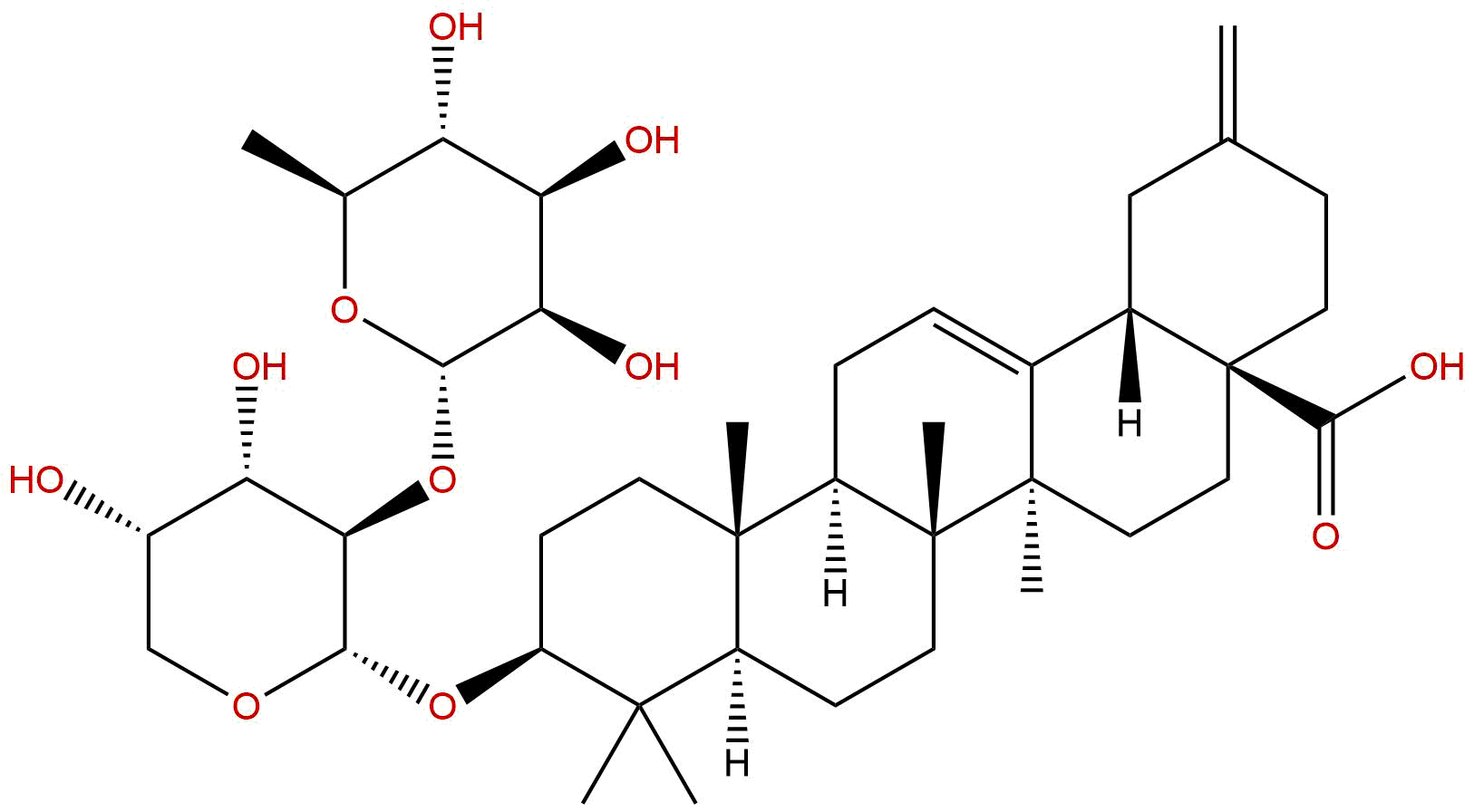
Ciwuqianoside E (CAS number: 114912-36-6) is a triterpenoid saponin compound with important pharmacological activity isolated from Ciwuqianoside. As one of the unique saponin components in the genus Acanthopanax, the structural characteristics and biological activity of Acanthopanax saponin E have attracted widespread interest among researchers in recent years. Early research mainly focused on its sedative and hypnotic effects, while recent studies have revealed its enormous potential in regulating glucose metabolism. This article aims to provide a systematic review of the chemical structure, plant origin, pharmacological activity, mechanism of action, medicinal characteristics, and clinical application prospects of saponins E from Acanthopanax senticosus, in order to provide comprehensive scientific basis for the in-depth development and utilization of this natural product.
Ciwujia saponin E belongs to the pentacyclic triterpenoid saponins, and its glycoside skeleton is oleanane type. From a chemical structure perspective, this compound is composed of triterpenoid saponins connected to sugar chains through glycosidic bonds. Specifically, its aglycone is a derivative of oleanolic acid, with glycosides attached at positions C-3 and C-28, respectively. The sugar chain is usually composed of monosaccharides such as glucose, xylose, and arabinose, forming a complex oligosaccharide chain structure. This amphiphilic structure - a hydrophobic triterpenoid glycoside skeleton and a hydrophilic sugar chain - endows saponins E of Acanthopanax senticosus with unique physicochemical properties and biological activity.
From the perspective of physical and chemical parameters, the molecular weight of Ciwujia saponin E is 718.9250 Da, which belongs to a natural product with medium molecular weight. The LogP of the compound is 3.5203, indicating that it has a certain lipophilicity, which is beneficial for its interaction with cell membranes and membrane proteins. However, its topological polar surface area (TPSA) is as high as 175.3700 Å ², far exceeding the recommended upper limit of 140 Å ² for oral medications. The TPSA value reflects the ability of a compound to form hydrogen bonds, and a high TPSA value typically indicates poor cell membrane permeability and oral bioavailability. The water solubility data (0.0376 mg/mL) also confirms this point, and the low solubility of saponins E in water may be the main limiting factor for their absorption and distribution in vivo. In addition, the blood-brain barrier (BBB) penetration assessment is rated as' low ', indicating limited distribution of the compound in the central nervous system, which may be related to its early detection of sedative hypnotic effects mainly through peripheral or indirect mechanisms. It is worth noting that the hERG inhibition prediction is "no", and the Ames test result is 0.0, which preliminarily excludes the risks of cardiac toxicity and genetic toxicity, providing favorable early evidence for its safety evaluation.
The main plant source of Ciwujia saponin E is the family Araliaceae plant Ciwujia(Acanthopanax senticosus). This plant is mainly distributed in Northeast and North China of China, as well as the Far East of Russia, Japan, and South Korea. In Acanthopanax senticosus, saponins are mainly present in the roots and rhizomes, and there is also a certain amount in the stems and leaves, but the content is usually lower than that in the underground parts. The content of Ciwujia saponin E in plants is relatively low and belongs to trace active ingredients. Its content is influenced by various factors such as origin, harvest season, growth period, and processing method.
The extraction of saponins E from Acanthopanax senticosus usually follows the classic process of natural product chemistry. Firstly, the dried root or rhizome powder of Acanthopanax senticosus is subjected to reflux extraction or cold soaking extraction using organic solvents such as methanol, ethanol, or aqueous ethanol. Due to the good solubility of saponin components in alcohol water mixed solvents, 70% -80% ethanol water solution is often used as the extraction solvent. After the extraction solution is concentrated under reduced pressure, the total extract is obtained. Subsequently, the total extract was preliminarily separated using liquid-liquid extraction method (such as sequential extraction with petroleum ether, ethyl acetate, and n-butanol), and saponin components were usually enriched in the n-butanol extraction layer.
Further separation and purification rely on the combination of multiple chromatographic techniques. Positive phase silica gel column chromatography is a classic method for separating triterpenoid saponins, typically using a chloroform methanol water system for gradient elution. For saponin isomers with similar structures, reverse phase column chromatography (such as ODS-C18) and high performance liquid chromatography (HPLC) show higher separation efficiency. In recent years, high-speed countercurrent chromatography (HSCCC) and macroporous adsorption resin technology have also been applied to the efficient separation and enrichment of saponins in Acanthopanax senticosus. Finally, the purified compound was structurally identified by spectroscopic methods such as nuclear magnetic resonance (NMR) and mass spectrometry (MS), confirming its identity as Acanthopanax senticosus saponin E. Due to the low content of this compound in plants, obtaining milligram level purity from kilogram level raw materials is a common yield level, which to some extent limits its large-scale pharmacological research.
The earliest reported pharmacological activity of Ciwujia saponin E is its regulatory effect on the central nervous system. Traditionally, Ciwujia has been used to treat insomnia and neurasthenia. Modern pharmacological studies have shown that saponins E from Acanthopanax senticosus can significantly prolong the sleep time induced by pentobarbital sodium in mice, reduce the number of spontaneous activities, and exhibit clear sedative hypnotic effects. Its mechanism of action may be related to regulating the gamma aminobutyric acid (GABA) system, by enhancing the function of GABA_A receptors, promoting chloride ion influx, and thus producing central inhibitory effects. However, given its low blood-brain barrier penetration, further clarification is needed on whether this central effect is achieved through direct action on GABA receptors in the brain, or through peripheral metabolites or indirect neural pathways.
In recent years, the activity of saponins E from Acanthopanax senticosus in regulating sugar metabolism has become a research hotspot. Multiple in vitro and in vivo experiments have confirmed that this compound has significant hypoglycemic effects. In the model of streptozotocin (STZ) induced diabetes mice or the model of type 2 diabetes induced by high-fat diet combined with low-dose STZ, after the intervention of acanthopanax senticosus saponin E, the fasting blood glucose level of the animals decreased significantly, the glucose tolerance improved, and the serum insulin level also recovered. In addition, the compound can also improve diabetes related dyslipidemia, reduce total cholesterol and triglyceride levels.
In vitro cell experiments further revealed the cellular basis of its hypoglycemic effect. In insulin resistant HepG2 liver cancer cells or 3T3-L1 adipocyte models, saponins E from Acanthopanax senticosus can promote glucose uptake and utilization. These findings suggest that saponins E from Acanthopanax senticosus may exert hypoglycemic effects through multiple pathways, such as improving insulin sensitivity, promoting peripheral tissue glucose utilization, and regulating pancreatic beta cell function.
In addition to the main activities mentioned above, Ciwujia saponin E also exhibits biological activities such as antioxidant, anti-inflammatory, and immune regulation. Its antioxidant activity may be related to its ability to scavenge free radicals and increase the activity of superoxide dismutase (SOD) and glutathione peroxidase (GSH Px). The anti-inflammatory activity is manifested by inhibiting the production of nitric oxide (NO) and pro-inflammatory cytokines (such as TNF - α, IL-6) in macrophages induced by lipopolysaccharide (LPS). These additional activities may be related to their potential application in the prevention and treatment of complications of diabetes.
The molecular mechanism of the hypoglycemic effect of Ciwujia saponin E involves multiple key targets and signaling pathways, reflecting the characteristic of multi-target regulation of natural products. According to existing research, its mechanism of action mainly revolves around the following core targets:
1. Key nodes in the insulin signaling pathway: IRS1, INSR, and SLC2A4
The initiation of insulin signal transduction depends on the binding of insulin receptor (INSR) to its ligand. Ciwujia saponin E may promote the initial transmission of insulin signaling by upregulating the expression of INSR or enhancing its tyrosine kinase activity. Insulin receptor substrate 1 (IRS1) is a key adapter protein in the insulin signaling pathway, and its phosphorylation level directly affects the activation of downstream signaling pathways. Research has shown that saponins E from Acanthopanax senticosus can restore the tyrosine phosphorylation level of IRS1 in insulin resistance, while inhibiting its serine phosphorylation (a negative feedback regulatory mechanism), thereby improving the efficiency of insulin signaling transmission. SLC2A4 (also known as GLUT4) is the main glucose transporter that mediates the entry of glucose into adipocytes and skeletal muscle cells. Ciwujia saponin E can promote the translocation of GLUT4 from intracellular vesicles to the cell membrane, increase the number of glucose transporters on the cell surface, and significantly enhance insulin stimulated glucose uptake ability. This process may involve the activation of the PI3K/Akt signaling pathway.
2. Sugar metabolizing enzymes and hormone regulation: GCK and DPP4
Glucokinase (GCK) is a key rate limiting enzyme in glucose metabolism in liver and pancreatic beta cells, playing a central role in maintaining glucose homeostasis. In the liver, GCK promotes glucose phosphorylation, which in turn promotes glycogen synthesis and glycolysis; In the pancreas, GCK acts as a glucose sensor to regulate insulin secretion. Ciwujia saponin E may enhance liver glucose uptake and utilization by upregulating the expression and activity of GCK, thereby reducing blood glucose levels. Dipeptidyl peptidase 4 (DPP4) is a degradation enzyme of intestinal insulinotropic hormones such as GLP-1 and GIP. Inhibiting DPP4 activity can prolong the half-life of endogenous GLP-1, promote insulin secretion, and inhibit glucagon release. Preliminary research suggests that saponins E from Acanthopanax senticosus may have DPP4 inhibitory activity, providing another important mechanism for its hypoglycemic effect.
3. Adipose cell differentiation and insulin sensitization: PPARG
Peroxisome proliferator activated receptor gamma (PPARG) is a core transcription factor for adipocyte differentiation and insulin sensitization. Thiazolidinedione (TZDs) drugs exert potent insulin sensitizing effects by activating PPARG. Ciwujia saponin E has been shown to moderately activate PPARG, promote adipocyte differentiation, and improve insulin sensitivity in adipose tissue. It is worth noting that compared with the complete agonist, acanthopanax senticosus saponin E may be a partial agonist or a selective PPARG regulator, which may avoid the side effects of the complete agonist such as weight gain and fluid retention.
In summary, Ciwujia saponin E exerts hypoglycemic effects through multi-target and multi pathway synergistic effects, improving insulin signaling, regulating glucose metabolism enzyme activity, promoting glucose transport, and regulating adipocyte function from multiple levels. This multi-target mode of action is its unique advantage over single target synthetic drugs.
The evaluation of drug properties is a key step in converting natural products into clinical drugs. Based on existing data, the pharmacological characteristics of Ciwujia saponin E present both opportunities and challenges.
1. Drug like properties and physicochemical properties
The molecular weight of saponin E in Acanthopanax senticosus (718.9 Da) exceeds the threshold of Lipinski's "Five Rules" for molecular weight less than 500, and LogP (3.52) meets the requirements, but the number of hydrogen bond donors and acceptors (reflected in high TPSA values) also exceeds the rule limit. This indicates that the compound belongs to the "beyond Rule of Five" (bRo5) molecule. In recent years, more and more bRo5 natural products have been successfully marketed (such as macrolides, cyclosporine, etc.), proving that these molecules still have the potential to become drugs, but usually require special formulation techniques or administration routes. Its low water solubility (0.0376 mg/mL) is the main obstacle to oral absorption, which may limit its dissolution and absorption in the gastrointestinal tract.
2. Pharmacokinetic characteristics
At present, there is insufficient systematic research on the pharmacokinetics of saponins E from Acanthopanax senticosus in vivo. Based on its physicochemical properties, it is speculated that the oral bioavailability of this compound may be low. Saponins typically face multiple challenges in the gastrointestinal tract, including acid degradation, enzymatic hydrolysis, and gut microbiota metabolism. Its absorption may mainly rely on passive diffusion, but the presence of highly polar sugar chains makes it difficult to penetrate the lipid bilayer of intestinal epithelial cell membranes. Some saponins can be absorbed through the intestinal lymphatic system or enter the bloodstream through transporter mediated pathways. After entering the systemic circulation, saponins E of Acanthopanax senticosus may undergo extensive first pass effects in the liver, including phase I metabolism such as glycation hydrolysis and oxidation-reduction, as well as phase II metabolism such as glucuronidation and sulfation. Its metabolites may still have biological activity, or even stronger activity. In terms of distribution, high TPSA values and low BBB penetration suggest that it is mainly distributed in plasma and extracellular fluid, and is not easily accessible to the central nervous system and cells. The main excretion pathway may be bile excretion, which is excreted from the body through feces.
3. Safety evaluation
The preliminary safety evaluation results are encouraging. HERG inhibition prediction is negative, indicating a low risk of cardiac toxicity. The Ames test result was 0.0, indicating no significant induction of gene mutations. These data provide preliminary assurance for the safety of the compound. However, comprehensive toxicological evaluation (including acute toxicity, long-term toxicity, reproductive toxicity, etc.) is still a necessary step in preclinical research.
4. Optimization strategy for drug properties
Given the above-mentioned bottlenecks in drug development, future pharmaceutical chemistry optimization can start from the following aspects: firstly, by designing prodrugs and introducing cleavable lipid soluble groups on the sugar chain to improve oral absorption; The second is to develop new drug delivery systems such as nano formulations, liposomes, or phospholipid complexes to improve solubility and bioavailability; Thirdly, explore non oral routes of administration, such as transdermal or inhaled administration; The fourth is to conduct in-depth research on its active metabolites and search for lead compounds with simpler structures and stronger activity.
Ciwujia saponin E, as a natural triterpenoid saponin with both sedative, hypnotic, and hypoglycemic activities, has demonstrated unique advantages and broad prospects in clinical applications.
1. Treatment of type 2 diabetes and its complications
Based on its multi target hypoglycemic mechanism, acanthopanax senticosus saponin E is expected to be developed as a new type of treatment drug or adjuvant treatment drug for type 2 diabetes. Compared with existing single target drugs such as DPP4 inhibitors and PPARG agonists, its multi-target nature may bring more comprehensive blood glucose control effects, and due to its mild action, it may have a lower risk of hypoglycemia. In addition, its antioxidant and anti-inflammatory activities have potential value for preventing and delaying chronic complications such as diabetes nephropathy, retinopathy and neuropathy. In particular, its sedative and hypnotic activity has a unique synergistic therapeutic significance for improving the sleep disorder and anxiety state often associated with diabetes patients, reflecting the comprehensive treatment concept of "sugar heart treatment".
2. Comprehensive intervention for metabolic syndrome
Metabolic syndrome, characterized by central obesity, hyperglycemia, dyslipidemia and hypertension, is a high-risk factor for cardiovascular disease and type 2 diabetes. The role of Ciwujia saponin E in improving glucose and lipid metabolism and reducing insulin resistance makes it a candidate compound for intervening in metabolic syndrome. Its multi-target mode of action perfectly fits the complex pathophysiological network of metabolic syndrome.
3. Adjuvant therapy for neurological disorders
Although BBB penetration is low, the sedative and hypnotic effects of Ciwujia saponin E still provide possibilities for its application in the field of neurological and psychiatric disorders. For diabetes patients with sleep disorder, the compound can improve blood sugar and sleep at the same time, realizing one drug with multiple effects. In addition, its anti-inflammatory and antioxidant effects may have a positive impact on the prevention and treatment of neurodegenerative diseases, but further research is needed to clarify its mode of action.
4. Future research directions
Future research should focus on the following key directions: firstly, conducting in-depth pharmacokinetic studies to clarify their absorption, distribution, metabolism, and excretion characteristics, especially the absolute values of oral bioavailability and metabolite profiles; Secondly, utilizing systems pharmacology and network pharmacology methods to comprehensively reveal its multi-target action network; The third is to solve the problems of solubility and bioavailability through structural modification and formulation optimization; Fourthly, conduct long-term toxicological evaluations and preclinical pharmacological studies to lay the foundation for clinical trials; The fifth is to explore its synergistic effect with existing hypoglycemic drugs such as metformin and SGLT2 inhibitors, and develop compound formulations.
Ciwujia saponin E, as a triterpenoid saponin active ingredient derived from the traditional medicinal plant Ciwujia, occupies an important position in the field of natural product medicine research due to its unique chemical structure and multi-target pharmacological activity. From the early discovery of sedative and hypnotic effects to the in-depth revelation of hypoglycemic activity in recent years, the pharmacological connotation of this compound has been continuously enriched. Through regulating multiple key targets such as IRS1, INSR, SLC2A4, GCK, DPP4 and PPARG, it cooperatively improves insulin signal transduction, promotes glucose utilization and regulates the activity of glucose metabolic enzymes, showing great potential for treating type 2 diabetes and metabolic syndrome.
However, from laboratory discovery to clinical application, Ciwujia saponin E still faces many challenges. The inherent defects of bRo5 molecule, such as low water solubility and potential low oral bioavailability, are the core bottlenecks that restrict its drug development. In addition, insufficient understanding of pharmacokinetic behavior in vivo, in-depth analysis of the mechanism of action, and comprehensive safety evaluation are all urgent issues that need to be addressed in future research.
However, natural products, as "evolutionarily optimized molecules," have structural complexity and diverse biological activities that synthetic compounds cannot compare to. The development process of Ciwujia saponin E is a microcosm of the combination of modern medicinal chemistry and ancient traditional wisdom. With the continuous progress of medicinal chemistry, pharmacy, systems biology, and translational medicine, through rational structural modification, advanced formulation technology, and precise clinical positioning, saponins E and its derivatives of Acanthopanax senticosus are expected to break through the bottleneck of drug development and ultimately be transformed into innovative drugs that benefit humanity. Continuous and in-depth research on it will not only provide new candidate molecules for the treatment of metabolic diseases such as diabetes, but also provide valuable examples for the modern development of natural products.
Batch can search by a CAS number,one per line
