| Catalog No | Package | Original Price | Price | Inventory | Quantity | Operating |
|---|---|---|---|---|---|---|
| BP5275-5mg | 5mg | $190.00 | Sign in |
|


Storage conditions:Short-term storage at 2~8℃, long-term storage at -20 ~ -80℃
339.7400
2.1343
2.1343
.0924
.5850
.3090
Low
75.1248
6.8273
No
No
No
No
No
No
0.0
Yes
No
No
Yes
Natural products, as an important source of drug discovery, play an irreplaceable role in the long history of human fight against diseases. Among them, saponin compounds derived from plants in the Araliaceae family have always been a hot topic in natural product chemistry and pharmacology research due to their structural diversity and extensive biological activity. Ciwujia(Acanthopanax senticosus (Rupr. & Maxim.) Harms), Also known as Siberian ginseng, it is a traditional herb with a long medicinal history in East Asia, especially in China, Russia, Japan, and South Korea. Its roots and rhizomes are widely used to enhance the body's non-specific resistance, resist fatigue, regulate immunity, and treat neurasthenia and cardiovascular diseases. Modern research has shown that the main active ingredients of Acanthopanax senticosus include Eleutherosides, polysaccharides, and a series of more complex saponin compounds.
Among the numerous saponins isolated and identified from Acanthopanax senticosus, Ciwujanioside D2 has gradually gained attention due to its unique biological activity. This compound was first isolated from Acanthopanax senticosus in the 1990s and its structure was identified as a triterpenoid saponin. Early research mainly focused on its impact on digestive system enzyme activity, especially its ability to significantly enhance pancreatic lipase activity. This discovery has shown potential application value in regulating lipid metabolism. However, with the deepening of research, the pharmacological activity spectrum of Ciwujia saponin D2 has been continuously expanded. Of particular note, increasing evidence suggests that this compound exhibits significant anti-tumor activity in various tumor cell models, with its mechanism of action involving regulation of multiple key signaling pathways and targets, such as inducing cell apoptosis, inhibiting cell proliferation, invasion, and metastasis.
This article aims to provide a systematic professional review of saponins D2 from Acanthopanax senticosus. We will start with the chemical structure and physicochemical properties, trace its plant origin and extraction methods, comprehensively sort out its pharmacological activities (especially anti-tumor and metabolic regulatory effects), deeply explore its molecular mechanism of action, and evaluate its pharmacokinetic properties based on drug parameters. Finally, we will look forward to its clinical application prospects as a lead compound or candidate drug. Through this review, it is expected to provide a comprehensive, in-depth, and professional academic reference for researchers in the pharmacology of natural products on Ciwujia saponin D2, and lay the foundation for subsequent drug development and transformation research.
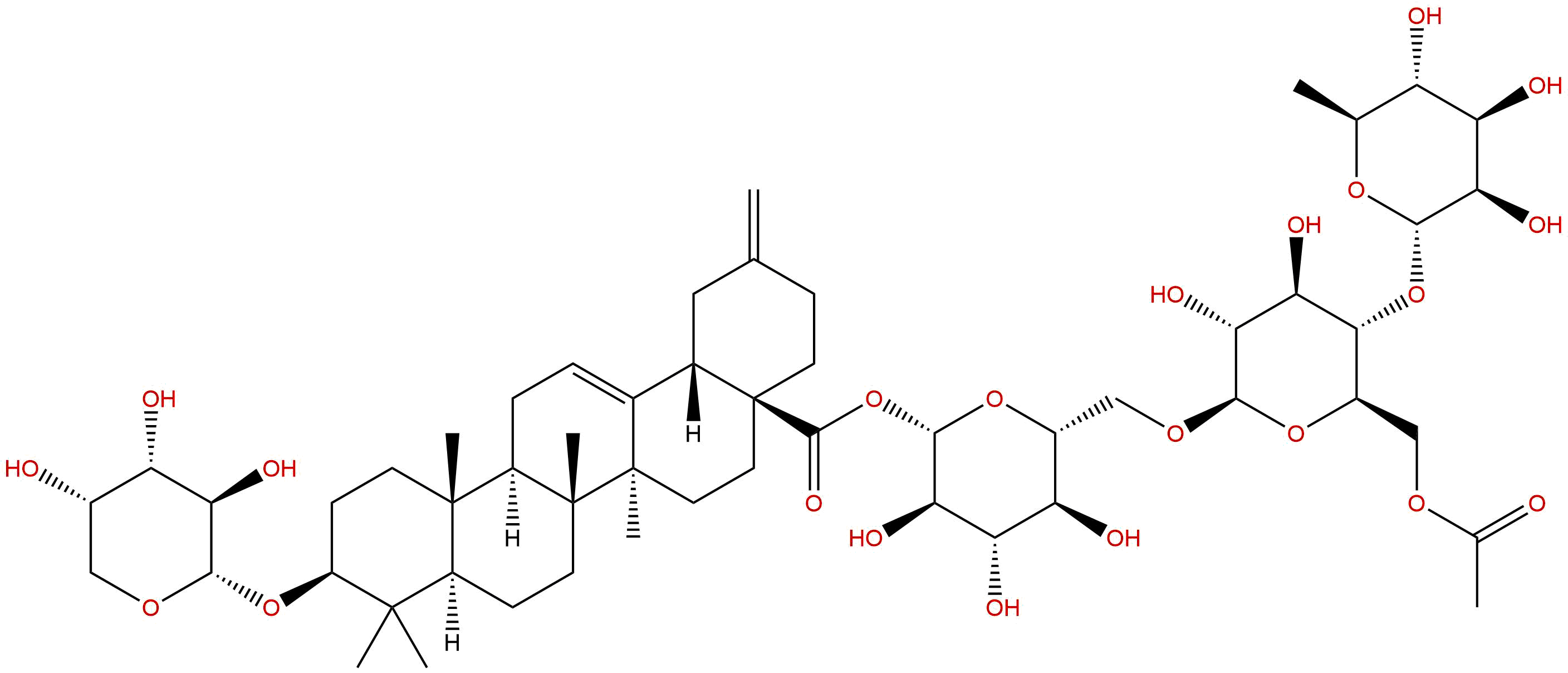
The chemical structure of Ciwujia saponin D2 belongs to the Oleanane type pentacyclic triterpenoid saponin. Its aglycone is oleanolic acid, and the sugar chain is composed of multiple monosaccharide units, which are connected to the C-3 hydroxyl or C-28 carboxyl groups of the aglycone through glycosidic bonds. According to existing literature reports, the complete structure of Ciwujia saponin D2 is 3-O - [β - D-glucopyranosyl (1 → 2) - β - D-glucopyranosyl] - oleanolic acid-28-O - [β - D-glucopyranosyl (1 → 6) - β - D-glucopyranosyl] ester. That is, its C-3 position is connected to a disaccharide chain formed by two glucose molecules connected by a β (1 → 2) bond, while the carboxyl group at C-28 position forms an ester bond with another disaccharide chain formed by two glucose molecules connected by a β (1 → 6) bond. The structural characteristics of this bisdesmosidic chain are more common in saponins of Araliaceae plants, but the connection mode and monosaccharide composition of the sugar chain determine its unique chemical properties.
From the perspective of physicochemical properties, the molecular formula of Ciwujia saponin D2 is C ₅∝ H ₈₈ O ₂∝, with a molecular weight of up to 1085.2440 g/mol, which is consistent with its complex glycosylation structure. The LogP of its lipid water partition coefficient is 2.1343, indicating that the compound has a certain degree of lipophilicity, but at the same time exhibits strong hydrophilicity due to the presence of multiple polar hydroxyl groups. The topologically polar surface area (TPSA) is as high as 339.7400 Å ², far exceeding the recommended upper limit of 140 Å ² for oral drugs, mainly due to the large number of hydroxyl and ether oxygen atoms in its molecules. A high TPSA value usually indicates that the compound has poor membrane permeability. The calculated water solubility is 0.0924 mg/mL, which belongs to the category of slight solubility, consistent with its larger molecular weight and polar surface area. Overall, the physicochemical properties of Ciwujia saponin D2 exhibit typical characteristics of high molecular weight saponins: high polarity, high molecular weight, low water solubility, and low permeability. These properties have a decisive impact on its subsequent pharmacokinetic behavior and administration design.
Ciwujia saponin D2 was originally derived from the plant Ciwujia in the Araliaceae family(Acanthopanax senticosus)Separate and identify from the roots and rhizomes. Ciwujia is mainly distributed in Northeast China, North China, the Far East of Russia, and the Korean Peninsula. Except for Acanthopanax senticosus, it belongs to the same genus of closely related plants, such as Acanthopanax senticosus without stems(Acanthopanax sessiliflorus)And short meme Wujia(Acanthopanax brachypus)Wait, it may also contain the compound, but the content is usually low. Therefore, Ciwujia remains the main natural source for obtaining this compound. It is worth noting that the content of Ciwujia saponin D2 in plants is usually not high and belongs to trace components, making its isolation and purification challenging.
The traditional extraction method mainly relies on solvent extraction. Due to the high polarity of Ciwujia saponin D2, highly polar solvents such as methanol, ethanol, or water are usually used as extraction solvents. The commonly used processes include: extracting the dried root powder of Acanthopanax senticosus with 70% -80% ethanol reflux, or using cold soaking method. After vacuum concentration, the extract was extracted sequentially with petroleum ether, ethyl acetate, and water saturated n-butanol. Due to the moderate to strong polarity of Ciwujia saponin D2, it is mainly enriched in the n-butanol extraction layer. The crude extract of total saponins was obtained by concentrating the n-butanol layer.
In order to obtain high-purity Ciwujia saponin D2 monomer, it is necessary to combine various modern chromatographic separation techniques. The classic separation process usually includes: first, the crude extract of total saponins is preliminarily classified through macroporous adsorption resin columns (such as D101, AB-8, etc.), and gradient elution is performed using ethanol water systems of different concentrations to remove impurities such as sugars and pigments, and enrich the target saponin components. Subsequently, further separation was carried out using a solvent system such as chloroform methanol water (e.g. 65:35:10 lower layer) using silica gel column chromatography. For saponin isomers with similar structures, it is often necessary to use reverse phase silica gel column chromatography (such as ODS C18) to perform fine separation using methanol water or acetonitrile water systems. Finally, the D2 monomer of Acanthopanax senticosus saponins with a purity of over 98% can be obtained through preparative HPLC. The entire extraction and separation process is cumbersome with low yield, which is also one of the main bottlenecks limiting its large-scale research and development. In recent years, some new extraction techniques, such as ultrasound assisted extraction, microwave-assisted extraction, and high-speed countercurrent chromatography (HSCCC), have been attempted to improve the extraction efficiency and separation effect of total saponins in Acanthopanax senticosus, which is expected to provide new pathways for the efficient acquisition of saponin D2 in Acanthopanax senticosus.
The anti-tumor activity is currently the most extensively studied pharmacological field of Ciwujia saponin D2. In vitro cell experiments showed that the compound had significant proliferation inhibitory effects on a variety of human tumor cell lines, including but not limited to liver cancer cells (such as HepG2, Huh7), lung cancer cells (such as A549), breast cancer cells (such as MCF-7, MDA-MB-231), gastric cancer cells (such as SGC-7901), colon cancer cells (such as HT-29), and leukemia cells (such as HL-60). Its effect exhibits a certain dose and time dependence. It is worth noting that the toxicity of Ciwujia saponin D2 to normal cells is relatively low, demonstrating a certain degree of selective anti-tumor potential.
Further mechanistic studies have found that saponins D2 from Acanthopanax senticosus mainly exert anti-tumor effects through the following pathways:
- Inducing cell apoptosis This is one of the core mechanisms of its anti-tumor effect. Research has confirmed that saponins D2 from Acanthopanax senticosus can induce tumor cell apoptosis through the mitochondrial pathway (endogenous pathway) and death receptor pathway (exogenous pathway). Specifically, it manifests as upregulating the expression of pro apoptotic protein Bax, downregulating the expression of anti apoptotic proteins Bcl-2 and Mcl-1, leading to a decrease in mitochondrial membrane potential, release of cytochrome c into the cytoplasm, and activation of the Caspase-9 and Caspase-3 cascade reaction. Meanwhile, it can also upregulate the expression of death receptor Fas and its ligand FasL, activating Caspase-8.
- Inhibition of cell proliferation and cycle arrest This compound can arrest the tumor cell cycle in the G0/G1 or G2/M phase, thereby inhibiting cell proliferation. The mechanism may be related to downregulating the expression of cell cycle proteins (Cyclin D1, Cyclin E) and cyclin dependent kinases (CDK2, CDK4, CDK6), as well as upregulating the expression of cyclin dependent kinase inhibitors (such as p21, p27).
- Inhibit invasion and metastasis The invasion and metastasis of tumors are the main causes of treatment failure and patient death. Ciwujia saponin D2 has been shown to significantly inhibit the migration and invasion ability of various highly metastatic tumor cells. Its mechanism of action is closely related to the downregulation of the expression and activity of matrix metalloproteinases (MMP-2 and MMP-9). MMPs are key enzymes that degrade the extracellular matrix, and their reduced activity directly weakens the invasive ability of tumor cells.
- Inhibit angiogenesis The growth and metastasis of tumors depend on the formation of new blood vessels. Ciwujia saponin D2 can inhibit the expression of hypoxia inducible factor 1 alpha (HIF-1 alpha), thereby downregulating the transcription and secretion of its downstream target gene, vascular endothelial growth factor (VEGF), and inhibiting tumor induced angiogenesis.
The unique activity initially reported for Ciwujia saponin D2 is its ability to enhance pancreatic lipase activity in vitro. Pancreatic lipase is a key enzyme for digesting and absorbing dietary fats. This discovery suggests that the compound may have a promoting effect on fat digestion and absorption, which is different from the traditional understanding that saponins often have a lipid-lowering effect. However, there is currently insufficient in vivo research on this activity, and its ultimate impact on lipid metabolism at the overall animal level (whether it promotes absorption or regulates metabolism through other mechanisms) remains to be elucidated. In addition, some studies have preliminarily explored its effect on alpha glucosidase activity, but the results are still unclear.
In addition to the main activities mentioned above, preliminary studies also suggest that Ciwujia saponin D2 may have other pharmacological effects, such as:
- immunomodulation As one of the main active ingredients of Acanthopanax senticosus, it may inherit the immune regulatory characteristics of the parent plant, such as enhancing macrophage phagocytic function or regulating lymphocyte activity.
- anti-inflammatory effect Partial studies have shown that this compound can inhibit the production of nitric oxide (NO) and prostaglandin E2 (PGE2) in macrophages induced by lipopolysaccharide (LPS), indicating its anti-inflammatory potential.
- Antioxidant effect The multiple hydroxyl groups in its molecular structure endow it with certain free radical scavenging ability, but its activity is usually weaker than classical antioxidants such as vitamin C or E.
The pharmacological activity of Ciwujia saponin D2, especially its anti-tumor effect, is achieved by regulating multiple complex signal transduction networks and directly acting on specific molecular targets. Based on existing research, its core mechanism of action can be summarized as follows:
Regulating the STAT3 signaling pathway STAT3 (Signal Transduction and Transcription Activation Factor 3) is a key oncogenic transcription factor that is continuously activated in various tumors, promoting cell proliferation, survival, angiogenesis, and immune escape. Research has shown that saponins D2 from Acanthopanax senticosus can significantly inhibit the phosphorylation (Tyr705 site) and nuclear translocation of STAT3, thereby blocking its transcriptional activity. The downregulation of STAT3 further inhibits the expression of its target genes, including anti apoptotic proteins (such as Mcl-1, Bcl-2, Survivor), cell cycle regulatory proteins (such as Cyclin D1), and angiogenic factors (such as VEGF). Therefore, inhibiting the STAT3 signaling pathway is one of the core mechanisms by which Ciwujia saponin D2 exerts anti-tumor effects.
Regulating the MAPK signaling pathway The MAPK (mitogen activated protein kinase) family includes members such as ERK, JNK, and p38 MAPK, which play important roles in regulating cell proliferation, differentiation, and apoptosis. The effect of Ciwujia saponin D2 on the MAPK pathway is cell type dependent. In most tumor cells, it can inhibit the phosphorylation of ERK1/2, which promotes proliferation, while activating the phosphorylation of JNK and p38 MAPK, which promote apoptosis. This differential regulation of different branches of the MAPK pathway collectively promotes cell apoptosis and growth inhibition.
Affects apoptosis related proteins (Bcl-2 family)As mentioned earlier, Ciwujia saponin D2 can directly regulate the expression balance of Bcl-2 family proteins. It downregulates the anti apoptotic proteins Mcl-1 and Bcl-2, upregulates the pro apoptotic proteins Bax and Bak, disrupts the integrity of the mitochondrial outer membrane, leads to mitochondrial dysfunction and cytochrome c release, thereby initiating the endogenous apoptotic program. Mcl-1 and Bcl-2 are their direct or indirect molecular targets.
Inhibition of Topoisomerase Activity Topoisomerase I (TOP1) and Topoisomerase II alpha (TOP2A) are essential enzymes for DNA replication and transcription, as well as classic targets for various clinical anticancer drugs such as camptothecin and etoposide. Preliminary molecular docking and enzyme activity experiments suggest that saponins D2 from Acanthopanax senticosus may exert cytotoxic effects by binding to TOP1 and TOP2A, inhibiting their catalytic activity and causing DNA damage. This provides a new explanation for its anti-tumor mechanism.
Regulating estrogen signaling For hormone dependent breast cancer (such as MCF-7 cells), acanthopanax senticosus saponin D2 shows the potential to interact with estrogen receptor alpha (ESR1). It may act as a selective estrogen receptor modulator (SERM) to inhibit the expression of downstream target genes (such as CYP19A1, aromatase) by antagonizing the binding of estrogen and ESR1, thus inhibiting the proliferation of breast cancer cells. CYP19A1 is a key enzyme that catalyzes the conversion of androgens to estrogens, and downregulation of its expression can reduce estrogen levels in the tumor microenvironment.
In summary, Ciwujia saponin D2 is a natural product with multi-target effects. Its anti-tumor activity is not derived from a single mechanism, but through simultaneous intervention in multiple key pathways such as STAT3, MAPK, Bcl-2 family, topoisomerase, and estrogen signaling, forming a synergistic network regulatory effect. This multi-target characteristic is a potential advantage of its wide anti-tumor spectrum and low susceptibility to drug resistance, but it also poses challenges for accurately elucidating its mechanism of action.
To promote the clinical application of Ciwujia saponin D2 from laboratory research, it is necessary to rigorously evaluate its drug like and pharmacokinetic (ADME) properties. Based on the provided pharmacological parameters, we can conduct a preliminary analysis:
Overall, the medicinal properties of Ciwujia saponin D2 exhibit typical characteristics of "high activity, low medicinal properties". The biggest challenge lies in the extremely poor bioavailability.
There is currently very limited in vivo research data available on its pharmacokinetics. Based on its physical and chemical properties, it can be inferred that:
- absorb After oral administration, its absorption in the gastrointestinal tract will be very limited. Most drugs may be excreted in their prototype form with feces. Medications that are absorbed in small amounts may also be metabolized in large quantities due to first pass effects. Therefore, the oral bioavailability is expected to be extremely low.
- distribution Due to its high polarity and low fat solubility, its apparent distribution volume may be small and mainly distributed in the extracellular fluid. The binding rate with plasma proteins (such as albumin) may be high.
- Metabolism As a saponin compound, its sugar chain may undergo hydrolysis under the action of gut microbiota, producing secondary glycosides or aglycones (oleanolic acid). The cytochrome P450 enzyme system in the liver may also be involved in its metabolism.
- excretion The prototype drug and its metabolites are mainly excreted through bile and feces, and the proportion of renal excretion (urine) may be lower.
Given its poor oral bioavailability, future drug development strategies must consider non oral routes of administration, such as intravenous injection, subcutaneous injection, or transdermal delivery. In addition, utilizing modern drug delivery systems such as liposomes, nanoparticles, phospholipid complexes, etc. is a key direction for improving their bioavailability, achieving targeted delivery, and enhancing pharmacokinetic properties.
Ciwujia saponin D2, as a natural product with unique biological activity, has broad clinical application prospects, but also faces many challenges.
Main application prospects:
Development of anti-tumor drugs This is its most promising application direction. Its multi-target and low toxicity characteristics make it an extremely attractive anti-tumor lead compound. In particular, it can inhibit STAT3, Mcl-1, MMP-2 and other key carcinogenic targets, as well as induce apoptosis and inhibit metastasis, making it potentially valuable in the treatment of solid tumors (such as liver cancer, lung cancer, breast cancer) and hematological tumors (such as leukemia). In the future, it can be explored to use it in combination with existing chemotherapy drugs (such as cisplatin, paclitaxel) or targeted drugs, in order to achieve a "cocktail" therapy effect that synergistically enhances efficacy and reduces toxic side effects.
Treatment of metabolic diseases The unique effect of enhancing pancreatic lipase activity, although seemingly contradictory to lipid-lowering goals, may open up new application areas. For example, for patients with fat dyspepsia caused by insufficient lipase activity (such as pancreatic exocrine dysfunction), it may become a new type of digestive enzyme enhancer. Of course, this requires extensive in vivo research to confirm its safety and effectiveness.
As a functional food or health supplement ingredient Given that it originates from the medicinal and edible source of Acanthopanax senticosus, and preliminary toxicological evaluation shows high safety (no genotoxicity, low cardiac toxicity), it may be developed as a food additive with specific health functions. For example, developing dietary supplements targeting its anti fatigue, immune regulatory, or potential anti-tumor preventive effects.
Challenges and future research directions:
Optimization of drug properties This is the biggest bottleneck that restricts its development. Future research should focus on:
In depth pharmacological and mechanistic research:
Comprehensive toxicological evaluation Although the preliminary data is good, systematic preclinical safety evaluations such as acute toxicity, long-term toxicity, and reproductive toxicity are still needed to provide safety guarantees for its entry into clinical trials.
Resource sustainability Due to the low content and difficult extraction of Acanthopanax senticosus, it is necessary to develop efficient biosynthetic or chemical total synthesis methods to ensure the supply of raw materials for future large-scale applications.
Ciwujia saponin D2, as a unique triterpenoid saponin derived from traditional Chinese medicine Ciwujia, has gradually demonstrated diversified pharmacological activities with anti-tumor as the core, starting from its unique discovery of enhancing pancreatic lipase activity. Its mechanism of action involves the regulation of multiple key pathways such as STAT3, MAPK, Bcl-2 family, topoisomerase, and estrogen signaling, reflecting the typical characteristics of multi-target and networked regulation of natural products. Although its excellent pharmacological activity is exciting, the extremely poor oral bioavailability caused by its high molecular weight and polarity constitutes the "Achilles heel" of its transition from laboratory to clinical application.
Future research must focus on optimizing drug properties while thoroughly elucidating its mechanism of action. Through innovative drug delivery strategies, prodrug design, or structural simplification, it is expected to overcome this key obstacle. If its pharmacokinetic defects can be successfully resolved, Ciwujia saponin D2 is highly likely to develop into a new type of anti-tumor candidate drug, or provide new ideas for the treatment of metabolic diseases. The continuous exploration of Ciwujia saponin D2 is not only a study of a single compound, but also a response to the common challenges in the development of natural product drugs. Its experience and lessons will provide valuable references for the research of other similar natural products. We have reason to believe that with the interdisciplinary integration and technological advancement, the clinical value of Ciwujia saponin D2 will eventually be fully released.
Batch can search by a CAS number,one per line
