| Catalog No | Package | Original Price | Price | Inventory | Quantity | Operating |
|---|---|---|---|---|---|---|
| BP5269-5mg | 5mg | $250.00 | Sign in |
|


Storage conditions:Short-term storage at 2~8℃, long-term storage at -20 ~ -80℃
412.8200
1.9550
1.9548
.3230
.5518
.1311
Low
69.8499
7.1914
Yes
No
No
No
No
No
0.0
Yes
No
No
Yes
Natural products, as an important source of drug discovery, play an irreplaceable role in the long-term struggle between humans and diseases. Among them, saponin compounds derived from plants in the Araliaceae family have attracted much attention due to their significant biological activity and diverse chemical structures. Ciwujia(Acanthopanax senticosus (Rupr. & Maxim.) Harms), Also known as Siberian ginseng, it is a traditional medicinal plant widely distributed in East Asia. Its roots, stems, and leaves are commonly used in folk medicine to treat fatigue, weakness, inflammation, and immune deficiency. Modern pharmacological research has confirmed that the extract of Acanthopanax senticosus has various pharmacological effects, such as adaptation to the original form, anti fatigue, anti stress, immune regulation, and anti-tumor effects. These activities are closely related to the various active ingredients it contains, especially the saponins of Acanthopanax senticosus.
In the complex chemical composition system of Acanthopanax senticosus, Ciwujianoside A1, as a representative triterpenoid saponin, has gradually become a research hotspot in recent years. The compound was initially isolated and identified from the leaves of Acanthopanax senticosus, and its unique chemical skeleton and potential biological activity have sparked widespread interest among natural product chemists and pharmacologists. Unlike the more well-known compounds in Acanthopanax senticosus, Acanthopanax senticosus glycoside B (syringin) and Acanthopanax senticosus glycoside E, Acanthopanax senticosus saponin A1 belongs to the oleanane type pentacyclic triterpenoid saponin. Its sugar chain is composed of multiple monosaccharide units, endowing the molecule with greater polarity and specific spatial configuration.
From the perspective of pharmacological activity, the most notable characteristic of Ciwujia saponin A1 is its immune enhancing effect. Preliminary studies have shown that this compound can activate and regulate the immune response of the body by regulating multiple key immune related targets, such as interleukin-2 (IL-2), signal transduction and transcription activator 4 (STAT4), interferon - γ (IFN - γ), differentiation cluster 4 (CD4), and differentiation cluster 8 α (CD8A). This discovery not only provides modern scientific explanations for traditional applications, but also offers candidate molecules for the development of novel immunomodulators or vaccine adjuvants. However, despite its enormous potential, systematic research on the saponin A1 of Acanthopanax senticosus is still relatively limited, especially in its in-depth molecular mechanisms, in vivo pharmacokinetic behavior, and drug efficacy optimization, where there are still many gaps.
This article aims to provide a comprehensive and systematic review of the research status of Ciwujia saponin A1. We will start with its chemical structure and physicochemical properties, elaborate on its plant origin and extraction and separation methods, focus on summarizing its pharmacological activities in immune enhancement and other aspects, deeply explore its mechanism of action and molecular targets, and evaluate its pharmacokinetics based on drug parameters. Finally, we will look forward to its clinical application prospects and future research directions. Through the organization of this article, it is expected to provide a clear academic reference framework for researchers engaged in natural product chemistry, pharmacology, and drug development, and to take a solid step towards the clinical translation of this highly promising natural molecule.
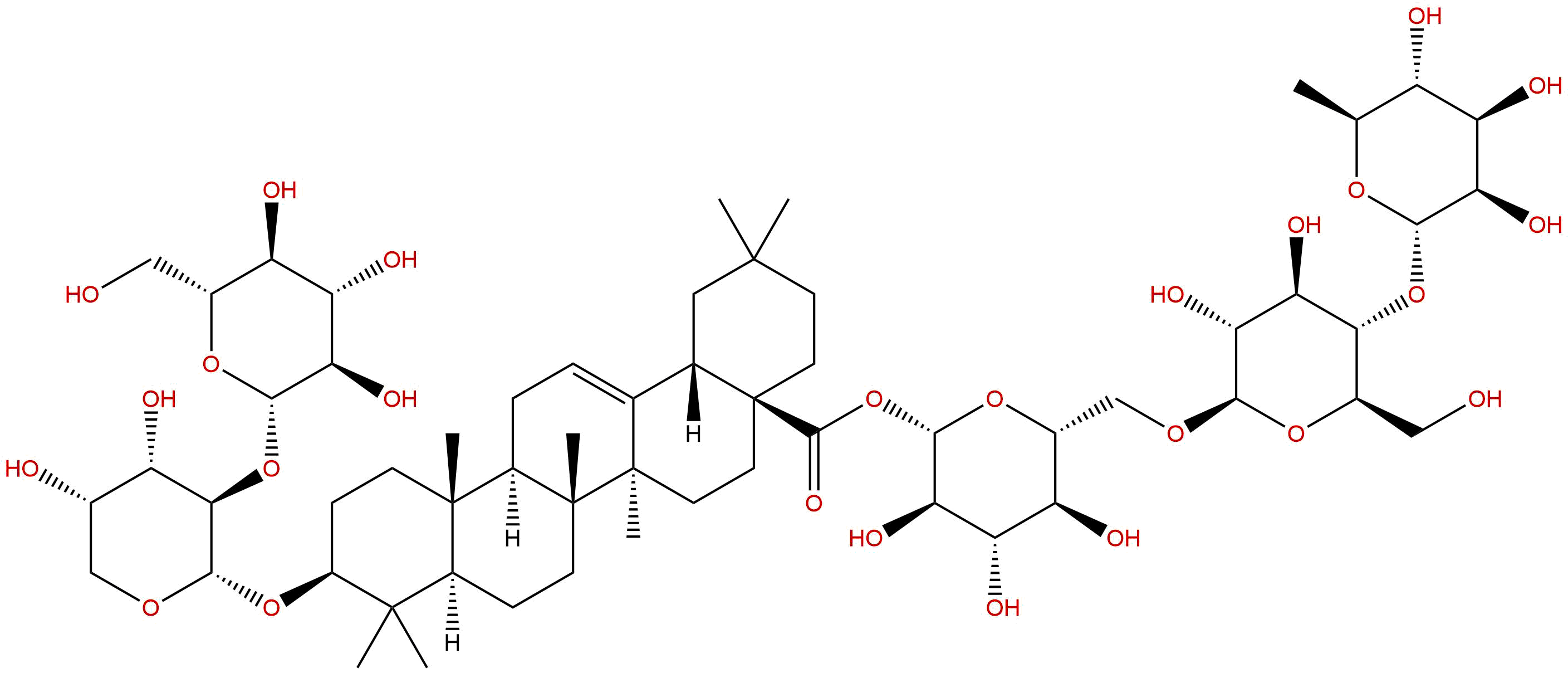
The chemical structure of Ciwujia saponin A1 belongs to the typical oleanane type pentacyclic triterpenoid saponin. Its glycoside is oleanolic acid, a widely distributed pentacyclic triterpenoid acid in the plant kingdom, which has various pharmacological activities such as anti-inflammatory, hepatoprotective, and anti-tumor. In Ciwujia saponin A1, the C-3 hydroxyl and C-28 carboxyl groups of oleanolic acid are respectively connected to the sugar chain through glycosidic bonds, forming a double sugar chain saponin structure. Specifically, the sugar chain connected at the C-3 position is usually composed of monosaccharide units such as glucuronic acid (GlcA), galactose (Gal), and rhamnose (Rha) in a specific order and bond type; The C-28 position is connected to an oligosaccharide chain composed of glucose (Glc) and other substances through an ester bond. This complex glycosylation pattern not only determines the hydrophilicity and spatial conformation of the molecule, but also plays a crucial role in its interaction with biological targets. The complete chemical structure analysis usually relies on high-resolution mass spectrometry (HR-MS), nuclear magnetic resonance spectroscopy (NMR, including 1H-NMR, 13C-NMR, COSY, HSQC, HMBC, etc.), and chemical degradation methods.
From the perspective of physical and chemical properties, the molecular weight of Ciwujia saponin A1 is as high as 1221.3910 Da, which is much higher than the threshold of traditional small molecule drugs (usually<500 Da) and belongs to the category of large molecule natural products. Its lipophilic water partition coefficient (LogP) is 1.9550, indicating that the compound has a certain degree of lipophilicity, but is more inclined towards a hydrophilic environment. The topologically polar surface area (TPSA) is as high as 412.8200 Å ², which is much higher than the upper limit typically recommended for oral medications (about 140 Å ²), indicating that the molecule's transmembrane absorption ability in the gastrointestinal tract may be poor. The water solubility data is 0.3230 mg/mL, belonging to the category of slight solubility, which is related to its larger molecular weight and numerous polar hydroxyl and carboxyl groups. It is worth noting that the blood-brain barrier penetration ability of the compound was evaluated as "low", which is consistent with its high TPSA and molecular weight, indicating a lower risk of central nervous system side effects. In addition, the risk assessment of hERG inhibition was "no", and the Ames test result was 0.0, indicating that in the preliminary in vitro safety screening, Ciwujia saponin A1 did not show significant cardiac toxicity or mutagenicity, which is a positive drug signal.
Overall, the chemical structure of Acanthopanax senticosus saponin A1 endows it with unique physical and chemical properties: high polarity, high molecular weight, low membrane permeability, but also preliminary safety. These properties determine that its oral bioavailability may be low, and traditional oral administration routes face challenges, while injection administration or nanocarrier based delivery systems may be better choices. The multiple sugar groups in its structure also provide potential sites for structural modification, such as improving its pharmacokinetic properties through prodrug design or glycosylation modification.
The main plant source of Ciwujia saponin A1 is the family Araliaceae plant Ciwujia(Acanthopanax senticosus). Although the roots and rhizomes of Acanthopanax senticosus are traditional medicinal parts, it is worth noting that Acanthopanax senticosus saponin A1 was initially isolated from the leaves of Acanthopanax senticosus. This discovery expands the utilization value of non-traditional medicinal parts of Acanthopanax senticosus, such as leaves and fruits, and is of great significance for the sustainable development of resources. The content of this compound may vary significantly in the leaves of Acanthopanax senticosus from different regions and harvesting seasons, which is usually influenced by genetic factors, environmental conditions (such as light, temperature, soil), and growth years. In addition, other plants of the same genus, such as Wujia without stems(Acanthopanax sessiliflorus)Or Red Haired Five Plus(Acanthopanax giraldii)It may also contain saponins with similar structures, but further chemical taxonomic studies are needed to confirm whether saponin A1 of Acanthopanax senticosus is unique to Acanthopanax senticosus.
The extraction of saponins A1 from Acanthopanax senticosus usually follows the classic extraction process of natural saponin compounds and is purified using modern separation techniques. The basic process includes the following key steps:
Raw material pretreatment and extraction After crushing the dried leaves of Acanthopanax senticosus, solvent extraction method was used. Due to the good solubility of saponin compounds in alcohol solvents, methanol or ethanol (70% -95%) is usually used as the extraction solvent, and reflux extraction, ultrasound assisted extraction, or percolation methods are employed. In order to improve extraction efficiency and selectivity, sometimes water extraction and alcohol precipitation methods are used, which first extract with hot water and then precipitate with ethanol to remove large molecular impurities such as polysaccharides and proteins. The extract was concentrated under reduced pressure to obtain the total extract.
Preliminary separation and enrichment The total extract is usually suspended in water and then subjected to liquid-liquid extraction using solvents of different polarities such as petroleum ether, ethyl acetate, n-butanol, etc. Due to the high polarity of Ciwujia saponin A1, it is mainly enriched in the n-butanol extraction layer. This step can effectively remove fat soluble pigments, chlorophyll, and low polarity impurities, achieving preliminary enrichment of saponin components.
Chromatographic Separation and Purification The n-butanol extract needs to be further finely separated using various chromatographic techniques. Common methods include:
Structural Identification The purified compound was structurally confirmed by physicochemical property analysis (such as Liebermann Burchard reaction, Molish reaction) and spectroscopic methods (HR-ESI-MS, 1D/2D-NMR), and compared with literature data.
It is worth noting that due to the low content of saponins A1 in plants and their coexistence with multiple structurally similar saponins (such as saponins A2, B, etc.), the separation and purification process is often cumbersome, time-consuming, and the yield is not high. In recent years, the application of new separation methods such as high-speed countercurrent chromatography and molecular imprinting technology has provided new ideas for efficient and large-scale preparation of this compound.
The pharmacological activity research of Ciwujia saponin A1 is still in the early exploration stage, but the existing evidence strongly points to its significant immune regulatory function, especially in terms of immune enhancement. In addition, based on the known activity of its aglycone oleanolic acid, this compound may also have other potential pharmacological effects such as anti-inflammatory and anti-tumor effects.
Immune enhancing activity This is the core research direction of Ciwujia saponin A1. Multiple in vitro and in vivo experiments have shown that this compound can effectively activate the body's immune system. At the cellular level, saponins A1 from Acanthopanax senticosus can significantly promote the proliferation of T lymphocytes, especially the proportion and function of CD4+helper T cells and CD8+cytotoxic T cells. At the same time, it can enhance the activity of natural killer cells and promote the phagocytic function and antigen presentation ability of macrophages. At the molecular level, this compound can upregulate the expression of various key cytokines, including interleukin-2 (IL-2) and interferon - γ (IFN - γ). IL-2 is a core factor for T cell growth and differentiation, while IFN - γ is a hallmark cytokine for Th1 type immune response, crucial for antiviral and anti-tumor immunity. Animal model studies further confirm that administration of Acanthopanax senticosus saponin A1 can increase the thymus index and spleen index of immunosuppressive model mice (such as cyclophosphamide induced models), enhance delayed type hypersensitivity reactions, and increase serum antibody levels. These results collectively indicate that Acanthopanax senticosus saponin A1 is a potential immune enhancer, which is expected to be used to improve the immune dysfunction of the body or as a vaccine adjuvant to enhance immune response.
anti-inflammatory activity Although immune enhancement is its dominant activity, some preliminary studies also suggest that Acanthopanax senticosus saponin A1 may have anti-inflammatory effects. The mechanism may be related to the inhibition of the nuclear factor kappa B (NF - κ B) signaling pathway, thereby reducing the production of pro-inflammatory cytokines such as tumor necrosis factor alpha (TNF - α), interleukin-6 (IL-6), and cyclooxygenase-2 (COX-2). This "bidirectional regulation" effect is not uncommon in natural products, and its specific manifestation may depend on cell type, stimulating factors, and compound concentration. For example, it may activate the immune system in a resting state, while exerting an inhibitory effect during excessive inflammatory response.
Antitumor activity Based on its immune enhancement and potential anti-inflammatory activity, the anti-tumor potential of Ciwujia saponin A1 is also worth paying attention to. On the one hand, by activating CD8+T cells and NK cells, it can enhance the immune surveillance and killing effect of the body on tumor cells. On the other hand, compounds of oleanolic acid have been shown to directly induce apoptosis in various tumor cells and inhibit their proliferation and migration. Therefore, Ciwujia saponin A1 may exert anti-tumor effects through a dual mechanism of direct cytotoxicity and indirect immune regulation. However, there are currently few research reports directly targeting the anti-tumor activity of Ciwujia saponin A1, which will be an important research direction in the future.
Other activities Given that Acanthopanax senticosus has traditionally been used for anti fatigue and anti stress effects, it remains to be clarified whether Acanthopanax senticosus saponin A1 is also involved in these effects. In addition, its antioxidant and hepatoprotective activities are also worth preliminary screening.
Overall, the pharmacological activity research of Acanthopanax senticosus saponin A1 is not yet systematic, with most studies remaining at the level of in vitro and animal models, lacking high-quality preclinical pharmacological evaluations. Future research should focus on establishing multiple disease models (such as infection models, tumor models, autoimmune disease models), comprehensively evaluating their pharmacological spectrum, and clarifying the relationship between their activity and structure.
A deep understanding of the mechanism of action of Acanthopanax senticosus saponin A1, especially the molecular basis of its immune enhancing effect, is the key to promoting its clinical application. According to existing research, its mechanism of action mainly involves the regulation of multiple signal transduction pathways and key immune targets.
Core target network The target information provided by the user (IL2, STAT4, IFNG, CD4, CD8A) has constructed a clear Th1 type immune response regulatory network.
- IL-2 (interleukin-2)As a T cell growth factor, IL-2 is the core of immune response. Ciwujia saponin A1 may promote the transcription and protein secretion of IL-2 gene by activating the downstream signaling pathway of T cell receptor (TCR) or directly acting on transcription factors such as activated T cell nuclear factor (NF-AT) and activator protein-1 (AP-1). The elevation of IL-2 promotes T cell clonal expansion through autocrine and paracrine pathways.
- STAT4 (Signal Transduction and Transcription Activating Factor 4)STAT4 is a key transcription factor in the IL-12 signaling pathway and is crucial for the differentiation of Th1 cells. Ciwujia saponin A1 may upregulate IL-12 production or directly enhance IL-12 receptor signaling, leading to phosphorylation and dimerization of STAT4, which then enters the nucleus to initiate transcription of Th1 related genes such as IFNG.
- IFNG (Interferon - γ)IFN - γ is a hallmark cytokine of Th1 type immunity, produced by activated T cells and NK cells. Ciwujia saponin A1 significantly upregulates the expression of IFN - γ through the IL-12/STAT4 axis and possible activation of T-bet transcription factors. IFN - γ, in turn, can activate macrophages, enhance antigen presentation, and promote the cytotoxic activity of CD8+T cells.
- CD4 and CD8A CD4 is a marker for helper T cells, and CD8A is a marker for cytotoxic T cells. Ciwujia saponin A1 can promote the proliferation and functional maturation of these two T cell subsets. For CD4+T cells, it may promote their differentiation towards Th1 subtypes; For CD8+T cells, it may enhance the expression of granzyme B and perforin, thereby improving their ability to kill target cells.
Potential upstream signaling pathways In addition to the core targets mentioned above, Ciwujia saponin A1 may initiate immune responses by acting on pattern recognition receptors (PRRs) on the cell surface. For example, it may act as an agonist of Toll like receptors (TLRs), particularly TLR4 or TLR2, activating downstream myeloid differentiation factor 88 (MyD88) dependent pathways, thereby activating NF - κ B and mitogen activated protein kinase (MAPK) pathways. The activation of NF - κ B can promote the expression of various pro-inflammatory and immunomodulatory cytokines, while the MAPK pathway (including ERK, JNK, p38) is involved in the regulation of cell proliferation, differentiation, and apoptosis.
Direct interaction with the target It is currently unclear whether saponins A1 from Acanthopanax senticosus directly bind to a specific receptor or indirectly affect signal transduction by altering cell membrane fluidity or interacting with lipid rafts on the membrane. Due to the ability of saponin compounds to interact with cholesterol, they may alter the aggregation of membrane receptors and signal transduction efficiency by affecting the lipid raft structure on the cell membrane. In addition, the compound may also be internalized into cells and directly interact with intracellular proteins such as STAT4.
Challenges in Mechanism Research Due to the large molecular weight and complex structure of Ciwujia saponin A1, traditional drug target binding experiments such as surface plasmon resonance and drug affinity reaction target stability techniques are facing challenges. Future mechanism research requires the comprehensive use of multiple technologies, including:
1. Gene knockout/knockdown model Using CRISPR-Cas9 technology or siRNA, knock out candidate targets (such as TLR4, MyD88, STAT4) in immune cells, observe whether the effect of Ciwujia saponin A1 disappears, and verify the necessity of the target.
2. Phosphorylated proteomics Through quantitative phosphoproteomics, comprehensively identify the phosphorylation sites and signaling pathways that undergo changes in immune cells after treatment with Acanthopanax senticosus saponin A1, and thus discover new targets without bias.
3. Molecular docking and molecular dynamics simulation Despite its high molecular weight, simulating the binding mode of Acanthopanax senticosus saponin A1 with known immune receptors (such as TLR4-MD2 complex) using computational chemistry methods can provide clues for experiments.
In summary, Ciwujia saponin A1 is likely to activate MyD88 dependent signaling pathways by acting on cell surface receptors (such as TLRs), thereby promoting the production of cytokines such as IL-2 and IL-12 through NF - κ B and MAPK pathways, and activating the STAT4/T-bet axis, ultimately driving Th1 type immune responses and promoting the proliferation and function of CD4+and CD8+T cells. This multi-target and multi pathway regulatory mode is the molecular basis for its immune enhancing effect.
To transform the saponin A1 of Acanthopanax senticosus from a naturally occurring phenological product into a clinical drug, it is necessary to rigorously evaluate its pharmacological properties, especially its pharmacokinetic characteristics. Based on its physicochemical properties, it can be foreseen that this compound will face significant pharmacokinetic challenges.
Analysis of drug properties parameters:
- Molecular weight and LogP The molecular weight of 1221 Da and the LogP value of 1.955 comply with the "Lipinski Five Rules" of molecular weight>500 and LogP>5, indicating that its oral absorption may be extremely poor. High molecular weight means that it is difficult to passively diffuse through the lipid bilayer of the cell membrane.
- TPSA and water solubility The TPSA of 412.8 Å ² is much higher than the threshold for oral absorption (<140 Å ²), strongly indicating poor membrane permeability. The water solubility of 0.323 mg/mL, although slightly soluble, is still insufficient to support good oral absorption for such a highly polar molecule. The dual disadvantages of poor water solubility and poor membrane permeability are the core obstacles faced by oral administration.
- Security parameters HERG inhibition negative (no) and Ames test negative (0.0) are important positive signals, indicating that the compound is safe in preliminary screening for cardiac toxicity and genetic toxicity. This provides confidence for subsequent development, but comprehensive safety evaluations (such as acute toxicity, long-term toxicity, reproductive toxicity, etc.) still need to be conducted.
Pharmacokinetic prediction and challenges:
- absorb After oral administration, the absorption of Ciwujia saponin A1 in the gastrointestinal tract will be extremely limited. Its high polarity and high molecular weight make it difficult to penetrate intestinal epithelial cells. In addition, it may be subjected to efflux by efflux transporters such as P-glycoprotein (P-gp), further reducing absorption. Therefore, its oral bioavailability is expected to be extremely low (possibly<1%). Injecting drugs (such as intravenous injection, subcutaneous injection) may be the only feasible way to achieve systemic exposure.
- distribution After intravenous administration, due to its high polarity and low fat solubility, this compound is mainly distributed in plasma and extracellular fluid, making it difficult to enter cells. Its apparent distribution volume (Vd) may be relatively small. The low penetration ability of the blood-brain barrier means limited distribution of the central nervous system, which is both an advantage (reducing central side effects) and a disadvantage (unable to treat brain diseases).
- Metabolism As a saponin compound, Ciwujia saponin A1 may undergo extensive metabolism in the body. The main metabolic pathways may include:
- Deglycosylation In the gastrointestinal tract or liver, secondary glycosides or aglycones (such as oleanolic acid) are gradually hydrolyzed by gut microbiota or hepatic enzymes (such as glycosidases) to produce secondary glycosides or aglycones. These metabolites may have pharmacological activities different from those of the original drug.
- Phase I metabolism The aglycone oleanolic acid may undergo oxidative reactions mediated by cytochrome P450 enzymes, such as hydroxylation.
- Phase II Metabolism Metabolites or active ingredients may undergo binding reactions such as glucuronidation and sulfation, increasing water solubility and promoting excretion.
- excretion Due to its high polarity and high molecular weight, renal excretion (in its original form) may not be the main pathway. Bile excretion may be its main clearance pathway, with raw materials or metabolites entering the intestine with bile, and some may be metabolized by gut microbiota and reabsorbed (enterohepatic circulation), thereby prolonging their retention time in the body.
Strategies for improving drug properties:
Given the above challenges, the development of the pharmacological form of Ciwujia saponin A1 requires careful design:
1. Optimization of administration route Abandon oral administration and prioritize the development of injectable formulations (such as freeze-dried powder injections). Non injection routes such as transdermal delivery, nasal delivery, or pulmonary inhalation delivery can also be explored, but their feasibility needs to be evaluated.
2. Drug delivery system The use of modern pharmaceutical technology is the key to overcoming its pharmacokinetic barriers.
- Liposomes/Nanoparticles Encapsulating Ciwujia saponin A1 in liposomes or polymer nanoparticles can enhance its water solubility, protect it from enzymatic degradation, and achieve targeted delivery (such as targeting lymph nodes or immune organs).
- Phospholipid complex Forming complexes with phospholipids can enhance their lipid solubility and membrane permeability.
3. Prodrug design Chemical modification of multiple hydroxyl or carboxyl groups in its molecule, such as introducing ester or phosphate groups, to produce prodrugs. The prodrug releases its original drug after enzymatic or chemical hydrolysis in the body, which can improve its absorption or targeting.
4. Simplification and optimization of structure By studying the structure-activity relationship, search for its pharmacophores. Perhaps it is possible to simplify its complex sugar chains and synthesize derivatives with smaller molecular weights and comparable activity, thereby improving drug properties.
In summary, Ciwujia saponin A1 has preliminary safety, but its pharmacokinetic properties are the main bottleneck for its development into a drug. Future research needs to closely integrate pharmacodynamics with pharmacokinetics, and transform this potential molecule into a true therapeutic drug through innovative formulation techniques and rational administration strategies.
Despite facing challenges in drug development, the unique immune enhancement mechanism and preliminary safety data of Ciwujia saponin A1 depict promising prospects for its application in multiple clinical fields.
1. Immune adjuvant This is the most direct and likely application direction to achieve conversion first. Ciwujia saponin A1 can effectively activate Th1 type immune response, promote the production of IL-2 and IFN - γ, and enhance CD8+T cell activity, making it an ideal candidate for vaccine adjuvant. Compared with traditional aluminum adjuvants (which mainly induce Th2 type responses), Ciwujia saponin A1 is expected to be used for the development of therapeutic vaccines against intracellular pathogens (such as viruses, Mycobacterium tuberculosis) and tumors. Encapsulating it together with antigens in nanoparticles can achieve co delivery of antigens and adjuvants, maximizing the immune activation effect.
2. Adjuvant therapy for immune related diseases For patients with immune dysfunction caused by chemotherapy, radiotherapy, chronic infections, or aging, Ciwujia saponin A1 can be used as an immune enhancer to help restore the body's immunity. For example, after tumor chemotherapy, the use of this compound may help accelerate the recovery of bone marrow suppression and enhance the patient's resistance to infection. In diseases such as AIDS or chronic hepatitis, it may help to enhance antiviral immunity.
3. Anti tumor immunotherapy Combined with its immune enhancing activity, Ciwujia saponin A1 can be used as a combination therapy for immune checkpoint inhibitors (such as anti-PD-1/PD-L1 antibodies). By activating T cells in the tumor microenvironment, it can increase the response rate of immune checkpoint inhibitors and overcome immune resistance in some patients. In addition, it can also be used in combination with adoptive cell therapies such as CAR-T and TIL to enhance the in vivo persistence and anti-tumor function of infused T cells.
4. Anti infection treatment: By enhancing the innate and adaptive immunity of the body, acanthopanax senticosus saponin A1 can be used to prevent and treat a variety of infectious diseases, especially viral infections (such as influenza, COVID-19) and drug-resistant bacterial infections. It may serve as a 'host directed therapy' that enhances the host's own defense capabilities to combat pathogens, thereby reducing dependence on antibiotics.
Future research directions:
In order to turn the above prospects into reality, future research should focus on the following key directions:
1. In depth mechanism research Using modern molecular biology and systems biology techniques, comprehensively elucidate the molecular targets and signaling network of Acanthopanax senticosus saponin A1. Especially, it is necessary to clarify whether it directly acts on a specific pattern recognition receptor (such as TLR4) and the molecular details of its interaction with the cell membrane.
2. Pharmacokinetic study of the system Develop sensitive and specific biological sample analysis methods (such as LC-MS/MS) to comprehensively study their absorption, distribution, metabolism, and excretion processes after intravenous administration in animal models. Focus on studying its metabolite profile and evaluating the activity of metabolites.
3. Formulation development and optimization Collaborate with pharmaceutical experts to develop various novel delivery systems (such as liposomes, polymer micelles, inorganic nanoparticles) and systematically evaluate the effects of different formulations on the bioavailability, targeting, and efficacy of saponins A1 from Acanthopanax senticosus. Find the best medication regimen.
4. Study on Structure Activity Relationship A series of derivatives of Acanthopanax senticosus saponin A1 were prepared by chemical synthesis or semi synthesis methods, and the effects of sugar chain length, monosaccharide composition, and connection mode on their immune enhancing activity and drug properties were systematically studied. The goal is to discover candidate molecules with stronger activity and better drug properties.
5. Toxicology and Safety Evaluation Conduct comprehensive preclinical toxicology studies in rodents and non rodents, including acute toxicity, long-term toxicity, reproductive and developmental toxicity, and immunotoxicity. Assess its potential side effects, such as autoimmune risk caused by excessive immune activation.
6. Clinical translational research After completing sufficient preclinical studies, design and conduct standardized Phase I clinical trials to evaluate their safety, tolerability, and pharmacokinetic characteristics in healthy volunteers. Subsequently, phase II concept validation clinical trials will be conducted for specific indications, such as as as vaccine adjuvants.
Ciwujia saponin A1, as a unique triterpenoid saponin isolated from the leaves of traditional Chinese medicine Ciwujia, has demonstrated unique academic value and development potential in the field of natural product pharmacology due to its clear immune enhancing activity and preliminary safety characteristics. This article systematically reviews its chemical structure, plant origin, pharmacological activity, molecular mechanism, pharmacological evaluation, and clinical application prospects, outlining a complete picture from natural products to potential drugs.
This compound is expected to become a candidate molecule for novel immunomodulators or vaccine adjuvants by regulating the IL-2/STAT4/IFN - γ axis and CD4+and CD8+T cell functions. However, the pharmacokinetic challenges posed by its enormous molecular weight, high polarity, and low permeability are the main obstacles on its path to clinical practice. This requires future research to not only stay at the traditional level of pharmacological evaluation, but also to deeply integrate with multiple disciplines such as medicinal chemistry, pharmacy, pharmacokinetics, and toxicology.
Looking ahead to the future, overcoming the bottleneck of drug formation through innovative formulation technologies (such as nano delivery systems) and rational structural modifications will be the key to unleashing the full potential of Acanthopanax senticosus saponin A1. Meanwhile, in-depth analysis of its molecular mechanism will provide important guidance for rational drug design based on this skeleton. We have reason to believe that with the continuous deepening of research, this traditional plant molecule derived from Eastern wisdom is expected to play an important role on the stage of modern medicine and contribute to the cause of human health. Although the journey from laboratory to clinical translation is long and challenging, the exploration of Acanthopanax senticosus saponin A1 undoubtedly provides a highly inspiring example for the discovery of natural product drugs.
Batch can search by a CAS number,one per line
