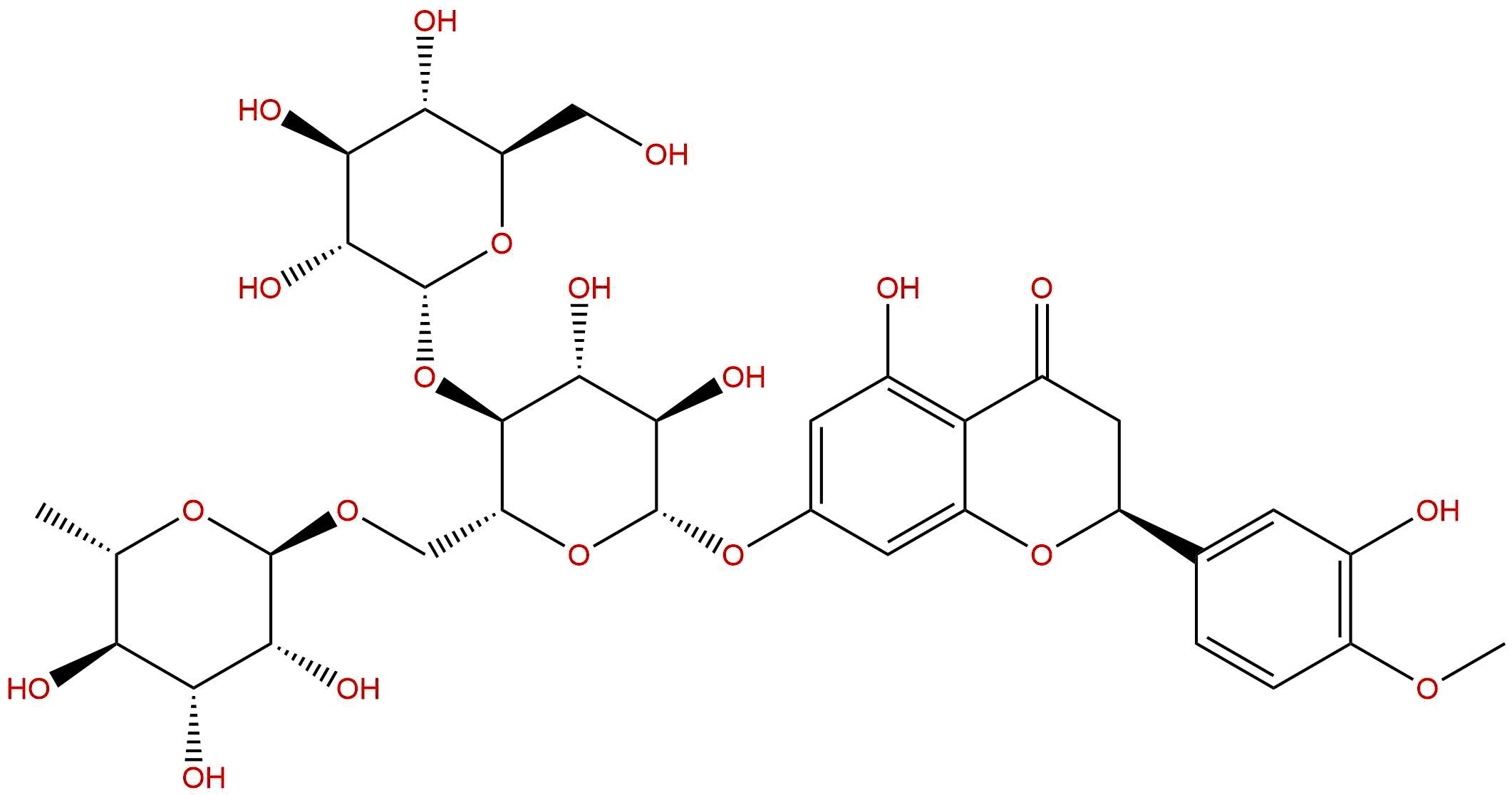


Product name: α-Glucosyl Hesperidin
Synonym name: G-Hesperidin; Hesperidin G; Hesperidin S; α-G-Hesperidin PS-CC
Catalogue No.: BP5247
Cas No.: 161713-86-6
Formula: C34H44O20
Mol Weight: 772.706
Botanical Source:
Type of Compound: Flavonoids
Purity: 95%~99%
Analysis Method: HPLC-DAD or/and HPLC-ELSD
Identification Method: Mass, NMR
Packing: Brown vial or HDPE plastic bottle
Storage: Store in a well closed container, protected from air and light. Put into refrigerate or freeze for long term storage.
Whenever possible, you should prepare and use solutions on the same day. However, if you need to make up stock solutions in advance, we recommend that you store the solution as aliquots in tightly sealed vials at -20℃. Generally, these will be useable for up to two weeks.
The product could be supplied from milligrams to grams
Inquire for bulk scale.
Alpha-Glucosyl hesperidin(AGH) is a water-soluble form of hesperidin, a flavonoid found in many citrus plants, as well as in evening primrose oil. Whereas hesperidin is natural, glycosyl hesperidin is synthetic. Its water solubility means it is more readily absorbed by the skin.
Research shows hesperidin has antioxidant properties and when applied topically, can help improve skin’s barrier function. There are also studies showing it has skin-soothing benefits and that it can improve the appearance of uneven skin tone.
Alpha-Glucosyl hesperidin(AGH) has been scientifically proven to enhance microcirculation when applied to the skin, thus helping to overcome the negative physical effects caused by stress, tiredness and cold environment. It is also a strong antioxidant with anti-inflammatory properties that helps to improve dark circles under the eyes, as well as brighten dull complexions and tired puffy skin, providing a more radiant look.
Aside from its skin care use, glucosyl hesperidin is also used as a food additive and has been determined “generally ruled as safe” (GRAS) by the United States Food & Drug Administration.
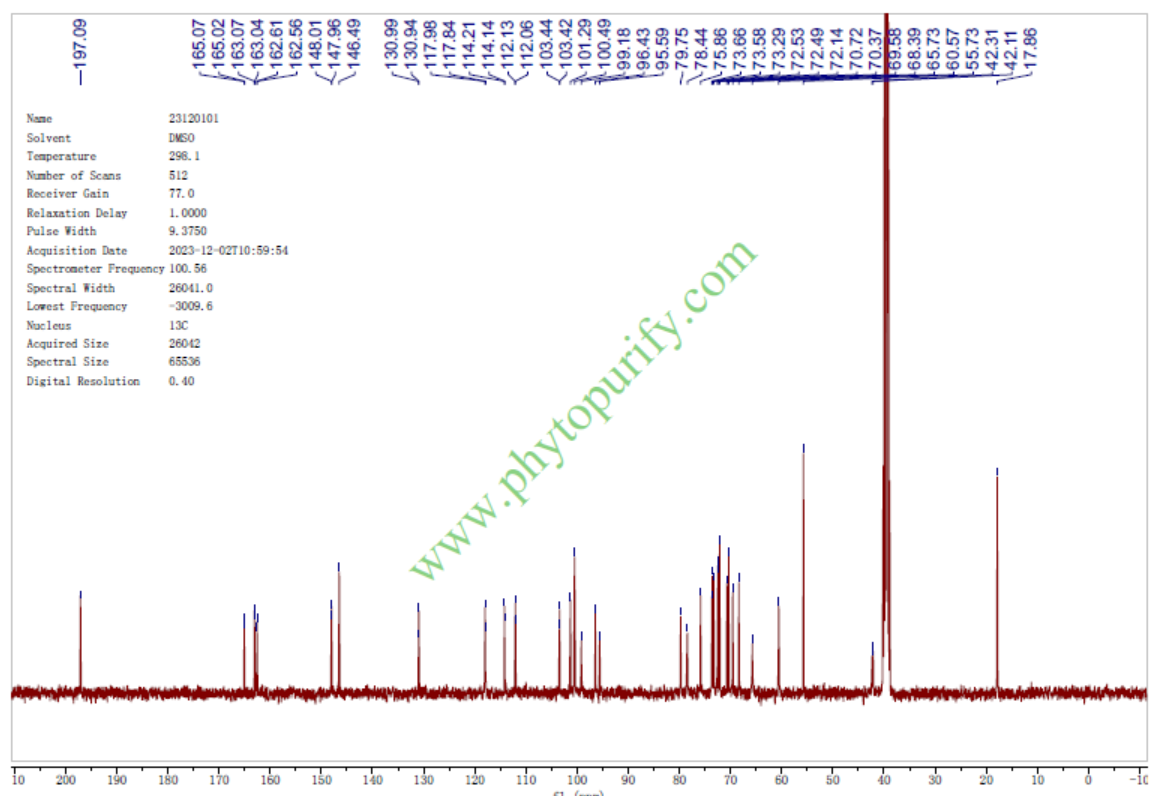
NMR of α-Glucosyl Hesperidin
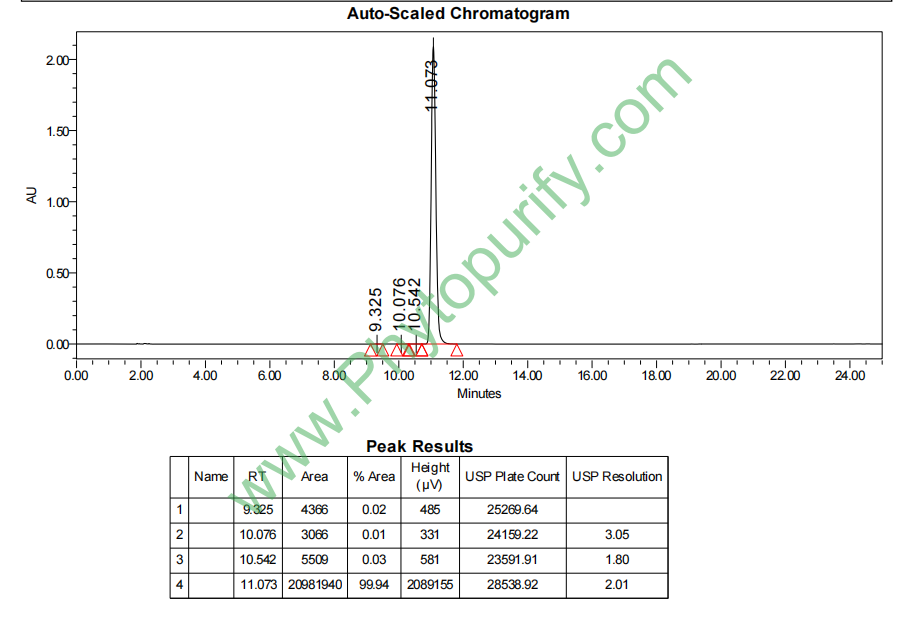
HPLC of α-Glucosyl Hesperidin
Storage conditions:Short-term storage at 2~8℃, long-term storage at -20 ~ -80℃
313.4400
-.7664
-.7886
10.9284
.4831
.0801
Low
67.9988
5.4305
Yes
No
No
No
No
No
0.0
Yes
No
No
No
Natural products have always been an important source of drug discovery and development, and their diverse chemical structures and unique biological activities provide valuable resources for human health. Among the numerous bioactive flavonoids, Hesperidin, as a dihydroflavonoid glycoside found in citrus fruits, has attracted widespread attention due to its significant antioxidant, anti-inflammatory, and vascular protective effects. However, the solubility of hesperidin in water is extremely low (about 20 µ g/mL), which severely limits its application in the fields of food, medicine, and cosmetics. In order to overcome this bottleneck, researchers have modified the structure of hesperidin through enzymatic or chemical methods. Among them, the birth of α - glucosyl Hesperidin (α - GH) marks an important breakthrough in the modification research of flavonoid glycosides.
Alpha glucosyl hesperidin, CAS number 161713-86-6, is a derivative formed by transferring glucose groups to the glycosyl portion of hesperidin (usually rhamnose) through enzyme preparations such as cyclodextrin glucosyltransferase (CGTase) or alpha glucosidase. This modification not only retains the core pharmacological activity of hesperidin, but also significantly enhances its water solubility (hundreds of times higher than hesperidin), greatly improving its bioavailability and formulation properties. In recent years, with the deepening understanding of the pathogenesis of allergic diseases, especially the molecular mechanisms of Th2 type immune response and mast cell degranulation process, the potential of α - glucosyl hesperidin in the field of anti allergy has gradually become prominent. Research has shown that it can regulate immune responses through multiple targets and pathways, demonstrating great potential as a novel anti allergic candidate drug. This article will provide a systematic review of alpha glucosyl hesperidin from the aspects of chemical structure, physicochemical properties, plant origin, pharmacological activity, mechanism of action, drug evaluation, and clinical application prospects.
The chemical structure of α - glucosyl hesperidin is modified based on the skeleton of hesperidin. Hesperetin itself is composed of hesperetin and the disaccharide Rutinose (α - L-rhamnose - (1 → 6) - β - D-glucose) linked by glycosidic bonds. Alpha glucosyl hesperidin is an additional D-glucose group attached to the glucose unit of the rutin sugar group through alpha-1,4- or alpha-1,6-glycosidic bonds. The most common single substituted product is α - glucosyl hesperidin, with a molecular formula of C34H44O20 and a molecular weight of 772.7060 Da.
From the perspective of physical and chemical properties, the most significant feature of alpha glucosinolate hesperidin is its excellent water solubility. The calculated water solubility parameter (LogS) is as high as 10.9284, which is closely related to the introduction of multiple hydroxyl (- OH) and sugar units in its molecule. In contrast, the water solubility of the parent compound hesperidin is extremely poor, while the water solubility of α - GH can reach hundreds of times that of hesperidin (for example, its solubility can exceed 100 mg/mL at 25 ° C). This high water solubility directly solves the core obstacles of hesperidin in formulation processing and in vivo absorption.
Its oil-water partition coefficient (LogP) is -0.7664, indicating that the compound has strong hydrophilicity and is not easily able to penetrate the lipid bilayer. This characteristic determines its pharmacokinetic behavior: oral absorption may mainly rely on active transport or cellular bypass pathways mediated by transporters, and is not easily able to pass through the blood-brain barrier (BBB permeability is low). The topologically polar surface area (TPSA) is as high as 313.4400 Å ², further confirming its high polarity and low membrane permeability. In addition, the compound is relatively stable under acidic conditions (such as gastric juice), but may degrade under alkaline conditions. Its melting point is 210-220 ° C (decomposition), appearing as a white to light yellow powder with no special odor and a slightly sweet taste. These physicochemical properties provide a solid foundation for its application in oral, topical, and injectable formulations.
Alpha glucosyl hesperidin is not naturally present in plants, but is derived from natural hesperidin through biotransformation or chemical synthesis methods. Therefore, its "plant source" actually refers to the source of its precursor - hesperidin. Hesperidin is widely present in the fruits, peels, and flowers of citrus plants in the Rutaceae family, and is one of the most abundant flavonoids in citrus fruits. Common plant sources rich in hesperidin include:
- sweet orange(Citrus sinensis)The content of fruit peel and juice is extremely high.
- grapefruit(Citrus paradisi)Rich in fruit skin and flesh.
- Lemon(Citrus limon)And lime(Citrus aurantifolia)The content in the fruit peel is relatively high.
- Immature Bitter Orange(Citrus aurantium)Immature fruits are an important source of hesperidin in traditional Chinese medicine.
- tangerine peel(Citrus reticulata)Chenpi, also known as tangerine peel, is a classic source of hesperidin.
In industry, the extraction of hesperidin is usually carried out using solvent extraction method, which separates it based on its solubility differences in different solvents. Traditional methods include:
1. Alkali extraction and acid precipitation method Extract by utilizing the characteristic of hesperidin dissolving in alkaline aqueous solution (such as lime water) and precipitating under acidic conditions. This is the most economical and commonly used method.
2. Alcohol extraction method Use methanol or ethanol for reflux extraction, followed by concentration and crystallization.
3. Microwave or ultrasound assisted extraction Using physical field effects to destroy cell walls, improve extraction efficiency, and shorten time.
After obtaining high-purity hesperidin, the preparation of α - glucosyl hesperidin mainly relies on Enzymatic glycosylation This is currently the most mainstream and environmentally friendly method. The specific process is as follows:
- Enzyme selection Mainly using cyclodextrin glucosyltransferase (CGTase, EC 2.4.1.19) or alpha glucosidase (EC 3.2.1.20). CGTase can catalyze the transfer of glucose groups from starch or dextrin to the glycosyl receptor of hesperidin.
- reaction system Dissolve hesperidin in alkaline buffer solution (such as phosphate buffer solution with pH 8-10), add soluble starch or dextrin as glucose donor, and then add an appropriate amount of CGTase. The reaction temperature is usually controlled between 40-60 ° C.
- reaction process Enzyme catalyzed transfer of glucose groups from the donor to the C-6 '' - OH or C-3 '' - OH site of hesperidin, forming alpha-1,4 or alpha-1,6 glycosidic bonds. The reaction time depends on enzyme activity and substrate concentration, usually ranging from a few hours to 24 hours.
- Product purification After the reaction is complete, the enzyme is inactivated by heating or adjusting the pH. Using activated carbon for decolorization and ion exchange resin for desalination, followed by column chromatography (such as silica gel column, reverse phase C18 column) or preparative high-performance liquid chromatography (HPLC) for separation and purification, high-purity α - glucosyl hesperidin is finally obtained. The conversion rate of this method can reach 70-90%, and the product is single with few by-products.
The pharmacological activity research of α - glucosyl hesperidin mainly revolves around the known functions of its parent compound hesperidin, but due to its significantly improved water solubility, its activity in vivo is often more significant. At present, its most concerned pharmacological activities are focused on anti allergic, anti-inflammatory, and antioxidant aspects.
This is the core research direction of α - glucosyl hesperidin. Numerous in vitro and in vivo experiments have confirmed that α - GH has significant anti allergic effects.
- Inhibit degranulation of mast cells Mast cells are key effector cells in type I hypersensitivity reactions (i.e., immediate hypersensitivity reactions). Research has shown that α - GH can concentration dependently inhibit degranulation of mast cells induced by antigens (such as IgE cross-linking) or chemical stimuli (such as compound 48/80, A23187), thereby reducing the release of allergic mediators such as histamine and trypsin. In the RBL-2H3 cell model (rat basophilic leukemia cells), the IC50 value of α - GH is usually in the micromolar range.
- Inhibition of Th2 cytokine secretion The core of allergic reactions is Th2 immune shift. Alpha GH can significantly inhibit the secretion of key cytokines such as IL-4, IL-5, IL-13 by Th2 cells, mast cells, and eosinophils under allergen stimulation. These cytokines are the core molecules that induce IgE class switching, promote eosinophil activation, and recruitment.
- Reduce allergic inflammation In mouse allergic rhinitis or asthma models induced by ovalbumin (OVA), oral or intraperitoneal injection of alpha GH can significantly reduce the number of eosinophils in nasal lavage fluid or bronchoalveolar lavage fluid (BALF), decrease IgE and histamine levels, and alleviate airway hyperresponsiveness and histopathological changes.
Alpha glucosyl hesperidin exhibits broad-spectrum anti-inflammatory effects.
- Inhibit pro-inflammatory mediators In the lipopolysaccharide (LPS) - stimulated macrophage model (such as RAW264.7 cells), α - GH significantly inhibits the production of nitric oxide (NO), prostaglandin E2 (PGE2), as well as pro-inflammatory cytokines such as tumor necrosis factor - α (TNF - α), interleukin-1 β (IL-1 β), and interleukin-6 (IL-6).
- Regulating the inflammatory signaling pathway Its anti-inflammatory mechanism is closely related to the inhibition of the activation of nuclear factor kappa B (NF - κ B) and mitogen activated protein kinase (MAPK) signaling pathways. By blocking the phosphorylation of these key pathways, α - GH can downregulate the expression of various inflammatory genes at the transcriptional level.
As a flavonoid compound, α - glucosyl hesperidin retains good antioxidant capacity.
- scavenge free radicals It can effectively scavenge 1,1-diphenyl-2-trinitrophenylhydrazine (DPPH) free radicals, 2,2 '- bis (3-ethylbenzothiazoline-6-sulfonic acid) (ABTS) cationic free radicals, as well as hydroxyl free radicals (· OH) and superoxide anions (O ₂⁻ ·).
- Enhance endogenous antioxidant enzyme activity In cell and animal models, α - GH can upregulate the activity of superoxide dismutase (SOD), glutathione peroxidase (GSH Px), and catalase (CAT), while reducing the level of malondialdehyde (MDA), thereby alleviating oxidative stress damage.
The anti allergic effect of α - glucosyl hesperidin is not achieved through a single target, but through a network regulation mode of multiple targets and pathways. Based on existing research, its core molecular mechanism can be summarized as follows:
This is the upstream mechanism of its anti allergic effect. Allergens crosslink with IgE antibodies bound to the surface of mast cells/eosinophils, leading to the aggregation of high affinity IgE receptors (Fc ε RI) and initiating downstream signaling cascades. Alpha GH can:
- Inhibition of Fc ε RI aggregation and activation Possible reduction of Fc ε RI aggregation by interfering with the formation of lipid rafts or receptor ligand interactions.
- Blocking Lyn/Syk kinase activation After Fc ε RI aggregation, the Src family kinase Lyn is first activated, followed by phosphorylation and activation of splenic tyrosine kinase (Syk). α - GH can inhibit the phosphorylation of Lyn and Syk, thereby blocking the initiation of the entire signaling pathway.
- Inhibit downstream PLC gamma and PI3K/Akt pathways After activation, Syk phosphorylates phospholipase C γ (PLC γ) and phosphatidylinositol 3-kinase (PI3K). α - GH can inhibit the phosphorylation of PLC γ, thereby reducing the production of inositol triphosphate (IP3) and diacylglycerol (DAG), thereby inhibiting the release of calcium ions from the endoplasmic reticulum and the activation of protein kinase C (PKC). At the same time, it also inhibits the phosphorylation of the PI3K/Akt pathway, affecting cell survival and degranulation processes.
The increase in intracellular calcium ion concentration is a necessary condition for degranulation of mast cells. Alpha GH can:
- Inhibit reservoir manipulative calcium influx (SOCE)By inhibiting PLC γ and reducing IP3 mediated endoplasmic reticulum calcium release, the opening of calcium release activated calcium channels (CRACs) on the cell membrane triggered by endoplasmic reticulum calcium depletion is inhibited, thereby blocking the influx of extracellular calcium ions.
- Directly acting on calcium channels May directly inhibit the activity of certain voltage-gated or passive longitudinal calcium channels.
In summary, α - glucosyl hesperidin forms a complete network regulatory system from upstream receptor activation, signal transduction, transcriptional regulation to downstream effector molecule release by acting on multiple targets such as ALOX5, HRH1, IL4, IL5, IL13, FCER1A, TBXA2R, STAT6, TSLP, etc., thus exerting its comprehensive and mild anti allergic effects.
The pharmacological parameters of α - glucosyl hesperidin demonstrate its enormous potential as a candidate drug, while also revealing the potential challenges it may face in oral administration.
Considering its low oral bioavailability, the following formulation strategies can be considered to improve its drug efficacy:
- nano-formulation Liposomes, nanoemulsions, solid lipid nanoparticles, etc. can improve their encapsulation efficiency and transmembrane transport capacity.
- Prodrug design Esterification or etherification of the sugar moiety to enhance lipid solubility, followed by enzymatic release of active ingredients in vivo.
- Absorption enhancer Combined with surfactants or bile salts to increase the fluidity of intestinal epithelial cell membranes.
- Non oral route: Developed as topical cream (for allergic dermatitis), nasal spray (for allergic rhinitis) or injection (for acute allergic reaction), it can bypass the absorption barrier and play a direct role.
Alpha glucosyl hesperidin has shown broad application prospects in multiple therapeutic fields due to its excellent water solubility, good safety, and multi-target anti allergic mechanism.
This is its most direct application direction.
- allergic rhinitis: Developed as nasal spray, it directly acts on nasal mucosa, can quickly inhibit mast cell degranulation, and alleviate nasal congestion, runny nose, sneezing and other symptoms. Its high water solubility makes it easy to prepare and atomize.
- allergic asthma Through nebulized inhalation administration, it can directly reach the airway, inhibit airway inflammation, and reduce airway hyperresponsiveness. Its inhibitory effects on ALOX5 and TBXA2R are particularly beneficial for relieving bronchial spasms.
- Atopic dermatitis (eczema): Developed as topical cream or gel, it can locally inhibit skin inflammation, itching and redness. Its antioxidant effect can also alleviate skin oxidative damage.
- Food allergies and urticaria Oral preparations can be used to prevent or alleviate symptoms of food allergies and chronic urticaria.
Due to its origin from citrus fruits, high safety, and anti-inflammatory and antioxidant properties, alpha glucosyl hesperidin is highly suitable as a functional food ingredient or dietary supplement. Can be used for development:
- Antiallergic prebiotics Combined with probiotics, regulate gut microbiota and enhance immune tolerance.
- Sports nutrition products Reduce oxidative stress and inflammatory reactions caused by exercise.
- Beauty and health products Improve skin health and reduce UV damage.
Its whitening, anti-inflammatory, and antioxidant properties make it an ideal active ingredient in cosmetics. Can be used for:
- Whitening Serum Inhibit tyrosinase and reduce melanin production.
- Soothing and repairing cream Relieve inflammatory reactions such as sensitive muscles and red blood streaks.
- Sunscreen products As an auxiliary antioxidant, it enhances the sun protection effect.
Despite the bright future, further research is still needed:
- In depth clinical research Currently, most research remains at the cellular and animal levels. Large scale, multicenter, randomized controlled clinical trials are needed to validate its efficacy and safety in humans, and determine the optimal dosage and administration regimen.
- Fine analysis of the mechanism of action Using systems biology and network pharmacology methods, further elucidate its specific binding mode with targets such as ALOX5, HRH1, STAT6, and its mechanism of regulating upstream key factors such as TSLP (thymic stromal lymphopoietin).
- Pharmacokinetic optimization Develop efficient nano delivery systems or prodrugs to significantly improve their oral bioavailability, making them truly oral anti allergic drugs.
- Combination therapy research Explore its synergistic effects with traditional antihistamines, glucocorticoids, or biologics such as omalizumab, in order to reduce side effects and improve efficacy.
As an enzymatic glycosylation derivative of hesperidin, α - glucosyl hesperidin successfully overcomes the fatal defect of poor water solubility of the parent compound, while fully preserving its multi-target and multi pathway pharmacological activity spectrum. Its high water solubility, low toxicity, non mutagenicity, and clear anti allergic mechanism make it uniquely advantageous in the treatment of allergic diseases, the development of functional foods, and the application of cosmetics. Although oral bioavailability is the main challenge facing its drug development, this bottleneck is expected to be overcome through advanced formulation technology. With the continuous deepening of understanding of the immunological mechanisms of allergic diseases and the continuous advancement of medicinal chemistry and formulation technology, α - glucosyl hesperidin is expected to transform from a star molecule studied in the laboratory to a safe and effective new anti allergic drug in clinical practice, bringing new treatment options for billions of allergic patients worldwide. In the future, based on its unique chemical skeleton, further structural optimization and derivative development will also open up new directions for the research of flavonoid drugs.
