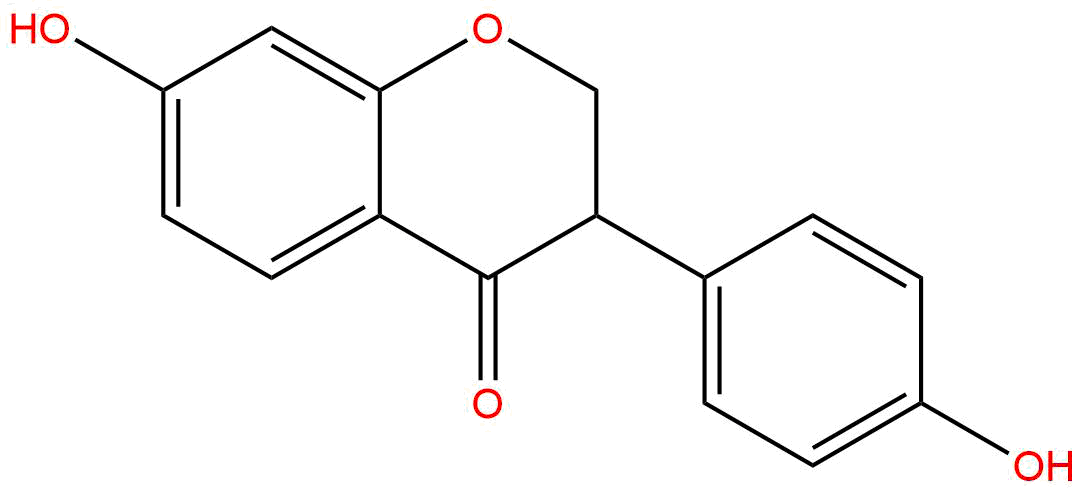


Product name: (±)-Dihydrodaidzein
Synonym name: Dihydrodaidzein
Catalogue No.: BPF0686
Cas No.: 17238-05-0
Formula: C15H12O4
Mol Weight: 256.257
Botanical Source: Glycine max
Type of Compound: Flavonoids
Purity: 95%~99%
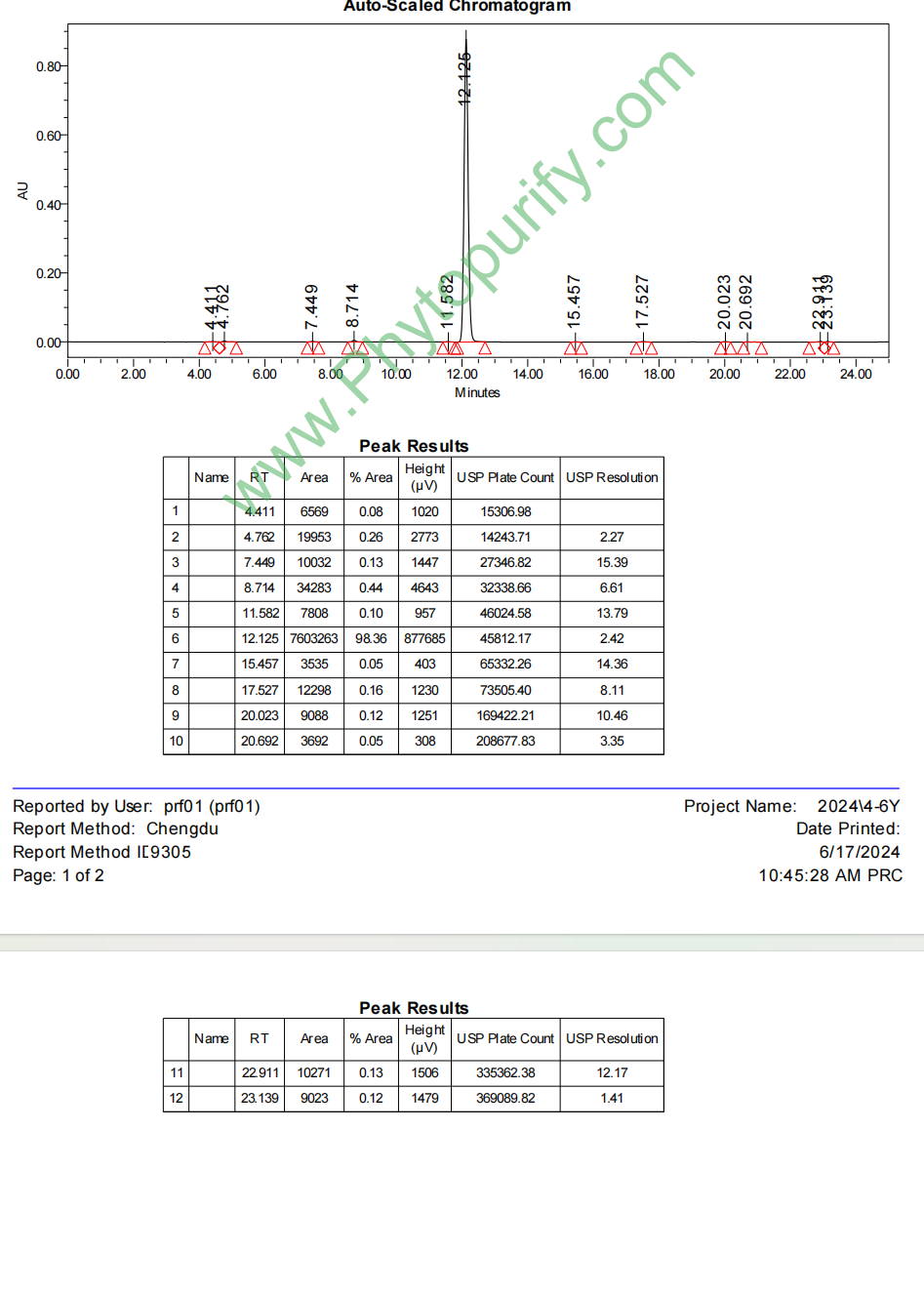
Analysis Method: HPLC-DAD or/and HPLC-ELSD
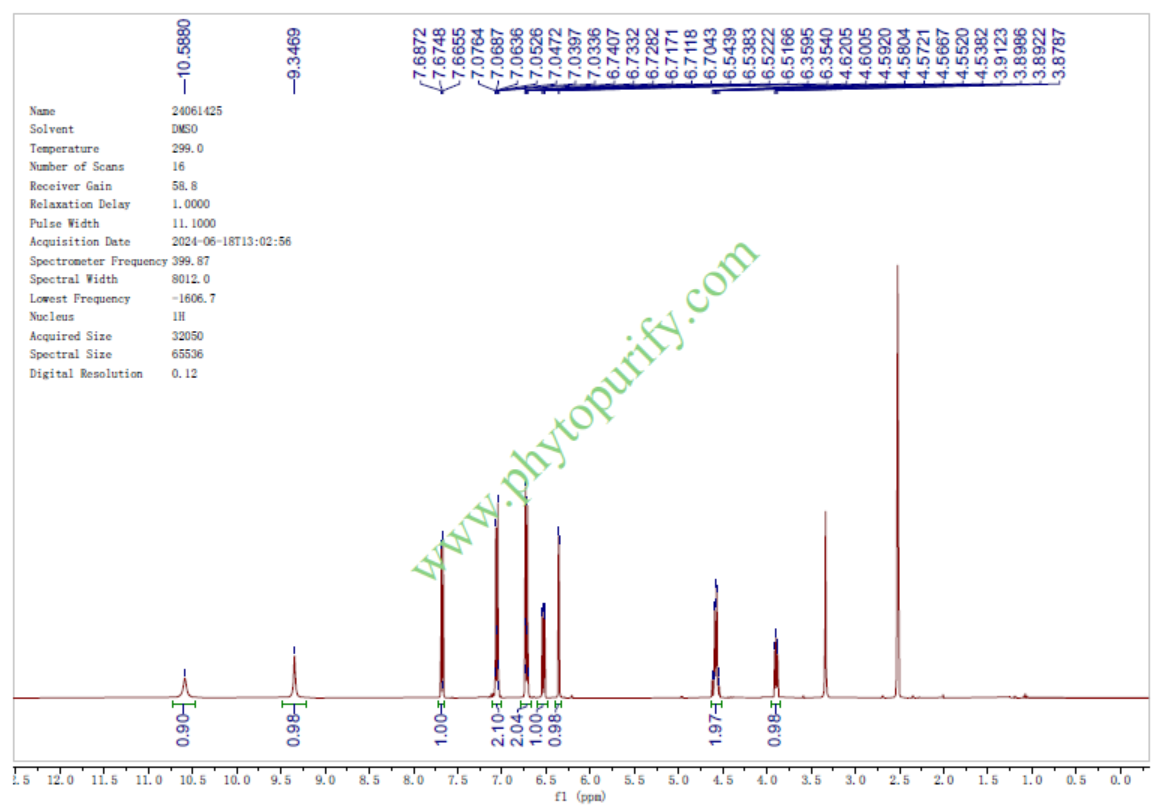
Identification Method: Mass, NMR
Packing: Brown vial or HDPE plastic bottle
Storage: Store in a well closed container, protected from air and light. Put into refrigerate or freeze for long term storage.
Whenever possible, you should prepare and use solutions on the same day. However, if you need to make up stock solutions in advance, we recommend that you store the solution as aliquots in tightly sealed vials at -20℃. Generally, these will be useable for up to two weeks.
The product could be supplied from milligrams to grams
Inquire for bulk scale.
For Reference Standard and R&D, Not for Human Use Directly.
HPLC of Dihydrodaidzein
HNMR of Dihydrodaidzein
Storage conditions:Short-term storage at 2~8℃, long-term storage at -20 ~ -80℃
66.7600
2.3850
2.3544
.2711
3.0234
14.9810
Low
88.3187
2.7187
No
No
No
No
Yes
No
0.0
Yes
Yes
No
Yes
Natural products, as an important source of drug discovery, play an indispensable role in maintaining human health and treating diseases. The isoflavones rich in soybeans and their products have attracted widespread attention due to their diverse biological activities. Daidzein, as one of the main isoflavones in soybeans, has been proven to have estrogen like effects, antioxidant, anti-inflammatory, and anti-tumor pharmacological activities. However, in recent years, studies have found that the metabolites of daidzein in the body also have important biological significance. Among them, racemic dihydrodaidzein (±) - Dihydrodaidzein, abbreviated as DHD, as a key metabolic intermediate of daidzein, is gradually becoming a new hotspot in natural product pharmacology research.
Racemized dihydrodaidzein is a hydroxyflavone compound, which belongs to the class of flavone compounds in terms of chemical structure. Its molecule has two hydroxyl substituents at positions 4 'and 7'. As a reducing metabolite of daidzein, DHD is generated in vivo through a reduction reaction mediated by the gut microbiota and further metabolized into more biologically active compounds such as estrol. It is worth noting that DHD itself also has unique pharmacological activities, and its roles in estrogen receptor regulation, antioxidant stress, anti-inflammatory response, and anti-tumor are gradually being revealed.
With the deepening understanding of the relationship between gut microbiota and host health, DHD, as a key intermediate for gut microbiota metabolism of soy isoflavones, has increasingly highlighted its research value. The differences in gut microbiota composition among different individuals lead to significant differences in the efficiency of DHD and its downstream metabolites, which are closely related to the risk of various diseases. Therefore, a deep understanding of the pharmacological characteristics, mechanism of action, and pharmacological properties of DHD is of great significance for the development of precise nutritional intervention strategies and new drugs based on soy isoflavones.
This article will systematically review the research progress of racemic dihydrodaidzein from the aspects of chemical structure and physicochemical properties, plant sources and extraction methods, pharmacological activity research, mechanism of action and molecular targets, drug evaluation and pharmacokinetics, clinical application prospects and prospects, in order to provide reference for the in-depth research and development of this compound.
The chemical name of racemic dihydrodaidzein is 4 ', 7-dihydroxy isoflavones, which belong to isoflavone compounds. Its core skeleton is an isoflavanone structure, consisting of a benzodihydropyran-4-one parent nucleus connected to a benzene ring at the C-3 position. Compared with daidzein, the double bond between C-2 and C-3 positions of DHD is reduced to a single bond, thus forming an isoflavone structure. This structural change makes the molecular conformation of DHD more flexible, which may affect its interaction mode with biological targets.
There are two chiral centers (C-2 and C-3 positions) in DHD molecule, therefore it has four stereoisomers. The commercially available racemic dihydrodaidzein is a racemic mixture of two enantiomers, (R, R) - DHD and (S, S) - DHD. It is worth noting that naturally occurring DHDs are mainly in the (S) - configuration, while DHDs produced by gut microbiota metabolism may be mainly in specific stereoisomers. There may be significant differences in the biological activity of DHDs with different stereoconfigurations, which poses an important challenge for future research.
According to computational chemical analysis, the molecular weight of DHD is 256.2570 g/mol, belonging to the category of small molecule compounds. Its lipid water partition coefficient (LogP) is 2.3850, indicating that the compound has moderate lipophilicity, which is beneficial for transmembrane transport and interaction with lipid soluble targets. The topological polar surface area (TPSA) is 66.7600 Å ², which is below the threshold of 100 Å ², indicating that DHD has good oral absorption potential.
In terms of water solubility, DHD has a water solubility value of 0.2711 mg/mL, which belongs to the category of slight solubility. This moderate water solubility is beneficial for the dissolution and absorption after oral administration, without affecting its transmembrane transport due to excessive hydrophilicity. It is worth noting that the phenolic hydroxyl structure of DHD allows it to form phenolic salt ions in alkaline environments, significantly improving its water solubility, which can be used in formulation design.
In terms of drug safety prediction, the blood-brain barrier permeability assessment of DHD is low, indicating a lower risk of central nervous system side effects. The prediction result of hERG inhibition is negative, indicating a low risk of cardiac toxicity. The Ames test result is 0.0, indicating that the compound does not exhibit significant mutagenicity. These preliminary safety evaluation results provide favorable conditions for the further development of DHD.
The distribution of DHD in nature is relatively limited and mainly exists in leguminous plants. Soybean (Glycine max) and its products are the main dietary sources of DHD, but the content of DHD in soybean is usually low and mainly exists in the form of glycosides. In addition, DHD has also been detected in some traditional medicinal plants such as Pueraria lobata and Trifolium pratense.
It is worth noting that the content of DHD in plants is influenced by various factors, including variety, growth environment, harvesting time, processing method, etc. For example, the content of DHD in fermented soybean products (such as fermented soybean and miso) is usually higher than that in unfermented products, because the β - glucosidase produced by microorganisms during the fermentation process can hydrolyze daidzein glycosides, release glycosides, and then be reduced to DHD.
Due to the low natural content of DHD in plants, direct extraction from plants is difficult to meet research and application needs. Therefore, biotransformation and chemical synthesis have become the main ways to obtain DHD.
The biotransformation method mainly utilizes microorganisms or enzymes to catalyze the reduction reaction of daidzein. Intestinal bacteria such as Lactobacillus spp., Bifidobacterium spp., and certain Clostridium spp. have the ability to reduce daidzein to DHD. By screening efficient transformation strains and optimizing fermentation conditions, large-scale biological preparation of DHD can be achieved. In addition, recombinant enzyme technology also provides a new pathway for the biosynthesis of DHD, which can achieve efficient in vitro conversion by expressing daidzein reductase.
In terms of chemical synthesis, DHD can be synthesized through various routes. The classic method is to obtain 2,4-dihydroxyacetophenone and 4-hydroxybenzaldehyde as raw materials through aldol condensation, cyclization, reduction and other steps. In recent years, the development of asymmetric catalytic synthesis technology has made it possible to selectively synthesize DHD with specific stereoisomers, which is of great significance for studying the differences in biological activity of different enantiomers.
Organic solvent extraction is commonly used to extract DHD from plant materials or fermentation products. Common extraction solvents include methanol, ethanol, ethyl acetate, etc. To improve extraction efficiency, modern extraction techniques such as ultrasound assisted extraction, microwave-assisted extraction, or supercritical fluid extraction can be used. After concentration, the extract can be separated and purified by methods such as silica gel column chromatography and preparative high-performance liquid chromatography.
During the purification process, the separation of DHD from structurally similar compounds such as daidzein and estrone is a key challenge. By utilizing the differences in polarity and acidity of these compounds, efficient separation can be achieved through techniques such as gradient elution and pH zone purification countercurrent chromatography. In recent years, the application of molecular imprinting technology and macroporous adsorption resin has also provided new ideas for the selective separation of DHD.
As a metabolite of soy isoflavones, the pharmacological activity of DHD that has received the most attention is its estrogen like effect. DHD can bind to estrogen receptors (ER) and exert a selective estrogen receptor modulator (SERM) effect. Research has shown that DHD has a higher affinity for ER β than ER α, and this selectivity may be related to its unique molecular configuration. In vitro, DHD can promote the proliferation of ER positive breast cancer cell MCF-7, but its activity intensity is weaker than 17 β - estradiol, about 1/1000-1/100 of the latter.
It is worth noting that the estrogenic activity of DHD varies among different stereoisomers. Preliminary studies suggest that (S) - DHD may have a higher affinity for ER than (R) - DHD, suggesting that stereochemistry plays an important role in the biological activity of DHD. In addition, the estrogenic activity of DHD also exhibits tissue selectivity, potentially exerting beneficial estrogen like effects in tissues such as bone and cardiovascular system, while exhibiting antagonistic effects in tissues such as breast and uterus.
The phenolic hydroxyl groups in the molecular structure of DHD endow it with excellent antioxidant activity. Research has shown that DHD can effectively scavenge various free radicals, including DPPH free radicals, ABTS cationic free radicals, and hydroxyl free radicals. Its antioxidant mechanism mainly includes direct clearance of free radicals, chelation of transition metal ions (such as Fe ² ⁺, Cu ² ⁺), and upregulation of endogenous antioxidant enzymes (such as superoxide dismutase and glutathione peroxidase) expression.
In cell models, DHD can alleviate oxidative stress-induced cell damage. For example, in H ₂ O ₂ - treated liver cells, DHD pretreatment can significantly reduce intracellular reactive oxygen species levels, inhibit lipid peroxidation, and protect mitochondrial function. In addition, DHD can activate the Nrf2/ARE signaling pathway, promote the expression of antioxidant enzyme genes, and enhance the antioxidant defense ability of cells.
Inflammatory response is an important pathological basis for various chronic diseases, and the role of DHD in anti-inflammatory treatment is increasingly receiving attention. In vitro studies have shown that DHD can inhibit the production of pro-inflammatory cytokines in macrophages stimulated by lipopolysaccharide (LPS), including tumor necrosis factor - α (TNF - α), interleukin-6 (IL-6), and interleukin-1 β (IL-1 β). Meanwhile, DHD can downregulate the expression of inducible nitric oxide synthase (iNOS) and cyclooxygenase-2 (COX-2), reducing the production of nitric oxide and prostaglandin E ₂.
In animal models, DHD has shown protective effects against various inflammatory diseases. In a mouse model of colitis induced by dextran sulfate sodium, oral administration of DHD can alleviate colon tissue damage, reduce inflammation scores, and inhibit myeloperoxidase activity. In arthritis models, DHD can reduce joint swelling and bone destruction, and lower levels of inflammatory cytokines in serum.
The anti-tumor activity of DHD is one of its research hotspots. Many studies have shown that DHD has inhibitory effects on a variety of tumor cells, including breast cancer, prostate cancer, colon cancer and liver cancer. Its anti-tumor mechanism involves multiple aspects: firstly, DHD can affect the growth of hormone dependent tumors by regulating the estrogen signaling pathway; Secondly, DHD can induce apoptosis of tumor cells by activating the caspase cascade and regulating the expression of Bcl-2 family proteins; In addition, DHD can also inhibit tumor cell proliferation by blocking the cell cycle in G0/G1 or G2/M phases.
It is worth noting that DHD exhibits a certain degree of selectivity in its anti-tumor activity, with low toxicity to normal cells. This selectivity may be related to differences in metabolism, signaling pathways, and other aspects between tumor cells and normal cells. For example, DHD can inhibit the activation of the PI3K/Akt signaling pathway in tumor cells, with little effect on normal cells.
In recent years, the role of DHD in metabolic regulation has received attention. Research has shown that DHD can improve insulin sensitivity, promote glucose uptake and utilization. DHD can promote adipocyte differentiation, increase adiponectin secretion, and inhibit the production of inflammatory factors in 3T3-L1 adipocytes. In animal models, DHD can alleviate obesity and insulin resistance induced by high-fat diet, improve lipid profile, and reduce liver fat accumulation.
In addition, DHD also has a regulatory effect on bone metabolism. As a weak estrogen, DHD can inhibit osteoclast activity and promote osteoblast differentiation, thus having potential preventive and therapeutic effects on osteoporosis. In the ovariectomy rat model, DHD can partially prevent bone loss and maintain the integrity of bone microstructure.
The binding of DHD to estrogen receptors (ER α and ER β) is the basis for its various biological activities. Molecular docking studies have shown that the phenolic hydroxyl group of DHD can form hydrogen bonds with key amino acid residues in the binding domain of ER ligands, while its isoflavone skeleton binds to receptors through hydrophobic interactions. Compared with 17 β - estradiol, DHD has a lower affinity for binding to ER, but exhibits higher ER β selectivity.
After binding to ER, DHD can induce receptor conformational changes, promote receptor dimerization and nuclear translocation, and then bind to estrogen response elements (ERE) in the promoter region of target genes, regulating gene transcription. In addition, DHD can rapidly activate signaling pathways through non genomic pathways, such as MAPK/ERK and PI3K/Akt pathways, which may be involved in DHD's regulation of cell proliferation, differentiation, and apoptosis.
The anti-inflammatory activity of DHD is closely related to its regulation of the NF - κ B signaling pathway. Research has shown that DHD can inhibit the phosphorylation and degradation of I κ B α, thereby preventing nuclear translocation and transcriptional activation of NF - κ B. By inhibiting the activity of NF - κ B, DHD can downregulate the expression of various pro-inflammatory genes, including TNF - α, IL-6, IL-1 β, iNOS, and COX-2.
In addition, DHD can indirectly inhibit the activity of NF - κ B by activating the Nrf2 pathway, promoting the expression of antioxidant genes. There is cross regulation between Nrf2 and NF - κ B, and activation of Nrf2 can inhibit the activity of NF - κ B, thereby synergistically exerting anti-inflammatory effects.
The anti-tumor effect of DHD involves the regulation of cell apoptosis and cell cycle. At the molecular level, DHD can upregulate the expression of pro apoptotic protein Bax and downregulate the expression of anti apoptotic protein Bcl-2, leading to a decrease in mitochondrial membrane potential, release of cytochrome c, and activation of caspase-9 and caspase-3, inducing cell apoptosis.
In terms of cell cycle regulation, DHD can upregulate the expression of cell cycle inhibitory proteins such as p21 and p27, inhibit the activity of cyclin CDK complex, and lead to cell cycle arrest. There are differences in the sensitivity of different tumor cells to DHD, which may be related to the status of key regulatory factors such as p53 and Rb in the cells.
Recent studies have shown that DHD may also exert biological activity through epigenetic mechanisms. DHD can inhibit the activity of histone deacetylase (HDAC), increase histone acetylation levels, and thus alter chromatin structure and gene expression. In addition, DHD can also affect DNA methylation patterns by inhibiting the activity of DNA methyltransferase and reversing abnormal methylation of tumor suppressor genes.
These epigenetic regulatory effects provide a new explanation for the anti-tumor activity of DHD and provide a theoretical basis for the development of epigenetic therapy strategies based on DHD.
A systematic evaluation of the pharmacological properties of DHD was conducted based on computational drug chemistry methods. According to Lipinski's Five Rules, the molecular weight of DHD (256.26 Da) is less than 500 Da, the LogP value (2.39) is less than 5, the number of hydrogen bond donors (2 phenolic hydroxyl groups) is less than 5, and the number of hydrogen bond acceptors (4 oxygen atoms) is less than 10, fully meeting the basic requirements for oral medication. In addition, the TPSA value of DHD is 66.76 Å ², which is below the threshold of 140 Å ², indicating its good oral absorption potential.
In terms of safety evaluation, the blood-brain barrier permeability of DHD is predicted to be low, indicating a lower risk of central nervous system side effects. The prediction result of hERG inhibition is negative, indicating a low risk of cardiac toxicity. The Ames test result is 0.0, indicating no significant mutagenicity. These preliminary safety evaluation results provide favorable conditions for the further development of DHD.
The oral bioavailability of DHD is influenced by multiple factors. In the gastrointestinal tract, DHD can be rapidly absorbed, but first pass metabolism may reduce its bioavailability. Research has shown that DHD mainly undergoes phase II metabolic reactions in the body, including glucuronidation and sulfation, forming corresponding complexes. These complexes can be excreted through bile and enter the intestine, where they undergo dissociation reactions under the influence of gut microbiota, forming enterohepatic circulation and prolonging the retention time of DHD in the body.
It is worth noting that DHD itself is also a metabolic intermediate of daidzein in the body. Reductase in the gut microbiota can reduce daidzein to DHD, which can be further reduced to estradiol. The differences in gut microbiota composition among different individuals lead to significant differences in the production efficiency of DHD and estradiol, which are closely related to the risk of various diseases.
DHD is widely distributed in the body and can be found in various tissues such as the liver, kidneys, heart, lungs, and brain. Due to the moderate lipid solubility of DHD, its tissue distribution is influenced by blood flow perfusion and tissue affinity. DHD has a high binding rate with plasma proteins, mainly binding to albumin, which facilitates its transport and storage in the body.
DHD is mainly excreted through urine and feces. In urine, DHD mainly exists in the form of glucuronic acid complexes and sulfate complexes; In feces, it exists in the form of prototypes and metabolites. The elimination half-life of DHD is affected by individual differences and is generally between 6-12 hours.
The estrogen like activity based on DHD has potential application value in the management of menopausal syndrome. Compared with traditional hormone replacement therapy, DHD, as a phytoestrogen, may have better safety, especially in reducing the risk of breast cancer and endometrial cancer. Preclinical studies have shown that DHD can alleviate menopausal symptoms such as hot flashes, night sweats, emotional fluctuations, and may also have a preventive effect on osteoporosis.
However, the clinical application of DHD still faces challenges. Firstly, the estrogenic activity of DHD is relatively weak and may require higher doses to achieve clinical efficacy; Secondly, the metabolic differences of DHD among different individuals may lead to individual differences in therapeutic efficacy; In addition, the long-term safety of DHD still needs further evaluation.
The role of DHD in metabolic regulation provides a basis for its application in the prevention and treatment of metabolic diseases. Studies have shown that DHD can improve insulin sensitivity, regulate lipid metabolism and reduce inflammatory reaction, which makes it potentially valuable in the prevention and treatment of metabolic diseases such as type 2 diabetes, obesity and non-alcoholic fatty liver disease.
Future research needs to further clarify the optimal dosage, dosing regimen, and applicable population of DHD in metabolic diseases. Meanwhile, the interaction between DHD and other hypoglycemic and lipid-lowering drugs is also worth paying attention to.
The anti-tumor activity of DHD provides the possibility for its application in adjuvant therapy for tumors. As a natural product, DHD may have low toxicity and is suitable as an adjuvant drug for chemotherapy or radiotherapy to enhance efficacy and reduce side effects. In addition, the role of DHD in hormone dependent tumors makes it have special value in the prevention and treatment of breast cancer, prostate cancer and other tumors.
However, the application of DHD in tumor treatment still needs to be cautious. Its estrogen like activity may promote tumor growth in some cases, especially in ER positive breast cancer. Therefore, personalized treatment plans need to be developed based on the type of tumor and individual patient conditions.
DHD, as a key intermediate in the metabolism of soy isoflavones by gut microbiota, deserves attention for its role in regulating the gut microbiome. By regulating the composition of gut microbiota, promoting the growth of beneficial bacteria, and inhibiting the proliferation of harmful bacteria, DHD may have a positive impact on gut health. In addition, DHD can also affect the host's immune function and metabolic status by regulating gut microbiota metabolism.
Future research needs to delve deeper into the interaction mechanism between DHD and the gut microbiome, as well as the impact of this interaction on host health. The development of prebiotics or prebiotics based on DHD may provide new strategies for gut health management.
As an important metabolite of soy isoflavones, racemic dihydrodaidzein has made significant progress in pharmacological research. From a chemical structure perspective, the unique isoflavone skeleton of DHD endows it with diverse biological activities; From a pharmacological perspective, DHD exhibits various activities such as estrogen like, antioxidant, anti-inflammatory, anti-tumor, and metabolic regulation; From the perspective of its mechanism of action, DHD exerts its biological effects by regulating multiple signaling pathways such as estrogen receptor, NF - κ B, Nrf2, etc; From the perspective of drug properties, DHD has good oral drug characteristics and the safety evaluation results are relatively ideal.
However, research on DHD still faces many challenges. Firstly, the impact of DHD's stereochemistry on its biological activity still requires systematic research; Secondly, the effectiveness and safety of DHD in different disease models require further preclinical and clinical research validation; In addition, the development and clinical application of DHD formulations still need to overcome many technical obstacles.
Looking ahead, with a deeper understanding of the relationship between gut microbiota and host health, the research value of DHD as a key intermediate in gut microbiota metabolism will be further highlighted. The precise nutritional intervention strategy based on DHD and the development of new drugs are expected to provide new options for the prevention and treatment of chronic diseases such as menopausal syndrome, metabolic disorders, and tumors. At the same time, the synergistic effects of DHD with other natural products, the structural optimization of DHD, and the development of derivatives are also worthy of further exploration.
In summary, the study of racemic dihydrodaidzein, as a natural metabolite with important biological activity, not only helps to understand the health mechanism of soy isoflavones, but also provides valuable lead compounds for the development of new drugs and functional foods. With the continuous deepening of research, the application prospects of DHD in human health maintenance and disease prevention will become even broader.
